Off grid septic systems: every option, cost, and code reality
By the SepticMind Editorial Team

TL;DR
- An off-grid septic system treats household wastewater without any connection to municipal sewer.
- Options run from conventional gravity tanks with drain fields ($8k, $15k) to aerobic treatment units, mound systems, and composting toilets ($3k and up).
- The right choice depends on your soil, lot size, water table depth, local health code, and daily water use.
- Every state requires a permit.
- No exceptions.
What is an off-grid septic system and how does it work?
An off-grid septic system treats your household wastewater right on your property. No pipe runs to a municipal plant. Waste goes in, gets treated on-site, and either soaks into the soil or, in a few systems, composts or evaporates. That's the whole deal.
The classic version has three parts: a septic tank that separates solids from liquid, a distribution system that moves effluent out of the tank, and a soil absorption area (the drain field, or leach field) where bacteria in the ground finish the treatment before water re-enters the groundwater. The EPA calls these onsite setups "decentralized wastewater treatment," a category that runs from a single-family gravity system all the way to a community cluster serving dozens of homes [1].
Here's a distinction people trip on. Off-grid in the wastewater sense doesn't mean off the electrical grid. Aerobic treatment units, pump-dosed mound systems, and some composting setups all need power. If you're also disconnected from the utility grid, you have to plan solar or battery backup for anything with a pump or blower.
The soil does most of the biological work. Effluent percolates through the top few feet of native soil, where microbes break down pathogens and nutrients before the water reaches the water table. That's why a percolation test, or a soil morphology evaluation by a licensed soil scientist, is the first real step in designing any system [2].
What types of off-grid septic systems are available?
You have more options than most people realize. Not all of them work on every piece of land.
Conventional gravity system
A standard septic tank feeds effluent by gravity to perforated pipes in a gravel-filled trench. Works on flat to gently sloping land with moderate to good percolation. It's the cheapest to install and the simplest to keep running. Most rural homes built before 1990 have some version of this. See the septic tank installation overview for what the tank side looks like.
Pressure-dosed system
Same idea, but a pump doses effluent in timed batches instead of letting gravity trickle it out constantly. Spreads effluent more evenly, which stretches drain field life. Adds a pump, a pump chamber, and controls to the price.
Mound system
When the water table is high or the native soil won't perc well enough, a mound system builds a raised bed of imported sand above grade. Effluent gets pumped up into the mound and filters through the sand before reaching native soil. More land disturbance, more cost, more visual impact on the yard. It also opens up sites that would otherwise be dead. EPA guidance notes mound systems suit areas where "seasonal high water tables are within 1 to 2 feet of the surface" [1].
Aerobic treatment unit (ATU)
An ATU injects air into the treatment chamber, feeding aerobic bacteria that break down waste more thoroughly than the anaerobic process in a plain tank. The output is clean enough that some states allow a smaller drain field or surface drip irrigation. ATUs have blowers, timers, and effluent pumps, so they need reliable power and more frequent service, usually quarterly. More money upfront, more to maintain.
Drip irrigation system
Usually paired with an ATU, drip systems send treated effluent through subsurface tubing across a wider area. Good for tight lots or odd geometry. Needs a filter, a pump, pressure regulation, and winterization in cold climates.
Constructed wetland
A planted gravel bed filters effluent through the root zones of wetland plants. More common in warm climates and on farms. Permitting is all over the map; some states treat them as experimental.
Composting toilet plus greywater system
This splits the waste stream. A composting toilet handles solids and urine in an insulated chamber through aerobic decomposition. Greywater from sinks, showers, and laundry goes to a separate small system. This combination can legally replace a full septic system in some states, but the rules are spotty. Plenty of states require a full septic system even if you install a composting toilet. Call your county health department before you buy anything.
Incinerating toilet
Burns waste to ash. Very low water use. Legal for some off-grid uses in rural areas, but the power draw is heavy (1,500 to 2,000 watts per cycle) and it isn't practical without a serious renewable setup.
Evapotranspiration (ET) system
Used in very arid country, like parts of the desert Southwest. Effluent goes into a shallow lined bed and evaporates or gets taken up by plants instead of percolating into groundwater. Only works where evaporation rates beat rainfall year-round [12].
How much does an off-grid septic system cost?
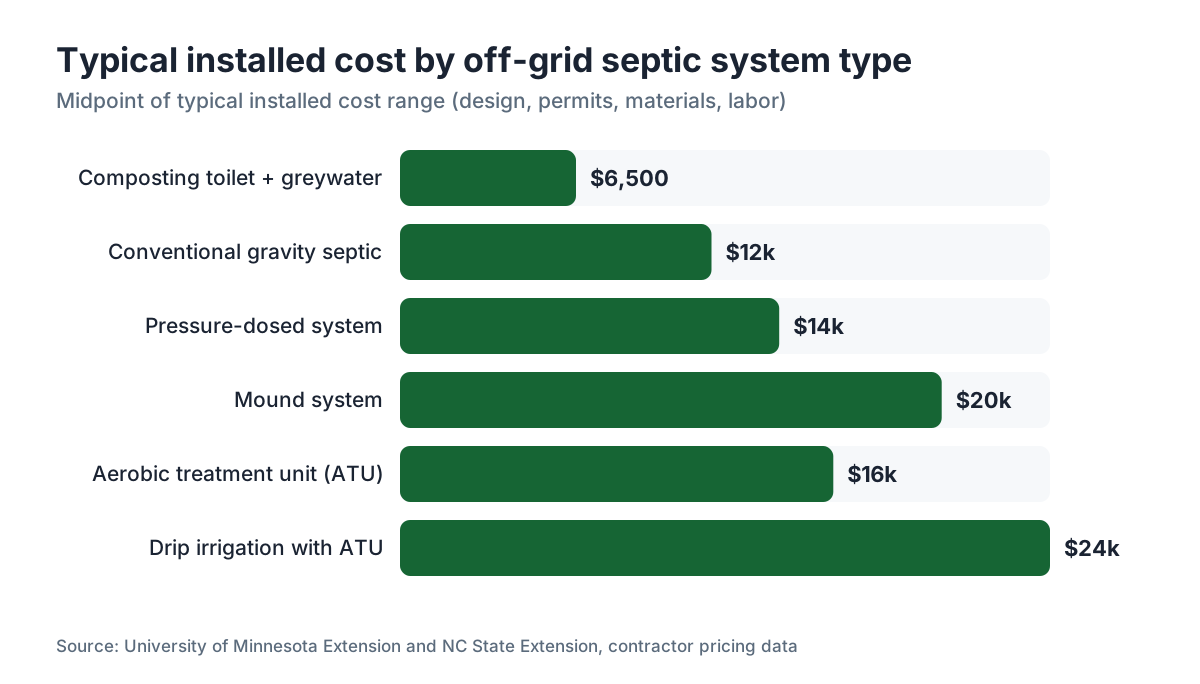
Cost swings hard with system type, soil, site access, and local labor rates. Here's an honest look at typical installed ranges pulled from contractor pricing and state extension guidance [3][4].
| System Type | Typical Installed Cost | Main Cost Drivers |
|---|---|---|
| Conventional gravity | $8,000, $15,000 | Tank size, trench length, soil type |
| Pressure-dosed | $10,000, $18,000 | Pump chamber, controls, field size |
| Mound system | $15,000, $25,000 | Sand fill volume, pump, land grading |
| Aerobic treatment unit (ATU) | $12,000, $20,000 | Unit brand, field/drip size, service contract |
| Drip irrigation (with ATU) | $18,000, $30,000+ | Tubing quantity, filter system, winterization |
| Composting toilet + greywater | $3,000, $10,000 | Unit quality, greywater dispersal design |
| Constructed wetland | $10,000, $25,000 | Plant sourcing, liner, permits |
Those are installed costs: design, permits, excavation, materials, and labor. They don't include ongoing maintenance.
Operating cost is a separate line. A conventional system's main expense is pumping every 3 to 5 years, which runs $300 to $600 depending on tank size and location. An ATU adds a service contract, typically $300 to $600 a year, on top of that. See how often to pump a septic tank for the variables that move pumping frequency.
Permit fees run from under $100 in some rural counties to over $1,000 in California or New England. Soil testing and a site evaluation by a licensed engineer or soil scientist adds $500 to $2,000 before anyone picks up a shovel.
The cost to install a septic system varies by region. Get at least three bids from licensed installers in your county before you commit to a system type.
Do you need a permit for an off-grid septic system?
Yes. Every state requires a permit for a new septic installation, and most require one for any significant repair or alteration too. There is no state where you can legally skip this.
Permitting usually happens at the county or local health department, not the state level. Rules differ dramatically from one county to the next inside the same state. Some counties want a licensed engineer to stamp the design; others accept a licensed installer's plan. Texas has handed onsite sewage authority almost entirely to counties, which creates big swings across the state [5].
The process usually runs like this. You get the site evaluated, often with a perc test or soil morphology assessment. A licensed designer submits a system design. The health department reviews and approves it. Installation happens. An inspector signs off before backfill. The whole thing takes 2 to 12 weeks depending on the county's workload.
Building without a permit is a bad move for reasons beyond fines. An unpermitted system can kill a sale, and many lenders won't finance a home that has one. The EPA's SepticSmart program says plainly that "proper installation and maintenance of your septic system protects your investment in your home" [1].
Some western counties are so rural that enforcement barely exists. That doesn't make an unpermitted system legal. It just means you might not get caught until you try to sell.
What soil and site conditions determine which system you can use?
Soil is the main variable. Everything else is secondary.
A perc test measures how fast water drains through your soil, expressed in minutes per inch (MPI). Most conventional drain fields work in soils that perc between 1 and 60 MPI. Faster than 1 MPI (very sandy or gravelly ground) means effluent moves through too quickly and may not get treated before it hits groundwater. Slower than 60 MPI (clay-heavy soil) means the field floods [2].
Beyond perc rate, evaluators look at:
- Depth to seasonal high water table. Most codes want at least 2 to 4 feet of unsaturated soil below the bottom of the drain field. If your water table climbs to within 18 inches of the surface in spring, expect to need a mound or an ATU with drip.
- Depth to bedrock. Shallow bedrock limits trench depth and can push you toward a mound or a surface-applied system.
- Slope. Steep ground complicates distribution and may need a curtain drain uphill to intercept groundwater before it soaks the field.
- Lot size and setbacks. Every state has minimum setbacks: drain fields have to sit a set distance from wells, property lines, structures, and surface water. A typical setback from a water well is 50 to 100 feet, though it varies [5][6].
- Floodplain status. A drain field in a FEMA-mapped floodplain faces extra restrictions in most states.
A licensed soil scientist or engineer who knows your county's code is worth paying for before you buy a remote parcel. People buy land all the time that turns out to be unbuildable because there's no legal septic solution on it.
How do you size an off-grid septic system for low-water or rainwater-only use?
Septic sizing runs off estimated daily wastewater flow, and in homes that number comes from bedroom count, not actual use. Most state codes use 100 to 150 gallons per bedroom per day as the design standard [3][6].
Say you're off-grid on a rainwater cistern or a well with strict conservation. Your real flow might be 20 to 40 gallons per person per day, way below the design assumption. Most counties still make you size to the bedroom formula anyway. A 3-bedroom off-grid cabin can be required to have a system built for 300 to 450 gallons a day even if the people living there use 80.
Some counties will accept a reduced-flow design if you can prove low water use through fixture specs: a composting toilet, low-flow fixtures, greywater reuse. That takes documentation, and usually a licensed engineer making the case to the health department.
For a truly minimal-use cabin or tiny home, the composting toilet plus greywater route makes the most sense where code allows it. Greywater from a kitchen sink, shower, and laundry can often go to a small subsurface dispersal bed sized for 50 to 100 gallons per day, far cheaper than a full septic system.
Tank sizing follows a similar pattern. Most states require a minimum 1,000-gallon tank no matter the flow, and larger tanks as bedroom count rises. A 1,000-gallon tank covers up to a 3-bedroom home in most places. Septic tank pumping intervals stretch out when actual use is low, but you still pump periodically to clear accumulated solids.
What are the best off-grid septic options for remote or difficult sites?
"Remote" usually means no equipment access, no nearby soil data, and a county inspector who might be two hours out. That changes how you pick a system.
Poor road access makes precast concrete tanks a pain to deliver. Polyethylene (HDPE) tanks are lighter, move with smaller equipment, and hold up just as well when installed right. A few installers have flown tanks in by helicopter on truly locked-in mountain parcels, but that's an expensive specialty.
No grid power means you want to cut out pumps or lose them entirely. A gravity-fed conventional system, or a composting toilet with gravity-fed greywater dispersal, uses zero electricity. If you do need a pump-dosed or ATU system, size your solar and battery bank specifically to run it. A typical ATU blower pulls 300 to 600 watts and runs most of the time. A pump-dosed system pump might pull 500 to 1,000 watts but only runs a few minutes a day.
Extreme soil limits (hardpan clay, very shallow bedrock) usually point to a mound system, assuming you can get fill sand delivered. If sand delivery is too costly, some states allow an engineered fill-based system using approved aggregate. A handful permit lined evapotranspiration beds in true desert conditions [12].
Seasonal-use cabins bring their own wrinkle. A properly sized system sits dormant for months. Before you leave for winter, pump it if it's been more than 3 years, and make sure the tank risers are sealed against surface water. Freeze protection matters for any pump or ATU; manufacturers publish winterization steps for seasonal sites.
Operators running multiple remote properties use tools like SepticMind to track service intervals and inspection records across sites without keeping paper files at each one. That's genuinely useful when a property sits 90 minutes from the office.
How do you maintain an off-grid septic system?
Maintenance is where most off-grid owners fall down, usually because they forget the system exists until something goes wrong.
For a conventional gravity system, the work is simple. Pump the tank every 3 to 5 years. Inspect the baffles and tank integrity when you pump. Keep the drain field clear of roots, vehicle traffic, and surface water. The septic tank pump out takes 30 to 60 minutes for a standard tank. Don't skip it. Full tanks pass solids into the drain field, and drain field repair costs a lot more than a pump-out.
For ATUs, follow the manufacturer's service schedule, which is almost always quarterly inspections by a licensed provider. These units have air diffusers, filters, and pumps that need cleaning and occasional replacement. A neglected ATU can put out effluent as dirty as an untreated system, which defeats the whole point.
Habits that protect any off-grid system:
- Don't put fats, oils, grease, wipes (including the "flushable" ones), or medications down the drain. Ever.
- Spread laundry across the week instead of running six loads on Saturday. A washing machine can dump 200-plus gallons in one morning.
- Keep the area over the drain field mowed, and never drive on it. Compaction wrecks the soil structure the system depends on.
- Know where your tank lids and cleanouts are. If you're the second or third owner, get a septic tank inspection to locate and map the whole system.
- If something smells outside or drains slow inside, call someone. Early septic system repair always beats late repair on price.
The EPA's SepticSmart initiative puts it plainly: "Have your septic system inspected every 3 years by a professional and pump your tank as necessary (every 3-5 years)." [1] For ATUs and advanced systems, those intervals are shorter.
What can go wrong with an off-grid septic system and how do you fix it?
Failures follow a predictable pattern. Knowing them helps you catch trouble before it gets expensive.
Drain field failure is the most common and most costly problem. The soil absorption area saturates and can't take effluent, which then backs up into the house or surfaces in the yard (called "surfacing effluent"). Causes: biomat buildup from overloading or solids carryover, root intrusion, compaction from vehicles, and natural soil saturation in wet years. Depending on the cause and your county's rules, fixes range from resting the field while you use an alternate area, to aerating the field, to full replacement. Full drain field replacement runs $5,000 to $20,000 depending on system type and size. The leach field guide breaks down failure modes and repair options in detail.
Tank structural failure usually shows up as cracked concrete letting groundwater in or effluent out. Both are bad. Infiltration overloads the system; exfiltration contaminates groundwater. Polyethylene tanks don't crack the same way, but an empty one can float out of the ground if the water table rises. Concrete tanks can sometimes be patched with hydraulic cement or epoxy coatings; badly deteriorated tanks need replacement. See septic tank repair for cost guidance.
Pump failure hits any system with a pump. ATU effluent pumps, dosing pumps, and mound pumps are mechanical, and they all die eventually. Most have alarm floats that trigger a light or buzzer before effluent backs up. On a remote site, check that alarm regularly. Pump replacement typically costs $400 to $1,200 including parts and labor.
ATU blower failure stops the aerobic process cold. The system drops back to anaerobic treatment and effluent quality falls fast. Blowers usually last 3 to 7 years and cost $200 to $600 to replace.
Tree root intrusion into pipes or the tank is gradual but can block a system completely. Copper sulfate treatments get used on roots in pipes, but the real fix is removing the tree or rerouting the pipe. Septic tank cleaning during routine pumping can catch root intrusion early.
How does an off-grid septic system affect water wells on the same property?
This is the interaction most off-grid owners underestimate. Your septic system and your well share the same ground. Bad design or a system failure can contaminate your drinking water.
Pathogens from a failing system, mainly bacteria like E. coli plus nitrates from the nitrogen in wastewater, can move through soil to a nearby well. The risk depends on distance, soil type, well depth, and whether the system is working right.
Setback requirements exist to give a minimum safety buffer. The most common rule is 50 feet between a well and a septic tank, and 100 feet between a well and a drain field, though these numbers shift with state and soil [5][6]. Some states want 150 feet or more in permeable soils. Minnesota, for example, requires at least a 50-foot setback from a septic tank and 75 feet from a drain field to a well under most conditions [6].
On a small lot where those setbacks are hard to hit, an ATU putting out cleaner effluent may let you reduce them under your state's code. Check with your health department before you assume anything.
Test your well water every year for coliform bacteria and nitrates if you have an on-site septic system. The EPA recommends this as basic practice for private well owners [7]. A single test at a certified lab costs $30 to $150 depending on the panel. If coliform turns up, shock-chlorinate the well and retest, then inspect your septic system if the problem comes back. A well-functioning system should have no detectable effect on a properly sited well.
Are composting toilets a legal replacement for a septic system?
Sometimes. The answer varies so much by state and county that you have to check your own jurisdiction before you assume anything.
A composting toilet handles the solid waste stream ("blackwater") through aerobic decomposition. Done right, the end product is a humus-like material you can add to non-food gardens in most states, though rules on end-product disposal also vary. The composting toilet gets rid of the blackwater septic need, but it does nothing for greywater, the water from sinks, showers, and laundry. Greywater still needs handling, and that means some kind of dispersal system.
Some states allow a simple greywater dispersal system, a shallow mulch basin or subsurface bed, as a standalone replacement for a full septic system when it's paired with a composting toilet. Arizona, Oregon, New Mexico, and Texas (in some counties) have relatively permissive greywater rules [8][11]. California runs a tiered system where simple laundry-to-landscape setups don't need permits, but more complex systems do.
Other states, especially in the Northeast and Southeast, effectively require a conventional septic system no matter what toilet you use. Their logic: greywater from a typical household carries enough pathogens and nutrients to need full septic treatment. New York, for instance, doesn't recognize composting toilets as a standalone wastewater solution for most uses.
Here's the bottom line. Call your county health department with a direct question before you spend $2,000 to $5,000 on a composting toilet system. The National Sanitation Foundation certifies composting toilets under NSF/ANSI Standard 41, which some states require for permitted installations [9].
How do you find and hire the right installer for an off-grid septic system?
Licensing rules for septic installers vary by state. Most states require a specific septic installation license separate from a general contractor's license. Some require a licensed professional engineer or certified designer to stamp the plans, with the installer executing the design.
Where to look:
- Your county health department can usually hand you a list of licensed installers who work the area.
- The National Onsite Wastewater Recycling Association (NOWRA) keeps a member directory at nowra.org [10].
- State contractor licensing boards have online lookup tools to confirm a license is current.
For off-grid or remote sites, ask specifically about experience with the system type you need. An installer who's done 200 conventional gravity systems may never have built a drip irrigation system with an ATU. Specialty systems need installers with documented experience.
Get at least three bids. Price swings of 30 to 40% for the same scope are common, and the lowest bid isn't always the right one. Ask each bidder:
- What permit will you pull, and what's included in your price?
- Who's the designer, and will they be on-site during installation?
- What's your experience with this specific system type in this county?
- What warranty do you offer on the installation?
For the design and permitting side, a licensed site evaluator or engineer who knows your county's health department by name can save you weeks of back-and-forth. Local relationships matter more than credentials alone in most rural counties.
Once your system's in, keep every piece of paper: the as-built drawing, permit, inspection sign-off, and tank specs. If you ever sell the property or need septic tank emptying or repair down the road, that paperwork saves real time and money.
Frequently asked questions
Can you put in a septic system off the grid without any permits?
No. Every U.S. state requires a permit for a new septic installation. Permitting is handled at the county or local health department level, and requirements vary by location, but there's no jurisdiction where skipping the permit is legal. An unpermitted system can block a future home sale and may result in mandatory removal at your expense.
How much land do you need for an off-grid septic system?
Minimum lot size depends on soil type, system type, and local code. A conventional gravity system needs room for a drain field plus required setbacks from wells, property lines, and structures. As a rough guide, most county codes require a drain field of 500 to 1,500 square feet for a 3-bedroom home, plus a reserve area of equal size. Plan for at least half an acre on most sites, more on poor-percolation soils.
What is the longest-lasting off-grid septic system?
A properly installed and maintained conventional gravity system is the most durable option. With regular pumping and no vehicle traffic over the drain field, a well-built gravity system can last 25 to 40 years before major work is needed. ATUs and drip systems have more mechanical parts that wear out faster. Composting toilets last 10 to 20 years depending on brand and maintenance.
Can an off-grid septic system work in freezing climates?
Yes, but cold-weather design matters. Tanks should be buried below the local frost depth, typically 3 to 6 feet in northern states. Drain field pipes and ATU components need insulation or winterization for seasonal-use properties. Pump systems should have freeze protection built in. Gravity-fed conventional systems with properly buried tanks handle cold climates well without power.
How often does an off-grid septic tank need to be pumped?
Every 3 to 5 years for a household-sized conventional system, though it depends on tank size and actual water use. Lower daily water use slows solids accumulation. A tank serving a full-time family of four needs pumping more often than one at a seasonal cabin used 8 weeks a year. Have the tank inspected at least every 3 years regardless of pump interval.
What happens to the solid waste in a composting toilet?
Aerobic bacteria break down solids into a humus-like material over weeks to months, depending on the unit's design and temperature. Most residential composting toilets produce end material you can add to ornamental (non-food) gardens. Some states regulate end-product disposal specifically. Check your state's composting toilet regulations, and follow the manufacturer's disposal guidance to stay compliant.
Is an aerobic treatment unit worth the extra cost for off-grid use?
It depends on your site. If your soil or your setbacks to a well require cleaner effluent, or if you need a smaller drain field footprint, an ATU is often worth it. For sites with good soil and enough space for a conventional drain field, the extra $4,000 to $8,000 upfront plus $300 to $600 a year in service contracts rarely pays off against a well-maintained gravity system.
Can a tiny home or cabin use a smaller septic system?
Most county codes size systems by bedroom count, not actual occupancy or water use. A 1-bedroom cabin may qualify for the minimum tank size (typically 750 to 1,000 gallons) and a smaller drain field. If local code allows design based on actual fixture flow rather than bedroom count, a licensed designer can document low-flow fixtures and a composting toilet to justify a reduced system size.
How do you tell if your off-grid drain field is failing?
Warning signs include slow drains throughout the house, gurgling in the pipes, sewage odors outside near the field, wet or spongy ground over the field area, and sewage surfacing above ground. Any of these, especially in combination, mean you should call a licensed inspector right away. Catching failure early can be the difference between resting a field and replacing it entirely.
Does an off-grid septic system affect property value?
A permitted, well-maintained septic system typically has no negative impact on property value in rural areas where septic is the norm. An unpermitted, failing, or undersized system can drop value hard or block a sale outright. Some rural buyers specifically want to know the system's age and last pump date. Good documentation of maintenance history is a real asset when you sell.
What's the difference between a septic system and a cesspool for off-grid use?
A cesspool is a pit that collects raw sewage and relies on seepage through the pit walls, with no real treatment. They were common before modern septic codes and are now banned for new construction in virtually every state. A modern off-grid septic system treats effluent before soil dispersal. Cesspools contaminate groundwater far more readily and typically must be replaced with a compliant system when discovered.
Can I install an off-grid septic system myself?
Some states allow homeowner-installed septic systems on owner-occupied property, but most require a licensed installer and a licensed designer for the permit. Even where DIY is legal, the design, soil evaluation, and inspections still need licensed professionals. A self-installed system that fails inspection can require complete removal and reinstallation at your cost. Check your state's specific rules before you attempt it.
How do greywater systems work alongside off-grid septic or composting toilets?
Greywater systems handle water from sinks, showers, and laundry separately from toilet waste. Simple ones use a mulch basin or subsurface dispersal bed. Greywater still carries soap, pathogens, and nutrients, so it needs treatment and dispersal rather than surface discharge. State rules range from very permissive (Arizona, Oregon) to restrictive (most of the Southeast). Soap choice matters; avoid boron-containing detergents near plants.
Sources
- U.S. EPA, Septic Systems (Onsite/Decentralized Systems) overview and SepticSmart program: EPA defines onsite systems as decentralized wastewater treatment; recommends inspection every 3 years and pumping every 3-5 years; notes mound systems for high water tables within 1-2 feet of the surface
- U.S. EPA, Onsite Wastewater Treatment Systems Manual (EPA/625/R-00/008): Perc test results between 1 and 60 minutes per inch indicate soils suitable for conventional drain field trenches; soil morphology evaluation used to determine seasonal high water table depth
- University of Minnesota Extension, Septic system guidance: State extension guidance on residential septic system installed cost ranges and design flow standards of 100-150 gallons per bedroom per day
- North Carolina State University Extension, onsite wastewater resources: Contractor pricing data and system type cost comparisons for conventional, mound, and advanced treatment unit systems
- Texas Commission on Environmental Quality (TCEQ), On-Site Sewage Facilities (OSSF): Texas delegates OSSF permitting authority to counties; setback and design requirements vary at the county level
- Minnesota Pollution Control Agency, Subsurface sewage treatment systems: Minnesota requires minimum 50-foot setback from septic tank to well and 75-foot setback from drain field to well under standard conditions
- U.S. EPA, Private Drinking Water Wells: EPA recommends annual testing of private well water for coliform bacteria and nitrates when an on-site septic system is present
- Arizona Department of Environmental Quality, Graywater Reuse: Arizona permits residential greywater reuse for subsurface irrigation with general permit; among states with relatively permissive greywater rules
- NSF International, NSF/ANSI Standard 41: Non-Liquid Saturated Treatment Systems (Composting Toilets): NSF/ANSI 41 is the certification standard for composting toilets; required by some states for permitted composting toilet installations
- National Onsite Wastewater Recycling Association (NOWRA), Member Directory and Industry Resources: NOWRA maintains a member directory for locating licensed onsite wastewater professionals by state and specialization
- Oregon Department of Environmental Quality, Onsite Wastewater Management: Oregon recognizes alternative treatment technologies including drip irrigation with ATU and has rules governing composting toilet and greywater system combinations
- U.S. EPA, Types of Septic Systems: Evapotranspiration systems are viable in arid climates where evaporation rates consistently exceed rainfall; EPA documents multiple alternative system types
Last updated 2026-07-09