Hydro jetting a septic drain field: what actually works
By the SepticMind Editorial Team
TL;DR
- Hydro jetting a septic drain field means blasting clogged distribution pipes with high-pressure water to restore flow.
- It can work on pipe-level clogs, but it cannot fix biomat buildup inside the soil itself.
- Expect to pay $200 to $1,200 depending on system size.
- If the soil is saturated or the biomat is thick, jetting buys months at best, not years.
What is hydro jetting a septic drain field?
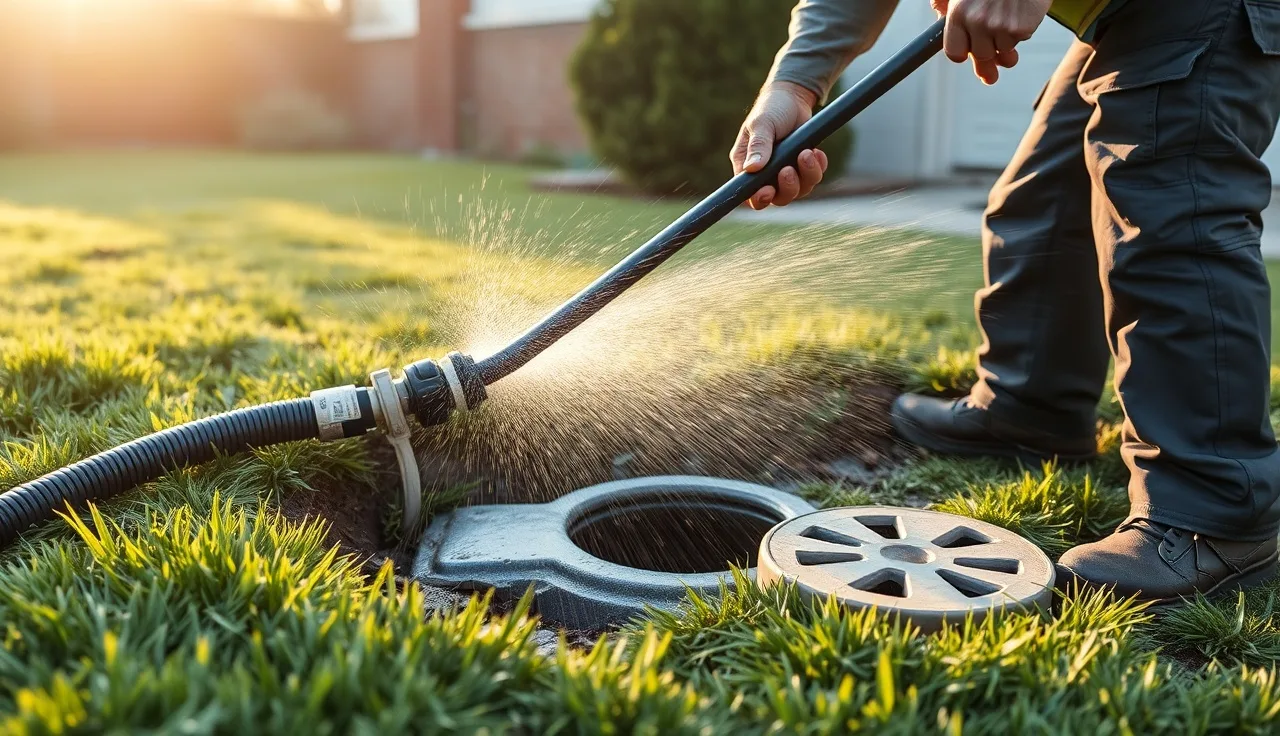
Hydro jetting a drain field means feeding a flexible hose with a rotating or forward-facing nozzle into the perforated distribution pipes that run through your leach field, then pumping water at pressures usually between 1,500 and 4,000 PSI to break up and flush debris [1]. The hose gets pushed down each lateral from a cleanout or the distribution box, and the operator works it back and forth until the discharge runs clear.
That is exactly what the process is. What it is not is a way to clean the soil around those pipes. The gravel bed, the biomat layer clinging to the pipe perforations and gravel surface, and the soil below the gravel are all untouched by the water jet. If a contractor claims jetting "rejuvenates the soil," ask them to explain the mechanism, because high-pressure water forced through a pipe does not travel sideways through gravel and clay in any meaningful volume.
For context on how a drain field is supposed to work, read our overview of the leach field and its parts. The short version: wastewater exits the tank through an outlet pipe, flows to a distribution box or header, then fans out through lateral pipes. Those laterals have small holes every foot or so. Wastewater drips through the holes, passes through a gravel envelope, and soaks into the native soil below. When any part of that path clogs, jetting reaches only the pipe interior, not the gravel or native soil.
When does hydro jetting a drain field actually help?
Two situations. Jetting a drain field pipe legitimately helps with root intrusion and with inorganic scale, and almost nothing else.
First, root intrusion. Tree and shrub roots will work their way through pipe joints and perforations over time. A hydro jet nozzle with a root-cutting head can sever and flush those roots. The roots grow back, sometimes within a season, but jetting at least restores flow for a period and can confirm whether roots were the primary cause.
Second, pipe scale and mineral buildup. In areas with very hard water, mineral scale can partially block distribution pipes. Jetting cuts through that scale well.
What does not respond to jetting is biomat, the black, gel-like layer of anaerobic bacteria and their byproducts that forms on and just below the soil interface in every drain field, healthy or not [2]. Biomat is the normal product of wastewater treatment in soil, but it thickens over years, especially when the tank is not pumped on schedule or when the field takes on more flow than it can handle. Once biomat has clogged the pipe perforations or saturated the gravel bed, jetting the pipe interior does little. Water can exit the pipe, but it still has nowhere to go.
A straightforward test: after jetting, add a tracer dye to the tank and have your contractor run a camera through the laterals 24 to 48 hours later. If the dye is backing up to the pipe despite clear jetting, the problem is in the soil, not the pipe [3].
How much does hydro jetting a septic drain field cost?
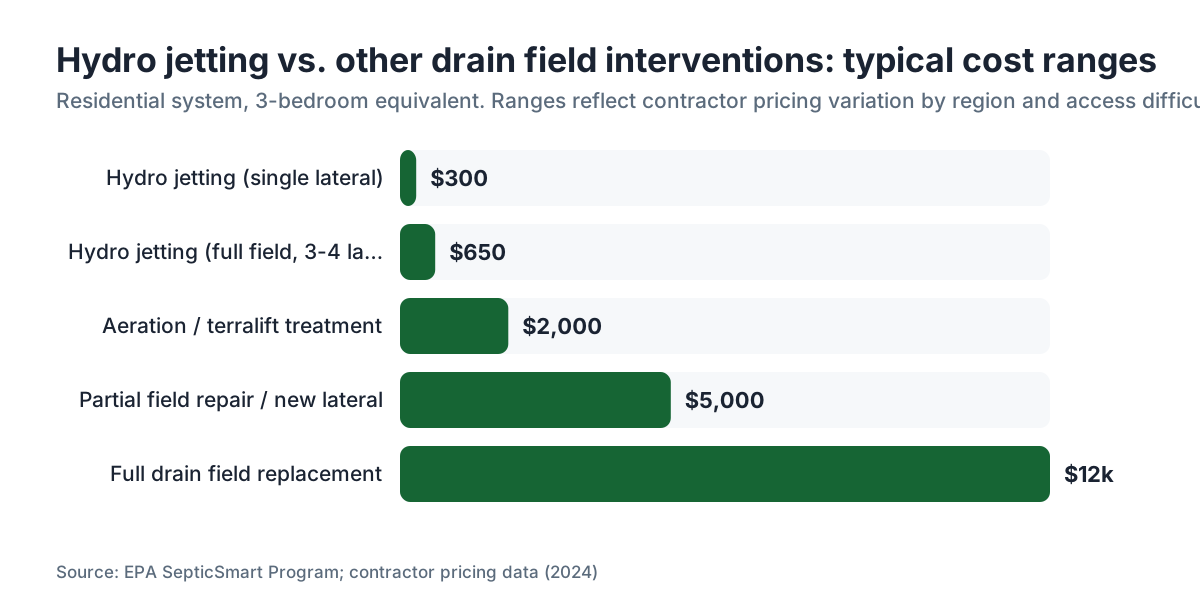
Cost varies a lot because field size, access, and local labor rates all matter. The numbers below reflect contractor quotes and industry pricing, not manufacturer list prices.
| System / Scope | Typical Cost Range |
|---|---|
| Single lateral, easy access | $200, $400 |
| Full 3-bedroom field (3-4 laterals) | $400, $900 |
| Large field or difficult access | $900, $1,500+ |
| Camera inspection added | +$150, $350 |
| Tank pump-out required first | +$300, $600 |
Most contractors will not jet a field that has not been pumped recently, and for good reason. A full tank sends raw solids into the distribution pipes during jetting and makes the clog worse. Budget for a septic tank pump out as part of the service if you have not pumped within the past year [4].
Compare that to field replacement, which runs $5,000 to $25,000 or more depending on your state and lot conditions [5]. Even a repair short of full replacement, like adding a new lateral or installing a replacement system in a reserve area, usually costs $3,000 to $10,000. Jetting looks cheap by comparison, and it is, but only if it solves the problem. A $700 jetting job that fails in three months and delays proper diagnosis is not cheap. It is expensive.
Operators running high-volume service schedules can track jetting outcomes against call-back rates in SepticMind to see which field types and soil conditions actually hold after service, which helps set honest customer expectations.
What is the actual process on the day of service?
A typical drain field jetting visit runs two to four hours for a standard residential system. Here is what happens.
The tech locates and exposes the distribution box (D-box) and any cleanouts. If none exist, access may require cutting into the header pipe, which adds cost and repair time. The tank has to be at a manageable level, so the truck either pumps first or verifies a recent pump-out on record.
The hose goes into the first lateral. Most field laterals are 4-inch perforated pipe, so the nozzle gets sized to match. At the far end of the lateral the tech works the hose back toward the D-box, letting the rear-facing jets push debris toward the access point, where it gets flushed into a vacuum or catch area. Each lateral gets the same treatment.
After jetting, a camera run through each lateral is the only objective way to confirm the pipe interior is clear and to check for broken sections, offset joints, or confirmed root penetration. Without the camera, you are paying for a service with no way to verify the result. Insist on it, or at least ask for still photos from the nozzle-mounted camera if a full inspection camera is not available.
The debris flushed out has to go somewhere. Responsible contractors collect it and dispose of it properly instead of flushing it to the soil around the field.
After the service, you should see water drain faster from sinks and toilets, and any surfacing water above the field should recede within a few days if pipe-level clogging was the real problem.
Can hydro jetting fix a failing or saturated drain field?
No, not on its own, and a technician who tells you otherwise is selling you something. A truly failing drain field has soil that has lost its ability to accept and treat wastewater. The EPA's SepticSmart program describes a failing system as one where wastewater surfaces in the yard, backs up into the house, or discharges to surface water [6]. All three of those signs point to overloaded soil, not a dirty pipe.
The biomat layer is part of normal soil treatment, but when it grows thick enough to seal off percolation, the only real remedies are resting the field (routing wastewater elsewhere for 6 to 12 months while the biomat aerobically breaks down), oxidizing the biomat with aeration or chemical treatment, or replacing the field. Jetting the pipe does nothing to the biomat below the gravel or in the soil pores.
There is one scenario where jetting helps a stressed field. If the distribution is so uneven that most wastewater is going to one or two laterals while others run dry, clearing a clogged distribution pipe can re-balance the load and give the overworked laterals a rest. That is a real benefit. But if all laterals are flowing and the field still backs up, the soil is done.
For a broader look at repair options, see septic system repair and septic tank repair for the tank-side issues that often come with field problems.
Is hydro jetting safe for septic pipes and gravel beds?
At the pressures used for drain field work (1,500 to 4,000 PSI), standard 4-inch SDR-35 PVC perforated pipe handles jetting fine. The risk is with older systems: clay tile pipe, Orangeburg (bituminized fiber) pipe from mid-20th-century installations, or brittle corrugated ABS that has been in the ground for 30-plus years [7]. A jetting nozzle in crumbling Orangeburg pipe can collapse it, turning a clogged pipe into a broken one.
Before any jetting, a camera inspection of at least the first few feet of each lateral is worth the money specifically to check pipe condition. If the camera shows cracking, brittleness, or a significant joint offset, do not jet. Pull the permit and replace the pipe.
The gravel bed itself is not really at risk. The nozzle stays inside the pipe. Water does exit through the perforations during jetting, which is fine and actually helps dislodge soft debris sitting in the gravel right around the holes. What it cannot do, again, is reach far enough into the gravel and soil mass to do anything useful there.
One practical concern: jetting pushes a lot of water into the field in a short time. On a field that is already saturated, you are adding hydraulic load to soil that cannot take it. That is another reason to camera-inspect first and pump the tank before jetting.
How does hydro jetting compare to other drain field treatments?
There are several competing approaches to a struggling drain field. Here is an honest comparison.
Hydro jetting (pipe cleaning): Works on root intrusion, mineral scale, and soft debris inside distribution pipes. Does not touch soil biomat. Cost: $200 to $1,500. Best as a diagnostic and maintenance step, not a repair.
Aeration / terralift: Fracturing tools inject compressed air into the soil to break up biomat and open channels. Some studies from university extension programs suggest modest short-term improvement in hydraulic conductivity for mildly clogged fields, but the data on long-term effectiveness is mixed and largely unpublished [8]. Cost: $1,000 to $3,000 per treatment.
Septic field additives (enzymes, bacteria): The EPA has stated that "there is no scientific evidence that additives improve the performance of a properly functioning septic system" and that some additives may actually harm the system [6]. I would not spend money on these.
Resting the field: Divert wastewater to a holding tank or secondary field while the primary field rests, and aerobic bacteria consume the biomat. This genuinely works for fields that are clogged but not physically broken, but it needs a second disposal option, which many lots do not have.
Field replacement or expansion: The definitive fix for a failed field. Expensive but permanent. Review the full cost range in our cost to install septic system guide.
For most homeowners, the honest sequence is: pump the tank, camera-inspect the laterals, jet if pipe-level clogging is confirmed, then reassess after 30 days. If problems persist, move to field replacement discussions.
What do state regulations say about drain field jetting?
Rules vary by state, but a few patterns hold. Most states with active onsite wastewater programs (Texas, Florida, North Carolina, Oregon, and others) require that any alteration to a drain field, including a camera inspection with a cut-in access point, be done by a licensed installer or service provider [9]. Jetting itself is usually treated as a maintenance service rather than a repair, which often means it does not need a separate permit, but the contractor must still hold the appropriate wastewater contractor license.
If jetting reveals a broken pipe and the tech makes any physical repair to the lateral (cutting in a repair coupler, replacing a section), that repair typically needs a permit and inspection in most states. Skipping the permit exposes the homeowner to fines and can complicate a home sale later, since unpermitted septic work shows up on inspection reports.
The EPA's SepticSmart guidelines recommend contacting your local health department before doing any drain field work beyond routine pumping [6]. That is genuinely good advice. Your county health department or environmental health office can tell you which licenses to verify, whether a permit is needed, and what the rules are for waste disposal from the jetting process itself. The debris flushed out is septage, which must go to an approved facility [11].
For a full picture of what inspections cover, including what an inspector will flag when reviewing a recently jetted field, see septic tank inspection.
How often should drain field pipes be hydro jetted as maintenance?
Nobody has great data on the ideal jetting interval for residential drain fields. The closest thing to a data-informed number comes from commercial facility maintenance literature, which typically suggests jetting sewer laterals every 18 to 24 months for high-use buildings. Residential systems run much lower volume.
For a well-functioning residential system, routine jetting is probably not necessary at all. The standard maintenance framework from the EPA's SepticSmart program focuses on pumping every 3 to 5 years (or as indicated by inspection), water conservation, and keeping harmful chemicals out of the system [4]. There is no federal recommendation for routine drain field jetting, because in a healthy system there is nothing meaningful to jet.
Where periodic jetting makes sense: systems with mature trees nearby that have a documented history of root intrusion, systems over 20 years old where a camera has shown gradual buildup, or commercial properties where grease and solids loads run higher than residential normal.
For the tank maintenance schedule that keeps the field from being overloaded in the first place, see how often to pump septic tank. Keeping the tank pumped on schedule is the best drain field maintenance you can do.
What should I ask a contractor before hiring them to jet my drain field?
The gap between a good hydro jetting job and a waste of money comes down to the contractor. These are the questions worth asking before you hand over a check.
Are you licensed for septic work in this state? Ask for the license number and verify it with your state environmental health agency. Most states have online lookup tools.
Will you camera-inspect before and after? Pre-inspection confirms pipe condition and the type of clog. Post-inspection confirms the pipe is actually clear. A contractor who skips both is working blind.
What pressure and flow rate do you use, and what nozzle? This question alone tells you whether the tech knows their equipment. Field laterals usually do best with a nozzle that has both forward-cutting jets and rear-facing propulsion jets. Pressure should match the pipe condition seen on camera.
How will you handle the flushed debris? It is septage. Dumping it on the ground or into a storm drain is illegal and a health hazard. It goes in the truck's waste tank and to an approved disposal facility.
What do you do if the camera shows broken pipe? A good contractor has a clear answer and a fair change-order policy. A bad one jets the broken pipe anyway and tells you it is fine.
What does success look like, and what is not covered by this service? An honest contractor tells you upfront that jetting does not fix failed soil and will not guarantee outcomes if the soil is the problem.
Operators running multiple crews can use SepticMind to track pre-job and post-job camera notes against service outcomes, which makes training new techs on these standards much faster.
What are the signs that jetting did not work and you need a new drain field?
Give it 30 days after a jetting service before drawing conclusions, assuming normal household water use during that time. If these signs persist or return within a month, jetting was not the answer.
Wastewater surfacing over the drain field. This is the clearest sign of hydraulic failure. No amount of pipe cleaning fixes soil that cannot accept effluent.
Slow drains or sewage odors inside the house that do not improve. If the tank is pumped and the pipes are clear but the house still drains slowly, the field is not accepting flow.
Lush green grass over the field with persistent wet spots. A little extra grass growth is normal, but standing water that does not drain within a day or two after rain means saturation.
High water levels in the tank between pumpings. If your pumper finds the tank full at an odd interval, more wastewater is coming back from the field than going out.
At this point, you need a licensed site evaluator to assess whether the field can be rested, repaired, or must be replaced. Some states allow repairs short of full replacement, like adding a pressure-dosed system to redistribute load or installing a low-pressure pipe system in a reserve area. Review options in septic system repair and get cost context from cost to put in a septic tank.
The honest truth: most drain fields that have reached the point of surfacing sewage are not saved by jetting. The median age of a drain field at failure is roughly 20 to 30 years [10]. If yours is in that range and has been showing signs for more than one season, replacement planning is more productive than repeated service calls.
Frequently asked questions
Can hydro jetting really save a failing septic drain field?
It depends on why the field is failing. If distribution pipes are clogged with roots or debris, jetting can restore flow and extend the field's life. If the surrounding soil has lost its ability to percolate, jetting does nothing for the soil. A camera inspection before and after jetting is the only reliable way to tell a pipe-level problem from a soil-level failure.
How long does hydro jetting a drain field last?
There is no published data on average service life after jetting, and any contractor who gives you a specific guarantee should explain their basis. Anecdotally, root-caused clogs often recur within one to three years because roots regrow. Mineral scale can take longer to return. If jetting fails within weeks, the problem is in the soil, not the pipes.
Does jetting the drain field require a permit?
Usually not for the jetting itself, since most states classify it as maintenance rather than repair. But if the tech discovers broken pipe and makes any physical repair, a permit is typically required. Rules vary by state and county. Check with your local environmental health office before any drain field work, and verify your contractor holds the appropriate state septic license.
Should the septic tank be pumped before hydro jetting the drain field?
Yes. Jetting with a full or nearly full tank pushes solids from the tank into the distribution pipes and makes clogs worse. Most reputable contractors require confirmation of a recent pump-out or pump the tank as the first step. Budget for that service if you have not pumped in the past year. See our guide on septic tank pumping for typical costs and intervals.
What pressure is used to hydro jet septic field lines?
Most contractors use 1,500 to 4,000 PSI for residential drain field laterals. The right pressure depends on pipe material and condition. Older clay tile or Orangeburg pipe cannot handle the higher end of that range. A camera inspection before jetting should confirm pipe material and condition so the tech can set pressure correctly.
Can hydro jetting damage my septic system pipes?
At appropriate pressure, standard PVC SDR-35 perforated pipe is not at risk. The danger is with older, brittle materials: Orangeburg pipe, clay tile with loose joints, or heavily corroded cast iron. A pre-jetting camera inspection catches these situations. If the camera shows brittle or cracked pipe, the pipe should be replaced, not jetted.
What is the difference between hydro jetting and snaking a drain field?
A drain snake (auger) mechanically cuts or breaks through blockages by rotating a cable. Hydro jetting uses high-pressure water to break up debris and flush it out of the pipe. Jetting is more thorough at removing soft buildup and root fragments, costs more, and needs more equipment. Snaking is a first step for simple blockages. Jetting is appropriate when snaking has not cleared the pipe or when buildup is confirmed by camera.
Are there drain field additives that work better than jetting?
The EPA states there is no scientific evidence that septic additives, including enzymes and bacteria products, improve system performance. Jetting at least has a clear mechanical mechanism: it physically removes pipe debris. Additives do not. I would skip additives entirely and put the money toward a proper camera inspection and pump-out, which give you actual diagnostic information.
How do I find a reputable contractor to jet my drain field?
Start with your state's environmental health agency, which maintains a list of licensed septic contractors. The National Association of Wastewater Technicians (NAWT) and the National Onsite Wastewater Recycling Association (NOWRA) also keep member directories. Ask specifically for contractors who offer camera inspection as part of their drain field jetting service, and verify the license number before signing anything.
What happens to the debris flushed out during drain field jetting?
The debris is septage, a regulated waste in all states. The contractor's vacuum truck collects it and must haul it to an approved septage disposal facility, typically a municipal wastewater treatment plant or a permitted land application site. Ask your contractor how they dispose of septage and whether they are licensed to haul it. Dumping it on-site or into a ditch is illegal.
How much does it cost to jet a septic drain field versus replacing it?
Jetting a residential drain field usually runs $200 to $1,500, depending on field size and access. A full drain field replacement costs $5,000 to $25,000 or more depending on state, soil conditions, and system type. Jetting is worth attempting when a camera confirms pipe-level clogging, but it is not a substitute for replacement when the soil itself has failed.
Can I hydro jet my own septic drain field as a DIY project?
Technically, consumer-grade hydro jetting equipment is available for rent. Practically, this is a bad idea. Without a camera, you cannot confirm pipe condition before applying pressure, and you risk collapsing brittle pipe. You also have no legal way to dispose of the septage you flush out. In most states, doing septic work without a license is a violation. Leave this one to licensed professionals.
How long does it take to hydro jet a drain field?
A standard three-bedroom residential system, three to four laterals with good access, takes two to four hours. Add time for a camera inspection before and after (recommended), a pump-out if needed, and any cleanout installation if the laterals lack existing access points. Schedule a half-day and do not let the tech rush the camera portion.
Sources
- National Association of Wastewater Technicians (NAWT) - Hydrojetting Overview: Hydro jetting uses pressurized water at 1,500 to 4,000 PSI through rotating or forward-facing nozzles to clear pipe obstructions in septic lateral lines.
- University of Minnesota Extension - Septic System Owner's Guide: Biomat is a layer of anaerobic bacteria and their byproducts that forms on and just below the soil interface in septic drain fields and thickens over time, especially when hydraulically overloaded.
- Oregon Department of Environmental Quality - Onsite Septic Systems: Dye testing combined with camera inspection is used to determine whether drain field laterals are accepting effluent after a cleaning service.
- EPA SepticSmart Program - Maintain Your Septic System: The EPA SepticSmart program recommends inspecting and pumping septic tanks on a regular schedule and contacting a local health department before undertaking drain field work.
- EPA SepticSmart - Septic System Costs: Septic system replacement costs vary widely by location and system type; the EPA notes repair or replacement can range from a few thousand to tens of thousands of dollars.
- EPA SepticSmart - Additives and System Performance: The EPA states: 'There is no scientific evidence that additives improve the performance of a properly functioning septic system' and some may harm the system.
- North Carolina State Extension - Septic System Care and Maintenance: Older drain field pipe materials including Orangeburg and clay tile can be damaged by high-pressure jetting and should be camera-inspected for condition before any jetting service.
- University of Wisconsin-Madison Extension - Restoring Clogged Soil Treatment Areas: Studies on aeration and fracturing treatments for clogged drain fields show mixed and largely short-term improvements in hydraulic conductivity; long-term effectiveness data is limited.
- Texas Commission on Environmental Quality - On-Site Sewage Facilities Rules (Title 30, TAC Chapter 285): Texas requires that alterations or maintenance work on on-site sewage facilities, including access to lateral pipes, be performed by licensed installers or maintenance providers.
- University of Minnesota Extension - Septic System Lifespan and Failure Rates: The median service life of a residential drain field before failure is generally cited in the range of 20 to 30 years, depending on soil conditions, loading rates, and maintenance history.
- Florida Department of Health - Onsite Sewage Treatment and Disposal Systems: Florida requires licensed septic contractors for any drain field service work and mandates proper septage disposal at approved treatment facilities.
- National Onsite Wastewater Recycling Association (NOWRA) - Member Resources: NOWRA maintains a directory of licensed onsite wastewater professionals and publishes guidance on drain field maintenance practices including jetting.
Last updated 2026-07-09