Replacing a leach field: costs, signs, and what to expect
By the SepticMind Editorial Team
TL;DR
- Replacing a leach field costs $5,000 to $20,000 for most homes, driven by system type, soil, and local permit rules.
- Most failures come from biomat buildup or too much water.
- A new field lasts 25 to 30 years with good maintenance.
- You need a soil test, a licensed contractor, and a county permit before anyone digs.
What is a leach field and why does it fail?
A leach field is the network of perforated pipes buried in gravel trenches that takes clarified wastewater from your septic tank and spreads it into the ground. Some people call it a drain field or a soil absorption system. Same thing. The soil beneath those pipes does the real treatment: bacteria and physical filtration clean the effluent before it reaches groundwater.
Failure almost always traces to one of four causes. Biomat is the most common. It's a dark, slimy layer of anaerobic bacteria and grease that builds up at the soil interface and seals the pores until water can't drain fast enough [1]. Hydraulic overload happens when a household pushes more water through the system than the soil can absorb, which is common after adding a bathroom or when a few extra people move into the house. Root intrusion from trees and shrubs cracks or blocks pipes. Compaction from vehicles, heavy equipment, or years of foot traffic crushes the gravel bed and collapses the distribution.
Some failures creep up slowly. You notice wet spots in the yard during dry weather, or the grass over the field turns suspiciously green in July. Others hit fast and ugly: sewage backs up into the lowest drain in the house, or you smell sulfur out by the trenches. The diagnosis path is the same either way.
See our full breakdown on what a leach field is if you want the complete picture on how these systems work before you start planning a replacement.
How do you know a leach field actually needs replacement?
Pump the tank first. Most homeowners get this wrong. They see a wet yard and assume the field is dead, when the real culprit is a clogged distribution box, a broken pipe, or a tank nobody has pumped in a decade [2].
After pumping, give the system 48 to 72 hours and watch. If the wet spots dry up and the drains clear, you may have bought years of extra life for a few hundred dollars. If nothing changes, a licensed inspector should run a dye test and, ideally, a camera inspection of the lateral lines to find where the blockage or saturation is worst.
A septic tank inspection is the logical first move before anyone quotes you a replacement. The inspector checks effluent levels in the tank, tests the outlet baffles, and probes the soil in the field for saturation. Some inspectors run a percolation test on the existing trench to gauge how much absorption is left.
Warning signs that point to replacement, not repair:
- Sewage odors outdoors near the field for more than a few weeks
- Standing water or spongy soil directly over the trenches
- Multiple drains backing up at the same time
- A perc test showing near-zero absorption
- A system older than 25 to 30 years that's never been serviced
Signs that point to a repair instead of a full replacement:
- A single broken or offset pipe found on camera
- A collapsed distribution box
- Root intrusion in just one lateral
- A failed pump in a pressure-dosed system
The line between repair and replacement isn't always clean. A contractor makes more on a full replacement, so the incentive is obvious. Get two quotes and make each one explain exactly what they found on camera or probe.
What does leach field replacement actually cost?
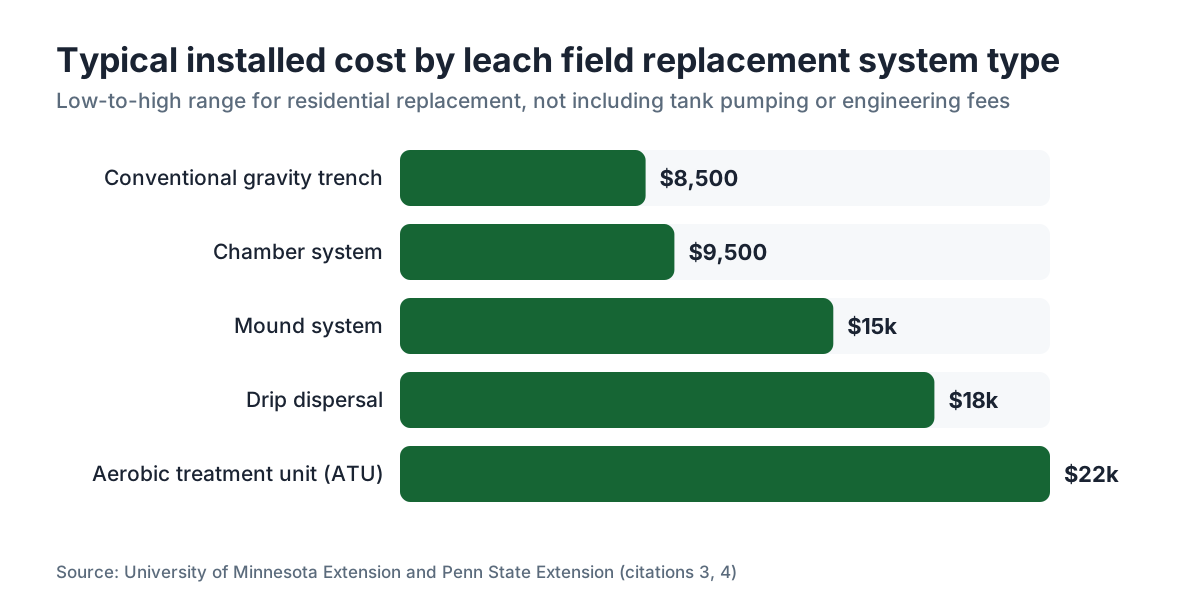
Leach field replacement runs $5,000 to $20,000 for most homes, but any single number you see online is a starting point, not a quote. Cost swings hard on soil, lot size, and local permit fees. The ranges below come from real contractor pricing and published state extension estimates [3][4].
| System type | Typical installed cost | Notes |
|---|---|---|
| Conventional gravity trench | $5,000, $12,000 | Works on sites with good perc and adequate setbacks |
| Chamber (Infiltrator-style) | $6,000, $13,000 | Faster install, often better in tighter soils |
| Mound system | $10,000, $20,000 | Required when the seasonal water table is high |
| Drip irrigation / drip dispersal | $12,000, $25,000 | Used on tough lots; needs a pump and timer |
| Aerobic treatment unit (ATU) | $15,000, $30,000+ | Full system replacement including treatment tank |
What drives the high end: rocky or clay soil means more excavation, small lots may force an engineered alternative system, steep slopes add labor, permit and engineering fees run $1,500 to $3,000 in some counties, and hauling off old gravel and pipe adds to the bill.
What drives the low end: sandy loam soil, a flat lot with room to spare from wells and property lines, a plain gravity system, and a competitive local market.
Pumping the tank before replacement is almost always required by the contractor and sometimes by the permit. Budget $300 to $600 for that separately. See current pricing in our cost to install septic system guide.
Nobody has clean national average data that accounts for soil type and system complexity together. The closest published figure comes from University of Minnesota Extension, which put conventional system replacement in that state at $5,000 to $10,000 as of its last update, with alternative systems running two to three times that [3]. Adjust for your region's labor and permit costs.
What permits and approvals do you need before work starts?
You need a permit in every state, and most route it through the county health department or a state environmental agency [5]. You cannot legally dig up an old field and install a new one without going through this process. Skip it and you risk fines, a forced removal order, and a house you can't sell later.
The EPA's SepticSmart program warns that "improper installation or maintenance of a septic system can contaminate groundwater, harm public health, and damage the environment," which is why regulators take permits seriously [1].
The process generally runs like this:
- Hire a licensed site evaluator or engineer to run a soil evaluation and perc test on the proposed replacement area. Some counties require a licensed soil scientist.
- Submit a site plan showing setbacks from wells, property lines, buildings, and water bodies. Minimums vary by state: commonly 50 to 100 feet from a well, 10 feet from a structure, 5 to 10 feet from a property line.
- The county issues a permit, sometimes with conditions attached.
- A licensed septic contractor installs the system under that permit.
- A county inspector signs off before anyone backfills. Homeowners skip this step most often by pressuring contractors to bury the work fast. Don't.
Lead time ranges from a few days in rural counties to six to eight weeks in busy suburban jurisdictions. Plan for it. If your system is actively failing and backing up into the house, most counties have an emergency permit path, but you still can't skip the soil evaluation.
For state-specific codes, look up your state's onsite wastewater regulations through your state environmental or health agency. The National Environmental Services Center at West Virginia University keeps a database of state contacts [6].
What types of leach field systems can replace an old one?
Your soil evaluation, lot size, and local code decide the system type, not your preference. Understanding the options still helps, because it lets you talk straight with the contractor and the permit office instead of nodding along.
Conventional gravity trench. Perforated pipe in a gravel-filled trench, sized to daily flow. Needs a percolation rate between roughly 1 and 60 minutes per inch in most states. Cheapest and simplest when the site qualifies.
Chamber systems (Infiltrator or Cultec brands, for example). Plastic arch-shaped chambers take the place of gravel and pipe. They ship and install easier, and they give more infiltrative surface area per foot of trench. Plenty of engineers now spec these over gravel by default.
Mound systems. When the seasonal high water table sits less than 24 inches from the surface, or perc rates are too slow, a mound lifts the treatment zone above grade using imported sand fill. Mounds eat more land, more material, and a pump in most designs.
Drip dispersal. Effluent from a treatment tank drips through small tubing just below the surface on a timed schedule. Works on lots that can't fit a conventional field. Needs reliable power and a maintenance contract in most states.
Aerobic treatment units (ATUs). These add an aeration chamber to the treatment process, producing cleaner effluent that can sometimes go into smaller or more sensitive sites. Operating cost is higher because the aerator runs around the clock and the system needs quarterly inspections in most states.
If your lot is tiny or your soil is genuinely hopeless, a holding tank (a sealed vault pumped on a schedule) is technically an option. But at $300 to $600 every few weeks, it's a last resort, not a fix.
For more on full system costs when the tank needs replacing too, see our septic tank installation guide.
Can you repair a leach field instead of replacing the whole thing?
Sometimes. Repair is worth chasing when the problem is localized and the rest of the field still absorbs water.
Hydro-jetting a clogged lateral can clear a pipe blocked by roots or grease without digging anything up. Cost: $200 to $600 per lateral.
Biomat treatment products (enzymes, forced aeration through rest cycles, bacterial additives) have mixed evidence behind them. A few small studies show short-term gains in absorption, but no large controlled trial has shown lasting recovery from advanced biomat. If a contractor guarantees full recovery from a bottle of additive, be skeptical.
Resting a failed field means diverting flow to another area while the original dries out. Some biomat degrades over six to twelve months of rest. This only works if you have space for a temporary or alternate field and your code allows it.
Partial replacement, meaning excavating and replacing just the failed laterals, makes sense when a camera confirms only one or two of four laterals have died. Cost lands around half of full replacement, but it assumes the distribution box and the surviving laterals still work.
Full replacement is unavoidable when the whole field is saturated, the soil is physically compacted, the site has no clean replacement area, or the system is past its design life with several components failing at once.
Our septic system repair guide walks through the repair-versus-replace call in more detail, including distribution box issues and pipe repairs.
How long does leach field replacement take?
The digging itself takes one to three days for a standard residential system with a good crew. That covers excavation, laying pipe or chambers, placing gravel or fill, and rough grading. Mound systems run two to four days because of the sand volume and the careful grading they need.
Everything around the install takes longer. Soil evaluation and permit application: one to eight weeks depending on your county's workload. Permit review and approval: one to six weeks. Booking a contractor in busy season: two to six weeks. Final inspection: usually same day or next day if the county inspector is local.
From the day you call a contractor to the day the new system runs, budget two to four months if you're not in a crisis. In an emergency with an active sewage backup, the permit process can compress to one to two weeks and contractors can often bump you up the schedule.
After installation, the system usually works right away, but the soil above the new field needs time to settle. Most contractors ask you to keep vehicles and heavy equipment off the field for at least six months, and to never plant anything deep-rooted near the trenches.
What happens to the old leach field when you replace it?
The old field usually gets abandoned in place instead of dug out. Full excavation of old gravel and pipe adds $2,000 to $5,000 to the job and is only worth it if the contaminated soil poses a specific groundwater risk or you need the ground for another structure.
Here's the standard process. The contractor locates and crushes or caps the distribution box, disconnects the old laterals from the tank outlet, and installs a new outlet baffle or distribution device that routes flow to the new field. The old trenches drain and dry out on their own over the following years.
If your replacement area sits next to or overlaps the old field, the engineer may require the old ground to rest for a set period (six months to a year is common) before it counts toward the new system's absorption area.
Some states have specific decommissioning rules for old distribution boxes, especially large concrete ones. Check your permit conditions.
One thing worth knowing. If you're selling the house within a few years of the replacement, keep every permit record, inspection sign-off, and the as-built drawing. A buyer's inspector will ask for these, and missing paperwork can stall or kill a sale.
How do you choose a contractor for leach field replacement?
State licensing is your first filter. Most states require a specific onsite wastewater installer license, separate from a general contractor license. Verify it's current through your state health or environmental agency's online lookup before you ask for a quote.
Get three quotes. The spread on identical work is often $3,000 to $5,000, which is real money. Make each contractor spell out: what system type they propose and why, whether they pull the permit or you do, what the inspection process looks like, and what the warranty covers (most offer one year on workmanship, some offer three).
Ask for references from jobs in the last two years where they installed a similar system type. A contractor who does mostly mounds may be the wrong call for a drip dispersal job.
Septic service operators running multiple replacement projects across a service area can use platforms like SepticMind to track permit status, schedule inspections, and keep as-built documentation in one place. That cuts the paperwork drag that slows these jobs down.
Walk away from any contractor who offers to start without a permit, who guarantees a specific system type before seeing the soil evaluation, or who wants more than 30 to 40 percent upfront. Legitimate contractors pull permits and book inspections without being asked. Cutting those corners is a red flag that costs you far more later.
How long will a new leach field last, and what keeps it working?
A properly designed and installed leach field should last 25 to 30 years. Some go longer. Some die in 10. The difference is almost entirely maintenance behavior and how much water you run through it [7].
Pump the septic tank on schedule. That's the single best thing you can do. A tank that goes too long between pumps lets solids carry over into the field, which speeds up biomat formation and shortens field life fast. Most households need pumping every three to five years, heavy users more often [8]. Our how often to pump septic tank guide has a size-and-usage calculator that finds your right interval.
Other habits that stretch field life:
- Spread laundry loads across the week instead of running five loads on Saturday. Water spikes stress the field.
- Install water-efficient fixtures. A high-efficiency toilet uses 1.28 gallons per flush versus 3.5 for older models. Over a year in a family of four, that's a real load reduction.
- Keep vehicles, heavy equipment, and garden structures off the field. Even a riding mower run over the same line all season can compact the gravel bed enough to hurt performance.
- Route roof drains and sump pumps away from the field. Flooding the soil with clear water steals capacity you need for wastewater.
- Don't plant trees within 30 feet of the field. Willows, maples, and poplars are the worst for root intrusion.
The EPA's SepticSmart campaign tells homeowners to "have their system inspected every three years by a licensed professional" as a baseline [1]. That's a reasonable minimum. A quick annual look at the field surface costs nothing and catches problems early.
After your new field goes in, schedule your first septic tank pumping within two to three years, not five. Let the new system settle in without a solids overload in its early years.
Are there financial assistance programs to help pay for replacement?
Yes, and they're underused. The most reachable programs sit at the state and county level, funded through state environmental agency budgets and federal EPA Clean Water State Revolving Fund money [9].
The USDA Rural Development program (Section 504 grants and loans) helps very low-income rural homeowners repair or replace failing systems. Grants go to homeowners 62 or older who meet income limits [10]. As of 2024, grants ran up to $10,000 per household and loans up to $40,000.
Many states run their own programs too. Virginia offers low-interest loans for failing systems in the Chesapeake Bay watershed. North Carolina's Clean Water State Revolving Fund has a direct grant component for qualifying low-income households.
To find what's in your county, call your county health department and ask specifically about "onsite wastewater financial assistance." You can also search your state's environmental or rural development office. The EPA's Environmental Finance Center network helps states connect residents with funding [9].
Homeowners insurance occasionally covers leach field damage from sudden, accidental causes (a vehicle crushing the pipes, say), but almost never covers gradual failure from age or misuse. Read your policy carefully and call your agent before you assume anything is covered.
For the full picture when the tank also needs work, our cost to put in a septic tank article runs the combined numbers.
What should you do right now if you think your leach field is failing?
Don't panic, and don't sign a contract with the first contractor who knocks on your door.
Step one: pump the tank. It costs $300 to $600 and knocks out one big variable. A pumped tank gives the field a chance to recover if it was just overloaded. Schedule a septic tank pump out and note whether the drains clear within 48 to 72 hours afterward.
Step two: stop adding water. Run only what you have to. Fix any leaking toilet immediately, because a running flapper can dump 100 to 200 gallons a day into the system. Hold off on laundry until you understand the field's condition.
Step three: get an inspection with camera footage of the laterals. An inspector who shows you video of what's actually inside the pipes is worth far more than one who walks the yard and pronounces it dead.
Step four: if replacement is confirmed, call your county health department and learn the permit process and timeline before you sign anything. The permit requirements decide which system types are even on the table.
Step five: get three quotes once you have the soil evaluation and permit conditions in hand. Now you know what system is required, so the quotes actually compare.
SepticMind publishes maintenance trackers and inspection checklists in its homeowner resource section if you want a structured way to log what you're seeing and what each contractor tells you. A written record of every conversation about a failing system protects you if a dispute comes up later.
If sewage is backing up into the house right now: stop all water use, call a contractor and your county health department at the same time, and ask about emergency permit procedures. Don't let sewage back up for more than a day before you act.
Frequently asked questions
How much does it cost to replace a leach field?
Replacement costs $5,000 to $20,000 for most homes. A standard gravity trench on a cooperative site runs $5,000 to $12,000 installed. A mound or drip-dispersal system forced by tough soil or a high water table can hit $20,000 to $25,000 or more. Permit and engineering fees add $500 to $3,000 on top of the contractor price, depending on your county.
Can a leach field be restored without replacement?
Sometimes. Hydro-jetting blocked laterals, resting the field for six to twelve months, or replacing only the failed portions can work when the trouble is localized. Biomat treatment products show modest short-term results but no strong long-term evidence. Full replacement is unavoidable when the whole field is saturated, the soil is compacted, or the system has passed its design life.
How long does a leach field last?
A properly installed field lasts 25 to 30 years under normal use. Pumping the septic tank every three to five years is the biggest factor in hitting that lifespan. Fields that take solids carryover from an overfull tank, or that handle more daily flow than they were designed for, commonly fail in 10 to 15 years.
Do you need a permit to replace a leach field?
Yes, in every state. Permits run through the county health department or state environmental agency and require a soil evaluation before approval. Starting work without one risks fines, a forced removal order, and headaches when you try to sell. Most counties have emergency permit paths when there's an active sewage backup.
How long does it take to replace a leach field?
The physical install takes one to three days for a conventional system, two to four days for a mound. The surrounding process, soil evaluation, permit approval, contractor scheduling, and final inspection, adds two to four months in most cases. Emergencies can compress the permitting timeline to one to two weeks in many counties.
What are the signs a leach field is failing?
Wet, spongy soil over the field during dry weather; sewage odors outdoors; unusually green grass directly over the trenches; multiple indoor drains backing up at once; and slow drains that won't clear after the tank is pumped. Any of these lasting more than a few days after a pump-out warrants a full inspection with camera footage of the laterals.
What is the difference between a leach field and a drain field?
They're the same thing. Leach field, drain field, and soil absorption system all describe the network of perforated pipes buried in gravel that spreads clarified wastewater from the septic tank into the soil. Regional usage varies: drain field is more common in the South and West, leach field in the Northeast and Midwest.
Can you build or park on a leach field after replacement?
No. Parking vehicles, building structures, or paving over a leach field compacts the gravel bed and crushes the pipes, cutting absorption and eventually causing failure. Keep foot traffic light, plant only shallow-rooted grass over the field, and mark the boundaries clearly so contractors and delivery drivers know to stay off.
Does homeowners insurance cover leach field replacement?
Rarely. Most policies exclude gradual system failure from age or misuse. Some cover sudden, accidental physical damage, like a vehicle crushing a pipe, but 'sudden' gets read narrowly. Check your policy's sewer and drain language specifically, and call your agent before assuming anything is covered. Supplemental septic riders are available from some insurers.
Are there grants or loans available for leach field replacement?
Yes. The USDA Rural Development Section 504 program offers grants up to $10,000 for very low-income rural homeowners aged 62 or older, and loans up to $40,000 for others. Many states have added programs funded through the EPA's Clean Water State Revolving Fund. Contact your county health department and ask specifically about onsite wastewater financial assistance.
What type of replacement leach field is best?
Your soil evaluation and local code decide it, not preference. Conventional gravity trench works on sites with adequate percolation. Chamber systems work similarly with less gravel. Mound systems are required when the seasonal water table is high. Drip dispersal handles tight lots. An aerobic treatment unit may be needed for the toughest sites.
How do I find a licensed septic contractor for leach field replacement?
Verify the contractor's onsite wastewater installer license through your state health or environmental agency's online lookup. Get three quotes only after you have the soil evaluation and permit conditions in hand, so the quotes compare the same system type. Ask for references from recent jobs and confirm they pull permits and book county inspections as standard practice.
What happens to the old leach field when a new one is installed?
It usually gets abandoned in place. The contractor disconnects the old laterals from the tank and caps or crushes the old distribution box. Full excavation of old gravel and pipe is rarely required unless the site poses a specific groundwater risk. The old trenches dry out over months to years, and the land can eventually take light landscaping, though not structures.
How do I prevent my new leach field from failing early?
Pump the septic tank every three to five years, spread laundry through the week instead of one big day, install water-efficient fixtures, keep vehicles and heavy equipment off the field for good, route stormwater and roof runoff away, and don't plant trees within 30 feet of the trenches. Annual visual checks of the field surface cost nothing and catch problems early.
Sources
- U.S. EPA SepticSmart Program: EPA SepticSmart recommends systems be inspected every three years and notes that improper installation or maintenance can contaminate groundwater and harm public health.
- U.S. EPA, How Your Septic System Works: Septic tank pumping is the foundational maintenance step before diagnosing drain field performance issues.
- University of Minnesota Extension, Septic System Costs: University of Minnesota Extension estimates conventional system replacement in Minnesota at $5,000 to $10,000, with alternative systems two to three times higher.
- Penn State Extension, Onsite Septic Systems: Installed costs for mound systems and alternative dispersal systems in the mid-Atlantic range from $10,000 to $25,000 or more depending on site conditions.
- U.S. EPA, Septic System Oversight and Permits: All states require permits for septic system installation and replacement, routed through county health departments or state environmental agencies.
- National Environmental Services Center (NESC), West Virginia University: NESC maintains a database of state onsite wastewater contacts and regulatory resources for homeowners and contractors.
- University of Minnesota Extension, Septic System Lifespan and Maintenance: A properly designed and maintained leach field lasts 25 to 30 years; maintenance behavior and loading rate are the primary variables.
- U.S. EPA, Septic System Maintenance: EPA recommends pumping household septic tanks every three to five years as the standard maintenance interval.
- U.S. EPA, Clean Water State Revolving Fund and Environmental Finance Centers: The EPA's Clean Water State Revolving Fund and Environmental Finance Center network help states connect residents with funding for septic repair and replacement.
- USDA Rural Development, Single Family Housing Repair Loans and Grants (Section 504): USDA Section 504 offers grants up to $10,000 for very low-income rural homeowners aged 62 or older and loans up to $40,000 for septic repair and replacement.
- North Carolina State Extension, Septic System Types and Selection: System type selection for replacement is determined by soil perc rate, seasonal high water table depth, lot size, and setback requirements under state code.
- Virginia Department of Health, Sewage Handling and Disposal Regulations: Virginia requires licensed installers, county health department permits, and final inspections before backfilling on all septic system installations and replacements.
Last updated 2026-07-09