Replacing a septic system: costs, signs, and what to expect
By the SepticMind Editorial Team
TL;DR
- Replacing a septic system typically costs $3,000 to $30,000, with most homeowners paying $10,000 to $20,000 for a conventional system on favorable soil.
- Costs spike when soil fails a perc test, the lot is small, or a mound or aerobic system is required.
- Permits, soil tests, and a licensed installer are non-negotiable in every state.
What does it cost to replace a septic system?
Replacing a full septic system, tank plus drain field, runs from about $3,000 on the low end (a small tank swap in an easy rural install) to $30,000 or more when the soil fails and a mound or drip-irrigation system is the only legal option. The EPA's SepticSmart program puts a typical new system at $3,000 to $10,000, but that figure is dated and reflects simpler installs [1]. Most licensed contractors in competitive markets quote $10,000 to $20,000 today for a standard 1,000-gallon concrete tank and a conventional gravity-fed drain field on a suburban lot.
A few things move that number hard. Soil type matters more than almost anything else. Sandy loam drains freely and keeps costs down. Clay or a high water table may force an engineered alternative that doubles or triples the price. Lot size and setback rules (distance from wells, property lines, and the house) can wipe out your cheapest options entirely. Permit fees range from under $200 in rural counties to over $1,000 in tightly regulated coastal zones. Inspection and soil-testing fees add $500 to $2,000 before a shovel touches the ground [2].
Labor is the biggest variable. Tank and field installation alone runs $1,500 to $5,000 in low-cost rural markets and $5,000 to $10,000 in high-labor metro areas. Excavation, haul-off of the old tank, gravel, and pipe add another $1,000 to $4,000 in most installs. A 1,000-gallon concrete tank costs $600 to $1,200 by itself. A 1,500-gallon precast tank runs $900 to $1,800 [3].
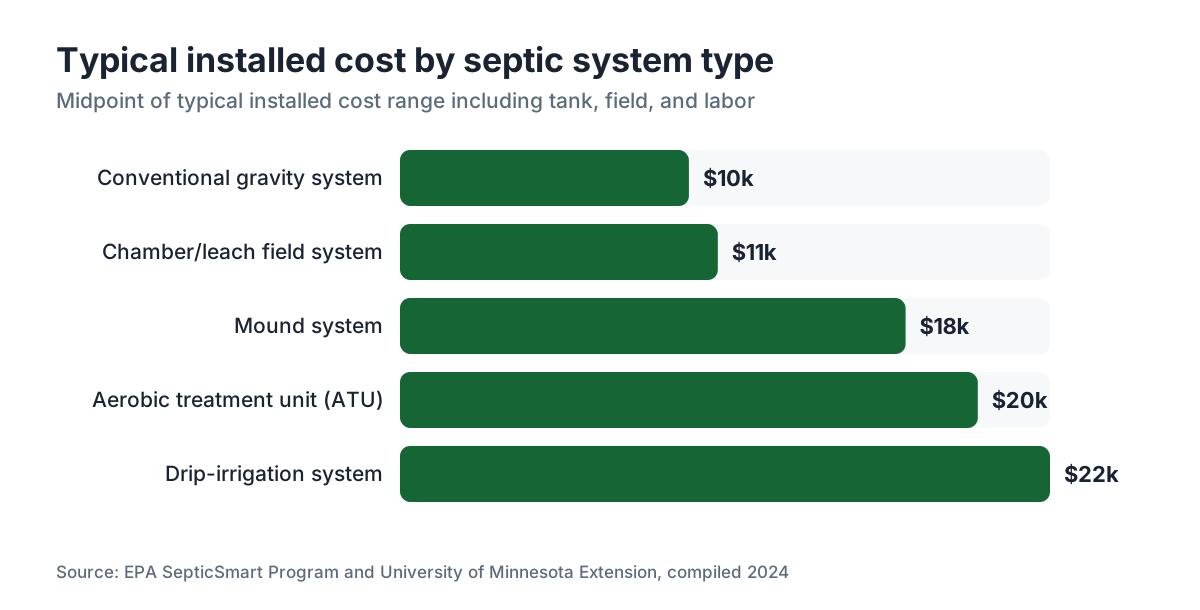
The table below breaks cost down by system type, which is where the widest gaps live.
How do septic replacement costs compare by system type?
The system type your site requires is the single biggest cost driver. A conventional gravity system is cheapest. An aerobic treatment unit (ATU), mound system, or drip-irrigation system can cost two to five times more.
| System type | Typical installed cost | When it's required |
|---|---|---|
| Conventional gravity (concrete tank + gravel trench) | $5,000, $15,000 | Good soil, adequate lot size |
| Chamber/leach field (no gravel) | $6,000, $16,000 | Sandy or variable soils |
| Mound system | $10,000, $25,000 | High water table, shallow bedrock |
| Aerobic treatment unit (ATU) | $10,000, $30,000 | Poor soil, small lots, near water |
| Drip-irrigation (pressure-dosed) | $15,000, $30,000+ | Very challenging soil or tight setbacks |
| Cesspool replacement (upgrade to septic) | $8,000, $20,000 | Older properties with no true septic |
Mound systems need imported clean fill, an elevated bed, and often a pump chamber, which adds $3,000 to $8,000 over a conventional install. ATUs carry ongoing electrical and service costs that a gravity system doesn't, usually $300 to $600 a year for a maintenance contract. If your county requires an ATU in a sensitive watershed, budget for that recurring bill on top of the install [4].
For a granular breakdown of pricing on a first-time install (versus replacement on an existing site), see our guide on cost to install septic system.
How do you know when repair isn't enough and replacement is the only option?
Most homeowners get this question wrong, because the person answering it (the contractor) makes money on replacement. So here's how to think about it on your own.
Repair is usually the right call when one component has failed: a cracked tank baffle, a broken distribution box, a single clogged pipe, or a dead pump in a pump chamber. Septic tank repair and septic system repair fix a discrete problem. Replacement is the answer when the problem is the drain field, because a failed field almost never recovers with simple fixes.
Biomat is the main killer. It's a black, slimy layer of anaerobic bacteria and organic solids that builds up at the soil-trench interface after years of use, or after a tank failure that pushed solids into the field. Once the biomat blocks water movement, the field backs up and sewage surfaces. Some operators sell field-restoration additives or resting periods. In rare cases, resting a saturated field for six to twelve months does allow partial recovery. But if fine particles from decades of skipped pumping have clogged the soil structure, resting does nothing. You replace it [5].
Get a second opinion from a licensed soil scientist or septic inspector before you commit. A proper septic tank inspection with a camera scope confirms whether the tank is intact and whether the field lines are getting flow. That $300 to $500 inspection can save you from a $15,000 replacement you didn't need. Or it confirms you do.
Clear signs the system is at end of life: sewage odors or wet spots over the drain field that don't clear after pumping, backups inside the home during normal water use, a system 25 to 40 years old that's never been pumped regularly, or a failed perc test on the existing field area.
What is the replacement process from start to finish?
Most homeowners have no idea how long this takes. The honest answer is four to twelve weeks from first call to a working system in most jurisdictions. Here's the order of events.
First, you hire a licensed installer or soil scientist to run a percolation test and soil evaluation on the proposed replacement area. This measures how fast water moves through the soil and determines which system types are even legal on your lot. The perc test alone takes one to three days including setup, and many counties require a health department official to witness it [2].
Next, the installer submits a system design and permit application to the local health department or environmental agency. Permit review takes two to eight weeks depending on the county. Some are fast. Some make you wait. You cannot legally start work without the permit, full stop.
With the permit in hand, excavation and installation take two to five days for a conventional system. Mound and ATU installs take longer, sometimes two to three weeks with inspections mid-process. The health department usually requires a final inspection before anyone covers the system with soil.
After cover and final approval, the site is backfilled and graded and you get a stamped completion certificate. Some states require that certificate to be recorded with the property deed, which matters at resale. Budget two weeks for that step if your state requires it [6].
Total elapsed time runs four weeks minimum in a permissive rural county and twelve weeks or more in a regulated coastal state. If your existing system has failed and you're living without working sewage, ask your health department about emergency permits. Most have them.
What permits and soil tests do you need before replacing a septic system?
Every state requires a permit for septic replacement, though the issuing authority varies. In most states it's the county health department. In some it's the state environmental agency or a delegated local authority. There is no federal permit for residential septic, but the EPA's SepticSmart resources point homeowners to state programs [1].
The soil evaluation is not optional, and it's not the same thing as a simple perc test, even though people use the terms interchangeably. Modern state codes generally require a full soil morphology evaluation by a licensed soil scientist or engineer. That assessment looks at soil texture, structure, depth to restrictive layers (bedrock, clay hardpan, seasonal high water table), and the land's ability to accept and treat wastewater. The percolation test only measures how fast water drains. System design needs both.
Setback requirements live in state code and vary by state and county. Common minimums: 50 to 100 feet from a drinking water well, 10 to 25 feet from a property line, 10 feet from a foundation or basement, and 50 to 100 feet from surface water. Massachusetts (Title 5) and North Carolina (15A NCAC 18A) have some of the most detailed codes in the country [6][7]. Your installer has to design around all of them, which is why some small lots have no legal space for a replacement field without a mound or ATU.
Permit fees run from roughly $150 in some rural southern counties to $1,200 or more in regulated coastal counties. Some states also require a registered engineer to stamp the design, which adds $500 to $2,000 upfront.
Can you replace just the drain field without replacing the tank?
Yes, and this is the more common scenario when a system fails. A concrete or fiberglass tank often survives 30 to 50 years if it's been pumped regularly, has no structural cracks, and still has intact baffles. The drain field, with its soil biology and gravel bed, is the part that wears out.
Before you keep the old tank, have it inspected and pumped. A licensed inspector checks the baffles (the inlet and outlet baffles keep solids out of the field), looks for cracks, and confirms the tank volume is adequate for your household size. Older homes often have 500- or 750-gallon tanks that are undersized for modern flow rates. If the tank is undersized or compromised, replace it while the yard is already open. Opening the yard twice costs far more [5].
Replacing just the field runs $3,000 to $10,000 for a conventional gravity field, depending on size and soil. That's meaningfully cheaper than a full system replacement. The catch: your health department may require the whole system to be brought up to current code when any portion is replaced, which can force a tank upgrade too. Ask before you assume you can keep the old tank.
For what a healthy leach field looks like and how long fields typically last, that article covers the biology in detail.
How long does a new septic system last?
A well-installed conventional system, pumped every three to five years and not abused with heavy chemicals or garbage-disposal overuse, routinely lasts 25 to 40 years. Some last longer. The EPA puts average lifespan at 20 to 30 years and notes that "a properly designed, installed, and maintained system" can last indefinitely [1]. That last part is technically true and practically optimistic. Most drain fields do eventually need replacement.
The tank outlasts the field in most cases. Concrete tanks in neutral soil can last 40 to 50 years. Steel tanks corrode faster and often fail in 15 to 25 years, so if you have a steel tank, plan for its replacement. Fiberglass and plastic tanks resist corrosion but can crack or float in high-water-table areas when they're installed badly.
Field lifespan hinges on two things: how often the tank gets pumped, and whether the household sends anything into the system that kills the beneficial bacteria or clogs the soil. Pumping every three to five years (see how often to pump septic tank) is the highest-return maintenance act there is for extending field life. Skip pumping for ten-plus years and solids reach the field. That damage is often permanent.
Water softener backwash, high-strength cleaners, and non-septic-safe wipes are quiet field-killers. They don't show up as a dramatic failure event. They just cut years off the field's life.
Does homeowner's insurance cover septic system replacement?
Almost never. Standard homeowner's policies exclude underground systems from coverage for wear, corrosion, and gradual deterioration, which is exactly how septic systems fail. Some policies cover sudden and accidental damage, like a tank crushed by a falling tree, but even that hangs on policy language and adjuster interpretation.
A handful of specialty riders cover septic. Home warranty plans sometimes include it as an optional add-on, typically covering $500 to $1,500 in repairs per year, which barely dents a replacement cost. Read the exclusions before paying for coverage that won't pay out.
The practical answer is to treat septic replacement as a capital expense you self-fund. Set aside $50 to $100 a month in a dedicated account starting the day you move into a home on septic. Over ten years that's $6,000 to $12,000, enough to cover a drain field replacement or make a real dent in a full system. Boring advice. It's also what you'd actually tell a friend.
Some states run low-interest loan programs for failing septic systems, particularly near sensitive water bodies. USDA Rural Development's Section 504 loan and grant program covers septic repairs and replacement for qualifying low-income rural homeowners [8]. Check with your county health department for state-specific assistance.
What are the signs your septic system is failing right now?
You want to catch failure before it becomes a sewage emergency or a public health violation. Here are the real indicators, roughly in order of how serious they are.
Sewage odors outside the home, especially over the drain field, mean the system isn't treating effluent before it reaches the surface. That's a health hazard. Green, lush grass in a rectangular patch over the field (especially during dry weather) means the field is getting more liquid than it should. Wet, spongy ground or standing water over the field is surfacing effluent. All three warrant an immediate call to a septic professional.
Inside the home: slow drains in multiple fixtures that don't respond to normal clearing, gurgling when you flush, sewage backing up into the lowest drains in the house. Those can also mean a simple clog in the main line. But if the house is on septic and the tank was last pumped five-plus years ago, a failing field is a real possibility.
A septic tank pump out is the first diagnostic step. If the drains clear right after pumping and the field dries out within a few days, the tank was overdue and the field may still have life. If the problems come back within weeks, the field is likely past repair.
Some signs are slow and invisible. A rising nitrate level in your well water, caught only by testing, can mean your system isn't treating wastewater before it reaches groundwater. The EPA recommends annual water testing for homes with both a private well and a septic system within 100 feet [1].
How do you find and hire a qualified septic installer for replacement?
Every state requires septic installers to hold some form of license or certification, though the specifics vary. Your state health department website lists licensed contractors in your area, and that list is the safest starting point because it's already filtered for licensure. The National Onsite Wastewater Recycling Association (NOWRA) also keeps a professional directory [9].
Get at least three written bids. Each bid should specify tank size and material, drain field square footage, pipe material, gravel spec (or chamber system specs), permit and inspection fees, warranty terms, and site restoration (what happens to your yard). A vague bid is a risk. If one bid comes in dramatically lower than the others, ask exactly what's different.
Check that the installer carries general liability insurance and, ideally, contractor's pollution liability insurance. A sewage spill during installation is a real possibility, and you don't want to be holding that liability.
Ask how many replacement systems they've installed in your county and with your soil type. A contractor who normally puts conventional systems on sandy lots may not have the experience to design a mound system correctly. The design matters as much as the dig.
Septic service operators who manage many installs and replacements often run software like SepticMind to track permits, inspections, and job timelines across projects, which usually signals a more organized operation.
Don't pay more than 30 to 40 percent upfront. A contractor confident in their work and materials won't demand full payment before breaking ground.
What maintenance should you do right after a new system is installed?
The first few years after installation set the trajectory for your new system's lifespan. Get them right.
First, document everything. Get a copy of the as-built drawing from your installer, which shows exactly where the tank and field lines sit on your lot. File it with your home records, and file a copy with your county health department if they don't already have one. Repair technicians, home inspectors, and buyers will all need it. Losing this document is expensive.
Don't drive or park over the new drain field. Ever. Compaction crushes the air pockets in the soil that the system depends on for treatment. Don't plant anything with aggressive roots over the field either. Grass is fine. Trees and shrubs are not.
Get the tank pumped for the first time at the three-year mark, even if you don't think you've used it hard. That first pump gives you a baseline. A technician can see whether solids are building at the expected rate or faster, and can catch early installation problems. After that, a septic tank cleaning every three to five years depending on household size is the standard schedule.
Keep a log of pump dates, repairs, and anything unusual. That log helps your own maintenance and adds real value at resale. Buyers, especially in states that require disclosure of septic condition, will ask for it.
For the full maintenance picture, see the guides on septic tank pumping and septic tank emptying.
Does replacing a septic system affect home value or resale?
Yes, and it cuts both ways depending on the situation. A documented failed or failing septic system is a major obstacle at resale in most markets. Buyers and their lenders (FHA and VA loans both require a passing septic inspection as a condition of financing) will either walk away or demand a price cut equal to or greater than the cost of replacement [10].
A newly replaced system, documented and permitted, is a selling point. In rural markets where buyers expect older systems, a new one can justify a premium of $5,000 to $15,000 over a comparable home with an old, unserviced system. In competitive suburban markets the value-add is fuzzier, but it removes a contingency that could kill the deal.
Many states require septic disclosure at sale. Massachusetts Title 5 requires a full septic inspection within two years of a property transfer, and a failed system must be repaired or replaced before or right after sale [6]. North Carolina requires disclosure of known defects. Even in states without mandatory inspection, a buyer's agent will almost always order one.
The safest posture is to treat the system as part of the home's mechanical infrastructure. Replace it when it's time, keep records, and price it into what you expect from the home over the years you own it.
Frequently asked questions
How much does it cost to replace a septic system on average?
Most homeowners pay $10,000 to $20,000 for a full conventional septic system replacement, including a new concrete tank and drain field on average soil. Costs range from $3,000 for a basic rural tank-only swap to $30,000 or more for a mound or aerobic system on challenging soil. Permit fees, soil testing, and excavation add $1,500 to $5,000 on top of equipment costs.
How long does septic system replacement take?
From first call to a working system, expect four to twelve weeks. Soil testing and permit review take two to eight weeks depending on your county's workload. Actual installation typically takes two to five days for a conventional system. Mound or aerobic systems with mid-process inspections can take two to three weeks of site work. Emergency permits can compress the timeline when the existing system has completely failed.
Can I replace just the drain field and keep the old septic tank?
Yes, if the tank passes inspection. Have the tank pumped and inspected for structural integrity, crack-free walls, and functioning baffles before deciding to keep it. Also confirm the tank volume meets current code for your household size. Older tanks may be undersized. Your health department may require the whole system to meet current code when any part is replaced, so verify that before assuming you can reuse the tank.
What are the signs I need a full septic replacement versus a repair?
Replacement is usually necessary when the drain field itself has failed: sewage surfacing over the field, persistent wet spots, backups that return weeks after pumping, or a field that's been receiving solids for years due to neglected pumping. Repair is viable for isolated problems like a cracked baffle, broken distribution box, or failed pump. A camera inspection and evaluation by a licensed professional can tell you which situation you're in.
How long does a new septic system last after replacement?
A well-installed conventional system pumped on schedule lasts 25 to 40 years. The tank typically outlasts the drain field. Field lifespan depends heavily on maintenance: regular pumping every three to five years dramatically extends it. Neglecting pumping for a decade or more can shorten a field's life to 10 to 15 years. Steel tanks corrode faster than concrete or fiberglass and may need replacement in 15 to 25 years.
Does homeowner's insurance pay for septic system replacement?
Rarely. Standard policies exclude gradual deterioration and wear, which covers most septic failures. Some policies cover sudden accidental damage, but septic failures are almost never sudden. Home warranty add-ons sometimes cover septic but limits are typically $500 to $1,500, far below replacement cost. USDA Section 504 loans and grants are available to qualifying low-income rural homeowners for septic repairs and replacement.
What permits do you need to replace a septic system?
A permit from the county health department or state environmental agency is required in every state. The permit process typically requires a soil evaluation and perc test, a system design by a licensed installer or engineer, and a review period of two to eight weeks. Permit fees range from $150 to $1,200 depending on jurisdiction. Work cannot legally begin without an approved permit, and the final installation requires a passing inspection before the system is covered.
Does replacing a septic system increase home value?
A new, permitted system removes a major contingency for buyers and lenders. FHA and VA loans require a passing septic inspection. In rural markets a new system can support a price premium of $5,000 to $15,000 over comparable homes with aging, unserviced systems. In suburban markets the value-add is less consistent but it eliminates a deal-killer. States like Massachusetts require a septic inspection as part of property transfer, making a passing system effectively mandatory.
Why is my septic replacement costing more than my neighbor's?
Soil conditions, system type, and local permit requirements drive most of the variation. If your soil failed the perc test or has a high water table, you need a mound or aerobic system that costs two to five times more than a conventional gravity system. Lot size and setback constraints can eliminate cheaper options. Labor costs vary significantly by region. Getting three written, itemized bids is the best way to understand whether a quote is reasonable.
How do I find a licensed septic installer for replacement?
Start with your county or state health department's list of licensed septic contractors, which is the most reliable source because it's filtered for current licensure. NOWRA (National Onsite Wastewater Recycling Association) also maintains a professional directory. Get at least three written bids specifying tank size, field square footage, materials, permits, and site restoration. Check that the contractor carries general liability insurance and has experience with your specific system type and local soil conditions.
What maintenance does a new septic system need after installation?
Document and file the as-built drawing. Avoid driving or parking over the drain field. Don't plant trees or shrubs over the field. Get the first pump at three years to establish a baseline, then every three to five years after that. Keep a log of all service dates and any issues. Avoid flushing wipes, chemicals, and excessive garbage disposal waste. These habits protect the new system and add value at resale.
What is the cheapest type of septic system to install for a replacement?
A conventional gravity-fed system with a concrete tank and gravel trench drain field is the least expensive option, typically $5,000 to $15,000 installed. It's only an option where the soil percolates adequately and setback requirements can be met with available yard space. If soil or lot conditions require a mound, chamber, drip, or aerobic system, there's no cheaper alternative that will pass permit. Soil determines what's possible, not budget.
Does a failing septic system affect a home sale?
Yes, significantly. FHA and VA loans require a passing septic inspection as a loan condition. A failed system will either kill the deal or require a price reduction equal to replacement cost, often $10,000 to $25,000. Several states, including Massachusetts, require septic inspection as part of property transfer. Even where not required by law, buyers' agents routinely order inspections. A documented, recently replaced system is a selling point that removes a major contingency.
Sources
- U.S. EPA, SepticSmart Program: EPA estimates new system costs at $3,000 to $10,000 and recommends pumping every three to five years; states average lifespan at 20 to 30 years for a properly maintained system
- U.S. EPA, Septic System Owner's Guide: Soil evaluation and percolation testing are required before system design; testing typically requires health department witnessing
- University of Minnesota Extension, Septic System Owner's Guide: Concrete septic tank pricing and sizing guidance for residential systems, including 1,000 and 1,500 gallon tanks
- North Carolina State University Extension, Aerobic Treatment Units: ATUs require ongoing service contracts and have annual maintenance costs of $300 to $600 for residential installations
- University of Rhode Island, Septic System Fact Sheet: Drain Field Failure: Biomat formation at the soil-pipe interface is the primary cause of drain field failure; resting a saturated field may allow partial recovery in some soil types
- Massachusetts Department of Environmental Protection, Title 5 Regulations (310 CMR 15.000): Massachusetts Title 5 requires a full septic inspection within two years of property transfer and mandates repair or replacement of failed systems
- North Carolina Administrative Code, 15A NCAC 18A .1900 (On-Site Wastewater): North Carolina rules set detailed soil evaluation and setback requirements for on-site wastewater systems
- USDA Rural Development, Section 504 Home Repair Loan and Grant Program: USDA Section 504 loans and grants are available to qualifying low-income rural homeowners for septic system repair and replacement
- National Onsite Wastewater Recycling Association (NOWRA), Professional Directory: NOWRA maintains a national directory of licensed onsite wastewater professionals for homeowner use
- U.S. Department of Housing and Urban Development, FHA Loan Requirements: FHA loan approval requires a passing septic system inspection as a condition of financing for homes on private septic
Last updated 2026-07-09