Replacing a septic tank: costs, signs, and what to expect
By the SepticMind Editorial Team
TL;DR
- Replacing a septic tank usually costs $3,000 to $10,000 for the tank alone, and $15,000 or more if the drain field also needs work.
- Concrete tanks last 25 to 40 years; fiberglass and plastic can go longer.
- You replace, not repair, when the tank has structural cracks, a collapsed baffle beyond fixing, or chronic failure a licensed inspector confirms.
How do you know when a septic tank actually needs replacing (more than repairing)?
Most septic problems that feel catastrophic aren't. A clogged inlet pipe, a broken baffle, a blocked outlet filter, those are repairs. A septic tank repair runs a few hundred dollars in most cases. Replacement is the answer when the tank's structure itself is gone.
Here's what actually forces a full replacement: structural cracks through the tank wall or floor that let groundwater in or effluent out, a collapsed or badly deteriorated concrete lid, a tank that has settled and tilted so far it no longer holds liquid, or a steel tank that has rusted through. Some states also require replacement if your tank pre-dates current code minimums and you're doing a permitted renovation.
Sewage odors in the yard, wet spots over the tank in dry weather, and backups after pumping are all worth taking seriously. None of them automatically means the tank is the problem. About half the time those symptoms point to the leach field instead. Get a septic tank inspection from a licensed pro before you commit to any excavation. A camera run down the outlet baffle and a look at the distribution box will tell you most of what you need to know.
The EPA's SepticSmart program is blunt about prevention: inspections every one to three years for most systems are the best way to catch problems before they turn into replacements [1].
What does it actually cost to replace a septic tank?
The honest answer is that it varies a lot, and anyone quoting a single number without seeing your property is guessing.
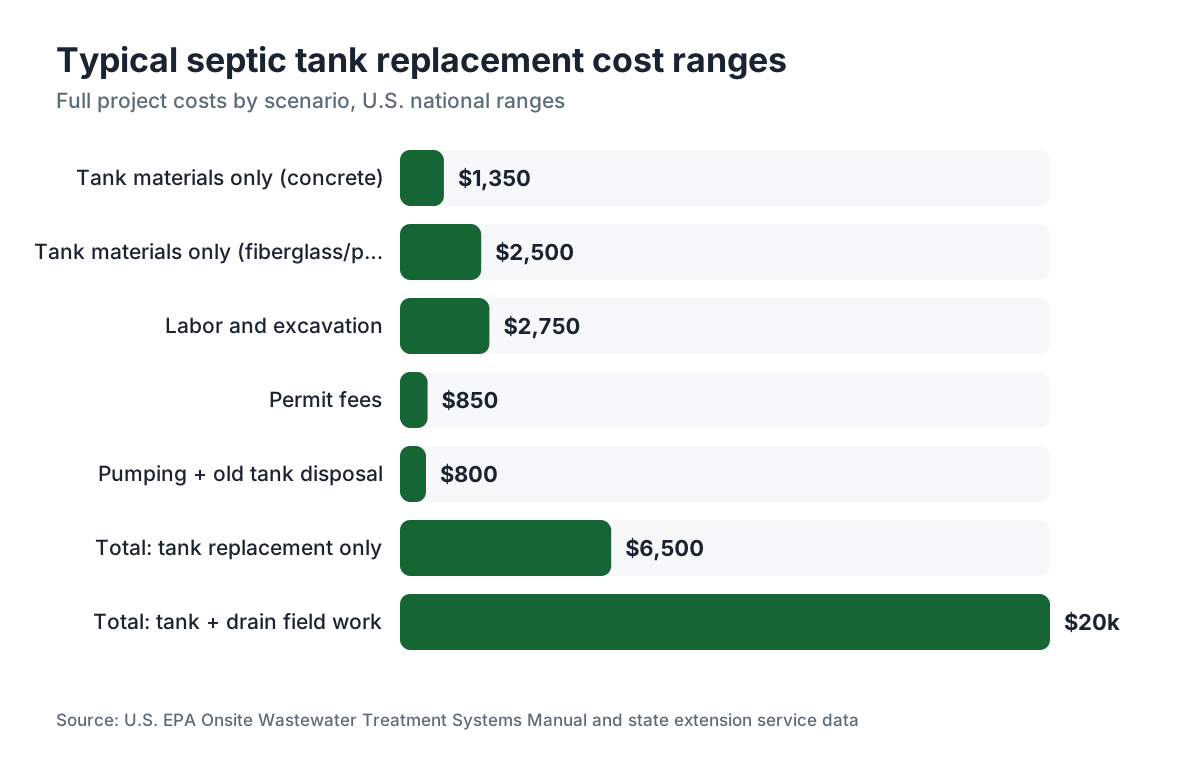
Here's what the real ranges look like, based on contractor pricing and state extension service estimates:
| Component | Typical cost range |
|---|---|
| Concrete tank (1,000 gal), materials only | $700, $2,000 |
| Fiberglass or poly tank, materials only | $1,500, $3,500 |
| Labor and excavation | $1,500, $4,000 |
| Permit fees | $200, $1,500 |
| Pumping and disposal of old tank contents | $300, $600 |
| Old tank removal or abandonment | $500, $2,500 |
| Total, tank only (typical range) | $3,000, $10,000 |
| Total if drain field also needs work | $8,000, $25,000+ |
The big cost drivers are how deep the tank sits, how tight the access is (a tank under a deck or crowding a foundation costs more to reach), local labor rates, and whether your county wants a new perc test or soil evaluation before it issues a permit.
For the full picture of what a fresh install adds up to, the cost to put in a septic tank and cost to install septic system articles break down every line item. A replacement almost always triggers permit requirements close to a new install, so budget that way.
Neither the tank nor the labor has gotten cheaper. The U.S. Bureau of Labor Statistics producer price index for construction shows costs rising roughly 4 to 6 percent a year from 2020 through 2024 [2], and septic contractors aren't immune to that.
What types of septic tanks can you replace with, and does it matter?
You have three realistic choices: precast concrete, fiberglass, or polyethylene (plastic). What you can actually use depends on your state's onsite wastewater code and what your soil and site allow.
Precast concrete is still the most common. It's heavy (a 1,000-gallon tank weighs around 8,500 lbs), so it won't float in high groundwater, and most local crews know how to set it right. A properly installed concrete tank can last 40 years or more, though it can crack from soil movement and corrode from hydrogen sulfide gas on the inside walls under heavy organic loading [3]. Plenty of old concrete tanks that need replacing are failing for exactly that reason.
Fiberglass tanks are lighter and easier to handle in tight spaces, and they shrug off corrosion. The tradeoff is flotation: put one in a high water table without proper anchoring and it can pop up out of the ground. They can also crack under a vehicle load if someone parks over them. Not every state allows fiberglass. Check your state environmental or public health agency's onsite rules before you spec one.
Polyethylene tanks share most of fiberglass's pros and cons. They're the lightest option and show up often in remote or access-restricted sites where a crane can't reach. Some states cap their use to certain capacity ranges.
One thing doesn't change no matter the material: the tank has to meet your state's current minimum capacity. Most states require at least a 1,000-gallon tank for a three-bedroom home, with larger sizes for more bedrooms [4]. If your old tank was undersized, the new one has to come up to current code.
What is the replacement process from start to finish?
Here's what actually happens once you decide to replace.
First, a licensed inspector or contractor locates the existing tank, usually by probing the yard or pulling old installation records from the county health department. If no records exist, they use a probe rod or a camera down a cleanout. You can start this yourself by calling your county environmental health office; many states keep digital records of permitted installations.
Second, you pull a permit. In nearly every U.S. jurisdiction, replacing a septic tank requires a permit from the local health department or environmental agency. Some counties want a fresh soil evaluation or perc test even for a straight tank swap [4]. Plan on two to four weeks for approval. In rural counties with thin staffing, six weeks isn't unusual.
Third, the contractor pumps the existing tank. It needs to be empty before anyone digs. A standard septic tank pump out runs $300 to $600 depending on your area and tank size [5].
Fourth, excavation. A backhoe or excavator opens up the ground around the tank. If the old concrete tank is intact, some jurisdictions let it be crushed in place and buried instead of hauled off, which saves on disposal. If it has to come out, add $500 to $1,500 for removal.
Fifth, the new tank drops in, the inlet and outlet pipes connect, and the lid gets set at or near grade (ideally with risers so you're not digging for the next septic tank pumping). The inspector signs off, the crew backfills, and the area gets graded.
From permit submission to finished backfill, plan on two to six weeks. Installation day itself usually runs four to eight hours for a straightforward swap.
Do you need a permit to replace a septic tank?
Yes. In virtually every U.S. state, replacing a septic tank is a permitted activity under state and local onsite wastewater rules. Doing it without a permit is illegal, and it comes back to bite you at sale time: title searches routinely turn up unpermitted septic work, and buyers' lenders often demand a compliant inspection.
The permit pathway depends on your state. Most states hand onsite wastewater regulation to county health departments or county environmental agencies. A handful (Florida, for example) layer a state-level permit on top of the county rules [6].
What the permit usually requires: a licensed or certified contractor to do the work, a county inspection before backfilling, and documentation that the new system meets current code for your property's use. If your home has changed (added a bedroom, more occupants), the county may make you upsize the tank and evaluate the drain field even when the field isn't the reason you're replacing.
Call your county health department before you get contractor bids. Ask exactly what a tank replacement permit costs and what documents you need. That call takes 20 minutes and can save you from a bid that ignores permit-required upgrades.
How long does a replacement septic tank last?
Concrete tanks in good soil with regular maintenance commonly last 25 to 40 years. The North Carolina Cooperative Extension, which has done some of the more thorough onsite wastewater work in the country, notes concrete tanks fail sooner in acidic soil or where hydrogen sulfide corrosion keeps coming back [3].
Fiberglass and polyethylene tanks, installed right and spared from flotation damage, can last 30 to 40 years or more. There's less long-term field data on plastic simply because widespread use is more recent.
The biggest variable isn't the material. It's what goes in the tank. Flushing non-biodegradable wipes, dumping grease, or running a garbage disposal hard all speed up solids accumulation, which raises the odds solids flow out to the drain field. Keeping up with pumping (every three to five years for most households) is what actually makes a tank last. The how often to pump septic tank guide walks through that math.
Steel tanks are the exception. They were common from roughly the 1940s through the 1970s. Steel corrodes, full stop. Almost any steel tank still in use is well past its functional life, and if you have one, replacement beats repair nearly every time.
Can you repair a septic tank instead of replacing it?
Often, yes. A cracked baffle gets replaced with a PVC tee for under $200 in parts. A damaged concrete lid comes off and gets swapped without touching the tank body. An outlet filter can be cleaned or replaced during a standard septic tank cleaning. Those are repairs, and they're worth doing.
Where repair stops making sense: structural cracks through the tank wall or floor (patching concrete that's actively moving is temporary at best), a tank eaten up by hydrogen sulfide corrosion on the inside walls, or a steel tank rusted through. Sealants and epoxy patches exist, and some contractors sell them, but a patched concrete tank sitting in corrosive soil tends to fail again within a few years.
Here's the decision I'd make. If the tank is structurally sound and the problem is a component (baffle, filter, lid, riser), repair it. If the wall or floor is cracked and the tank is over 20 years old, get a replacement quote and put it next to the repair quote, with an honest talk about how long the patch will actually hold. The septic system repair article covers the full scope of what's fixable before you hit replacement territory.
SepticMind's inspection tracking tools help service operators document exactly what they found and what they recommended, so the homeowner conversation runs on photos and records instead of guesswork.
What happens if you ignore a failing septic tank?
Nothing good. A tank leaking effluent into the soil is a public health problem before it's a property problem. Failed septic systems are among the leading causes of groundwater contamination in rural areas. The EPA estimates roughly 20 percent of U.S. households rely on septic or other onsite systems [7], and failed ones add nitrogen to groundwater and pathogens to nearby drinking water wells.
On the regulatory side, running a failed system usually violates state health code. Most states give you a compliance window to repair or replace after a failure is identified, but ignoring the notice can bring fines or even an order to vacate the property. Several states (Massachusetts and Virginia among them) require a septic inspection at property transfer, so a known failed system kills a home sale [8].
On the practical side, sewage backing up into your house is expensive and miserable. Saturated soil over a failing system kills landscaping. And if effluent reaches a neighbor's land or a surface water body, you're looking at environmental liability stacked on top of the repair cost.
The math lands the same way almost every time: the longer you wait on a confirmed failure, the more the eventual fix costs.
Does replacing the tank mean you also have to replace the drain field?
Not automatically, but sometimes yes. The tank and the drain field are separate parts. If the tank is structurally failed but the field is working normally (soil absorbing effluent, no surfacing, no wet spots), you can replace the tank and leave the field alone.
The catch is that many tanks fail for reasons that have already stressed the field. A tank that's been leaking solids into the outlet pipe for years may have clogged the drain field's soil pores with biomat. Replace the tank without addressing that, and the new tank fills up and backs into the house.
Before any tank replacement, have the field evaluated. That means checking the distribution box for solids, running a load test (run water and watch whether it moves through), and if possible having a pro probe the soil above the leach lines to gauge saturation. More on how drain fields work and fail is in the leach field guide.
If the field does need work on top of the tank, the total jumps hard, often to $15,000 to $30,000 or more depending on field type and local rules. Some states allow drain field remediation instead of full replacement, which can cut the cost. Ask your county health department what's allowed.
How do you hire the right contractor for a septic tank replacement?
Start with licensing. Every state that regulates onsite wastewater (essentially all of them) requires the contractor who installs or replaces a tank to hold a state license or certification. Ask for the license number and verify it with your state agency before you sign anything. The National Onsite Wastewater Recycling Association (NOWRA) keeps a directory of certified professionals, but state licensing databases are the authoritative source [9].
Get three written bids. Each bid should spell out tank material and capacity, whether permit fees are included, how the old tank gets handled (crushed in place vs. removed), what happens if they hit unexpected problems during excavation, and the warranty on labor and materials. Bids that skip this detail invite disputes.
Watch out for anyone who wants to skip the permit. It saves them time, not you. Unpermitted work can void your homeowner's insurance for septic claims, complicate a sale, and in some states expose you to fines.
Timing matters a little. Most contractors are busiest in spring and fall. Schedule for midsummer or late winter and you may get better availability and occasionally better pricing. If you have any time at all, don't let urgency shove you into the first crew that answers.
One more thing to ask: are septic tank pumping risers included or can they add them? Risers bring the lid to grade and make every future pump-out faster and cheaper. On a new install they're cheap. Retrofitting later costs more.
Are there financial assistance programs to help pay for septic replacement?
Yes, real ones exist, though availability is patchy.
USDA Rural Development (specifically the Section 504 Home Repair program and the Rural Utilities Service Water and Environmental Programs) offers grants and low-interest loans to eligible low-income rural homeowners for septic repair and replacement [10]. Income limits apply, and applications go through your state's USDA Rural Development office.
The EPA's SepticSmart initiative doesn't fund replacements directly, but EPA does fund the Clean Water State Revolving Fund, and several states use that money for subsidized loans or grants on failing onsite systems. New Hampshire, Maine, and Minnesota, among others, have run active onsite wastewater assistance programs backed partly by revolving fund dollars [11].
At the county level, some health departments run their own loan or grant programs, especially in areas with documented groundwater problems from failing systems. Call your county environmental health office and ask directly. These programs are often under-publicized.
On taxes: as of this writing there's no federal income tax credit specifically for septic replacement. Some states offer credits or deductions. Massachusetts allows a credit of up to $6,000 for approved Title 5 septic upgrades [12]. Check with your state tax agency or a local tax pro for what's live in your state right now.
SepticMind's job and cost tracking helps service operators document replacement projects cleanly, which matters when a homeowner needs records for a loan application or a tax credit claim.
What should you do immediately after a new septic tank is installed?
A few things matter in the first weeks.
Keep heavy equipment and vehicles off the ground above the tank and drain field while the soil settles. Fresh fill over an excavation is loose and compressible, and driving over it can crack the lid or shift the inlet pipes.
Don't treat a new tank as license to flush things you wouldn't have before. The system needs a biological startup period where the right microbes establish in the tank, and normal household wastewater supplies them. You don't need commercial starter products. EPA's SepticSmart guidance says typical household use provides adequate bacteria naturally [1]. Go easy on antibacterial cleaners and bleach the first few weeks.
Save the inspection and permit records somewhere you can find them. Your county should have copies, but contractors change hands, floods happen, and paper walks off. A phone photo of the permit and the as-built drawing saved in cloud storage takes two minutes and has saved homeowners thousands at sale time.
Schedule your first pump-out. A new tank doesn't need pumping right away, but set a reminder for three years out. By then you'll know your household's usage, and a qualified tech can tell you whether the tank fills faster or slower than average. Regular septic tank emptying is what makes a new tank last its full service life.
Frequently asked questions
How much does it cost to replace a septic tank?
Most homeowners pay $3,000 to $10,000 for a straight tank replacement, including labor, permit fees, and disposal of the old tank. If the drain field also needs work, the total can reach $15,000 to $30,000 or more. The main variables are tank material, site access, excavation depth, and local labor rates. Get at least three written bids from licensed contractors.
How long does a septic tank replacement take?
Installation day typically runs four to eight hours for a straightforward swap. The total timeline from deciding to replace to finished backfill is usually two to six weeks, most of it waiting on permit approval. In rural counties with small staff, permit processing alone can take four to six weeks. Factor that in, especially if you're managing a failing system in the meantime.
Can I replace just the septic tank without replacing the drain field?
Yes, if the drain field is working properly. The tank and field are separate parts. But if the tank has been sending solids into the outlet for years, the field may be partially clogged. Always have the field evaluated before tank replacement so you don't set a new tank on a compromised field. A licensed inspector can run a load test and a visual check to confirm field condition.
What are the signs that a septic tank needs replacing rather than repairing?
The clearest signs are structural cracks through the tank wall or floor, a severely corroded interior (common in older concrete and steel tanks), a collapsed or rusted-through steel tank, and a lid that has failed and can't be safely restored. Slow drains, odors, or wet spots are worth investigating but usually point to a repair, not a replacement. A professional inspection is the only reliable way to know.
Do I need a permit to replace my septic tank?
Yes, in virtually every U.S. jurisdiction. Septic tank replacement is permitted under state and local onsite wastewater rules. Working without a permit is illegal, can void insurance coverage for related claims, and surfaces as a problem when you sell. Contact your county health department to learn what's required before getting bids. Permit fees typically run $200 to $1,500 depending on location.
How long does a new septic tank last?
Properly installed concrete tanks last 25 to 40 years in typical soil; corrosive soils or heavy organic loading shorten that. Fiberglass and polyethylene tanks can also last 30 to 40 years or more when installed right and spared flotation or vehicle damage. Steel tanks, common from the 1940s through 1970s, corrode, and most are well past their service life. Pumping every three to five years extends any tank's life significantly.
What type of septic tank is best for replacement?
Precast concrete is the most common and generally the most forgiving choice, especially where high groundwater isn't a concern. Fiberglass and polyethylene tanks work well in tight-access sites and resist corrosion, but they can float in high water tables if not anchored correctly. What you can install depends on your state's onsite wastewater code. Check with your county health department before specifying a material.
Is there financial help available to replace a septic tank?
Yes. The USDA Section 504 Home Repair program offers grants and loans for eligible low-income rural homeowners. Several states run their own assistance programs funded through EPA revolving fund mechanisms. Some county health departments run local programs, particularly in areas with groundwater concerns. Massachusetts offers a state income tax credit of up to $6,000 for qualifying septic upgrades. Check with your county health department and USDA Rural Development office.
What happens if I don't replace a failing septic tank?
A failing tank leaks untreated effluent into the soil, which can contaminate groundwater and nearby wells. Most states require repair within a compliance window after a system is identified as failed; ignoring notices can bring fines or an order to cease occupancy. A known failed system also effectively blocks a home sale in states that require septic inspections at transfer, including Massachusetts and Virginia.
Does replacing a septic tank increase home value?
A functioning system is baseline expected by buyers; a failed or near-failed one is a negotiating liability. Replacing a failed tank removes a significant defect and typically lets a sale proceed where it otherwise couldn't. It's hard to pin a precise dollar figure on the value add because buyers price it as removing a problem, not adding a premium. In practical terms, a compliant system is worth whatever it costs to keep the sale alive.
Can I replace my septic tank myself?
Most states prohibit homeowners from replacing their own tanks without a contractor's license. Even in states that allow owner-builder permits for some septic work, the job still needs a county permit and inspection. The DIY risks are real: improper installation voids the tank warranty, can cause structural failure, and won't pass inspection. Hire a licensed contractor. The permit and inspection process exists because done wrong, septic failures are a genuine public health problem.
How do I find my septic tank to prepare for replacement?
Start with your county health department or environmental agency, which should have permit records and as-built drawings from the original install. If records don't exist, a contractor can locate the tank by probing the yard, following the outlet pipe from the house with a soil probe, or using electronic locating equipment. Some states have digitized permit records you can look up online. Have the location marked before any excavation.
What should I ask a contractor before hiring them for a septic tank replacement?
Ask for their state contractor license number and verify it. Ask for a written bid that specifies tank material and size, whether permit fees are included, how the old tank gets handled, what happens if unexpected problems come up during excavation, and the warranty terms. Ask whether risers to grade level are included. Get at least three bids. Any contractor who suggests skipping the permit is someone to walk away from.
How often should I pump a septic tank to make it last?
Every three to five years for most households, though a large family or heavy water use can push that to every two to three years. EPA's SepticSmart guidance points to routine pumping as the single best thing you can do for tank longevity. A qualified technician measuring sludge and scum depth at each visit can tell you your household's real interval rather than a generic estimate.
Sources
- U.S. EPA, SepticSmart Program: Routine septic inspections every one to three years and normal household use provides adequate bacteria for the system without commercial additives.
- U.S. Bureau of Labor Statistics, Producer Price Index: Construction costs rose roughly 4 to 6 percent annually from 2020 through 2024 based on producer price index data for construction.
- NC State Extension: Concrete tanks can fail sooner in acidic soils or where hydrogen sulfide corrosion is a recurring problem; well-maintained concrete tanks can last 40 years or more.
- U.S. EPA, Onsite Wastewater Treatment Systems Manual: Most states require a minimum 1,000-gallon tank for a three-bedroom home; replacement tanks must meet current code for the property's use.
- U.S. EPA, SepticSmart Program: Routine septic tank pumping is recommended every three to five years; typical pump-out costs vary by region.
- Florida Department of Health, Onsite Sewage Program: Florida requires state-level permits for septic system installation and replacement through the county health department under state oversight.
- U.S. EPA, Septic Systems Overview: Approximately 20 percent of U.S. households rely on septic or other decentralized onsite wastewater treatment systems.
- Massachusetts Department of Environmental Protection, Title 5 Program: Massachusetts requires a septic inspection at time of property transfer under Title 5; a failed system must be repaired or replaced before sale.
- National Onsite Wastewater Recycling Association (NOWRA): NOWRA maintains a directory of certified onsite wastewater professionals; state licensing databases are the authoritative source for contractor verification.
- USDA Rural Development, Single Family Housing Repair Loans and Grants (Section 504): USDA Section 504 offers grants and low-interest loans to eligible low-income rural homeowners for septic repair and replacement.
- U.S. EPA, Clean Water State Revolving Fund: EPA funds state revolving fund programs that several states use to offer subsidized loans or grants for failing onsite wastewater systems.
- Massachusetts Department of Revenue, Title 5 Septic Tax Credit: Massachusetts allows a state income tax credit of up to $6,000 for approved Title 5 septic system upgrades.
Last updated 2026-07-09