Roebic K-37-Q septic tank treatment: does it actually work?
By the SepticMind Editorial Team
TL;DR
- Roebic K-37-Q is a liquid bacterial concentrate that restocks the microbes in a septic tank.
- It can help after antibiotics, heavy cleaning, or a pump-out.
- It won't fix a full tank, a failing drain field, or cracked pipes.
- Pump first if you're overdue, then use K-37-Q as a maintenance aid, not a cure.
What is Roebic K-37-Q and what's actually in it?
Roebic K-37-Q is a liquid septic tank treatment sold in quart (32 oz) and larger bottles. The formula carries a mix of aerobic and anaerobic bacteria plus a set of enzymes: protease, lipase, amylase, and cellulase. Those enzymes cut proteins, fats, starches, and cellulose into smaller pieces, and the bacteria then eat those pieces as food.
The maker, Roebic Laboratories (based in Kalamazoo, Michigan, and in business since 1954), calls K-37-Q a biological drain and septic treatment. The product is nontoxic and biodegradable, and Roebic says it won't harm plastic, rubber, or metal pipes.
Here's what K-37-Q is not. It isn't a chemical drain cleaner. It doesn't chew through clogs mechanically. It doesn't cover odor with perfume. Any odor drop you notice comes from bacteria eating the compounds that smell, not from a masking scent.
No federal rule standardizes the bacteria counts in these products, so the label won't tell you how many colony-forming units (CFUs) per ounce you're buying. That makes brand-to-brand comparison genuinely hard. Roebic doesn't print a CFU count on the consumer label, which is worth knowing before you assume it's more concentrated than a rival bottle.
How does K-37-Q work inside a septic tank?
A healthy septic tank is an anaerobic digester. Bacteria break down sewage solids, shrinking the sludge that piles up on the bottom and the scum that floats on top. The clear liquid in the middle, called effluent, flows out to the leach field, where soil bacteria and filtration finish the job.
Pour K-37-Q down a toilet and it rides the wastewater into the tank. The bacteria sit dormant in storage and wake up when they hit the warm, wet tank. They then settle into the sludge layer and along the tank walls, adding to whatever native population is already there.
The enzyme part does its most in the first few hours. Enzymes are catalysts, not living things, so they don't reproduce. They start breaking apart the structure of fats and proteins right away, making the material easier for bacteria to process. That helps most when a fresh slug of cooking grease hits the tank.
One thing the science is clear on: bacteria can't eat what isn't there. If solids have already built up to the point where the tank needs pumping, more bacteria won't shrink that sludge. The bacteria eat organic material at a rate that keeps a healthy tank steady. They don't liquify years of built-up solids overnight. Think of K-37-Q as restocking a kitchen that ran low on cooks, not a way to skip cleaning the kitchen.
Does Roebic K-37-Q actually work? What does the research say?
Honest uncertainty matters here. There's no large, independent, peer-reviewed trial on K-37-Q specifically. The evidence base for septic additives in general is thin and mixed.
The most-cited assessment comes from the EPA, which reviewed septic additive research and concluded that "there is little scientific evidence that biological additives improve the performance of a properly functioning septic system." [1] That's the agency's own language, and it's worth sitting with. A working tank already holds billions of bacteria. Adding more usually doesn't shift the balance in any real way.
The evidence tips slightly toward products like K-37-Q in one spot: after a specific disruption. Virginia Cooperative Extension notes that after heavy antibiotic use, long disinfectant use, or a big dose of bleach into the system, replenishing bacteria with a commercial additive can help the tank recover faster than waiting for nature to do it. [2] That makes biological sense even where the trial data is sparse.
The National Onsite Wastewater Recycling Association (NOWRA) holds a similar line: additives aren't a substitute for pumping or maintenance, but they may support recovery after a disruption. [3]
My honest read. K-37-Q is unlikely to hurt anything, and it may help after a genuine disruption. Using it as your only maintenance plan is a mistake. Using it after an event that killed your tank's bacteria is a reasonable, cheap move.
When should you actually use Roebic K-37-Q?
A handful of situations make adding K-37-Q worth it.
After a round of antibiotics. Broad-spectrum antibiotics pass through your body into the wastewater and can knock down tank bacteria. A household where several people take a course of antibiotics is a fair candidate for a maintenance dose.
After heavy cleaning with bleach or disinfectants. If someone dumped a lot of bleach, quaternary ammonium cleaners, or pine oil down the drains, the bacterial population takes a hit. The EPA's SepticSmart program warns homeowners to limit harsh chemical use for exactly this reason. [1]
After pumping. Septic tank pumping hauls out the whole working bacterial community along with the sludge. A dose right after a pump-out gives the tank a head start. Many pumping companies suggest it, though some studies show the tank recolonizes on its own within a few weeks.
Seasonal or vacation homes. A tank that sits unused for months starves its bacteria. Dosing a week before you open a vacation home gives the microbes time to set up before heavy use.
Slow drains with no structural cause. If a septic tank inspection shows the tank isn't full and the leach field isn't saturated, sluggish drainage sometimes eases with enzyme treatment that breaks up a partial grease or soap buildup near the inlet baffle.
Routine monthly dosing when nothing is wrong. This is where I'd keep my money. If your tank runs fine and you pump on schedule, the monthly ritual probably isn't doing much you wouldn't get from ordinary household wastewater.
How do you use K-37-Q? Dosing and application instructions
Roebic's dosing is simple. For initial treatment, pour 32 oz (one full quart) straight into a toilet and flush. That carries the product to the tank fast, without it getting diluted in sink traps.
For ongoing maintenance, the label says 8 oz monthly. Some homeowners run 16 oz quarterly instead, which works out to about the same total volume and is easier to remember.
Application tips that matter in practice:
Flush on a low-use day, ideally at night. You want the bacteria to settle into the tank before a big flush dilutes them and pushes them toward the outlet baffle.
Don't dose right after using bleach-heavy bowl cleaners. The chlorine kills the bacteria before they reach the tank.
Store K-37-Q at room temperature, out of direct sun and heat. The bacteria are alive but dormant, and heat kills them in the bottle. Check the expiration date, because shelf life matters.
For a 1,000-gallon tank (the most common residential size in the U.S.) serving a family of four, the 32 oz initial dose fits. No published evidence says doubling the dose doubles the benefit.
If you run a garbage disposal, your tank already takes on more solid organic material than a kitchen without one. Monthly dosing makes more sense there than for a house that scrapes plates before washing.
How does K-37-Q compare to other septic tank treatments?
The additive market splits into three groups: biological products (bacteria and enzymes, like K-37-Q), chemical products (solvents and surfactants), and inorganic products (things like hydrogen peroxide or baking soda blends).
Chemical additives, the solvent-based ones especially, are the most controversial. The EPA warns against them because they can dissolve the organic material that holds sludge together, flushing solids into the drain field and causing biomat formation and field failure. [1] I'd avoid them.
Among biological products, K-37-Q sits mid-tier. Rid-X is the most widely stocked competitor and uses a similar bacteria-enzyme mix in powder or liquid. Septic Drainer and Bio-One are other options. None of them publish standardized CFU counts, so a true apples-to-apples comparison isn't possible.
Here's how the main product types stack up on mechanism and risk:
| Product Type | Example | Main Mechanism | EPA Risk Level | When Useful |
|---|---|---|---|---|
| Bacterial/enzyme liquid | Roebic K-37-Q | Adds bacteria + enzymes | Low | Post-disruption, post-pump |
| Bacterial/enzyme powder | Rid-X | Adds bacteria + enzymes | Low | Same as above |
| Solvent-based | Some older brands | Dissolves grease chemically | High (field damage risk) | Not recommended |
| Yeast-based (DIY) | Baking yeast | Adds yeast organisms | Very low | Negligible effect |
| Inorganic (H2O2) | Some pool-derived products | Oxidizes organics | Medium (kills bacteria) | Not appropriate |
K-37-Q's liquid form has a small edge over powders because liquid disperses faster through the tank water. The difference is minor, though. Both formats work on the same idea.
What won't Roebic K-37-Q fix?
Being clear about this matters more than listing benefits.
A full tank. If sludge and scum have grown until less than a third of the tank's liquid depth is left, the tank needs to be pumped. Septic tank pumping is the answer, not an additive. Dosing an over-full tank is like adding cooks to a kitchen with no counter space.
A failing drain field. Saturated soil, a biomat that has sealed the soil interface, crushed laterals, or high groundwater won't respond to bacteria poured into the tank. Those are structural or hydraulic failures that need septic system repair or field replacement.
Root intrusion or cracked pipes. Roots growing into the tank or laterals cause blockages that enzymes won't touch. That's a physical problem needing mechanical work or septic tank repair.
Heavy metals or chemical contamination. If non-biodegradable material enters the system, bacteria can't break it down.
Foul odors from a broken vent pipe. A rotten-egg smell in the yard or house is often a plumbing vent problem, not a bacterial shortage. More bacteria won't help when the real issue is a blocked or missing vent.
The EPA's SepticSmart guidance says it plainly: pumping every three to five years is the single most effective maintenance action a homeowner can take, and no additive replaces it. [1] If your septic tank pump out is overdue, start there.
Is K-37-Q safe for all septic system types?
For conventional anaerobic septic tanks, K-37-Q is safe. The bacteria and enzymes in it are naturally occurring organisms already present in a healthy system.
Aerobic treatment units (ATUs) are different. These pump air into the tank to feed aerobic bacteria and make cleaner effluent. Roebic's literature doesn't address ATUs for K-37-Q, and some ATU makers have their own rules about which additives are allowed. If you own a Norweco, Orenco, or similar ATU, check with the manufacturer before adding any third-party biological product.
Mound and drip irrigation systems sit downstream of the tank and shouldn't be affected by a tank-applied additive. The bacteria in K-37-Q don't travel from the tank to the field in amounts that change field biology.
Cesspools, which are older unlined pits rather than true septic tanks, may benefit from K-37-Q for the same reasons a standard tank would. Cesspools are increasingly regulated or banned in many states, so check your local onsite wastewater code before building any long-term plan around one.
Holding tanks. K-37-Q isn't appropriate here because holding tanks don't discharge and don't rely on biological treatment. They're collection vessels that get pumped, full stop.
Septic tanks with garbage disposals. Safe to use, and the higher organic load actually gives the bacteria more to eat.
How often should you pump your septic tank, and where does K-37-Q fit in the schedule?
The EPA recommends pumping most residential septic tanks every three to five years. [1] Your real interval depends on tank size, how many people live there, and how much solid waste enters the system. A 1,000-gallon tank serving two people might go five to seven years. The same tank serving five people should be pumped every two to three years. [9] How often to pump your septic tank comes down to those specifics.
K-37-Q fits the schedule like this: pump on time, add a full 32 oz dose right after pumping to restart the colony, then follow with an 8 to 16 oz monthly or quarterly dose only if you're dealing with one of the disruption cases above.
What I would not do is use K-37-Q as an excuse to stretch the pumping interval. No published evidence shows any additive cuts sludge buildup enough to push a real pump-out past its due date. The sludge depth measured during an inspection tells you when to pump. Your additive schedule doesn't.
For tracking pumping history and service dates, septic operators often lean on service management software. If you run a pumping company, tools like SepticMind help you track customer tank histories and maintenance intervals across your whole book, so nothing slips.
State codes vary on required inspection frequency. Massachusetts, with its Title 5 regulation, requires a septic inspection before a home sale and sets specific maintenance rules. [4] Know your state's rules before you assume a five-year interval is legally enough.
What do state and federal regulations say about septic additives?
At the federal level, the EPA doesn't regulate septic additives as a product category under the Clean Water Act or the Safe Drinking Water Act. Its position, through the SepticSmart program, is educational: it advises against chemical additives and notes that biological additives have unproven benefit for properly functioning systems. [1]
Some states go further. Washington State's Department of Health reviewed additive efficacy and concluded that "no additive has been demonstrated to eliminate or reduce the need for regular pumping." [5] Wisconsin's Department of Safety and Professional Services regulates onsite wastewater under COMM 83 and gives similar guidance that additives don't substitute for maintenance.
A few states require registration. In some jurisdictions, additive products that make specific treatment claims must be registered with the state environmental agency. Minnesota requires registration of septic system additives under its rules. [6]
Most states don't ban biological additives outright, and K-37-Q's nontoxic profile means it's generally fine where sold. Still, check your state's onsite wastewater regulations before making additive use part of a formal maintenance plan, especially if you run a commercial service.
If a salesperson tells you their additive is "EPA approved," that's a red flag. The EPA doesn't approve septic additives. A product may comply with EPA guidelines for certain uses, but none carry an EPA approval for septic treatment efficacy.
How much does Roebic K-37-Q cost, and is it worth the money?
A 32 oz quart of Roebic K-37-Q usually sells for $10 to $16 at hardware stores, home centers, and online retailers as of mid-2025. Gallon jugs run $25 to $40 and cost less per ounce if you use it often or manage several properties.
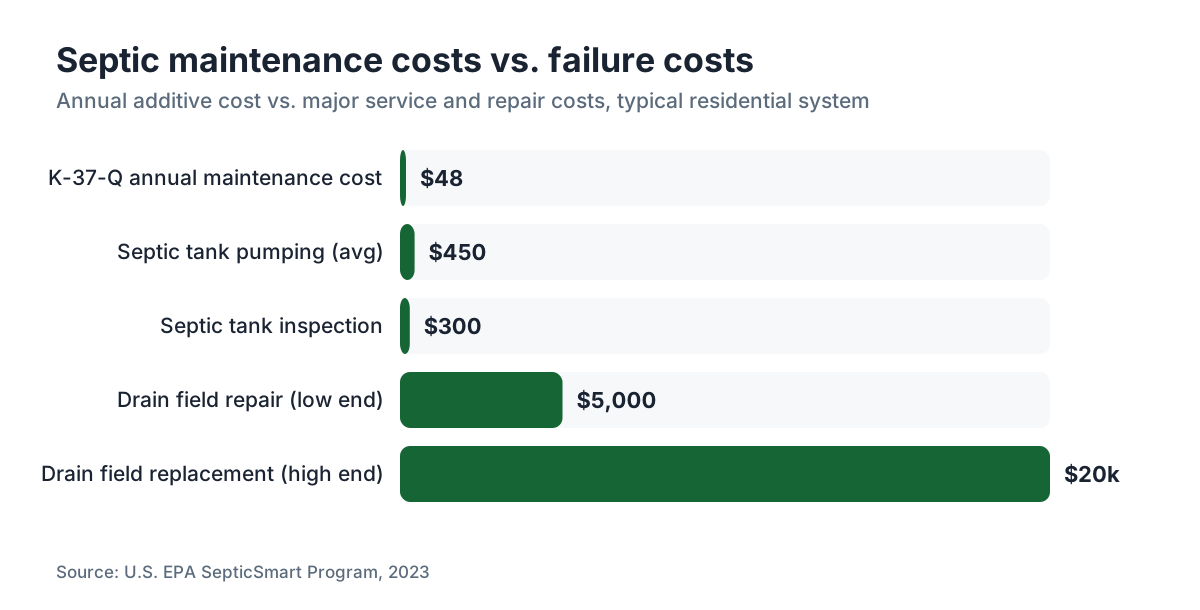
At the standard 8 oz monthly maintenance dose, a quart lasts four months, about $3 to $4 a month. Annual cost for routine monthly use lands around $40 to $48.
That's cheap next to what it's meant to protect. Septic tank pumping costs $300 to $600 for most residential tanks. A leach field replacement can run $5,000 to $20,000 or more depending on site conditions and local labor. [7]
But the math isn't "spend $48 a year to dodge $15,000." The evidence that K-37-Q prevents field failure is weak. What actually prevents field failure is pumping on schedule, keeping non-biodegradable material out, limiting water softener backwash into the tank, and not pouring grease down drains.
My honest verdict. K-37-Q is cheap, low-risk, and worth using after a specific disruption or right after pumping. As a monthly ritual that stands in for real maintenance, it's money you could keep. If you're choosing between buying K-37-Q and getting a septic tank inspection that's overdue, spend on the inspection.
Common mistakes homeowners make with septic tank treatments
Using additives instead of pumping. This is the big one. Homeowners start on K-37-Q or a similar product and stop scheduling pump-outs because they feel like they're doing something. The sludge keeps piling up anyway.
Adding treatment right before heavy water use. Flush K-37-Q at night or on a low-use day. Add it and then run three loads of laundry, and the bacteria get pushed through the tank before they can set up.
Using it alongside chemical cleaners. If you run bleach tablets in the toilet tank or heavy weekly bleach drain treatments, the additive's bacteria die off routinely. Scale back the chemicals or accept that the additive isn't doing much.
Overdosing. More is not better. Doubling the dose doesn't double the colony, because the tank's carrying capacity (organic material to eat, space to live in) is the limit, not the incoming bacteria count.
Ignoring slow drains. A slow drain that doesn't improve with treatment is telling you something. Get an inspection. Don't keep pouring product and hoping.
Buying expired or heat-damaged product. A bottle that sat in a hot garage all summer may hold a dead colony. Check the date and store it right.
For a fuller picture of your system's health, SepticMind's maintenance guides help you track what you've done and when the next service is due, so you're not guessing.
Skipping the inspection after moving in. If you bought a house with a septic system and don't know when it was last pumped or inspected, start there. A septic tank inspection is the only way to learn what you're actually dealing with before you spend on any product.
Frequently asked questions
Can I use Roebic K-37-Q in a garbage disposal household?
Yes, and it arguably makes more sense there. Garbage disposals send more organic solids into the tank than kitchens without one, raising the bacterial load needed to process them. Use the standard 32 oz initial dose and consider monthly maintenance dosing rather than quarterly. The EPA recommends limiting garbage disposal use on septic systems regardless of any additive.
How long does it take for Roebic K-37-Q to work?
Bacterial colonization takes 24 to 72 hours under typical tank conditions. Enzyme activity starts on contact. For a tank recently hit by antibiotics or bleach, you may notice better drainage or less odor within a week. For routine maintenance doses, there's nothing visible to notice, because the product is holding a baseline rather than fixing a crisis.
Is Roebic K-37-Q the same as Rid-X?
Similar but not identical. Both use bacteria and enzyme blends targeting the same organic compounds. Rid-X is more widely distributed and comes in powder and liquid; K-37-Q is liquid only. Neither company publishes standardized CFU counts, so a direct potency comparison isn't possible. They sit in the same product category and carry the same low risk profile.
Can K-37-Q unclog a septic drain field?
No. A clogged drain field has saturated soil, a biomat layer at the soil interface, or a physical obstruction. Additives poured into the tank don't reach the field in amounts that break up a biomat. Field restoration needs resting the field, mechanical aeration, or replacement. See a septic professional before you assume an additive will solve field problems.
Do I still need to pump my septic tank if I use K-37-Q regularly?
Yes, always. No additive removes the need for pumping. Sludge and scum build up regardless, because inorganic solids, hair, and non-biodegradable material pile up alongside organic matter. The EPA recommends pumping every three to five years for most households. K-37-Q can support bacterial health between pumpings but never substitutes for removing solids.
Is Roebic K-37-Q safe for the environment and groundwater?
Yes, as long as the whole system works properly to protect groundwater. The bacteria and enzymes in K-37-Q occur naturally and are biodegradable. Roebic states the product holds no hazardous chemicals and is safe for pipes, tank walls, and downstream soil. The EPA hasn't flagged biological additives as a groundwater risk, unlike solvent-based chemical additives.
Where is the best place to add K-37-Q in my home?
Flush it down the toilet closest to your main drain line. That gives the product the most direct path to the tank with the least dilution in trap water. Avoid sinks and showers, where p-traps hold water and soap residue that can degrade the bacteria before they reach the tank. One flush with a normal water volume after pouring is all you need.
Can K-37-Q damage my septic tank or pipes?
No. The product holds no acids, caustics, or solvents. Roebic formulates K-37-Q to be safe for PVC, ABS, cast iron, concrete tanks, and rubber gaskets. The bacteria and enzyme ingredients are the same types already living in a healthy tank. The risk is about as close to zero as any product category gets.
What happens if I pour too much K-37-Q into my tank?
Overdosing is unlikely to cause harm, and also unlikely to add benefit. The population a tank can hold is limited by available organic material, not by how many bacteria you add. Extra bacteria just die off. You won't damage the system, but you'll have wasted product. Stick to the label dose.
Should I use K-37-Q after my septic tank is pumped?
This is one of the better uses for the product. Pumping removes the whole working colony along with the sludge. Adding 32 oz right after gives the tank a head start. Without it, the tank recolonizes from incoming wastewater within a few weeks anyway, but the additive may shorten that window, which matters most for high-use households.
Does K-37-Q help with septic odors?
It can, in specific cases. Odors from a healthy tank come from hydrogen sulfide and other gases made during anaerobic digestion. A strong bacterial population processes waste efficiently and can cut the odor-causing intermediates. But if the smell comes from a broken vent pipe, a cracked tank lid, or a backed-up system, K-37-Q won't help. Find the odor source before treating.
Is Roebic K-37-Q approved by the EPA or any government agency?
No, and no septic additive carries EPA approval for treatment efficacy. The EPA has no formal approval program for septic additives. A product may comply with EPA guidelines for chemical content and safety, but that's not an endorsement. Any retailer or salesperson claiming EPA approval for a septic additive is misrepresenting it.
How does K-37-Q differ from Roebic's other products like K-57 or Roebic 100?
Roebic makes several products for different jobs. K-57 is their root-killing treatment, using copper sulfate or dichlobenil to kill roots in drain lines, and it shares nothing with K-37-Q's bacterial formula. Roebic 100 is a concentrated bacterial treatment aimed more at drain maintenance. K-37-Q is formulated for septic tank bacterial replenishment, with a blend tuned for anaerobic tank conditions.
Sources
- U.S. EPA, SepticSmart Program: EPA states 'there is little scientific evidence that biological additives improve the performance of a properly functioning septic system' and recommends pumping every three to five years as the primary maintenance action.
- Virginia Cooperative Extension, Septic System Owner's Guide: After antibiotic use or large disinfectant doses, replenishing bacteria with a commercial additive may help a tank recover faster than natural recolonization.
- National Onsite Wastewater Recycling Association (NOWRA): NOWRA's position holds that additives are not a substitute for pumping or maintenance but may support recovery after disruption events.
- Massachusetts Department of Environmental Protection, Title 5 Septic Regulations: Massachusetts Title 5 regulation requires a septic inspection before home sale and mandates specific maintenance compliance.
- Washington State Department of Health, On-Site Sewage Systems: Washington State DOH concluded that 'no additive has been demonstrated to eliminate or reduce the need for regular pumping.'
- Minnesota Pollution Control Agency, Septic System Additives: Minnesota requires registration of septic system additives under state rules before they can be marketed or sold in the state.
- U.S. EPA, Septic System Costs and Homeowner Guidance: Drain field replacement can cost $5,000 to $20,000 or more depending on site conditions and local labor rates.
- North Carolina State Extension, Septic Tank Additives Fact Sheet: Chemical solvent-based additives can dissolve organic material holding sludge together, flushing solids into the drain field and causing biomat formation.
- University of Minnesota Extension, Septic System Maintenance: A 1,000-gallon tank serving a family of four should generally be pumped every three to five years; larger households or smaller tanks require shorter intervals.
- U.S. EPA, How Your Septic System Works: The SepticSmart program warns homeowners to limit use of harsh chemicals including bleach and drain cleaners because they reduce beneficial tank bacterial populations.
Last updated 2026-07-10