Fixing a septic tank: what's broken, what it costs, and what to do first
By the SepticMind Editorial Team
TL;DR
- Septic tank fixes split into four buckets: broken baffles ($200-$500), cracked tanks ($1,000-$3,000 to patch, more to replace), failed risers and lids ($100-$800), and collapsed or saturated drain fields ($3,000-$15,000+).
- A licensed pump-out and inspection is the right first move every time.
- You can swap lids and risers yourself in many states.
- Structural repairs and drain field work almost always need a permit and a licensed contractor.
How do you know your septic tank actually needs fixing?
Four symptoms send homeowners looking for answers, and they're consistent: slow drains across more than one fixture, sewage odor in the yard or the house, wet soggy patches over the drain field, and sewage backing up into the lowest drains. Any one is a red flag. Two together means stop the heavy water use and call a licensed septic contractor the same day.
Most people treat the symptom without finding the cause. That's the expensive mistake. A sewage smell outside could be a cracked lid, a failed inlet baffle, a tank sitting high because the drain field is drowning, or a vent pipe problem on the roof. Each one has a different fix and a wildly different price. Guessing burns money.
The correct first step, every single time, is a septic tank pump out. Pumping clears the solids so a technician can see the tank interior: baffles, walls, inlet and outlet pipes. Skip that and you're diagnosing in the dark. The EPA's SepticSmart program puts it plainly: "Have your septic system inspected (in general, every 3 years) by a professional and have the tank pumped when necessary" [1]. The look inside during that pump-out is where you learn what's broken.
Be honest about the last pump-out date. EPA guidance says most households need pumping every three to five years, depending on tank size and how many people live there [1]. If it's been ten years, the tank is probably packed with solids, and that alone backs up the drain field. It looks like a dead system. It often clears up once the tank is pumped and flow returns to normal.
What are the most common septic tank problems and their fixes?
Once the tank is pumped and you can see inside, problems sort into a short list. Here's how each one shows up and what the repair looks like.
Broken or missing baffles. The inlet baffle slows incoming waste so it doesn't stir the settled solids. The outlet baffle keeps floating scum from escaping to the drain field. Both are concrete on older tanks and PVC on newer ones, and both fail. Concrete baffles rot from hydrogen sulfide gas over decades. PVC baffles get knocked loose. A broken outlet baffle is the single most common cause of premature drain field failure, because scum and solids slip into the field and clog the soil [2]. Cost to replace: $200 to $500 for parts and labor if the technician is already there for the pump-out.
Cracked or leaking tank walls. Hairline cracks from soil settlement or freeze-thaw can be patched with hydraulic cement or two-part epoxy rated for below-grade use. Major structural cracks, especially in the second compartment near the outlet, are a different animal. A crack leaking effluent into the soil is a health code violation in most states and forces a repair-or-replace decision. Patching runs $1,000 to $3,000 depending on depth and access. A badly cracked or collapsed tank means replacement: $3,000 to $8,000 or more depending on size, material, and local labor [3].
Failed or sunken lid and riser. Lids crack from vehicle traffic or plain age. A cracked lid lets surface water flood the tank, which dilutes treatment and overloads the field, and it's a fall hazard for anyone in the yard. Concrete lids are heavy and cheap ($50 to $150 for the lid itself). If the access sits deep, that's the moment to add a septic tank riser so future pump-outs skip the digging. Riser kits run $100 to $500 installed.
Flooded or saturated drain field. This one gets misread as a tank problem constantly. Tank full of liquid, drains slow, so the instinct is to pump the tank. But if the field soil is saturated, the tank fills right back up within a day or two. The fix has to hit the field, not the tank. See the drain field section below.
Blocked inlet or outlet pipes. Roots from nearby trees work into pipe joints. Grease and non-flushable wipes build up in the inlet line. A hydro-jet cleaning of the inlet pipe ($150 to $400) clears most blockages with no excavation. Outlet blockage between tank and field is less common but usually clears the same way or with a mechanical snake.
How much does fixing a septic tank cost?
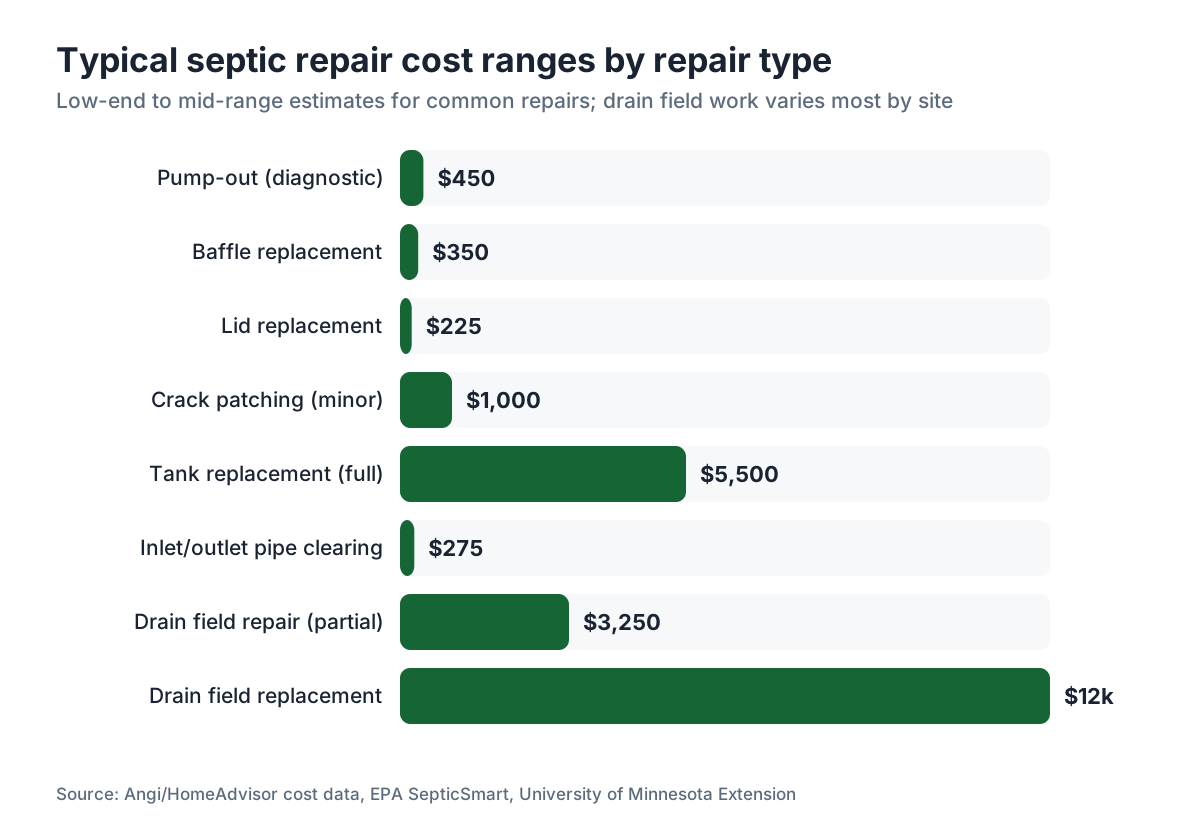
Cost swings hard by problem type, tank age, access difficulty, and which state you're in. The table below pulls real ranges from industry and government sources.
| Repair type | Typical cost range | Notes |
|---|---|---|
| Pump-out (diagnostic first step) | $300 to $600 | National average; rural areas higher [4] |
| Baffle replacement | $200 to $500 | Often same visit as pump-out |
| Lid replacement | $50 to $400 | Concrete lid vs. plastic riser kit |
| Crack patching (minor) | $500 to $1,500 | Accessible, above water table |
| Tank replacement (full) | $3,000 to $8,000 | Concrete, standard size; more for fiberglass or poly |
| Inlet/outlet pipe clearing | $150 to $400 | Hydro-jetting |
| Drain field repair (partial) | $1,500 to $5,000 | Aeration, jetting, limited re-piping |
| Drain field replacement | $5,000 to $20,000+ | Site conditions, soil type, local permits [3] |
Those drain field numbers are wide on purpose. A simple trench replacement in sandy soil with easy access might land at $5,000. A mound system on a tight lot with poor perc in the Northeast can run $20,000 to $30,000. Nobody should quote a final number without walking the site.
The diagnostic pump-out is money you'd spend on maintenance anyway. Frame it that way. You aren't paying for a diagnosis. You're getting the diagnosis on top of maintenance you already owed the tank.
For a full cost breakdown by system type, see our guide on cost to install septic system.
Can you fix a septic tank yourself, or do you need a permit?
Homeowners get in trouble here, and rarely from the physical work. It's the legal side that bites.
Almost every state requires a permit for any repair involving excavation, pipe modification, tank replacement, or drain field work. Many require that a licensed onsite wastewater professional pull the permit and do the work. The rules swing widely. Some states let homeowners swap a lid or baffle without a permit. Others demand a licensed installer for anything past pumping.
North Carolina requires a permit for repair or replacement of system components under its onsite wastewater rules [5]. Florida requires a licensed septic contractor, registered under Chapter 489, Part III of the Florida Statutes, for repairs involving excavation or component replacement [6]. Check your state's environmental or health department site before you pick up a shovel.
What most homeowners can legally and safely do without a contractor: replace a broken lid with a new concrete lid or approved plastic cover, drop in a pre-made riser kit that fits an existing access point, and clear minor surface-level root intrusions. That's about the whole list.
Everything else belongs to a licensed pro. That includes baffle replacement, which means going inside the tank, any crack repair, and all drain field work. Tanks hold hydrogen sulfide gas that can kill within seconds at high concentration. OSHA classifies septic tanks as permit-required confined spaces, which means entry demands training, atmospheric testing, and specific equipment [7]. A DIY baffle swap is not worth dying over.
What's involved in fixing a cracked septic tank?
Cracks in concrete tanks come eventually. Concrete starts alkaline, but hydrogen sulfide in the headspace turns it acidic and eats it over decades. Uneven soil settlement cracks tanks too, worst in heavy clay or hard freeze-thaw country.
Minor surface cracks above the liquid line can sometimes be patched from inside, by a confined-space-certified technician, with hydraulic cement or polyurethane crack filler. The patch surface has to be dry and clean, which is exactly why pumping first is non-negotiable. Done right, these patches hold for years in stable soil.
Through-cracks at or below the waterline are harder. A crack leaking effluent into the soil is a groundwater contamination problem. Most state codes require you to notify the local health department and set a repair or replacement timeline. Patching a through-crack from inside only works if soil pressure isn't prying it open from outside. A contractor has to judge whether the patch is structurally sound or whether the tank is done.
Fiberglass and polyethylene tanks fail differently. They flex more but develop stress fractures at fittings. They generally don't take a permanent patch, so fitting replacement is common. Full replacement of a poly or fiberglass tank is sometimes cheaper than concrete, because the tank weighs far less and the excavation equipment costs drop.
If replacement is required, the new tank has to meet your state's current code. That may mean a larger size than the original if household size or water use has grown since the tank went in [5].
How do you fix a septic drain field that's failing?
The drain field eats most septic repair money, and it's where most of the confusion lives. Fields fail because biomat, a biological layer of microorganisms and organic particles, builds up in the soil pores and hydraulic conductivity drops to near zero. Effluent can't sink in, so it backs up into the tank, the tank fills, and you get every classic failure symptom.
Pumping the tank does not fix biomat. It buys temporary relief by opening headspace in the tank. If the field can't drain, the problem comes back within days to weeks.
A few real options exist:
Rest the field. If your system has a backup field, divert to it and let the primary rest six to twelve months. Aerobic bacteria sometimes consume the biomat in that window. This works in some cases, mostly when the clogging is recent and the soil type is favorable. Cost is just the diversion valve work, but it's not reliable.
Aeration or fracturing. Injecting air or water under pressure into the trenches can break up biomat and restore some permeability. Machines like the Terralift use pneumatic fracturing. Results are genuinely mixed. Some contractors swear by it, others watch it fail over and over. Cost runs $1,000 to $3,000. Worth trying on a partially failed field before you commit to full replacement.
Pipe replacement within existing trenches. If the distribution pipe is crushed or root-choked but the soil is still permeable, replacing just the pipe without tearing up the gravel bed can restore flow. A legitimate targeted repair.
Full drain field replacement. New trenches, new distribution pipe, new gravel or approved aggregate, new perforated pipe. This needs a fresh site evaluation and perc test in most states, a permit, and inspection. The new field may sit somewhere else if the old soil is judged permanently saturated. On tight lots, the state may require an alternative system: mound, drip irrigation, or an aerobic treatment unit. Our full guide on septic drain field goes deeper.
A failed drain field is the most expensive septic repair by a wide margin, and the one homeowners try hardest to put off. That delay almost always makes it worse. Once the saturated soil around the trenches compacts further, the permeability loss turns permanent faster.
What septic tank repairs require a licensed contractor?
Short answer: most of them. Any work that means entering the tank, excavating components, modifying pipe connections, or touching the drain field requires a licensed onsite wastewater professional in nearly every state.
The licensing structure differs by state. Some license septic installers or onsite wastewater contractors separately from plumbers. Others fold it into the plumbing license. A handful, notably Texas and several southeastern states, have a dedicated licensed on-site sewage facility installer credential run by the state health or environmental agency [8].
For inspections tied to real estate deals, many states add a separate septic inspector credential or require a licensed sanitarian or registered environmental health specialist to do the inspection.
Mechanical work on pump chambers, float switches, and effluent pumps often brings in a licensed electrician alongside the septic contractor, because electrical connections in a wet, gas-producing space carry real hazard.
Ask to see the contractor's license number and verify it with your state licensing board before you sign anything. A surprising share of septic complaints filed with state agencies trace back to unlicensed contractors who did bad work and then vanished.
Operators juggling multiple service calls can track permit status and inspection scheduling in one place. SepticMind's service operations platform is built for that workflow.
How do you find and access your septic tank for repairs?
You can't fix what you can't find. On a lot of older properties the tank isn't marked and the lids sit 6 to 18 inches down. Here's how to find it.
Start with property records. Most county health departments keep as-built drawings or permit files for septic systems installed after the 1970s or 1980s. Pull the permit file. It usually has a site diagram showing tank location relative to the house. Some states put these online.
If records are missing or vague, find the main sewer line leaving the house, usually a 4-inch pipe out of the foundation, and follow it. Most tanks sit 10 to 25 feet from the house, directly in line with that pipe. A metal probe pushed into the soil at intervals hits the concrete lid. A plumber can also run a pipe locator camera through the cleanout and track the signal.
Once you find it, you'll usually need to dig out both access lids, inlet and outlet compartments, for a proper inspection. That's the moment risers earn their keep. After the repair, install polyethylene riser extensions so the lids sit at or just below grade. Future pump-outs and inspections then cost less because nobody has to dig. A septic tank riser kit for a standard 20-inch or 24-inch opening runs $100 to $300 for materials.
For routine septic tank pumping intervals and what a standard service visit looks like, that guide walks through what technicians actually do on arrival.
What should you not flush or pour down the drain if you're trying to fix or protect a septic system?
This is a maintenance question, but it belongs in a repair article, because most premature septic failures trace back to what went into the system, not to structural defects.
The tank runs on a living population of anaerobic bacteria that breaks down solids. Antibacterial soap in small amounts is fine. A household dumping bleach or strong disinfectants regularly knocks bacterial activity way down. The EPA SepticSmart program names the threats directly: "Never pour fats, oils, grease, or harsh chemicals down your drains" [1].
Non-flushable wipes are now the single most common physical cause of inlet baffle blockage and pump impeller damage in systems with pump chambers. The word "flushable" on the package means nothing for a septic tank. Those wipes don't break down the way toilet paper does [9].
Garbage disposals pile on solids. A household with a disposal typically needs pumping 30 to 50 percent more often than one without, per guidance from several state extension programs [10]. If your system is struggling, disconnecting the disposal is a free fix worth trying.
Prescription meds, paint, solvents, and pesticides can wipe out the bacterial population, and once they reach the drain field they're very hard to pull back out of the soil. None of that ever goes down a drain on a septic system.
How do you decide between repairing a septic system and replacing it entirely?
This is the question homeowners dread, and the honest answer is that it depends on a calculation most people never run: the age of the system, the repair cost against replacement cost, and how long you plan to stay in the house.
A concrete tank from the 1970s or 1980s might be 40 to 50 years old. Concrete septic tanks have a design life of roughly 40 years when maintained well, though plenty last longer [2]. If that tank needs a major structural repair and the drain field is showing early failure signs, sinking $5,000 into a system that may need full replacement in five years is a bad bet.
Flip it around. A 20-year-old tank with one broken baffle has a cheap fix and decades of life left. Replacing that tank is pure waste.
The rough breakeven most contractors use in their heads: if the repair costs more than 40 to 50 percent of the replacement cost, replacement deserves a hard look, especially past the expected design life. For reference, a full conventional replacement, tank plus drain field, typically runs $10,000 to $25,000 depending on location and system type [3]. Our detailed look at cost to put in a septic tank covers replacement specifics.
For a real estate deal, get this analysis in writing from a licensed inspector before the inspection contingency expires. A failing septic system is a material defect in most states, and sellers are generally required to disclose known failures.
SepticMind's inspection scheduling and records tools help contractors document condition history, so a homeowner sees where the system stands over time instead of one snapshot from a single visit.
What are the steps to take immediately if your septic system is actively failing?
Active failure means sewage surfacing in the yard or backing up into the house. Both are health emergencies. Move fast.
First: stop adding water. Turn off the dishwasher and washing machine, and cut toilet flushes to the bare minimum. Every gallon you add makes it worse and can push more sewage to the surface.
Second: keep children and pets off any wet or smelly patch in the yard. Surfacing effluent carries pathogens including E. coli and fecal coliforms. Treat the area as contaminated until the system is fixed and the soil dries out.
Third: call a licensed septic contractor, not a plumber, unless you have an indoor sewer backup that needs clearing first. Explain what's happening and ask for same-day or next-day service. Most contractors bump active failures to the front of the line.
Fourth: check whether your state requires reporting a surfacing sewage event to the local health department. Many do. In some states the contractor handles it once on site; in others the homeowner is on the hook. A quick call to the county health department to ask won't create problems. Failing to report when required can.
Fifth: photograph everything before any work starts. That matters for insurance claims, real estate disclosures, and any contractor dispute later.
For a full breakdown of what a professional septic system repair visit looks like, including the questions to ask and what the technician should hand you in writing, that guide covers the call start to finish.
For normal pump-out timing so you never get here, see how often to pump septic tank.
Frequently asked questions
Can a broken septic tank be repaired or does it always need to be replaced?
Most broken septic tanks can be repaired rather than replaced. Broken baffles, cracked lids, and minor wall cracks are routine repairs costing a few hundred to a couple thousand dollars. Full replacement becomes the right call when structural cracking is extensive, the tank leaks effluent into the soil and can't be patched reliably, or the system is already 40-plus years old and another major component also needs work.
How long does it take to fix a septic tank?
Simple repairs like baffle replacement or lid swaps can happen the same day as a pump-out, usually 2 to 4 hours on site. Crack repairs that need excavation and patching take 1 to 2 days. Full tank replacement runs 1 to 3 days depending on access. Drain field repairs or replacement take 3 to 10 days, plus the time to secure permits, which can add 2 to 8 weeks in many jurisdictions.
What happens if you don't fix a failing septic system?
An unfixed failing system keeps getting worse and the costs grow fast. Untreated drain field saturation causes permanent soil clogging. Effluent surfacing in the yard creates a public health hazard from fecal pathogens. In most states, a known failed system left unrepaired is a code violation subject to fines. Real estate sales are typically blocked until a failed system is repaired or replaced and a passing inspection is documented.
How do I know if my septic tank is full vs. actually broken?
A full tank and a broken one look identical from inside the house: slow drains, gurgling, odors. The difference shows during a pump-out. If the technician pumps the tank and it drains fast with no backup from the field, the problem was simple fullness. If the tank refills within hours, or pumping reveals damage to baffles, walls, or pipes, something is broken. Never try to diagnose without pumping first.
How much does it cost to replace a septic tank only (not the drain field)?
Replacing a standard 1,000-gallon concrete tank without touching the drain field typically costs $3,000 to $8,000 depending on region, site access, and whether the existing drain field connections need modification. Fiberglass or polyethylene tanks of similar size cost a bit more for the tank itself but less in excavation labor because they weigh less. Get at least two quotes; pricing varies a lot by contractor.
Can tree roots damage a septic tank and how do you fix it?
Yes. Tree roots enter through hairline cracks in concrete and through pipe joints at the inlet and outlet. Inside a tank, roots rarely cause major structural damage but they block baffles and pipes. In inlet and outlet pipes, roots are a frequent cause of blockage that clears with hydro-jetting ($150 to $400). Preventing a repeat means removing the offending tree or installing root barrier fabric around the pipes, which a contractor can quote.
Does homeowners insurance cover septic tank repairs?
Most standard homeowners policies exclude septic system repairs. They cover sudden accidental damage, like a truck crushing the lid, but exclude wear, deterioration, and gradual failure, which describes nearly every septic failure. Some insurers offer a separate service line or systems breakdown endorsement that covers certain septic repairs for roughly $3 to $10 per month. Read the endorsement carefully; drain field replacement is often still excluded.
What size septic tank do I need when replacing an old one?
Most state codes set minimum tank size by the number of bedrooms, not actual occupancy. A 3-bedroom home typically requires at least a 1,000-gallon tank; a 4-bedroom home often requires 1,250 gallons; 5 bedrooms commonly requires 1,500 gallons. Your state or county health code controls this, and the new tank must meet current code even if the old one was smaller. A licensed installer specifies the correct size when pulling the permit.
How do you fix a septic tank that smells?
Sewage odor has several sources. A sulfur smell outside near the tank usually means a broken or missing inlet baffle letting gas escape, or a cracked lid. Inside the house, odor often comes from a dry p-trap or a plumbing vent issue, not the tank. Have the tank pumped and inspected: replace broken baffles and reseal or replace the lid. If odor persists after confirmed tank repairs, have a plumber check the vent stack on the roof.
Is it safe to be around a failing septic system?
Surfacing effluent is a real health hazard. It carries fecal coliforms, E. coli, and other pathogens that cause gastrointestinal illness through skin contact or accidental ingestion. Children and immunocompromised people face higher risk. Keep people and animals off any wet, smelly patch in the yard until the system is repaired. Wash hands thoroughly after any contact with the area. Contact your county health department if sewage is surfacing near a well.
Can you use additives or bacteria treatments to fix a septic tank problem?
Additives marketed to restore drain fields or boost bacteria have a poor track record. The EPA reviewed available data and found no scientific evidence that septic additives help, and some biological and chemical additives can harm the drain field or contaminate groundwater. The EPA does not endorse any septic additive. If a system is failing from biomat or overloading, additives are no substitute for physical repair or proper pumping intervals.
How do you fix a septic system after it has been flooded?
After flooding, do not pump the tank while the soil is still saturated; an empty tank can float out of the ground when the water table is high. Wait for the flood water to recede. Limit water use in the house until the soil drains. Have a licensed inspector evaluate the system once it's accessible: look for flotation damage, shifted pipes, and debris in the tank. In most cases a post-flood pump-out and inspection is enough if no structural damage occurred.
How do permits work for septic tank repair?
Permit rules vary by state and sometimes by county. Minor repairs like lid replacement may not need a permit in many jurisdictions. Anything involving tank replacement, drain field repair, or pipe modification almost always does. The permit is typically pulled by the licensed contractor, not the homeowner. It triggers an inspection by the local health or environmental department before backfilling. Skipping permits can bring fines and, worse, problems when you try to sell.
Sources
- EPA SepticSmart Program: Have your septic system inspected every 3 years and tank pumped when necessary; never pour fats, oils, grease, or harsh chemicals down drains.
- EPA, Septic System Owner's Manual: A broken outlet baffle allows solids and scum to reach the drain field; concrete septic tanks have a typical design life of roughly 40 years.
- Angi, Septic System Replacement Cost Guide: Full conventional septic system replacement (tank plus drain field) typically runs $10,000 to $25,000 depending on location and system type.
- Angi, Septic Tank Pumping Cost Guide: National average septic tank pump-out cost is approximately $300 to $600.
- North Carolina Department of Health and Human Services, Onsite Wastewater Program: North Carolina requires a permit for repair or replacement of onsite wastewater system components, and the new tank must meet current code.
- Florida Department of Health, Onsite Sewage Program: Florida requires a licensed septic contractor under Chapter 489 Part III for septic repairs involving excavation or component replacement.
- OSHA, Confined Spaces in Construction (29 CFR 1926 Subpart AA): Septic tanks are permit-required confined spaces; entry requires specific training, atmospheric testing, and equipment.
- Texas Commission on Environmental Quality, On-Site Sewage Facilities Program: Texas maintains a dedicated licensed on-site sewage facility installer credential managed by the state environmental agency.
- The Water Research Foundation: Wipes labeled flushable do not degrade in septic tanks the way toilet paper does and contribute to blockage and pump damage.
- University of Minnesota Extension, Septic System Owner's Guide: Households with a garbage disposal typically need the septic tank pumped 30 to 50 percent more frequently than those without one.
- EPA, Homeowner's Guide to Septic Systems: EPA reviewed available data and found no scientific evidence that septic additives benefit system performance; some can harm drain fields or groundwater.
- National Onsite Wastewater Recycling Association (NOWRA): Industry guidance on septic system repair decisions, replacement thresholds, and licensed contractor requirements.
Last updated 2026-07-09