Best bathroom tissue for septic systems: what actually works
By the SepticMind Editorial Team
TL;DR
- Single-ply or rapid-dissolve toilet paper is safest for septic systems.
- Look for tissue labeled 'septic-safe' or 'rapid-dissolving' that breaks apart in under 10 seconds when agitated in water.
- Scott 1000, Seventh Generation, and Cottonelle Ultra are consistently strong performers.
- Thick quilted papers and flushable wipes are the two biggest offenders.
Does toilet paper brand actually matter for a septic system?
Yes. A lot.
Your septic tank is a living biological system. Bacteria break down solids in the tank, and everything that doesn't break down either floats as scum, sinks as sludge, or, worst case, moves out toward your drain field where it has no business being. Toilet paper that dissolves slowly adds to the sludge layer faster than bacteria can process it, which means you pump the tank more often and, in bad cases, push partially digested paper fibers into the leach field where they clog soil pores and kill the field.
A new drain field runs $3,000 to $15,000 or more depending on soil conditions and local labor [1]. A premium roll of rapid-dissolve toilet paper costs maybe $0.50 more than the budget quilted kind. The math is not complicated.
The EPA's SepticSmart program, one of the more credible homeowner-facing resources on this, lists "only flush toilet paper" as a core guidance item and warns against flushing paper products that don't break down quickly [2]. That's not a generic disclaimer. Paper is the largest non-water, non-waste material entering most residential septic tanks by volume.
What makes toilet paper 'septic-safe'?
No federal standard sits behind the phrase 'septic-safe.' Any manufacturer can print it. What you actually want is toilet paper that disintegrates fast in water, ideally within about 10 seconds of agitation, and doesn't leave long fiber strands behind.
Two things determine this: ply count and fiber length. Single-ply paper uses shorter fibers and less binding agent, so it falls apart faster. Ultra-soft multi-ply papers use longer fibers and sometimes synthetic binders to hold that plush texture together. That's the exact opposite of what you want downstream.
The standard slosh test is simple enough to do at home. Put a few sheets in a jar with water, seal it, shake it for 10 seconds, and see what you have. Good tissue is basically dissolved. Thick bath tissue looks like wet paper mache.
Bone-dry fiber weight isn't publicly reported by most brands, but state extension programs have run breakaway testing. University of Illinois Extension has noted that recycled-content and single-ply papers consistently outperform virgin-fiber ultra-plush products in dissolution tests [3]. Recycled paper uses shorter, already-processed fibers that come apart more easily.
None of this means you have to sandpaper yourself. There are genuinely comfortable rapid-dissolve options now. The market got a lot better over the past decade.
Which toilet paper brands perform best for septic systems?
Based on independent dissolution testing, ply count, fiber type, and field use reported in septic professional forums and extension literature, here are the standouts.
Scott 1000 is the one septic pumpers and extension agents name most. It's single-ply, dissolves in seconds, and holds up fine in normal use. It's not plush. It's functional. If you're on septic and not already using it, it's the easiest upgrade you can make.
Seventh Generation 100% Recycled scores well because of the shorter recycled fiber. It's two-ply but breaks apart almost as fast as Scott 1000, since recycled fibers have less structural integrity (in the good way).
Cottonelle Ultra Clean does better than most "ultra" products because its ripple texture needs less paper per use, and the fiber structure comes apart more predictably than other extra-thick sheets.
Angel Soft sits mid-pack. Two-ply, cheaper, dissolves acceptably. Not the best choice, but it won't destroy a properly maintained system.
Charmin Ultra Soft and Ultra Strong are the two you most want to avoid. Ultra Strong is engineered to resist tearing, which is exactly what you don't want in a tank. Pumpers report it as a repeat culprit in tanks that fill faster than expected.
RV and marine tissue (Freedom Living, Thetford, Scott Rapid-Dissolving) dissolves almost instantly because it's built for holding tanks with minimal water and no bacteria. It works fine in residential septic systems and is worth a look if you're on a high-use property or have an older tank.
| Brand | Ply | Fiber Type | Dissolution Speed | Septic Recommendation |
|---|---|---|---|---|
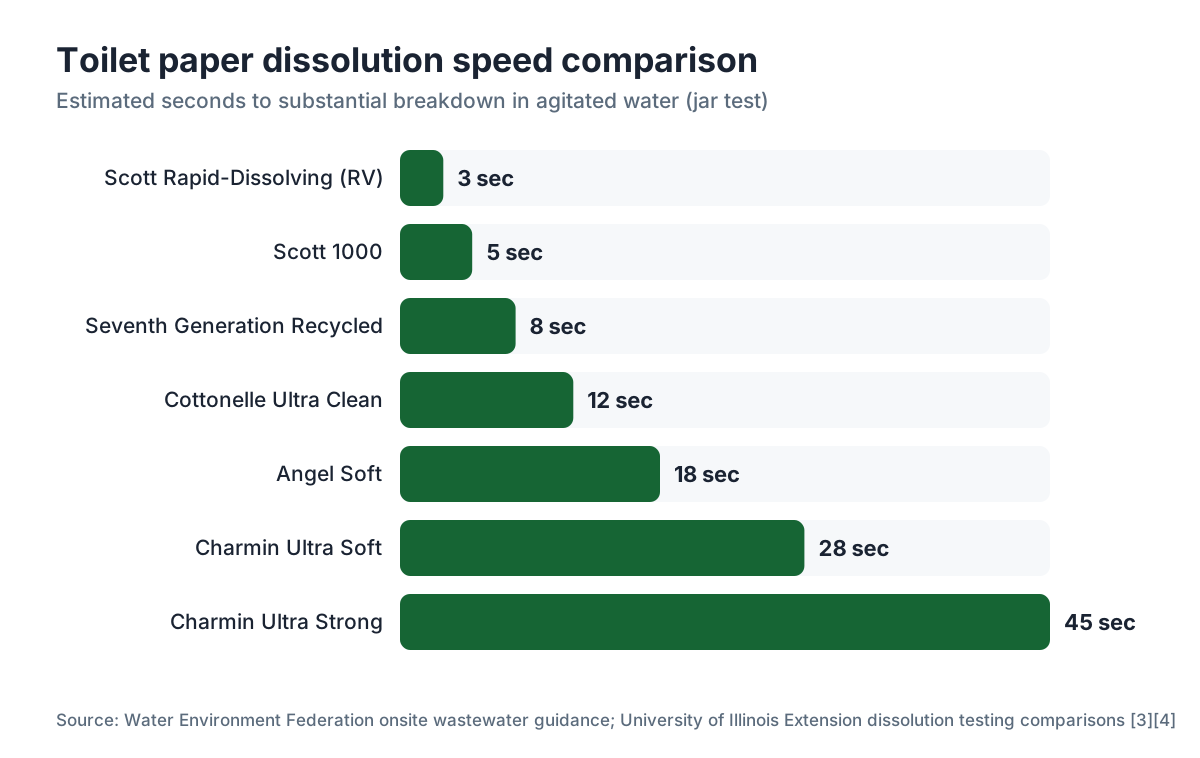
| Scott 1000 | 1 | Virgin, short | Very fast (~5 sec) | Strong yes |
| Seventh Generation Recycled | 2 | Recycled | Fast (~8 sec) | Yes |
| Cottonelle Ultra Clean | 2 | Virgin | Moderate-fast | Yes |
| Angel Soft | 2 | Virgin | Moderate | Acceptable |
| Charmin Ultra Soft | 2 | Virgin, long | Slow | Use sparingly |
| Charmin Ultra Strong | 2 | Virgin, long | Very slow | Avoid |
| Scott Rapid-Dissolving (RV) | 1 | Virgin, ultra-short | Extremely fast | Best option |
These dissolution estimates reflect published water-disintegration testing and line up with guidance from the Water Environment Federation's onsite wastewater resources [4].
Should you use 1-ply toilet paper with a septic system?
Not necessarily, but 1-ply is the lower-risk default.
Single-ply paper falls apart faster almost regardless of brand, because there's one less layer of fiber to dissolve and less bonding agent holding the layers together. Fiber type matters as much as ply, though. A good recycled-fiber 2-ply can beat a cheap virgin-fiber 1-ply in dissolution tests. So ply count is a useful heuristic, not a hard rule.
The practical argument against a strict 1-ply-only rule is that people use more of it. If someone reaches for four times the paper to make up for comfort, the net load on the tank goes up. The goal is low fiber volume, and a 2-ply rapid-dissolve product used normally can get you there.
Guests, older family members, kids who won't tolerate thin paper: a quality recycled 2-ply is a fair middle ground. Don't fight the behavior. Solve it with a better product.
Are 'flushable' wipes actually safe for septic systems?
No. Not reliably.
This is one of the best-documented sources of septic and sewer problems in the country. The word 'flushable' means only that the wipe passes through the toilet trap without clogging it. It says nothing about breaking down in a septic tank or downstream infrastructure.
The Water Research Foundation tested products labeled 'flushable' and found that none dispersed to the degree needed to be safe in collection systems [6]. Their work, cited across state wastewater guidelines, found that wipes kept their structure through the same agitation cycles that fully dissolve toilet paper.
In a tank, wipes settle into the sludge layer, don't break down, and pull your pumping date closer. In a pump chamber or effluent pump, they wrap around the impeller and burn out the motor. A replacement septic effluent pump runs $300 to $700 for the pump alone, plus the service call [7].
Want the wipe experience? Wet your toilet paper at the sink or use a bidet. Both have zero downstream risk.
How does toilet paper choice affect how often you need to pump your tank?
Toilet paper feeds the sludge and scum layers in your tank. Those layers build until you pump. The EPA and most state guidelines recommend pumping a residential tank every 3 to 5 years for a typical household [2], but that range assumes normal toilet paper use, not heavy quilted tissue or wipes.
Nobody has clean controlled-study data on exactly how many inches per year different papers add to sludge depth. The honest answer is it varies by household size, tank volume, and bacterial health. What pumpers report is anecdotal but consistent: homes using thick virgin-fiber tissue or wipes often hit the pump threshold a year or two sooner than homes using rapid-dissolve products.
Take a 1,000-gallon tank serving four people. At normal use, you add roughly 1.5 to 2 inches of sludge per year. You pump once combined sludge and scum fill more than a third of tank capacity. Tissue that dissolves well gives your bacteria a chance to keep up. Tissue that sits intact means more piles in than gets processed.
For the full picture on schedules, see our guide on how often to pump a septic tank.
A septic tank pumping job usually runs $300 to $600 for a standard residential tank. If your paper choices drag you from a 4-year cycle to a 2-year cycle, that's an extra $300 to $600 every two years that a better roll could have prevented.
Does recycled toilet paper harm septic systems?
Recycled paper is better for most septic systems, not worse.
The worry you sometimes hear is that recycled paper carries bleach byproducts or processing chemicals that hurt the bacteria in your tank. In practice, the chemical load from recycled toilet paper is tiny next to the antibacterial soaps, cleaners, and medications already flowing into most systems every day.
What recycled paper has going for it is shorter fiber. Paper processed once already has shorter, more fragmented cellulose. Those fibers come apart in water faster than long virgin cellulose. EPA's WaterSense-aligned guidance and independent dissolution testing both point the same way: recycled-content and bamboo papers tend to break down faster than conventional virgin-fiber options [2][3].
Bamboo toilet paper, a newer category, scores well for the same reason. Bamboo fiber is naturally short and dissolves readily. Brands like Reel and Who Gives a Crap (their bamboo line) have performed well in community-level testing shared by septic and plumbing pros.
What other bathroom products are dangerous to flush with a septic system?
Toilet paper is the one thing that belongs down the toilet. Everything else goes in the trash.
The list of problem products is long, but the biggest offenders beyond wipes are these.
Cotton products. Q-tips, cotton balls, and feminine hygiene products don't break down. They build up in the tank and eventually reach the inlet baffle or the drain field.
Paper towels and facial tissue. Kleenex and Puffs are engineered to hold together wet. That's the whole design. They will not dissolve in your tank.
Medications and harsh chemicals. Bleach in bulk, toilet bowl tablets loaded with biocides, and prescription drugs can knock back the bacteria in your tank. The FDA and EPA both advise against flushing medications [8]. Most states now run drug take-back programs.
Cat litter. Even 'flushable' clay and crystal litters swell in water and have caused pump failures and field clogs. Several states prohibit flushing cat litter under their onsite wastewater rules [9].
Condoms and dental floss. Both wrap around pump impellers and baffles and are basically indestructible in an anaerobic tank.
The simplest operating rule: if it's not toilet paper, it doesn't get flushed.
How do you test toilet paper at home for septic safety?
The jar test is the most reliable DIY method and costs nothing.
Fill a quart mason jar about two-thirds with room-temperature water. Tear off a length of toilet paper close to what you'd normally use, say 4 to 6 sheets. Drop it in, screw on the lid, shake hard for 10 seconds, then look.
Good tissue: mostly dissolved, small fragments, no intact sheet structure.
Acceptable tissue: broken into pieces, no large intact sections.
Avoid this tissue: the sheet is still largely intact, holding together in visible layers.
You can run this across several brands in an afternoon. The results are usually stark and match what the professional dissolution tests show. Scott 1000 is hard to spot after 10 seconds of shaking. Charmin Ultra Strong looks like you just shook a wet paper towel.
Some people run a second round with hot water to mimic tank temperature. Skip it. Septic tanks run around 60 to 70 degrees Fahrenheit, so room-temperature water is actually closer to real conditions than hot tap water, and the results don't change much either way.
If you want to track your system's health more systematically, tools like SepticMind let you log pumping dates, paper changes, and maintenance history so you see patterns over time instead of guessing.
Does toilet paper affect septic tank additives and bacteria?
Slow-dissolving toilet paper cuts into your tank's bacterial performance, but not mainly through chemistry. The mechanism is physical. When fibers don't break down, they take up tank volume, shorten the retention time bacteria need to process waste, and can clog the effluent screen at the outlet.
Commercial septic additives (enzyme products, bacterial inoculants) get sold as fixes for paper and waste buildup, but the evidence for them is thin. The EPA's review of septic additives found no consistent evidence that they improve system performance or stretch pump intervals [2]. State agencies, including the Minnesota Pollution Control Agency, say plainly that additives are no substitute for proper maintenance [10].
The better spend is simpler: use paper that dissolves well, stay current on septic tank cleaning and pumping, and avoid the products above. A healthy tank with a reasonable paper load doesn't need additives. An unhealthy tank with a bad paper load won't be saved by them.
What do septic inspectors look for related to toilet paper?
During a septic tank inspection, an inspector opens the tank and measures sludge depth, scum thickness, baffle condition, and effluent quality. They aren't cataloging your toilet paper brand, but the evidence of your choices is right there in front of them.
Abnormally fast sludge buildup since the last pump, visible paper chunks in the liquid layer (the zone between sludge and scum), or paper fibers on the effluent filter all point to non-dissolving material entering the tank. Inspectors record these and often flag them in the report as signs of a maintenance problem.
Selling your house and facing an inspection? Switching to rapid-dissolve paper three to six months out won't undo years of thick tissue, but it slows the ongoing buildup. The tank's condition reflects cumulative history more than last month's inputs.
Requirements vary by state. Massachusetts Title 5, for one, sets specific pass/fail thresholds for sludge and scum depth as a percentage of tank volume [11]. Most states tie required pumping to those measured thresholds.
For more on what inspections cover and cost, see our septic tank inspection guide.
Is there a difference between toilet paper brands for older vs. newer septic systems?
Yes, and older systems have less room for error.
A newer system with a properly sized tank, intact baffles, a working effluent filter, and a healthy drain field carries some resilience. Use thicker paper now and then, and it handles the load over short stretches.
An older system, say one from the 1970s or 1980s, likely has a smaller tank by today's standards. Many older tanks run 750 to 1,000 gallons for households that would now require 1,250 to 1,500 gallons under modern sizing codes. Add deteriorating concrete baffles and a drain field already working at the edge of its capacity, and tissue choice matters more because the margin is thinner.
Older system and unsure of its condition? A pump-out and inspection is the right first move before you fuss over paper brands. See our guides on septic tank pump out and septic system repair for what to expect if problems turn up.
The EPA's SepticSmart materials call out older systems as higher-risk for failure and recommend more frequent inspections and conservative maintenance for systems over 20 years old [2].
What's the bottom line on choosing toilet paper for a septic system?
Here's what I'd actually do, and what I'd tell a neighbor.
Buy Scott 1000 or a rapid-dissolve RV tissue for everyday use. Need something softer for family reasons? Seventh Generation recycled 2-ply is a solid compromise. Do the jar test with whatever you're using right now, just once, so you can see for yourself what's been going into your tank.
Stop flushing wipes. Full stop. Even the ones labeled 'flushable.' If comfort is the issue, get a bidet attachment; a decent unit runs $30 to $80 and pays for itself fast against the pump schedule.
Keep a maintenance log. Each time you pump, note the sludge depth and the date. Track it over time and you'll know whether your habits are working. If your pump interval keeps creeping shorter, something is wrong, and tissue choice is one of the first things to check.
SepticMind's homeowner maintenance tracker keeps those records organized and reminds you when you're near a typical pump interval, but a paper log in the utility closet works just as well.
The system you own is a big piece of your property's value. A conventional septic system costs $10,000 to $30,000 or more to replace [12]. Protecting it with the right toilet paper is about the cheapest maintenance decision you'll ever make. For a broader look at long-term cost, see our guide on the cost to install a septic system.
Frequently asked questions
Is Charmin toilet paper safe for septic systems?
Charmin Ultra Soft is usable in moderation but not ideal. Charmin Ultra Strong should be avoided. Both use long virgin fibers and multi-layer construction that dissolves slowly next to 1-ply or recycled options. The jar test confirms it: Ultra Strong keeps its sheet structure well past the 10-second mark. If Charmin is your household preference, use it sparingly and pump on the shorter end of the recommended interval.
What toilet paper do plumbers and septic pumpers actually recommend?
Scott 1000 comes up most often when septic pumpers get asked informally. It's cheap, everywhere, dissolves almost instantly, and holds up for normal use. RV and marine rapid-dissolve papers are a close second for older systems or high usage. Most pumpers say to avoid Charmin Ultra Strong and any product labeled 'ultra' with a very plush, thick feel.
Can too much toilet paper damage a septic drain field?
Yes. Paper fibers that don't break down in the tank can reach the drain field through the effluent. Once in the field, fibers clog soil pores, cut percolation, and over time add to biomat on the soil surface. A clogged drain field usually needs either resting and rehab or full replacement, which runs $3,000 to $15,000 depending on size and soil. Rapid-dissolve tissue lowers this risk a lot.
Is bamboo toilet paper better for septic systems than regular toilet paper?
Generally yes. Bamboo fiber is naturally shorter than virgin wood pulp, so it breaks apart in water faster. Brands like Reel and Who Gives a Crap (bamboo line) perform well in dissolution tests. Bamboo paper also tends to be unbleached or lightly processed, cutting chemical load on tank bacteria. It costs more than conventional tissue but is a strong choice for households that care about both septic health and sustainability.
How many sheets of toilet paper can a septic tank handle per day?
There's no widely accepted per-sheet threshold. What matters is total fiber load against bacterial processing capacity. A healthy 1,000-gallon tank for 2 to 4 people handles normal toilet paper use with rapid-dissolve tissue. Trouble comes with very high use, tissue that won't dissolve, or tanks undersized for the household. If you're consistently at 6 to 8 people on a standard residential tank, tank size matters more than brand.
Are septic-safe labels on toilet paper regulated by any government agency?
No. The label 'septic-safe' has no legal definition under federal law and isn't regulated by the EPA or FTC as a specific product claim. It functions as marketing. The more useful indicators are dissolution speed (jar test), ply count, and fiber type. Recycled-content and single-ply papers are more reliably safe whether or not they carry the 'septic-safe' label.
Do flushable wipes break down in a septic tank?
No. Testing by the Water Research Foundation found that products labeled 'flushable' kept their structure through standard agitation tests that fully dissolve toilet paper. In a tank, wipes pile up in the sludge layer and don't break down. They also wreck effluent pumps by wrapping around impellers. No wipe product should be treated as safe for septic systems, no matter how it's labeled.
Does Scott 1000 break down fast enough for a septic system?
Yes. Scott 1000 is one of the fastest-dissolving mainstream toilet papers you can buy. In the jar test it's basically unrecognizable after 10 seconds of shaking. It's single-ply with short virgin fibers and minimal bonding agent. Septic professionals name it more than anything else, and it lands at the top of both informal and formal dissolution comparisons. The tradeoff is comfort; it's functional, not plush.
What's the best toilet paper for a septic system with an effluent pump?
For a pump system, use the fastest-dissolving paper you can find. RV and marine rapid-dissolve papers are the safest option because pump chambers have minimal retention time and little to no bacterial activity. Paper that reaches the pump intact can clog the pump or screen. Scott Rapid-Dissolving (the RV version) or Freedom Living marine tissue are both built for exactly this use and cost only slightly more than standard tissue.
How often should I pump my septic tank if I use regular toilet paper?
The EPA recommends every 3 to 5 years for a typical household using normal toilet paper [2]. Thick, slow-dissolving paper or wipes push you toward the short end of that range or worse. Rapid-dissolve tissue may let you stretch toward the long end if your household is average-sized. The only reliable way to know your actual interval is to measure sludge depth at each pump and track the accumulation rate.
Can toilet paper additives like lotion or aloe harm septic tank bacteria?
Possibly, in heavy use. Lotion and aloe additives are generally low-concentration, so the chemical load from normal use is small. They do add to the organic load, and some compounds may mildly inhibit bacteria over time. Unscented, additive-free tissue is always the conservative choice for septic. If you're choosing between scented lotion tissue and a plain recycled option, plain wins for septic health.
Is it worth buying septic-safe toilet paper if I'm on a shared septic system?
Yes, arguably more so. Shared systems serve more people, which means higher cumulative paper load. The tank and drain field have to process inputs from multiple households or units. Every household using rapid-dissolve tissue lightens the collective burden. If you're a property manager or on a homeowners association system, standardizing to Scott 1000 or equivalent across units is a low-cost way to stretch pump intervals and cut field stress.
What happens if you accidentally flush paper towels or facial tissue down a septic toilet?
A single incident is unlikely to cause immediate damage. Paper towels and facial tissue settle into the sludge layer and decompose very slowly, adding to the volume that needs pumping. The real concern is ongoing use. If someone in the house regularly flushes these, sludge builds faster than normal, the outlet baffle can clog with partially decomposed fiber mats, and you hit your pump threshold sooner. Correct the habit, more than the one flush.
Sources
- EPA, Onsite Wastewater Treatment Systems Manual: Drain field replacement costs and system component failure modes from septic solids loading
- EPA SepticSmart Program: Core guidance: only flush toilet paper; pump every 3-5 years; additives not supported by evidence; older systems are higher risk
- University of Illinois Extension, Septic System Maintenance: Recycled-content and single-ply papers consistently outperform virgin-fiber ultra-plush products in dissolution
- Water Environment Federation, Onsite Wastewater Treatment: Dissolution speed benchmarks and fiber-type performance in onsite wastewater contexts
- Water Research Foundation, Flushability Testing of Nonwoven Consumer Products: None of the wipes labeled 'flushable' dispersed to the degree needed for collection system safety in WRF testing
- Angi, Septic Pump Replacement Cost Guide: Septic effluent pump replacement cost range $300 to $700 plus service call
- FDA, How to Dispose of Unused Medicines: FDA advises against flushing most medications; recommends take-back programs
- California State Water Resources Control Board, Onsite Wastewater Treatment Systems Policy: State-level onsite wastewater regulations including prohibited flush items
- Massachusetts Department of Environmental Protection, Title 5 Regulations 310 CMR 15.000: Title 5 pass/fail thresholds for sludge and scum depth as percentage of tank volume
- Minnesota Pollution Control Agency, Septic Systems (SSTS): State guidance that septic additives are not a substitute for proper maintenance
- EPA, Septic System Costs and Economic Considerations: Conventional septic system replacement cost range $10,000 to $30,000 or more
Last updated 2026-07-09