Best home warranty for septic systems: what actually covers you
By the SepticMind Editorial Team
TL;DR
- Most standard home warranties exclude septic systems entirely.
- A handful of providers, including American Home Shield, Choice Home Warranty, and Select Home Warranty, sell septic add-ons or fold basic coverage into top tiers for $60 to $180 per year on top of a base plan.
- Coverage caps, drain field exclusions, and pre-existing condition clauses make the fine print the only thing that matters.
Do home warranties actually cover septic systems?
Most don't, not by default. The standard home warranty contract treats a septic system the way it treats your roof: something the homeowner maintains, not something the warranty company wants to touch. Pumping, drain field repairs, and most tank work fall outside the base plan at nearly every major provider.
Septic add-ons do exist, though. American Home Shield, Choice Home Warranty, Select Home Warranty, and a few regional players sell an optional septic rider, or they fold basic tank and pump coverage into higher-tier plans. You pay $50 to $180 extra per year for the add-on, on top of a base plan that already runs $400 to $700 annually [1].
Here's the trap. The marketing and the contract rarely agree. A plan advertises "septic coverage" while defining covered repairs so narrowly that a failed distribution box, a cracked pipe, or anything touching the leach field gets denied automatically.
Read the sample contract before you buy. Every reputable provider will send one on request. If a company won't, that tells you something.
Which home warranty companies offer septic coverage?
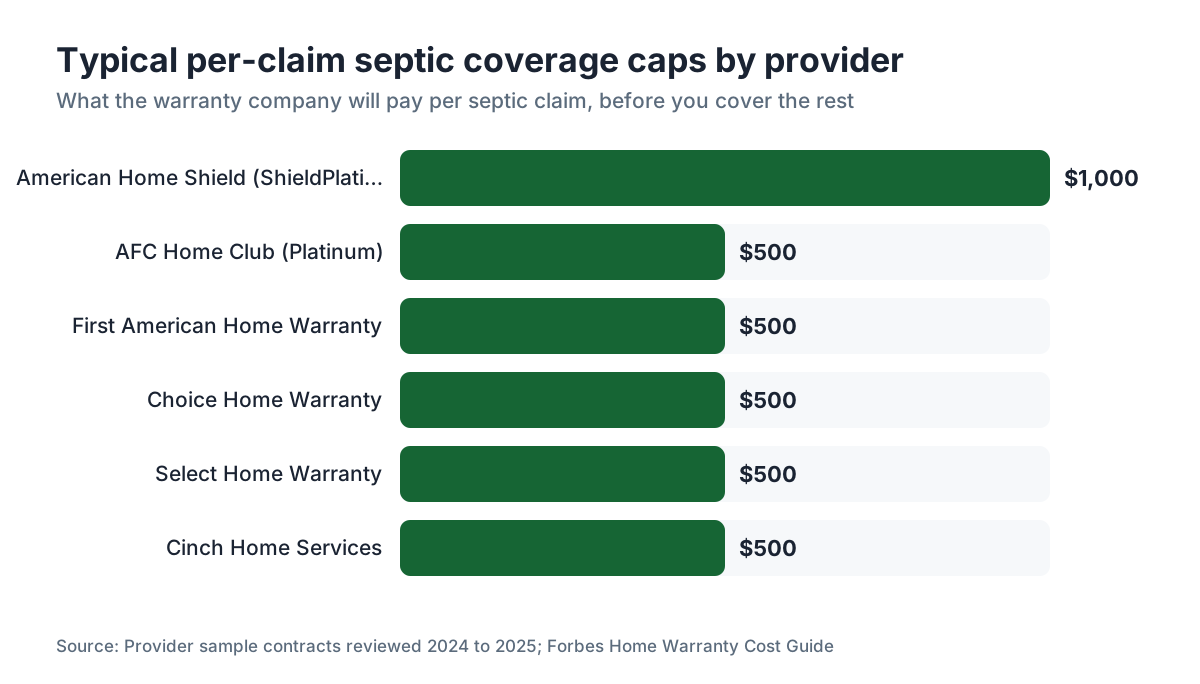
Six national providers offer some form of septic coverage, and they sort into two camps: optional add-ons capped at $500 per claim, or built-in coverage in a top tier. Here's how they stack up as of mid-2025. Coverage terms change, so verify directly with each company before you buy.
| Provider | Septic Coverage Type | Approx. Add-on Cost/yr | Stated Coverage Cap | Drain Field Covered? |
|---|---|---|---|---|
| American Home Shield | Optional add-on | ~$120 to $180 | $500 to $1,000 per claim | No (tank & pump only) |
| Choice Home Warranty | Optional add-on | ~$60 to $120 | $500 per claim | No |
| Select Home Warranty | Optional add-on | ~$60 to $100 | $500 per claim | No |
| AFC Home Club | Built into top tier (Platinum) | Included (~$700/yr base) | $500 per claim | No |
| First American Home Warranty | Optional add-on | ~$100 to $150 | $500 per claim | No |
| Cinch Home Services | Optional add-on | ~$80 to $140 | $500 per claim | No |
One fact jumps off that table. Nobody covers the drain field or leach field as part of a standard septic add-on. That's the single most expensive thing to replace, often $5,000 to $25,000 or more [2]. The $500 cap common to most plans won't come close to covering a pump replacement ($300 to $800 in parts) plus labor in most markets, let alone a tank repair.
Regional warranty companies sometimes offer better septic terms than the nationals, especially in rural states where septic is the norm rather than the exception. Get a quote from a state-specific provider if you live in a heavily rural area. The nationals write their contracts for suburbs on sewer.
What does septic warranty coverage actually include and exclude?
When a plan does cover septic, the included list is short: the septic tank itself (cracks, collapses), the sewage ejector pump or effluent pump, and sometimes the connecting pipes between house and tank. That's it.
The exclusions are where the real money lives. Nearly every plan explicitly excludes:
- The drain field or leach field, in its entirety
- Routine pumping and cleaning (see septic tank pumping for why this matters)
- Root intrusion damage
- Damage from improper use (flushing wipes, grease, and the like)
- Pre-existing conditions, defined broadly and invoked often
- Chemical treatments and biological additives
- Repairs tied to permit violations or non-permitted systems
- Concrete or cast-iron tank repairs (some contracts)
- Aerobic treatment units or alternative types (mound systems, drip systems, and so on)
That last point matters a lot for owners of alternative systems. If you have a mound system, an aerobic treatment unit, or a tiny home septic system like a small package plant, read the contract language slowly. Many contracts define "septic system" as a conventional gravity-fed system, which means your alternative system is uninsured under the same policy you're paying for.
Pre-existing condition clauses are the most common reason septic claims get denied [3]. Find any evidence of prior deterioration, corrosion, or a sloppy installation, and the company has grounds to walk away. On a system that's five or ten years old, that's nearly every claim.
How much does a home warranty with septic coverage cost per year?
A homeowner who wants septic included should budget $460 to $880 a year before any claim, and that assumes nothing breaks. Plan pricing has two parts: the annual premium and the service call fee (sometimes called a trade call fee or deductible), which you pay every time a technician shows up.
Here's a realistic breakdown:
- Base plan: $400 to $700/year
- Septic add-on: $60 to $180/year
- Service call fee: $75 to $125 per visit
- Total annual cost (no claims): $460 to $880/year
Make one claim that triggers a service call, add $75 to $125. If the repair beats the $500 cap (common), you cover the difference.
Now compare that to doing it yourself. The EPA's SepticSmart program points to routine maintenance, mostly pumping every 3 to 5 years at $300 to $600 per pump-out, running the average homeowner roughly $100 to $200 a year when you spread it out [4]. A warranty add-on at $120/year plus service fees can cost more than self-funding that maintenance, especially if you're disciplined about how often to pump your septic tank.
The math favors a warranty only if you hit an unexpected pump failure or tank repair in the $800 to $2,000 range, and only if the company approves the claim instead of citing a pre-existing condition. That's a real if, and it decides everything.
Is a home warranty for septic worth it, or is self-insuring smarter?
For most homeowners with a well-maintained system under 20 years old, self-insuring wins. I'll say it plainly. Put the $120 to $180 a year you'd hand a warranty company into a dedicated repair fund. After five years you've got $600 to $900 sitting there to cover a pump replacement, and no one to argue with.
A warranty makes more sense in a couple of spots. Buying a house with a septic system of unknown age or condition? A rider gives you some cover during the first year while you learn the system's history. Some real estate deals throw in a one-year warranty as a seller concession. That's a free year of marginal coverage, and free changes the math.
Older system (15+ years) or one that's already had repairs? The pre-existing language cuts against you. You're more likely to be denied, not less, because the repair history is documented. Older systems also fail in expensive ways, like full drain field replacement, that no home warranty touches anyway.
The EPA's SepticSmart guidance is blunt: "Protect your investment by having your system inspected and pumped regularly." [4] A warranty is no substitute for that. Skip pumping because you figure the warranty has your back, and you'll void most contracts on grounds of owner neglect. You'll have paid premiums for nothing.
What questions should you ask before buying a septic warranty?
Get written answers to eight specific questions before you sign anything. Verbal assurances from a sales rep are worth nothing when a claim gets denied.
- Does the contract cover my specific system type? (conventional, aerobic, mound, drip, package plant)
- What is the per-claim dollar cap for septic repairs?
- Is the drain field or leach field covered at all, under any circumstances?
- How do you define a pre-existing condition, and who decides?
- Does routine pumping count as maintenance I'm required to perform, and what documentation do you want?
- Will you dispatch your own network contractor, or can I use a local septic company I trust?
- What is the service call fee, and does it apply per visit or per incident?
- Is there a waiting period before septic coverage starts?
Most providers use a 30-day waiting period from policy start. You can't buy coverage the same week your alarm goes off. Some stretch this to 90 days for systems flagged during a home inspection.
The contractor question matters more than people realize. Warranty companies route you to approved vendors who work volume deals with the insurer, which can mean longer waits or a generalist instead of a specialist. For a septic system repair, you want someone who knows the soil and system types in your county, not a tech dispatched from 60 miles away who's never seen your kind of tank.
Does a home warranty cover septic inspections?
No. Home warranty contracts are repair and replacement contracts. They cover the failure of a covered component, not the cost of finding out whether something is about to fail. A septic tank inspection is a separate out-of-pocket expense, typically $100 to $350 for a basic look and $300 to $650 for a full inspection with pumping [5].
Some warranty companies want proof of a recent inspection before they'll activate septic coverage, or they'll send their own inspector (at your cost) before approving a repair claim. That inspection exists to document pre-existing conditions. Don't mistake it for a favor.
If your state requires a septic inspection at property transfer, that report becomes part of the home's record. A warranty company can and will use it to argue that problems noted at sale were pre-existing, which shuts down the claim before it starts.
Does homeowners insurance cover septic system repairs, and how is it different?
Homeowners insurance and home warranties are different products covering different failures. Insurance handles sudden, accidental losses: a tree falls on your septic tank lid, or a burst pipe floods the system. It does not touch mechanical breakdown, age-related failure, or normal wear and tear.
Septic failures are almost always gradual. A failing drain field, a slow pump, a cracked baffle: these develop over months or years. That profile is exactly what homeowners insurance excludes and what a home warranty is supposed to catch. In practice, the overlap between the two is thin.
So here's the gap. Insurance says "that's not sudden," the warranty says "that's pre-existing," and you pay. The average septic tank repair runs $600 to $3,000 [6], and a full system replacement can reach $20,000 to $30,000 depending on soil conditions and system type [7].
Knowing the full cost to install a septic system helps you size the risk you're actually carrying, and whether any warranty product meaningfully covers it. Usually it doesn't cover the part that costs the most.
What about septic coverage for tiny homes and alternative systems?
Tiny home septic systems get almost nothing from standard home warranty products. The reason is practical. Tiny homes often run alternative systems like composting toilets, aerobic treatment units, small package plants, or engineered mound systems precisely because the lot won't support a conventional setup. Those are the exact system types most warranty contracts exclude by name.
If that's you, the honest answer is that a home warranty is the wrong product. Your septic risk plan looks like this: a working relationship with a licensed septic service company, regular maintenance to the manufacturer's spec (aerobic systems often need quarterly service checks [8]), and a cash reserve for repairs.
Some manufacturers of aerobic and alternative treatment systems sell their own service contracts. Those match your actual equipment far better than a generic home warranty add-on ever will.
For conventional small-lot septic systems on tiny properties, the system is usually just a smaller version of the standard build, so conventional warranty terms may apply. Confirm it with the provider by giving them your system's make, model if it has one, and the most recent inspection report.
How do you file a septic claim with a home warranty company?
Call the company's claim line or log in to their portal the moment you notice a problem, before you call anyone else. They assign a service provider from their network. That provider comes out, diagnoses the issue, and submits a repair scope for authorization. The company approves or denies.
Three things slow this down or kill the claim. Call your own septic company first, and most contracts let the insurer deny you for skipping the authorization process. Second, the company may dispute the scope: your tech says the pump needs replacement, the insurer says it needs an adjustment. Third, if the diagnosis turns up prior repair, corrosion, or deferred maintenance, expect a pre-existing denial.
Document everything before you make that call. If you've kept records of past septic tank pump outs and tank cleanings, have those dates in hand. A maintenance record makes it harder (not impossible) for the company to claim neglect.
Denied? You can ask for a second opinion and file an appeal with your own contractor's written assessment. Some states set specific rules for how warranty companies handle disputes. Check your state department of insurance website.
SepticMind's scheduling and service history tools help homeowners keep a clean digital record of every pump-out and service visit. That's the documentation that strengthens a claim when a company reaches for the neglect argument.
What are the best home warranty companies for septic systems, ranked honestly?
American Home Shield's ShieldPlatinum tier is the best septic option on the market, and it still won't cover your drain field. That's the state of this category. Based on publicly available contract terms, Better Business Bureau complaint volume, and consumer review aggregators, here's how I'd rank the main options for homeowners who care about septic coverage specifically.
- American Home Shield. ShieldPlatinum includes septic and well coverage as built-in, not an add-on, with a $1,000 cap per claim. That's twice what most competitors offer. The base price runs higher (~$60 to $80/month), but the cap makes a real difference for pump failures. Main complaint: slow contractor dispatch.
- AFC Home Club Platinum. Septic coverage in the top tier with reasonable terms. Lets you use your own contractor with reimbursement up to the cap, which is a real advantage for rural homeowners who already have a septic company they trust.
- Choice Home Warranty. Lower cost, but the $500 cap and narrow definition of covered components make it marginal for serious septic risk. Fine for someone who mostly wants HVAC and appliance coverage and figures they'll check the septic box too.
- First American Home Warranty. Solid general reputation, septic add-on available, but the pre-existing condition language is among the stricter I've read.
Select Home Warranty and Cinch Home Services come cheaper, but lower caps and more aggressive denial patterns (going by BBB complaints) make them less reliable for septic specifically.
None of these cover drain fields. Understand that before you buy any of them. If drain field risk is your main worry, and it should be, since full drain field replacement is the most expensive septic failure there is, no home warranty product on the market covers you. Your only real defense is a healthy cash reserve or a cost-aware maintenance program that keeps the field from failing at all.
SepticMind helps service operators track system health across their customer base, which turns into proactive service reminders for homeowners instead of 2 a.m. emergency calls.
What state regulations or requirements affect septic warranties?
Home warranty products are regulated at the state level, mostly by insurance or consumer protection departments. Several states, including California through the California Department of Insurance, require home warranty companies to register and meet contract transparency standards [9].
Septic systems get regulated through state onsite wastewater codes. The EPA sets broad national guidance under the Clean Water Act and the SepticSmart program [4], but actual permitting, inspection requirements, and approved system types are state and often county business. This matters for warranties because a system installed or repaired without proper permits may be excluded from coverage outright under most contracts.
If your state requires a septic inspection at property transfer (Massachusetts requires a Title 5 inspection at point of sale [10]), that report enters the public record and gets used as evidence of system condition. Buy a warranty after a documented failing inspection, and your claims are almost certainly going to bounce.
Check your state environmental or health department website for onsite wastewater rules. The EPA's SepticSmart program keeps a state-by-state resource list at epa.gov.
Frequently asked questions
Do home warranties cover septic tank pumping?
No. Every major home warranty contract explicitly excludes routine maintenance, and pumping counts as maintenance. The EPA recommends pumping every 3 to 5 years depending on household size and tank volume. That cost ($300 to $600 per pump-out) is always yours, warranty or not. Some contracts void septic coverage entirely if you can't show a documented pumping history.
Does any home warranty cover the drain field or leach field?
No standard home warranty product covers drain field or leach field repair or replacement. This is the most expensive septic failure there is, often $5,000 to $25,000 or more depending on soil, lot conditions, and system type. If drain field risk is your main concern, a cash reserve and a proactive maintenance program are your only real options.
What is the average claim payout for septic repairs under a home warranty?
Most septic add-ons cap coverage at $500 per claim, with American Home Shield's ShieldPlatinum tier the notable exception at $1,000. A septic pump replacement alone runs $300 to $800 in parts plus labor, so most claims hit or exceed the cap. You pay the difference out of pocket after the service call fee.
Can I buy a home warranty after my septic system already has a problem?
You can buy the policy, but the claim will likely be denied. Pre-existing condition clauses are written broadly, and an inspector dispatched before authorization will document any existing issues. Most policies also carry a 30 to 90 day waiting period before coverage activates, so you can't buy in response to an active problem and expect a payout.
Does a home warranty cover a septic pump replacement?
Sometimes, if your plan includes septic coverage and the failure isn't blamed on a pre-existing condition or lack of maintenance. Coverage is subject to the per-claim cap (usually $500 to $1,000). Pump replacements typically run $400 to $1,200 including labor, so you may still face out-of-pocket costs even on an approved claim.
Is a home warranty required when buying a house with a septic system?
No, it's never required. Sellers sometimes offer a one-year warranty as a concession. Some lenders informally encourage them for older homes, but no mortgage product mandates one. A septic inspection at time of sale is far more valuable than a warranty, and many states require that inspection by law regardless.
Does American Home Shield cover septic systems?
Yes. American Home Shield offers septic coverage as an optional add-on on most plans and includes it in the ShieldPlatinum tier. The cap is $500 to $1,000 per claim depending on tier. Drain fields are excluded. The add-on runs roughly $120 to $180 per year, and contractor dispatch can be slow in rural areas.
What does a home warranty typically exclude for septic systems?
Standard exclusions include the drain field, routine pumping, root intrusion damage, chemical treatments, permit violations, aerobic or alternative system components, pre-existing conditions, and damage from improper use. The septic pump and tank body are the only components with any realistic shot at coverage, and only within the per-claim cap.
How do I know if my septic system qualifies for home warranty coverage?
Get the contract's definition of a covered septic system in writing before buying. Most policies cover conventional gravity-fed systems only. Alternative systems, including aerobic treatment units, mound systems, drip irrigation, and small package plants, are frequently excluded. Give the provider your system type and ask for written confirmation of coverage before you pay a dime.
Can I use my own septic contractor when making a warranty claim?
Most home warranty companies require you to use their approved contractor network. AFC Home Club Platinum is a notable exception that lets you use your own contractor and reimburse up to the cap. Using an unauthorized contractor before getting authorization typically voids the claim. Always call the warranty company first, before anyone else.
Does homeowners insurance cover septic system failure?
Homeowners insurance covers sudden, accidental losses, like physical damage from a falling tree. It does not cover mechanical breakdown, wear and tear, or gradual failure, which is how most septic systems fail. The typical septic failure sits squarely outside what insurance covers, creating a gap that a home warranty only partially fills.
Is a septic warranty worth it for an older system?
Usually not. Older systems (15+ years) are more likely to have documented repairs or deterioration, which triggers pre-existing condition denials. They also tend to need drain field work, which nothing covers. Self-insuring with a cash reserve, plus proactive inspections and pumping, is typically the smarter move for systems over 15 years old.
Are tiny home septic systems covered by home warranties?
Rarely. Tiny homes often use aerobic treatment units, composting systems, or engineered alternative systems that most warranty contracts exclude by name. Some manufacturers of aerobic systems sell their own service contracts, which fit far better. For conventional gravity-fed systems on small lots, standard warranty terms may apply, but confirm it in writing first.
Sources
- Forbes Home, Home Warranty Cost Guide 2024: Base home warranty plan pricing of $400 to $700 annually and typical septic add-on pricing
- EPA SepticSmart Program, Homeowner's Guide to Septic Systems: Drain field replacement costs and the importance of routine maintenance to prevent costly failures
- Consumer Reports, Home Warranty Complaints Analysis: Pre-existing condition clauses are among the most common reasons home warranty claims are denied
- EPA SepticSmart, Protect Your Investment: EPA states 'Protect your investment by having your system inspected and pumped regularly' and estimates routine septic maintenance costs for average homeowners
- HomeAdvisor / Angi, Septic Inspection Cost Guide: Septic inspection costs range from $100 to $350 basic and $300 to $650 with pumping
- HomeAdvisor / Angi, Septic Tank Repair Cost Guide: Average septic tank repair costs of $600 to $3,000 depending on repair type
- EPA SepticSmart, Septic System Costs: Septic system replacement costs reaching $20,000 to $30,000 depending on soil and system type
- NSF International, Aerobic Treatment Unit Standards (NSF/ANSI 40): Aerobic treatment units typically require quarterly service inspections per manufacturer and certification standards
- California Department of Insurance, Home Warranty Contracts: California requires home warranty companies to register and meet contract transparency standards
- Massachusetts Department of Environmental Protection, Title 5 Inspection Requirements: Massachusetts requires a Title 5 septic inspection at point of property sale
- EPA SepticSmart, How to Care for Your Septic System: EPA recommends pumping every 3 to 5 years depending on household size and tank volume
Last updated 2026-07-09