Classic septic inspections: what they check, cost, and why NJ is strict
By the SepticMind Editorial Team
TL;DR
- A classic septic inspection examines the tank, inlet and outlet baffles, distribution box, and drain field for evidence of failure or imminent problems.
- In New Jersey, a full inspection is mandatory before most property transfers.
- Costs run $250 to $600 for a visual and probed inspection, more if pumping is included.
- Plan two to four hours on site.
What is a classic septic inspection?
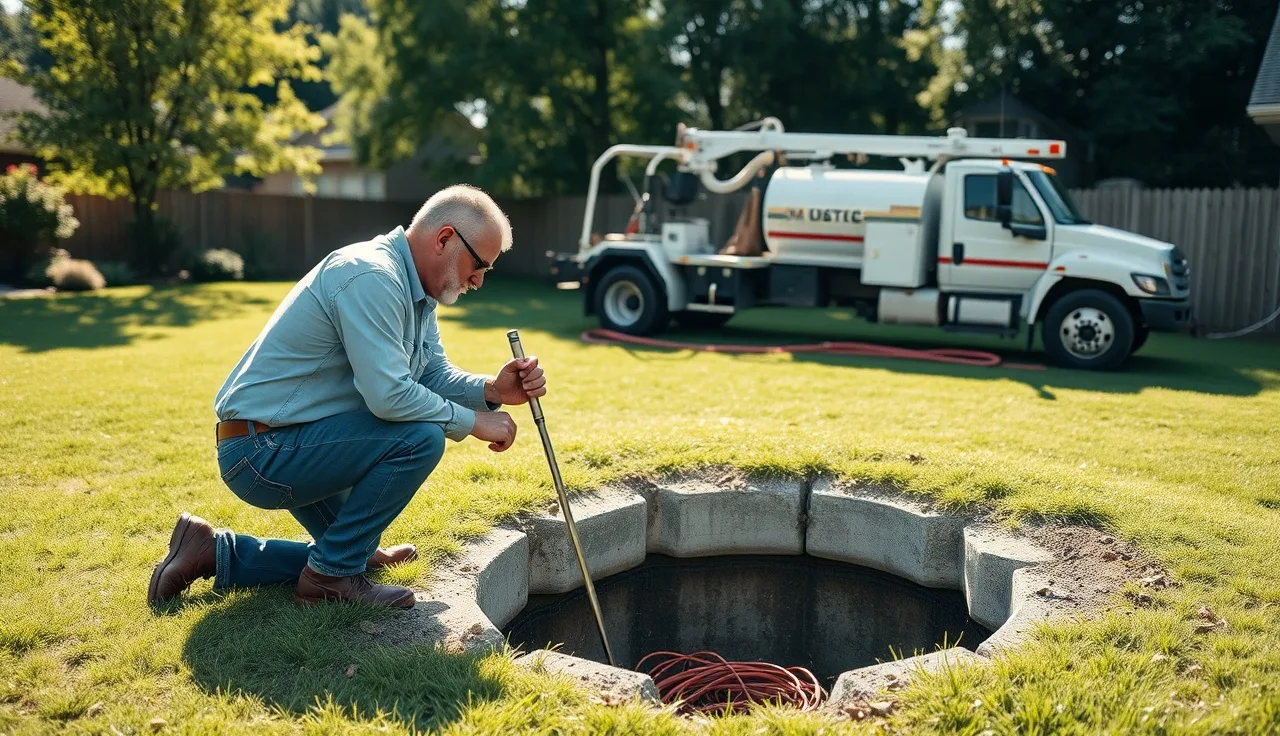
A classic septic inspection is a hands-on evaluation of every accessible part of a septic system: the tank, its inlet and outlet baffles, the distribution box (if present), and the drain field. An inspector locates and uncovers the tank, checks the liquid and scum layer depths, probes the outlet baffle, and walks the drain field looking for soft ground, odors, or effluent breaking the surface.
The word "classic" separates this ground-level inspection from more specialized checks like a camera run down the lateral lines or a full dye test. It's the baseline most lenders, buyers, and municipalities require before a property changes hands.
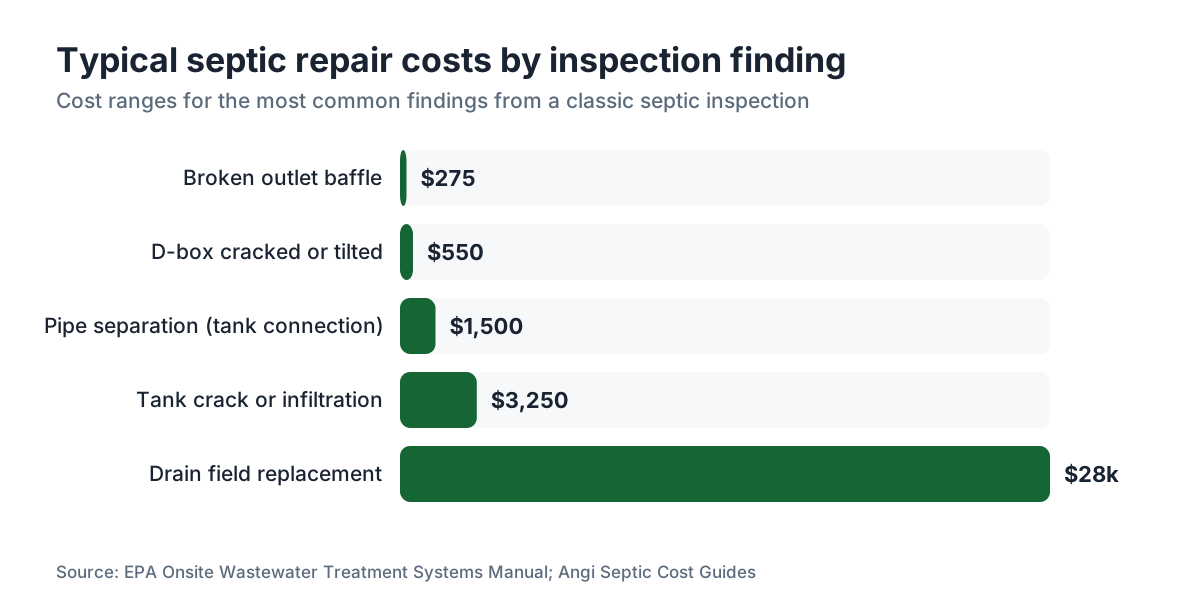
This is not a peek in the lid. A thorough classic inspection follows a set sequence so nothing gets missed: locate the system using the as-built drawing or a probe, expose the access ports, pump or measure the liquid level, check the baffles, assess the distribution box for level and cracks, then watch the drain field under load. The inspector hunts for both current failures and early warning signs. A cracked outlet baffle or a d-box that's shifted out of level tells you a $400 repair is six months from becoming a $15,000 replacement.
What does a septic inspector actually check during the inspection?
The inspection covers five areas in sequence.
Tank condition. The inspector exposes both the inlet and outlet access ports (or the full riser lid on modern systems), checks the tank walls for cracks or infiltration, and measures the scum and sludge layers. EPA guidance says a tank should be pumped when the combined scum and sludge fills more than one-third of the tank's liquid volume [1]. If the system hasn't been pumped in three or more years, most inspectors pump it as part of the inspection so they can see the tank bottom and walls clearly.
Baffles. The inlet baffle slows incoming waste. The outlet baffle keeps scum from flowing into the drain field. A broken outlet baffle is the single most common finding on older systems and the one most likely to kill a field if left alone. Inspectors probe both baffles and note whether they're concrete tees, sanitary tees, or effluent filters.
Distribution box. Not every system has one, but when present the d-box must sit level so effluent loads the drain field trenches evenly. A tilted d-box means one trench floods while others stay dry, which speeds up failure.
Drain field. The inspector walks the field, often after running water in the house for 20 to 30 minutes to stress the system. Signs of failure include effluent breaking the surface, unusually lush grass directly over the trenches, soft or spongy ground, and odors [2]. Some inspectors use a probe rod to check soil saturation at trench depth.
Setbacks and as-built records. A complete inspection verifies that the system location matches the recorded as-built drawing and that required setbacks to wells, property lines, and water features are met. This matters most in New Jersey, where setback rules have changed over the decades and older systems sometimes don't meet current standards [3].
| Inspection Component | What Failure Looks Like | Typical Repair Cost |
|---|---|---|
| Outlet baffle missing/broken | Scum in d-box or field lines | $150, $400 |
| Distribution box cracked/tilted | Uneven field loading, wet spots | $300, $800 |
| Tank cracked or infiltrating | High water in tank after dry period | $1,500, $5,000+ |
| Drain field saturated/failing | Surface effluent, odors | $8,000, $25,000+ |
| Pump failure (pressure systems) | Alarm on, no dosing | $400, $1,200 |
How much does a septic inspection cost?
The honest range for a classic septic inspection is $250 to $600. That spread comes from three variables: region, whether pumping is included, and system complexity [4].
In New Jersey, inspections for real estate deals typically run $350 to $550 for the inspection alone. Add pumping and you're at $500 to $900 total, since NJ pump-out rates average $300 to $400 for a standard two-compartment tank. Some companies bundle everything. Others bill separately.
A few things push the price up: a system with no as-built drawing (someone has to probe to find the tank), a buried d-box that's never been located, a pressure-dosed system with a pump chamber, or a mound system that needs extra evaluation steps. The cheapest job is a straightforward gravity system on a house where the tank got pumped two years ago and the lids are already at grade.
Don't confuse a septic inspection with a septic certification. Some NJ counties issue a "septic certification" letter only after a full pump-and-inspection passes. The inspection is the event. The certificate is the paperwork that follows.
For what a full replacement costs if an inspection turns up catastrophic failure, see cost to install septic system.
What are the septic inspection requirements in New Jersey?
New Jersey's requirements are among the most detailed in the country, and they trip up buyers and sellers all the time.
Under N.J.A.C. 7:9A, the New Jersey Department of Environmental Protection sets the technical standards for subsurface sewage disposal systems [3]. At the county and municipal level, most NJ jurisdictions require a septic inspection as a condition of property transfer. The inspection usually has to be performed by a licensed professional engineer (PE), a licensed site evaluator, or a certified inspector, depending on the county.
The most commonly cited rule: inspections in NJ must include a pump-out so the inspector can view the tank interior. Many inspectors cannot simply "pass" a system without pumping it first. Bergen, Morris, Monmouth, and Ocean counties each layer their own forms and submission requirements on top of the state baseline.
Timing matters too. Most NJ municipalities require the inspection to be done before the closing date, not after. The report goes to the local health department, which then issues its own clearance. In a busy spring or fall market, budget three to four weeks between ordering the inspection and getting the municipal clearance.
One NJ-specific wrinkle: if the system fails or needs major repair, the local board of health may issue a correction notice that has to be resolved before or concurrent with closing. Buyers and sellers negotiate in their contracts who pays for repairs, but the municipality controls the timeline.
For operators managing inspection workflows across multiple NJ counties, scheduling and documentation tools like SepticMind can cut the paperwork bottleneck, especially when each county wants its own report format.
How long does a septic inspection take?
Plan two to four hours for a standard gravity system. Pressure-dosed and mound systems take three to five hours.
The time breaks down roughly like this: 20 to 30 minutes to locate and expose the tank if the lids aren't at grade; 30 to 60 minutes for the pump-out truck if pumping is included; 20 minutes to inspect the tank interior, baffles, and d-box; 20 to 30 minutes to run water and watch the drain field; and 30 to 45 minutes for documentation and the report. If the inspector has to probe for a buried tank with no drawing, add 30 to 90 minutes.
Be present and ready to answer questions about the system's history, last pump-out date, and any odors or wet spots you've noticed. That context often changes the inspector's findings. A wet area in the yard means one thing in February after a rain and something very different in August after a dry month.
What's the difference between a visual inspection and a full septic inspection?
A visual inspection is exactly what it sounds like. The inspector looks at what's accessible without pumping or excavating. They open the lid, check the liquid level relative to the outlet, look for obvious floating scum, and walk the yard. It takes 45 minutes and costs $150 to $250. Plenty of home inspectors offer this as an add-on during a general home inspection.
The problem is that a visual inspection misses the findings that matter most. You can't see a broken outlet baffle unless you pump the tank or probe it. You can't evaluate the d-box if it's buried. You can't judge drain field saturation without stressing the system under load.
For a real estate transaction, a visual inspection is almost always not enough. Most NJ municipalities will not issue a septic clearance on a visual alone. A buyer who accepts a visual-only inspection on a home with septic is taking on real financial risk.
A full septic tank inspection includes the pump-out, interior tank check, baffle check, d-box check, and drain field evaluation under load. That's the standard anyone buying a home should require.
How do I find a qualified septic inspector in NJ?
In New Jersey, the inspector's required credentials vary by county and transaction type. For a property transfer, you generally need a licensed professional engineer with septic experience, a licensed site evaluator (LSE), or, in some counties, a contractor licensed by the local health department.
The New Jersey Department of Environmental Protection maintains information about site evaluator licensing under N.J.A.C. 7:9A [3]. Your county health department is the best first call: ask them whose reports they accept and what form they require. Ocean, Monmouth, and Morris counties each keep their own forms and approved inspector lists.
Don't just pick the cheapest name on a Google search. Ask the company how many NJ property transfer inspections they've done in the past year. Ask if they know your specific county's requirements. Ask whether they'll handle submission to the health department or just hand you the report.
A contractor who mostly does residential pumping and occasionally does inspections is not the same as a firm that does 200 NJ real estate inspections a year. The county-specific paperwork alone can derail a closing if the report is on the wrong form or missing a required signature.
The phrase "CSI septic inspections NJ" shows up in searches because Classic Septic Inspections (CSI) is a known inspection firm in the NJ market, which tells you how specialized this niche has become. Any firm you hire should show the same depth of county-specific knowledge.
What happens if a septic system fails inspection in NJ?
A failed inspection doesn't automatically kill a transaction, but it creates a defined legal and logistical problem that has to be solved.
The local board of health issues a written notice of deficiency listing each item that failed. Common failures: a broken outlet baffle, a cracked distribution box, evidence of drain field failure, improper setbacks. Minor items like a broken baffle or cracked d-box are often repaired for $200 to $800 and re-inspected quickly. See septic tank repair for a breakdown of common repair costs.
Drain field failure is a different animal. If the field is saturated or breaking out at the surface, the municipality may require a full replacement before it issues clearance. That means a percolation test, engineering design, permits, and installation, a process that takes weeks to months and costs $15,000 to $40,000 depending on lot conditions [5].
Buyers and sellers have several options: the seller fixes it before closing, the buyer accepts an escrow holdback for repair costs, the price gets renegotiated to reflect the repair, or the buyer walks. In NJ, the purchase contract should spell out which party is responsible and up to what dollar limit. Many real estate attorneys write in a septic repair cap, often $10,000 to $15,000, above which the buyer can cancel.
One thing that never works: asking the inspector to "pass" a system that failed. In NJ, the report goes straight to the health department. Inspectors who falsify reports lose their licenses and face civil liability.
How often should you get a septic inspection even if you're not selling?
Every three to five years is the standard recommendation for a routine inspection, tied to the pump-out cycle [1]. EPA's SepticSmart program states that "household septic systems should be inspected at least every three years by a septic service professional" and pumped every three to five years [1].
The honest answer is that most homeowners only get an inspection when they're buying or selling. That's a mistake. A routine inspection catches a broken baffle before it kills your drain field. It catches a cracked distribution box before a wet spring turns it into a sinkhole. A $350 inspection every three years is trivial next to the $20,000 to $40,000 cost of a new leach field.
High-usage households (more people than the system was designed for, frequent laundry days, a garbage disposal in regular use) should inspect more often. Older systems, especially those installed before 1990, are worth inspecting every two to three years, because the concrete components are at the age where cracks and crumbling baffles show up.
For pairing inspection with regular maintenance, how often to pump septic tank covers the schedule in detail.
What should you do to prepare for a septic inspection?
Four things you can do before the inspector arrives will make the inspection faster, more accurate, and cheaper.
First, find your as-built drawing. This document shows the tank location, tank size, distribution box location, and drain field layout. It's usually on file with the county health department if you don't have a copy. An inspector who has to probe for an unmapped tank adds time and cost.
Second, know your pump history. If you have receipts from your last septic tank pump out, have them ready. The inspector will ask, and a documented pump date in the last two years may change what's required.
Third, go easy on the water for 12 to 24 hours before the inspection. Heavy use right before can temporarily flood the drain field and make a marginal system look worse than it is. Some inspectors actually prefer to stress-test the system by running water during the visit so they can watch how the field responds. Ask yours which they want.
Fourth, clear access to the tank lids. If the lids are buried, dig them out before the inspector shows up. Most inspectors charge hourly for hand-digging buried lids, and it's 30 minutes of shovel work you can do yourself if you know where the tank is.
If you haven't had the tank pumped recently, scheduling a septic tank pumping at the same time as the inspection is usually the most efficient move.
How do septic inspection requirements differ by state?
New Jersey's requirements are stricter than most states, but the gap has narrowed as more states adopt Title 5-style transfer-of-title inspection laws.
Massachusetts Title 5 (310 CMR 15.000) is the best-known model. It requires a full inspection at point of sale, with the report filed with the local board of health [6]. Connecticut requires inspection at point of sale in most municipalities. Pennsylvania has no statewide point-of-sale requirement, so it's left to local ordinance. Florida requires inspections under certain conditions through its onsite sewage treatment and disposal rules (Chapter 64E-6, FAC) [7].
New York has no statewide point-of-sale septic inspection requirement, though individual counties like Suffolk (which has serious groundwater sensitivity concerns) run their own strict programs.
The EPA does not mandate inspections federally, but it strongly encourages them through its SepticSmart initiative and the Onsite Wastewater Treatment Systems manual [8]. The practical difference between states comes down to who can perform inspections, what the report must contain, who receives it, and what triggers a mandatory repair.
| State | Point-of-Sale Required? | Inspector Credential | Report Filed With |
|---|---|---|---|
| New Jersey | Yes (most counties) | PE or licensed site evaluator | County/local BOH |
| Massachusetts | Yes (statewide) | Licensed inspector | Local BOH |
| Connecticut | Yes (most towns) | Licensed inspector | Town health dept |
| Pennsylvania | No statewide rule | Varies by county | Varies |
| New York | No statewide rule | Varies by county | Varies |
| Florida | Conditional | Licensed contractor | County health dept |
For operators tracking inspection compliance across multiple states, the variation is a real operational headache. SepticMind's workflow tools handle state and county-specific documentation so inspectors don't miss a form field that stalls a closing.
What are the most common septic inspection findings and what do they mean?
Across residential systems, the findings cluster into a short list.
Broken or missing outlet baffle. The most common finding on systems older than 20 years. Concrete tees crack and crumble, and older systems may have no effluent filter at all. Fix it before it lets scum reach the drain field. Cost: $150 to $400.
High sludge and scum levels. Not a system failure, but proof the tank hasn't been pumped on schedule. An overfull tank pushes solids into the drain field. The fix is immediate pumping and a stricter maintenance schedule. See septic tank cleaning for what that process involves.
D-box out of level or cracked. Causes uneven loading of the drain field trenches, which kills the most-loaded trench first. Replacement: $300 to $800. Catch this early and you save the field.
Inlet or outlet pipe separation. Pipes shift over decades. A separated pipe means sewage may be going somewhere it shouldn't. Repair cost depends on depth and access: $500 to $2,500.
Evidence of drain field saturation. The serious one. Saturated soils in the leach field mean either the field has a failed biomat, the soil can't accept effluent at the designed rate, or the system is overloaded. This may require field replacement or a secondary treatment system. Full septic system repair or replacement costs are substantial.
Groundwater infiltration into the tank. Cracks in old concrete tanks let groundwater in, which hydraulically overloads the drain field. Common in the high water table areas of coastal NJ. A tank showing liquid above the outlet pipe after a dry period is a red flag for infiltration.
Frequently asked questions
Is a septic inspection required when selling a house in NJ?
Yes. In most New Jersey municipalities a septic inspection is required before the transfer of title on any property with a private septic system. The specific requirements, including who must perform it and which form is used, vary by county. Bergen, Monmouth, Ocean, and Morris counties each have their own procedures. Contact your local board of health early in the listing process. Six to eight weeks before closing is not too soon.
How much does a septic inspection cost in NJ?
Expect $350 to $550 for the inspection itself. If pumping is required (and it usually is for NJ property transfer inspections), add $300 to $400 for the pump-out, bringing the total to $500 to $900. Pressure-dosed or mound systems cost more because the inspection is more involved. Ask the company upfront whether their quote includes pumping and health department report submission.
Can a home inspector do a septic inspection in NJ?
A general home inspector can do a visual assessment of the accessible components, but that typically does not satisfy NJ county health department requirements for a property transfer inspection. Most NJ counties require the inspection to be performed by a licensed professional engineer or a licensed site evaluator. A home inspector's septic add-on is better than nothing for a buyer's own due diligence, but it won't produce the clearance letter you need to close.
How long is a septic inspection valid in NJ?
Most NJ county health departments accept an inspection report for two years from the date of inspection, though some counties set a shorter window of 12 to 18 months. Check with your specific county. If the property sits on the market for over a year and the inspection lapses, you'll need a new one before closing. The municipality, not the inspector or the real estate attorney, controls this clock.
What is a dye test and is it the same as a full septic inspection?
A dye test is one component of a septic evaluation, not a substitute for a full inspection. A non-toxic fluorescent dye is added to the plumbing, and the inspector looks for dye surfacing in the yard, a drainage ditch, or nearby water. It can confirm a drain field is failing, but it won't detect a broken baffle, a cracked tank, or a tilted distribution box. Some older NJ municipalities accepted dye tests alone; most now require a full pump-and-inspect.
Who pays for a septic inspection in a real estate transaction?
There's no legal rule that governs this in most states; it's negotiated in the purchase contract. In practice, buyers typically pay for the inspection as part of their due diligence costs, similar to a home inspection. In NJ, sellers sometimes order a pre-listing inspection to avoid surprises. If a failure triggers required repairs, contract language usually determines whether it's seller-paid, split, or credited against purchase price.
Can you buy a house with a failed septic inspection in NJ?
Yes, but the local board of health must be satisfied before or concurrent with closing. In practice that means either repairs are completed and re-inspected before closing, or the parties execute an escrow or repair agreement that the municipality accepts. Some municipalities allow an escrow holdback for minor repairs; others require full correction before issuing clearance. A seller who wants to close quickly will address the issue rather than argue with the health department.
What is the difference between a septic inspection and a perc test?
A percolation test (perc test) measures how fast water drains through the soil and is used when designing a new septic system or evaluating a site for one. It's done on bare ground before installation. A septic inspection evaluates an existing system that's already in the ground. The two tests answer different questions: a perc test says 'can this soil support a system?'; an inspection says 'is this existing system working and in what condition?'
How do I know if my septic system passed or failed an inspection?
The inspector provides a written report listing each component, its condition, and any deficiencies. In NJ, this report goes to the county or municipal health department, which then issues either a clearance or a deficiency notice. A clearance means the system is in satisfactory condition for its age and design. A deficiency notice lists specific items that must be repaired. Borderline systems may receive a conditional pass with required follow-up within a set timeframe.
What happens to the drain field if a broken outlet baffle isn't fixed?
A broken outlet baffle lets the floating scum layer flow directly into the distribution box and drain field trenches. Grease and solids coat the soil interface in the trenches, forming a biological mat (biomat) that progressively blocks the soil's ability to absorb effluent. Once the biomat is fully established, the field saturates and eventually fails. This process can take months or a few years depending on usage. Replacing a baffle costs a few hundred dollars; replacing a field costs tens of thousands.
Is a septic inspection required for a refinance in NJ?
Generally no. NJ's septic inspection requirements are triggered by a transfer of title, not a refinance. However, some lenders, particularly FHA and USDA loans, may require an inspection as a loan condition if there's any indication of a septic issue on the property report or appraisal. Check with your lender directly. A voluntary inspection every few years is good practice regardless of any loan requirement.
How deep are septic tank lids typically buried?
In older systems, lids are commonly buried six to 18 inches below grade; some older NJ installations are two to three feet down. Modern systems installed after roughly 2000 often have risers that bring access to grade level. If you don't know where your lids are, the county health department should have an as-built drawing on file. Locating and exposing buried lids before the inspector arrives saves time and usually saves money on the inspection bill.
Can a septic inspection detect problems with the pipes inside the house?
No. A classic septic inspection starts at the tank and works outward. It does not cover interior plumbing, the building sewer line from the house to the tank, or any components inside the foundation. A separate sewer scope (camera inspection of the lateral line from house to tank) is needed to assess that run. If the inspector finds evidence of root intrusion or pipe separation at the tank inlet, they'll note it, but identifying the cause requires a camera.
Sources
- EPA SepticSmart: Caring for Your Septic System: Household septic systems should be inspected at least every three years by a septic service professional and pumped every three to five years; pump when scum and sludge occupy more than one-third of tank volume.
- EPA: How Your Septic System Works: Signs of a failing septic system include surface breakout of effluent, lush green grass over the drain field, soft or spongy ground, and odors near the system.
- HomeAdvisor (Angi): Septic Inspection Cost Guide: National cost range for a classic septic inspection is approximately $250 to $600 depending on region, system type, and whether pumping is included.
- EPA: Onsite Wastewater Treatment Systems Manual: Drain field replacement costs vary widely by lot conditions, local labor, and system type but commonly range from $10,000 to $40,000 for a standard residential system.
- Massachusetts DEP: Title 5 Septic System Program (310 CMR 15.000): Massachusetts Title 5 requires a full septic inspection at point of sale, with the report filed with the local board of health.
- Florida Department of Health: Onsite Sewage Treatment and Disposal Systems (Chapter 64E-6, FAC): Florida's Chapter 64E-6 FAC governs onsite sewage treatment and disposal system inspections and repair requirements under certain triggering conditions.
- EPA: Onsite Wastewater Treatment Systems Technology Fact Sheets: EPA does not mandate federal point-of-sale inspections but encourages them through SepticSmart guidance and its Onsite Wastewater Treatment Systems technical publications.
- Rutgers NJAES Cooperative Extension: Septic System Maintenance for Homeowners: Broken outlet baffles are among the most common findings on residential septic systems older than 20 years in New Jersey and a leading cause of premature drain field failure.
- New Jersey DEP Office of Water: Septic System Owner Information: NJ property transfer inspection requirements are primarily administered by county and local health departments under authority granted through state environmental and health codes.
- Penn State Extension: Homeowner's Guide to Septic Systems: Pennsylvania does not have a statewide point-of-sale septic inspection requirement; requirements are left to local ordinance and vary by county and municipality.
- National Environmental Services Center (NESC) / WVU: Septic System Owner's Manual: A distribution box that is tilted or cracked results in uneven effluent loading across drain field trenches, causing premature failure in the most heavily loaded sections.
Last updated 2026-07-09