Accelerator drain field cleaner: does it actually work?
By the SepticMind Editorial Team
TL;DR
- Accelerator drain field cleaners are bacterial or enzyme products marketed to break up biomat in clogged leach fields.
- The EPA does not endorse any additive for septic systems, and peer-reviewed evidence is thin.
- Some homeowners see temporary improvement; none of these products fix structural failures or replace proper pumping and maintenance.
- Realistic cost is $20-$200 per treatment.
What is an accelerator drain field cleaner and how is it supposed to work?
An accelerator drain field cleaner is a liquid, powder, or pod product you flush down a toilet or pour directly into a distribution box, with the goal of restoring flow through a sluggish or failing leach field. Most products in this category claim to work through one of two mechanisms: live bacterial cultures that colonize the soil pores and digest the organic matter clogging them, or enzyme blends that chemically break down fats, oils, greases, and the biomat layer that builds up on drain field trench walls.
The biomat is the real enemy here. It's a dark, gelatinous layer of anaerobic bacteria and organic debris that forms naturally on the soil interface of any leach field. A healthy system keeps that biomat thin enough that effluent can still percolate through. When it gets thick enough to seal off soil pores entirely, you get slow drains, soggy yard patches, or sewage surfacing. That's the failure mode accelerator products are trying to address [1].
Most products lean on one of three active ingredients: Bacillus bacteria strains (aerobic or facultative anaerobic), enzymes like lipase, protease, or cellulase, or in a handful of older products, hydrogen peroxide. The hydrogen-peroxide versions were popular in the 1990s and early 2000s. Several states banned them after evidence emerged that high-concentration peroxide damaged soil structure and killed the native microbial communities that make a drain field work in the first place [2].
The bacterial and enzyme products on the market now are a different animal. They carry a much softer risk profile. Whether they deliver meaningful benefit is a separate question entirely.
Does the EPA or any government agency approve drain field additives?
No federal agency approves or certifies septic additives as effective. The EPA's SepticSmart program states plainly that the agency "has not approved any additives for use in septic systems," and the program's guidance warns homeowners that additives marketed to extend service life or clean drain fields are not necessary for a properly designed and maintained system [3].
At the state level, the picture is patchier. Some states regulate septic additives directly. NSF International runs Standard 40 for aerobic treatment units and Standard 245 for nitrogen-reducing media, but there is no NSF standard for bacterial or enzyme additives applied to existing drain fields [9]. That means the market is essentially self-regulated, with manufacturers setting their own test conditions and writing their own efficacy claims.
At least 14 states had some form of additive registration or prohibition requirement as of recent surveys of state onsite wastewater codes, though the rules vary wildly. Virginia requires registration. Washington state's Department of Health has published guidance discouraging biological additives because the research base is too weak to support efficacy claims [4]. Want to know your state's position? Search your state's department of environmental quality or health website for "septic additive" or "onsite wastewater additive."
The honest bottom line: no government regulator has validated any accelerator drain field cleaner as effective. That doesn't mean every product is useless. It does mean buyer-beware logic applies.
What does the science actually say about these products?
The peer-reviewed literature on biological septic additives is thin and frequently inconclusive. The most-cited independent review is a 1999 University of Minnesota Extension study that tested multiple additive types in controlled septic systems. The study found that biological additives (bacterial and enzyme products) caused no measurable harm to tank function but also produced no statistically significant improvement in effluent quality or soil permeability compared to control systems [5]. State extension programs in Wisconsin and Ohio have reproduced that finding in rough form, with similar results: not harmful, not meaningfully helpful under controlled conditions.
Here's a caveat worth taking seriously. Most controlled studies test additives under normal operating conditions, not in already-failing systems with mature biomats. A small number of field reports and manufacturer-sponsored trials suggest that high-dose bacterial treatments applied to a rested drain field (meaning the field is taken offline for days or weeks to allow aerobic conditions to recover) produce better outcomes than treatment alone. Nobody has good peer-reviewed data on this specific protocol, which is frustrating given how many people are trying it.
The closest thing to a positive signal comes from research on aerobic conditions. Biomats thrive in anaerobic environments. Anything that introduces oxygen to the trench, whether aeration devices, dosing pumps, or simply reducing daily water load, tends to thin biomat over time. Bacterial accelerator products that contain aerobic Bacillus strains may help this process along, but the oxygen is arguably doing more work than the additive itself [1].
So where does that leave you? If your drain field is underperforming but not completely failed, a bacterial accelerator is a low-risk, low-cost trial worth running alongside proper maintenance. If your field is fully saturated, surfacing sewage, or structurally compromised, no additive will fix that.
How much does an accelerator drain field cleaner cost?
Consumer-grade products run roughly $20 to $80 per treatment for a standard 3-4 bedroom home system. Professional-grade treatments applied by a septic contractor, sometimes under brand names like Septic Drainer or Bio-Solv, or field-shock treatments using high-concentration bacterial suspensions, typically run $150 to $500 per application including labor.
Some contractors bundle a "drain field restoration" service that includes a tank pump-out, jetting or roto-tilling the distribution lines, and a high-dose biological treatment. These packages range from $500 to $2,000 depending on field size and access difficulty. That's a real service with real mechanical work attached. The additive is a small fraction of the cost.
Compare those numbers to the alternatives. A new conventional drain field for a 3-bedroom home typically costs $3,000 to $15,000 depending on soil type, lot size, and state permitting requirements [6]. A mound system or drip-irrigation alternative field in poor-perc soil runs $10,000 to $30,000 or more. Against that backdrop, spending $200 on a trial treatment before committing to a repair or replacement is almost always rational.
One thing that's a genuine waste of money: monthly maintenance additives for a healthy, properly pumped system. Your tank already holds billions of bacteria doing the job. A functioning system doesn't need a probiotic. Save the additive spend for systems that are showing early distress symptoms.
How do you use an accelerator drain field cleaner correctly?
Application methods vary by product, but the general protocol that gives these treatments the best shot at working follows a few consistent steps.
First, have your tank pumped before treatment. A tank holding 18 inches of sludge will re-clog any distribution you achieve almost immediately. Pumping first gives the treatment a clean starting point [7]. If you haven't pumped recently, skip the additive entirely until you've handled that. See our guide on septic tank pumping for what to expect.
Second, reduce water load on the system for at least 48 to 72 hours after application. That means shorter showers, no laundry, minimal dishwasher use. You're trying to give bacteria time to colonize the biomat without being flushed away by a surge of water.
Third, if the product comes in powder or granule form, dissolve it in warm (not hot) water before flushing. Hot water kills bacteria. Some homeowners flush the product straight down a toilet, which works fine for liquid formulations.
Fourth, avoid antibacterial soaps, bleach, and harsh drain cleaners in the days before and after treatment. These kill the bacterial cultures you're trying to introduce. The EPA's SepticSmart guidance echoes this point, recommending that homeowners avoid flushing "chemicals, pharmaceuticals, and other products that can disrupt the biological treatment process" [11].
For badly clogged fields, some contractors recommend a rest-and-treat protocol: divert flow to an alternate field (if one exists) or minimize water use for one to two weeks, then apply a high-dose biological treatment. This gives the soil time to dry out and re-oxygenate before the bacteria arrive. The evidence base for this protocol is anecdotal, but the logic holds up.
What are the signs your drain field needs help beyond an additive?
Accelerator products have a ceiling. Knowing when you've hit that ceiling saves you money and keeps a fixable problem from turning into an irreversible one.
Early distress signs an additive might address: slow toilet or sink drains throughout the house (more than one fixture), occasional gurgling in pipes when water drains, mild odors near the drain field after heavy rain, or slightly elevated water levels in the tank between pumping cycles.
Signs that mean you need mechanical intervention, not an additive: sewage surfacing in the yard over the drain field, sewage backing up into the house, saturated or permanently soggy ground over the field, a tank that fills unusually fast (within weeks of pumping), or a septic tank inspection that shows the drain field effluent line fully submerged with no draw-down.
Seeing any of the severe signs? Call a licensed septic contractor for a proper assessment before spending anything on additives. A failing field may need septic system repair involving distribution box replacement, lateral line jetting, or a partial field expansion. None of that work is optional once structural failure is established. See our guide on septic tank repair for what those repairs typically involve.
Age matters too. A drain field that's 25 to 30 years old and failing has likely reached end of service life. Soil pores compact over decades of use, and no additive reverses that physical process. The EPA estimates the average drain field lasts 20 to 30 years with proper maintenance [1].
Which accelerator drain field cleaner products actually get results?
Naming the single best drain field cleaner is harder than the marketing suggests, because no independent head-to-head trial with field-installed systems has produced a clear winner. That said, a few product categories and specific formulations show up repeatedly in contractor recommendations and homeowner forums.
Bio-Solv and Septic Drainer are two professional-grade liquid treatments that contractors apply during service calls. Both are high-concentration bacterial and enzyme blends. Neither has independent peer-reviewed efficacy data, but both have been on the market long enough that their safety profiles are well established.
For consumer products, look for formulations that list specific Bacillus strains (B. subtilis, B. licheniformis) and actual colony-forming unit counts (CFUs) on the label. Products with CFU counts of 1 billion or more per dose have a higher plausibility of delivering meaningful bacterial mass to the field. Products that list only "proprietary enzyme blend" without strain identification or CFU counts give you no way to evaluate what you're actually buying.
Avoid any product that lists hydrogen peroxide as an active ingredient for drain field use. As noted above, high-concentration peroxide has a documented track record of damaging soil structure and is prohibited in several states [2].
The honest answer on "best": if you're a homeowner running a trial treatment, buy a product with specific Bacillus strains listed, a CFU count you can verify, and no harsh oxidizers. Spend $30 to $60, follow the protocol above, cut water use for a few days, and judge results over the next four to six weeks. That's what I'd actually do.
For operators managing multiple accounts, tracking which treatments coincide with reduced callback rates is the only real way to build a house view on product efficacy. SepticMind's service tracking tools can log treatment applications alongside customer complaint history, which over a few hundred jobs gives you an actual data signal instead of anecdote.
Can you use a drain field cleaner in any type of septic system?
Conventional gravity-fed systems with soil absorption fields are the intended use case for most consumer accelerator products, and the application protocol described above applies directly.
Pressure-dosed systems add one complication: the distribution laterals are smaller diameter, so you want to verify the product won't create any particulate matter that could plug the orifices. Liquid formulations are safer than granules for these systems.
Chamber systems (like Infiltrator or similar arch-type chambers) work slightly differently than gravel-and-pipe laterals, but the biomat mechanism is the same. Bacterial treatments apply the same way.
Aerobic treatment units (ATUs) are a different story. ATUs already run mechanical aeration to feed oxygen to the treatment process. Adding large quantities of external bacterial cultures is redundant at best and may interfere with the system's calibrated treatment process. Check with your ATU manufacturer or service provider before applying any additive.
Mound systems and drip-irrigation systems also use pressure-dosed distribution with small orifices. Liquid bacterial products are generally safe; granules and powders are riskier. In doubt, pour the product into the tank rather than directly into the distribution network.
Got a newer alternative system? Check with your state's onsite wastewater program before applying additives. Some states' permits for alternative systems explicitly prohibit unapproved additives.
How does regular maintenance compare to using an accelerator product?
This is where the math is unambiguous. A properly pumped and maintained septic system almost never needs a drain field cleaner. The reason is simple: most drain field failures trace back to tanks that weren't pumped often enough, allowing solids to carry over into the field and speed up biomat formation.
The EPA's SepticSmart program recommends pumping every 3 to 5 years for a typical household, though the actual interval depends on tank size and household occupancy [3]. For a 1,000-gallon tank serving four people, that's closer to 3 years. For a 1,500-gallon tank with two people, 5 to 7 years may be reasonable. See our guide on how often to pump septic tank for a full breakdown.
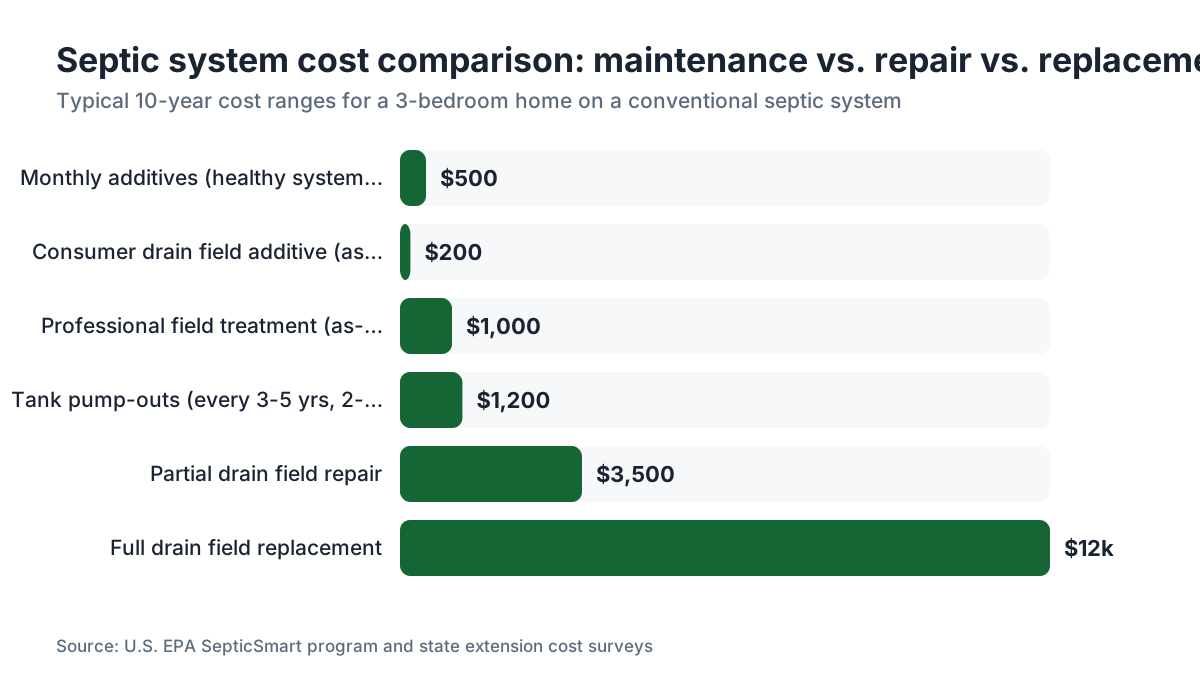
The table below puts the cost comparison in perspective.
| Action | Typical cost | Frequency | 10-year cost estimate |
|---|---|---|---|
| Tank pump-out | $300-$600 | Every 3-5 years | $600-$2,000 |
| Consumer drain field additive | $30-$80 | As needed | $0-$500 |
| Professional field treatment | $150-$500 | As needed | $0-$1,500 |
| Drain field repair (partial) | $1,500-$5,000 | One-time if needed | $1,500-$5,000 |
| Full drain field replacement | $5,000-$20,000 | One-time if needed | $5,000-$20,000 |
Data compiled from EPA SepticSmart program cost guidance and state extension program surveys [3][6].
The takeaway is clear: spend on pumping, not on monthly additives for a healthy system. Use additives as an early-intervention tool when symptoms appear, and treat replacement cost as the floor you're trying to avoid hitting.
What regulations cover drain field cleaners and additives in your state?
State regulation of septic additives sits inside each state's onsite wastewater or individual sewage disposal regulations, and the variation is significant. A few examples give a sense of the landscape.
North Carolina's onsite wastewater regulations (15A NCAC 18A) require that any additive used in a permitted system not interfere with the treatment process, which effectively puts liability on the homeowner if an additive contributes to system failure [10]. Virginia requires commercial septic additive manufacturers to register their products with the Department of Health. Several Pacific Northwest states explicitly discourage biological additives in their extension guidance, citing the lack of supporting evidence.
The key document to hunt for in any state is the "Individual Sewage Disposal System" or "Onsite Wastewater Treatment System" regulations, usually found on the department of environmental quality or department of health website. Search for "septic additive" within those documents.
If you provide drain field treatment services commercially, check whether your state requires any special certification or permit notation for additive application. A few states fold high-concentration bacterial applications into the licensed pumper scope; others have no specific rule. Building out a service line that includes field treatment? SepticMind's job management features help document which products were applied and when, which protects you in the event of a future regulatory inquiry.
The broader federal regulatory frame is thin. The Clean Water Act regulates discharge to surface water, and if a failing field results in surface discharge, that can trigger Clean Water Act issues regardless of whether an additive was involved [8]. That's another reason to treat early symptoms aggressively rather than waiting for surfacing sewage.
When should you skip the additive and go straight to professional repair?
The honest answer: sooner than most people do. The typical homeowner pattern is to try two or three additive treatments over six to twelve months while symptoms gradually worsen, then finally call a contractor when the problem is bigger and more expensive than it had to be.
Skip the additive phase entirely if you have sewage surfacing anywhere in the yard, if you have sewage backup into the house, if your field is more than 25 years old and showing distress, or if a licensed inspector has already told you the field has structural failure. In those cases, call for a professional assessment and get a repair or replacement plan. See our guides on septic system repair and cost to install septic system to understand what that process looks like.
For slow-drain symptoms that just started, especially in a system that hasn't been pumped in the last three to five years, get the tank pumped first (read about septic tank pump out before scheduling). If symptoms persist after pumping, that's a reasonable moment to try a bacterial accelerator treatment while scheduling a drain field inspection.
Getting a septic tank inspection before spending on any treatment is never the wrong call. A licensed inspector can tell you whether the field is partially clogged, fully saturated, or structurally compromised. That information determines whether you're in additive territory or repair territory, and it's worth the $100 to $300 inspection fee every time.
Frequently asked questions
How long does it take for an accelerator drain field cleaner to work?
Most bacterial products need four to eight weeks to produce noticeable results, if they're going to work at all. You're relying on bacterial colonies establishing in soil pores and gradually consuming the biomat, which is a slow biological process. Products that show no symptom improvement after eight to ten weeks under reduced water use are unlikely to produce further benefit, and you should shift to professional assessment.
Can I use a drain field cleaner in a system that already failed?
A fully failed drain field means soil pores are sealed by biomat or the soil structure is permanently compacted. No additive reverses physical compaction, and bacterial products have limited reach in fully anaerobic, saturated soil. You can try a high-dose bacterial treatment with a field rest period as a last-resort measure before replacement, but manage expectations: contractors report mixed results and most fully failed fields ultimately need repair or replacement.
Is it safe to use drain field additives if I have a well on the same property?
Bacterial and enzyme additives are generally considered low-risk relative to well water contamination, because the living microbes introduced are non-pathogenic Bacillus strains. The real well-contamination risk comes from a failing drain field that's not treating effluent properly, not from the additive itself. If your drain field is failing and your well is within 100 feet, focus on repair first and water testing second.
How often should I use an accelerator drain field cleaner?
For a healthy system that's properly pumped on schedule, never. For a system showing early distress symptoms, a single treatment cycle with a follow-up dose at 30 days is the standard protocol for most products. Ongoing monthly dosing for a normal system is a marketing upsell with no evidence of benefit. Put that money toward your next scheduled pump-out instead.
Do drain field cleaners work on grease clogs specifically?
Enzyme products that include lipase (fat-digesting enzymes) have the most plausible mechanism for grease-heavy clogs, common in systems serving households that dispose of cooking grease through drains. Lipase degrades fatty acid chains, which are a significant component of restaurant-style biomat. For residential systems with grease issues, an enzyme-plus-bacteria combination product outperforms bacteria-only formulations in contractor field reports, though controlled studies remain limited.
What's the difference between a drain field cleaner and a septic tank treatment?
Septic tank treatments are designed to support the bacterial population inside the tank itself, breaking down solids and reducing scum and sludge buildup. Drain field cleaners target the biomat layer at the soil interface of the absorption field. The two applications are complementary but different. Some products market themselves for both uses; check the label to confirm the bacterial strains and concentrations are appropriate for field application.
Will my homeowner's insurance cover a drain field failure?
Standard homeowner's insurance policies generally exclude septic system failures, treating them as maintenance items rather than sudden losses. Some insurers offer optional riders or service line coverage that includes drain fields. Check your policy declarations page for "service line" or "septic" coverage. If you're looking at a $10,000 to $20,000 field replacement, the $50 to $100 annual rider cost is usually worth it.
Can tree roots cause the biomat problem that drain field cleaners target?
Tree roots cause a different failure mode than biomat. Roots physically block or crack distribution pipes and can infiltrate drain trenches, but the clog they create is mechanical, not biological. Bacterial and enzyme products don't dissolve root masses. Root intrusion needs physical intervention, like pipe jetting, root-cutting tools, or pipe replacement. If a camera inspection shows roots, skip the additive and go straight to mechanical repair.
Are there any drain field additives that are genuinely harmful?
Hydrogen-peroxide-based products at high concentrations (above roughly 3 to 5%) are documented to damage soil structure and kill beneficial microbial communities. Several states banned or restricted them by the mid-2000s. Chemical solvents, degreasers, and any product with bleach or quaternary ammonium compounds will also destroy the biological treatment process. Stick to products with identified Bacillus bacterial strains and avoid anything with an oxidizer or antimicrobial claim.
Does the Accelerator brand drain field cleaner work better than generic products?
"Accelerator" is used both as a product name by some manufacturers and as a generic category term in the industry. Without independent head-to-head testing, there's no honest way to declare any branded product superior to others with comparable CFU counts and bacterial strains. Evaluate any product by its stated Bacillus strains, CFU count per dose, and whether it lists specific enzyme types. A $30 generic with 1 billion CFU and identified strains beats an $80 branded product that lists only 'proprietary blend.'
How does drain field rest (taking the field offline) interact with additive treatment?
Resting the field, reducing or eliminating effluent flow, allows anaerobic biomat to begin dying back as oxygen re-enters the soil. Adding a high-dose bacterial treatment after two to four weeks of rest introduces aerobic bacteria into a more receptive environment. Contractors who use this combined protocol report better outcomes than additive-only treatment, though the supporting data is mostly anecdotal. This approach requires either very low household water use or an alternate field or holding tank.
What should I ask a septic contractor before paying for a professional drain field treatment service?
Ask what specific product and concentration they're using, what the treatment protocol includes beyond the additive (pumping, jetting, rest period), what outcome you should expect and over what time frame, and what the next step is if symptoms don't improve. A contractor who can't answer those questions clearly is selling hope, not service. Get the scope and expected outcomes in writing before you pay.
Sources
- U.S. EPA, "How Your Septic System Works": Biomat formation on the soil interface is the primary failure mechanism in drain fields; average drain field lifespan is 20-30 years with proper maintenance.
- University of Minnesota Extension, "Septic System Additives": High-concentration hydrogen peroxide additives damage soil structure and kill beneficial microbial communities in drain fields; multiple states banned or restricted these products.
- U.S. EPA SepticSmart Program: EPA has not approved any additives for use in septic systems; recommends pumping every 3-5 years and avoiding chemicals that disrupt biological treatment.
- Washington State Department of Health, "Septic Additives": Washington state's Department of Health discourages biological additives for septic systems, citing insufficient evidence to support efficacy claims.
- University of Minnesota Extension, 1999 study on septic additives: Controlled study found biological additives caused no measurable harm but produced no statistically significant improvement in effluent quality or soil permeability.
- U.S. EPA, "Septic System Costs" (SepticSmart program): New conventional drain field installation costs range from approximately $3,000 to $20,000 depending on soil type, system size, and state permitting requirements.
- U.S. EPA, "Maintaining Your Septic System": Tank pump-out is recommended before any drain field treatment to prevent rapid re-clogging from solids carryover.
- U.S. EPA, Summary of the Clean Water Act: Surfacing sewage from a failing drain field can constitute an unpermitted discharge to waters of the United States, triggering Clean Water Act liability.
- NSF International, Standard 40 for Residential Wastewater Treatment Systems: NSF Standard 40 covers aerobic treatment units; no equivalent NSF standard exists for bacterial or enzyme additives applied to existing drain fields.
- North Carolina Department of Environmental Quality, 15A NCAC 18A Onsite Wastewater Rules: North Carolina onsite wastewater regulations require that any additive not interfere with the permitted treatment process, placing liability on the homeowner if an additive contributes to system failure.
- U.S. EPA SepticSmart, "Protect It": EPA SepticSmart recommends that homeowners avoid flushing chemicals, pharmaceuticals, and other products that can disrupt the biological treatment process in septic systems.
Last updated 2026-07-09