Above ground septic tank: what it is, when it's used, and what it costs
By the SepticMind Editorial Team
TL;DR
- An above ground septic tank sits at or near the soil surface instead of buried, used when high groundwater, shallow bedrock, or slow-draining soil rules out conventional burial.
- Installed costs run $3,000 to $15,000 or more depending on system type and site.
- They're legal in every state under specific permits, but the maintenance load is heavier than a buried system.
What exactly is an above ground septic tank?
An above ground septic tank is any septic holding or treatment vessel that sits at or very close to the ground surface instead of being buried several feet down. The tank itself looks familiar: polyethylene or fiberglass, inlet and outlet baffles, maybe a riser port on top. The difference is depth. Instead of resting 3 to 6 feet down, it sits on a concrete pad or compacted gravel base, gets partially mounded with soil around it, or sits fully exposed in a utility area.
The term gets used loosely. Some people mean a mound system, where the tank is buried normally but the drainfield is built above grade on imported fill. Others mean a true surface-mounted tank, common in places like Alaska or northern Canada where permafrost makes burial impossible. A few mean an aerobic treatment unit (ATU) installed in a shed or enclosure. Different systems, different designs. The one thread that ties them together is simple: burial below the frost line or at normal depth isn't an option here.
The EPA's SepticSmart program groups these under "alternative systems" suited to difficult sites where soil conditions don't support a conventional design [1]. That framing matters. Above ground isn't a preference. It's a response to a constraint.
When would someone actually need an above ground septic system?
You need one when the site won't support burial. Four reasons cover almost every case.
First, a high seasonal water table. If groundwater sits within 2 feet of the surface for weeks at a time, a buried tank can float, crack under hydrostatic pressure, or push effluent into saturated soil before it ever gets treated. State codes set minimum vertical separation between the bottom of a drainfield and the seasonal high water table, often 2 to 4 feet [2]. Miss that number and you either build up with a mound or you don't build.
Second, shallow bedrock. You can't dig through granite with a backhoe at any sane price. Across much of New England, the Mid-Atlantic, and the Rocky Mountain West, ledge sits 12 to 24 inches down over huge stretches of rural land.
Third, dense clay or very slow-draining soil. Perc tests measure how fast water moves through soil. Rates slower than roughly 60 to 120 minutes per inch disqualify a site for conventional drainfields in most state codes [2]. Some states allow drip irrigation or constructed wetlands instead. Others send you to a mound.
Fourth, permafrost and hard cold. In Alaska and parts of northern Minnesota, Wisconsin, and Canada, frozen ground makes conventional burial impractical. The University of Alaska Fairbanks Cooperative Extension Service publishes cold-climate septic guidance precisely because this is a genuine design problem up there [3].
None of these are freak cases. The EPA estimated in 2002 that about 25 percent of U.S. households run onsite septic systems [1], and a real slice of those sit on land with at least one of these constraints.
What are the different types of above ground or mound-style systems?
Not all above ground systems are the same animal. Here are the configurations you'll actually run into.
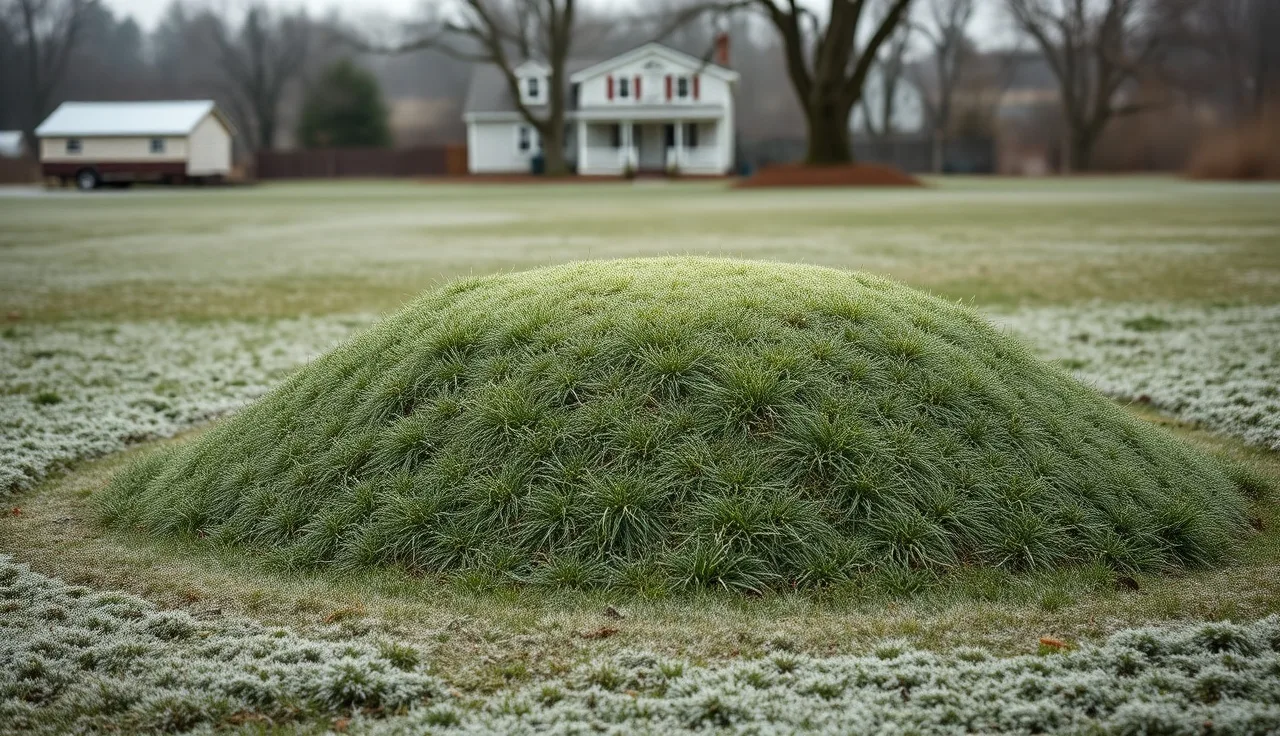
Mound system. The most common above-grade alternative in the lower 48. The tank itself is buried normally. What goes above grade is the drainfield: a raised bed of imported sand and gravel, usually 2 to 4 feet above the original soil surface, sometimes taller. A dosing chamber and pump push effluent from the tank up into the mound in timed doses. The mound gets seeded with grass and looks like a low hill in the yard. State codes have approved these since the 1970s.
Aerobic Treatment Unit (ATU) in a surface enclosure. An ATU uses aeration to treat wastewater to a higher standard than a plain septic tank. On small lots or near water, the ATU vessel sometimes sits in a utility enclosure or shed above grade, with a smaller drainfield because the effluent is cleaner. Texas permits ATUs widely on hard sites under Title 30, Chapter 285 of the Texas Administrative Code [4].
Holding tank only. Where no drainfield is feasible at all, a surface-mounted or partially buried watertight tank collects everything with no treatment and no discharge. It has to be pumped, sometimes every 2 to 4 weeks for a full-time home. This is a last resort. Pumping alone runs $150 to $300 a visit, and a family of four can fill a 1,000-gallon tank in roughly 3 to 4 weeks [5].
Constructed wetland or drip irrigation. More specialized, less common, still worth knowing. Constructed wetlands treat effluent in a shallow planted bed above grade. Drip irrigation spreads treated effluent through shallow tubing. Both show up on sites where a plain mound won't work.
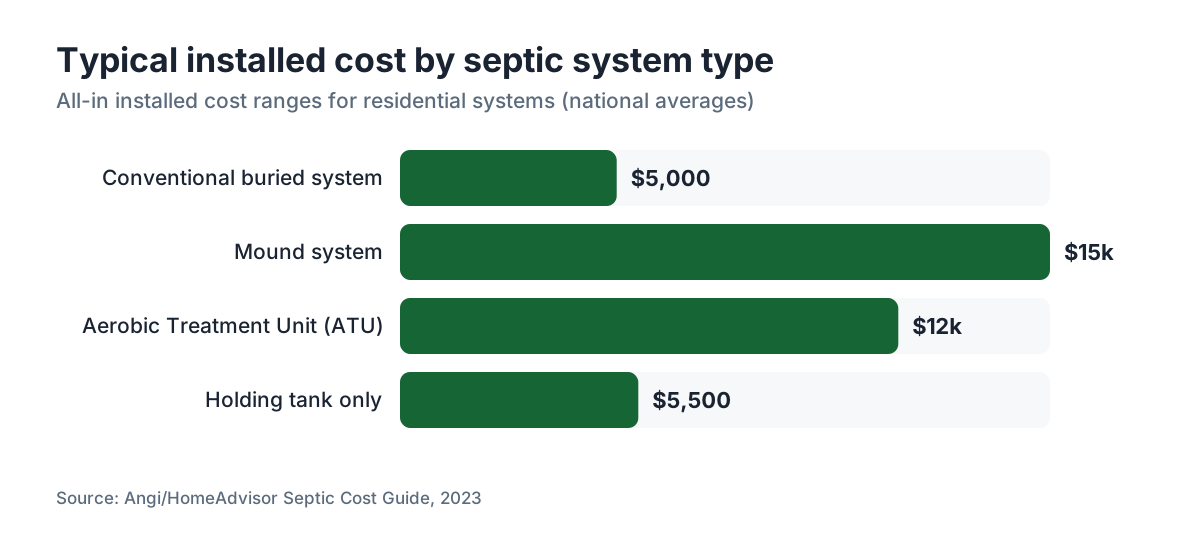
| System type | Tank location | Drainfield location | Typical installed cost | Pumping frequency |
|---|---|---|---|---|
| Conventional | Buried 3-6 ft | Buried | $3,000-$7,000 | Every 3-5 years |
| Mound system | Buried | Above grade on fill | $10,000-$20,000 | Every 3-5 years |
| ATU (surface unit) | At/near surface | Minimal or reduced | $8,000-$15,000+ | Every 3-5 years |
| Holding tank only | At/near surface | None | $3,000-$8,000 installed | Every 2-6 weeks |
Those ranges come from national survey data and industry estimates. Your local quotes will swing hard based on site access, soil import costs, and permit fees [6].
How much does an above ground septic system cost?
Costs spread wide. System type, local labor, and how much dirt work the site needs drive everything. Here are honest ranges.
A mound system is the most common above-grade build. Most homeowners pay $10,000 to $20,000 all-in for design, permits, tank, pump chamber, sand fill, and installation [6]. Tight access or a large required mound volume pushes it higher. The sand alone runs $2,000 to $5,000 depending on how much you need and how far the supplier sits from you.
An ATU runs $8,000 to $15,000 or more installed, plus $300 to $600 a year for the maintenance contract most states require [4].
A holding tank looks cheap up front, maybe $3,000 to $8,000, and then the operating cost eats you alive. At $200 a pump-out every three weeks, that's about $3,400 a year. Ten years is $34,000 in pumping. Pick a holding tank only when there's truly nothing else.
For a straight comparison to conventional systems, see our guide to cost to install septic system and cost to put in a septic tank.
Permit fees add $200 to $1,500 depending on state and county. Many jurisdictions require engineered plans for any alternative system, which tacks on $1,000 to $3,000 for the engineer's design and stamp.
Are above ground septic tanks legal? What does permitting look like?
Yes, they're legal in every state, always under specific conditions and permits. No state lets you set a tank in your yard and call it done.
Onsite wastewater rules live mostly with state environmental or health agencies, not the federal government. The EPA sets broad guidelines and publishes its Onsite Wastewater Treatment Systems Manual [7], but the actual permit flows through states and counties. So the rules vary a lot.
In most states you need a site evaluation (soil test plus perc test or soil profile), a design approved by a licensed designer or engineer, a permit from the county or state health department, an inspection during and after installation, and often an operation permit for any ATU. EPA's SepticSmart guidance notes that "properly designed, installed, and maintained" alternative systems can protect public health as well as conventional ones [1]. The design and inspection requirements behind that sentence are real and not negotiable.
A few state notes worth knowing. Minnesota has one of the most detailed mound design standards in the country, in Minnesota Rules Chapter 7080 [8]. Texas permits ATUs broadly but requires a service contract [4]. California's Title 22 governs reuse of treated effluent. Alaska sets cold-climate standards under 18 AAC 72 [9].
Buying land or a home with an existing mound or above-ground system? Ask for the original permit and the as-built drawing. Without those, you can't verify the system went in correctly, and some lenders won't close without them.
What are the main maintenance requirements for an above ground septic system?
An above-ground system asks more of you than a buried one. That's the tradeoff, plain and simple.
For a mound, the tank needs pumping on the same schedule as any septic tank: every 3 to 5 years for a household of 3 to 4 people, depending on tank size and use [10]. See our full guide on how often to pump septic tank. The dosing pump and pump chamber need an annual look. The pump runs on a timer and will die eventually. A dead pump means effluent backs up into the house or overflows the chamber. Replacement pumps run $300 to $700 including labor.
Keep the mound surface in grass, never trees or shrubs. Roots wreck the distribution pipes and the sand bed. Keep the slopes intact. Never drive over a mound. Route surface water away from it so it doesn't saturate.
An ATU has more moving parts. The blowers, diffusers, or mixers need regular service, and most state permits require a licensed provider to inspect the unit at least yearly, sometimes quarterly [4]. The service contract usually covers those visits, and keeping it current isn't optional in most places.
A holding tank's only "maintenance" is pumping before it fills. A float alarm or level sensor comes standard and tells you when it's getting close. Don't ignore the alarm. An overflow is an immediate health and environmental violation.
One rule covers every system: watch the drain. Fats, oils, grease, and non-degradable solids stress anything, and they're especially rough on an ATU, where solids can damage the aeration gear. EPA's SepticSmart "What Not to Flush" material is a clean summary [1]. Septic tank cleaning and septic tank pumping belong in any maintenance plan.
How long do above ground and mound septic systems last?
A well-designed, well-maintained mound should last 20 to 30 years, some longer. The weak points are the dosing pump (5 to 15 years), the distribution pipes inside the mound (they clog or degrade), and the sand bed itself, which can biologically clog if you overload the system.
The tank, poly or concrete, usually lasts 30 to 50 years if it wasn't damaged going in and you pump it on schedule. A septic tank pump out every 3 to 5 years is the single best thing you can do to stretch the system's life.
ATUs carry more mechanical parts, so more places to fail. The aeration blower on many units lasts 5 to 10 years. Control panels and float switches quit. With a real service contract behind it, an ATU can run 20 years or more, but that yearly cost is a line item you shouldn't wave off when you compare system types.
Holding tanks, kept from overflowing and protected from freeze-thaw, can last 30-plus years physically. The limit is the pump-out math, not the concrete.
When a mound starts to fail, you'll see wet spots on the surface, smell sewage nearby, or watch drains slow down inside. Don't wait. Early action on a mound is a septic system repair that might run $1,000 to $3,000. A full mound replacement runs $15,000 or more.
What are the biggest problems specific to above ground septic systems?
Freezing is the problem a buried system mostly ducks and an above-ground one can't. A tank or pump chamber near the surface in a cold climate meets frost in ways a deep tank never does. Foam board over the pump chamber lid and smart snow management help. Cold-climate mound designers spec extra insulation above the sand bed for exactly this reason [3].
Pump failure is the second big one. A mound or ATU with a dead pump is a dead system. The pump gives little warning. A timer-based dosing setup keeps trying to dose even when the drainfield is soaked, so only an inspection catches a failing mound early.
Site constraints can make repairs pricey. A mound crammed into a tight yard, or an ATU enclosure in an awkward corner, means a service truck struggles to get in. Think about access before you design anything.
Some towns pile on extra rules for above-ground systems in floodplains. A surface tank can get displaced or contaminated by floodwater more easily than a deeply buried one. FEMA's flood zone maps [11] and local floodplain ordinances matter if your property sits near water.
Last, neighbors and buyers sometimes flinch at visible septic hardware. A mound is hard to hide. If you're selling, a documented, permitted mound is not a dealbreaker for most buyers, but you'll have to explain it. An undocumented or non-compliant system is a whole different conversation.
When repair questions come up, our guides on septic tank repair and septic system repair cover both tank and field issues.
Can you convert an existing above ground system to a conventional buried one?
Sometimes, not always, and rarely cheap. If the original reason for going above ground was temporary, like disturbed soil that has since settled, or a permit condition that has since changed, you might be able to redesign and install a buried system under new permits.
If the reason was permanent, like shallow bedrock, a high permanent water table, or extreme soil permeability, nothing you do to the hardware changes the ground. You'd be trying to build a conventional system on a site that already failed the evaluation for one.
A conversion means a full new permit, new site evaluation, and new install. You usually can't reuse the old tank because it's in the wrong place. A new conventional system runs $3,000 to $7,000 in typical conditions per our septic tank installation guide, with site prep on top.
The more common move goes the other way: a conventional system fails on a hard site and gets replaced with a mound or ATU. That's an expensive day, but it's not rare. If you suspect your current system is struggling, an inspection now beats an emergency replacement later, every time.
What should you look for when buying a home with an above ground septic system?
Four documents carry the weight: the original permit, the as-built drawing, the most recent inspection report, and the pumping records.
The permit proves the system was legally designed and approved. The as-built shows where everything sits, which matters for septic tank riser location and future service. The inspection report, ideally within the last 2 years, tells you current condition. Pumping records show the thing was actually maintained.
If any of those are missing, hire a licensed septic inspector before closing. An inspection runs $200 to $500 and earns it back many times over. The inspector locates the tank, checks the pump chamber and pump operation, probes the mound for wet areas, and reviews the ATU if there is one.
For a mound specifically, ask: how old is the dosing pump, has it ever been replaced, is the ATU service contract current, and are there permits for any repairs or modifications? A 20-year-old mound with no pump replacement and no service records deserves hard scrutiny.
Operators managing large portfolios of alternative-system properties can lean on tools like SepticMind, which tracks inspection history, pump replacement cycles, and service contract status across many sites, so systems near end of life get flagged before they become emergencies.
One more: check whether the system is permitted for the current bedroom count. Septic systems get sized by bedrooms. If the home was expanded without a system upgrade, you may be looking at an undersized system, and an above-ground system with too little capacity fails faster than a buried one.
How does a mound system's drainfield work differently from a conventional one?
In a conventional system, gravity pulls effluent from the tank into buried pipes and it soaks into native soil. Treatment happens right there in the ground.
In a mound, effluent gets pumped from a separate dosing chamber (not the main tank) up into the elevated sand bed on a timed schedule. The sand filters it as it travels down. By the time treated water reaches the original soil surface, it has passed through at least 2 feet of sand, which is part of why mounds work on sites with marginal native soil [8].
Dosing in timed increments is deliberate. It lets the mound rest between doses and avoids the constant saturation that clogs a system fast. Set the timer wrong, or let the pump run continuously, and the biomat builds faster and the mound fails sooner.
The distribution network inside a mound is usually PVC pressure pipe with small holes or emitters spaced evenly, so effluent spreads across the whole bed instead of dumping at one spot. Uneven distribution is a classic failure mode. Crack a pipe or clog an emitter and one section drowns while the rest sits dry.
For more on how the drainfield side works in any system, the septic drain field guide covers the fundamentals and the failure signs.
Where do septic service operators fit in with above ground systems?
Above-ground and mound systems create more touchpoints for operators than conventional ones. A buried system needs pumping every 3 to 5 years, and that's often the only visit. A mound or ATU needs annual service, pump inspections, timer checks, ATU service contracts, and sometimes more frequent pumping if the dosing pump was undersized or the household outgrew the design.
For operators, tracking which properties run mounds versus ATUs versus holding tanks matters because the schedules, equipment, and billing all differ. A holding tank might need a visit every 3 weeks. An ATU needs a certified technician, more than a pump truck.
SepticMind's operator tools are built for exactly this variability across a territory: scheduling by system type, tracking service contract compliance, and flagging properties due for inspection. For a mixed fleet of conventional and alternative systems, that kind of scheduling isn't a nicety. It's how you avoid the missed visit that turns into a regulatory complaint.
For any system, regular septic tank emptying stays the foundation of the service relationship.
Frequently asked questions
Can I install an above ground septic tank myself?
No. Every state requires a permit for septic installation, and permits require licensed designers and often licensed installers. Mound systems need engineered designs, specific sand gradations, and precise pump timer settings. A DIY install won't pass inspection, won't be insurable, and can create a public health violation. Hire a licensed septic designer and contractor from the start.
How often does a mound system need to be pumped?
The tank in a mound system needs pumping every 3 to 5 years for a typical household of 3 to 4 people, same as a conventional system. The dosing pump chamber also needs periodic cleaning. If the household uses more water than the system was designed for, you may need pumping sooner. Have the tank level checked during any service visit.
Is an above ground septic system bad for resale value?
A permitted, well-maintained mound or ATU is not a dealbreaker for most buyers, especially in areas where they're common. What hurts value is an undocumented system, missing permits, or one that's failing or overdue for service. Keep records, stay current on maintenance, and have a recent inspection report ready. Buyers in rural markets understand alternative systems.
What's the difference between a mound system and a holding tank?
A mound system treats wastewater and disperses treated effluent into the soil through an elevated sand bed. It works like a conventional septic system, just above grade. A holding tank stores wastewater with zero treatment and zero discharge, and it must be pumped completely every few weeks. Holding tanks are a last resort because the recurring pump-out cost can top $3,000 a year for a full-time residence.
Can an above ground septic system freeze in winter?
Yes, and it's one of the real risks. Pump chambers and exposed pipes are vulnerable below freezing. Insulation boards over lids, keeping the mound surface in grass (snow acts as insulation), and not leaving the system unused for weeks in winter all cut the risk. Cold-climate states like Alaska and Minnesota set specific design standards to handle frost penetration in above-ground systems.
How big does a mound system need to be?
Mound size depends on design flow (often based on bedroom count, roughly 150 gallons per bedroom per day), the native soil's hydraulic loading rate, and state minimums. A three-bedroom home in Minnesota might need a mound 70 to 100 feet long and 20 to 30 feet wide. Your licensed designer calculates the exact dimensions from your site's soil evaluation.
What soil conditions disqualify a conventional septic system and require an above ground alternative?
The main disqualifiers: a seasonal high water table within 2 feet of the proposed drainfield bottom, bedrock within 18 to 24 inches of the surface, percolation slower than 60 to 120 minutes per inch (varies by state), or a lot too small for required setbacks. Any one of these typically forces a mound, ATU, or holding tank. A site evaluation by a licensed soil scientist determines which conditions apply to your property.
Do above ground septic systems smell more than buried ones?
A working mound or ATU should not produce noticeable surface odor. Odor usually means a problem: a failing biomat, a venting issue, a damaged riser cap, or an overloaded system. Some smell near an ATU enclosure is possible when the unit is due for service. If you consistently smell sewage near the system, schedule an inspection promptly.
What is a septic tank riser, and do above ground systems need one?
A riser is a vertical pipe running from the tank's access ports up to or near the ground surface, so pumping and inspection happen without digging. Above-ground systems still benefit because the tank, even when the mound is above grade, usually sits buried at normal depth. Risers cut service cost and time a lot. See our guide on septic tank risers for installation details.
How do I know if my mound system is failing?
Warning signs: wet or soggy areas on or around the mound, sewage odor nearby, slow drains or backups in the house, alarm lights or beeping from the pump panel, or unusually lush grass in one spot on the mound. Any of these warrants an immediate call to a licensed septic professional. Catch a mound failure early and it's a pump replacement. Ignore it and it's a full mound replacement.
Is an aerobic treatment unit the same as an above ground septic tank?
Not exactly. An ATU is a treatment system that uses oxygen to break down wastewater more thoroughly than a conventional septic tank. ATUs can be installed above grade in some configurations, so they overlap with the above-ground category. But many ATUs are buried like conventional tanks. The key distinction is the treatment process, not the burial depth.
Can I add a bedroom to my house if I have a mound system?
Maybe. Septic systems are permitted by bedroom count, which estimates wastewater volume. If your mound was sized for three bedrooms and you're adding a fourth, you likely need a permit review and possibly a system upgrade. Contact your county health department before adding bedrooms or converting spaces. An undersized mound fails faster, and the repairs are expensive.
What does an above ground septic system inspection cost?
A standard inspection by a licensed septic professional runs $200 to $500 for most system types. ATU inspections under a service contract may be bundled differently. Some states require an inspection at the time of sale, and a few require periodic inspections for all alternative systems. The cost is modest against the risk of buying a property with a failing or non-compliant system.
How far does a mound system need to be from a well or property line?
Setbacks vary by state. Common minimums are 50 to 100 feet from a private well, 10 to 25 feet from a property line, and 25 to 50 feet from surface water. Some states require larger setbacks for ATUs or mounds specifically. Your county health department or state onsite wastewater code spells out the exact numbers for your jurisdiction. Always verify locally before designing.
Sources
- U.S. EPA, SepticSmart Program: EPA describes alternative systems as suited to difficult sites where conventional systems aren't feasible; approximately 25% of U.S. households use onsite septic systems
- U.S. EPA, Onsite Wastewater Treatment Systems Manual (EPA/625/R-00/008): Minimum vertical separation requirements between drainfield bottom and seasonal high water table; soil percolation rate thresholds for conventional systems
- University of Alaska Fairbanks Cooperative Extension Service: Cold-climate septic design challenges including permafrost and frost penetration considerations for above-ground systems in northern regions
- Texas Commission on Environmental Quality, Title 30 TAC Chapter 285: Texas permits ATUs on problematic sites and requires a service contract for aerobic treatment units
- U.S. EPA, SepticSmart Homeowner Resources: Typical household wastewater generation rates used to estimate holding tank pump-out frequency
- Angi, How Much Does It Cost to Install a Septic System: National cost ranges for mound system installation ($10,000-$20,000) and ATU installation ($8,000-$15,000+)
- U.S. EPA, Onsite Wastewater Treatment Systems Manual: EPA guidance that properly designed, installed, and maintained alternative systems can protect public health as effectively as conventional systems
- Minnesota Pollution Control Agency, Minnesota Rules Chapter 7080: Minnesota has detailed mound system design standards in Chapter 7080; mound sand filtration requirements of at least 2 feet
- Alaska Department of Environmental Conservation, 18 AAC 72: Alaska-specific standards for cold-climate onsite wastewater systems under 18 AAC 72
- U.S. EPA, How to Care for Your Septic System: Recommended septic tank pumping frequency of every 3 to 5 years for typical households
- FEMA, National Flood Insurance Program Flood Map Service Center: FEMA flood zone maps relevant to siting and permitting of above-ground septic systems in floodplains
Last updated 2026-07-09