Putting in a septic system: a complete guide for homeowners
By the SepticMind Editorial Team
TL;DR
- A new septic system usually costs $3,000 to $15,000, and soil conditions drive that number more than tank size or brand.
- The work runs from soil testing and permitting through tank setting and drain field construction.
- Actual site work takes 2 to 5 days.
- Permits are the slow part, sometimes six weeks to six months.
What does putting in a septic system actually involve?
A septic system is a private wastewater plant buried in your yard. It does the job a city sewer would do, except you own it, you maintain it, and you pay the bill when it breaks. Knowing the full scope before you start saves real money.
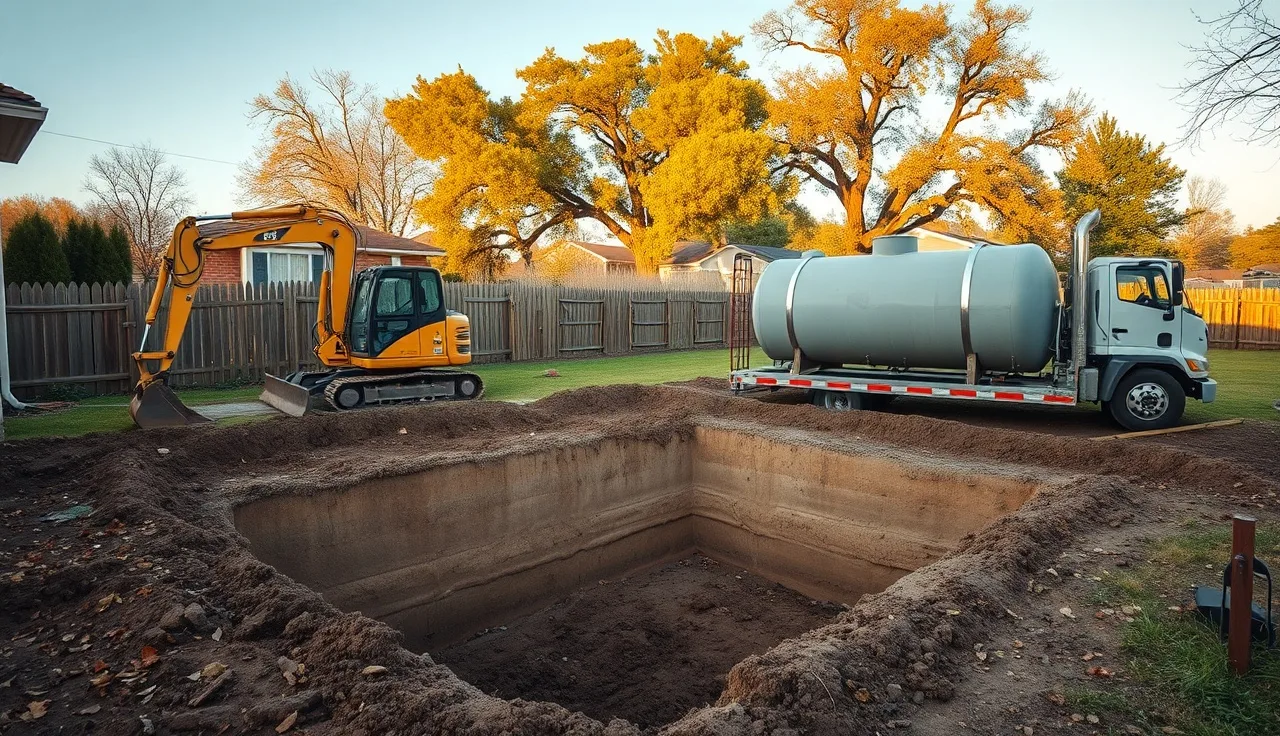
The system has two main parts: a tank and a drain field (also called a leach field). Wastewater flows from the house into the tank, where solids settle and bacteria break them down. The liquid effluent then flows out through perforated pipes into the drain field, where soil does the final filtering before the water returns to the groundwater. That design has been standard since the mid-20th century, and it still works well when it's sized and sited right.
Here's what surprises most homeowners. A big chunk of the project happens before any dirt moves. Soil testing, site evaluation, engineering, and permitting can eat more time than the install itself. In some counties the permit queue alone runs six to twelve weeks. Build that into your timeline or it will build itself in for you.
For a plain breakdown of the septic tank installation phase, that guide covers the tank-specific work step by step.
What are the different types of septic systems you can install?
The soil on your lot decides which system you can legally install. Budget comes second. A standard gravity system works in a lot of places, but a failed perc test or a high water table pushes you toward more complex and more expensive designs.
Conventional gravity system. The common one. Effluent flows by gravity from the tank to a gravel-filled trench field. Works where soil drains well and the lot has enough usable area. Cheapest option when conditions allow it.
Pressure distribution system. A pump delivers effluent in timed doses across the field. Handles loading rates better in tighter soils. It adds a pump, a pump chamber, and controls, so you get more maintenance points and a higher upfront cost.
Mound system. Built when soil is too slow, too fast (sandy), or the water table sits too shallow. Sand fill gets trucked in and mounded above grade to make an engineered treatment layer. Mounds cost a lot more, often $8,000 to $20,000 just for the mound part, and they're impossible to hide on the lot.
Aerobic treatment unit (ATU). Pumps air into the tank to speed up bacterial breakdown, which produces cleaner effluent. Some states require it where a conventional system can't get enough soil treatment distance. ATUs need service contracts, usually $150 to $300 per year. [1]
Drip irrigation system. Sends effluent through subsurface drip tubing. Good on sloped or space-limited lots. It needs filtration and pressure regulation, and it isn't cheap to maintain.
Chamber system. Uses plastic arch chambers instead of gravel in the field trenches. Allows a smaller field footprint in some soils. The EPA notes these can work well in variable or coarse soils. [2]
If your lot has a leach field that failed or was never sized right, the replacement type matters a lot. Don't let a contractor push the cheap option if your soil report says otherwise.
What soil and site tests are required before you can install?
You can't skip site evaluation. Every state requires it, and the results steer every decision after. Two tests matter most.
Percolation test (perc test). Crews dig holes to the proposed field depth and fill them with water. How fast the water drains tells the engineer how quickly your soil accepts effluent. Soil that percs between 1 and 60 minutes per inch is generally fine for a conventional system. Faster than 1 minute per inch means the soil is too coarse to treat effluent. Slower than 60 minutes per inch (often written 60 MPI) means the soil can't take effluent fast enough. Most states set the conventional cutoff at 30 or 60 MPI. [3]
Soil profile evaluation. A licensed soil scientist or sanitarian digs test pits and reads the soil layers by hand and eye. They look for mottling (rust-colored streaks that flag seasonal high groundwater), bedrock depth, and soil texture. This evaluation often carries more weight than the perc test. Many states now require it instead of, or on top of, a perc test.
Other site factors shape the design: setbacks from wells, property lines, streams, and buildings; lot slope; restrictive layers; and enough room for both the primary and reserve field. That last one catches people off guard. Most codes require a reserve area equal to 100 percent of the primary field, kept clear of structures and pavement, in case the primary field fails. [4]
Tests run $300 to $1,500 depending on the number of holes, travel, and whether a soil scientist is required. Some counties do their own evaluations. Others make you hire a licensed evaluator.
What permits do you need and how long does the process take?
You need a permit before you install, full stop. In many states the local health department or environmental agency issues it. In others a state agency handles it directly. Installing without one is illegal, and most licensed installers won't touch the job.
The usual path: you or your engineer submit a site plan, soil test results, a system design, and an application fee. The reviewer checks the design against the local onsite wastewater code. They approve it, ask for revisions, or schedule an on-site review. Once approved, you get a construction permit. After installation, the system has to pass a final inspection before you cover it with soil. Some jurisdictions also inspect the drain field in progress, before backfill.
Timeline reality. In rural counties with short queues, permits sometimes clear in two to four weeks. In busy areas or states with layered rules (California, Texas, and Florida all qualify), three to six months from application to permit is normal. If your county has a backlog, start the permit before you touch anything else on the lot.
Fees run $200 to $1,500. Some states require a licensed engineer or soil scientist to design the system. Others let a registered installer design and permit it. Check your state environmental or health department site for the exact authority. The EPA's SepticSmart program links out to state-level contacts. [5]
Operating permits are a separate animal from construction permits. In many states, ATUs and other advanced systems need an annual operating permit plus a service contract with a licensed maintenance provider.
How much does it cost to put in a septic system?
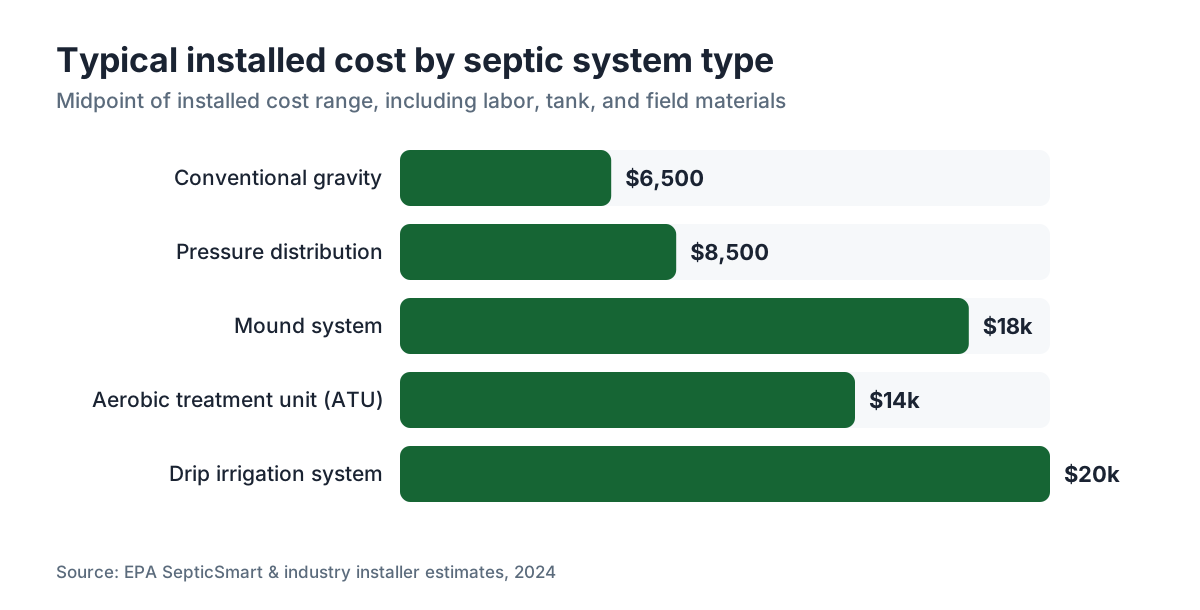
The range is genuinely wide, and soil and site conditions drive it, not tank size or brand. A conventional gravity system on a straightforward lot with good soil runs $3,000 to $7,000 in lower-cost regions and $6,000 to $12,000 in pricier states like New England, California, and the Pacific Northwest.
Mound systems commonly run $10,000 to $25,000. ATUs with drip fields can top $30,000 on hard lots. These are installed numbers, including labor, tank, and field materials.
| System type | Typical installed cost range |
|---|---|
| Conventional gravity | $3,000 to $10,000 |
| Pressure distribution | $5,000 to $12,000 |
| Mound system | $10,000 to $25,000 |
| Aerobic treatment unit (ATU) | $8,000 to $20,000 |
| Drip irrigation system | $10,000 to $30,000 |
The costs that ambush people: soil testing and engineering ($500 to $3,000), permit fees ($200 to $1,500), tank risers and lids if they aren't included ($200 to $800), site restoration after excavation ($500 to $2,000), and electrical work when a pump is involved ($500 to $1,500).
For a regional cost breakdown, the cost to install a septic system guide covers labor rates, tank material costs, and how to compare quotes. The cost to put in a septic tank page zeroes in on the tank component.
One honest note. Online cost calculators are often wildly off. The only number you can trust comes from a licensed installer who has read your soil report and walked your site plan. Get three quotes, and make sure each one covers the same scope.
How long does it take to install a septic system?
Two timelines run at once: the permit and approval process, and the physical install. The permit is the long one. As covered above, plan for two weeks on the short end and six months on the long end.
Once the permit is in hand, the site work goes fast. A conventional system on a good lot takes two to five days of active work: excavation, tank delivery and setting, pipe install, drain field construction, inspection, and backfill. Mound systems add a day or two for the sand fill. ATUs may need an extra half-day for electrical and controls.
Weather matters. Most contractors won't build a drain field in saturated soil or frozen ground because it wrecks the field's structure. Spring and fall in northern states often means working around wet conditions. Summer is peak install season across most of the country.
Building a new home? The septic install usually happens after the foundation is poured and the rough-in plumbing is set, so the crew knows where the house outlet lands. The drain field often goes in before interior framing, because heavy equipment gets around the site easier before the house is standing.
Who installs septic systems and how do you pick a good contractor?
Licensing rules vary, but in most states septic installers must be licensed, and often bonded and insured too. That license is separate from a general contractor's license. Some states require the designer (whoever prepares the permit application and the layout) to be a licensed engineer or soil scientist, even when a different licensed installer does the digging.
Here's a reliable way to find a licensed contractor. Your county health department or state environmental agency usually keeps a list of permitted installers. The National Onsite Wastewater Recycling Association (NOWRA) also runs a member directory. [6]
What to ask before you hire:
- Can you give me your state installer license number?
- Have you installed this exact type of system (mound, ATU, drip)?
- Who pulls the permit, you or me?
- What does the quote include and exclude? (Make them list it: tank, risers, distribution box, field material, electrical, restoration)
- Will you be on site during the county inspection?
- What warranty do you give on your workmanship?
The lowest quote is usually low for a reason. An undersized tank or a badly graded field will fail, and the repair dwarfs whatever you saved. See septic system repair for what those repairs actually run.
Contractors running multiple installs use job-tracking tools like SepticMind to keep permit records, inspection notes, and customer messages out of a paper pile. Any good installer already has a system, though. What matters to you as a homeowner is simple: do they show up, pull the permit, and pass the inspection.
What are the steps in the actual installation process?
Here's the sequence for a conventional gravity system, which is the baseline most other systems build on.
Step 1: Site layout and mark-out. The installer stakes the tank, distribution box, and field trenches against the approved plan. Call 811 (the national dig-safe line in the US) before any digging to locate buried utilities. [7]
Step 2: Excavation. A backhoe or excavator digs the tank pit and the field trenches. Trench depth follows the design and soil profile, usually 18 to 36 inches. Topsoil gets stockpiled separately for final grading.
Step 3: Tank placement. The concrete, fiberglass, or polyethylene tank is delivered and set into the pit by crane or excavator. Crews level it, then connect the inlet and outlet pipes. Concrete tanks are the most common. They're heavy (a 1,000-gallon tank can weigh 8,000 to 12,000 pounds) and they last when the concrete is good. [8]
Step 4: Distribution system. In a gravity system, a distribution box (D-box) splits flow evenly to the field lines. In a pressure system, a pump chamber and a timer-controlled pump go here instead.
Step 5: Drain field construction. Perforated pipe goes into gravel-filled trenches (or onto chamber arches). Pipe slope is the detail that makes or breaks the field, typically 1/8 inch per foot for gravity distribution. Geotextile fabric covers the gravel to keep soil out, then the crew backfills.
Step 6: Inspection. The county inspector visits before final backfill in most jurisdictions. This is not optional. Cover the field early and many counties make you dig it back up.
Step 7: Final backfill and grading. Trenches get filled, topsoil goes back, and the surface is graded to push runoff away from the field. Seeding or sod follows.
Step 8: As-built drawing. A sketch showing where the tank and field actually sit, measured off fixed points like house corners and fences, gets filed with the permit office and handed to you. Keep it. Future owners, inspectors, and pump trucks all need it.
The tank-only sequence lives in the septic tank installation article if you want that level of detail.
What size septic tank and drain field do you need?
Tank size comes from the number of bedrooms, not the number of people living there now. The logic: bedrooms set the maximum plausible occupancy, and the tank has to handle a full house whether or not you fill it. Most state codes use a table like this:
| Bedrooms | Minimum tank size |
|---|---|
| 1 to 2 | 750 gallons |
| 3 | 1,000 gallons |
| 4 | 1,200 gallons |
| 5 to 6 | 1,500 gallons |
These are minimums. [11] Plenty of installers and engineers push you to size up, and they're right. A 1,000-gallon tank for a 3-bedroom house meets code, but a 1,250-gallon tank gives you buffer for guests, a garbage disposal, and the day twelve people show up for Thanksgiving. The cost gap between a 1,000 and a 1,500-gallon concrete tank is often under $500, which is nothing against the total project.
Drain field size comes from two inputs: the daily design flow (gallons per day, based on bedroom count) and the soil's absorption rate (from the perc test). Soil at 30 MPI needs roughly twice the trench length of soil at 15 MPI to carry the same daily flow. Your engineer runs that math. You just need to know that slower soil means a bigger field.
For a typical 3-bedroom house with decent soil, plan on 300 to 500 linear feet of drain trench, 2 to 3 feet wide. That works out to roughly 1,500 to 3,000 square feet of field area before you add trench spacing.
What can go wrong during installation, and what are the red flags?
Most install failures trace back to a short list of problems, and most of them are visible if you know what to watch for.
Wrong tank elevation. Set the tank too low and it can flood in a high water table. Set it too high and gravity flow from the house may not reach it. Both are avoidable with proper survey work before the hole gets dug.
Poor drain field grading. Trenches have to be level (or on a slight design slope) so effluent spreads evenly. Uneven trenches dump into one section of the field and starve the rest. The overloaded section fails early.
Driving equipment over the drain field. Heavy machines compact the trench soil and crush the void space that makes the field work. Once it's compacted, there's no easy fix. A good installer keeps equipment off the field area from day one.
Bad tank backfill. Concrete tanks in particular crack when backfill goes in unevenly or with big rocks. Proper backfill goes in lifts with clean fill.
Skipping the inspection. Some contractors, usually the cheap ones, try to backfill before the inspector shows up. It saves them time and hides shoddy work. Don't allow it. The inspection is your one shot at an independent set of eyes on the field before it disappears underground.
No as-built drawing. A shockingly common omission. Without it, the next pump truck can't find the tank. Require it in writing before final payment.
If something goes wrong after installation, septic tank repair and septic system repair cover the common failure modes and what fixes typically cost.
How do you maintain a new septic system to make it last?
A well-installed system with steady maintenance should last 20 to 40 years. The drain field is the part most homeowners kill early through neglect or abuse, so protect it first.
The single most important task is regular pumping. The EPA recommends pumping every 3 to 5 years for a typical household, though your actual frequency depends on tank size and water use. [9] A 1,000-gallon tank serving four people may need pumping every 3 years. The same tank serving one person might go 8 or 10. For your specific case, how often to pump a septic tank walks through the variables.
What else matters:
- Keep the drain field free of vehicle traffic, structures, and deep-rooted plants. Tree roots are a top cause of field damage.
- Don't pour grease, harsh chemicals, or non-biodegradable stuff down the drain. It disrupts the bacteria in the tank and can clog the field.
- Fix leaky faucets and running toilets. A failed toilet flapper can push hundreds of gallons a day into the system and hydraulically overload the field.
- Keep surface water (gutters, downspouts, French drains) from running over the field. Extra water saturates the soil and cuts treatment capacity.
- Spread laundry across the week instead of eight loads on Saturday. Big water surges shock the system.
Get the tank pumped out on schedule and inspected every few years. A good inspector catches early field stress before the whole thing fails. The septic tank cleaning and septic tank emptying articles show what a service visit actually looks like if you've never watched one.
Homeowners who want a simple way to track pump schedules and service records can use SepticMind's homeowner tools, which log history and send reminders when service is due.
Are there rules about where a septic system can and can't be placed?
Yes, and they don't bend. Setback requirements set minimum distances between system parts and other features. They exist to protect drinking water, neighboring properties, and public health.
Common minimum setbacks (these vary a lot by state and local code, so always check yours):
| Feature | Typical setback from tank | Typical setback from drain field |
|---|---|---|
| Private well (your property) | 50 ft | 100 ft |
| Neighboring well | 50 ft | 100 ft |
| Property line | 5 to 10 ft | 10 to 25 ft |
| House foundation | 5 ft | 20 ft |
| Surface water (streams, ponds) | 50 ft | 50 to 100 ft |
| Stormwater drains | 10 ft | 25 ft |
The EPA's guidance ties siting straight to failure risk, and improper siting ranks among the leading causes of system failure and groundwater contamination. [5] Some states run tighter rules. Florida's setback from a surface water body, for one, can hit 75 feet or more depending on how the water is classified.
Small lots get genuinely tricky. If you're eyeing a rural property to buy, have a licensed site evaluator walk the lot before you close. A lot that looks buildable from the road might hide a high water table, no room for setbacks, or soil that makes septic impossible or brutally expensive.
What are the environmental rules and protections you need to know about?
Septic systems are regulated mostly at the state level, but federal law sets the floor. The Clean Water Act gives the EPA authority over water quality, and septic failures that push pollutants into surface water or groundwater can trigger enforcement under it. [10] Day to day, the work happens through state onsite wastewater programs that run the permits, inspections, and installer licensing.
The EPA's SepticSmart initiative publishes homeowner guidance and tracks state program contacts. Its published estimate is that 10 to 20 percent of US septic systems are failing at any given time, adding nitrogen, phosphorus, and pathogens to groundwater. [9] That's a sobering number, and it's the reason inspections and pumping matter beyond protecting your own tank.
In nitrogen-sensitive areas, like coastal regions where nutrient loading is hurting estuaries, some states now require enhanced nitrogen-reducing systems. Massachusetts, Maryland, and Virginia have put such rules in place in certain watershed zones. [12] If your property sits in a designated nitrogen-sensitive area, expect extra design requirements and maybe a mandate to upgrade an older system when you add bedrooms.
Wetlands add another layer. The Army Corps of Engineers and state environmental agencies regulate work in and near wetlands under Section 404 of the Clean Water Act. If any part of your proposed system falls inside a wetland buffer, you may need a separate wetlands permit before the health department will issue yours.
Frequently asked questions
Can I install my own septic system without hiring a contractor?
In a handful of states, a homeowner can pull the permit and do the install on their primary residence. Most states require a licensed installer. Even where DIY is legal, you'll still need a licensed engineer for the design and a county inspection before backfill. The legal and practical risks of a botched install are high enough that most homeowners come out ahead hiring a licensed pro.
How far does a septic system need to be from a well?
The common minimum is 50 feet from the tank and 100 feet from the drain field to a private well, but it varies a lot by state. Some states require 150 feet from the field to a well. Always check your specific state and county code. On a small lot with a well, get a site evaluator to walk the property before you commit to anything.
Does a new septic system add value to a home?
A working, code-compliant system is a baseline expectation for any rural or suburban home, so it doesn't add premium value the way a kitchen remodel does. But a failed or aging system can gut a home's value or kill a sale outright. A new system clears a major liability and keeps the home financeable and insurable, which matters more than a price bump.
What happens if your property fails a perc test?
Failing a standard perc test doesn't automatically kill your septic plans. It means a conventional gravity system won't work. Depending on the soil profile, a mound, ATU, drip, or other engineered system may still be permitted. Some lots genuinely can't support any onsite system, and then your only options are connecting to public sewer or, on very large parcels, buying more land.
How long does a septic system last?
A well-installed, properly maintained conventional system usually lasts 25 to 40 years. A good concrete tank can last 40 years or more. The drain field is the part that fails first, usually from compaction, root intrusion, or hydraulic overload caused by skipped pumping. ATUs and drip systems carry more mechanical parts and tend to need component replacement earlier.
Can you put a septic system on a small lot?
It depends on the lot's shape, soil, and local setbacks. A lot under half an acre in a rural area can sometimes fit a system, but every setback eats into usable area. Very small urban-fringe lots often can't clear property line, well, and structure setbacks all at once. A licensed site evaluator can tell you for sure after walking the lot and reading the local code.
Is a concrete, fiberglass, or plastic septic tank better?
Concrete tanks are the most common and last well when made right, though they can crack in acidic soils or with a poor mix. Fiberglass resists corrosion and is lighter to haul, but it can shift or float in a high water table if it isn't anchored. Polyethylene tanks are the lightest and easiest to install but may carry lower weight-bearing capacity. Your installer and local code steer the choice.
What should you not put in a septic system?
Skip wipes (even the flushable-labeled kind), feminine hygiene products, condoms, paper towels, and prescription meds. Don't pour cooking grease, paint, large amounts of bleach, or harsh drain cleaners down the drain. These either clog pipes and tank baffles or kill the bacteria doing the treatment work. A garbage disposal dumps a big solids load and is generally not recommended on septic.
Do you need an engineer to design a septic system?
It depends on the state and the system type. For a simple conventional system in many rural counties, a licensed installer can prepare the permit application and design. For engineered systems like mounds, ATUs, or drip fields, most states require a licensed professional engineer or soil scientist to stamp the design. Check your state's onsite wastewater program before assuming either way.
How does a septic system connect to the house plumbing?
The main sewer line exits the house through the foundation, usually 4-inch PVC, and runs to the septic tank inlet. It has to slope about 1/4 inch per foot toward the tank to keep gravity flow moving. That slope and the distance from house to tank set how deep the tank inlet sits, which drives excavation cost and decides whether you need a pump lift station.
What permits do you need to install a septic system?
At minimum, a construction permit from your local health department or the equivalent agency. Some states also issue a design permit separately from the construction permit. If the install includes electrical work (pumps, ATU controls), you usually need a separate electrical permit. After the system passes inspection, you get a use permit or certificate of completion. Advanced systems also need operating permits in some states.
Can a septic system be installed in winter?
In practice, most installers avoid frozen or saturated ground. Compacted or frozen soil in the trenches wrecks field performance. In mild-winter states, winter installs are routine. In northern states, most contractors schedule around ground conditions, not the calendar. Some jurisdictions ban drain field installation when the ground is frozen, so check local rules before you try a cold-weather window.
How do you find out where your septic system is located on your property?
Start with your county health department. Most keep as-built drawings on file from the original permit. If not, the previous owner may have paperwork. Failing both, a septic company can probe the yard with a metal rod to find the tank lid, or you can trace the sewer line from the house with a camera. Once you find it, draw your own sketch with measurements off fixed reference points.
Sources
- EPA SepticSmart, Types of Septic Systems: ATUs inject air to accelerate treatment and require regular service contracts; drip and mound systems used where conventional systems cannot meet setback or soil requirements
- EPA SepticSmart, Types of Septic Systems: Chamber systems can work well in variable or coarse soils and allow a smaller field footprint in some conditions
- University of Minnesota Extension, Septic System Owner's Guide: Percolation rates between 1 and 60 minutes per inch are generally acceptable for conventional drain fields; outside that range, alternative systems are required
- EPA SepticSmart, Siting and Site Evaluation: Most codes require a designated reserve area equal to 100% of the primary field, kept free of structures and pavement
- EPA SepticSmart Program, Homeowner Resources: Improper siting is one of the leading causes of system failure and groundwater contamination; EPA maintains state-level program contacts through the SepticSmart initiative
- National Onsite Wastewater Recycling Association (NOWRA), Member Directory: NOWRA maintains a directory of licensed septic system professionals as a resource for locating qualified installers
- Common Ground Alliance, Call 811 Before You Dig: 811 is the national call-before-you-dig number in the US; required before any excavation to locate buried utilities
- Penn State Extension, Septic System Maintenance: Concrete septic tanks are the most common type; a 1,000-gallon precast concrete tank typically weighs 8,000 to 12,000 pounds
- EPA SepticSmart, Maintain Your Septic System: EPA recommends pumping every 3 to 5 years for a typical household; estimates 10 to 20 percent of US septic systems are failing at any given time
- EPA, Summary of the Clean Water Act: The Clean Water Act gives EPA authority over water quality; septic failures that cause pollutants to reach surface or groundwater can trigger federal enforcement
- USDA Rural Development, Single Family Housing Programs: Minimum tank sizing by bedroom count referenced in federal rural housing guidance; 1,000-gallon tanks for 3-bedroom homes are the most common minimum standard
- Virginia Department of Health, Sewage Handling and Disposal Regulations: Virginia has implemented nitrogen-sensitive area requirements in certain watershed zones requiring enhanced treatment systems in those areas
Last updated 2026-07-09