Pump septic system: how it works, costs, and when to act
By the SepticMind Editorial Team

TL;DR
- A pump septic system uses an electric pump to push wastewater where gravity can't carry it.
- Routine pumping runs $250 to $600 for most homes and should happen every 3 to 5 years.
- Mound and pressure-dosed systems cost more to build and maintain, but they work well on flat lots, wet ground, and clay soils when you keep the pump and alarm in good shape.
What is a pump septic system and how does it work?
A gravity septic system does what the name says. Wastewater flows downhill from the house into the tank, then downhill again into the drain field. No moving parts, no electricity. But millions of homes sit on flat lots, high water tables, or dense clay where gravity quits partway through. That's the job a pump septic system takes over.
In a pump system, an electric pump (sometimes two) sits either inside the septic tank or in a separate pump chamber downstream of it. When wastewater reaches a set level, a float switch flips the pump on, and it pushes effluent uphill or across flat ground to the drain field. The pump cycles on and off, delivering effluent in measured doses instead of one slow trickle.
You'll run into a few configurations:
- Effluent pump systems move partially treated wastewater from the tank to a standard drain field that sits uphill or too far away for gravity flow.
- Pressure distribution systems use a pump to spread effluent evenly across the field through small-diameter perforated pipes. That keeps one end of the field from drowning while the other stays bone dry.
- Mound systems pump effluent up into an engineered sand mound built above the natural ground, used on sites with shallow soil or a high water table [1].
- Aerobic treatment units (ATUs) use a pump plus air injection to treat wastewater harder before it disperses, common where discharge rules are strict.
The pump is the only moving part in most of these. That makes it the component you rely on most and the one that eventually quits. Most submersible effluent pumps last 7 to 15 years depending on how hard they run and what's in the water [2].
For a closer look at what happens during routine service, see our guide to septic tank pumping.
How much does it cost to pump a septic system?
Routine septic tank pump out pricing lands between $250 and $600 for most single-family homes, with the national average around $400 to $500. That range comes from HomeAdvisor survey data and lines up with what contractors report across regions [3]. You'll pay the low end for a small tank in a metro area with easy access. You'll pay the high end for a 1,500-gallon tank at the end of a long rural driveway.
A few things drive the price up fast:
- Tank size: A 1,000-gallon tank is standard. A 1,500-gallon tank adds $50 to $150. Big household or commercial tanks can run $800 or more.
- Access: If the lid is buried under two feet of dirt, you pay for locating and digging it out. A septic tank riser fixes that for good and pays for itself within two pump cycles.
- Sludge volume: A tank ignored for 10 years holds more solids. Some contractors bill by the gallon hauled.
- Travel and disposal fees: Long hauls to the nearest treatment plant add cost. Disposal fees run $0 to $150 depending on local tipping rates.
- Pump system complexity: A separate pump chamber or ATU usually means a separate charge to inspect the pump, controls, and floats. Budget $75 to $200 more for that.
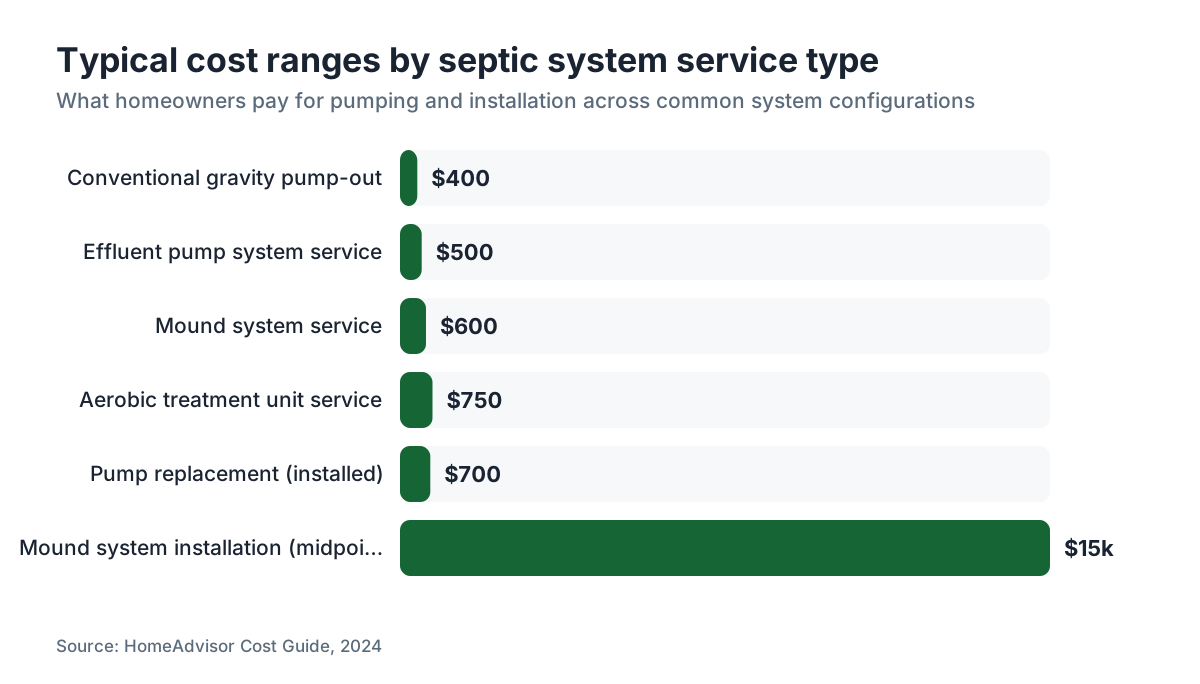
Here's how the numbers break down by system type:
| System Type | Typical Pump-Out Cost | Notes |
|---|---|---|
| Conventional gravity | $250, $500 | Tank only, no pump service |
| Effluent pump system | $350, $600 | Tank + pump chamber inspection |
| Mound system | $400, $700 | May need pump and distribution box check |
| Aerobic treatment unit | $500, $900 | Quarterly service contracts common |
| Large tank (1,500+ gal) | $500, $1,000+ | Volume and travel add cost |
For a full breakdown of what drives septic costs at every stage, see cost to install septic system.
How often should you pump a pump septic system?
The EPA recommends pumping every 3 to 5 years for most households [4]. That's a fine default, but honestly too vague to lean on by itself. The right interval depends on four things: tank size, household size, how much water you use, and whether you grind food waste down the drain.
The EPA and University of Minnesota Extension both point to a practical rule. When the sludge and scum layers together fill more than one-third of the tank's liquid capacity, it's time to pump [4][5]. A good technician measures those layers at every visit. If yours doesn't, ask why.
Pump systems carry one extra job that gravity systems don't. The pump chamber or dosing tank should get inspected every time the main tank gets pumped. Test the float switches, the alarm, and the pump. A float switch that sticks and lets the chamber overflow can dump raw effluent in your yard before you notice a thing.
Households with garbage disposals, big families, or heavy water use should lean toward the 3-year end. A retired couple on a 1,500-gallon tank might stretch comfortably to 5 to 7 years. Nobody has clean population-level data on pump-system intervals specifically. The 3-to-5-year guidance comes from studies on conventional tanks and gets applied to pump systems by extension.
See how often to pump septic tank for the full decision framework.
What is a mound septic system and what does it cost to install?
A mound system is the pump-dependent design you'll see most often on wet, shallow, or slow-draining soils. The idea is simple. Instead of trusting the native soil to treat and absorb effluent, an engineer builds an elevated sand bed, usually 2 to 4 feet above the original ground, with distribution pipes running inside it. A pump doses effluent into that mound on a set schedule [1].
Mound systems work because clean fill sand has predictable permeability and sits above the water table. Effluent trickles down through the sand, soil bacteria treat it, and it reaches the native soil at a rate the ground can handle. State regulators usually require a mound when soil perc rates run slower than 60 minutes per inch or faster than 5 minutes per inch, or when the seasonal high water table sits within 18 to 24 inches of the surface. Rules vary by state, so check your onsite wastewater code [6].
Installation costs far more than a conventional system. The typical range is $10,000 to $20,000, with complex sites or large homes pushing past $25,000 [3][7]. The money goes to engineered fill, extra excavation, the pump and controls, and the engineering design itself.
Maintenance adds up too. Mound systems need the pump serviced, the distribution network checked, and the mound surface watched for ponding or damage. Budget $150 to $400 a year in service calls beyond routine pumping.
For a broader look at what new installation runs, see septic tank installation and cost to put in a septic tank.
What are the signs your pump septic system is failing?
Pump systems fail two ways. The pump quits mechanically, or the drain field fails biologically and hydraulically. Sometimes both go at once, and that's when the bills get ugly.
Pump failure signs:
- The alarm light or buzzer on your control panel goes off. Most pump systems have a high-water alarm. Don't reset it and walk away. Call your service provider.
- Slow drains throughout the house, more than one fixture.
- Gurgling from toilets or drains.
- The pump runs nonstop or short-cycles (flips on and off fast). Usually that means a failing float switch or a pump that can't keep up with inflow.
Drain field failure signs:
- Wet or spongy ground over the mound or field, especially during dry weather.
- Sewage odor outdoors near the field.
- Lush, oddly green grass over the field. Not always a problem in dry weather, but worth watching.
- Sewage backing up into the lowest fixtures in the house.
Mound systems add one more failure mode: erosion or compaction of the mound surface. If the mound settles or dips, water pools on top and treatment capacity drops. Walk the mound surface after heavy rain and every spring.
Here's the math that should shape your whole approach. A pump failure caught at inspection costs $300 to $800 to fix. A failed drain field costs $5,000 to $20,000 or more. That gap is the entire argument for inspecting on schedule. See septic system repair and septic tank repair for what real repair scenarios cost.
How long does a septic pump last and when should you replace it?
Most submersible effluent pumps are rated for 7 to 15 years, but real-world life varies a lot. Pumps in water heavy with iron or manganese wear out faster. Pumps that run constantly because the house uses far more water than the system was designed for also fail early.
Signs a pump is near the end:
- Startup amperage climbs (a technician checks this with a clamp meter)
- Grinding or rattling noises
- Flow rate drops noticeably between inspections
- It flunks the float switch test during routine service
Replacing a submersible effluent pump usually runs $400 to $1,000 installed, depending on size, horsepower, and access. Don't cheap out here. A $150 pump off a big-box shelf is not the same machine as a Zoeller, Liberty Pumps, or Myers unit, which is what most licensed contractors install. The extra $100 to $200 up front usually buys two to three more years of service.
Alarm floats and control panels get replaced on their own. A control panel replacement runs $300 to $600 installed. Float switches are cheap, $20 to $60 for the part, but you pay for the service call either way.
What maintenance does a pump septic system need beyond pumping?
Pumping the tank handles solids. A pump system needs several other things a gravity system doesn't.
Annual or biannual pump inspection. Have a technician confirm the pump draws correct amperage, test the float switches by hand, and check the high-water alarm. Twenty minutes, and it catches problems before they turn into 2 a.m. emergencies.
Filter cleaning. Many systems carry an effluent filter on the tank's outlet baffle. It keeps solids from reaching the pump chamber and needs cleaning every 1 to 3 years [10]. If it's never been touched, expect it badly clogged. A plugged filter causes slow drains and can burn out the pump.
Distribution system check. On pressure distribution and mound systems, the small orifices in the pipes clog with biofilm or mineral scale. A technician can flush or rod these lines during a visit. How often depends on your effluent quality, but every 5 to 7 years is a reasonable baseline.
Control panel inspection. Timer settings on a time-dosed system should match the original engineering design. If prior owners fiddled with the timers and left no paperwork, have a licensed engineer verify the settings.
Water use audits. Pump systems are sized for a design flow, usually 150 gallons per day per bedroom. Use much more than that and you're shortening the system's life. A quick look at your water utility records (or a flow meter on a private well) tells you where you stand.
For septic tank cleaning specifics, including how a full clean differs from a plain pump-out, that guide covers the difference.
SepticMind's maintenance tracking tools let service operators log pump test results, timer settings, and filter cleaning dates so nothing slips between visits.
How does a pump septic system affect your drain field?
The pump and the septic drain field are tied together more tightly than most homeowners think. The pump's job is to protect the field as much as it is to move effluent.
In a gravity system, effluent dribbles into the field continuously as the house uses water. That constant trickle can saturate the biomat (the bacterial layer at the soil interface) and cut absorption over time. A pressure-dosed system fixes this by delivering effluent in timed bursts, letting the field rest and drain between doses. Research from the University of Minnesota found that pressure distribution extends drain field life over gravity flow in comparable soils [5].
Mound systems push the idea further. The engineered sand gives a steady, well-aerated treatment zone that doesn't depend on the native soil's spotty permeability. The tradeoff: if the pump fails and the mound floods over and over, you lose the aerobic treatment zone and the field breaks down faster than it would under normal use.
Keep vehicles off the drain field and mound completely. The weight of a car or riding mower compacts soil and sand, chokes off oxygen, and kills the biological treatment layer. That's one of the most common and most preventable causes of early field failure.
What permits and regulations apply to pump septic systems?
Every state regulates onsite wastewater systems, and pump systems draw extra scrutiny because they're more complex. In most states you need a permit to install, repair, or substantially change a pump system. Some states require a licensed engineer to design mound and pressure distribution systems. Others let a certified installer design a simpler effluent pump setup.
The EPA's SepticSmart program sets a national baseline of guidance and puts the responsibility for upkeep squarely on the homeowner [4]. But real regulatory authority sits with state and county health or environmental agencies. There is no single federal septic permit.
A few practical points:
- Never change pump timer settings, float switch heights, or distribution orifice sizes without documentation and, in many states, a permit. An engineer set those numbers based on your site's soil and loading.
- Selling your home? Most states require a septic inspection. A pump system that fails can delay or kill the sale. A dead alarm, a failed pump, or a missing as-built drawing are all common deficiencies.
- Some states, Wisconsin and Minnesota among the best known, require mandatory maintenance and reporting for pressure distribution and mound systems [6][8]. Owners file annual or biannual inspection reports with the county.
Search your state department of health or environmental quality site for "onsite wastewater" or "individual sewage treatment system" to find your rules. If you own a pump system, this is not optional reading.
Is a pump septic system worth it compared to other alternatives?
If your site needs a pump system, it needs a pump system. There's usually no cheaper option that's also legal. On a flat lot with high groundwater or clay, the real choice isn't pump versus gravity. It's pump system versus not building at all, or hooking up to municipal sewer if it's there.
The honest tradeoffs:
They cost more up front. A mound system typically runs $10,000 to $20,000 more than a gravity system on the same lot [3][7]. Real money.
They cost more to maintain. Annual upkeep for a pump system runs $300 to $600 once you count pump inspection and filter cleaning, versus maybe $50 to $100 for a gravity system between pump-outs.
They fail differently. A gravity system fails slowly and gives you warning signs over months. A pump system can quit overnight when a float switch sticks or a motor burns out. That's exactly why the alarm is not optional and gets tested every year.
They can work beautifully. A well-designed, well-maintained mound or pressure distribution system can run 25 to 40 years before the field needs major work. Sites where a gravity system would have failed in 10 years often see a mound run reliably for decades.
The bottom line I'd give a friend: if you're buying a home with a pump system, plan on $200 to $400 a year in maintenance beyond pumping, keep the alarm working, and don't put off service visits. That's the cost of making it last.
SepticMind helps service operators track these schedules and inspection records across their whole customer base, so nothing falls through the cracks.
What should you ask a contractor before hiring them to service your pump system?
Not every septic pumper is comfortable on pump systems, and some will empty the tank without ever opening the pump chamber. Before you hire anyone, ask these straight out:
- Do you inspect and test the pump and float switches as part of the service call, or is that separate?
- Can you check amperage draw on the pump?
- Do you clean effluent filters?
- Do you have experience with mound systems and pressure distribution specifically? (Matters if you have either.)
- Can you give me a written service report with pump test results, sludge and scum depth measurements, and any deficiencies you found?
A contractor who hedges on any of these is telling you something. Good pump-system technicians treat the pump, floats, alarm, and distribution as part of the job, not an upsell. Written records also matter if you ever sell the home or file a warranty claim.
For septic tank emptying, the process on a pump system starts the same as any tank: open the lid, pull the solids and liquids, inspect the baffles, and ideally camera-inspect or probe the outlet for filter condition. The difference is what comes next. The pump chamber gets its own separate service.
Frequently asked questions
How much does it cost to pump a septic system with a pump chamber?
Expect $350 to $700 for a pump system service that covers both the main tank and the pump chamber. The chamber inspection adds $75 to $200 over a standard pump-out because the technician tests the pump, checks float switches, verifies the alarm, and inspects wiring. Mound systems and ATUs land toward the high end of that range.
What is the average mound septic system cost?
Mound septic installation typically costs $10,000 to $20,000, with complex sites or large homes pushing past $25,000. The higher price over a conventional system comes from engineered fill sand, extra excavation, the pump and controls, and mandatory engineering design. Maintenance beyond pumping adds $150 to $400 a year.
How do I know if my septic pump is working?
The quickest check is the control panel alarm. If it's lit or sounding, the pump isn't keeping up. During a service visit, a technician tests the float switches by hand and measures pump amperage. Between visits, listen for the pump cycling during heavy water use. No cycling when it should run, or nonstop running when the tank should be draining, both point to a problem.
Can I pump my own septic system?
Legally, no, in most states. Septage (the tank's contents) is regulated waste that must be hauled and disposed of by a licensed operator. Even if it weren't, you'd need a vacuum truck holding 1,500 to 4,000 gallons. DIY pumping isn't realistic. What you can do is inspect the tank between professional pump-outs and clean an accessible effluent filter if your contractor shows you how.
What happens if you never pump a pump septic system?
Solids build until they start passing into the pump chamber. Once solids hit the pump, they damage or destroy it, often within weeks. Solids that get past the pump reach the drain field and clog the soil for good. Field replacement costs $5,000 to $20,000+. Skipping a $400 pump-out every few years is one of the most expensive moves a homeowner can make.
Does a pump septic system need electricity to work?
Yes. The pump runs on household current, typically 120V or 240V depending on size. A power outage stops the pump. For short outages, the chamber gives you a buffer, usually a few hundred gallons of storage. Extended outages in a busy household can overflow the chamber. Some owners with pump systems wire in a backup generator circuit for that reason.
How long does a mound septic system last?
A well-designed, well-maintained mound system typically lasts 25 to 40 years before the drain field needs replacement. The pump itself needs replacing every 7 to 15 years. Longevity depends heavily on keeping vehicles off the mound, holding correct pump dosing, and never overloading the system with excess water or garbage disposal waste.
What is the difference between a septic pump and a septic tank pump-out?
A septic pump is the electric pump in your system that moves effluent from the tank or chamber to the drain field. A pump-out (tank pumping) is the routine service where a vacuum truck removes built-up solids from the tank. The two are unrelated mechanically. You need pump-outs every 3 to 5 years whether or not your system has an electric pump.
Do pump septic systems require more frequent pumping than gravity systems?
Not necessarily for the main tank, which still follows the 3-to-5-year guideline based on tank size and household use. But the pump chamber should be inspected at every service visit, which may mean annual or biannual visits rather than waiting a full 3 to 5 years. That extra inspection frequency keeps the pump and floats from failing silently between calls.
What permits do I need to repair or replace a pump in my septic system?
Rules vary by state and county. Replacing a failed pump with the same model and size often needs only a notice to the local health department rather than a full permit. Changing pump size, timer settings, or distribution components typically requires a permit and sometimes engineered drawings. Always check with your county health or environmental agency before doing anything beyond a direct swap.
How much does it cost to replace a septic pump?
Replacing a submersible effluent pump typically costs $400 to $1,000 installed, covering the pump, labor, and any wiring or float switch work done at the same time. A control panel replacement adds $300 to $600. A quality brand pump (Zoeller, Liberty, Myers) over a budget unit usually adds $100 to $200 but extends service life by 2 to 4 years in most cases.
Can you put a garbage disposal in a home with a pump septic system?
Technically yes, but most septic pros advise against it, and some states ban garbage disposals on septic entirely. Ground food waste raises the solids load in the tank a lot, which shortens time between pump-outs and raises the risk of solids reaching the pump chamber. If you already have one, pump more often, every 2 to 3 years instead of every 5.
What is a pressure distribution septic system?
A pressure distribution system uses a pump to deliver effluent in timed doses through small-diameter perforated pipes across the whole drain field, instead of letting gravity dump flow at one end. That spreads the hydraulic load evenly, gives the field rest between doses, and extends field life over gravity flow in similar soils. It's a common choice on new installs and replacement systems.
Sources
- University of Minnesota Extension, Mound Septic Systems: Mound systems pump effluent into an elevated engineered sand bed above natural ground surface, used where soils are wet, shallow, or slowly permeable
- Penn State Extension, Septic System Pumps and Controls: Submersible effluent pumps typically have a service life of 7 to 15 years depending on usage conditions
- HomeAdvisor, Septic Tank Pumping Cost Guide: National average for septic tank pumping is approximately $400 to $500; mound system installation ranges from $10,000 to $20,000+
- U.S. EPA, SepticSmart Program: EPA recommends pumping septic tanks every 3 to 5 years and states that homeowners are responsible for maintaining their systems to protect public health
- University of Minnesota Extension, Pressure Distribution Septic Systems: Pressure distribution extends drain field life compared to gravity flow by dosing effluent evenly and providing rest periods; sludge and scum exceeding one-third of tank capacity indicates need for pumping
- Wisconsin Department of Natural Resources, Private Sewage Systems Code (SPS 383): Wisconsin requires mandatory maintenance and inspection reporting for mound and pressure distribution systems; soil permeability thresholds determine when mound systems are required
- Oregon Department of Environmental Quality, Alternative Onsite Wastewater Systems: Engineered alternative systems including mound designs require licensed site evaluator design and cost significantly more than conventional gravity systems
- Minnesota Pollution Control Agency, Subsurface Sewage Treatment Systems: Minnesota requires biannual inspection reporting for compliant alternative septic systems including mound and pressure distribution designs
- U.S. EPA, How Your Septic System Works: EPA describes effluent pump and pressure distribution systems as components requiring professional maintenance to protect groundwater and public health
- North Carolina State University Cooperative Extension, Septic System Maintenance: Effluent filters on septic tank outlet baffles require cleaning every 1 to 3 years to prevent pump damage and system backup
Last updated 2026-07-09