64 oz septic tank treatment: does it actually work?
By the SepticMind Editorial Team
TL;DR
- A 64 oz septic tank treatment is a liquid or powder bacterial additive sold to grow the microbial population in your tank.
- The EPA and most state regulators say healthy tanks don't need them.
- A compromised tank, one recovering from antibiotics or a recent pump-out, may see a small benefit.
- They won't fix a full tank or a failing drain field.
What is a 64 oz septic tank treatment and what's in it?
A 64 oz septic tank treatment is a concentrated liquid, usually a blend of bacterial cultures and enzymes, sold in a single jug meant to last about a year at a monthly dose. The 64-ounce size is a retail sweet spot. Big enough to signal potency, small enough to fit under a bathroom sink. Some products are bacteria-only, some are enzyme-only, and plenty mix both.
The bacteria in these products are almost always facultative anaerobes, organisms that live with or without oxygen. Bacillus species show up most often on ingredient lists because they form hardy spores that survive manufacturing and long shelf lives. The enzymes, usually lipase, protease, and amylase, pre-digest fats, proteins, and starches before the bacteria finish the job.
Here's what the label leaves out. Your tank already holds hundreds of billions of bacteria per milliliter of sludge [1]. A 64 oz jug adds a comparatively tiny population to an environment that snaps back to whatever your wastewater dictates. Good conditions, and the native bacteria already thrive. Bad conditions, and a bottle won't fix them.
Does the EPA recommend septic tank additives?
No. The EPA's SepticSmart program is blunt: "The natural bacteria in your septic system are sufficient to break down solids in the tank, and additives are generally not necessary" [2]. That's the agency's consumer guidance, not a fringe take.
The EPA does leave a narrow door open. It splits biological additives (bacteria and enzymes, generally low-risk) from chemical additives (solvents, acids, caustics), which it warns against outright. Chemical additives kill the bacteria you need, corrode tank parts, and shove partially treated sewage into the drain field [2].
So the federal position, as of the current SepticSmart guidance, comes down to this. Biological additives probably won't hurt you, and probably won't help a working system either. Chemical ones make things worse. A 64 oz liquid bacterial treatment sits firmly in the biological camp, so the harm risk is low. Keep the expectation of a dramatic fix low too.
When might a 64 oz treatment actually help?
A few real scenarios make a bacterial inoculant worth the pour.
After antibiotics in the house. Oral antibiotics leave the body in urine and feces, and studies have detected clinically relevant antibiotic concentrations in septic effluent [3]. Finish a round of broad-spectrum antibiotics, and the bacterial community in your tank took a hit. Dosing during that recovery window is defensible, even if the science on how much it helps is thin.
Right after a pump-out. A septic tank pump-out removes roughly 95 percent of the sludge and scum, along with most of the active bacteria. The tank re-seeds itself from incoming wastewater within a few weeks anyway, but a treatment can nudge the restart. This is the use case where most pumpers say the product has its clearest, if modest, rationale.
After a tank has sat unused. Vacation homes and seasonal cabins go months without fresh wastewater. Come back, start the taps, and the bacterial population may be sparse. A dose at startup is cheap insurance.
None of these promises a measurable result. Nobody has published a rigorous randomized controlled trial on residential septic additives. The closest systematic review, a 2000 assessment from the University of Minnesota Extension, concluded that "no scientific evidence currently exists to support the claims made by additive manufacturers" [4]. That finding is old, and newer bacterial strains exist now, but no peer-reviewed work since has closed the gap or overturned the core conclusion.
What does a 64 oz septic treatment cost, and what are you really buying?
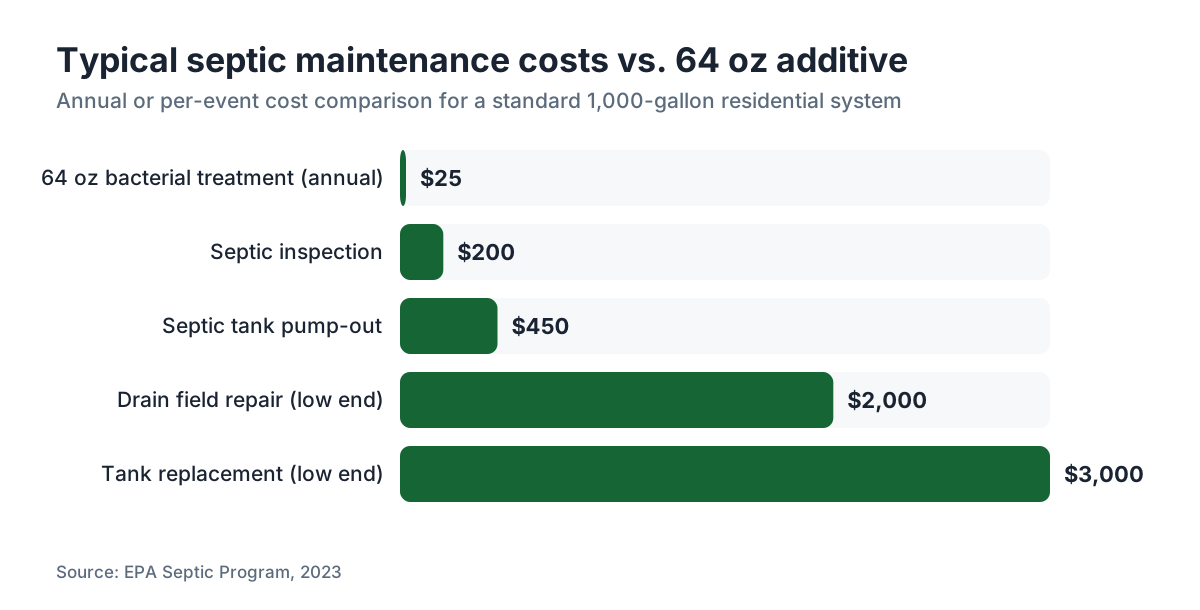
Retail prices for 64 oz septic treatments run about $12 to $45 depending on brand and formula [estimated from current retail listings; prices vary by retailer and region]. Call the midpoint $20 to $25. At a monthly dose of roughly 4 to 8 oz per 1,000 gallons of capacity, a 64 oz jug lasts 8 to 16 months on a standard 1,000-gallon tank.
Here's how that stacks up against everything else a septic system asks of you:
| Maintenance item | Typical cost | Frequency |
|---|---|---|
| 64 oz bacterial treatment | $12-$45 | Monthly dose, jug lasts ~12 months |
| Septic tank pumping (1,000 gal) | $300-$600 | Every 3-5 years [5] |
| Septic inspection | $100-$300 | Every 1-3 years |
| Drain field repair | $2,000-$10,000+ | As needed [6] |
| Tank replacement | $3,000-$10,000+ | End of life [6] |
The additive is cheap next to the cost of failure. That's the honest argument for it. Not that it works dramatically, but that any marginal benefit at $25 a year makes the expected-value math easy. Where I push back hard is on people who treat additives as a stand-in for septic tank pumping. Pumping is the one action with clear scientific and regulatory consensus behind it. An additive is not a substitute for it, and never will be.
How do you use a 64 oz liquid septic treatment correctly?
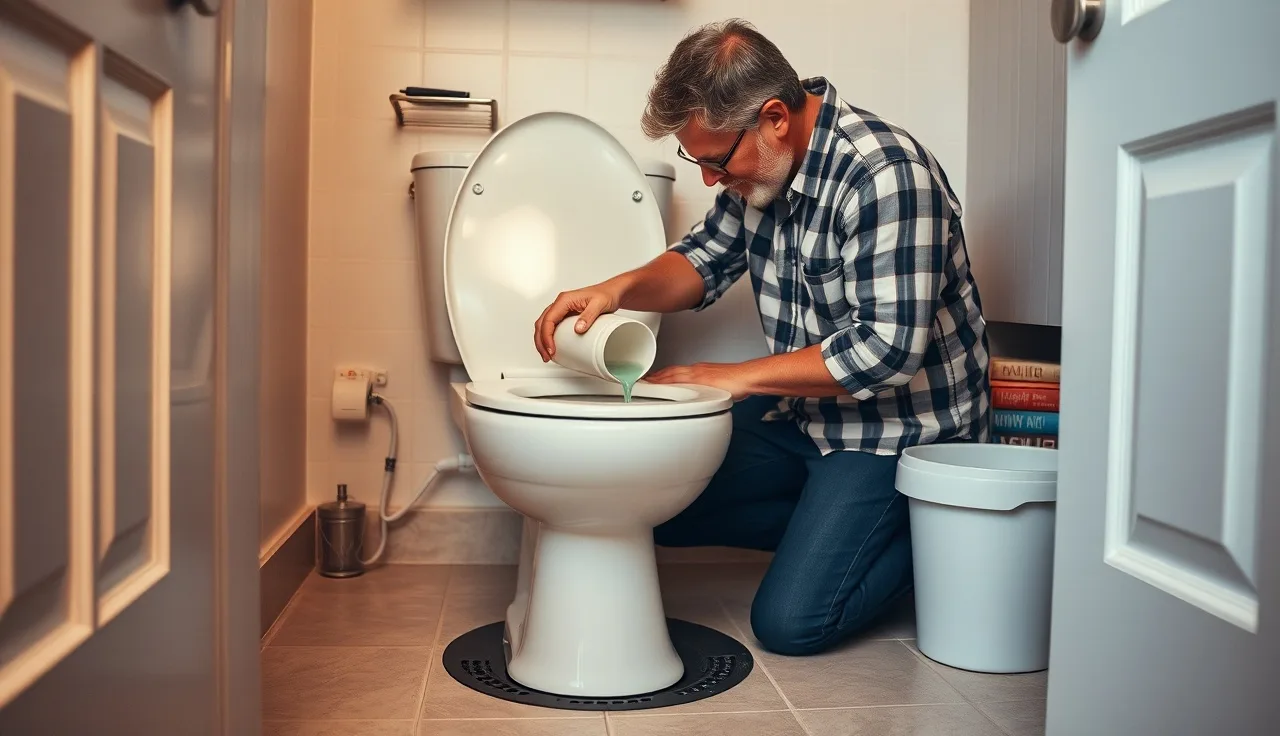
Instructions vary by brand, but the standard method holds. Measure the dose on the label (usually 4 to 8 oz for monthly upkeep), pour it straight into a toilet, and flush. That routes the product down the drain line into the tank without letting it sit in a sink trap.
Do it at night if you can. Sending the treatment in with little competing water, right before eight hours of quiet, gives the bacteria time to attach to surfaces before a shower or dishwasher surge washes through. Manufacturers push this, and it tracks with basic microbiology. Bacteria need time to colonize.
For a tank recovering from a pump-out, some labels call for a bigger opening dose, sometimes the whole 64 oz split over two or three days. Follow it if your product says so. The reasoning holds up.
Go easy on the garbage disposal in the days after you dose. A flood of food solids shifts the bacterial community toward fermenters fast and slows the strains you just added. The EPA's SepticSmart program also recommends limiting garbage disposal use as a general habit, since ground food waste sharply raises the solids load in your tank [2].
Store the jug cool and dry. Extreme heat kills bacterial spores faster than the printed shelf life assumes.
Are there state regulations that ban or restrict septic additives?
Yes, and homeowners get caught off guard by this. Several states regulate or ban certain septic additives under their onsite wastewater codes.
New Hampshire requires chemical additives for septic systems to be state-approved before sale [7]. Massachusetts prohibits chemical additives that may harm the system or the environment under its Title 5 regulations (310 CMR 15.000) [8]. Washington State's Department of Health holds that biological additives haven't shown performance benefits, and its rules read skeptically toward additive claims.
The pattern across states is consistent. Biological additives (bacteria, enzymes) are rarely banned but rarely endorsed. Chemical additives, especially those with solvents or acids, are banned or heavily restricted in many states over documented groundwater contamination.
Check your state's environmental or health department site for onsite wastewater rules before you buy. If you live in a regulated area with a documented water sensitivity, near a well, a lake, or a protected aquifer, knowing what's allowed may be a legal requirement, not a courtesy. Your county extension office is usually the fastest route to a plain answer on local rules.
What won't a 64 oz treatment fix?
This is the section that matters most, because additive marketing implies these products rescue a struggling system. They don't.
A full tank. If your tank is due for pumping, bacteria won't eat the sludge fast enough to matter. The math is brutal. A healthy tank digests roughly 50 percent of incoming solids [1], and the other half piles up as sludge over years. That's why how often you pump your septic tank tracks sludge accumulation, not what you poured in the water. Additives don't change the accumulation math in any way you'd notice.
A failing drain field. If your leach field is saturated, clogged with biomat, or structurally broken, no bacterial product touches those problems. A biomat is itself a bacterial community, just the wrong one in the wrong place. Adding more bacteria upstream doesn't fix what's happening in the soil. Septic system repair for a failing field means excavation, aeration, or replacement, not a jug.
Cracked or leaking tanks. Physical failures need physical fixes. See septic tank repair for what those involve.
Odors from structural problems. Sewage smells in your yard or basement almost always trace to a mechanical fault: a broken baffle, a cracked line, a flooded field. A 64 oz treatment seals nothing.
Liquid vs. powder vs. pod: does the delivery format matter?
Not much. The 64 oz liquid is the most common retail size, but the same product concept comes as powder packets, dissolvable pods, and tablets. Format affects convenience and shelf life more than it affects what happens in the tank.
Powders often last longer on the shelf because dry bacterial spores are more stable than spores floating in liquid. Buy a year of liquid, store it in a hot garage, and the viable cell count can drop hard by month ten. Powders in a cool, dry spot hold their count better.
Pods and tablets are handy but cost more per dose. They aren't more effective. You're paying for the packaging and the pre-measured dose.
Liquid concentrates, the 64 oz jugs included, are fine if you use them regularly and store them right. The bigger container means fewer store trips and a lower per-dose cost than pods.
Format is a preference call. Don't pay a premium for pods if budget matters, and don't buy a huge liquid jug if you can't store it well.
How does a septic treatment interact with household cleaners and medications?
This is the question most homeowners skip, and it's worth a minute.
Antibacterial soaps and cleaners. Products with triclosan or quaternary ammonium compounds (quats) kill bacteria broadly, the good strains in your tank included. The FDA banned triclosan in consumer hand soaps in 2016 [9], so that one ingredient is less of a worry now, but plenty of disinfectants still carry quats. Heavy bleach use also suppresses septic bacteria. Lean hard on these products, and the additive you're pouring in has a harder job.
Prescription medications. Beyond antibiotics, chemotherapy drugs and some antifungals reach the tank at concentrations that hit bacterial populations [3]. If someone in the house is on chemo, the effect on your system's biology is real. Regular additive use through that stretch makes more sense than usual.
The EPA's SepticSmart guidance here is practical. Use household chemicals in moderation, pick septic-safe products where you can, and keep medications, paints, and solvents out of the drain [2]. No amount of bacterial additive offsets a steady habit of pouring harsh chemicals down the pipes.
Operators tracking household chemical loads across many properties can use tools like SepticMind to document usage when clients report system stress. That makes it easier to tie an additive recommendation to a specific household situation instead of guessing.
How do you know if your septic treatment is actually doing anything?
For a healthy system, you probably can't tell. No consumer test measures bacterial diversity or enzyme activity in a septic tank, and sludge builds slowly enough that year-over-year change stays invisible without formal measurement.
The useful proxies are all indirect. No sewage odors, no slow drains, no wet spots over the field, and a pump-out that shows sludge depths in normal range. The EPA recommends a sludge check at every pump-out, and sludge should be pumped when it reaches one-third of the tank's liquid depth [5].
Want to know your tank's biology is healthy before the next pump-out? A licensed inspector can run a dye test or drop a sludge judge to measure accumulation. A septic tank inspection every one to three years gives you actual data instead of vibes. If you're prioritizing dollars, that beats a premium-tier additive.
One scenario where you might notice a difference: a tank stressed by antibiotic or disinfectant overload, throwing odor complaints. Add a bacterial treatment, clean up the chemical load at the same time, and the odor often clears within two to four weeks. Untangling whether the bacteria or the behavior change did the work is impossible.
What should you actually do to keep a septic system healthy?
The evidence here is far clearer than anything about additives.
Pump on schedule. The EPA recommends pumping every three to five years for a typical household [5], though real intervals depend on household size and tank volume. A two-person home with a 1,500-gallon tank can stretch it. A five-person home with a 1,000-gallon tank needs more frequent septic tank cleaning. Your pumper tells you where you actually stand after measuring sludge depth.
Watch what goes in. Wipes (including the "flushable" ones), feminine hygiene products, paper towels, and cooking grease drive premature failure. None of them break down the way toilet paper does.
Protect the drain field. Don't park on it, don't plant deep-rooted trees near it, and route surface water away from it. A saturated field fails faster than any bacteria can compensate for.
Get inspections done. A visual check at pump-out plus a closer look at baffles, lids, and distribution boxes every few years catches problems before they get expensive. See septic tank inspection for what a proper inspection covers.
If you're eyeing septic tank emptying as a maintenance reset, start there. Additives supplement this list. They replace nothing on it. Do all of the above, and a 64 oz treatment costs about two cups of coffee a month at minimal risk. Skip pumps and hope bacteria carry the load, and you'll get a very expensive lesson eventually.
For the bigger picture on system economics, weighing the cost to put in a septic tank or the cost to install a septic system shows how much preventive maintenance is worth against a full replacement.
Frequently asked questions
How much of a 64 oz septic treatment should I use per dose?
Most 64 oz products call for 4 to 8 ounces a month for a standard 1,000-gallon tank, so a jug lasts 8 to 16 months. Higher opening doses, sometimes the full bottle split over a few days, are recommended for tanks just pumped or recovering from a disruption. Follow your specific label, since bacterial concentrations vary by brand.
Can I use a 64 oz septic treatment instead of pumping my tank?
No. Bacterial additives don't replace pumping. Sludge builds faster than bacteria can digest it, and no additive changes that math in any meaningful way. The EPA and state regulators consistently say pumping every three to five years is the core maintenance action. Using additives as a pump substitute is exactly how systems fail early and expensively.
Is a 64 oz liquid treatment better than powder or tablet forms?
Not better, just different. Liquids are convenient but can lose viable bacteria faster in heat. Powders hold shelf stability longer because dry spores are more resilient. Tablets and pods offer pre-measured convenience at a higher per-dose cost. Format matters less than using the product consistently and storing it properly.
Are septic tank treatments safe for all types of septic systems?
Biological treatments, meaning bacteria and enzyme products, are generally safe for conventional gravity systems, mound systems, and aerobic treatment units. Chemical additives, especially solvents or caustics, are not safe for any system and are banned in several states. Check that your product is labeled biological, not chemical, and verify your state's rules before use.
Does a septic treatment help with odors?
Sometimes. If odors come from a depleted bacterial population, say after antibiotics or heavy disinfectant use, a biological treatment plus a lighter chemical load often clears the problem within a few weeks. But odors from a full tank, broken baffle, cracked pipe, or saturated field won't improve with additives. Physical problems need physical fixes.
How soon after a pump-out should I add a septic treatment?
Most pumpers recommend dosing within the first day or two after a pump-out. The tank re-seeds itself from incoming wastewater anyway, but adding bacteria right after pumping nudges the restart. This is one of the more defensible use cases for septic additives, even though nobody has rigorously quantified the size of the benefit in published research.
Can septic treatments damage my drain field or pipes?
Biological additives with bacteria and enzymes aren't known to damage pipes or drain fields. Chemical additives with solvents, acids, or caustic compounds can harm both. The EPA specifically warns against chemical additives because they can push untreated effluent into the drain field and cause groundwater contamination. Stick to biological formulations.
What happens if I use too much septic treatment?
Overdosing a biological treatment is unlikely to cause harm. You'd mainly waste money. The tank's bacterial ecology self-regulates on available food and oxygen, not on how much you add. Still, follow label directions. Some enzyme-heavy products, if massively overdosed, could in theory speed solids breakdown enough to push fine particles toward the drain field, though that's more theoretical than documented.
Are there septic treatments that are EPA approved or certified?
The EPA has no formal approval or certification program for septic additives. NSF (the National Sanitation Foundation) certifies some products under NSF/ANSI Standard 40 for aerobic treatment units, but that's not a bacterial additive certification. Some states keep their own approval lists. Check your state environmental agency's website for local certification requirements before buying.
How do I know if my septic tank needs treatment or just needs to be pumped?
Slow drains, sewage odors, wet spots over the field, or more than three to five years since the last pump-out all point to pumping, not treatment. A licensed inspector can measure sludge depth with a sludge judge to confirm. Additives make the most sense for a recently pumped or otherwise healthy tank, not as a rescue for one overdue for service.
Do septic treatments work better in cold weather or hot weather?
Bacterial activity slows sharply in cold temperatures. Tanks in cold climates still function, but the bacteria are less active in winter. Dosing in late fall or early spring, when wastewater temperatures are moderate, gives introduced bacteria a better shot at establishing. Avoid dosing right before or after a hard freeze if your tank is shallow or lightly insulated.
What brands of 64 oz septic treatment are considered reliable?
Rid-X, Roebic, and Green Gobbler are the most widely available 64 oz products in U.S. retail. None has been shown superior to the others in peer-reviewed research. All three are biological formulations. The honest answer is that brand differences are minor. Consistent use and proper storage matter more than the label on the jug.
Can a 64 oz treatment help a new septic system get started?
A new system colonizes naturally within days of regular use. Manufacturers sometimes market starter doses for new tanks, and the idea isn't wrong, just not necessary for a normally used residential system. If a new system sits unused for weeks before occupancy, a starter dose has slightly more rationale. Normal household use seeds the tank faster and better than any additive.
Sources
- EPA, "How Your Septic System Works": A healthy septic tank contains hundreds of billions of bacteria per milliliter of sludge; the tank naturally digests roughly 50 percent of incoming solids.
- EPA SepticSmart Program, consumer guidance: "The natural bacteria in your septic system are sufficient to break down solids in the tank, and additives are generally not necessary"; chemical additives can harm the system and groundwater.
- Kümmerer, K., "Antibiotics in the aquatic environment," Chemosphere, 2009: Clinically relevant antibiotic concentrations have been detected in septic system effluent following household antibiotic use.
- University of Minnesota Extension, "Septic System Owner's Guide": A systematic review concluded that "no scientific evidence currently exists to support the claims made by additive manufacturers."
- EPA, "Septic System Maintenance": EPA recommends pumping a septic tank every three to five years for a typical household; sludge should be pumped when it reaches one-third of the tank's liquid depth.
- EPA, "Types of Septic Systems": Drain field repair costs range from $2,000 to over $10,000; tank replacement costs range from $3,000 to over $10,000 depending on system type and site conditions.
- New Hampshire Department of Environmental Services, Septic System Rules: New Hampshire requires chemical additives for septic systems to be state-approved before sale or use.
- Massachusetts Title 5 Regulations, 310 CMR 15.000: Massachusetts prohibits use of chemical additives that may harm a septic system or the environment under its Title 5 onsite wastewater code.
- FDA, "FDA issues final rule on safety and effectiveness of consumer hand sanitizers": The FDA banned triclosan from consumer hand soaps in 2016, reducing but not eliminating the presence of antibacterial compounds entering septic systems.
- NSF International, NSF/ANSI Standard 40: NSF certifies aerobic treatment units under NSF/ANSI 40 but does not operate a formal certification program for bacterial septic additives.
Last updated 2026-07-10