Class H septic inspection in Delaware: what homeowners need to know
By the SepticMind Editorial Team
TL;DR
- A Class H inspection is Delaware's mandatory septic evaluation, required before any property sale.
- A licensed Class H inspector pumps the tank, checks components, and stress-tests the drain field under load.
- Inspections cost $200 to $450 and take two to four hours.
- A failing system triggers a required repair or replacement before the transfer can close.
What is a Class H septic inspection in Delaware?
A Class H inspection is Delaware's state-mandated septic evaluation that happens every time a property with an onsite wastewater system changes hands. The name comes from the inspector's license class: Delaware's Department of Natural Resources and Environmental Control (DNREC) issues Class H licenses specifically for point-of-sale inspection work [1]. No other license class covers this transaction requirement.
This is not a quick look at the tank lid. The inspector pumps the tank, probes the soil around the drain field, runs water through the system to stress-test flow, and documents every accessible component. The point is to tell the buyer whether the system works and how much useful life it has left. DNREC requires the completed report to be filed with the Division of Water before a realty transfer can go through [1].
A general home inspection does not count. A home inspector who holds no Class H license cannot legally satisfy Delaware's transfer requirement, even if they open the tank lid and peek inside. Confirm your inspector's Class H license is current before you hire them.
Delaware has required some form of septic evaluation at property transfer since the late 1990s. The current Class H structure sits inside the state's Regulations Governing the Design, Installation, and Operation of On-Site Wastewater Treatment and Disposal Systems [2].
Who is required to get a Class H inspection?
Any residential or commercial property served by an onsite wastewater system (septic tank, holding tank, cesspool, or alternative system) must have a Class H inspection completed before the deed transfers [1]. That rule applies statewide, across New Castle, Kent, and Sussex counties.
A few narrow exemptions exist. Transfers between spouses, certain trust transfers where no money changes hands, and some foreclosure-related transactions may qualify for exemption or deferral under DNREC's rules. Confirm the current exemption list directly with DNREC, because these details change [2]. Never assume an exemption applies without written confirmation.
Buyers should write the inspection into the purchase contract as a contingency. Sellers can complete the inspection before listing or let the buyer arrange it. Someone pays for it either way, and that's usually a negotiated term. Sellers who inspect early can fix small problems before they turn into deal-breakers at the closing table.
Delaware agents who don't work with septic properties often confuse the Class H inspection with the general home inspection. They are separate things. Budget for both.
What does a Class H inspector actually check?
A Class H inspector evaluates every accessible part of the onsite wastewater system. Here is what happens during a standard visit:
| Component | What the inspector does |
|---|---|
| Septic tank | Pumps contents, checks baffles, inspects tank walls for cracks or separation |
| Distribution box (if present) | Checks for equal flow distribution to all laterals |
| Drain field / leach field | Probes for surfacing effluent, standing water, or system-wide saturation |
| Pump chamber (if present) | Tests pump operation, float switches, and alarm |
| Inlet and outlet lines | Inspects for root intrusion, offset joints, or blockages |
| Soil absorption area | Evaluates whether soil accepts effluent under a hydraulic load test |
| Overall system capacity | Compares current household size and usage to permitted capacity |
The hydraulic load test is the part sellers underestimate. The inspector runs water through every fixture in the house, often 150 to 250 gallons worth, to see how the system responds under real demand [3]. A drain field that looks fine at rest can pond or back up under load. That is exactly what the test catches.
You get a written report with one of three findings: Pass, Conditional Pass (system works but has a noted deficiency), or Fail. DNREC defines the pass/fail criteria in the state regulations, and the report must be submitted to DNREC's online portal within a set window after completion [1].
For more on what the inspector sees inside the tank, read our guide to septic tank inspection.
How much does a Class H inspection cost in Delaware?
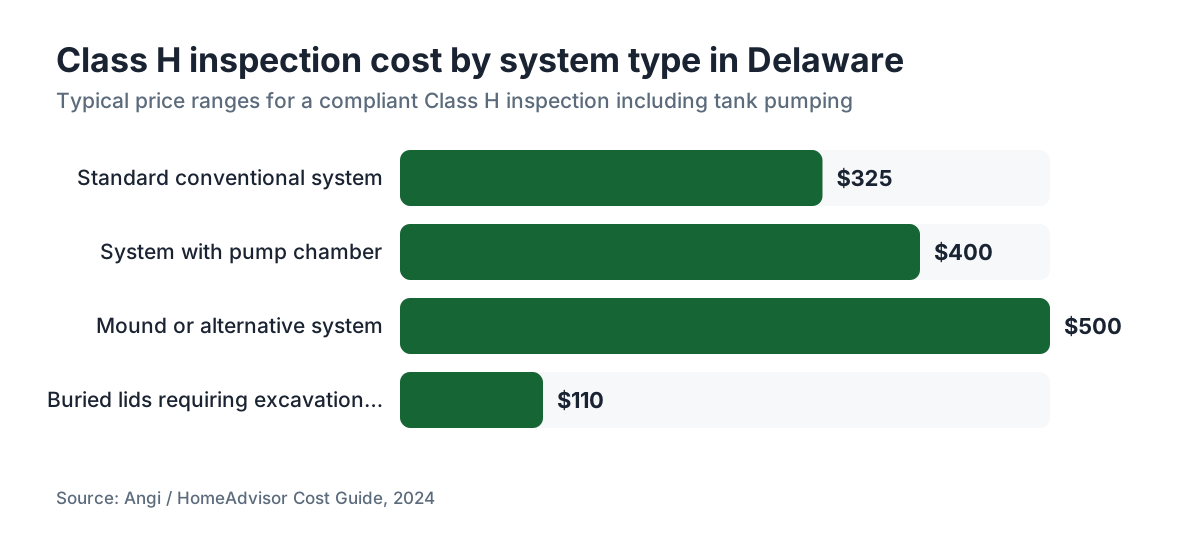
Expect to pay $200 to $450 for a Class H inspection in Delaware. Most quotes land between $275 and $375 in 2024 and 2025 [4]. The price moves with system complexity, tank size, whether pumping is included (most inspectors include it, some charge separately), and which county you're in. Sussex County runs slightly higher because of the volume of seasonal and vacation properties.
Certain things push the price up. Alternative systems (drip irrigation, mound systems, aerobic treatment units) take longer to inspect and cost more, sometimes $500 and above. Buried tank risers that require excavation add $75 to $150. Remote rural properties may carry a travel surcharge.
The septic tank pump out is usually bundled into the Class H fee, and that's good practice: the inspector needs the tank empty to judge baffles and walls. If a contractor quotes an inspection without pumping, ask straight out whether they plan to pump the tank. If the answer is no, find someone else or make them explain their method.
For sellers, $300 spent on an inspection before listing pays for itself. A surprise $6,000 drain field repair during the buyer's inspection kills deals or forces price cuts. Getting ahead of it lets you make repairs on your own schedule and price the home honestly.
How do I find a licensed Class H inspector in Delaware?
DNREC maintains a public list of licensed Class H practitioners through its Division of Water, Watershed Assessment and Management Section [1]. Search for licensed professionals on the DNREC website. The license must be current: Class H licenses expire and require renewal, so confirm the inspector's status before signing anything.
A few ways to find a good one. Ask your real estate agent who they've seen run clean, thorough inspections. Check whether the inspector is also a licensed pumper, since one contractor doing both speeds things up. Ask how fast they file the report with DNREC, because slow filing drags out your closing.
Stay away from inspectors offering rock-bottom prices and vague scopes. An inspection that skips the hydraulic load test or the drain field probe is not a compliant Class H inspection. If an inspector says they don't need to pump the tank to finish the job, walk.
Operators managing many transactions in Delaware have a harder problem: tracking inspection scheduling, report filing deadlines, and pumping logistics across dozens of properties. That's the kind of workflow software handles. SepticMind is built for septic service companies juggling recurring inspection and reporting work.
What happens if a system fails the Class H inspection?
A failed Class H inspection does not automatically kill the sale, but it creates a mandatory repair obligation. Under Delaware regulations, a failed system must be repaired or replaced before the transfer completes, unless DNREC approves a special variance or escrow arrangement [2].
There are a few paths forward. The seller can repair the system, pass a reinspection, and close. The buyer can take on the repair responsibility, often in exchange for a price reduction, with an escrow account funded to cover the estimated cost. DNREC can grant a temporary operating permit in some cases, but these are not automatic and require an application.
Common Class H failures include drain fields with surfacing effluent (visible sewage at the surface of the yard), cracked or collapsed tank walls, failed baffles letting solids migrate into the drain field, distribution boxes with unequal flow, and pump failures in pressurized systems [3].
A failed drain field means replacement. In Delaware that typically runs $8,000 to $25,000, depending on soil conditions, lot constraints, and whether an alternative system design is required [5]. The state may also require a new site evaluation and design permit before any replacement goes in. Our guide to leach field repair and replacement covers that process.
Minor failures are far cheaper. A septic tank repair for a cracked baffle or a failed pump float switch typically runs $150 to $300.
How long does a Class H inspection take and how long is the report valid?
On site, a Class H inspection takes two to four hours for a typical single-family system. Complex systems with multiple tanks, pump chambers, or alternative treatment components take longer. Build that time into your scheduling, especially if the property is occupied.
Report validity is where sellers get caught. DNREC's regulations set a validity period for Class H reports, and it has been one year from the date of inspection for most residential systems [2]. If a listing sits on the market longer than a year, or a sale falls through and the property re-lists, a new inspection may be required.
Confirm the current validity period with DNREC at the time of your transaction, since regulatory amendments can change it. Finding out at closing that your report expired is an ugly surprise.
Plan ahead: schedule the inspection at least three to four weeks before your expected closing date. That leaves time for the report to be filed, for any required repairs, and for a reinspection if needed. Waiting until the week before closing is a gamble you don't need to take.
What are Delaware's regulations that govern Class H inspections?
The legal foundation is Delaware's Regulations Governing the Design, Installation, and Operation of On-Site Wastewater Treatment and Disposal Systems, administered by DNREC under Title 7 of the Delaware Code [2]. These regulations define the Class H inspection requirements, the license structure for inspectors, the pass/fail criteria, and the reporting obligations.
Delaware Code Title 7, Chapter 60 gives DNREC its environmental regulatory authority, which is the statutory basis for the onsite wastewater regulations [6]. The realty transfer requirement lives inside the regulations themselves rather than a separate statute, which is why some people (and some attorneys) who haven't dealt with it before are surprised to hit it.
The EPA's SepticSmart program provides the national framework behind state programs like Delaware's. EPA guidance states that "properly functioning septic systems protect public health and the quality of our water resources," and it endorses point-of-sale inspections as one of the most effective ways to catch failing systems before new owners inherit the liability [7]. Delaware's Class H program is one of the more structured state versions of this idea.
DNREC amends the onsite wastewater regulations periodically. The current version lives on DNREC's website. Download the actual regulation document rather than trusting a summary, because the details matter.
How should sellers prepare their septic system before a Class H inspection?
There is no way to game a Class H inspection, and any inspector worth hiring will see through the attempt. But you can present the system in honest, good condition.
Start by pumping the tank six to twelve months before the inspection if it hasn't been done recently. That's good maintenance anyway, and it removes the guesswork about whether accumulated solids are hiding a baffle problem or early tank deterioration. Regular pumping also keeps a heavily loaded tank from failing the hydraulic test simply because service was overdue.
Skip the additives and "septic treatments" in the weeks before inspection. They don't fix structural problems, and some inspectors read recent additive use as a sign someone was masking an odor or a slow drain field. Our how often to pump septic tank guide gives normal schedules by household size.
Locate and expose all tank access lids before the inspector arrives. If risers are not installed and the lids are buried, either install risers (worth it for ongoing maintenance) or dig them up before the appointment. Most inspectors won't include excavation in a standard fee.
Keep water use normal in the week before inspection. Don't starve the system by avoiding water, and don't run extra laundry to "pre-load" the drain field. Normal use gives the truest picture, and that's what helps you at the negotiating table if the results are good.
A thorough septic tank cleaning that removes the scum layer and bottom sludge gives the inspector the clearest look at baffle and tank wall condition.
What do Class H inspection results mean for buyers?
As a buyer, the Class H report is the most useful document you'll get about the home's wastewater infrastructure. Read past the pass/fail line and take in the whole thing.
A Pass tells you the system worked at the time of inspection. It does not mean the system is new or that you're free of expenses for years. Ask the inspector directly: how old is this system, and what components show age-related wear? A system that passes at age 22 may need drain field work within five years.
A Conditional Pass means the system passes but carries a documented deficiency. Find out exactly what it is. Some conditional passes involve small items, like a lid that needs securing or a riser that needs raising to grade. Others flag early drain field stress that isn't a failure yet but points to limited remaining life. Price your offer accordingly.
A Fail means the system isn't working adequately. DNREC's definition of failure centers on public health or environmental risk: surfacing effluent, hydraulic failure where effluent backs up or won't absorb, or structural damage to the tank. Negotiate repair costs or a price reduction that reflects a septic system repair or full replacement.
The cost to put in a new septic system in Delaware swings widely based on lot size and soil. Our guide to cost to install septic system breaks down what drives that number. Budget $10,000 to $30,000 for a full replacement scenario in Delaware as a conservative planning range [5].
Operators handling Class H inspections at volume need to track report statuses across many active transactions. That's where SepticMind's job management keeps filings on time and clients informed.
How does Delaware's Class H program compare to neighboring states?
Delaware's point-of-sale inspection requirement is among the more structured in the mid-Atlantic, though neighboring states take different approaches.
| State | Point-of-sale inspection required? | Administered by |
|---|---|---|
| Delaware | Yes, statewide (Class H license required) | DNREC |
| Maryland | Required in some counties (not uniform statewide) | MDE / county health depts |
| New Jersey | Required, administered through local health departments | NJDEP / local |
| Pennsylvania | No uniform statewide requirement; varies by county/township | County / township level |
| Virginia | No uniform statewide requirement; some localities require | VDH / local |
Delaware's statewide uniformity is a real advantage for buyers and sellers: the rules are the same whether you're buying a beach house in Rehoboth or a farm in Kent County [1]. Maryland's county-by-county variation, by contrast, confuses buyers crossing county lines [8].
The Class H license structure also builds accountability that informal inspection arrangements in other states lack. When an inspector's license rides on every report filed with a state agency, inspection quality tends to run higher than under a self-regulated system.
Where Delaware could improve, in the view of many practitioners, is follow-up enforcement on systems that fail and are supposed to be repaired. DNREC has limited field staff, and systems that fail but transfer through an escrow arrangement don't always get the follow-up reinspection they're owed.
Frequently asked questions
How much does a Class H septic inspection cost in Delaware?
Most Class H inspections in Delaware run $200 to $450, with the typical quote between $275 and $375 as of 2024-2025. The price includes tank pumping in most cases. Alternative systems (mound, drip, aerobic) cost more to inspect, often $450 to $550 or above. Add $75 to $150 if tank lids need excavation. Sussex County tends to run slightly higher than New Castle or Kent.
Is a Class H inspection required for all Delaware home sales?
Yes, any property served by an onsite wastewater system must have a Class H inspection before deed transfer statewide. Narrow exemptions exist for certain spousal transfers, some trust transfers, and foreclosure-related transactions, but these are not automatic. Confirm any claimed exemption in writing with DNREC before proceeding without an inspection.
How long is a Delaware Class H inspection report valid?
Under DNREC regulations, a Class H inspection report is generally valid for one year from the date of completion for residential systems. If a property sits on the market past that date or a sale falls through, a new inspection is required. Confirm the current validity period with DNREC directly, since this can change with regulatory amendments.
What license does a Delaware septic inspector need to perform a Class H inspection?
Inspectors must hold a current Class H license issued by DNREC. No other license, including a general home inspector license or a Class A septic installer license, satisfies the Class H requirement. DNREC maintains a public list of licensed Class H practitioners on its website. Always verify that the inspector's license is active before hiring.
What happens if a septic system fails the Class H inspection in Delaware?
A failed system must be repaired or replaced before the transfer closes, or the parties must arrange a DNREC-approved escrow with funds set aside for the repair. The seller and buyer negotiate who handles the repair. Minor failures (cracked baffle, failed pump float) run $150 to $500. Full drain field replacements in Delaware typically cost $8,000 to $25,000.
Can a buyer waive the Class H inspection in Delaware?
No. The Class H inspection is a regulatory requirement under DNREC rules, more than a contract contingency. Buyers and sellers cannot contractually waive a state-mandated inspection. The transfer cannot be recorded without the inspection report filed with DNREC. Any real estate attorney or agent suggesting it can be waived is mistaken about Delaware law.
How long does a Class H inspection take in Delaware?
On site, a standard single-family system inspection takes two to four hours. This includes pumping the tank, running the hydraulic load test (flushing fixtures to stress the system), probing the drain field, and documenting components. Complex systems with pump chambers, multiple tanks, or alternative treatment units take longer. Schedule the inspection with that time window in mind.
Who pays for the Class H inspection, the buyer or seller?
Either party can pay, and it's a negotiated term in the purchase contract. In practice, sellers often pay when they commission the inspection before listing, and buyers often pay when it's a buyer-arranged contingency. Some contracts split the cost. There is no Delaware statute that mandates which party pays. Ask your agent what's typical in your county and for your price range.
What is a conditional pass on a Delaware Class H inspection?
A conditional pass means the system is currently functioning but has a documented deficiency that doesn't rise to a full failure. Examples include a lid that needs securing, a riser not at grade, or early signs of drain field stress. A conditional pass allows the transfer to proceed but puts the buyer on notice about the deficiency. Buyers should get a repair estimate for any noted condition before closing.
Do Delaware Class H inspections cover holding tanks or alternative systems?
Yes. The Class H inspection requirement covers all onsite wastewater systems including conventional septic tanks, holding tanks, cesspools, mound systems, drip irrigation systems, and aerobic treatment units. Alternative system inspections are more complex and cost more. Inspectors must evaluate the specific components relevant to each system type, including treatment units, pumps, and controls.
Where do I find the list of Class H licensed inspectors in Delaware?
DNREC's Division of Water, Watershed Assessment and Management Section maintains the official list of Class H licensees on the DNREC website. You can search by name or license number. Always confirm the license is current before hiring, as Class H licenses expire and must be renewed. Your real estate agent may also have a list of inspectors they've worked with in past transactions.
How do I prepare my home's septic system for a Class H inspection?
Pump the tank six to twelve months before inspection if it's overdue. Locate and expose all access lids. Use water normally in the week before the inspection. Don't use septic additives. Have records of prior pumping and any repairs handy for the inspector. If you know of a past drain field problem, disclose it. Hiding a known issue from a Class H inspector creates liability.
Does a Class H inspection satisfy the requirement for a new septic permit after a home addition in Delaware?
No. A Class H inspection is a point-of-sale evaluation, not a capacity or permitting review. If you add bedrooms or increase flow to an existing septic system through an addition, you need a separate permit review through DNREC or your county to confirm the existing system is sized for the new load. These are two different regulatory processes.
Sources
- Delaware DNREC, Division of Water - Onsite Wastewater Program (Class H Inspection Information): DNREC issues Class H licenses for point-of-sale septic inspections and requires completed reports to be filed with the Division of Water before realty transfer.
- Delaware DNREC, Regulations Governing the Design, Installation, and Operation of On-Site Wastewater Treatment and Disposal Systems: Delaware's onsite wastewater regulations establish the Class H inspection requirement, pass/fail criteria, report validity period, and exemptions for certain property transfers.
- University of Minnesota Extension, Septic System Inspection Guidance: Hydraulic load testing runs 150 to 250 gallons through the system to evaluate drain field performance under real demand; common failure modes include surfacing effluent and distribution box imbalance.
- HomeAdvisor / Angi, Septic Inspection Cost Guide (2024): Septic inspection costs nationally range $200 to $450; Delaware market pricing aligns with the mid-Atlantic regional average of $275 to $375 for standard residential systems.
- Delaware DNREC, Onsite Wastewater Program - System Replacement Information: Full septic system replacement in Delaware typically ranges from $8,000 to $25,000 depending on soil conditions, lot constraints, and whether an alternative system design is required.
- Delaware Code Title 7, Chapter 60 - Environmental Control: Title 7 Chapter 60 of Delaware Code grants DNREC its environmental regulatory authority, which is the statutory basis for the onsite wastewater regulations including the Class H inspection requirement.
- U.S. EPA SepticSmart Program: EPA SepticSmart guidance states that 'properly functioning septic systems protect public health and the quality of our water resources' and endorses point-of-sale inspections as an effective mechanism for identifying failing systems.
- Maryland Department of the Environment, Septic System Inspection Requirements by County: Maryland requires point-of-sale septic inspections in some counties but not uniformly statewide, in contrast to Delaware's uniform Class H requirement.
- New Jersey Department of Environmental Protection, Onsite Wastewater Management Program: New Jersey requires septic inspections at property transfer, administered through local health departments under NJDEP oversight.
- U.S. EPA, Septic Systems Overview: Approximately one in five U.S. households relies on an onsite septic system for wastewater treatment, and the EPA recommends routine inspection and pumping every three to five years.
- Delaware DNREC, Division of Water - Licensed Practitioner Search: DNREC maintains a public searchable list of Class H licensed inspectors with current license status available on its Division of Water website.
Last updated 2026-07-09