Best laundry detergent for septic systems: what actually works
By the SepticMind Editorial Team
TL;DR
- Liquid, low-phosphate, low-surfactant detergents are safest for septic systems.
- Skip powders with fillers, antibacterial additives, and high-sudsing formulas.
- Seventh Generation Free & Clear, ECOS, and Arm & Hammer Sensitive rate septic-safe again and again.
- Use the smallest dose that cleans, run full loads, and spread laundry across the week to protect your drain field.
Why does laundry detergent matter for septic systems?
Most homeowners worry about what goes down the toilet. The washing machine is the bigger threat.
A typical household runs 300 to 400 loads a year. Each load sends 15 to 45 gallons of water into your septic tank, depending on the machine [1]. That surge alone can push half-treated effluent out to the drain field before the solids have a chance to settle. Now add a detergent that kills the bacteria living in your tank, and you've got a system that's overloaded and biologically wrecked at the same time.
Your tank works because of anaerobic bacteria that break down organic waste. Those bacteria hate certain chemicals: surfactants at high concentration, antibacterial agents like triclosan, and, in older formulas, phosphates. The EPA's SepticSmart program lists laundry habits as one of the behaviors homeowners can change to stretch a system's life [2].
The drain field is what's really on the line. Surfactant residue that slips through the tank can coat the biomat in your leach field and choke off permeability year after year. A leach field repair or replacement runs $5,000 to $20,000, depending on your soil and your state. A better detergent costs maybe $4 more a bottle. The math isn't hard.
What ingredients in detergent are harmful to a septic tank?
Four ingredient groups cause the most documented trouble: high-concentration surfactants, phosphates, antibacterial additives, and powder fillers. Read past the front label to spot them.
Surfactants in high concentration. Surfactants are the cleaning agents that lift grease and dirt. Nearly every detergent has them. The problem isn't their presence, it's the dose and the type. Linear alkylbenzene sulfonates (LAS), found in most conventional detergents, are biodegradable but can slow methanogenic bacteria at high concentrations [3]. The branched-chain surfactants phased out decades ago were much worse, and a few imported or off-brand products still use them.
Phosphates. Most U.S. laundry detergents dropped phosphates after state bans started in the 1990s, and the last big holdouts followed by 2011 [4]. Phosphates feed algae blooms in groundwater and surface water downstream of septic systems. Using a detergent made before 2011, or one sourced outside the U.S.? Check the label.
Antibacterial additives. Triclosan and benzalkonium chloride are the two you'll see most. They do exactly what the label promises: kill bacteria. Fine for your hands. Bad for a tank that runs on a living bacterial colony. The FDA banned triclosan from consumer hand soaps in 2016 [5], but it still turns up in some laundry products. Read the ingredient list, not the marketing.
Synthetic fragrances and optical brighteners. These aren't acutely toxic to septic bacteria at normal doses, but they don't break down easily. They pass through the tank and into your drain field intact. What they do to biomat layers at low chronic concentrations over years? Nobody has solid long-term data yet. That's the honest answer.
Powder deserves its own warning. Many powders use clay or sodium sulfate as anti-clumping filler. Those solids feed the sludge layer in your tank and can build up in the distribution lines between tank and field. Liquid and gel formulas skip the problem entirely.
What should you look for in a septic-safe detergent?
Six things: low or no phosphates, plant-derived surfactants at low concentration, no antibacterial agents, fragrance-free or naturally scented, liquid or gel over powder, and a certified-biodegradable mark. The EPA's Safer Choice program tests and labels for most of that [6].
Low phosphates are now standard in U.S. brands, but confirm it on imports. Everything else you can read off the ingredient panel in about thirty seconds.
The EPA Safer Choice label is the most reliable third-party signal at the shelf. Products earn it by meeting standards across every ingredient, including surfactant biodegradability, a restricted-chemicals list, and packaging. More than 2,000 household cleaning products carry the Safer Choice label as of 2025 [6]. Septic suitability isn't the program's stated focus, but its criteria line up almost exactly with what a tank needs: biodegradable surfactants, no restricted antimicrobials, and formulas that break down in a normal wastewater environment.
HE (high-efficiency) machines use less water per load, which helps your septic system by cutting the hydraulic surge. But HE machines need low-sudsing detergent. Run a standard high-suds formula in an HE washer and the excess foam can travel straight to your tank. If you have a front-loader or an HE top-loader, use only detergents labeled "HE."
Which detergents are considered septic-safe? (A comparison)
These brands show up again and again on septic-safe lists from extension programs and wastewater engineers. I'm not telling you to spend $30 on a specialty eco-bottle. Some of the cheapest options on the market are right here.
| Detergent | Form | EPA Safer Choice | Fragrance-Free Option | Notes |
|---|---|---|---|---|
| Seventh Generation Free & Clear | Liquid | Yes | Yes (this is the FF version) | Plant-based surfactants, no dyes |
| ECOS Free & Clear | Liquid | Yes | Yes | Low surfactant load, widely available |
| Arm & Hammer Sensitive Skin | Liquid | No (as of 2025) | Yes | Very low cost, no brighteners |
| All Free Clear | Liquid | No | Yes | Dermatologist-recommended; septic-compatible formula |
| Molly's Suds | Powder | No | Yes | Low-filler powder; one of the safer powders |
| Tide Free & Gentle | Liquid | No | Yes | Higher surfactant concentration; use half-dose |
| Persil Sensitive | Liquid | No | Yes | European formula; verify phosphate-free on U.S. label |
A few honest caveats. Tide Free & Gentle cleans well and sits on every shelf, but its surfactant concentration runs higher than the others. If you use it, stay at the minimum dose or slightly under. No peer-reviewed study shows it harms a properly functioning septic system at label doses, but you want margin when a $15,000 drain field is the downside.
The fragrance-free variants across all these brands beat the scented versions, because they keep synthetic fragrance compounds out of your tank. That's a steady recommendation from North Carolina State University's onsite wastewater extension resources [7].
For most households, ECOS or Seventh Generation Free & Clear does the job with zero changes to how you do laundry. Both sell at major retailers for roughly $0.13 to $0.18 per load, against $0.10 to $0.15 for conventional brands. That's less than a dollar a week for a busy family.
Does the amount of detergent you use matter?
Yes. Probably more than the brand does.
Most people pour two to three times more detergent than a load needs. The dosing lines on the cap are calibrated for heavily soiled clothes in hard water. If your water is soft or your clothes are barely dirty, half that dose cleans just as well and sends far less surfactant into your system.
A University of Tennessee extension guide on household chemicals and septic systems points to overuse of cleaning products as one of the most common causes of disrupted septic function in otherwise well-sized systems [8]. Your tank's bacteria can bounce back from an occasional hit of harsh chemicals. Chronic overexposure at high concentration is what causes lasting damage.
Here's the practical move: test your water hardness (kits cost about $5 at any hardware store) and dose to match. Soft water needs less detergent for the same clean. Below 60 mg/L as calcium carbonate, you can often use 30 to 50 percent of the labeled dose and get identical results.
If you're tracking your septic maintenance alongside pumping and inspection records, SepticMind has tools to log service history and remind you when routine work is due.
How do laundry habits affect the septic tank, beyond detergent choice?
Detergent chemistry gets the attention, but water volume and timing matter at least as much. Spread your loads out and you cut the hydraulic stress no matter what's in the bottle.
Running several big loads back-to-back floods the tank faster than solids can settle. Effluent gets pushed into the drain field while it's still carrying suspended solids and fine particles. Over time that clogs the perforated pipes and the biomat. The leach field depends on slow, even distribution of pre-treated liquid.
EPA SepticSmart guidance says to spread laundry across several days instead of doing it all at once [2]. Easy for a two-person household. For a family of five it takes discipline. One load a day, or two with a few hours between them, is the number most extension programs repeat.
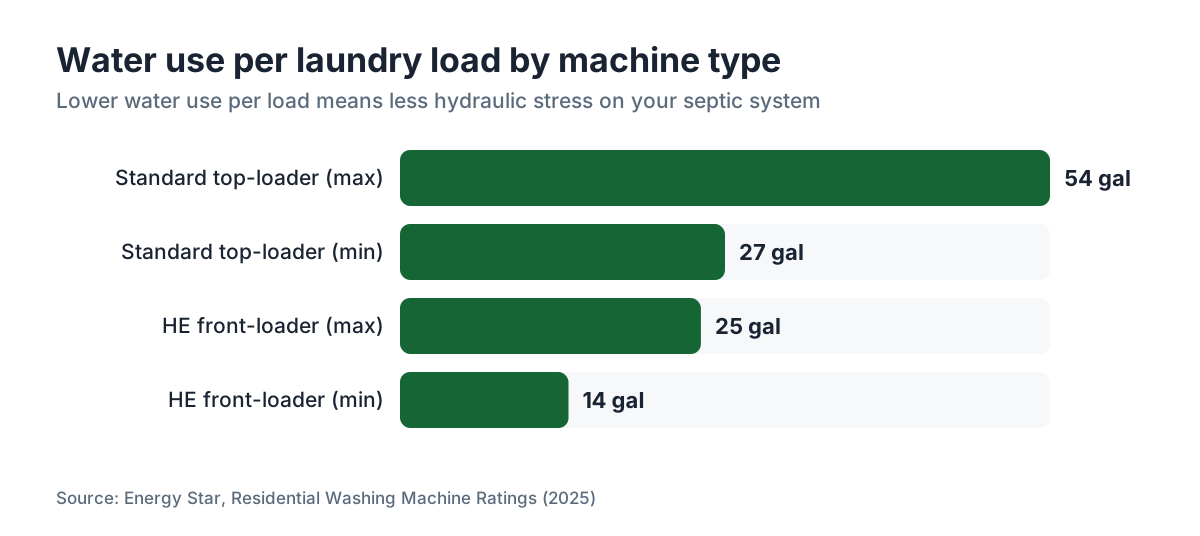
Water-efficient machines help too. A standard top-loader uses 27 to 54 gallons per load. A certified HE front-loader uses 14 to 25 gallons [9]. For a household doing 8 to 10 loads a week, switching to HE cuts septic input by 100 gallons or more per week. That's real relief for a system already running near capacity.
Lint filters are worth a mention. Washing machines discharge fine synthetic fibers, mostly polyester and nylon, too small to settle in the tank, so they pass straight to the drain field. An external lint filter (not the machine's built-in trap, which misses fibers this small) can cut that load. Research on long-term field clogging from microfibers is thin, but several university extension programs have started recommending them as a precaution [7].
If your system shows strain, a septic tank pump out resets the sludge and scum levels. Most households pump every 3 to 5 years. Laundry-heavy homes or big families may need it sooner. Our guide on how often to pump septic tank walks through the math.
Are dryer sheets or fabric softeners a problem for septic systems?
Dryer sheets skip the septic system completely. They go in the dryer, not the washer, so there's no tank concern.
Liquid fabric softeners are a different story. They run through the wash cycle and land in your tank. Most use quaternary ammonium compounds (quats) as the active ingredient. Quats are antimicrobial. The same mechanism that keeps clothes from building static also makes them somewhat harsh on the bacteria in your tank, especially at high doses.
If you use liquid softener, go light and skip it on most loads. White vinegar is the alternative people reach for. It softens fabric for most purposes and has no effect on septic bacteria at typical laundry concentrations. About half a cup in the rinse cycle softens as well as commercial products for most fabrics.
Dryer balls, wool or rubber, replace both dryer sheets and liquid softener for a lot of people. No septic concern, and they shorten drying time.
Are there state regulations about laundry detergents and septic systems?
No state currently requires specific detergent brands for households on septic. A few states regulate phosphate content in cleaning products across the board.
Phosphate bans for laundry detergents exist in 17 states plus Washington D.C. as of 2025, though national market forces made most of that moot once major brands reformulated nationally instead of state by state [4]. Washington state led the early push, and several Great Lakes states followed because of phosphate damage to surface water.
Some state health departments fold laundry habits into their onsite wastewater guidance. Virginia's Department of Health, for example, publishes homeowner guidance that includes spreading laundry across the week and using low-sudsing formulas as part of routine maintenance. Similar advice shows up in extension publications from North Carolina, Minnesota, and Oregon.
Buying or selling a home on septic? Some inspectors ask about household chemical use during the assessment. A septic tank inspection before purchase is worth including if you want to know whether past detergent and chemical habits have stressed the system.
What about 'septic-safe' labels on detergent packaging? Are they reliable?
The "septic-safe" label on a detergent bottle is not regulated by any federal agency. Any manufacturer can print it. There is no required test, no certification body, and no standard for what it means [10].
That doesn't make the products liars, but the label alone tells you nothing you can trust. The EPA Safer Choice label involves actual testing and third-party verification against published criteria [6]. It carries real weight. "Septic-safe" carries none on its own.
The Biodegradable Products Institute (BPI) and NSF International both certify certain products, but their focus is industrial compostability and water treatment, not residential septic systems.
So here's the shortcut: look for the EPA Safer Choice label, a fragrance-free formula, liquid over powder, and no antibacterial ingredients. Those four checks beat any manufacturer's "septic-safe" marketing.
The National Onsite Wastewater Recycling Association (NOWRA) has published homeowner guidance on household products and septic systems that lands on the same point: the burden sits with the homeowner to read ingredient lists rather than trust front-of-package claims [10].
What happens if you've been using the wrong detergent for years?
Probably not a disaster. Maybe some fixable damage.
A healthy septic system has slack in it. Used conventional scented powder for a few years in a properly sized, regularly pumped system? You've likely done no permanent harm. The tank's bacterial population rises and falls constantly, and it recovers from stretches of stress once the stress stops.
Watch for signs the laundry may have contributed to trouble: slow drains in the house, gurgling pipes after a wash cycle, soggy or oddly green patches over the drain field, or sewage odors near the tank or field. Any of those earns a professional inspection.
A septic tank cleaning removes accumulated surfactant-laden sludge and resets the bacterial environment. After that, switching to a lower-impact detergent and spreading loads across the week gives the system its best shot at recovery.
Where drain field damage has already set in, you may be looking at septic system repair or, worst case, full field replacement. A new system runs $3,000 to $25,000 depending on type, lot size, and state requirements [11]. That's a strong argument for prevention.
Service operators managing many customer systems can use SepticMind to flag accounts with a history of chemical misuse and schedule tighter inspection intervals for those properties.
What's the bottom-line recommendation for most homeowners?
Switch to a liquid, fragrance-free, EPA Safer Choice detergent if you haven't already. ECOS Free & Clear and Seventh Generation Free & Clear are the two easiest to find and among the cheapest in that category. Use the minimum dose that cleans, run full loads, and spread them across the week instead of batching everything on Saturday.
Can't make the switch right now? Arm & Hammer Sensitive Skin is a low-cost option with a formula gentler than most conventional detergents, even without formal certification. All Free Clear is just as accessible and free of the worst offenders.
Avoid powder with visible filler, anything advertising antibacterial properties, and anything with a long list of synthetic fragrance ingredients. Those three do the most quiet damage over time.
And keep detergent in perspective. Pumping every 3 to 5 years, conserving water, and never flushing non-biodegradables matter more in total than any single product swap. A septic tank pumping schedule you actually keep beats the fanciest eco-bottle on the shelf. A well-maintained system running conventional detergent will outlast a neglected system running the greenest product money can buy.
Frequently asked questions
Is Tide safe for septic systems?
Tide Free & Gentle is generally compatible with septic systems when used at or below the recommended dose. Standard Tide with fragrance and optical brighteners is not ideal; its surfactant concentration runs higher than most septic-friendly options. If you use Tide, pick the Free & Gentle version and reduce the dose. It does not carry the EPA Safer Choice label as of 2025.
Is powder detergent bad for septic systems?
Powder detergents often contain clay or sodium sulfate fillers that don't dissolve fully and add to the sludge layer in your tank. Liquid detergents skip this problem. Most septic professionals and extension programs recommend liquid over powder by default. If you prefer powder, Molly's Suds uses minimal fillers and is one of the more compatible powder options available.
How much laundry is too much for a septic system?
There's no universal number, but the common guidance is no more than one to two loads a day, spread across the week. Five or more loads back-to-back floods the tank before solids can settle. A household of four doing 8 to 10 loads a week is usually fine if those loads are distributed. Concentrated laundry days are the problem, not the weekly total.
Can laundry detergent kill the bacteria in my septic tank?
At high concentrations, yes. Antibacterial detergents with triclosan or quaternary ammonium compounds can suppress septic bacteria populations. Standard detergents are less acutely toxic but cause chronic stress at overdose levels. A healthy tank recovers from occasional exposure, but regular use of antibacterial laundry products or steady overdosing creates lasting disruption to the bacterial balance that makes the system work.
Is it safe to use bleach in the laundry on a septic system?
Occasional bleach at normal laundry doses (about half a cup per load) is generally tolerable for a properly functioning septic system. The tank's water volume dilutes it heavily by the time it reaches the bacterial layer. Frequent bleach use, or high concentrations, can suppress bacterial activity. If you use bleach, keep it to once a week or less and never mix it with other cleaning agents.
Do septic tank additives help offset the damage from laundry detergents?
The evidence for commercial septic additives is weak. The EPA and most state extension programs do not recommend biological or chemical additives for well-maintained systems. A properly sized, regularly pumped tank maintains its own bacterial population without supplementation. Additives are no substitute for switching to a gentler detergent or fixing your laundry habits.
What is the EPA Safer Choice label and does it mean a product is septic-safe?
The EPA Safer Choice program certifies that every ingredient in a product meets safety and biodegradability standards. It covers surfactant biodegradability, restricted chemicals, and packaging criteria. It doesn't test specifically for septic compatibility, but its standards line up closely with what a septic system needs. A Safer Choice label is the most reliable third-party marker you can use at the shelf for septic-friendly products.
Is liquid fabric softener safe for septic systems?
Liquid fabric softeners use quaternary ammonium compounds as their active ingredient, which are antimicrobial. Used on every load in full doses, they suppress septic bacteria over time. Use them sparingly or substitute white vinegar (half a cup in the rinse cycle), which softens fabric without any antimicrobial effect on septic bacteria. Dryer sheets go in the dryer and bypass the septic system entirely.
Does HE (high-efficiency) detergent matter for septic systems?
Yes, if you have an HE washer. HE machines use less water, which helps septic systems. But they need low-sudsing detergents labeled HE. A standard high-sudsing formula in an HE machine creates excess foam that moves straight into the tank without adequate rinsing. Match your detergent to your machine type. Most modern liquid detergents built for septic safety are already low-sudsing.
How do I know if my laundry habits have damaged my drain field?
Signs include soggy or unusually lush grass over the drain field, slow drains in the house (especially after running the washer), gurgling pipes, or sewage odors near the tank or field. These symptoms overlap with other causes, so a professional inspection is needed to confirm. A pump-out and a camera inspection of the distribution lines can show whether surfactant buildup or hydraulic overloading has caused early-stage damage.
Are natural or homemade laundry detergents safe for septic systems?
DIY detergents using washing soda, borax, and castile soap tend to run lower in synthetic surfactants and free of antibacterial agents, both positives for septic systems. But soap-based formulas can react with hard water to form soap scum that builds up in the tank and distribution lines. They also may not rinse fully in cold cycles. They're a reasonable option, not clearly better than a certified commercial product like ECOS Free & Clear.
Will my septic system recover if I switch to a safer detergent?
In most cases, yes. Septic bacterial populations recover from stress once the source is reduced or removed. Switching to a gentler detergent and adjusting laundry frequency gives the tank's biology time to reestablish. If the drain field itself is physically clogged from years of surfactant or filler buildup, recovery is slower and may need professional work. Scheduling a pump-out shortly after switching is a good reset.
Sources
- EPA, Septic Systems Overview: Standard household washing machines send 15 to 45 gallons per load into the septic system depending on machine type.
- EPA, SepticSmart Program: The EPA SepticSmart program lists laundry habits, including spreading loads across the week, as behaviors homeowners can change to extend system life.
- USDA Forest Service: Linear alkylbenzene sulfonates (LAS) are biodegradable but can inhibit methanogenic bacteria at high concentrations in septic tanks.
- EPA, Nutrient Policy and Data: Seventeen states and Washington D.C. have enacted phosphate bans for laundry detergents; major national brands largely reformulated by 2011.
- FDA, Consumer Information: The FDA banned triclosan from consumer antibacterial hand soaps in 2016 under the Federal Food, Drug, and Cosmetic Act.
- EPA, Safer Choice Program: As of 2025, more than 2,000 household cleaning products carry the EPA Safer Choice certification label, which requires biodegradable surfactants and restricted antimicrobials.
- NC State University Extension: NC State extension recommends fragrance-free detergent variants and external lint filters as precautionary measures for households on septic.
- University of Tennessee Extension: Overuse of cleaning products is among the most common causes of disrupted septic function in properly sized systems, according to UT Extension.
- Energy Star, Products: Standard top-loaders use 27 to 54 gallons per load; certified HE front-loaders use 14 to 25 gallons per load.
- NOWRA, Homeowner Resources: The 'septic-safe' label on consumer products is not regulated by any federal agency; no required test or certification standard exists for the claim.
- EPA, Septic Systems: The cost to install a new septic system ranges from $3,000 to $25,000 depending on system type, lot conditions, and local requirements.
Last updated 2026-07-09