Aerating a septic tank: how ATUs work and whether you need one
By the SepticMind Editorial Team
TL;DR
- Aerating a septic tank means pumping air into the treatment chamber to feed oxygen-hungry bacteria that break down waste faster and more completely than anaerobic digestion.
- Aerobic treatment units (ATUs) can cut biological oxygen demand by 85 to 95% before effluent reaches the drain field.
- They cost $5,000 to $15,000 installed and need yearly service that a plain tank never asks for.
What does aerating a septic tank actually mean?
A conventional septic tank works without oxygen. Anaerobic bacteria digest solids slowly, and the liquid effluent that flows out still carries a heavy load of pathogens and biological oxygen demand (BOD). Aerating flips that chemistry.
Pump air into a septic treatment chamber and you create conditions that favor aerobic bacteria, the same kind that run municipal wastewater plants. Aerobic bacteria are roughly 20 times more metabolically active than their anaerobic cousins [1]. They eat organic waste faster, make less sludge per pound of BOD removed, and leave effluent that's far cleaner before it reaches your leach field.
The phrase "aerating a septic tank" gets used two ways, and the difference matters. Some homeowners mean literally dropping an aerator into an existing conventional tank, often a cheap submersible pump or diffuser through the access lid. That's a DIY shortcut. It rarely meets any health code and doesn't come close to a real aerobic system. The real thing is an aerobic treatment unit, or ATU, a purpose-built multi-chamber system with aeration designed in from the start.
ATUs are old technology. They've been sold for home use since the 1950s and are regulated in every U.S. state [10]. The EPA lists aerobic treatment units among the onsite technologies that produce higher-quality effluent than conventional septic tanks [2].
How does an aerobic treatment unit (ATU) work?
An ATU pushes wastewater through three to five chambers, each with one job, and the aerobic step is where the real cleaning happens. Most residential units share the same basic layout.
The first chamber is a trash tank or pre-treatment zone. Raw sewage enters, large solids settle, and the liquid moves on. This chamber works almost exactly like the first compartment of a conventional septic tank.
The aeration chamber is the heart of the system. An electric compressor or blower pushes air through diffusers at the bottom, creating a churning, oxygen-rich environment. Aerobic bacteria colonize the water column and break down dissolved organic matter fast. Retention time here runs four to six hours [9].
Next is a clarifier or settling zone. The treated water slows, residual solids drop out, and the clarified effluent rises to exit. Some designs recirculate settled sludge back to the aeration chamber to keep the bacterial population dense.
Many ATUs finish with a disinfection chamber, usually a chlorine tablet dispenser or a UV light, before effluent discharges to the soil absorption system or, in some states, to surface drip irrigation.
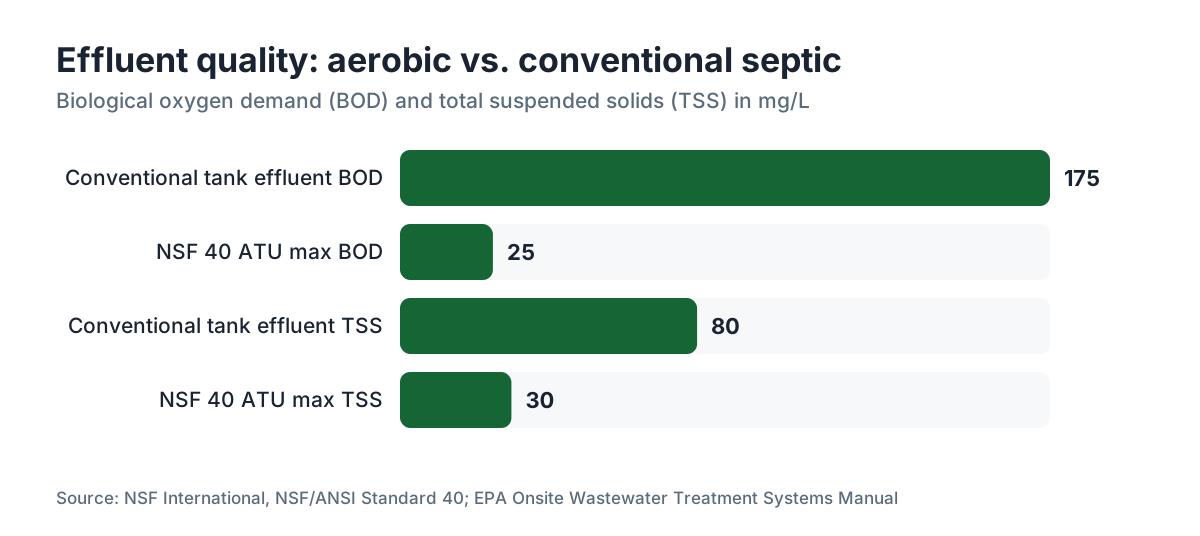
NSF/ANSI Standard 40 is the benchmark for residential ATUs in the U.S. A system certified to it must produce effluent with BOD of 25 mg/L or less and total suspended solids of 30 mg/L or less, compared to roughly 150 to 200 mg/L BOD in conventional septic tank effluent [3]. That's an 85 to 95% cut in organic loading before the effluent touches your soil.
The compressor runs continuously or on a timed cycle, drawing roughly 100 to 200 watts. Over a year that adds about $80 to $175 to your electric bill depending on local rates and the unit's design.
What are the real differences between an ATU and a conventional septic tank?
The table below sums up the differences a homeowner will actually feel. The short version: an ATU treats waste better and costs more to run.
| Feature | Conventional septic tank | Aerobic treatment unit (ATU) |
|---|---|---|
| Effluent BOD | 150 to 200 mg/L | 10 to 30 mg/L (NSF 40 certified) |
| Pathogens removed | Partial | High (especially with UV/chlorine stage) |
| Electricity needed | No | Yes, 100 to 200 W continuously |
| Annual maintenance | Pump every 3 to 5 years | Inspect/service every 6 to 12 months |
| Installed cost | $3,000 to $7,000 | $5,000 to $15,000 |
| Suitable for small lots | Moderate | Better (smaller drain field possible) |
| Failure risk | Clog, scum overflow | Compressor failure, chlorine runout |
| State permits required | Yes | Yes, plus often an annual operating permit |
The maintenance gap is the biggest practical difference. A conventional septic tank needs a pump out every three to five years on average [4]. An ATU needs a qualified technician to inspect the compressor, clean the diffuser, check chlorine, and test effluent quality at least once a year, sometimes twice. Many states make a service contract a condition of the operating permit. Budget $100 to $300 per visit [12].
When does aerating a septic system actually make sense?
Aerobic treatment is the right answer for a narrow set of properties, not for everyone. Here's when it earns its keep.
Small lots with poor soil. If your lot can't hold a conventional drain field because the soil is clay-heavy, the water table sits high, or there just isn't enough land, an ATU can qualify you for a smaller alternative drainfield design. Cleaner effluent puts less load on the soil, so the required square footage drops. Some states even allow surface drip irrigation with ATU effluent, skipping in-ground absorption entirely.
Failed conventional system with no room to expand. When a conventional drainfield fails and there's no suitable replacement area, an ATU retrofit is often the path regulators approve instead of condemning the property. The septic system repair page walks through your options.
Properties near sensitive water. If you sit close to a lake, stream, or shellfish harvesting area, regulators may require ATU-level treatment even with good soil. The cleaner discharge protects surface water from nitrogen and pathogen loading.
New construction where the county mandates it. Some counties and states have moved ATUs from optional to required for new installs in certain zones. Check your local health department before any septic tank installation.
When it doesn't make sense: a working conventional system on a generously sized lot with good soil. Adding aeration to a healthy tank costs thousands up front, then keeps costing you electricity and service fees, all for a benefit your soil already delivers. I wouldn't do it.
Can you actually add an aerator to an existing septic tank?
Technically yes. Practically and legally, almost never a good idea. People ask this constantly, so here's the straight answer.
You can buy submersible pond aerators or air pump kits online for $50 to $300 and drop them into a septic tank access port. The oxygen does change the bacterial environment inside the tank. Some online forums swear by it for odor control. The problems outweigh the payoff.
A conventional tank isn't built for aeration. Its chamber shape, retention time, and flow paths are engineered for settling, not for keeping bacteria suspended. You get a fraction of the treatment a real ATU delivers.
Bubbling also disturbs the settled sludge layer, which can push solids into the outlet baffle and out to your drainfield. That speeds up clogging, the exact failure you're trying to avoid.
And here's the one that bites: a retrofitted aerator carries no NSF certification, and running one almost certainly breaks your permit conditions. If an inspector finds an unapproved modification, you can face fines or an order to upgrade.
If you genuinely want aerobic treatment, install a certified ATU, either as a retrofit that replaces or supplements your existing tank or as part of a new build. Talk to a licensed onsite wastewater professional in your state before you touch anything.
What does it cost to install an aerobic septic system?
Expect $5,000 to $15,000 installed for a residential ATU in most of the U.S. [5]. The wide range comes from system size, site conditions, and how much existing infrastructure you can reuse.
The unit itself, a brand-name ATU like a Norweco Singulair, Jet, or Infiltrator Delta, runs $2,500 to $6,000 at the equipment level. Installation labor, electrical hookup for the compressor, permit fees, and any drainfield work make up the rest.
For comparison, a standard conventional septic tank installed from scratch runs $3,000 to $7,000 including the tank and a basic drainfield. The full breakdown is on the cost to install a septic system page.
Ongoing costs stack up differently than a conventional system:
- Annual service contract: $100 to $300 per visit, often two visits a year by permit [12]
- Electricity: roughly $80 to $175 per year for the compressor
- Chlorine tablets (if applicable): $50 to $100 per year
- Pump out (less frequent than conventional but still needed): $200 to $400 every three to five years
Over 20 years, an ATU generally costs $4,000 to $10,000 more than a conventional system, mostly in maintenance and electricity. Where an ATU is the right tool, that's money well spent. Where it's optional, run the numbers before you commit.
How do aerobic bacteria actually treat wastewater differently?
The biology explains both why ATUs work and how they fail. It's worth ten minutes of your attention if you own one.
Conventional tanks rely on anaerobic bacteria, organisms that live without oxygen. They break waste down through fermentation, producing methane, hydrogen sulfide (that rotten-egg smell), and partial breakdown products. The process works, but it's slow and incomplete. Effluent from an anaerobic tank still carries a heavy BOD because a lot of organic carbon survives.
Aerobic bacteria use oxygen as the final electron acceptor in respiration, the same pathway your own cells use. They oxidize organic compounds more completely, producing mostly carbon dioxide and water instead of methane. Higher energy yield means faster growth and more waste processed per hour. The end products are far less polluting [11].
Here's a detail most articles skip: the best aerobic systems run both processes in sequence. The anaerobic pre-treatment chamber handles settleable solids; the aerobic chamber handles dissolved organics. Run aeration on raw sewage without pre-settling and you get less treatment and burn out equipment faster.
Aerobic systems are also touchier. Antibacterial soaps, bleach, and strong cleaners can wipe out an aerobic colony faster than they'd dent a conventional tank's anaerobic population. A die-off in an ATU means untreated or poorly treated effluent reaching your drainfield until the colony rebuilds, which takes days to weeks. That's why good service contracts test effluent quality instead of just eyeballing the hardware.
What maintenance does an aerobic septic system require?
An ATU needs more attention than a conventional tank, full stop. This is where a lot of owners get blindsided.
The compressor or blower is the part that matters most. It runs continuously or on a cycle and typically lasts five to ten years before replacement [12]. A failed compressor stops aeration on the spot. Within 24 to 48 hours the aerobic colony starts dying as dissolved oxygen drops, and effluent quality falls with it. Most ATUs have an alarm for compressor failure or low air pressure, but an alarm does nothing if nobody answers it.
Minimum maintenance schedule for a typical residential ATU:
- Every 6 to 12 months: a licensed technician inspects compressor operation, cleans air diffusers, checks and replaces chlorine tablets, inspects baffles, and tests effluent for BOD and TSS
- Every 3 to 5 years: pump accumulated sludge from the pre-treatment chamber, similar to a conventional septic tank cleaning
- Annually: renew the operating permit in states that require one (roughly 35 states have some form of ATU operating permit requirement)
Operators running multiple ATU accounts, especially across rental properties or a small service territory, often use management software to stay on top of service intervals and permit renewals. SepticMind's operator platform is built around exactly this kind of recurring service scheduling across many properties.
A homeowner with one ATU can run reminders off a calendar, but don't skip the professional inspection. Some states treat a skipped inspection as a permit violation, and permit violations turn into headaches at closing.
What can go wrong with an aerobic septic system?
ATUs fail in ways conventional tanks don't. Knowing the failure modes lets you catch trouble early instead of paying for a full replacement.
Compressor or blower failure is the most common mechanical problem. Signs: the alarm light or buzzer trips, no bubbling in the aeration chamber when you look through the port, or sewage odor from the system. Fix: call your service provider. Don't just silence the alarm without finding out why it tripped.
Diffuser fouling happens when the air membranes or tubes at the bottom of the aeration chamber clog with biofilm or mineral scale. Air delivery drops, and treatment quality drops with it. A technician cleans or replaces diffusers during routine service.
A chlorine dispenser running dry means effluent leaves the tank without disinfection. If your system has a chlorine stage, check the tablet reservoir between visits. Tablets are cheap.
Bacterial colony collapse from toxic inputs. One bleach-heavy laundry day probably won't kill your system. Repeated heavy antibacterial use, flushed medications, or a big bleach dump during a cleaning spree can set the colony back hard. Treat your ATU like a living thing, because it is one.
Electrical faults specific to ATUs. The control panel, float switches, and alarm circuits can corrode in the wet, hydrogen-sulfide-rich air around a septic system. Have the panel inspected whenever the system is serviced.
For problems past routine maintenance, the septic tank repair page covers cost ranges for component fixes versus full replacement.
What state and EPA regulations apply to aerobic septic systems?
Aerobic treatment units are regulated at the state level, with EPA guidance setting the framework most states follow. The federal government doesn't permit individual home systems.
The EPA's Office of Water publishes the Onsite Wastewater Treatment Systems Manual, which describes ATUs as a recognized technology for reaching secondary-level treatment in decentralized systems [2]. The agency funds state programs through the Clean Water Act and shapes state standards through its guidance documents.
At the state level, nearly every state requires:
- A permit to install an ATU, issued by the county health department or state environmental agency
- NSF/ANSI 40 certification, or approval under an equivalent state evaluation program
- An operating permit, renewed annually or biannually in most places, tied to documented service inspections
- A licensed installer (some states require a plumber, others a certified onsite installer)
Texas has some of the most detailed ATU rules in the country. The Texas Commission on Environmental Quality requires that ATU maintenance be done by a licensed maintenance provider and that the homeowner keep a continuous service contract as a permit condition [6].
Florida regulates ATUs under Chapter 64E-6 of the Florida Administrative Code, requiring systems to meet a 20 mg/L CBOD5 standard and mandating inspections as often as every four months in some counties [7].
Before you install anything, pull the actual code for your county. Rules vary enough that what's legal across the state line may be banned in your jurisdiction. A licensed onsite wastewater professional knows the local rules; a general contractor often doesn't.
Is aerating a septic tank worth it for your property?
It depends on why you're asking, and for a homeowner with a working conventional system the honest answer is usually no.
If your system runs fine, your drainfield is healthy, and you have room, adding aerobic treatment won't change your daily life. The drainfield soil already treats conventional septic effluent biologically. You'd be paying for equipment, electricity, and service to duplicate a step the soil does for free.
If your drainfield is struggling, find out whether the problem is hydraulic overload, biomat buildup, or a design flaw before you assume aeration is the cure. Aeration won't rescue a physically failed drainfield. The leach field page breaks down drainfield failure causes and repairs.
If you're building new on a tough lot, or regulators require ATU-level treatment in your area, an ATU is likely the right spend. Get quotes from at least two licensed installers, and ask each to show you the permit requirements their design meets.
For homeowners just keeping a conventional system healthy, the payback from pumping on schedule (every three to five years for most households [4]), watching what goes down the drain, and getting a septic tank inspection before problems start beats adding aeration you don't need.
SepticMind's homeowner tools track your pump-out history and maintenance dates so you're not guessing when the next service is due.
Frequently asked questions
How long does it take for aerobic bacteria to establish in a new ATU?
A newly installed or freshly pumped ATU usually takes two to four weeks to build a stable aerobic colony that treats consistently. During startup, effluent quality sits below steady-state levels. Some installers add a bacterial inoculant to speed colonization, though evidence for real benefit is mixed. Skip antibacterial cleaners and heavy bleach during the startup weeks.
Can I convert my conventional septic tank to an aerobic system?
In most cases, no, at least not by dropping an aerator into the existing tank. A true conversion means replacing the conventional tank with a certified ATU or adding a separate aeration chamber downstream. Both need permits and a licensed installer. Check your county's rules before spending anything; some jurisdictions don't allow partial retrofits at all.
How often does an aerobic septic system need to be pumped out?
The pre-treatment chamber fills with sludge more slowly than a conventional tank because aerobic digestion is more thorough, but it still needs pumping. Most manufacturers and regulators recommend every three to five years, similar to a conventional pump-out. Your annual service technician can measure sludge depth and tell you when it's due. Don't skip it; solids eventually pass into the aeration chamber.
Does an aerobic septic system smell worse than a conventional tank?
A working ATU produces less hydrogen sulfide, so it usually smells better than a conventional tank. The rotten-egg odor comes from anaerobic decomposition. When the compressor runs and the colony is healthy, odor stays minimal. A strong sewage smell from an ATU usually means compressor failure or a system being overwhelmed.
What is NSF/ANSI 40 certification for septic systems?
NSF/ANSI 40 is the performance standard for residential aerobic treatment units in the U.S., set by NSF International. A certified ATU must produce effluent with BOD at or below 25 mg/L and total suspended solids at or below 30 mg/L under standard testing. Most states require NSF 40 certification to permit an ATU. Check NSF's product listing database to verify any unit you're considering.
How much electricity does an aerobic septic system use?
The compressor or blower in a residential ATU typically draws 100 to 200 watts continuously. At the U.S. average retail rate of roughly 16 cents per kWh [8], that runs about $140 to $280 per year. Actual cost depends on your rate and whether the unit runs continuously or on a timed cycle. Some newer units use variable-speed blowers that cut consumption during low-flow periods.
Can an aerobic system replace a drain field entirely?
Not entirely, but in some states ATU effluent can discharge through surface drip irrigation instead of a subsurface leach field, which cuts the land area needed. This is tightly regulated. Texas and Florida allow surface irrigation of ATU effluent under specific setback and quality conditions. Most states still require some soil absorption, just a smaller footprint than a conventional system would need.
What happens if the aerobic system's compressor fails?
The aeration chamber loses oxygen, aerobic bacteria die off over 24 to 48 hours, and the system reverts to anaerobic conditions. Effluent quality drops sharply. Most ATUs have an audible or visual alarm tied to air pressure or float switches. When it triggers, call your service provider promptly. Ignoring a compressor failure for more than a few days risks pushing poorly treated effluent into your drainfield.
Do aerobic treatment units require a special permit to operate?
Yes, in most states. Roughly 35 states require an annual or biennial operating permit for residential ATUs, separate from the installation permit. The operating permit is usually conditioned on documented inspections by a licensed service provider. Requirements and fees vary by state and county. Texas and Florida are among the strictest, mandating service contracts and regular effluent testing.
Are aerobic septic systems better for the environment than conventional tanks?
For nitrogen and pathogen reduction, yes, meaningfully. ATU effluent carries far fewer pathogens and lower BOD than conventional tank effluent. Some ATU designs also reduce nitrogen through nitrification-denitrification stages, which matters near nitrogen-sensitive water. But ATUs consume electricity and often need chlorine tablets, so the environmental picture isn't entirely one-sided.
How do I know if my aerobic system is working correctly?
Your service technician should test effluent BOD and TSS and hand you a written report. Day to day, a healthy ATU shows no active alarm lights or buzzers, visible bubbling when you look into the chamber through the access port, no strong sewage odor, and clear or lightly cloudy water in the clarifier zone. Brown or black water there is a warning sign.
What household products are harmful to an aerobic septic system?
Aerobic bacteria are more sensitive to toxic inputs than anaerobic bacteria. The biggest risks are large volumes of bleach or disinfectant, habitual antibacterial soap use, strong drain cleaners (especially lye-based), solvents, and flushed medications. Normal household use of cleaning products in reasonable amounts is generally fine. It's the concentrated or repeated heavy use that crashes the colony.
How do aerobic septic systems perform in cold climates?
Cold temperatures slow aerobic bacterial activity, the same way they slow conventional tank digestion. In very cold climates, ATUs installed below the frost line with insulated risers generally hold adequate treatment through winter. Surface parts like control panels and disinfection units need weatherproofing. Some northern states approve specific ATU models tested for cold-climate performance. Ask your installer which units are rated for your zone.
Is an aerobic septic system harder to sell a house with?
It depends on the buyer and your records. A well-maintained ATU with documented inspections and a current operating permit is a clean disclosure, not a liability. An ATU with lapsed permits, missed service, or alarm history can trigger concern during a buyer's inspection. Keep your service records organized. Permit status will likely surface during a pre-sale septic inspection, which most rural transactions require.
Sources
- EPA, Onsite Wastewater Treatment Systems Manual (EPA/625/R-00/008): Aerobic bacteria are roughly 20 times more metabolically active than anaerobic bacteria, enabling faster organic waste breakdown
- EPA SepticSmart Program, Aerobic Treatment Units overview: EPA lists aerobic treatment units among recognized onsite technologies producing higher-quality effluent than conventional septic tanks
- NSF International, NSF/ANSI Standard 40: Residential Wastewater Treatment Systems: NSF/ANSI 40 requires ATU effluent BOD of 25 mg/L or less and TSS of 30 mg/L or less; conventional septic effluent is typically 150-200 mg/L BOD
- EPA SepticSmart, How to Care for Your Septic System: EPA recommends conventional septic tanks be pumped every three to five years for a typical household
- University of Minnesota Extension, Aerobic Treatment Units for Homeowners: Installed cost for residential ATU systems ranges from $5,000 to $15,000 depending on system size and site conditions
- Texas Commission on Environmental Quality (TCEQ), On-Site Sewage Facilities Rules: Texas requires ATU maintenance by a licensed maintenance provider and a continuous service contract as a permit condition
- Florida Department of Health, Chapter 64E-6 Florida Administrative Code, Onsite Sewage Treatment: Florida requires ATUs to meet a 20 mg/L CBOD5 effluent standard with inspections required as frequently as every four months in some counties
- U.S. EIA, Electric Power Monthly, Average Retail Price of Electricity: U.S. average retail electricity rate used to calculate annual ATU compressor operating cost estimate of $140-$280 per year
- Penn State Extension, Aerobic Septic Systems: ATU aeration chambers typically achieve four to six hours of hydraulic retention time to support aerobic bacterial treatment
- National Environmental Services Center (NESC), West Virginia University, Small Flows Quarterly: Aerobic treatment units have been commercially available for residential use since the 1950s and are regulated in every U.S. state
- EPA, Decentralized Wastewater Treatment Systems: A Program Strategy: EPA recognizes decentralized ATU systems as capable of achieving secondary treatment levels comparable to municipal plants when properly maintained
- Oklahoma State University Extension, Aerobic Septic Systems: Compressor or blower lifespan for residential ATUs is typically five to ten years; annual service costs run $100-$300 per visit
Last updated 2026-07-10