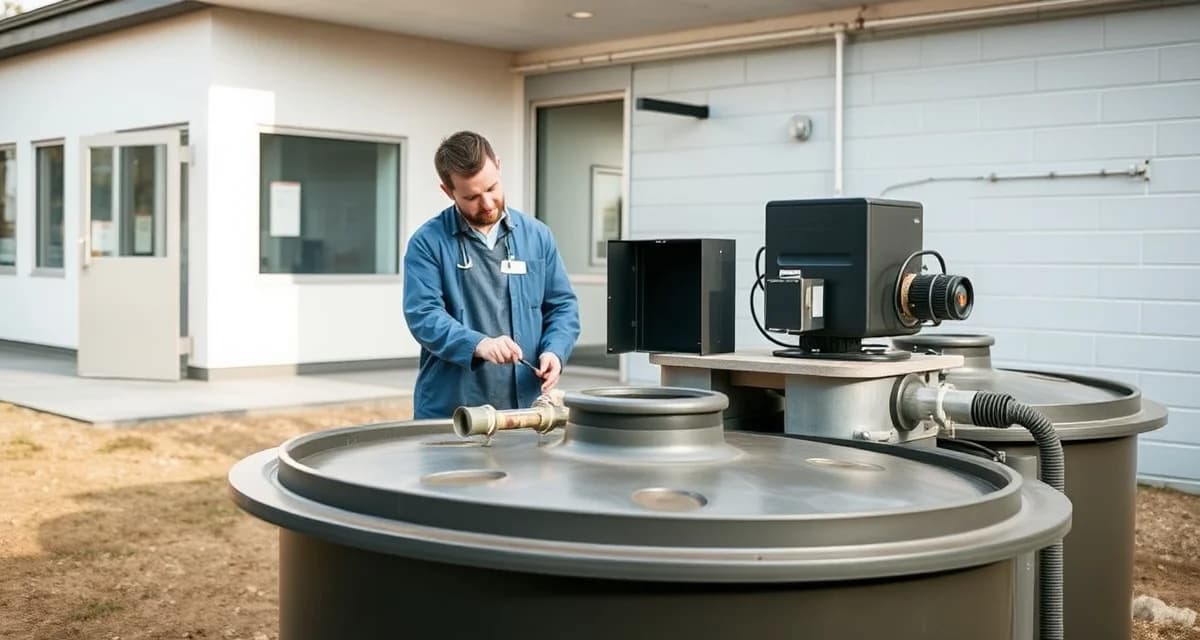
Septic Service for Veterinary Clinics With Onsite Wastewater
By the SepticMind Editorial Team
State environmental agencies are increasing oversight of pharmaceutical waste in veterinary facility septic systems. Pharmaceutical waste from veterinary clinics can disrupt septic bacterial populations and require more frequent service. For septic companies serving veterinary practices, understanding the pharmaceutical waste dimension is what separates an account that's managed well from one that becomes a compliance problem.
TL;DR
- Veterinary Clinics facilities have distinct wastewater loading patterns that affect septic system sizing, service frequency, and permit requirements.
- Commercial and institutional properties like veterinary clinics typically require more frequent pumping than residential systems due to higher daily usage.
- Some veterinary clinics operations generate waste streams (grease, chemicals, or high-volume flow) that require pre-treatment before reaching the septic system.
- Service contracts for veterinary clinics provide predictable recurring revenue and are easier to manage with a platform that tracks commercial account schedules.
- Health department inspections for veterinary clinics properties may require septic system condition documentation as part of facility licensing.
- Septic companies specializing in veterinary clinics service build referral networks with property managers, architects, and health inspectors in that niche.
SepticMind's veterinary account type documents pharmaceutical load considerations in service scheduling.
What Makes Veterinary Clinic Wastewater Different
A veterinary clinic's wastewater stream contains several categories of compounds that complicate standard septic management:
Pharmaceutical residues: Medications administered to patients -- antibiotics, sedatives, anesthetics, hormones, antiparasitic drugs -- are partially excreted by animal patients and enter the wastewater stream through normal biological elimination. The concentration depends on the clinic's patient volume and the types of medications used.
Disinfectants and cleaning agents: Clinical environments use high-strength disinfectants -- bleach solutions, quaternary ammonium compounds, phenolic disinfectants -- for surface cleaning and equipment sterilization. These compounds are designed to kill microorganisms, and they do the same in a septic tank.
Anesthetic gases: Some liquid anesthetic agents (particularly halogenated compounds) can enter wastewater through wash-down and spill cleanup. These compounds are persistent in the environment.
Controlled substances: Veterinary practices are licensed to use controlled substances. Unused and expired controlled substances must be disposed of through DEA-licensed disposal channels -- not into the septic system. Understanding this boundary is important for any service provider working with veterinary accounts.
Blood and biological waste: Surgery, wound care, and other clinical procedures generate biological waste. Some of this reaches the drain; most is properly segregated and disposed of as medical waste.
Antibiotic Resistance: An Emerging Regulatory Concern
The broader concern about pharmaceutical waste in the environment -- particularly antibiotics that drive resistance development -- has moved veterinary clinic wastewater onto regulatory radar. Several state environmental agencies have added veterinary practice wastewater to their monitoring and guidance programs.
The specific concern with antibiotics is that even small concentrations in drainfield soil can select for resistant bacterial strains, creating an environmental reservoir of antibiotic resistance. This is a public health issue that regulators are starting to address through guidance, monitoring requirements, and in some states, specific wastewater management standards for veterinary facilities.
As a service company, staying informed about your state's current requirements for veterinary clinic wastewater is part of managing these accounts responsibly. Regulations in this area are evolving.
Service Intervals for Veterinary Accounts
The combination of pharmaceutical loads and clinical disinfectants creates an environment that's harder on septic bacteria than standard commercial wastewater. Service intervals should reflect this:
- Small single-veterinarian practice (low surgical volume): Quarterly minimum
- Multi-veterinarian clinic (active surgery suite): Quarterly to monthly
- Emergency and specialty practice (high pharmaceutical use): Monthly
Beyond pump-out frequency, condition monitoring matters at veterinary accounts. Watch for signs of reduced bacterial activity -- changes in odor pattern, slower settling, or effluent quality changes -- that might indicate pharmaceutical or disinfectant suppression of the tank's treatment function.
Large Animal vs. Small Animal Practices
The wastewater characteristics differ between small animal (companion animal) and large animal (equine, livestock, agricultural) veterinary practices:
Small animal clinics: Higher concentration pharmaceutical waste relative to volume. Frequent cleaning with strong disinfectants. Relatively lower wastewater volumes per day unless the practice has bathing or grooming services.
Large animal practices: Higher volume wastewater from large animal washing and treatment. Different pharmaceutical profile -- large animal medicines include categories not commonly used in companion animal practice. Access to the clinic's septic system may be easier given more rural settings and more land.
Mixed practices: Combine the characteristics of both. Manage them with the interval appropriate for the higher-load component.
For practices with boarding and grooming services, the gray water load from animal bathing adds significant volume on top of the clinical wastewater. Factor this into the service interval.
Controlled Substance and Medical Waste Boundaries
To be clear about what does and doesn't concern the septic system:
Into the septic (normal clinical operations): Metabolized drug residues excreted by patients, wash-down water from treatment areas, autoclave effluent (from steam sterilization), cleaning chemicals from routine sanitation.
Not into the septic (proper disposal required): Unused or expired controlled substances (DEA-licensed disposal required), blood-contaminated materials (medical waste disposal), pathological waste (specialized disposal), unused medications that aren't controlled substances (pharmaceutical waste disposal).
A veterinary practice that's disposing of unused medications down the drain is violating both EPA regulations and DEA requirements for controlled substances. As a service provider, this is a concern you can raise if you observe evidence of it -- but your obligation is to document the concern and communicate it to the practice owner, not to act as an enforcement agent.
Get Started with SepticMind
Veterinary Clinics facilities need a service provider who understands the specific wastewater challenges of their operations. SepticMind makes it easy to manage commercial service contracts, track inspection schedules, and document service visits for every account in your portfolio. See how it supports commercial account management.
Frequently Asked Questions
What septic service requirements apply to veterinary clinics?
Veterinary clinics with onsite septic systems need service programs that account for pharmaceutical residues and clinical disinfectants in their wastewater, both of which can disrupt the bacterial processes that make conventional septic systems function. Most active veterinary practices need quarterly service at minimum, with monthly service appropriate for high-volume or surgical-intensive practices. Some states have specific guidance or requirements for veterinary clinic wastewater management, and regulatory oversight of pharmaceutical waste in veterinary settings is increasing as antibiotic resistance concerns drive environmental agency attention to this category.
How do veterinary pharmaceutical waste loads affect septic system service intervals?
Pharmaceuticals excreted by animal patients -- particularly antibiotics, antiseptics, and anesthetic residues -- can suppress the bacterial populations in a septic tank that are responsible for waste treatment. Clinical disinfectants used for surface cleaning and equipment sterilization have the same effect. The combined impact means septic systems serving active veterinary practices accumulate treatment-compromised material faster than standard commercial accounts at equivalent occupancy, requiring more frequent pump-outs to remove the accumulated load before it passes through to the drainfield.
Does SepticMind track pharmaceutical load considerations for veterinary account scheduling?
Yes. SepticMind's veterinary account type includes documentation fields for pharmaceutical load characteristics specific to the practice type, clinical disinfectant use, and any pretreatment considerations. Service intervals are calibrated to reflect the higher service frequency appropriate for pharmaceutical-load accounts rather than standard commercial intervals. Account notes document any regulatory requirements specific to the state's veterinary wastewater program. When dispatching technicians to veterinary accounts, the work order displays the account's pharmaceutical load designation so the technician understands the compliance context of the visit.
How often should a septic system serving a veterinary clinics property be inspected?
Septic systems at veterinary clinics properties should be inspected at least annually and pumped more frequently than residential systems, since commercial-scale daily water usage accelerates sludge and grease accumulation. The exact frequency depends on the specific activities at the facility, peak occupancy, any food service or chemical use on-site, and local regulatory requirements. A service provider familiar with veterinary clinics operations can recommend an appropriate inspection and pumping schedule based on the system's actual usage profile.
What septic system issues are most common at veterinary clinics properties?
The most common septic problems at veterinary clinics properties are rapid sludge accumulation from high occupancy, grease trap failure if food service is involved, hydraulic overloading during peak-use periods, and non-biodegradable waste disposal from cleaning or maintenance activities. Regular inspection and a service contract with clear maintenance intervals are the most effective ways to catch these problems before they cause system failure or regulatory violations.
Try These Free Tools
Sources
- National Onsite Wastewater Recycling Association (NOWRA)
- US EPA Office of Wastewater Management
- NSF International
- Water Environment Federation
- National Environmental Services Center (NESC)