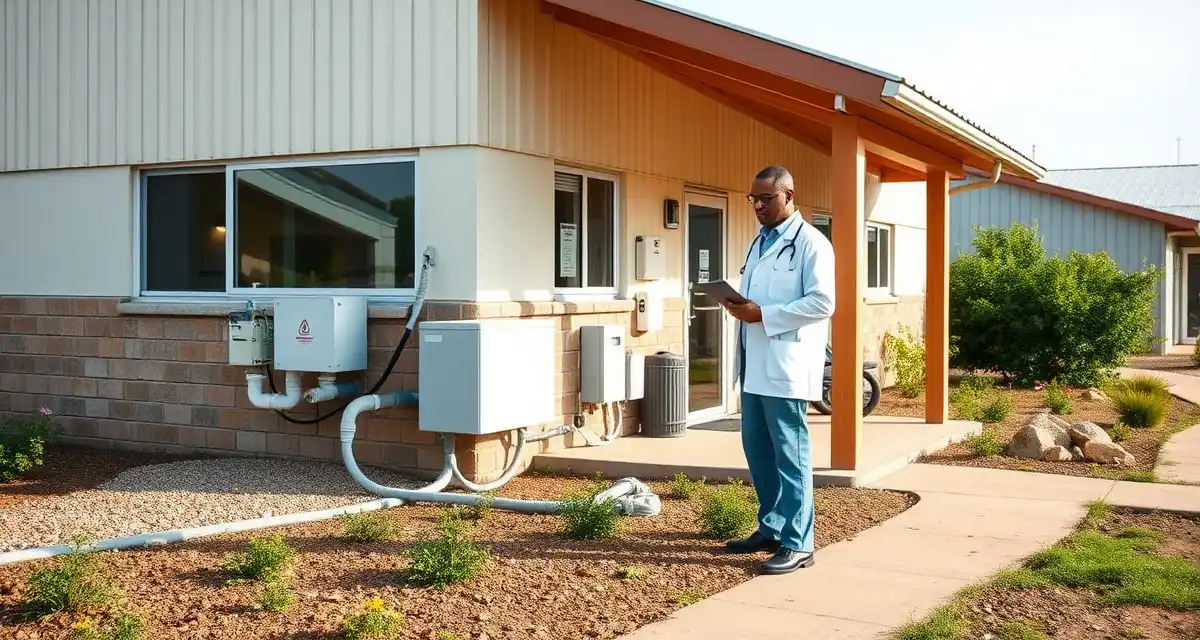
Septic Service for Rural Medical Clinics and Health Offices
By the SepticMind Editorial Team
Rural medical clinic licensing requires proof of functioning sanitation for all patient-facing facilities, and state medical licensing boards can revoke clinic operating permits for sanitation compliance failures. Operating a medical clinic in a rural area comes with a specific compliance challenge: you're subject to both the county health department's standard septic rules and the state medical licensing authority's facility requirements, and those two frameworks don't always align or communicate with each other.
TL;DR
- Rural Medical Clinics facilities have distinct wastewater loading patterns that affect septic system sizing, service frequency, and permit requirements.
- Commercial and institutional properties like rural medical clinics typically require more frequent pumping than residential systems due to higher daily usage.
- Some rural medical clinics operations generate waste streams (grease, chemicals, or high-volume flow) that require pre-treatment before reaching the septic system.
- Service contracts for rural medical clinics provide predictable recurring revenue and are easier to manage with a platform that tracks commercial account schedules.
- Health department inspections for rural medical clinics properties may require septic system condition documentation as part of facility licensing.
- Septic companies specializing in rural medical clinics service build referral networks with property managers, architects, and health inspectors in that niche.
The Rural Clinic Compliance Context
Rural medical clinics and health offices operate under at least two distinct regulatory frameworks that both touch septic systems:
County health department: Governs the onsite wastewater system itself under standard commercial or semi-public facility rules. Requires proper permits, adequate capacity for the occupancy, regular maintenance, and service documentation. This is the baseline layer of compliance that applies to any commercial building.
State medical licensing: The state agency that licenses medical facilities, whether that's a state health department division, a medical board, or a separate licensing bureau, requires functioning sanitation as a condition of facility licensure. A clinic that loses septic function has a facility compliance failure that can affect its operating license.
CMS and insurance credentialing: If the clinic participates in Medicare or Medicaid, CMS conditions of participation apply to facility standards. Private insurance credentialing also includes facility requirements. A clinic that can't maintain basic sanitation faces credentialing risk alongside licensing risk.
These frameworks operate independently. A septic failure that gets reported to the county health department doesn't automatically notify the state medical licensing office, and vice versa. The clinic operator is responsible for managing compliance across all applicable frameworks.
SepticMind's rural clinic account type tracks state medical licensing septic compliance requirements alongside standard county compliance, keeping both frameworks organized in one place.
Clinical Wastewater Considerations
Medical clinic wastewater isn't identical to standard commercial office wastewater, even when the patient volume is modest. Several factors affect septic system management at clinical facilities:
Restroom usage patterns: A busy clinic with a packed appointment schedule may cycle 40-60 patients through the facility in an eight-hour day. Combined with staff, this creates higher daily wastewater generation than a comparably sized office building.
Clinical handwashing: Medical staff wash hands repeatedly throughout the day. High-frequency handwashing with clinical soap products adds to daily gray water generation.
Sterilization and cleaning: Instrument sterilization, surface disinfection, and medical equipment cleaning all generate wastewater. The cleaning products used in clinical settings may include disinfectants, sterilants, and sanitizers that affect the biological balance in a conventional septic system.
X-ray and imaging: Clinics with on-site x-ray facilities may have darkroom chemicals or digital imaging cleaning solutions that require careful management before they reach the septic system.
Lab specimens and biohazard materials: Clinical wastewater from patient samples and biohazard disposal follows regulated medical waste protocols, but proper training prevents clinical materials from entering the septic system inappropriately.
Not all of these apply to every rural clinic, but knowing what your facility generates helps calibrate service intervals and system management appropriately.
Licensing Inspection Preparation
State medical licensing inspections typically include a facility review that covers sanitation. Being prepared means:
Current service documentation: The inspector should see a complete service history showing regular pump-outs and inspections. Gaps in the record raise questions. Document every service event with date, provider, and findings.
No outstanding violations: If the county health department has issued any notices of violation or required corrections, resolve those before a medical licensing inspection. Outstanding septic compliance issues compound into licensing concerns.
Functioning restrooms: The most basic requirement. Patient restrooms need to be operational, clean, and accessible. If a septic issue has affected restroom function at any point, the resolution should be documented.
Septic permit currency: The facility's septic permit should be current, not expired or pending renewal. Confirm permit status annually.
Grease trap compliance if applicable: Clinics with staff kitchens, break rooms, or patient nutrition services may need grease trap maintenance documentation as part of food service compliance.
Multi-Provider Rural Health Clinics
Many rural health clinics operate under FQHC (Federally Qualified Health Center) designation or RHC (Rural Health Clinic) certification. These designations add federal oversight to the existing state and local compliance picture.
FQHC compliance: Federally Qualified Health Centers receive HRSA funding and are subject to HRSA program compliance requirements including facility standards. HRSA site visits review facility conditions including sanitation.
RHC certification: Rural Health Clinics certified under the Rural Health Clinic Services Act must maintain CMS conditions of participation for their certification. Facility sanitation is a CMS condition.
Grant-funded facilities: Rural clinics that receive federal or state grants for rural health access often have grant conditions that include facility maintenance standards.
For any clinic with federal certification or grant funding, organized septic service documentation matters for program compliance audits as well as licensing inspections.
For community health centers with similar multi-framework compliance requirements, that guide covers the full FQHC compliance picture. For healthcare facilities at larger scale with more complex clinical operations, the broader healthcare framework applies.
Service Intervals for Rural Medical Clinics
The right service interval depends on patient volume and facility size:
Small solo practitioner offices (under 20 patients per day, 1-3 exam rooms): Annual inspections with pump-outs every 2-3 years unless usage patterns indicate faster filling.
Small group practices (20-50 patients per day, 4-8 exam rooms): Annual pump-outs. Inspection before each state medical licensing renewal cycle.
Busy rural clinics (50+ patients per day, multiple providers): Annual or semi-annual pump-outs depending on tank size and daily generation. Pre-inspection service before major licensing reviews.
Clinics with labs, imaging, or procedure rooms: More frequent service consideration given the additional wastewater categories. Annual inspections at minimum with pump-out frequency based on actual fill rate observations.
Get Started with SepticMind
Managing service contracts for rural medical clinics properties is easier with a platform built for the septic trade. SepticMind tracks commercial service schedules, documents every inspection visit, and keeps your compliance records organized by property. See how it handles your commercial account portfolio.
Frequently Asked Questions
What compliance requirements apply to rural medical clinic septic systems?
Rural medical clinics face septic compliance from multiple directions. The county health department governs the onsite wastewater system under commercial facility rules, requiring proper permits, adequate capacity, regular maintenance, and documented service history. The state medical licensing authority requires functioning sanitation as a condition of the facility operating license, meaning a septic failure isn't just a plumbing problem but a licensing compliance event. For clinics with Medicare or Medicaid participation, CMS conditions of participation include facility standards that cover sanitation. For FQHC or RHC-designated clinics, HRSA and CMS program compliance adds another layer of facility review. Organized service documentation satisfies all of these frameworks simultaneously.
How often should a rural medical clinic service its onsite septic system?
A rural medical clinic should treat its septic system like the commercial healthcare facility it is, not like a residential system. Annual inspections are appropriate for any clinic seeing patients. Pump-out frequency depends on patient volume: clinics with under 20 patients per day may manage with biennial pump-outs if tank size and actual fill rates support that interval, while clinics seeing 50+ patients per day should plan on annual pump-outs. Schedule inspections to occur before medical licensing renewal cycles so that any findings can be addressed before the licensing review. If the clinic has a commercial kitchen or staff food service, add grease trap service to the maintenance schedule.
Does SepticMind track state medical licensing septic compliance for rural clinic accounts?
Yes. SepticMind's rural clinic account type captures both the county health department septic compliance framework and the state medical licensing facility requirements in one account. License renewal dates are tracked so service documentation can be confirmed as current before licensing inspections. For clinics with FQHC or RHC designation, HRSA and CMS compliance notes can be added to the account. Service history is stored in a format suitable for presentation to medical licensing inspectors, health department reviewers, and federal program auditors. Multiple clinic locations under a single health organization can be tracked under one account with compliance status visible across all sites.
How often should a septic system serving a rural medical clinics property be inspected?
Septic systems at rural medical clinics properties should be inspected at least annually and pumped more frequently than residential systems, since commercial-scale daily water usage accelerates sludge and grease accumulation. The exact frequency depends on the specific activities at the facility, peak occupancy, any food service or chemical use on-site, and local regulatory requirements. A service provider familiar with rural medical clinics operations can recommend an appropriate inspection and pumping schedule based on the system's actual usage profile.
What septic system issues are most common at rural medical clinics properties?
The most common septic problems at rural medical clinics properties are rapid sludge accumulation from high occupancy, grease trap failure if food service is involved, hydraulic overloading during peak-use periods, and non-biodegradable waste disposal from cleaning or maintenance activities. Regular inspection and a service contract with clear maintenance intervals are the most effective ways to catch these problems before they cause system failure or regulatory violations.
Try These Free Tools
Sources
- National Onsite Wastewater Recycling Association (NOWRA)
- US EPA Office of Wastewater Management
- NSF International
- Water Environment Federation
- National Environmental Services Center (NESC)