Aeration septic system: how it works, costs, and when you need one
By the SepticMind Editorial Team
TL;DR
- An aeration (aerobic) septic system pumps oxygen into wastewater so bacteria break it down faster, producing cleaner effluent than a conventional anaerobic tank.
- Installed cost runs $10,000 to $20,000 depending on soil, site, and state rules.
- They need more maintenance than standard systems, but they're often the only permitted option on small or difficult lots.
What is an aeration septic system and how does it work?
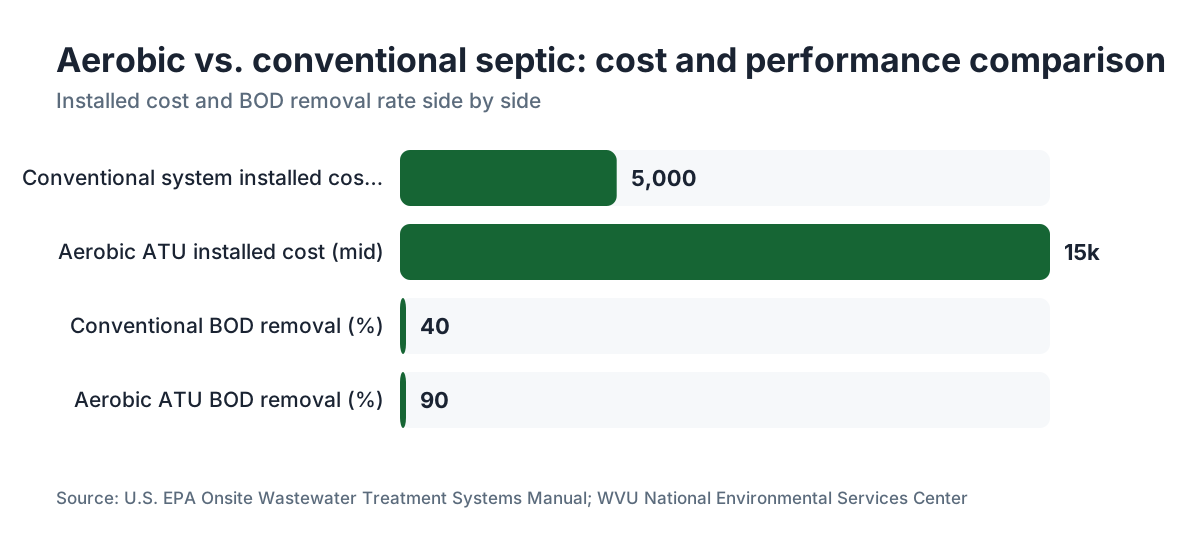
A conventional septic tank works without oxygen. Anaerobic bacteria break down solids slowly, and the partly treated liquid that flows out to your drain field still carries a real load of pathogens and nutrients. An aeration septic system, also called an aerobic treatment unit (ATU), changes that by forcing air into the treatment chamber. Aerobic bacteria are far more aggressive decomposers than their anaerobic cousins. With a steady oxygen supply, they cut biological oxygen demand (BOD) and total suspended solids (TSS) by 85 to 95%, compared to the 30 to 50% you get from a standard tank [1].
The process runs in three or four stages. Wastewater enters a trash or pre-treatment tank first, where large solids settle. It then moves into the aeration chamber, where a small electric air pump churns oxygen in continuously. From there, effluent passes into a clarifier or settling zone where any leftover solids drop back down. Finally, a pump doses the treated liquid to your dispersal area, which could be a conventional drain field, a drip irrigation system, or surface spray heads, depending on what your county health department approves.
A well-maintained ATU routinely meets the secondary treatment standard the EPA describes, and some units hit tertiary levels when paired with UV disinfection or chlorination [1]. That extra cleaning power is exactly why these systems get permitted on lots where a conventional system would fail: tight clay soils, high water tables, or sites close to a well or a lake.
Here's the part people miss. The air pump runs 24 hours a day, every day of the year. That continuous power draw and constant mechanical operation means more parts that can break, more service visits, and a higher monthly cost than a gravity-fed conventional system. Know that tradeoff going in and the rest is easy.
Aerobic vs. anaerobic septic system: what's the real difference?
"Anaerobic" just means without oxygen. Your standard three-compartment septic tank is an anaerobic system. Wastewater sits, solids settle, bacteria digest what they can without air, and relatively untreated effluent disperses into the soil. The soil does the heavy lifting of final treatment.
An aerobic system adds oxygen, and by doing so it shifts which bacteria dominate and how fast they work. Here's what that means side by side:
| Factor | Conventional anaerobic tank | Aerobic treatment unit (ATU) |
|---|---|---|
| Installed cost | $3,000 to $7,000 [2] | $10,000 to $20,000 [2] |
| BOD/TSS removal | 30 to 50% | 85 to 95% [1] |
| Electricity use | None | ~$30 to $60/month [3] |
| Service contract required? | Usually not | Yes, in most states |
| Pumping frequency | Every 3 to 5 years | Every 1 to 3 years typically |
| Drain field size needed | Standard | Often reduced (check local code) |
| Lifespan (with maintenance) | 20 to 40 years | 15 to 25 years for mechanical parts |
| Best for | Standard lots, good soil | Difficult sites, small lots, near water |
The cost advantage of the anaerobic tank is real and large. If your soil perc test passes and your lot is a normal size, a conventional system is almost always cheaper and lower maintenance. But if the health department has told you the site fails conventional criteria, an ATU is often the only path to a working system.
One honest note on lifespan. The tank shell of an ATU (usually fiberglass or polyethylene) lasts decades, but the air pump, float switches, and control panel need replacement every 5 to 15 years. Budget for those parts separately.
How much does an aeration septic system cost?
Installed cost for a residential ATU runs $10,000 to $20,000 in most U.S. markets as of 2024 to 2025, and tight labor markets or remote sites push it higher [2]. Here's the breakdown:
- Equipment (the ATU unit itself): $3,000 to $8,000 depending on capacity (gallons per day) and brand.
- Installation labor and excavation: $3,000 to $8,000. Rocky ground or high water tables add cost fast.
- Permits and engineering: $500 to $2,500. Many counties require a licensed engineer to stamp the design.
- Dispersal system: $1,500 to $5,000 or more. Drip irrigation and spray systems cost more than a simple leach field.
- Electrical hookup for the air pump and controls: $300 to $1,000.
Ongoing costs matter too. Most states require a maintenance contract with a licensed service provider, typically $200 to $500 per year [3]. That contract usually covers two to four visits where a technician checks the air pump, cleans filters, tests effluent quality, and adjusts the chlorination or disinfection system if one is required. Add power for the air pump ($30 to $60/month) and periodic septic tank pump out visits every one to three years ($250 to $600 each).
Over a 20-year window, total cost of ownership for an ATU, including installation, maintenance contracts, pumping, power, and part replacements, commonly runs $25,000 to $45,000. A conventional system over the same period might run $12,000 to $20,000, install plus routine pumping. That gap is real. But if the alternative is no permitted system at all, the ATU price isn't a choice. It's just what the property costs to work.
Comparing options from scratch? Look at the cost to install septic system for conventional alternatives before you assume you need an ATU.
When do you need an aerobic septic system instead of a conventional one?
Health departments approve ATUs (or require them) in a handful of specific situations, and the rules vary enough by county that you have to check your local onsite wastewater code. The common triggers are consistent:
Poor soil percolation. If your perc test shows soil that won't absorb effluent at an acceptable rate, a conventional drain field won't work. The higher-quality effluent from an ATU can often satisfy regulators even on slower-draining soils, because the remaining contaminant load is low enough that the soil doesn't have to do as much work [1].
High groundwater table. Setback requirements between the bottom of your drain field and seasonal high groundwater are strict in most states, often 24 inches or more. If your lot sits in a wet area, you may not have the vertical separation. An ATU's cleaner output sometimes lets the regulator approve a shallower or alternative dispersal method.
Small lot with tight setbacks. Conventional systems need significant distance from wells, property lines, and water features. An ATU can shrink the required drain field footprint, which makes a system fit on a lot where a conventional one wouldn't meet setbacks.
Near a sensitive water body. Nutrient loading from septic effluent feeds algae blooms and degrades water quality in lakes, coastal areas, and rivers. The EPA SepticSmart program calls out proper system selection near sensitive water bodies as a key protection measure [1]. States like Florida and Maryland now mandate advanced treatment systems in certain watershed zones [12].
Replacing a failed system on a developed lot. When a system fails on a lot that's already built out, there's often no room to expand the drain field. An ATU with a drip or spray dispersal system can sometimes be retrofitted into a smaller footprint. See septic system repair for more on failure and replacement options.
What types of aerobic septic systems are available?
Not all ATUs are the same, and the differences matter when you're comparing quotes or trying to understand what your installer is proposing.
Extended aeration systems are the most common residential type. A single fiberglass or polyethylene tank is split into compartments: pre-treatment, aeration chamber, clarifier, and pump chamber. The whole thing usually ships as one unit. Brands like Norweco, Infiltrator, and Jet (now part of Infiltrator Water Technologies) dominate this market [10]. These are what most people mean when they say "aerobic septic system."
Sequencing batch reactors (SBRs) treat wastewater in timed batches rather than continuous flow. They show up more in commercial or larger residential jobs and produce very consistent effluent quality.
Drip dispersal systems aren't a treatment unit on their own, but they're commonly paired with ATUs. Instead of a conventional leach field, treated effluent gets drip-irrigated through small-diameter tubing buried a few inches down. Drip works well on slopes and odd-shaped lots, but it needs filters and regular maintenance to keep from clogging [11].
Spray (surface application) systems disperse treated effluent over a lawn through spray heads, like an irrigation system. Some states permit them, others ban them. Where they're allowed they work well in warm climates, but they can cause odor complaints, public health worries, and freeze problems in cold weather.
Recirculating media filter systems (recirculating sand filters or textile media filters) add another treatment step after the aeration chamber, pushing effluent through a filter medium before dispersal. These hit some of the highest effluent quality of any onsite system and are sometimes required in the most sensitive environmental zones [5].
What maintenance does an aerobic septic system require?
This is the part that catches homeowners off guard. An ATU is genuinely higher maintenance than a conventional tank. That's not a knock on the technology, it's just a mechanical reality. Here's what's actually involved.
Annual or semi-annual service visits. Most state rules and manufacturer warranties require a licensed service provider to inspect an ATU at least once a year, and many require two to four visits [3]. The technician checks air pump output, inspects diffusers or aerators for fouling, clears filters, tests the float switches and control panel, verifies disinfection (chlorine tablets or UV), and often pulls an effluent sample to test BOD and TSS.
Chlorine tablet replacement. If your ATU uses chlorination (many do), the tablet feeder needs checking and refilling every one to three months. Homeowners often handle this themselves between visits. It takes five minutes.
Air pump maintenance. The compressor or blower is the heart of the system. Most residential units use a diaphragm compressor or a linear air pump. These last 3 to 10 years depending on brand and conditions [9]. Replacement runs $150 to $600 for the pump itself. Ignore a failing pump and the aerobic bacteria die, so your system quietly reverts to slow anaerobic treatment.
Pumping. Even with aggressive aerobic treatment, solids build up in the pre-treatment tank. Plan on septic tank pumping every one to three years. A bigger household or heavy garbage disposal use fills it faster. Regular septic tank cleaning keeps solids from carrying over into the aeration chamber, which is where the expensive damage happens.
Control panel alerts. Most modern ATUs have an audible and visual alarm that trips when something goes wrong, usually air pump failure or high water level. Don't ignore it. An alarm light that's been glowing for a week means a week of untreated sewage sitting in your system.
Want a single place to track service dates, chlorine refills, alarm events, and pump-out history? A maintenance log, paper or digital, pays for itself the first time a technician asks when the unit was last serviced and you can answer to the day.
What are the most common aerobic septic system problems?
ATUs fail in predictable ways. Knowing them helps you catch a problem before it gets expensive.
Air pump failure. This is the number-one mechanical failure. When the pump stops, aerobic bacteria die off within hours and you're back to anaerobic conditions. Effluent quality drops, odors and alarms follow. If the failure runs long enough, the biological community in the aeration chamber has to rebuild from scratch, which takes weeks [9]. Replace a failing pump right away.
Clogged diffusers or aerators. The device that pushes air into the wastewater fouls with biofilm or debris over time. Regular cleaning at service visits prevents it. A partly clogged diffuser cuts oxygen transfer without tripping an obvious alarm.
Disinfection failures. An empty chlorine feeder or a burned-out UV lamp means your system disperses inadequately disinfected effluent. In states that require surface spray application, that's a public health problem and a regulatory violation.
Pump chamber problems. The effluent pump that doses the drain field or drip system can fail or clog with solids. This usually trips a high-water alarm. See septic tank repair for more on pump chamber issues that overlap with conventional systems.
Drain field or drip line clogging. Even with clean ATU effluent, dispersal systems eventually clog. Drip lines are especially vulnerable to root intrusion and biofilm. Routine flushing and filter cleaning stretch their life a lot.
Chemical kill-off. Pouring bleach, antibacterial cleaners, or big doses of harsh chemicals down the drain wipes out the bacteria in the aeration chamber. The system basically stops treating wastewater until the biology recovers. Antibiotics in human waste are a smaller but real contributor to the same problem [1].
Do aerobic septic systems require a service contract?
In most states, yes, and it's not optional. Because ATUs discharge higher volumes of treated effluent to smaller dispersal areas, sometimes to the ground surface, regulators treat them differently than conventional systems. Many state onsite wastewater codes require the homeowner to keep an active service contract with a licensed ATU provider as a condition of the operating permit [4].
Florida requires annual inspections for all onsite sewage treatment systems, with aerobic systems held to extra performance requirements under Chapter 64E-6 of the Florida Administrative Code [4]. Texas requires maintenance contracts for aerobic systems under Title 30 of the Texas Administrative Code, Chapter 285 [8]. Verify your own state and county rules before you install an ATU or buy a home with one.
Service contracts run $200 to $500 a year and cover a set number of site visits, basic parts (like filter cartridges), and effluent testing. What they usually don't cover: major parts like air pumps or control panels, pumping, or emergency calls after hours. Read the contract carefully.
For service companies juggling many ATU contracts, scheduling, compliance paperwork, and service history are real operational headaches. Software built for septic operators, like SepticMind, helps companies track maintenance schedules and regulatory deadlines across a big customer list without visits slipping through the cracks.
Let a service contract lapse and fail an inspection, and you could get a notice of violation from your county health department. Fixing that is more expensive and more stressful than just keeping the contract current.
How long does an aerobic septic system last?
The fiberglass or polyethylene tank body of a residential ATU can realistically last 30 years or more with no structural issues, as long as the ground around it isn't settling hard or taking vehicle traffic. That's the good news.
The mechanical and electrical parts tell a different story. Air pumps average 3 to 10 years [9]. Float switches and control panels last 10 to 20 years but fail unpredictably. UV disinfection lamps need replacing every year. Effluent pumps last 7 to 15 years. The aerator or diffuser assembly may need replacement every 5 to 10 years depending on design.
So when someone asks how long an aerobic septic system lasts, the honest answer is this: the box lasts a long time, but the system needs ongoing part investment its whole life. Own an ATU for 20 years and expect two or three air pump replacements, at least one control panel, one or two effluent pumps, and various smaller parts, on top of your annual maintenance contract and pumping.
Maintenance is the biggest longevity lever there is. Systems that get regular visits, prompt pump swaps, and steady disinfection upkeep routinely hit 20 to 25 years of full function. Systems that get ignored fail completely in 7 to 12 years, and they usually take the drain field or drip system down with them, which is the expensive part to replace.
Buying a home with an existing ATU? A septic tank inspection by a licensed professional is essential. Ask the inspector to document the air pump age, control panel age, and whether the service contract history is intact.
Can you convert a conventional septic system to an aerobic one?
Sometimes, but it's not a simple upgrade. The honest answer is that most "conversions" are really replacements, because you're typically swapping out the treatment unit while maybe reusing the existing drain field or tank shell.
If your existing concrete septic tank is structurally sound, some installers can add an aeration retrofit kit, basically an air pump, diffuser, and control panel, that turns the tank into an aerobic process. Companies like Norweco (Singulair) and a handful of smaller makers sell these. Retrofit kits run $1,500 to $4,000 plus installation, far less than a full ATU replacement. The catch: converted tanks rarely match the treatment performance of a purpose-built ATU, and not every state will permit a retrofitted tank as a compliant ATU [10].
Full replacement makes more sense when the existing tank has structural problems, when local treatment standards require a certified ATU, or when you're also changing the dispersal method (say, switching from a failed leach field to drip irrigation).
The permit question decides everything. Converting or replacing a septic system almost always requires a new permit, a site evaluation, and sometimes a new perc test. Don't start work without the right permits. Unpermitted septic work can bring fines, mandatory removal, and serious trouble when you try to sell the property. See cost to put in a septic tank for a broader look at what drives replacement pricing.
What does EPA guidance say about aerobic treatment units?
The EPA's SepticSmart program, the agency's main public education effort for onsite wastewater, describes properly functioning septic systems as protecting public health and water quality, and it points to advanced treatment systems (which include ATUs) as appropriate for sites near sensitive water bodies or with soils that don't support conventional systems [1].
The EPA doesn't directly regulate residential septic systems. That authority sits with states and localities. But EPA guidance, including the 2002 "Onsite Wastewater Treatment Systems Manual," gives state regulators the technical foundation they draw from. That manual describes aerobic treatment processes reducing BOD and suspended solids to secondary treatment quality, roughly 30 mg/L each [1].
On nutrients, standard ATUs do well on BOD and pathogens but are weaker at removing nitrogen. Nitrogen loading from septic systems is a documented contributor to hypoxia and algae blooms in sensitive coastal and freshwater systems [1]. Some states now require nitrogen-reducing ATUs (advanced nitrogen removal, or ANR, systems) in specific watershed zones. These cost more, $15,000 to $30,000 or more installed, and they're about as far as residential onsite treatment currently goes.
If you're in a designated nitrogen-sensitive area, ask your county health department whether a standard ATU will satisfy the permit or whether you need an enhanced nitrogen removal unit [12]. Get this wrong and you install a $15,000 system, then get told it doesn't comply.
Is an aerobic septic system right for your property?
For most homeowners on a normal lot with adequate soil, no. A conventional septic system is simpler, cheaper, and lower maintenance. If a licensed inspector says your soil passes a perc test and you have room for a proper leach field with the right setbacks, go conventional.
An ATU is the right answer in a specific set of circumstances: difficult soil, high water table, small lot, sensitive water body nearby, or a failing conventional system with no room to expand. In those cases, an ATU is often the difference between a legally permitted, functioning sanitation system and a property you can't use or sell.
Before you commit, get at least two quotes from licensed ATU installers. Confirm your county health department will approve the specific unit model being proposed, because not every ATU is approved in every jurisdiction. Ask about the required maintenance contract before you sign anything, and put that annual cost in your ownership budget.
For homeowners managing the service schedule, SepticMind's maintenance tracking tools help you stay on top of service intervals and documentation, so you're never scrambling to prove compliance when the county asks.
Here's the bottom line. An aerobic system costs roughly twice what a conventional system costs to install, and meaningfully more to own over 20 years. For the sites that need one, it's worth every dollar. For the sites that don't, it's an expensive fix for a problem you don't have.
Frequently asked questions
How much does an aerobic septic system cost compared to a conventional one?
An aerobic treatment unit (ATU) runs $10,000 to $20,000 installed. A conventional anaerobic septic system typically costs $3,000 to $7,000 installed. Over 20 years, once you add maintenance contracts, power, pumping, and part replacements, total ownership of an ATU can run $25,000 to $45,000 versus $12,000 to $20,000 for a conventional system. The higher cost is usually justified only when the site requires it.
How often does an aerobic septic system need to be pumped?
Most ATUs need pumping every one to three years, more often than the three-to-five-year schedule common for conventional tanks. Even with aggressive aerobic treatment, solids build up in the pre-treatment compartment. How fast depends on household size, garbage disposal use, and whether the system is sized correctly. Check your system's manual and ask your service technician what they see at each visit.
Can I install an aerobic septic system myself?
No, practically speaking. ATU installation requires permits, licensed contractors in nearly every state, electrical work, and often an engineer-stamped design. Even if local code didn't require it, improper installation voids the manufacturer warranty and creates real liability. Some homeowners do minor tasks like adding chlorine tablets or checking alarm panels, but installation is strictly professional territory.
What happens if I don't maintain my aerobic septic system?
Without regular maintenance, the air pump eventually fails, the aerobic bacteria die off, effluent quality drops toward raw sewage levels, and the drain field or drip system clogs with partly treated solids. In states requiring maintenance contracts, you can also face violations and fines. Deferred maintenance on an ATU almost always costs more to fix than the maintenance itself would have cost.
How do I know if my aerobic septic system is working correctly?
The control panel alarm light and buzzer are your first indicators. A working system runs quietly with no odors and no standing water near the dispersal area. A licensed technician checks air pump output, effluent turbidity, and BOD during service visits. If you notice gurgling drains, slow-flushing toilets, wet spots in the yard, or sewage odors, call a service provider right away.
Are aerobic septic systems better for the environment?
For pathogen and BOD removal, yes, significantly. ATUs cut biological oxygen demand by 85 to 95% versus 30 to 50% for conventional tanks, and they kill far more pathogens before dispersal. For nitrogen removal, standard ATUs are only moderately better. If nitrogen loading to nearby water is the concern, you need a specialized nitrogen-reducing unit, which costs more and is required by regulation in some sensitive watershed areas.
Do aerobic septic systems smell?
A properly functioning ATU should produce little to no detectable odor at the tank or dispersal area. The aerobic process makes carbon dioxide and water vapor instead of the hydrogen sulfide behind that classic septic smell. Sulfur or sewage odors from your ATU are a symptom: the air pump may be failing, the system is overloaded, or a component is fouled. Get it inspected.
Can an aerobic septic system freeze in cold climates?
The underground tank itself isn't a major freeze risk, because soil insulates well at burial depth. Spray heads and above-ground components are more vulnerable. Drip irrigation lines close to the surface can freeze in severe climates. Some systems switch dispersal patterns automatically or have a low-temperature shutoff. Ask your installer about winterization steps for your climate and system design.
How big of an aerobic septic system do I need for my house?
Sizing is based on daily flow, which most states estimate by bedroom count. The standard assumption is 150 gallons per day per bedroom, so a three-bedroom home needs a system rated for roughly 450 GPD. Your local health department or a licensed engineer sets final sizing based on perc test results, state minimums, and projected peak flow. Never undersize an ATU. Going slightly bigger upfront beats replacing an undersized unit.
What is the difference between an ATU and a mound system?
An ATU (aerobic treatment unit) is a treatment technology that cleans wastewater before it disperses. A mound system is a dispersal method, a raised drain field built above grade when the natural soil won't work at ground level. The two combine: an ATU treats the wastewater, a mound disperses it. Or each pairs with other components. They aren't competing alternatives; they solve different parts of the problem.
Does an aerobic septic system need electricity to operate?
Yes. The air pump runs continuously and draws 100 to 300 watts depending on system size and design, which typically adds $30 to $60 to your monthly electric bill. If power goes out for an extended stretch, aerobic bacteria start dying within hours and treatment quality drops. Homeowners in outage-prone areas sometimes install a backup generator circuit for the ATU, worth considering if you lose power often.
What chemicals can I safely use in a home with an aerobic septic system?
Avoid bleach, antibacterial soaps, and drain cleaners in large amounts. They kill aerobic bacteria as effectively as they kill pathogens, which degrades your system's treatment capacity. Normal household amounts of soap and cleaning products are generally fine; it's concentrated doses that cause problems. Never pour solvents, paints, medications, or pool chemicals down any drain connected to an ATU.
How often should aerobic septic system chlorine tablets be replaced?
Every one to three months, depending on household size and the tablet feeder's size. A four-person household burns through tablets faster than a one- or two-person home. Most technicians check and refill the feeder during scheduled visits, but many ATU owners check it monthly themselves. An empty feeder means your system disperses un-disinfected effluent, which is a health and regulatory issue.
Can I use a garbage disposal with an aerobic septic system?
Technically yes, but most service providers and manufacturers recommend against it, or recommend a high-efficiency disposal if you insist. Disposals add a heavy load of solids and fats to the pre-treatment tank, which speeds sludge buildup and can carry solids into the aeration chamber. If you use one, expect to pump the system more often, possibly once a year or more depending on use.
Sources
- U.S. EPA, Onsite Wastewater Treatment Systems Manual (EPA/625/R-00/008) and SepticSmart program: Aerobic treatment processes reduce BOD and suspended solids to secondary treatment quality (~30 mg/L each, 85 to 95% removal); nitrogen loading contributes to hypoxia and algal blooms; SepticSmart guidance on system selection near sensitive water bodies.
- U.S. EPA, Septic Systems Overview: Conventional septic systems cost roughly $3,000, $7,000; aerobic/alternative systems cost significantly more due to added components and complexity.
- West Virginia University, National Environmental Services Center: ATU maintenance contracts typically run $200, $500 per year and cover scheduled service visits, effluent testing, and minor parts.
- Florida Department of Health, Onsite Sewage Treatment and Disposal (Chapter 64E-6 Florida Administrative Code): Florida requires annual inspections for all onsite sewage treatment systems; aerobic systems subject to additional performance standards and mandatory maintenance contracts.
- National Onsite Wastewater Recycling Association (NOWRA): Recirculating media filter systems and advanced treatment ATUs achieve tertiary-level effluent quality; UV disinfection pairing described.
- Texas State Law Library, Texas Administrative Code Title 30, Chapter 285: Texas Administrative Code Chapter 285 requires maintenance contracts for all aerobic septic systems in the state.
- University of Minnesota Extension, Septic Systems: Air pump lifespan in residential ATUs averages 3 to 10 years; biological community in aeration chamber can take weeks to rebuild after pump failure.
- Purdue University Extension: Extended aeration ATU units are the most common residential aerobic system type; brands like Norweco and Infiltrator dominate the residential market; retrofit permitting varies by state.
- North Carolina State Extension: Drip dispersal systems require routine flushing and filter maintenance to prevent clogging; ATU effluent quality allows reduced drain field footprint in many jurisdictions.
- Maryland Department of the Environment, Bay Restoration Fund: Maryland mandates advanced nitrogen-reducing septic systems in certain Chesapeake Bay watershed zones; standard ATUs insufficient in designated nitrogen-sensitive areas.
Last updated 2026-07-09