Bloomquist septic inspections: what they check and what to expect
By the SepticMind Editorial Team

TL;DR
- A Bloomquist septic inspection is a full system check covering the tank, baffles, effluent level, and drain field.
- Plan on two to four hours and $250 to $600, depending on system type and region.
- The inspector locates the lids, measures solids, reads the liquid level, and walks the absorption field for signs of failure before it reaches your house.
What is a Bloomquist septic inspection and who needs one?
Bloomquist is a regional septic inspection and pumping company working mostly in Minnesota and the upper Midwest. The name shows up in septic conversations because they built a local reputation for doing the whole job instead of popping a lid and calling it done. Their process follows the same framework any licensed inspector uses under state onsite wastewater rules. So if someone told you to get a Bloomquist inspection, or you saw the name on a real estate disclosure, you're looking at a full evaluation of your septic system, not a glance inside the tank.
Homeowners need this in a handful of situations. The big one is a home sale. Most lenders and buyers want a septic inspection before closing, and Minnesota Rule 7080, which governs individual sewage treatment systems statewide, requires inspection at property transfer in many jurisdictions [1]. Outside of real estate, you'd want one if your drains have slowed, if the yard is soggy near the drain field, or if the tank is years overdue for a pump and you genuinely don't know its condition.
Operators sizing themselves up against a company like Bloomquist can run the same inspection workflow with job-tracking and reporting tools. SepticMind is built for that. Crews document findings in the field and hand customers a report they can actually read.
So, do you need one? Yes if you're buying or selling a home on septic. Yes if you've had a problem. Yes if it's been long enough that you'd rather know than guess.
What does a Bloomquist septic inspection actually cover?
A full inspection covers every accessible part from the house cleanout to the far end of the absorption field. Here's what a licensed inspector working to state standards checks.
Tank condition and access. The inspector locates and exposes all lids, which on an older system can mean probing and digging. Then they look for cracks, structural problems, and any sign of groundwater leaking in or effluent leaking out.
Baffles. Inlet and outlet baffles keep solids from short-circuiting into the drain field. A broken or missing outlet baffle is one of the most common reasons a drain field dies early. The inspector confirms both baffles are intact and doing their job [2].
Solids and scum. Using a sludge judge or similar tool, the inspector measures the sludge layer on the bottom and the scum layer on top. EPA SepticSmart guidance says a tank needs pumping when the combined solids fill more than a third of the liquid capacity [3]. Hit that line and you'll get a pump recommendation on the spot.
Effluent level. The liquid level relative to the outlet pipe tells the inspector whether the drain field is accepting effluent or backing up. A high level with no recent heavy rain is a red flag.
Distribution box. If your system has a D-box, the inspector opens it and checks for even flow to all the lateral lines. Uneven flow burns out whichever zone takes the most load.
Drain field. The inspector walks the leach field looking for surfacing effluent, spongy ground, lush green stripes over the laterals during dry weather, or odor. Some use a probe to test soil saturation. This part matters most, because drain field replacement is where the real money is.
Pump and controls. Pressure-dosed and mound systems have a pump chamber and floats. The inspector cycles the pump, confirms the floats are set right, and checks that the pump moves its rated volume.
Two things a standard inspection usually skips: a camera run down the lateral pipes (some companies sell it as an add-on) and a hydraulic load test, which floods the system to stress the field. Some states require the load test at point of sale [4].
How long does a septic inspection take?
Plan on two to four hours for a standard inspection on a conventional gravity system. That assumes the lids are marked and easy to reach. If the inspector has to probe for buried lids, add 30 to 60 minutes. A mound system, a pressure-dosed system, or any alternative technology takes longer because there's more to check.
The written report usually lands within 24 to 48 hours, though some companies deliver same-day from a field tablet. For a closing, confirm the turnaround when you schedule. Title companies work to hard deadlines.
Four hours sounds like a lot. It isn't, given what they're evaluating. A rushed inspection that skips the field probe or never opens the distribution box is worth less than you paid for it.
What does a septic inspection cost in 2025?
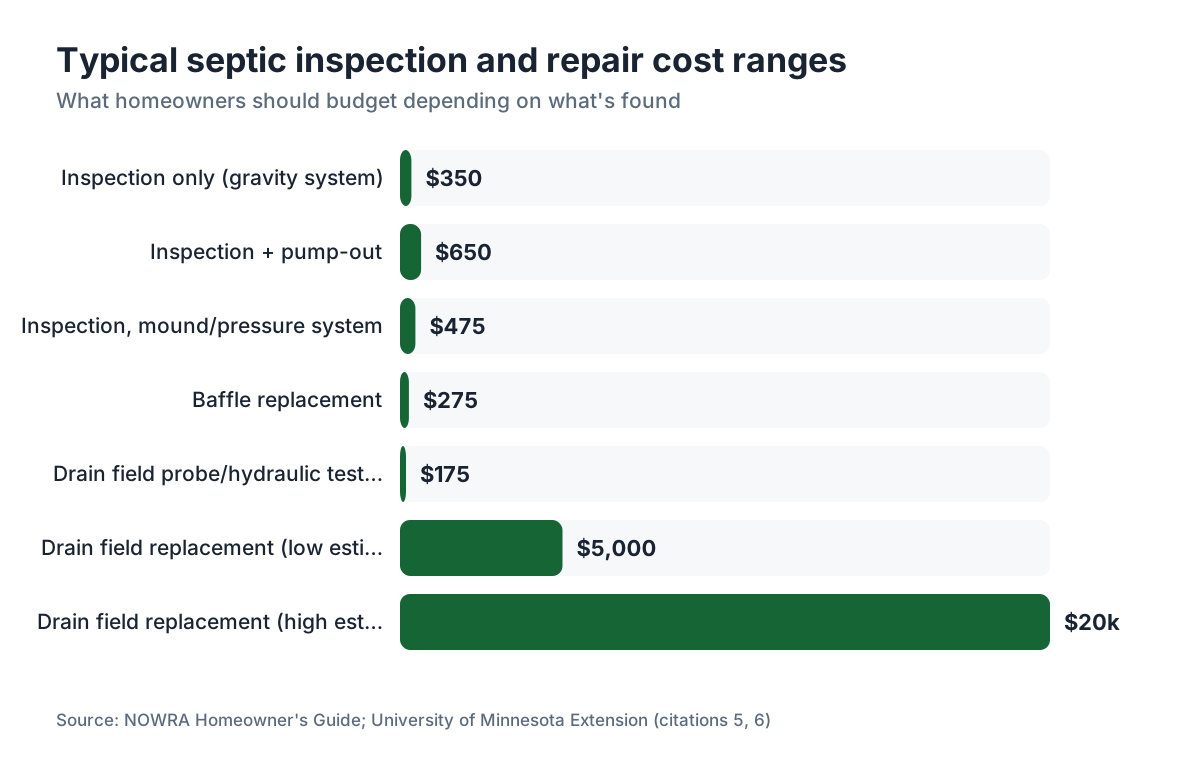
Cost depends on region, system type, and whether the inspector also pumps the tank. Nationally, a visual and operational inspection runs $250 to $500. Add a pump-out and you're usually at $450 to $800 combined, since septic tank pumping alone costs $300 to $600 for most residential tanks [5].
Minnesota and the upper Midwest, where Bloomquist works, sit in the middle of the national range. Expect $275 to $450 for the inspection alone and $500 to $750 if you bundle the pump-out. Mound systems and anything with a pump chamber cost more because there are more parts and the work runs longer.
In a home sale, some buyers negotiate the inspection cost into the deal and others pay out of pocket for an independent result. Either way, the inspection almost always costs less than the surprise it prevents. A drain field replacement runs $5,000 to $20,000 or more depending on system size and soil [6].
Here's a cost comparison by service:
| Service | Typical range | Notes |
|---|---|---|
| Inspection only (gravity system) | $250, $450 | Most common for real estate |
| Inspection + pump-out | $500, $800 | Best for an accurate read |
| Inspection, mound/pressure system | $350, $600 | More components, longer time |
| Drain field probe/hydraulic test add-on | $100, $250 | Required in some states at transfer |
| Full system replacement (if failure found) | $5,000, $20,000+ | Depends on system type and lot |
Nobody has clean national averages broken out by system type from a single authoritative study. The ranges above come from industry associations and state extension publications, not a randomized survey [5][6].
What happens if the inspection finds a problem?
This is the question everyone actually wants answered. A problem on the report doesn't always mean the system is failing. There's a spectrum.
At the minor end, you might get a recommendation to pump the tank (which should happen on a regular schedule anyway), replace a cracked riser, or fix a broken baffle. Baffle replacement usually runs $150 to $400. These are maintenance items, not emergencies [7].
A moderate finding might be a tank that's undersized for the home's current bedroom count, or a D-box that's out of level and distributing unevenly. Real problems, but correctable. See septic tank repair for what the common mid-level fixes involve.
A serious finding is surfacing effluent, biomat clogged across the whole drain field, or a cracked tank leaking into groundwater. Now you're looking at septic system repair or full replacement. In a home sale, this becomes a negotiating point. The buyer can ask for a price cut, require repairs before closing, or walk. Minnesota requires that failing systems be disclosed and brought into compliance within a set timeframe after transfer [1].
One thing worth knowing. An inspector's job is to report what they find, not to condemn systems for no reason. A good one will tell you whether a problem is urgent or something to watch. Ask straight out: "Is this an emergency or a watch-and-maintain situation?" That question almost always gets a straight answer.
How often should you get a septic inspection?
The EPA recommends inspecting a conventional septic system every three years and pumping it every three to five years, more often if usage is high [3]. That's a general guideline, not a hard rule in every state.
Minnesota's MPCA and some county rules require more frequent inspection for systems near lakes or waterways, because those sit in sensitive resource areas [8]. On a lake lot, check your county's specific requirements.
If you've never had an inspection and don't know when the system was last serviced, schedule one now and use it as your baseline. See how often to pump septic tank for the full breakdown on pumping intervals by household size and tank capacity.
Operators running a route-based pumping and inspection business know where this falls apart: tracking inspection intervals across hundreds of customers by hand. Scheduling software built for septic work closes that gap, and it's one of the core problems SepticMind was built to solve.
The honest answer on frequency: every three years for a well-maintained system, every one to two years if you have a big household, run a garbage disposal, or have any history of problems.
Do you need the tank pumped before or during the inspection?
This one gets debated. Some inspectors want to pump first so they can see the tank walls and baffles clearly. Others say pumping first wipes out the liquid-level evidence that reveals whether the drain field is backing up.
The approach that gets you the most information: have the inspector read the liquid level and solids first, then pump, then inspect the tank interior. That order catches both the liquid-level signal and the structural condition. Most inspectors working at the level Bloomquist does will follow this sequence on their own, but confirm it when you book.
If the tank hasn't been pumped in more than five years, odds are high you'll need a septic tank pump out no matter what the inspection turns up. Budget for it.
How do you prepare your property for a septic inspection?
You don't need to do much, but a few things help the inspector work faster and better.
Dig up your septic records. If you have the original permit, the as-built drawing (sometimes called a record drawing), or old inspection reports, have them ready. The inspector needs to know where the tank and field sit, the tank size, and the system type. No records? Your county environmental services office often has them on file.
Mark the lids if you know where they are. Digging for buried lids adds time and cost. If the lids are under the soil surface, the inspector will probe for them or use the as-built to locate them.
Go easy on water the day before and the morning of. Heavy use the night before can mask a marginal drain field that would otherwise show a high liquid level. Normal household use is fine.
Keep the area clear. Move anything parked or stored over the drain field. The inspector has to walk the whole field, and a clean, open surface makes probing and visual checks easier.
That's really it. There's no prep that makes a system look better than it is, and you wouldn't want it to. The inspection is for your benefit.
What does the inspection report include and who sees it?
A professional septic inspection report documents the components observed, the condition of each, any deficiencies found, and the inspector's overall call (usually pass, monitor, or fail, though the wording varies by company and state).
In a home sale, the report goes to whoever ordered it, then typically to the buyer, seller, and both agents. In Minnesota, a seller has to disclose known defects, so if a prior inspection showed a problem, that goes on the disclosure [9].
For a routine maintenance inspection, the report is yours. Keep it in your home file with your property records. It's your baseline for the next inspection and genuinely useful when you sell.
A good report includes photos of the tank interior, the baffles, and any deficiencies. If your report has no photos and just a checkbox form, ask whether photos are available. Most reputable companies take them.
How does a septic inspection differ from a home inspection?
A general home inspector is not a septic specialist and, in most states, is not licensed to do a full septic evaluation. A home inspection usually includes a look at the cleanout and maybe a flush test, which tells you almost nothing about the tank or drain field.
A dedicated septic inspection, like Bloomquist runs, opens the tank, measures solids, checks baffles, evaluates the drain field, and produces a component-by-component report. These are different products.
For any deal on a home with septic, you want both: a home inspection for the structure and systems, and a separate septic inspection. Skip the septic inspection to save a few hundred dollars and you can face a $15,000 drain field replacement two years after closing. That's painful and completely avoidable.
If you also want to know whether the system is sized right for the current bedroom count, or you're thinking about adding a bedroom or a guest suite, that's a conversation with your county health department about permitted capacity, not the inspector.
What should you do if you can't find a Bloomquist location near you?
Bloomquist works in specific parts of Minnesota. If you're outside their area or looking for a comparable inspection anywhere in the country, the way you find a qualified inspector is the same.
Start with your state's department of health or environmental quality. Most states run a license lookup for septic inspectors and pumpers. In Minnesota, the MPCA and individual counties regulate systems under Minnesota Rule 7080 [1]. Your county's environmental services office can usually refer you to licensed inspectors nearby.
National groups help too. The National Onsite Wastewater Recycling Association (NOWRA) keeps a member directory [10]. The National Association of Wastewater Technicians (NAWT) certifies inspectors specifically and runs a public directory [11].
When you call an inspector, ask four questions. Are you licensed under your state's onsite wastewater rules? Do you carry errors and omissions insurance? Do you produce a written report with photos? Will you open and inspect the tank, more than eyeball the yard? Those four filter out the people who show up, kick the grass over the drain field, and call it an inspection.
For what a full system install costs if the worst comes true, see cost to install septic system and cost to put in a septic tank.
Frequently asked questions
Is Bloomquist a licensed septic inspector in Minnesota?
Bloomquist is a licensed septic service company operating in Minnesota. Septic inspectors in Minnesota must meet licensing requirements under Minnesota Rule 7080, administered at the county level. Any company performing inspections in the state should hold a current license verifiable through your county environmental services office. Ask for the inspector's license number before scheduling.
How much does a Bloomquist septic inspection cost?
Bloomquist doesn't publish its pricing, but comparable inspections in Minnesota typically run $275 to $450 for the inspection alone. Bundle a pump-out and expect $500 to $750 total. Mound and pressure-dosed systems cost more because of the extra components. Call for a quote specific to your system type and location.
Does a septic inspection include pumping the tank?
Not automatically. Many inspectors offer pumping as a separate service or a bundled package. Some require pumping before they can fully assess the tank interior; others read the liquid level first, then pump. Ask when you book whether pumping is included and what sequence the inspector follows. Bundling usually costs less than scheduling them separately.
What happens if a septic inspection fails?
A failing inspection means the inspector found a deficiency that needs correction. Minor issues like a broken baffle or a full tank are relatively cheap fixes. A failing drain field is more serious and may need full replacement at $5,000 to $20,000 or more. In a home sale, a failed inspection triggers negotiation between buyer and seller and, in many states, requires correction within a set timeframe.
How long is a septic inspection report valid for a home sale?
Most lenders and real estate transactions want an inspection performed within six months to one year of closing, though this varies by state, lender, and loan type. FHA loans have specific requirements. Check with your lender and agent early so you don't schedule too far ahead. Minnesota county rules may also set an acceptable inspection age for point-of-sale compliance.
Can a septic inspection detect drain field failure early?
Yes, and this is one of the best reasons to inspect on schedule instead of waiting for obvious symptoms. An inspector can catch a rising liquid level in the tank, uneven flow at the distribution box, or soil saturation in the field before you see surfacing effluent or a backup inside the house. Early detection almost always means cheaper repair options are still open.
Do I need a septic inspection if the system was just pumped?
Pumping and inspection are different things. Pumping removes solids; inspection evaluates structural and functional condition. A freshly pumped tank can still have cracked walls, broken baffles, or a failing drain field. For real estate or any real read on system health, you need both. Doing them together is the most efficient approach.
What is Minnesota Rule 7080 and how does it affect septic inspections?
Minnesota Rule 7080 is the state's core regulation for individual sewage treatment systems. It sets design, construction, and maintenance standards, and many counties use it as the basis for requiring inspections at property transfer. The rule also defines what makes a system failing or non-compliant. Your county handles enforcement, so requirements vary somewhat by location within the state.
How do I find the location of my septic tank before an inspection?
Start with your property records. The original permit or as-built drawing shows the tank and field locations. Your county environmental services office often has these on file if you don't. If no records exist, an inspector can probe the yard with a soil probe to find the tank, and some companies use electronic locating equipment. Knowing the location before the appointment saves time and money.
Is a septic inspection required when selling a home in Minnesota?
Many Minnesota counties require a septic inspection at point of sale under local ordinances that reference Minnesota Rule 7080. Requirements vary by county, so the answer depends on where the property sits. Your county environmental services office will tell you exactly what's required. Most lenders and buyers will want one regardless of whether the county mandates it.
What's the difference between a septic inspection and a perc test?
A perc test (percolation test) measures how fast soil absorbs water and is done before a new system is designed and installed. It's a site evaluation tool, not a system evaluation tool. A septic inspection assesses an existing, installed system. You need a perc test when designing a new or replacement system; you need a septic inspection to evaluate what's already in the ground.
Can a septic inspection be done in winter in Minnesota?
Yes, but it's harder. Frozen ground makes locating and reaching lids tougher, and reading the drain field visually is trickier under snow. Most inspectors can still perform a valid inspection, but it may take longer. For winter closings, schedule early and confirm the inspector is set up to work in frozen conditions. Some items like a full field probe may have to wait for thaw.
Sources
- Minnesota Pollution Control Agency, Minnesota Rule 7080 Individual Sewage Treatment Systems: Minnesota Rule 7080 governs individual sewage treatment systems and requires inspection at property transfer in many jurisdictions
- EPA SepticSmart, How Your Septic System Works: Inlet and outlet baffles are required components; a missing or broken outlet baffle allows solids to pass into the drain field
- EPA SepticSmart, Inspect and Pump Frequently: EPA recommends inspecting a conventional septic system every three years and pumping every three to five years; pump when solids exceed one-third of tank liquid capacity
- Washington State Department of Health, On-Site Sewage System Inspection Guide: Some states require a hydraulic load test at point of sale as part of a septic inspection
- National Onsite Wastewater Recycling Association (NOWRA), Homeowner's Guide to Septic Systems: A professional septic inspection typically costs $250 to $500 and a pump-out $300 to $600 for most residential tanks
- University of Minnesota Extension, Septic System Basics for Homeowners: Drain field replacement costs $5,000 to $20,000 or more depending on system size and soil conditions
- Penn State Extension, Septic System Maintenance: Baffle replacement is a common maintenance repair typically running $150 to $400
- Minnesota Pollution Control Agency, Protecting Water Quality Near Lakes: Minnesota counties may require more frequent septic inspection for systems near lakes or waterways due to sensitive resource area designations
- Minnesota Department of Commerce, Seller Property Disclosure Requirements: Minnesota sellers are required to disclose known material defects, including septic system problems
- National Onsite Wastewater Recycling Association, Member Directory: NOWRA maintains a public member directory of licensed septic inspectors and pumpers
- National Association of Wastewater Technicians, Inspector Certification and Directory: NAWT certifies septic inspectors and maintains a public directory for homeowners seeking qualified inspectors
- EPA, Septic Systems Overview: Approximately one in five U.S. households relies on a septic system for wastewater treatment
Last updated 2026-07-09