Bleach in a septic system: how much is too much?
By the SepticMind Editorial Team
TL;DR
- Normal household bleach use, one load of laundry or wiping a counter, is unlikely to harm a healthy septic system.
- The bacteria in your tank shrug off small, infrequent doses.
- Damage comes from repeated high-concentration use: disinfecting projects, toilet-bowl cleaner left to soak, or dumping bleach straight down a drain.
- The rough danger line most microbiologists point to is 1/4 cup of undiluted bleach per gallon of tank capacity delivered all at once.
Is bleach bad for septic systems?
It depends on how much and how often. That's the honest answer. Bleach (sodium hypochlorite) is a broad-spectrum biocide, and killing microbes is the entire point of it. It disrupts cell membranes and oxidizes proteins, wiping out bacteria, viruses, and fungi. Your septic tank runs on bacteria. So yes, in large enough quantities, bleach can knock out the microbial community that breaks down solids and keeps the system working.
Here's the reassuring part. A working septic tank is not a fragile petri dish. A typical residential tank holds 1,000 to 1,500 gallons of wastewater and sludge [1]. Run a load of laundry with 3/4 cup of liquid chlorine bleach, and that bleach mixes into roughly 15 to 20 gallons of wash water before it even reaches the inlet pipe, then dilutes again in hundreds of gallons of tank liquid. By the time it touches the active bacterial layer, the concentration is a shadow of what it started as.
The EPA SepticSmart program puts it plainly. Their guidance advises homeowners to "avoid flushing household chemicals, gasoline, oil, pesticides, antifreeze, and paint" while noting that occasional use of bleach in normal household quantities is not likely to harm your system [2]. Read the qualifier twice: occasional, normal quantities.
Trouble starts with repeated concentrated exposure. Scrub a toilet bowl with a cup of bleach, walk away for 20 minutes, then flush, and you send a slug of concentrated hypochlorite straight into the inlet. Do that twice a week for months and you're running a slow drip of biocide through your tank's bacteria.
How does bleach actually kill septic bacteria?
Bleach kills tank bacteria by oxidizing the enzymes they need to breathe and digest waste. The bacteria live in two working zones. The liquid zone (the effluent layer) carries dissolved waste and suspended solids. The sludge layer at the bottom does the heavy lifting: anaerobic bacteria break down solid organic matter, shrinking its volume and giving off methane and carbon dioxide. A scum layer floats on top.
Sodium hypochlorite in water splits into hypochlorous acid (HOCl) and hypochlorite ion (OCl-). HOCl is the active killer. It crosses bacterial cell membranes and oxidizes key enzymes, shutting down cellular respiration. Above about 1 mg/L (1 part per million), it starts inhibiting the nitrifying bacteria (Nitrosomonas and Nitrobacter) that process ammonia. The anaerobic methanogens that digest sludge are even more sensitive to oxidizers, because their enzymes only work in a low-redox environment [3].
That sludge-digesting population is the one you can't easily replace. Kill it off and solids pile up faster, your tank fills faster, and you're paying for more frequent septic tank pumping. Worse, undigested solids can push into the drain field and clog it. That's a far pricier problem than a stunned tank.
A single cleaning event almost never sterilizes a tank. Bacteria reproduce fast, and the tank re-seeds from incoming waste all day long. What chronic overuse does is keep the population stressed and below its best density, so digestion runs slower and finishes less completely.
What amount of bleach is actually safe for a septic tank?
No one has run a controlled trial on the exact milliliters of Clorox per gallon of tank volume that crosses the line. The closest hard numbers come from wastewater treatment research and NSF/ANSI Standard 40 testing of aerobic units, which sets an effluent chlorine residual at 1 mg/L [4]. Homeowner guidance from extension programs and state health departments lands in a consistent range:
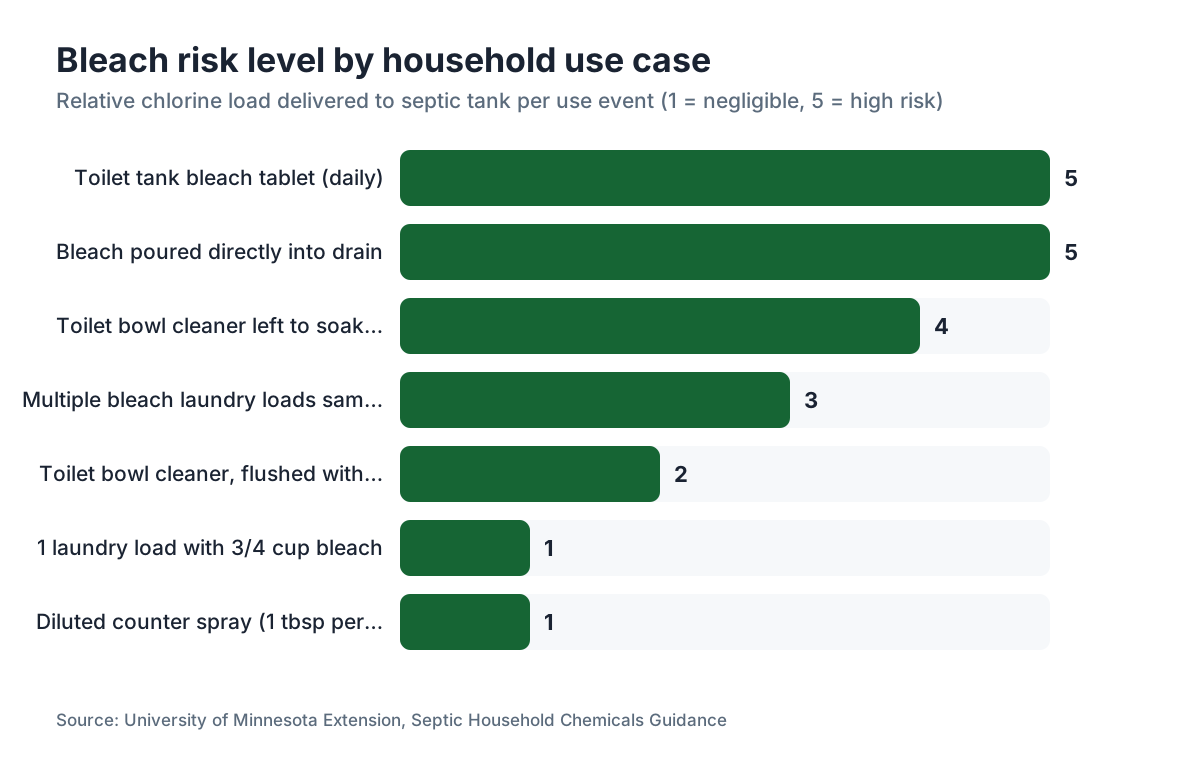
| Use case | Bleach amount | Risk level |
|---|---|---|
| Laundry (1 load, cold or warm) | 3/4 cup in 15-20 gal wash water | Very low |
| Wiping counters, diluted spray | <1 tbsp per quart of water | Very low |
| Toilet bowl cleaner (flush quickly) | 1/4 cup, flushed within 5 min | Low |
| Toilet bowl cleaner (left to soak) | 1/4-1/2 cup, sitting 15-30 min | Moderate |
| Cleaning a septic tank lid or risers | 1+ cup undiluted, poured to drain | High |
| Disinfecting well after contamination | Several gallons | Very high |
The University of Minnesota Extension, which puts out some of the most usable applied guidance on septic-safe household products, suggests keeping total daily bleach input under 5 tablespoons (about 2.5 oz) per person per day as a conservative working limit [5]. Most families doing normal laundry and surface cleaning stay well under that.
The danger zone is the big disinfecting job. Sanitizing a mudroom after a flood, killing mold in a crawlspace drain, shocking a well. Those projects can dump multiple gallons in a single day. That volume can crash tank bacteria for a stretch, and in a smaller or already stressed system, it can measurably drag down effluent quality for days or weeks.
Which household cleaning products are more dangerous than bleach?
Bleach hogs the attention, but for everyday use it isn't the worst thing going into your tank. A few other categories do more damage.
Antibacterial soaps with triclosan or triclocarban resist biodegradation and, in lab settings, cut microbial diversity at low concentrations [6]. The FDA banned triclosan from over-the-counter hand soaps in 2016, so most products reformulated, but old stock and some dish soaps still carry it. Check the label.
Garbage disposals beat bleach as a septic problem in most homes. Grinding food waste floods the tank with organic solids that anaerobic bacteria can't process fast enough, so sludge builds quicker. The Consortium of Institutes for Decentralized Wastewater Treatment (CIDWT) notes that homes with garbage disposals can need pumping up to 50% more often [7].
Things that should never go down a septic-served drain:
- Paint thinner, turpentine, acetone
- Prescription medications (they pass through bacterial digestion largely intact)
- Drain cleaners with lye or sulfuric acid (more on this below)
- Motor oil or any petroleum product
- Large quantities of alcohol-based sanitizers
Bleach used normally sits lower on my worry list than any of these. If a homeowner asked me what to cut first, I'd tell them to ditch the garbage disposal before I'd tell them to stop doing laundry.
Can you use Drano with a septic system?
An occasional dose to clear a real clog is unlikely to cause lasting harm, but weekly use is a bad idea. That's the short version. Here's why.
Drano Max Gel and most Drano products use sodium hydroxide (lye) and sodium hypochlorite as their active chemistry, plus aluminum chips that generate heat and hydrogen gas when they hit the lye. The lye cuts hair and grease. The problem for a septic system is twofold: the high pH (lye often runs above pH 13) can denature bacterial enzymes, and the heat-producing reaction can briefly spike local temperatures enough to stress organisms in the pipe and inlet zone.
SC Johnson, which makes Drano, says its products are safe for septic systems when used as directed, and Drano Septic Max carries that claim outright. Septic operators tend to be more cautious. An occasional use to break a genuine clog usually causes no lasting damage, because the product dilutes and largely neutralizes before it reaches the tank. Reaching for it every week as a maintenance habit is where people get burned.
For a clog in a septic-served home, a mechanical snake or hydro-jetting beats any chemical drain cleaner. It clears the blockage with zero chemistry landing in your tank. That might mean calling a plumber, but it's the right move if clogs keep coming back. Recurring clogs can also point to a deeper problem, so a septic tank inspection makes sense if you're reaching for Drano more than once a year.
What does the EPA say about chemicals in septic systems?
The EPA SepticSmart program, run through the Office of Water, tells homeowners to be careful about what they flush or pour down a drain, and specifically to keep out paint, varnishes, thinners, waste oil, photographic solutions, pesticides, herbicides, and antifreeze [2].
On household cleaners, the EPA stops short of banning bleach and focuses on quantity and frequency instead. Its drain field guidance also flags something that gets ignored: water conservation directly reduces system stress. Three loads of laundry back to back on a Saturday can hydraulically overload a drain field even with zero bleach in the mix [12].
State rules vary in ways worth knowing. Minnesota Rules Chapter 7080, which governs individual sewage treatment systems, doesn't prohibit bleach but does require systems to maintain adequate biological treatment [8]. Wisconsin and Washington (Chapter 246-272A WAC) both require homeowners to avoid adding anything that inhibits biological treatment, language broad enough to cover heavy chemical use [9]. None of them set a specific bleach concentration limit for household use. That absence tells you the regulators consider normal household amounts below the line worth regulating.
If you run a septic service business and track which accounts have had chemical-related complaints, a note in the job history saves time on the next visit. Tools like SepticMind attach those notes to property records so the next technician knows what they're walking into.
Does bleach affect the drain field more than the tank?
The tank gets most of the conversation, but your leach field has its own microbial ecosystem that matters just as much. Under normal use, bleach hurts the tank first, since most of the chlorine reacts with organic matter before it ever leaves the tank.
The biomat, a dark gelatinous layer that forms at the soil-trench interface, is bacteria and their byproducts. It sounds gross. It's also what filters pathogens and processes nutrients before effluent reaches groundwater. Disrupt it and effluent either races through too fast or the field fails outright.
Under normal household bleach use, chlorine residuals reaching the drain field usually sit at or below detection limits, because hypochlorite reacts with organic matter in the tank and dilutes further in the effluent. A North Carolina State study of septic effluent found chlorine residuals from homes using normal household products below 0.1 mg/L, well under the level tied to biomat disruption [3].
Heavy bleach use rewrites that. Push elevated chlorine into the drain field and you slow the biomat's function. A struggling field shows up as wet spots in the yard, sewage odors near the trenches, or sewage backing up indoors. Those signs mean more than a bacteria additive. They usually mean a professional assessment and possibly septic system repair.
The practical takeaway is simple. Keep bleach use moderate at the source. Whatever goes down the drain eventually reaches the field.
Do septic tank bacteria additives help after bleach exposure?
Not much, and the evidence is weak. Every hardware store sells bottles of bacterial additives, and the marketing promises they replace bacteria killed by bleach. The data doesn't back that up for a normal system.
The EPA has reviewed septic additives and found that biological additives introduce bacteria or enzymes to enhance breakdown, with some limited evidence of short-term benefit but no conclusive evidence they are necessary for a normally functioning system [2]. The National Environmental Services Center at West Virginia University says the same thing a different way: because tanks re-seed continuously from incoming waste, bacterial populations recover on their own after a chemical insult unless the exposure was extreme and sustained [10].
If you dumped a large quantity of bleach and you're worried, these steps help more than any bottle:
- Stop sending more bleach down for at least two to four weeks.
- Cut overall water use to give the tank time to stabilize.
- If it's been three or more years since a pump, schedule a septic tank pump out. Less accumulated sludge gives recovering bacteria more room.
Additives aren't always a waste. Some aerobic treatment units specify certain additive types in their maintenance requirements. But as a general recovery tool after bleach? Save the $15 and put it toward a pump-out.
Practical rules for using bleach safely in a septic household
Here's what actually protects your system without making you stop cleaning your house.
Spread it out. Instead of five bleach laundry loads on Saturday, do one or two a day through the week. The tank gets time to dilute and process each dose before the next one lands.
Flush promptly. With a bleach-based toilet bowl cleaner, swish and flush within five minutes. The longer concentrated bleach sits in the bowl, the bigger the concentration spike that hits the inlet.
Dilute before disposal. Leftover cleaning solution goes down heavily watered down. A cup of bleach in five gallons of water sends a far weaker dose to the tank than a cup poured neat.
Skip direct application. Never pour bleach straight into a drain, toilet, or cleanout as a treatment or freshener. There's no benefit, and it's a concentrated hit with no dilution buffer.
Watch your water. On big-project days, use less water overall. Fewer flushes, shorter showers. Lower hydraulic load helps the tank absorb the chemical load.
Know your tank's health. A stressed tank (no pump in five-plus years, past effluent backup, a failing field) reacts harder to chemical insults. Get a septic tank inspection and fix the root problem. A sick system needs less chemical stress, not more.
Regular septic tank cleaning on schedule, usually every three to five years for most households, is the single best thing you can do for resilience. A clean tank with a healthy bacterial population handles far more than a system packed with five years of sludge.
When should you call a professional instead of guessing?
Call a pro the moment symptoms point past the toilet bowl. If you landed here because something's already off, here's how to sort it out.
Signs of a biological problem in the tank (bleach-related or not):
- Slow drains throughout the house
- Gurgling from drains or toilets
- Sewage odor inside or near the tank
- Unusually green or wet grass over the drain field
- Sewage surfacing in the yard
None of these prove bleach killed your bacteria. They could mean a full tank, a clogged baffle, a broken pipe, or a failing field. An inspection is the only way to know. A technician pumps the tank, checks baffles and the inlet and outlet, looks at the distribution box, and probes the field. That tells you whether you're facing a chemical issue, a structural one, or an overdue pump-out.
Operators running a service business benefit from tracking which properties have had chemical-related calls. SepticMind's property management tools let you log that detail and surface it automatically at the next scheduled visit, so the technician knows the story before arrival.
A failing drain field is where costs jump. Repair or replacement runs $3,000 to $15,000 or more depending on soil and system type [11]. A routine pump-out costs $300 to $600 every few years [11]. The math on prevention isn't close. See how often to pump septic tank for the full timing breakdown.
Frequently asked questions
Can you use bleach with a septic system?
Yes, in normal household quantities. Washing clothes, wiping counters, and cleaning toilets with standard amounts of bleach won't harm a healthy septic system. The bleach gets heavily diluted before it contacts the tank's bacteria. The problem is high-concentration or high-frequency use: scrubbing with a cup of undiluted bleach repeatedly, or using bleach for large disinfecting projects that send multiple cups down the drain at once.
Is bleach harmful to septic systems?
In large quantities, yes. Bleach (sodium hypochlorite) is a biocide that kills the bacteria your tank needs to process waste. At normal household use levels, the dilution keeps bacteria populations healthy. Above roughly 1 mg/L in the tank, nitrifying bacteria start getting inhibited, and the anaerobic digesters in the sludge layer are even more sensitive. Heavy or repeated concentrated use can slow digestion and speed up sludge buildup.
Can you use Drano with a septic system?
An occasional use to clear a real clog is unlikely to cause lasting harm, since the lye-based chemistry gets neutralized and diluted as it works. That said, most septic professionals prefer mechanical methods (a snake or hydro-jetting) because they clear clogs without any chemistry reaching the tank. Using Drano or similar drain cleaners regularly as a maintenance habit is a bad idea for any septic system.
How much bleach is safe to use with a septic tank?
Most extension programs use a working limit of about 5 tablespoons (2.5 oz) of liquid chlorine bleach per person per day as a conservative threshold. Normal laundry (3/4 cup per load) spread across the week falls well under this. The risk rises sharply when you send more than a cup of undiluted bleach down in a short window, or do large disinfecting projects that total multiple cups in a single day.
What happens if you put too much bleach in a septic tank?
A large bleach dose can temporarily reduce the tank's bacteria, slowing solid digestion. In mild cases, the tank re-seeds itself within days to weeks as new bacteria arrive with incoming waste. In severe cases, digestion slows enough that solids build faster, you need more frequent pumping, and if elevated chlorine reaches the drain field, it can disrupt the biomat. Stopping bleach use and scheduling a pump-out are the best recovery steps.
Do septic-safe bleach alternatives actually work?
Hydrogen peroxide-based cleaners and oxygen bleach (sodium percarbonate) are gentler on septic bacteria than chlorine bleach. Hydrogen peroxide breaks down into water and oxygen and has a much shorter active life in wastewater. Oxygen bleach is slower-acting and less concentrated. Both are reasonable choices for routine cleaning if you want to reduce chlorine load, though at normal household bleach volumes the practical difference is small.
Can you pour bleach water down the drain with a septic tank?
Small amounts of diluted bleach solution (a cleaning bucket with a tablespoon or two of bleach in a gallon of water) are fine to pour down the drain. The key word is diluted. Never pour a cup or more of undiluted bleach directly into a drain or toilet at once. Spreading disposal over time and adding extra water helps the tank handle the dose without a concentration spike reaching the bacterial layer.
Is it safe to use bleach tablets in the toilet tank if you have a septic system?
Toilet tank bleach tablets are a real concern for septic homeowners. They release a slow dose of chlorine with every flush, creating chronic low-level exposure. It isn't a single large hit, but it's relentless. Several septic extension programs recommend against them. If you want a clean bowl, use a toilet brush with a small amount of bleach cleaner, then flush quickly. That's a far smaller total chlorine load.
How long does it take for septic bacteria to recover after bleach exposure?
After a moderate bleach event (say, half a cup in one use), populations usually recover within days, because the tank continuously receives new bacteria from household waste. After a heavy exposure (multiple cups or a full bottle), recovery can take two to four weeks. Stop using bleach entirely for three to four weeks, cut overall water use, and if the system was already stressed, schedule a pump-out to give bacteria room to rebuild.
Are there drain field risks specifically from bleach?
Yes, though they're secondary to tank risks. Chlorine that reaches the drain field can disrupt the biomat, the bacterial layer at the soil-trench interface that filters pathogens. Under normal household bleach use, chlorine residuals in septic effluent are typically too low to cause measurable biomat damage. Heavy or sustained bleach use raises residuals enough to be a concern. A disrupted biomat can either slow down (field floods) or fail to filter adequately (groundwater risk).
What cleaning products are safest for septic systems?
Plain soap, baking soda, and vinegar are the safest options. Among commercial products, plant-based surfactant cleaners and enzyme-based drain cleaners are lower risk than chlorine bleach or quaternary ammonium compounds. Avoid antibacterial products with triclosan (largely phased out but still around in some products), avoid anything with phenol or formaldehyde, and go easy on liquid fabric softeners. Normal amounts of phosphate-free dish soap and laundry detergent are fine.
Should I use a septic tank additive after using a lot of bleach?
The EPA and most university extension programs say biological additives are not necessary for normally functioning systems, because tanks re-seed naturally from incoming waste. If you're concerned after heavy bleach use, the more effective steps are stopping bleach input for a few weeks, reducing water use, and scheduling a pump-out if it's been more than three years. Additives may offer marginal short-term benefit, but there's no strong evidence they speed recovery meaningfully.
Does laundry bleach hurt a septic system?
Laundry bleach at normal use levels (3/4 cup per load, diluted in 15-20 gallons of wash water) is very unlikely to harm a healthy septic system. The dilution is large enough that chlorine concentrations reaching the tank stay well below harmful levels. The issue arises if you do multiple bleach loads back to back in a single day, which also sends a large hydraulic surge that can stress the drain field independent of the bleach.
Sources
- EPA, "Septic Systems Overview": Typical residential septic tanks hold 1,000 to 1,500 gallons; EPA overview of how septic systems function.
- EPA SepticSmart, "What Not to Put Down the Drain": EPA SepticSmart states occasional use of bleach in normal household quantities is not likely to harm your system, and advises avoiding chemicals such as paint, varnishes, thinners, waste oil, pesticides, and antifreeze.
- NC State Extension, "Septic System Effluent Quality": Chlorine residuals in septic tank effluent from homes using normal household products were below 0.1 mg/L, below biomat disruption thresholds.
- NSF International, "NSF/ANSI Standard 40: Residential Wastewater Treatment Systems": NSF/ANSI 40 sets chlorine residuals in aerobic treatment unit effluent at 1 mg/L as a performance threshold.
- University of Minnesota Extension, "Are Household Chemicals Harmful to Septic Systems?": University of Minnesota Extension recommends keeping total daily bleach input under 5 tablespoons (about 2.5 oz) per person per day as a conservative working limit.
- FDA, "Antibacterial Soap? You Can Skip It, Use Plain Soap and Water": FDA banned triclosan from over-the-counter hand soaps in 2016; triclosan is a persistent compound that reduces microbial diversity.
- Consortium of Institutes for Decentralized Wastewater Treatment (CIDWT), "Model Decentralized Wastewater Practitioner Curriculum": Homes with garbage disposals may require pumping up to 50% more frequently due to increased solids loading.
- Minnesota Pollution Control Agency, "Minnesota Rules Chapter 7080: Individual Sewage Treatment Systems": Minnesota Rules Chapter 7080 requires individual sewage treatment systems to maintain adequate biological treatment.
- Washington State Department of Health, "Chapter 246-272A WAC: On-Site Sewage Systems": Washington Chapter 246-272A WAC requires homeowners to avoid adding anything that inhibits biological treatment in on-site sewage systems.
- National Environmental Services Center, West Virginia University, "Septic System Additives": Because tanks continuously re-inoculate from incoming waste, bacterial populations recover on their own after a chemical insult unless exposure was extreme and sustained; biological additives are not necessary for normally functioning systems.
- HomeAdvisor / Angi, "How Much Does Drain Field Repair Cost?": Drain field repair or replacement costs $3,000 to $15,000 or more depending on soil conditions and system type; routine pump-out costs $300 to $600.
- EPA, "A Homeowner's Guide to Septic Systems": EPA guidance advises that water conservation reduces hydraulic stress on septic systems and that avoiding excess water use matters on days chemicals are used.
Last updated 2026-07-09