Biotech septic tank treatment: what actually works and what doesn't
By the SepticMind Editorial Team
TL;DR
- Biotech septic tank treatments add live bacteria, enzymes, or both to your tank to help break down solids.
- The EPA says a healthy tank already has enough native bacteria and that additives are generally unnecessary.
- Some products show modest lab benefits, but no additive removes the need for pumping every 3 to 5 years.
- Save your money unless your tank just took a hit from antibiotics or a heavy bleach event.
What is biotech septic tank treatment?
Biotech septic tank treatment is a catch-all term for products that add biological agents, usually bacteria, enzymes, or a mix of both, to your septic tank to speed up waste breakdown. The idea rests on one fact: your tank runs on a living microbial community that digests solids before the liquid moves to the leach field. Add more or better microbes, the pitch goes, and that digestion runs faster.
Most products fall into one of three buckets. Bacterial additives contain dormant or freeze-dried bacteria, usually Bacillus species, that are supposed to colonize the tank and outwork sluggish native populations. Enzyme additives skip the bugs and deliver the catalysts directly: protease, lipase, cellulase, and their cousins, aimed at pre-digesting proteins, fats, and plant fiber. Combo products do both. A few brands, sometimes sold as biowonder septic tank treatment or names like it, pack all three enzyme types with Bacillus strains and price themselves as the premium option.
The market is big and lightly policed. You can buy these products at hardware stores, big-box chains, and online, anywhere from about $8 for a single-use pod to $60 or more for a monthly subscription pack. The claims on the packaging swing hard, from "reduces pumping frequency" to "restores failing drain fields." The evidence swings just as hard, and mostly toward nothing. [1]
Does biotech septic treatment actually work?
Here's the honest answer: sometimes a little, never dramatically, and never as a stand-in for pumping.
The EPA's SepticSmart program puts it plainly. Its guidance says "the naturally occurring bacteria needed to treat wastewater are already present" in a working system, and that additives are not necessary to keep a healthy tank running. [2] That's the starting position from the agency that oversees onsite wastewater nationwide.
The research is more mixed. A 2010 literature review published by the Water Environment Research Foundation (now the Water Research Foundation) looked at studies on septic additives and found that most of the ones showing a benefit ran under controlled lab conditions that don't match the messy chemistry of a real household tank. Field studies came back inconsistent. No additive reliably cut sludge buildup enough to stretch pump-out intervals. [3]
There are two moments where these products have a plausible, if small, case. The first is after a heavy antibiotic hit, either from someone in the house on a long course of antibiotics or a large bleach dump during a cleaning emergency. Either one can genuinely crash the bacterial population in your tank. A packet of Bacillus-heavy product afterward can re-seed the community faster than waiting it out. The second is deep cold. Very low temperatures slow bacterial metabolism, and some operators dose a bacterial additive in early spring as a warm-weather jumpstart. Neither use has a randomized trial behind it. Both have plausible biology and a low price tag.
Avoid anything claiming to restore a failing drain field or end the need for septic tank pumping. No enzyme or bacterial product dissolves the non-biodegradable solids that pile up in the bottom of every tank, and none of them fix a drain field sealed with biomat. Those are mechanical problems. They need mechanical fixes. [4]
What does the EPA say about septic tank additives?
The EPA's SepticSmart program is the clearest federal guidance you'll find. It lists adding biological or chemical additives among the things homeowners do not need to do for routine care, and it warns against chemical additives like solvents and acids that can crack the tank or reach groundwater. [2]
The EPA's 2002 Onsite Wastewater Treatment Systems Manual is still the deepest federal technical reference on septic systems. It reviewed additive types and landed on this: biological additives are generally not harmful, but the evidence for their effectiveness in improving treatment or reducing pumping is weak. The manual's own language is worth quoting. It found "insufficient evidence to support the claim that biological additives improve the performance of a properly functioning septic system." [5]
State regulators mostly hold the same line, and a few go further. Wisconsin's Department of Natural Resources says no additive counts as a substitute for routine maintenance, and the state's code requires pump-outs on a schedule no matter what additive you use. [6] Massachusetts Title 5, the most cited state septic code in the country, gives no credit for additive use against required pump-out schedules. [7]
The practical read: if a label hints you can skip or stretch pump-outs by using the product, that label is making a claim the EPA and most state regulators have refused to sign off on.
How do bacterial and enzyme additives differ from each other?
The difference matters because the two types work by different mechanisms and hit different walls.
Bacterial additives contain live or dormant strains. Bacillus species dominate because they form endospores that shrug off drying, heat, and long shelf lives. Once they hit the wet, oxygen-poor guts of a septic tank, they germinate and start eating organic material. The wall they hit is math. Your tank already holds billions of bacteria per milliliter of liquid. A packet delivering millions of colony-forming units is a small drop in a very large bucket. Whether the introduced strains actually outcompete the natives and stick around is an open question most manufacturers haven't studied seriously.
Enzyme additives skip the microbes and deliver the catalytic proteins straight up. Lipases attack fats and grease, proteases go after proteins, cellulases break down plant fiber. Enzymes aren't alive, so they don't compete or colonize. They start working the moment they meet their substrate. The catch is a brutal environment. Enzymes in a septic tank get diluted, consumed, and flushed through within days. One application doesn't give you the sustained action a settled bacterial population could, at least in theory.
Combo products chase both effects at once. Whether the two help each other, or whether the enzymes just degrade before the bacteria get established, is genuinely not well studied. Straight-shooting product developers admit this. The ones who don't deserve a skeptical eye.
| Product Type | Active Ingredient | Works Immediately? | Sustained Action? | Survives Tank Chemistry? |
|---|---|---|---|---|
| Bacterial | Bacillus spores | No (germination lag) | Possibly, if colonization occurs | Generally yes |
| Enzyme | Lipase, protease, cellulase | Yes | No (days) | Partially |
| Combo | Both | Partial | Uncertain | Partially |
| Chemical (acid/solvent) | Varies | Yes | No | Damages tank; avoid | [1][3]
How often should you use a biotech septic treatment?
Most manufacturers say monthly. That schedule tracks sales logic more than science, and you should know that before you subscribe.
If you're going to use a product, quarterly is a more defensible cadence based on the biology. Bacillus spores need days to weeks to germinate and colonize, and enzyme activity fades within days. Monthly dosing keeps something present most of the time, but quarterly still gives you periodic reinforcement and costs a lot less. Some operators who handle low-use vacation homes drop in a single dose at reopening each year, which is also reasonable.
The cases that actually justify heavier dosing are specific. Households with a garbage disposal carry a much higher organic load. Homes with frequent guests or short-term rental traffic spike usage. Post-antibiotic events, as above, genuinely knock the population down. And a system that was just pumped out is rebuilding its bacterial community from close to zero.
A system that gets pumped on schedule doesn't need monthly additive dosing to work. See how often to pump septic tank for the full breakdown on intervals. The native population regulates itself. [2]
Are biotech septic treatments safe for your pipes, tank, and drain field?
Biological additives, meaning bacteria and enzymes, are generally safe for concrete, fiberglass, and plastic tanks, for PVC pipe, and for the soil in a drain field. The EPA's manual notes no documented harm from biological additives, which puts them in a different safety class than chemical additives. [5]
The caveat is enzyme products that carry surfactants. Some enzyme formulas add detergent-like compounds to help the product disperse, and surfactants at high enough concentrations can disturb the biomat layer in a drain field in ways nobody fully understands. If a product's ingredient list shows surfactants or non-ionic dispersants, call the manufacturer and ask whether the formula has been tested in drain field soils specifically.
Water-soluble tablets and pods are the safest format because they carry no solvents. Liquids are fine as long as they're solvent-free. Steer clear of anything with a strong chemical smell, especially solvents like methylene chloride or ketones, which are the chemical additives the EPA flags as harmful. [2]
None of this changes the core point. Safe and effective are two different things. A product can be completely harmless to your system and still do nothing you can measure.
Can biotech treatment rescue a failing septic system?
No product rescues a genuinely failing system, and believing it can is how homeowners end up with a $20,000 drain field replacement instead of the $400 fix they could have made years earlier.
A septic system fails in ways you can spot: sewage backing up into the house, wet spots or odors above the drain field, high effluent in the tank that means the field won't accept liquid. Those are physical problems. Drain field failure most often comes from biomat clogging (a layer of anaerobic bacteria and organic debris that seals the soil pores), hydraulic overload from too much water, or compaction from vehicles driving over the field. Enzyme and bacterial additives can't mechanically unclog packed soil. They can't undo the chemistry that builds biomat. [4]
What these products can sometimes touch is slow, partial clogging in the early stages, before the field has fully quit. Some operators and extension services report anecdotal gains from high-dose bacterial treatments applied during resting periods, where one section of a multi-zone field gets dosed heavily while the other zones carry the load. That's not a validated protocol, and you shouldn't try it without a licensed septic professional in the loop.
If your system shows failure signs, the move is a proper septic tank inspection to find out what's actually wrong, then septic system repair by a licensed contractor. Biotech products don't diagnose anything, and they don't repair anything. [4][5]
What should you look for when choosing a biotech septic product?
The U.S. has no mandatory efficacy testing standard for biological septic additives. That leaves you mostly on your own when you compare products.
Start with what's useful. Products that list specific bacterial species and colony-forming unit (CFU) counts per dose give you something concrete to compare. A product stating 2 billion CFU per dose is putting a measurable number on the label. Peer-reviewed data, even a limited lab study, beats a wall of testimonials. NSF International doesn't currently certify septic additives for efficacy, but some products carry NSF or similar marks for material safety, which at least tells you the formula got an independent look for harm. [8]
Now the noise to ignore. Before-and-after sludge photos aren't controlled experiments. Retail star ratings tell you nothing about whether a product works. "Proprietary blend" with no species or CFU count is a red flag. And any claim that the product reduces required pump-out frequency is one no credible regulator has validated.
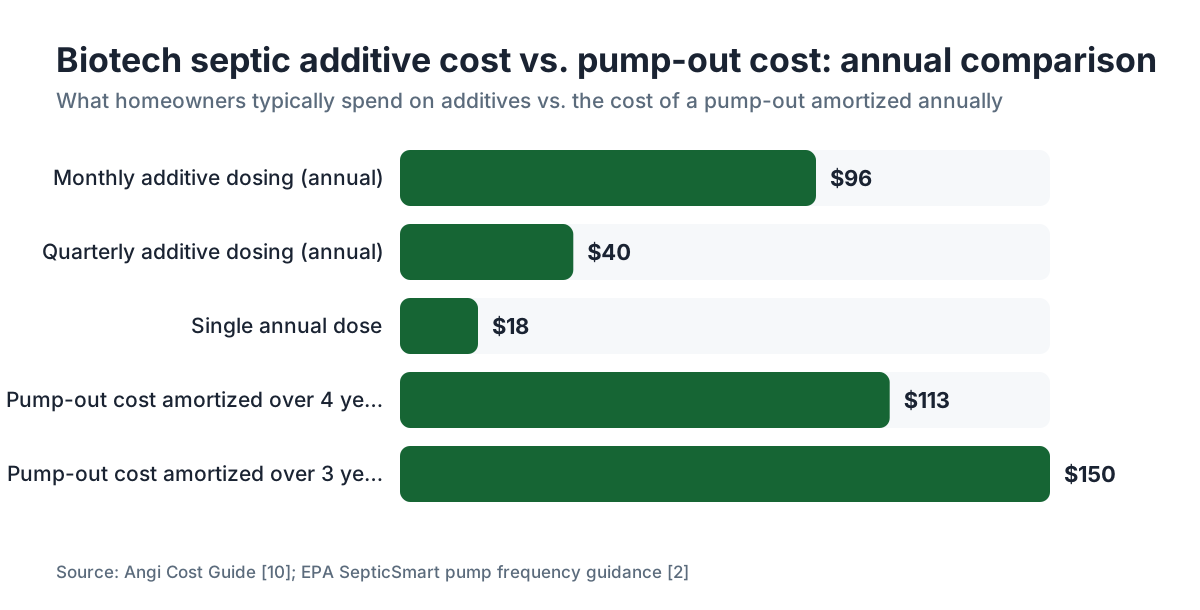
If you want a middle path, pick one mid-range product from a company that lists its bacterial strains, dose it quarterly, and keep a normal septic tank cleaning schedule. You get whatever marginal benefit exists without dropping $100-plus a year on something that may do little.
Operators running many client systems can do something homeowners can't: track which systems use additives and compare pump-out volumes over time. Platforms like SepticMind log maintenance records across a whole customer base, which makes that kind of informal comparison actually workable. [9]
How does biotech treatment compare to regular pumping?
There's no real comparison. Pumping wins every time as the baseline you don't skip.
The EPA recommends pumping a typical residential tank every 3 to 5 years, with the exact interval riding on household size, tank volume, and usage. [2] A standard pump-out runs $300 to $600 in most U.S. markets, though price swings by region and tank depth. [10] That one service physically hauls out the sludge and scum that no biological additive can dissolve.
Biotech treatment isn't a substitute for that. The honest framing is that these products are a supplement that might keep biological activity steady between pump-outs, mostly after disruptive events. Pump-outs are the primary act. Everything else is secondary.
A household that doses a monthly additive but skips pumping for 8 years ends up with a failing system. A household that pumps every 4 years and never touches an additive keeps a working system. The hierarchy isn't close.
For what a full pump-out actually involves and when to book one, see septic tank pumping and septic tank emptying.
What is biowonder septic tank treatment and how does it compare to other products?
Biowonder is one of several branded biotech products that pair multiple Bacillus strains with an enzyme blend, sold mainly for monthly maintenance dosing. It sits in the mid-tier premium slice of the market.
On formulation, biowonder septic tank treatment follows the standard combo approach: bacterial spores for colonization, enzymes for immediate attack on substrate. The marketing leans on multi-strain diversity, the argument being that different Bacillus strains specialize in different organic compounds and together cover more metabolic ground than a single strain.
The multi-strain argument is biologically plausible. Real ecosystems do run on diverse microbial communities, and a tank with a wider metabolic range should, in theory, handle varied waste better. Whether the strains in a bottle actually establish and persist in the competitive tank environment is the question independent research hasn't answered.
Next to a budget single-enzyme product, a combo bacterial-enzyme product like biowonder likely offers a fuller biological approach. Next to a high-CFU single-strain Bacillus product, the multi-strain edge is speculative. Without head-to-head field studies, no honest reviewer can tell you biowonder beats a competitor of similar makeup.
What I can tell you is that the category it represents (multi-strain bacterial plus enzyme, monthly dosing, no chemical carriers) is the safest and most biologically sensible corner of the additive market, even if the actual efficacy of any product in it stays unproven under rigorous field conditions. [3][5]
Do biotech treatments affect neighboring wells or groundwater?
Biological additives, meaning bacteria and enzyme products without chemical carriers, pose minimal groundwater risk. The bacterial strains in commercial septic additives are non-pathogenic Bacillus species that don't persist in groundwater or drinking wells at harmful levels. Enzymes are proteins, and they denature fast in the environment. [5]
The real groundwater threat from septic systems is pathogens and nutrients, mainly nitrogen and phosphorus, escaping through an overloaded or failing drain field. A working system with enough soil absorption and separation distance handles those threats whether or not you use additives. No additive improves or worsens nitrogen or phosphorus treatment in a conventional gravity-flow system. [11]
If you're near a drinking well, the factors that matter are setback distance between your drain field and the well (usually 50 to 100 feet depending on state code), proper system sizing for your household load, and regular pump-outs to head off overloading. Additive use moves none of those numbers in either direction. [6][7]
What maintenance routine should homeowners actually follow?
Here's a plain schedule any licensed septic professional would recognize as sound. Biotech products are optional. Everything else isn't.
Every 3 to 5 years: pump the tank. Have the pumper inspect the baffles, the inlet and outlet tees, and the risers while the lid is off. This is the single highest-impact thing you can do. [2]
Annually: scan for wet spots or unusual grass growth over the drain field, confirm there are no odors near the field or in the house, and check that your risers and lids are intact and reachable. A visual pass takes 10 minutes.
Monthly (optional): if you're going to use a biotech product, this is when you dose it. Don't exceed the recommended amount. More is not better with bacterial additives, and overshooting enzyme concentrations can disturb the tank's natural chemistry.
Anytime: keep wipes out of the toilet (even the "flushable" ones), along with medications, cooking grease, harsh chemical cleaners, and heavy food waste from a garbage disposal. Those are the main enemies of a healthy septic ecosystem, and no additive covers for them.
See any sign of stress, like slow drains, odors, or wet ground over the field, and get a professional septic tank inspection right away instead of reaching for a shock dose. Fast diagnosis always costs less than delayed repair. For the big problems, septic tank repair by a licensed contractor is the answer, not a product. [2][4]
Frequently asked questions
Do biotech septic tank treatments really work?
They produce modest benefits at best, mostly re-seeding a tank after antibiotic or bleach disruption. The EPA says a healthy tank already has enough native bacteria and does not need additives. No product has been proven in rigorous field studies to cut sludge buildup meaningfully or to stretch the time between pump-outs. They aren't harmful, but they aren't magic either.
Can I skip septic pumping if I use a biotech additive?
No. No additive removes the inorganic and non-biodegradable solids that pile up in every tank over time. The EPA recommends pumping every 3 to 5 years regardless of additive use. Skipping pumps while leaning on additives is one of the more reliable ways to end up with a failed drain field and a repair bill that typically runs $3,000 to $10,000 or more.
How often should I add biotech treatment to my septic tank?
Manufacturers say monthly, but quarterly is defensible and far cheaper. The exception is post-shock situations, like after a long antibiotic course or a heavy bleach event, where monthly dosing for 2 to 3 months helps rebuild the bacterial community. For normal, well-functioning systems, monthly dosing is a sales cadence more than a biological need.
What is the best biotech septic tank treatment?
There's no independent, field-validated ranking. Look for products that list specific bacterial species (usually Bacillus subtilis, B. licheniformis, or similar), give a colony-forming unit count per dose, and contain no chemical solvents or strong surfactants. Combo products with both enzyme and bacterial components cover more metabolic ground than enzyme-only or single-strain products, though the practical difference in a real tank is uncertain.
Are enzyme-only septic treatments better than bacterial ones?
Enzyme products work immediately on contact but fade within days. Bacterial products take longer to activate but can provide sustained action if the strains colonize successfully. Combo products chase both. For a single-dose recovery situation, an enzyme product gives faster initial action. For ongoing monthly maintenance, a bacterial or combo product makes more biological sense.
Is biowonder septic tank treatment EPA approved?
The EPA doesn't approve or certify septic tank additives for efficacy. Its SepticSmart program says biological additives are generally unnecessary for a functioning system and recommends against chemical additives. Products like biowonder aren't endorsed by the EPA. They're legal to sell because biological additives aren't classified as harmful, but legal and effective are two different things.
Can biotech septic treatment fix a failing drain field?
No. Drain field failures come from physical biomat clogging, soil compaction, hydraulic overload, or some mix of those. No enzyme or bacterial product can mechanically unclog packed soil or reverse the chemistry that builds biomat. A failing field needs professional diagnosis and likely septic system repair or field replacement. Using additives to dodge that diagnosis just delays the fix and makes it worse.
Will septic additives harm my well water or groundwater?
Non-pathogenic bacterial and enzyme additives, the type used in biotech products, pose minimal groundwater risk. The Bacillus strains in them don't persist at harmful concentrations in groundwater. Chemical additives (solvents, acids) are a different story and should be avoided entirely. Groundwater protection depends on proper system sizing, adequate setback from wells, and regular pump-outs, not on additive choice.
How long does it take for biotech septic treatment to work?
Enzyme components act within hours of meeting organic material. Bacterial components need days to germinate from spore form and weeks to build meaningful colonization, if they do at all. Most manufacturers suggest giving a new product 30 to 60 days before you judge results. In practice, since there's no easy way to measure in-tank biology at home, you'll mostly be going on faith.
What should I avoid putting down the drain if I use a biotech septic treatment?
The same things you should always avoid: antibacterial soaps used heavily, large bleach doses, chemical drain cleaners, medications, cooking grease, and wipes of any kind. These harm the native bacterial population that does the real work. If you're going to spend money on a biotech product, protect that investment by protecting the native ecosystem it's supposed to supplement.
Do I need biotech treatment after my tank is pumped?
A newly pumped tank rebuilds its bacterial population on its own, from the small residual left after pumping and from fresh waste input. You don't need to add a product after every pump-out. If you want to speed the re-seeding, one or two doses of a bacterial product in the month after a pump-out is the most biologically reasonable use for these products.
Are there state regulations that require or prohibit septic additives?
No state currently requires biotech additive use. Several states, including Wisconsin, prohibit certain chemical additives and make clear that biological additives don't substitute for required pump-outs. Massachusetts Title 5 gives no allowance for additive use as a maintenance credit. Always check your state's onsite wastewater code; the relevant authority is usually your state's environmental or health agency.
How much does biotech septic treatment cost per year?
Monthly dosing plans typically run $50 to $120 per year depending on the product and tank size. Single-use pods from hardware stores run $8 to $20 each. Against the $300 to $600 cost of a pump-out, annual additive spend is modest. The real question is whether any benefit justifies it for a well-maintained system, and the honest answer is probably not for most households.
Can I make a homemade biotech septic treatment?
Some homeowners add active dry yeast or flush products like buttermilk to introduce bacteria. These do no harm, and yeast (Saccharomyces cerevisiae) does produce enzymes relevant to organic breakdown. The concentration and strain diversity is far below even a budget commercial product. There's no evidence homemade preparations match commercial ones in CFU counts or enzyme activity, and equally no evidence they cause problems.
Sources
- EPA, Septic Systems (SepticSmart) overview: Biological and chemical additives marketed for septic systems vary widely in claims and are not required for a properly functioning system.
- EPA SepticSmart Program: The EPA SepticSmart program states that the naturally occurring bacteria needed to treat wastewater are already present in a working system and recommends pumping every 3 to 5 years.
- Water Environment Research Foundation, Review of Septic Tank Additive Performance (2010): A literature review found that most studies showing benefit from septic additives were conducted under controlled lab conditions and that field studies showed inconsistent results.
- EPA, Septic Systems: How Your Septic System Works: Drain field failures are physical (biomat clogging, hydraulic overload, compaction) and are not resolved by biological or enzyme additives.
- EPA, Onsite Wastewater Treatment Systems Manual (EPA/625/R-00/008, 2002): The manual concluded there is insufficient evidence to support claims that biological additives improve performance of a properly functioning septic system, and that biological additives are generally not harmful.
- Wisconsin Department of Natural Resources: Wisconsin requires pump-outs on a schedule and does not treat additives as a substitute for routine maintenance.
- Massachusetts Department of Environmental Protection, Title 5 Regulations (310 CMR 15.000): Massachusetts Title 5 makes no provision for additive use as a maintenance credit toward required pump-out schedules.
- NSF International: NSF does not currently certify septic additives for efficacy; some products carry material safety certifications that confirm they have been reviewed for harm.
- SepticMind, Septic Service Operations Software: SepticMind allows operators to log maintenance records across a customer base, enabling comparison of pump-out volumes over time across systems using and not using additives.
- Angi, Septic Tank Pumping Cost Guide: Standard septic pump-out costs $300 to $600 in most U.S. markets, with variation based on region, tank depth, and tank size.
- EPA, Nutrient Pollution: Sources and Solutions: No biotech additive improves nitrogen or phosphorus treatment in a conventional gravity-flow septic system; nutrient removal depends on system design and soil conditions.
Last updated 2026-07-10