California septic vs. sewer: which costs less and works better?
By the SepticMind Editorial Team

TL;DR
- In California, septic systems cost $10,000 to $30,000 to install but carry no monthly sewer bill.
- Sewer connections run $5,000 to $30,000 in fees plus $50 to $150 a month.
- Rural parcels usually have no sewer option.
- Urban and suburban lots often must connect once sewer reaches the street.
- The right choice hinges on lot size, soil, local ordinance, and how long you'll stay.
What is the actual difference between septic and sewer in California?
Septic and sewer solve the same problem two different ways: getting wastewater away from your house without poisoning groundwater or your neighbors.
A septic system is self-contained on your property. Wastewater flows from the house into a buried tank, where solids settle and bacteria break them down. The clarified liquid (effluent) flows out to a leach field, filters through soil, and recharges groundwater. The whole chain sits on your lot. You own it. You maintain it. You pay to pump it every three to five years.
A public sewer is a shared pipe network owned by a city or sanitation district. Your house connects to a lateral that runs to the street main, and effluent travels from there to a regional treatment plant. You pay a monthly fee. Nobody comes to your house unless the lateral clogs.
About 20 percent of California homes run on septic, concentrated in rural counties like Shasta, Trinity, Tuolumne, and parts of Riverside and San Bernardino [1]. The rest connect to sewers. Neither system wins on paper. The best one for a given parcel comes down to what's available, what the soil supports, and what your local agency demands.
How do installation costs compare in California?
Here the comparison gets genuinely complicated, because California's permitting, soil, and labor costs shove both systems toward the top of national ranges.
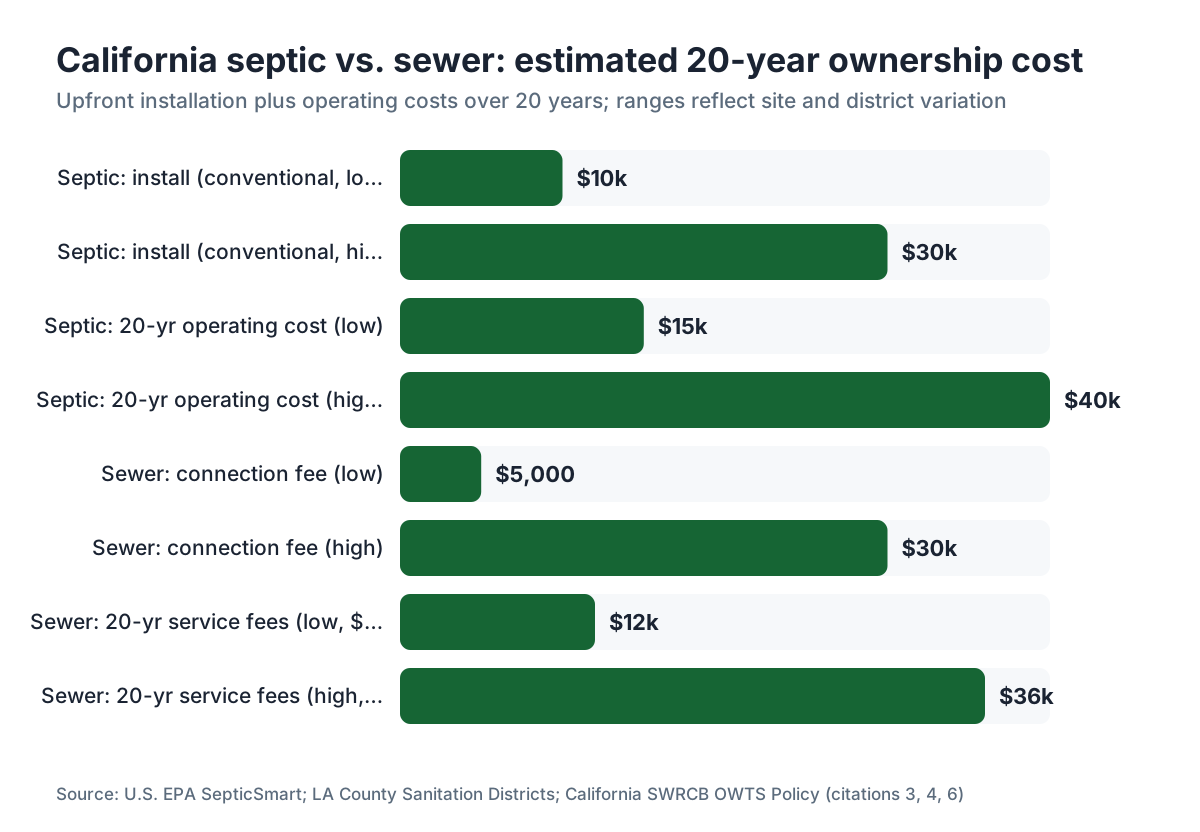
Septic installation in California typically runs $10,000 to $30,000 for a conventional gravity-fed system on a parcel with decent perc rates [2]. Need a mound system or an advanced treatment unit (ATU) because your soil failed percolation? You're easily at $25,000 to $60,000 or more. The cost to install a septic system swings that hard because site conditions drive almost all of it: depth to groundwater, slope, setback distances from wells and property lines, and county-specific design rules under the California Onsite Wastewater Treatment System (OWTS) Policy [3].
Sewer connection has a different shape. You pay a connection fee (sometimes called a capacity charge or sewer assessment) to the local district, plus the cost of running a lateral from your foundation to the street main. In California, connection fees alone range from about $5,000 to over $30,000 depending on the district [4]. The Los Angeles County Sanitation Districts, for example, publish fees that vary by zone and land use. Add $3,000 to $10,000 for the lateral trench and plumbing.
The honest summary is short. If sewer is already at the street, connecting usually beats building a new septic system upfront. If sewer is not nearby, the cost of extending a main makes it a non-option for one homeowner.
See our detailed breakdown of septic tank installation costs if you're pricing out a new system.
What do ongoing costs look like year over year?
Upfront cost is half the story. Over a 20-year ownership window, operating cost usually matters more.
| Cost item | Septic (annual avg.) | Sewer (annual avg.) |
|---|---|---|
| Monthly service fee | $0 | $600 to $1,800/yr |
| Pumping (every 3 to 5 yrs) | $200 to $600/yr amortized | $0 |
| Inspection | $100 to $300 every 1 to 3 yrs | Not required |
| Repairs (tank, drain field) | $500 to $5,000 when needed | Lateral only |
| Replacement reserve | $500 to $1,000/yr suggested | Not applicable |
| Rough 20-yr total | $15,000 to $40,000 | $12,000 to $36,000 |
Sewer looks cheaper to operate in that table, and for most urban households it is. But those service fees compound. A household paying $100 a month spends $24,000 over 20 years in fees alone, before any lateral repair. A septic household that pumps faithfully every four years and dodges a drain field failure spends less.
Here's the catch. Septic failures are unpredictable and expensive. A drain field replacement in California often costs $15,000 to $40,000 by itself [2]. Sewer customers never face that, though a failed private lateral from house to street can still cost $5,000 to $15,000 to replace.
For septic owners, the single best financial move is to stick to a pump-out schedule and get a septic tank inspection every two to three years. Catching a bad baffle early costs a few hundred dollars. Ignoring it until the leach field dies costs tens of thousands.
Does California law require you to connect to sewer if it's available?
Yes, in most cases. California Health and Safety Code Section 4760 requires property owners to connect to a public sewer within 200 feet of their property line once the sewer becomes available, unless a local agency grants an exception [5]. Most counties enforce this through their environmental health departments.
The usual trigger is a new sewer main going in on your street, or an existing system extending within that 200-foot line. Once you get a connection notice, you generally have a set window (often 60 to 90 days for a failing system, 12 months or longer for a working one) to hook up.
Exceptions exist, but they're narrow. If connection would cause real financial hardship, if the terrain makes it physically impractical, or if your system works fine and poses no public health risk, some districts grant a variance or extension. Get that in writing.
This bites in fast-growing parts of Southern California and the Bay Area, where sewer infrastructure keeps pushing into once-rural subdivisions. People who bought a rural lot expecting to keep their septic system have been blindsided by mandatory connection orders a decade later. Check your local sanitation district's capital improvement plans before you buy.
The State Water Resources Control Board's OWTS Policy [3] sets the statewide floor for onsite system rules, but counties can and do go stricter. Los Angeles County, for one, layers its own OWTS ordinance on top of the state rules.
How does California's OWTS Policy affect septic owners?
The California State Water Resources Control Board (SWRCB) adopted the statewide Onsite Wastewater Treatment System (OWTS) Policy in 2012 and updated it in later years. It covers all conventional and alternative septic systems statewide and sets minimum standards for siting, design, installation, operation, and inspection [3].
The policy splits California into five tiers by groundwater and water quality risk. Tier 0 covers existing systems in low-risk areas with light oversight. Tier 5 covers systems in high-risk areas (near impaired water bodies, high groundwater, or densely built lots) with strict management requirements. The SWRCB states the OWTS Policy is intended to "protect public health and water quality while allowing for the continued use of onsite systems where they can be safely operated."
For a homeowner, the practical effect is this: your county environmental health department runs a Local Agency Management Program (LAMP) that has to comply with the state policy. Before you install, replace, or substantially repair a system, you need a county permit. That permit triggers a site evaluation: percolation test, soil profile, and setback measurements from wells, property lines, and surface water.
In a Tier 4 or 5 management zone (common near coastal watersheds and the Lake Tahoe basin), you may be forced to install an ATU with nitrogen reduction instead of a standard system, plus mandatory periodic inspections and reporting.
Which system is better for property value in California?
The honest answer is that it depends on the market, and the data is mixed.
In urban and suburban California, being on sewer is neutral to slightly positive for buyers. Most buyers in those markets have never thought about septic and just assume sewer. A septic system on a suburban lot can spook a buyer, especially if the system is old or the buyer's agent doesn't understand how onsite systems work.
In rural California, septic is the norm. Buyers in Calaveras County or the El Dorado foothills expect it. A well-maintained system on a large lot with good soil is no liability. A failing system, or one with a recent failed inspection, absolutely is.
The real value issue is disclosure. California requires sellers to disclose known material defects, and a failing or aging septic system qualifies. If a septic tank inspection during escrow turns up problems, buyers renegotiate or walk. A sewer property has one fewer inspection point that can blow up a deal.
Lenders financing rural septic properties routinely require an inspection as a loan condition, especially for FHA and VA loans. A system that fails inspection can kill a deal even when the seller agrees to fix it, because California remediation timelines can stretch months once you factor in permit processing.
So, for sellers: get a pre-listing inspection. Know what you have. Fix what you can. Buyers relax around a documented maintenance history and tense up around uncertainty.
What are the environmental differences between septic and sewer?
Both systems protect public health when they work. The failure modes and footprints differ.
A properly sited, maintained septic system recharges water into the ground. EPA's septic program notes that a functioning system returns treated wastewater to local groundwater, which can support water supplies where recharge matters [6]. In water-scarce California, that counts for something.
But septic systems that are failing, waterlogged, or badly sited can discharge pathogens and nutrients (nitrogen and phosphorus especially) into groundwater or surface water. California's Central Coast, where shallow groundwater sits under farmland, has documented nitrate contamination tied in part to legacy septic systems in dense rural communities [7].
Public sewer plants must meet National Pollutant Discharge Elimination System (NPDES) permit limits before discharging to surface water. Modern tertiary treatment is genuinely good at stripping out pathogens. But plants fail too: combined sewer overflows during heavy rain, equipment breakdowns, and permit violations all happen. EPA tracks Clean Water Act enforcement actions that document plant failures nationwide [9].
Neither system is inherently cleaner. What matters is whether it's designed, maintained, and monitored for its specific site.
For California septic owners worried about their footprint, the highest-impact move is routine maintenance: keep solids out of the drain field by holding to a pump-out schedule and stop flushing products that kill drain-field bacteria.
Can you switch from septic to sewer (or vice versa) in California?
Switching from septic to sewer is the common direction, and it's generally clean if sewer is at the street. You apply to the sanitation district, pay the connection fee, hire a licensed contractor to run the lateral and abandon the tank per local rules (usually pump it and either crush it in place or fill it with slurry), then hook up. The old tank has to be decommissioned under a county permit.
Switching from sewer back to septic is much harder, and in most cases not allowed. Once a property is on public sewer, California law doesn't let you disconnect to install an onsite system unless the sewer connection is physically impossible or the district agrees to an exception. That's rare.
One scenario does raise the reverse question: rural properties with a failed septic system, where the owner is hunting for alternatives. If no sewer main exists within 200 feet, the only legal path is repairing or replacing the septic system under county permit. See our article on septic system repair for what that process looks like.
If you manage multiple properties or service accounts in California, SepticMind helps operators track permit timelines, inspection records, and service intervals across a whole customer base, which matters a lot in counties with mandatory LAMP reporting.
What maintenance does each system require in California?
Sewer maintenance is light for the homeowner. Your job is the private lateral from foundation to street main. Keep grease and wipes out of it, scope it every five to ten years, and replace it when it fails. Some California cities (Los Angeles, for one) run lateral repair assistance programs.
Septic maintenance is more involved, and skipping it costs you.
EPA recommends inspecting a septic system at least every three years and pumping it every three to five years, though the interval depends on household size and tank volume [6]. A family of four with a 1,000-gallon tank in California should expect to pump every three to four years. For your specific case, see how often to pump your septic tank.
Beyond pumping, California septic owners should:
- Divert surface water away from the drain field. California's wet winters can saturate a field fast.
- Never plant trees or shrubs over the leach field. Roots are a top cause of septic tank repair calls.
- Keep heavy vehicles off the leach field.
- Use water efficiently. High-flow days (big laundry loads, houseguests) can hydraulically overload a system.
- Know where your tank and field are before any landscaping or grading.
For routine tank work, see septic tank cleaning and septic tank pumping. A few hundred dollars every few years beats tens of thousands for a dead field.
Operators working California accounts should note that some counties (Santa Cruz, Marin, Monterey) run mandatory inspection programs tied to property transfer. Knowing which customers sit in those jurisdictions matters for scheduling. SepticMind's service tracking flags those accounts automatically.
How do you know which system is right for a property you're buying?
Before you close on a California property, nail down five things.
First, confirm what system serves the property right now. Ask the listing agent, call the county sanitation district, and check county assessor data. Listings get this wrong sometimes.
Second, if it's on septic, put an inspection contingency in your offer. A qualified inspector should pump the tank, check the baffles, locate the drain field, and run a load test. Some California counties require this at point of sale anyway. Don't accept a visual-only inspection.
Third, check whether sewer is coming. Call the local sanitation district and ask about capital improvement plans for the neighborhood. If a main is planned for your street in five years, you're facing a mandatory connection and its cost.
Fourth, for septic, ask for the permit history. Every permitted system should have a record at the county environmental health department. No permit record is a red flag: the system may be unpermitted, undersized, or badly sited.
Fifth, understand the soil. Percolation test results from the original permit file tell you whether the drain field was sized for the real conditions. A field designed for loam that's actually sitting in clay is a future problem.
The cost to put in a septic tank is a useful reference if the inspection turns up a failed or absent system and you're negotiating a price cut for replacement.
What about California counties with known septic problems?
A handful of California counties come up again and again in state enforcement and water quality literature, because their septic-heavy communities sit on hydrogeologically sensitive ground.
The Monterey Bay region and Salinas Valley have documented groundwater nitrate problems linked partly to densely packed onsite systems in communities like Castroville. The Central Coast Regional Water Quality Control Board runs active enforcement targeting these areas [7].
The Lake Tahoe basin is one of the most regulated areas in the country for onsite systems. Both California and Nevada enforce stringent OWTS requirements to protect lake clarity. Systems in the basin typically need nitrogen-reducing ATUs and annual inspections [12].
Mammoth Lakes and other Eastern Sierra communities fight high groundwater tables and short operating seasons that stress conventional systems. Mono County and Inyo County environmental health departments carry specific design rules for those conditions.
The Central Valley has a different problem. Many rural communities in Tulare, Fresno, and Kings counties rely on septic plus domestic wells in areas where groundwater is already fouled by agricultural runoff. The overlap between septic effluent and other contamination makes attributing specific impacts hard, but the SWRCB has flagged numerous disadvantaged unincorporated communities for failing wastewater infrastructure [8].
If you own or service systems in any of these regions, expect stricter compliance rules and steeper consequences for failure than in low-risk areas.
Frequently asked questions
Is septic or sewer cheaper in California overall?
It depends on where you start. If sewer is already at the street, connecting usually costs less upfront than building a new septic system. If sewer isn't available, septic is your only option, and its 20-year operating cost is often lower than cumulative sewer fees. A functioning septic system on a well-drained rural lot frequently comes out ahead over a 15 to 20 year ownership window.
How long does a septic system last in California?
A conventionally built system with a concrete or fiberglass tank typically lasts 25 to 40 years with proper maintenance. Drain fields can last 20 to 30 years or more if they're never overloaded and solids are pumped on schedule. Skipping pumping is the single biggest cause of early drain field failure. California's variable soils and groundwater mean lifespans swing a lot by county and site.
Can I install a new septic system anywhere in California?
No. You need a county permit, and the site must pass a percolation test and soil profile evaluation. Many parcels in densely developed areas, areas with high groundwater, or areas within setback distances of surface water or wells can't support a conventional system. Some can support an alternative system (ATU, mound, drip dispersal) at higher cost. Some can't support any onsite system and must connect to sewer.
How often should I pump my septic tank in California?
EPA guidance says every three to five years for a typical household. In California, most practitioners recommend three to four years for a family of four with a 1,000-gallon tank, given water usage patterns and the high cost of drain field repairs if solids accumulate. Have a licensed pumper measure your scum and sludge layers at each service to calibrate your real interval.
Does California require a septic inspection when selling a house?
There's no uniform statewide inspection mandate, but many California counties require septic inspections at point of sale. Santa Cruz, Marin, Monterey, and several foothill counties have local ordinances requiring inspection and sometimes repair before transfer. Lenders financing with FHA or VA loans almost always require an inspection regardless of county rules. Check with your county environmental health department before listing.
What happens if my septic system fails in California?
You're required to repair or replace it under a county permit. Running a failed system that surfaces effluent or backs up into the house is a public health violation. Your county environmental health department can issue citations and require correction within a set timeline. If public sewer is within 200 feet, they may require you to connect instead of repair. Repair costs range from a few thousand dollars for a tank problem to over $40,000 for a drain field replacement.
Are there financial assistance programs for septic repairs in California?
Yes. The State Water Resources Control Board administers small community wastewater grant programs, and USDA Rural Development offers Section 504 loans and grants for low-income rural homeowners to repair sanitation systems. Some counties run their own assistance programs. Local water districts occasionally fund advanced treatment upgrades in priority water quality areas. Eligibility is typically income-based and tied to proximity to impaired water bodies.
Do septic systems affect well water in California?
They can, if the system is failing or badly sited. California regulations require minimum horizontal setbacks between a septic system and a drinking water well, typically 100 feet for a conventional system, though it varies by county and soil type. A functioning system in good repair poses minimal risk to a properly set-back well. Test your well annually for coliform bacteria and nitrates if you're on both septic and a private well.
What is California's OWTS Policy and does it affect my existing system?
The Onsite Wastewater Treatment System Policy, adopted by the State Water Resources Control Board in 2012, sets statewide minimum standards for all septic systems. It applies to new installations and major repairs statewide. For existing systems in lower-risk Tier 0 and 1 areas, day-to-day impact is minimal. In higher-risk Tier 4 and 5 areas near impaired water bodies, you may face mandatory inspections and upgrade requirements under your county's Local Agency Management Program.
How does a mound system differ from a conventional septic system in California?
A mound system is an elevated drain field built above the native soil, used when the native soil is too dense, too shallow, or has a water table that blocks conventional trenches. Sand fill goes above grade, and the leach field sits inside it. Mound systems cost more to build (typically $20,000 to $50,000 in California) and need pumps to distribute effluent. They're common in coastal and foothill areas where standard percolation fails.
Can a California septic system handle a home addition or ADU?
Maybe. Adding bedrooms or a separate dwelling unit raises projected sewage flow, and your existing system may not be sized for it. Adding a permitted bedroom or ADU typically triggers a county review of your system's capacity. If the system is undersized, you may need to expand the drain field or add a second system. Check with your county environmental health department before you permit any addition that adds fixtures.
What do I do if I buy a property and can't find the septic system records?
Start with your county environmental health department: they hold permit records for systems installed after their permit requirement began, usually the 1970s or 1980s. Older systems may have no records at all. A licensed inspector can often locate the tank and field using probes and, if needed, a camera. Once located, document the system and consider applying for a retroactive permit or as-built record. Operating an unpermitted system in California carries compliance risk at point of sale.
Sources
- U.S. Census Bureau, American Housing Survey: Approximately 20 percent of California homes use septic systems, concentrated in rural counties.
- California Department of Environmental Health (Riverside County), Onsite Wastewater System Cost Guidance: Conventional septic system installation in California typically ranges $10,000 to $30,000; drain field replacement can exceed $40,000.
- California State Water Resources Control Board, Onsite Wastewater Treatment System (OWTS) Policy: California's OWTS Policy sets statewide standards for siting, design, installation, and operation of septic systems and established a tiered management framework.
- Los Angeles County Sanitation Districts, Connection Fee Schedule: Sewer connection fees in California districts range from approximately $5,000 to over $30,000 depending on district and land use.
- California Health and Safety Code Section 4760, California Legislative Information: California Health and Safety Code Section 4760 requires property owners to connect to a public sewer within 200 feet of their property line when sewer becomes available.
- U.S. EPA, SepticSmart Program: EPA recommends inspecting septic systems at least every three years and pumping every three to five years; EPA notes septic systems return treated wastewater to local groundwater.
- Central Coast Regional Water Quality Control Board: The Central Coast Regional Water Quality Control Board has documented groundwater nitrate contamination problems in part linked to onsite septic systems in densely settled communities.
- California State Water Resources Control Board, Disadvantaged Communities Program: The SWRCB has flagged numerous disadvantaged unincorporated communities in the Central Valley for failing wastewater infrastructure.
- U.S. EPA, Enforcement and Compliance (Clean Water Act): EPA tracks Clean Water Act enforcement actions that document treatment plant failures and permit violations nationwide.
- USDA Rural Development, Single Family Housing Repair Loans and Grants (Section 504): USDA Rural Development offers Section 504 loans and grants to low-income rural homeowners for repair of sanitation systems including septic.
- Tahoe Regional Planning Agency, Environmental Thresholds for the Lake Tahoe Basin: The Lake Tahoe basin requires advanced nitrogen-reducing ATU septic systems and annual inspections to protect lake clarity.
Last updated 2026-07-10