Camco septic tank treatments: do they actually work?
By the SepticMind Editorial Team
TL;DR
- Camco makes enzyme- and bacteria-based septic additives in tablet, liquid, and drop-in formats, priced roughly $15 to $25 a year.
- Independent research and EPA guidance both show biological additives are safe but don't eliminate the need for regular pumping.
- They can support a healthy bacterial population after heavy antibiotic use or a stress event.
- They aren't a maintenance shortcut.
What are Camco septic tank treatments and what's in them?
Camco is an RV and marine accessories brand that also sells septic and holding-tank treatments for homeowners and RV users. Their septic products split into three types: enzyme-only formulas, live-bacteria formulas, and combination products that pair both. The enzyme products usually contain cellulase, lipase, protease, and amylase. The bacteria products add strains of Bacillus, the same genus that lives naturally in a healthy tank.
Two formats sell the most. One is a monthly drop-in tablet, usually one tablet per flush. The other is a liquid concentrate you pour down any drain.
Camco also markets a "Pure Flush" holding-tank product and a "TST" (Tank Sanitizer and Treatment) line. Those are built for RV holding tanks, not residential septic systems. Read the label before you buy. A product marked for "holding tanks" is usually made to mask odor and break down waste in a sealed, non-leaching tank, which is a different job than what a residential septic system does.
The bacterial counts in Camco's residential septic tablets run from about 100 million to 1 billion colony-forming units (CFUs) per dose [1]. A healthy 1,000-gallon septic tank already holds trillions of bacteria. That gap between what you add and what's already there tells you most of what you need to know about the likely impact.
What does the EPA say about septic tank additives?
The EPA's SepticSmart program is the closest thing to federal guidance here, and it's cautious on purpose. The agency's position is that a working septic system already contains the bacteria and enzymes it needs, and that no additive has been proven necessary for normal operation [2].
That's not a ban. The EPA doesn't say biological additives are harmful. It says the proof of benefit isn't there.
The agency does warn hard against chemical additives, especially solvents like methylene chloride or 1,1,1-trichloroethane, which can kill the microbes you're trying to help and contaminate groundwater [2]. Camco's products are biological, not chemical, so they sit outside that warning.
The EPA's framing is still useful. Biological additives are low-risk, sometimes helpful in specific situations, and no substitute for the basics. Pumping your tank on schedule matters far more than what you pour down the drain.
The National Environmental Services Center at West Virginia University (formerly the National Small Flows Clearinghouse) reviewed additive studies going back decades and found no consistent evidence that biological additives improve effluent quality or stretch pump intervals in normal-use systems [1]. That review leans on 1990s data, and nobody has run a large controlled trial since. That's an honest gap, and any writer who tells you otherwise is guessing.
How does Camco's enzyme formula actually work in a septic tank?
Enzymes are proteins that speed up chemical reactions without getting used up in the reaction itself. In a septic tank, the enzymes in a Camco tablet go after specific organic molecules. Lipase breaks down fats and oils. Protease works on proteins. Cellulase attacks cellulose (paper and plant fiber). Amylase handles starches. Break those compounds into smaller pieces, and the bacteria have an easier time finishing the job.
Here's the catch. Enzymes don't reproduce. You add them once a month, they work until they're consumed or washed out, then they're gone. Bacteria keep reproducing as long as conditions hold. A single dose of viable Bacillus can colonize and persist. That's why combination products (enzyme plus bacteria) are the format most practitioners lean toward when they recommend anything at all.
Fats, oils, and greases (FOG) build the biggest scum layer in most residential tanks. Lipase does emulsify them well in the lab. Whether a monthly tablet delivers enough lipase to move the needle in a 1,000-gallon tank with a real household's grease load is where the evidence thins out. The lab numbers look better than the field numbers, every time.
Cook for a big household, fry often, or know your system takes a grease beating? A Camco enzyme product is cheap, low-risk insurance. If your system is healthy and you pump on schedule, the honest answer is you probably won't measure a difference.
Are Camco septic treatments safe for the drain field and groundwater?
Biological additives like Camco's are considered safe for drain fields and groundwater. The Bacillus strains are non-pathogenic and live in soil everywhere. The enzymes are proteins that break down on their own. No peer-reviewed study has pinned groundwater contamination on a biological septic additive [7].
The state picture varies more. Some states regulate additives directly. Washington's Department of Ecology requires additive makers to register their products and bans additives that harm the biological treatment process or the soil absorption system [3]. Florida's Department of Health has registration rules under Chapter 64E-6 of the Florida Administrative Code [4]. Camco's septic products show up on registration lists where those lists are public, but check your state's onsite wastewater program before using any additive, especially on a regulated system or a newer alternative system like a mound or aerobic unit.
Aerobic treatment units (ATUs) are their own case. Some ATU makers state in the warranty that additives can't be used without their approval. Got an ATU? Read the manual before you add anything.
For conventional gravity systems, Camco's biological products carry no meaningful risk to the leach field or groundwater. That's the strongest endorsement the evidence actually supports.
Can you use Camco treatments during cancer treatment or while on antibiotics?
Yes, and it's a fair precaution. People in cancer treatment, chemotherapy in particular, often take broad-spectrum antibiotics alongside the regimen. Those antibiotics leave the body largely intact through urine and feces, and they reach the tank in amounts that can suppress or shift the bacterial population.
A 2006 study in Environmental Science & Technology found antibiotic residues in septic tank effluent were measurable and biologically active, meaning they can affect microbial communities in drain field soil [5]. The effect on the bacteria inside the tank is harder to measure, but the concern is real.
If someone in the house is on a long or heavy antibiotic course, adding a live-bacteria product like Camco's is a reasonable move. It won't hurt anything. It might help re-seed the tank during and after the course. Think of it like taking a probiotic while on antibiotics: the evidence isn't conclusive, the mechanism makes sense, and the risk is close to nothing.
Chemotherapy drugs pass through the body and enter the wastewater stream too. Research on their fate in septic systems specifically is thin. The EPA notes pharmaceuticals as an issue but sets no specific restrictions for conventional systems [2]. On a complex protocol, the practical advice is short: don't stop treatment, don't panic about the tank, keep pumping on schedule, and consider a biological product during heavy antibiotic months.
One thing to be clear about. No septic additive affects cancer treatment itself. The connection is only about protecting the tank's bacterial health during a medical stretch that happens to introduce compounds that stress that biology.
How much do Camco septic treatments cost and how do you use them?
Camco's septic tablets, the most popular format, usually retail for $15 to $25 for a 12-month supply. Liquid formats run $12 to $20 per bottle. You'll find them at Walmart, Home Depot, Amazon, and most RV supply stores. Per dose, that's roughly $1.25 to $2.00 a month, which puts Camco among the cheapest septic additives sold.
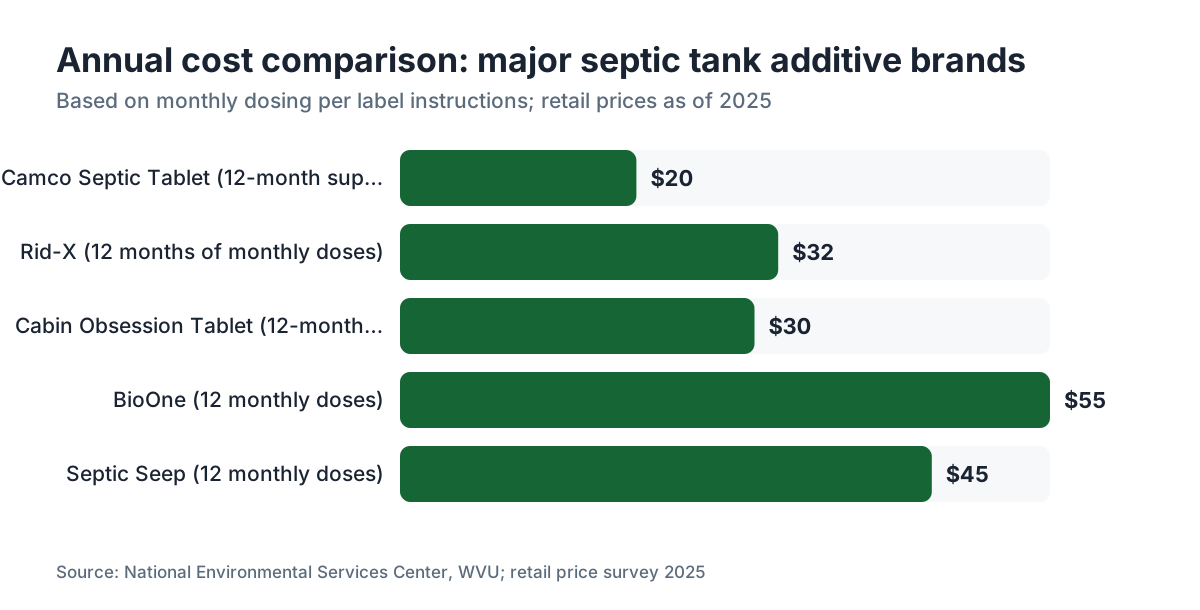
For comparison, Rid-X runs about $8 to $12 for a three-month supply, and premium probiotics like BioOne or Septic Seep can hit $30 to $60 per treatment. Camco sits in the budget tier.
Usage is simple. For tablets, drop one in the toilet and flush, once a month, ideally when water use will stay low for the next several hours (evening works). For liquid, pour the measured dose down any drain. You don't need to hold off running water after using these; that myth belongs to some chemical treatments, not biological ones.
The instructions also call for a "startup dose" (two or three tablets) if the system has been disturbed, after heavy antibiotic use, or right after the tank has been pumped. After a septic tank pump out, the biological population drops, and a larger initial dose has a plausible mechanism for helping. Whether it makes a measurable difference in practice, the controlled data still isn't there.
Camco vs. Rid-X vs. other brands: which septic treatment is best?
No independent study has ranked these products head-to-head on real septic systems in the field. Every comparison online is either manufacturer-sponsored or anecdotal. With that caveat out front, here's what the specs and formulations suggest.
| Product | Format | CFU Count | Enzyme Types | Price (annual) |
|---|---|---|---|---|
| Camco Septic Tank Treatment | Tablet | ~1 billion/tablet | 4 (cellulase, lipase, protease, amylase) | ~$20 |
| Rid-X | Powder/liquid | ~2.2 billion/dose | 4 (same types) | ~$32 |
| Cabin Obsession | Tablet | ~2 billion/tablet | 4 | ~$30 |
| BioOne | Liquid | ~5 billion/oz | 6+ | ~$55 |
| Septic Seep | Liquid | ~5 billion/dose | 4 | ~$45 |
Rid-X carries higher CFU counts per dose than Camco with similar enzyme breadth. If CFU count is the metric that matters, and there's reasonable logic that it does, Rid-X gives you more bacteria per dollar. BioOne and Septic Seep aim at septic pros and carry heavier bacterial loads, but at two to three times the cost.
Camco's edge is price and shelf availability. An RV user who also wants to treat a residential tank and already buys Camco gets real convenience. Optimizing purely for bacterial delivery? Rid-X or a pro-grade product gives you more for a little more money.
None of these should change how often you pump. The how often to pump septic tank question turns on household size, tank size, and solids loading, not on which additive you use [8].
What Camco septic treatments can't do
This is the section that saves people money and prevents damage.
Camco treatments can't fix a full tank. If your tank sits at or near capacity with solids, no enzyme or bacteria product digests that sludge fast enough to matter. You need a septic tank pumping service. Period.
They can't repair a failing drain field. If your leach field is clogged from biomat buildup, hydraulic overload, or soil saturation, adding bacteria won't unclog it [7]. Some practitioners use high-concentration bacterial products as part of a drain field restoration attempt, but that's a different product category and a different process from a monthly maintenance tablet. Camco's off-the-shelf products aren't built for that.
They can't replace a damaged baffle, a cracked pipe, or a broken distribution box. Those are mechanical failures that need septic tank repair. Seeing sewage back up into the house or wet spots over the drain field? Call a licensed septic contractor now. A tablet isn't a diagnostic.
They can't prevent pumping. EPA SepticSmart guidance is direct that even a well-maintained tank with healthy bacteria accumulates solids that have to be physically removed [2]. The average pump interval runs every three to five years for a properly sized tank, and no additive has changed that timeline in any study that's been run [10].
Being honest about what a $20 product can't do is worth more than the marketing.
When does using Camco septic treatment actually make sense?
A handful of situations give a biological product reasonable supporting logic, even when the evidence isn't airtight.
After heavy antibiotic use in the household. Antibiotics that pass through the body and reach the tank can knock back the bacterial population. A re-seeding dose is low-risk and mechanistically sound.
After a pump-out. The tank's biological community is reset. Adding bacteria helps re-establish it faster, though a healthy tank rebuilds on its own within a few weeks from normal waste input.
When your household is small for your tank. A 1,000-gallon tank serving one or two people gets thinner bacterial input. A monthly supplement may help hold populations up. A 1,500-gallon tank serving six people almost certainly has no bacterial deficit.
When you leave a vacation property empty for months. Less waste means less bacterial food. Dosing before a long closure and again when you return makes sense.
After significant drain cleaning work, especially with enzyme-based cleaners or products with quaternary ammonium compounds (common in disinfectant drain cleaners), your tank's bacteria may have taken a hit.
Routine maintenance on a well-used, properly sized, regularly pumped system? Probably unnecessary, but also harmless. If $20 a year buys you peace of mind, that's rational. If you're hoping it stretches your pump interval or rescues a failing system, it won't.
For service operators running multiple accounts, tracking which customers are on additive programs alongside their septic tank inspection schedules is the kind of detail software like SepticMind can log automatically, so nothing slips.
Are there any risks or side effects to using Camco septic treatments?
For biological products (enzyme and bacteria formulas), the risk is very low. The Bacillus strains are non-pathogenic, the enzymes are proteins that degrade naturally, and nothing in a standard Camco biological tablet sits on any EPA restricted list.
The one practical risk is dumping a holding-tank product into a residential septic system by mistake. RV holding-tank formulas often carry biocides or masking agents designed to suppress bacterial activity and odor in a sealed tank. Use those in a septic system and you're working against the system's biology. Read the label. If it says "holding tank" and doesn't specifically say "safe for septic systems," keep it out of your residential tank.
Another low-level worry, and it's a non-issue: if someone in the house has a compromised immune system (including during cancer treatment), the Bacillus strains in a septic additive don't reach them through the water supply. These products go into a sealed underground tank, not into drinking water. They pose no health risk to immunocompromised people in that setting.
The real financial risk is opportunity cost. Spending $20 to $60 a year on additives instead of putting that money toward a proper septic tank cleaning schedule. The cleaning is what prevents catastrophic failures. The additive is optional.
How do you get the most out of a monthly septic treatment routine?
If you're going to use Camco or any monthly biological treatment, here's how to make it count.
Dose at night. Flush the tablet before bed and it gets six to eight hours of low flow to start dispersing before morning water use pushes it into the tank. Some manufacturers recommend this, and the logic holds.
Keep bleach and antibacterial products out of your drains in the 24 hours before and after dosing. Bleach, quaternary ammonium compounds, and strong disinfectants kill or inhibit the bacteria you just added. This doesn't mean you can never use bleach at home. A modest amount through a normal household drain gets diluted enough that its effect on the tank is minimal [6]. Heavy, repeated use is the problem.
Keep a log of when you dose. It's easy to lose track. A phone calendar note or a reminder tied to your monthly bill cycle works fine.
Don't up the dose thinking more is better. The tank's bacterial ecosystem regulates itself. Flood it with extra bacteria and they just die off or wash out when the food supply can't carry them.
Pair the treatment habit with the habits that actually work: conserve water, keep fats and oils out of the drain, never flush wipes (even "flushable" ones), and stick to your pump schedule. Those do more measurable good than any additive. SepticMind's maintenance tracking helps homeowners stay on the full schedule, which matters more than the monthly tablet.
See signs of stress, like slow drains, gurgling, wet spots in the yard, or sewage odors? Stop adding tablets and call a licensed contractor. A failing system needs diagnosis, not more bacteria. That might mean septic system repair or something as simple as an overdue pump-out.
Frequently asked questions
How often should you use Camco septic tank treatment?
Once a month for the tablet format, following the package instructions. Camco and similar products call for a larger startup dose (two to three tablets) after a pump-out, after heavy antibiotic use, or when you first start the routine. After that, one tablet per month flushed at a low-use time covers normal maintenance.
Will Camco septic treatment let you skip pumping?
No. EPA SepticSmart is direct on this: no additive replaces pumping, because biological treatments can't remove the non-digestible solids, inorganic materials, and accumulated sludge that build up over time. Most households need pumping every three to five years. Camco products may support bacterial health but don't change that schedule.
Is Camco septic treatment safe for aerobic treatment units (ATUs)?
Check your ATU manufacturer's manual first. Some ATU warranties prohibit any additive not specifically approved by the manufacturer. Camco's biological products are generally safe for conventional gravity systems, but aerobic units run a different biological process, and the manufacturer's terms take priority over general guidance.
Can you use Camco RV holding tank treatment in a home septic system?
No. Camco's RV holding-tank products (like TST and Pure Flush) are made for sealed, non-leaching tanks and may contain biocides or odor suppressants that actively harm a septic system's bacterial population. Always use a product labeled specifically for residential septic systems. The packaging is different; read it.
Does Camco septic treatment help with odors from the tank?
Somewhat. Strong septic odors usually mean too much sludge (need pumping), a broken or missing baffle, a venting problem, or a damaged component. A biological additive can reduce odors from incomplete organic digestion, but it won't fix a structural problem. Persistent odors warrant a professional inspection.
Is it safe to use Camco septic treatments if someone in the house is on chemotherapy?
Yes. Chemotherapy drugs and antibiotics taken during cancer treatment do reach the septic tank through waste and can suppress bacterial populations. Adding a biological product like Camco's during heavy antibiotic months is a reasonable precaution to help re-seed the tank's microbial community. The bacteria in the additive pose no risk to immunocompromised people when used as directed.
How does Camco compare to Rid-X for residential septic systems?
Both are biological additives with similar enzyme types. Rid-X delivers around 2.2 billion CFUs per dose versus roughly 1 billion for a Camco tablet, but costs about $10 to $15 more per year. Neither has been proven superior in independent field studies. Camco's advantage is price and wide retail availability; Rid-X has higher bacterial counts per dose.
Can Camco treatments help a slow or sluggish drain?
Unlikely in most cases. Slow drains usually come from partial clogs in pipes, a full tank, or a saturated drain field, none of which a monthly bacterial tablet fixes. If the slowness sits in the house's plumbing, it's a plumbing issue. If it's system-wide, the tank probably needs pumping. Don't mistake a maintenance additive for a repair tool.
Where should you pour or flush Camco septic treatment?
For tablets, flush down the toilet closest to your main drain line. For liquid, pour down any drain. The toilet is preferred because it delivers the product most directly to the tank with minimal dilution from standing water in sink traps. Flush after bedtime so the product gets several hours of low flow before morning use.
Do state regulations affect whether you can use Camco septic additives?
Some states regulate septic additives and require manufacturer registration. Washington and Florida are notable examples with registration rules. Camco's residential products appear to meet general state requirements, but verify with your state's onsite wastewater or environmental program, especially on an alternative or engineered system with specific permit conditions.
What happens if you use too much Camco septic treatment?
Overdosing biological additives is generally harmless. The extra bacteria die off or wash out when the tank's food supply can't sustain them. You won't damage the system by adding an extra tablet. But more isn't better: the extra cost is wasted, and there's no documented benefit to exceeding the label dose except in the startup or post-pump scenarios described on the label.
How long does it take for Camco septic treatment to work?
Bacterial products typically show measurable colonization within 24 to 72 hours under favorable conditions. Enzyme activity starts immediately on contact. You won't see a dramatic change in performance from a single dose; the benefit, if any, builds over months of steady use. The value is maintaining baseline microbial populations, not a noticeable short-term effect.
Can you use Camco treatments in a new septic system?
Yes. A new tank starts without an established bacterial population, and seeding it with a biological product right away is one of the more defensible uses for an additive. Normal household waste populates the tank naturally over a few weeks, but a startup dose speeds that. After the first month or two, a new system should be self-sustaining under normal use.
Sources
- National Environmental Services Center, West Virginia University (formerly National Small Flows Clearinghouse), guidance on septic system additives: Review of additive studies found no consistent evidence that biological additives improve effluent quality or extend pump intervals in normal-use systems; bacterial counts in commercial products range from 100 million to over 1 billion CFUs per dose.
- U.S. EPA, SepticSmart Program, homeowner guidance on septic additives and maintenance: EPA states no additive is proven necessary for normal system operation, warns against chemical solvents as additives, and confirms no additive replaces pumping.
- Washington State Department of Ecology, on-site septic system additive regulations: Washington State requires septic additive manufacturers to register products and prohibits additives that harm biological treatment processes or soil absorption systems.
- Florida Department of Health, Chapter 64E-6 Florida Administrative Code, Onsite Sewage Treatment and Disposal: Florida requires registration of septic additives under its onsite wastewater rules.
- Environmental Science & Technology (American Chemical Society), study on antibiotic residues in septic tank effluent, 2006: A 2006 study in Environmental Science & Technology found antibiotic residues in septic tank effluent were measurable and biologically active, capable of affecting microbial communities in drain field soil.
- U.S. EPA, SepticSmart, 'How to Care for Your Septic System': EPA states average household pump interval is every three to five years and confirms that modest household bleach use reaches the septic tank sufficiently diluted to pose minimal risk to bacterial populations.
- University of Minnesota Extension, guidance on septic system additives: Extension guidance confirms biological additives are low-risk for conventional gravity systems and that enzyme and bacteria products do not repair failing drain fields.
- North Carolina State University Cooperative Extension, septic tank additive guidance: NCSU Extension notes no peer-reviewed field study has demonstrated that commercial biological additives measurably extend pumping intervals or improve effluent quality in residential systems.
- Penn State Extension, septic system maintenance guidance: Penn State Extension confirms that a household of typical size (four people) with a properly sized tank requires pumping every three to five years regardless of additive use.
Last updated 2026-07-10