Septic inspection in Connecticut: what it costs and what inspectors check
By the SepticMind Editorial Team
TL;DR
- A Connecticut septic inspection costs roughly $200, $600 for a visual and operational check, or $400, $900 when combined with pumping.
- CT requires an inspection for most real estate transfers involving a septic system.
- Inspectors check the tank, distribution box, and leach field.
- The process takes 1 to 3 hours.
- A failed inspection means repairs or replacement, which runs $5,000, $30,000+.
What does a septic inspection in Connecticut actually involve?
A Connecticut septic inspection is a structured assessment of every component between your toilet and the soil. Inspectors start at the tank, move to the distribution box (or D-box), and finish at the leach field. They're answering one question. Is wastewater getting treated and dispersed safely, or is something failing?
Most inspections in CT run in three phases. The inspector locates and uncovers the tank lids first, which sometimes means digging if the access risers aren't already at grade. Next the tank gets observed under load (running water from inside the house) or pumped so the inlet and outlet baffles are visible directly. Last, the drainfield is probed, checked for surfacing effluent, and sometimes pressure-tested.
A basic visual and operational inspection won't tell you everything. The inspector checks water levels inside the tank, baffle condition, and whether the D-box sits level and spreads flow evenly. What they usually can't tell you without a full pump-out is whether the tank walls are cracked, whether sludge and scum layers are within limits, or whether the leach field has years left or is one wet spring away from saturating.
Connecticut's Department of Public Health regulates onsite wastewater treatment under the Public Health Code, specifically Section 19-13-B103. Licensed inspectors follow those standards and report findings in writing [1].
How much does a septic inspection cost in Connecticut?
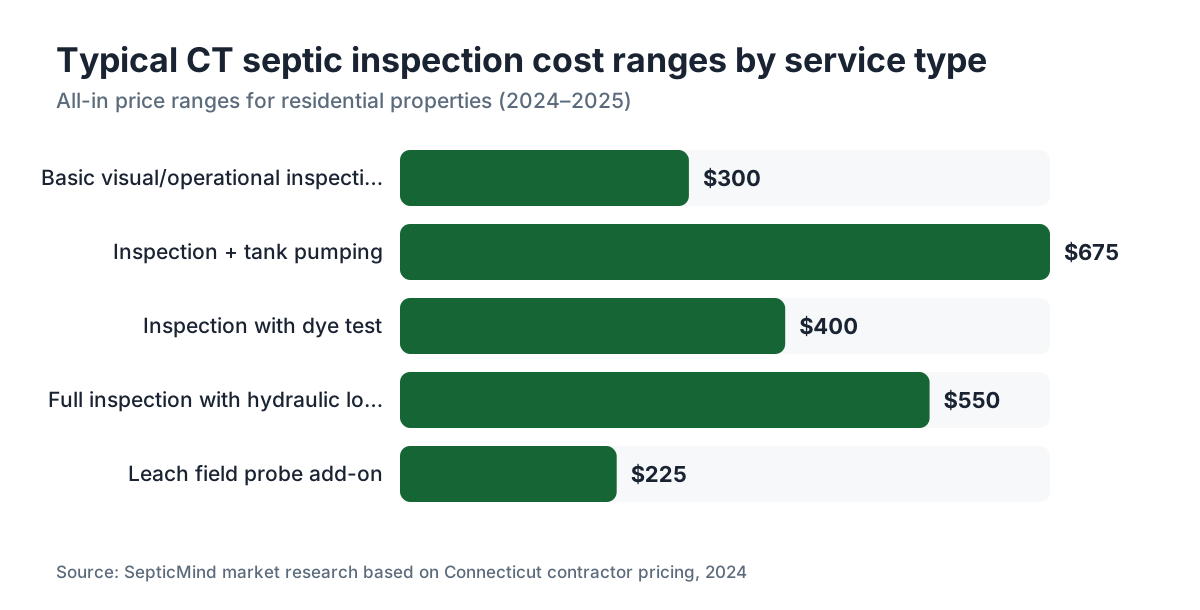
A basic visual and operational inspection in Connecticut runs $200 to $400. Add pumping and you're looking at $450 to $900 for a standard 3-bedroom tank. Prices swing by company, county, and what's included. Here's a realistic range based on what CT contractors actually charge.
| Service | Typical CT Price Range |
|---|---|
| Basic visual/operational inspection | $200, $400 |
| Inspection + pumping (3-bedroom tank) | $450, $900 |
| Inspection with dye test | $300, $500 |
| Full inspection with hydraulic load test | $400, $700 |
| Leach field probe/perc verification add-on | $150, $300 extra |
| Inspection report only (reviewing existing records) | $100, $200 |
The biggest cost driver is whether pumping is included. Many CT real estate inspections require the tank to be pumped so the inspector can see the baffles and check for cracks in the tank walls. If you're buying a home, budget for the higher end.
Geography matters too. Inspectors in Fairfield County (closer to New York) typically charge more than those in Windham or Tolland counties. Seasonal demand pushes prices up in spring and fall, the peak real estate seasons.
Watch for one trick. Some companies quote a low inspection fee, then charge separately for locate, dig, lid lifting, and mileage. Ask for an all-in price before you book. A flat-rate quote of $500 to $700 for inspection plus pump-out on a standard 1,000-gallon tank is reasonable across most of Connecticut right now.
For context on what system replacement costs if an inspection reveals failure, see our guide on cost to install septic system.
When is a septic inspection required in Connecticut?
Connecticut has no single statewide law that triggers an inspection on every real estate transaction. But in practice, inspections are nearly universal in property transfers that involve a septic system. Here's why.
Most mortgage lenders, especially those issuing FHA, VA, or USDA loans, require a passing septic inspection as a condition of financing [2]. Many home purchase contracts in CT include a septic inspection contingency by default. Some towns and cities run their own local health codes that require inspection or approval on transfer. Check with your town's sanitarian.
Beyond real estate, inspections are required or strongly advisable in these situations:
- Adding bedrooms or expanding the house. CT's Public Health Code requires a septic assessment before any addition that increases design flow [1].
- After a septic alarm or backup. If a pump chamber alarm goes off or sewage backs up into the basement, get an inspection before the problem spreads.
- Routine maintenance every 3 to 5 years. The EPA's SepticSmart program recommends inspecting your system "every three years by a septic service professional" and pumping every three to five years [3].
- When buying rural land. If you're buying a parcel with an existing system or planning to install one, a pre-purchase inspection and a review of local permit records is money well spent.
An inspection is the most direct way to find out where your system stands. Skipping one on an older property is how people inherit a $20,000 problem.
Who is qualified to do a septic inspection in Connecticut?
Connecticut licenses the people who can legally assess and sign off on septic systems. The credential you want is a Licensed Sanitarian (RS) issued by the CT Department of Public Health, or a licensed site evaluator, designer, or installer depending on which part of the system is being evaluated [4].
For a real estate inspection, the person signing the report generally needs to be a licensed professional. Some home inspectors will do a basic visual septic check as part of a general home inspection, but that isn't the same as a full system inspection by a licensed sanitarian or septic professional. If your lender or attorney needs a formal septic report, confirm the inspector holds the right CT license.
Licensed septic pumping companies can also perform inspections, and many CT pumpers have inspectors on staff or can refer you to one. The CT Department of Public Health runs a license lookup tool where you can verify credentials [4].
One practical tip. If you're buying a home, hire an inspector who is independent of the seller's preferred vendor. Conflicts are rare but they happen. An inspector who works regularly with a particular installer has an obvious reason to find problems that need fixing.
What do inspectors look for during a CT septic inspection?
A thorough inspection checks the system component by component. Here's what that actually means.
Septic tank: Inspectors look at liquid level (should sit at the outlet pipe invert, not above it), inlet and outlet baffle condition (they deteriorate and must stay intact to keep solids out of the field), sludge and scum layer depths (pumping is required when combined layers exceed roughly one-third of tank capacity [5]), and the structural integrity of the tank walls and lids. Concrete tanks develop cracks. Fiberglass and poly tanks can deform.
Distribution box: The D-box must sit level. If it tilts, one or more leach lines take all the flow while others starve, which kills the field unevenly. Inspectors check for solids in the D-box (a sign of a failed baffle) and measure whether the outlets are balanced.
Leach field / drainfield: This is where most failures show up. Inspectors probe the field for soft or saturated soil, look for surface breakout (wet spots, lush green grass in linear patterns, odor), and sometimes run a hydraulic load test to see how fast the field accepts water. A field that doesn't absorb within a reasonable time is biomat-compromised or failing.
Pump chambers (if present): For pressure-dosed or mound systems, inspectors check pump operation, float settings, and alarm function.
Setback compliance: CT's Public Health Code requires minimum distances between system components and wells, property lines, and structures [1]. An inspector flags obvious violations, though a full survey is a separate job.
For problems found in the tank itself, our septic tank repair guide covers what fixes typically cost and when a repair beats replacement.
What is a Title V inspection and does Connecticut use it?
Title V is Massachusetts's septic inspection law, not Connecticut's. CT homeowners near the MA border, or people who've moved from Massachusetts, ask about it often enough that it's worth clearing up.
Massachusetts Title V (310 CMR 15.000) requires a point-of-sale septic inspection for nearly every real estate transaction involving a septic system [8]. Connecticut has no equivalent statute with that name or that level of mandatory reach. CT's requirements sit across the Public Health Code (Section 19-13-B103) and local health regulations, not a single unified law.
So if someone tells you Connecticut has a "Title V requirement," they're either confused or using the term loosely to mean "a required septic inspection." The difference matters. In Massachusetts, a Title V failure can legally block a sale. In Connecticut, the outcome depends on the lender's requirements, local ordinances, and the purchase contract terms.
If you own property that straddles both states or you're buying near the CT-MA border, you may run into Title V language from a Massachusetts-based agent or inspector. Clarify which state's rules apply to your specific parcel.
How long does a septic inspection take in Connecticut?
Plan for 1.5 to 3 hours for a typical residential inspection. Here's roughly how that time breaks down.
Locating and uncovering the tank takes 15 to 45 minutes when risers aren't installed, and many older CT systems don't have them. The inspection and pumping runs 45 to 75 minutes. Walking the leach field and probing takes another 20 to 40 minutes. If the inspector has to dig to find lids or locate the D-box, add time.
Systems with multiple tanks, a pump chamber, or a mound design take longer. A full inspection on a complex system with a 1,500-gallon tank, a pump chamber, and a pressure-dosed field can easily run 3 to 4 hours.
The written report usually lands within 24 to 48 hours. For real estate closings with tight timelines, confirm turnaround before you book. Some inspectors can hand you a same-day summary with the formal report to follow.
Installing access risers after the inspection is smart money. Risers bring lids to grade so future inspections and septic tank pumping don't require digging. They cost $100 to $300 installed per lid and pay for themselves in labor savings within two pump-out cycles.
What happens if a septic system fails inspection in Connecticut?
A failed inspection doesn't automatically kill a real estate deal. It does change the conversation.
Start by understanding what actually failed. There's a big gap between a cracked concrete baffle (a $300 to $800 repair) and a saturated leach field that needs full replacement (potentially $15,000 to $40,000 in CT depending on soil and system type). The inspector's report should sort findings by severity.
In a real estate transaction, a failed inspection usually triggers one of three outcomes. The seller fixes the problem before closing. The price gets renegotiated to cover repair costs and the buyer takes on the work. Or the buyer walks using the inspection contingency.
For existing homeowners, a failure means you're legally on the hook to fix it. Operating a failed system in Connecticut is a public health violation. CT DEEP and local health departments can issue orders requiring repair within a set timeframe, and enforcement can include fines.
Common repair paths after a failed inspection:
- Baffle replacement: $300, $800. Buys years of extra life if the field is healthy.
- D-box leveling or replacement: $200, $600.
- Leach field remediation (Terralift, bio-treatment): $500, $2,500, with mixed success. Honest inspectors will tell you this is a gamble on older fields.
- New leach field: $8,000, $20,000+ depending on size and site constraints.
- Full system replacement: $15,000, $40,000 in CT, more for difficult sites requiring engineered systems.
See our guides on septic system repair and cost to put in a septic tank for detailed cost breakdowns.
Operators managing inspection workflows across multiple properties can use tools like SepticMind to track inspection results, schedule follow-up work, and document repair history in one place.
How do you prepare your septic system for an inspection in Connecticut?
A few things you can do before the inspector arrives make the process faster and get you better results.
Locate your records. Your town's local health department holds permit records for most systems, and CT DEEP holds records for systems that needed state-level approval. If you have the original design plan, share it. It shows tank size, field layout, and design flow, which helps the inspector evaluate the system accurately.
Don't pump right before the inspection. This sounds backwards, but some buyers ask sellers to pump the tank right before the sale inspection. That can hide problems. A freshly pumped tank gives the inspector less to read about normal operating levels. If pumping is part of the inspection, let the inspector run it.
Run water normally the day before. The system should be under normal load so the inspector sees it in realistic conditions. Don't do eight loads of laundry the morning of the inspection, though. A sudden surge can temporarily saturate a field that's otherwise borderline.
Clear access. If you know where the tank lids are, mark them. Move any furniture, deck sections, or stored materials sitting over the access area.
Ask about risers if you don't have them. When the inspector has the lids off, it's the perfect time to add risers. Ask whether they or an affiliate can do it same-day.
For routine maintenance context, our how often to pump septic tank guide explains the right pumping schedule for Connecticut households.
What are CT's rules for septic systems near wells and water bodies?
Connecticut's Public Health Code Section 19-13-B103 sets minimum setback distances that inspectors check during a formal assessment [1]. The ones homeowners should know:
| Component | Minimum setback (CT) |
|---|---|
| Septic tank to potable water well | 75 feet |
| Leach field to potable water well | 75 feet |
| Leach field to watercourse or wetland | 25 feet minimum (often more) |
| Septic tank to dwelling foundation | 10 feet |
| Leach field to property line | 10 feet |
| Leach field to swimming pool | 15 feet |
These are floors, not targets. Local health departments can and often do require greater distances, especially near sensitive water bodies or in aquifer protection areas. Properties in the Farmington River watershed or near Long Island Sound shoreline communities often face stricter local rules.
If your system doesn't meet current setbacks, it's a "pre-existing nonconforming system." In most cases, a nonconforming system that still functions doesn't have to be relocated immediately. But if you're doing new construction, an addition, or a full replacement, you'll need to meet current setbacks [1].
CT DEEP maintains mapping resources for aquifer protection areas and sensitive water bodies that affect where a system can go [6].
How often should Connecticut homeowners get a septic inspection?
The EPA's SepticSmart program recommends a professional inspection every three years for most conventional systems [3]. That's a reasonable baseline for Connecticut households.
The honest answer depends on your system type and household size. A gravity-fed conventional system serving two people on a large lot in sandy soil might realistically go four or five years between inspections without drama. A pressure-dosed or mound system has mechanical parts (pumps, floats, alarms) that need annual checks. If your system has an aerobic treatment unit, CT permitting conditions typically require an annual maintenance contract.
The bigger problem is that most Connecticut homeowners badly under-inspect. EPA guidance notes that a failed septic system can contaminate nearby wells with pathogens and nitrates, and that regular inspection and pumping is the primary prevention [3]. An inspection every three years ($200 to $400) is trivial next to the cost of a failed field.
For new owners buying an older property, I'd get an inspection immediately upon purchase, no matter what the previous owner says about the last service. System history is often incomplete or optimistic.
Tie your inspection schedule to your pumping schedule. A full pump-out every three years gives a pumper direct eyes on the tank, which works as a combined pump-out and inspection. See septic tank pump out for what's included in a standard CT pump-out service.
How does CT's septic permitting system affect inspections?
Connecticut requires a permit from the local health department (and sometimes CT DEEP) for new septic installation and for significant repairs or modifications [1]. That permitting history matters during an inspection because it tells the inspector whether the system was designed and installed to code, how old the design is, and what the approved design flow (number of bedrooms) is.
For systems installed before modern permitting rules, records can be thin or nonexistent. This is common on older rural CT properties, especially farms and summer cottages converted to year-round homes. In those cases the inspector works from physical evidence only, which raises the uncertainty in the assessment.
When a repair or replacement is required after a failed inspection, the work has to be permitted. CT's permit process involves a site evaluation (perc test and soil profile), a design by a licensed engineer or site designer, local health department approval, and inspections during and after installation. From permit application to installation, the full process can take two to six months in busy seasons, which is a real problem in the middle of a real estate deal.
Some CT towns have expedited permit pathways for emergency repairs (active sewage backup presenting a public health hazard), but those are exceptions. Planning ahead beats reacting to a failure every time.
Operators managing inspection and permit workflows across multiple client properties will find that tracking permit status, inspection results, and repair history in a platform like SepticMind cuts the administrative load, especially during busy spring closing seasons.
Frequently asked questions
Is a septic inspection required to sell a house in Connecticut?
Connecticut has no single statewide law mandating a septic inspection for every home sale, but most mortgage lenders (FHA, VA, USDA) require one as a loan condition, and most purchase contracts include a septic inspection contingency. Some CT towns have local ordinances requiring inspection on transfer. In practice, nearly every CT home sale involving a septic system results in an inspection.
How much does a septic inspection cost in Connecticut in 2025?
A basic visual and operational inspection in Connecticut runs $200 to $400. An inspection that includes pumping the tank typically costs $450 to $900 for a standard 3-bedroom home. Add $150 to $300 for leach field probing or a hydraulic load test. Fairfield County inspectors tend to charge more than rural eastern CT. Always ask for an all-in price to avoid separate charges for locating, digging, or lid removal.
What is the difference between a septic inspection and a Title V inspection?
Title V is Massachusetts's point-of-sale septic inspection law (310 CMR 15.000), not Connecticut's. Connecticut has no law called Title V. CT's requirements come from the Public Health Code (Section 19-13-B103) and local health regulations. If someone mentions Title V for a CT property, they're either using the term loosely or referring to a Massachusetts property.
How long does a septic inspection take in CT?
Most residential septic inspections in Connecticut take 1.5 to 3 hours. Locating and uncovering the tank adds time if there are no risers at grade. Complex systems with pump chambers, multiple tanks, or mound designs can take 3 to 4 hours. The written report typically arrives within 24 to 48 hours of the inspection.
Who can legally perform a septic inspection in Connecticut?
Connecticut requires inspectors signing formal septic reports to be licensed professionals, typically a Licensed Sanitarian (RS) or a licensed site evaluator or installer depending on the scope. A general home inspector can do a basic visual check, but that doesn't substitute for a licensed septic professional's report when a lender or attorney requires formal documentation. Verify credentials using the CT Department of Public Health's license lookup.
What causes a septic system to fail inspection in Connecticut?
Common failures include saturated or surfacing leach fields (the most serious), missing or deteriorated inlet/outlet baffles, a tilted distribution box causing uneven loading, sludge and scum layers exceeding one-third of tank capacity, cracked concrete tank walls, pump failures in pressurized systems, and setback violations. Baffle and D-box problems are relatively cheap to fix; leach field failure is expensive.
Can you sell a house in CT with a failing septic system?
Technically yes, if both parties agree and financing allows it. Most lenders won't close on a home with a documented septic failure, so cash buyers are the most common path. The more typical outcome is that the seller repairs the system before closing, the price is reduced to account for repair costs, or the buyer walks. Operating a known failing system is a public health violation in Connecticut.
How do I find my CT septic system records before an inspection?
Start with your town's local health department, which holds permit records for most systems. CT DEEP holds records for systems requiring state-level approval. Older systems (pre-1970s) may have little or no paperwork. If records are missing, your inspector will work from physical evidence. As-built drawings, if they exist, are the most useful document to have on hand before the inspection.
Does a septic inspection cover the leach field in Connecticut?
A thorough CT septic inspection includes the leach field. Inspectors probe the field for saturation, look for surface breakout (sewage reaching the surface), check the distribution box for evidence of field failure, and sometimes run a hydraulic load test. Field assessment is less precise than tank inspection; a healthy-looking field can still have compromised absorption capacity below the surface.
How often should I get my septic system inspected in Connecticut?
The EPA's SepticSmart program recommends a professional inspection every three years for conventional systems. Mechanical systems (pumps, aerobic treatment units) need annual checks. Most CT homeowners under-inspect and only discover problems during a home sale or after a failure. Tying your inspection to your pumping schedule every three years is the most practical approach for conventional gravity systems.
What setback distances does Connecticut require for septic systems?
Connecticut's Public Health Code requires a septic tank to be at least 75 feet from a potable water well, and a leach field at least 75 feet from a well and 25 feet from a watercourse or wetland. The tank must be at least 10 feet from a dwelling foundation. Local health departments can require greater distances, particularly near sensitive water bodies or in aquifer protection areas.
What is the average cost to replace a septic system in Connecticut after a failed inspection?
Full septic system replacement in Connecticut typically costs $15,000 to $40,000 for a residential property, with engineered systems on difficult sites (high water table, ledge, small lots) reaching $50,000 or more. A new leach field alone runs $8,000 to $20,000. Minor repairs like baffle replacement cost $300 to $800 and can extend system life significantly if the field is still functional. See our cost guides for detailed breakdowns.
Does Connecticut require a septic inspection for a refinance?
It depends on the lender and loan type. FHA and VA refinances that trigger a full appraisal cycle can require a septic inspection if the appraiser or lender flags concerns. Conventional rate-and-term refinances often don't require a new inspection if the system was recently inspected and documented. Check with your lender early since getting an inspection scheduled can take weeks in peak season.
Sources
- Connecticut Department of Public Health, Public Health Code Section 19-13-B103 (Subsurface Sewage Disposal): CT Public Health Code Section 19-13-B103 governs septic system design, installation, setback requirements, and the permitting process for onsite wastewater systems in Connecticut.
- U.S. Department of Housing and Urban Development, FHA Single Family Housing Policy Handbook 4000.1: FHA-insured mortgages require that septic systems be in proper working order, and lenders must obtain evidence of an acceptable inspection when an onsite sewage system is present.
- U.S. Environmental Protection Agency, SepticSmart Program: EPA SepticSmart recommends inspecting a septic system every three years by a professional, pumping every three to five years, and notes that system failures can contaminate nearby wells with pathogens and nitrates.
- Connecticut Department of Public Health, License Verification (eLicense): Connecticut issues licenses for sanitarians, site evaluators, and septic system designers and installers; credentials can be verified through the state's eLicense system.
- University of Minnesota Extension, Septic System Owner's Guide: Septic tanks should be pumped when the combined sludge and scum layers occupy more than one-third of the tank's liquid capacity, which is the standard threshold used by inspectors.
- Connecticut Department of Energy and Environmental Protection, Aquifer Protection Program: CT DEEP maintains aquifer protection area maps and imposes additional land use restrictions on septic systems within designated aquifer protection zones.
- U.S. Environmental Protection Agency, How Your Septic System Works: EPA explains that a properly designed, installed, and maintained septic system is adequate for treating household wastewater, and that failure typically results from neglected maintenance.
- Massachusetts Department of Environmental Protection, Title V Septic Regulations (310 CMR 15.000): Massachusetts Title V (310 CMR 15.000) requires point-of-sale septic inspection for nearly all real estate transactions involving onsite systems; this law applies in Massachusetts, not Connecticut.
- Connecticut Department of Public Health, Environmental Health: CT DPH's environmental health section oversees local health departments that administer septic permitting, inspection, and enforcement at the municipal level.
- U.S. Environmental Protection Agency, Septic Systems (Onsite/Decentralized Systems): Approximately 20 percent of U.S. households rely on onsite wastewater treatment systems, and the EPA estimates about one in five systems fails at some point due to neglect.
Last updated 2026-07-09