Leach field repair: costs, methods, and when to replace
By the SepticMind Editorial Team
TL;DR
- Leach field repair costs range from about $1,500 for minor fixes like a new distribution box to $20,000 or more for full replacement.
- The right fix depends on the failure cause.
- Biomat buildup, crushed pipes, and saturated soil each need a different approach.
- Some repairs add 15 to 25 years; others just delay an inevitable replacement by a few months.
What actually goes wrong with a leach field?
Four problems account for almost every leach field failure: biomat buildup in the soil, hydraulic overloading, physical pipe damage, or a system that was undersized or badly sited from the first day.
Biomat is the usual suspect. It's a dense layer of anaerobic bacteria and organic slime that forms at the soil interface where effluent leaves the distribution pipes. Over time it clogs the soil pores and the effluent has nowhere to go. The EPA's SepticSmart program identifies biomat accumulation as the leading cause of drain field failure in conventional systems [1]. Left alone, the field backs up, and you get sewage surfacing in the yard or backing up into the house.
Hydraulic overload happens when a household sends more water through the system than the soil can absorb. A running toilet dumping 200 extra gallons a day, a water softener regenerating into the septic, or a family that doubled in size since the system was permitted can all drown a field that was once sized right. Saturated soil stops treating effluent even after you shut off the source.
Pipe damage is the simplest cause. Tree roots, ground settlement, or a truck parked on the field can crush or crack the laterals. A camera inspection confirms it, and most contractors run one before quoting any repair. See our guide to septic tank inspection for what a full system evaluation looks like.
Some systems were doomed at installation, permitted in marginal soils or built to undersized specs. A percolation rate slower than 60 minutes per inch is the outer limit for a conventional system in most state codes, and soil that barely passed at installation may fail well before the 20-to-30-year design life [2].
How do you know your leach field is failing?
The clearest signs: sewage odors in the yard, soggy ground over the drain field, or a bright green stripe of grass directly above the laterals in an otherwise dry summer. Inside, sluggish drains in multiple fixtures and gurgling toilets mean the system can't take wastewater fast enough.
The definitive test is a dye test or a full inspection. A licensed inspector or sanitarian pours non-toxic fluorescent dye into the system and watches for it to surface where it shouldn't. Many states require this test at point of sale. If you already see wet areas, skip the dye and go straight to a contractor with a camera.
One thing worth knowing. A field that looks failed after a week of heavy rain may just be temporarily saturated. Give it a few dry days and cut household water use before you call it dead.
A field that surfaces sewage in dry weather is genuinely failing and needs attention now, both for public health and because many state codes classify surfacing effluent as a sanitary violation that carries fines [2].
What leach field repair methods actually work?
The methods run from free to five figures, and being honest about what each one can and can't do saves you money.
Resting and water conservation. If the field is hydraulically overloaded rather than biomat-clogged, cutting water use and letting the field dry out can restore function. Fix leaking toilets, spread laundry across the week, and stop running the dishwasher daily. The USDA Natural Resources Conservation Service has documented cases where rested fields recovered meaningful absorption capacity, though this only works when the soil itself isn't permanently damaged [3].
Hydro-jetting and pipe cleaning. When distribution pipes are clogged rather than the soil, high-pressure jetting clears the blockage. It runs $300 to $800. It does nothing for biomat in the soil. It only fixes pipe-level clogs.
Aeration and biomat remediation. Some services inject air or aerobic bacteria to break down biomat. The most studied version forces air through the soil with a compressor and perforated tubing, sometimes with a liquid biological additive. A University of Minnesota Extension study found aerobic treatment extended system life in some cases, though results varied a lot by soil type and how far gone the field was [4]. Honest read: it works best on fields maybe 30 to 40 percent failed, not fields that have surfaced sewage for years. Costs run $1,000 to $4,000 depending on contractor and number of laterals.
Replacing distribution pipes and the D-box. If the laterals are crushed or the distribution box is cracked and channeling flow to one section, replacing just the pipes and box costs $1,500 to $5,000 and can fully restore a field where the soil absorption capacity is still good. This is often the most cost-effective repair when a camera confirms the diagnosis.
Lateral line replacement without full excavation. Some contractors pull old perforated pipe and feed in new pipe without digging up the whole field. That saves the cost of redoing landscaping and hardscape.
Full leach field replacement. When the soil is permanently saturated or the biomat is beyond remediation, you're replacing the field. The cost section below covers what that involves.
How much does leach field repair cost?
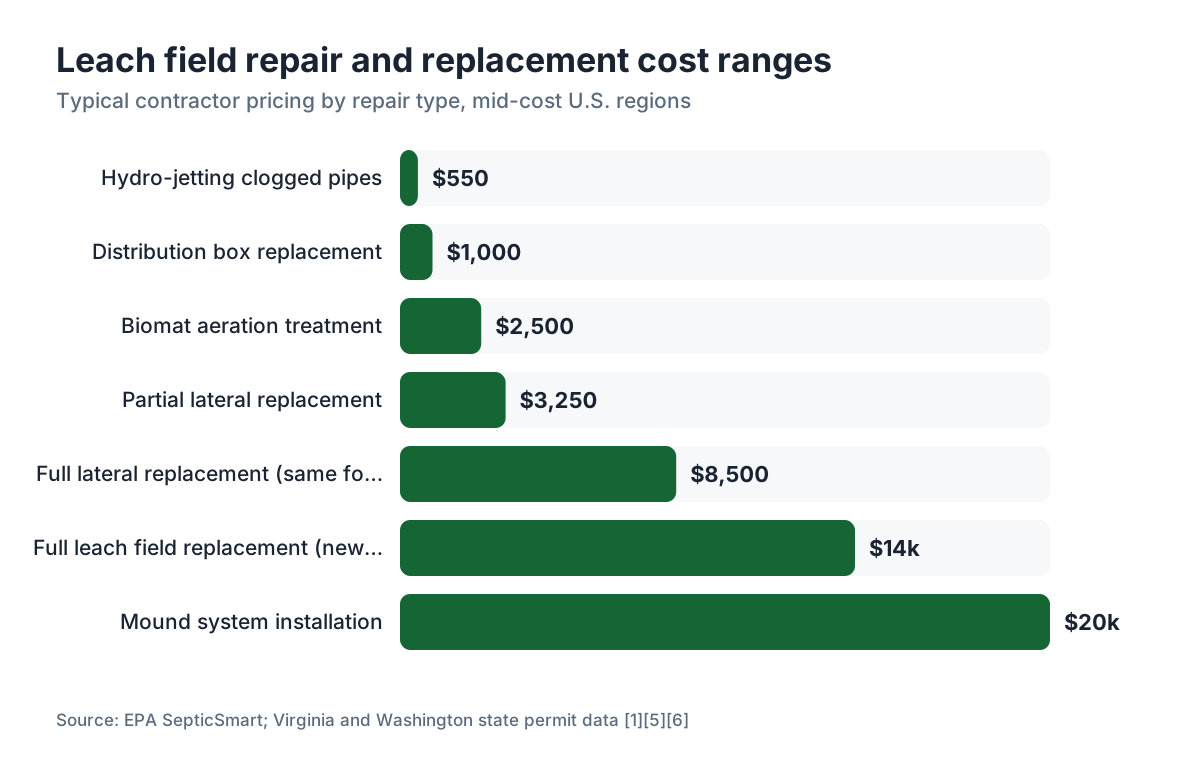
Repair costs span a huge range depending on what's wrong. Here's a realistic breakdown based on what licensed contractors typically charge:
| Repair type | Typical cost range |
|---|---|
| Hydro-jetting clogged pipes | $300, $800 |
| Distribution box replacement | $500, $1,500 |
| Biomat aeration treatment | $1,000, $4,000 |
| Partial lateral replacement | $1,500, $5,000 |
| Full lateral replacement (same footprint) | $5,000, $12,000 |
| Full leach field replacement (new area) | $8,000, $20,000+ |
| Mound system installation (poor soil) | $10,000, $30,000 |
These figures reflect contractor pricing in mid-cost U.S. regions. You'll pay more in New England, California, and the Pacific Northwest, where permitting, labor, and soil conditions all push costs up. Rural Midwest and Southeast jobs often land at the lower end.
The single biggest cost variable is whether you can repair in place or have to establish a new drain field area. A new field means a new perc test, a new permit, a soil evaluation, and excavation of ground that was never disturbed. Permits alone run $200 to $1,500 depending on the county [5].
Pump-dependent systems add cost too. If your current system gravity-feeds the field and the replacement needs a pump chamber and controls, budget another $2,000 to $5,000 for that piece. Our guide to septic system repair covers what drives total costs across every component.
How much does it cost to replace a leach field completely?
Full leach field replacement, meaning you abandon or remove the old field and install a new one, typically costs $8,000 to $20,000 for a conventional system on a property with enough suitable soil. That range comes from contractor data compiled by HomeAdvisor and Fixr, cross-referenced against state permit data from Virginia and Washington [5][6].
On a property with limited suitable soil, or one where the original field already used the only viable spot, costs jump hard. Alternative systems for those sites include mound systems ($10,000 to $30,000), drip irrigation systems ($15,000 to $30,000), and aerobic treatment units with spray heads, which reach $20,000 to $50,000 in some states [7].
The permitting process for replacement is basically the same as for a new install. A licensed site evaluator or soil scientist tests the new area. The county or state health department reviews the design. A licensed contractor pulls the permit and does the work. Many jurisdictions require a licensed engineer or surveyor to stamp the design for alternative systems.
Don't assume your property has a second suitable area. Plenty of older rural lots were permitted in the only location that would pass. If that's you, you're looking at an engineered alternative system, and you need that diagnosis before you set a budget. Our guide to cost to install septic system covers alternative system installation start to finish.
Can you repair a leach field yourself, or do you need a contractor?
Almost nothing meaningful is legal to DIY, and the things that are legal probably won't fix the real problem.
Every U.S. state requires a permit for leach field replacement or significant repair. Most require a licensed installer, and for alternative systems, a licensed designer. The EPA's guidance on onsite wastewater treatment defers to state and local programs for permitting, and those programs uniformly treat drain field work as regulated activity [1]. Unpermitted work creates real liability when you sell, and some county health departments require disclosure of any known septic work.
What you can legally do yourself: fix leaking toilets and fixtures that overload the system, cut household water use, and keep trees away from the field. These genuinely help. You can dig down and look at a distribution box to see if it's cracked or if one outlet is getting all the flow, though you'll still need a contractor to replace it properly.
The biomat-fighting additives sold at hardware stores deserve a straight answer. The EPA does not endorse septic additives, and Washington State University Extension found no consistent evidence that commercial bacterial or enzyme additives improve system performance [8]. Some products marketed for drain field restoration may briefly mask symptoms. They don't replace a real repair.
If you run a service business and want a structured way to track repair orders and inspection histories across customer accounts, SepticMind makes field operations software built for onsite wastewater service providers.
Does leach field repair require a permit?
Yes, in nearly every U.S. jurisdiction. Replacing or significantly repairing a drain field is regulated under state onsite wastewater codes, and most counties administer those codes locally through the health department or an environmental services office.
Minor repairs, like swapping a cracked distribution box or a short section of pipe, may fall below the permit threshold in some counties. But any work that adds absorption area, relocates laterals, or changes the design will need a permit, a site evaluation, and in many states a licensed installer.
Permit fees vary widely. Virginia's Department of Health charges repair permit fees starting around $325 [5]. Many California counties charge $500 to $1,500 for drain field repair or replacement permits, plus inspection fees. Texas requires an Authorized Agent review for any repair to an OSSF (on-site sewage facility) under 30 TAC Chapter 285 [9].
The process usually runs a site evaluation of the proposed repair area, a design from the contractor or engineer, health department review, and a final inspection after construction. From application to final approval, expect four to twelve weeks in most counties, longer in rural areas with thin health department staffing.
Skipping the permit is a bad bet. Unpermitted septic work shows up in title searches, can void homeowner's insurance claims tied to the system, and in some states brings fines of several thousand dollars.
How long does leach field repair or replacement take?
The physical work goes fast. A contractor with the right equipment replaces a conventional drain field in one to three days. A distribution box swap takes a few hours. Permitting is what actually governs your timeline.
For a permit at a reasonably staffed county health department, expect two to eight weeks from application to approval. Fast-track programs exist for failing systems that pose an immediate public health risk, and a few states allow emergency repair authorizations that cut that to days. Ask the health department directly if you have surfacing sewage right now.
Weather matters too. Contractors won't install drain field components in frozen or saturated ground, because it damages the aggregate and because the soil evaluation the permit requires won't reflect true percolation. Spring and fall are the peak installation seasons in most of the country. If your field fails in November, you may need a temporary holding arrangement until spring.
Biomat aeration is different. The service itself takes a day, but absorption improves over four to twelve weeks as the aerobic bacteria establish and break down the mat. You should see measurable improvement in that window, or the treatment isn't working.
What determines whether to repair or replace a leach field?
This is the decision that costs homeowners the most money when they get it wrong, usually by buying a repair that fails in six months and then paying for replacement anyway.
What pushes toward repair: the field is under 15 years old, the failure is recent and traced to a repairable problem like a broken pipe or D-box, the soil test still shows adequate percolation across most of the field, and household water use is within the system's design capacity.
What pushes toward replacement: the field is over 20 to 25 years old, biomat has spread across the whole absorption area, there's no rest area left to rotate into, the soil shows irreversible saturation or grease buildup from years of misuse, or a camera confirms collapsed laterals in multiple spots.
A good contractor tells you honestly which situation you're in after a camera inspection and a probe of the field soil. Be wary of anyone who quotes a $3,000 remediation without running a camera first. You want to know what you're treating before you pay to treat it.
Here's a rule of thumb experienced installers use. If the repair costs more than 50 to 60 percent of a replacement quote and the system is over 15 years old, replacement usually makes more sense over a five-year horizon. You're buying more than function. You're buying years without repeated service calls.
How can you extend the life of a repaired leach field?
Once you've spent money on a repair or replacement, protecting it is simple, if not always convenient.
Pump the septic tank on schedule. The top way a repaired field fails early is sludge and scum spilling out of an overfull tank and loading the field with solids it can't handle. The EPA recommends pumping every three to five years for a typical household, though the right interval depends on household size and tank volume [1]. Our guide to how often to pump septic tank shows how to calculate your schedule.
Cut the hydraulic load. Fix running toilets the day you notice them. Install low-flow fixtures. Spread laundry across the week. Don't run the dishwasher and washing machine at once. On marginal soil, these habits are the difference between a field that lasts 20 years and one that fails in 7.
Keep the field clear. No vehicles, no heavy equipment, no construction over the field area. Compaction crushes the aggregate and kills the aerobic conditions the soil needs to treat effluent. Plant grass over the field and nothing else. Tree roots are fast and destructive.
Skip the garbage disposal if your system is already stressed. A disposal adds heavy organic loading, which speeds up biomat formation. University of Minnesota Extension estimates disposal use can increase septic tank solids by 50 percent or more [4].
Schedule a septic tank pump out before you think you need one, especially in the first two years after a field repair, so the tank isn't building up faster than expected.
Does homeowner's insurance cover leach field repair?
Usually not. Standard homeowner's policies treat septic systems as part of the structure and generally exclude damage from normal wear, ground movement, and maintenance failures, which is how most leach field failures get classified [10].
There are narrow exceptions. If a covered peril damaged the field, something specifically named in the policy like a collapse from a sinkhole in a state with sinkhole coverage, or damage from a vehicle that isn't yours, you may have a claim. Biomat failure, soil saturation, and pipe deterioration don't qualify.
Some states offer low-interest loans for failing septic systems, especially where they threaten groundwater or surface water. The USDA Rural Development program (Section 504 Repair Loans) can cover septic repairs for qualifying low-income rural homeowners [11]. A few states, including Massachusetts and Maine, have run grant or loan programs for onsite wastewater upgrades, funded through clean water provisions.
Buying or selling? Note that some mortgage lenders, particularly for FHA and VA loans, require a passing septic inspection at closing. A failing leach field can kill a sale or force the seller to repair first.
What's the difference between a leach field and a drain field, and does it matter for repair?
The terms mean the same thing. Leach field, drain field, absorption field, and soil treatment area all describe the same component, and which one you hear depends on the region and the regulatory program. Some state codes use one, some use another, and contractors usually match their local inspector.
For repair purposes, the name doesn't matter. The system type does: conventional gravity, pressure-dosed, mound, drip, or aerobic treatment unit. Each has different repair pathways and different licensed contractor requirements. A contractor licensed for conventional systems may not be licensed for aerobic treatment units in your state, so verify credentials before signing anything.
For the full picture of how the field fits into the whole system and what can go wrong at each part, see our overview of the leach field. For problems with the tank itself rather than the field, see septic tank repair.
Frequently asked questions
How much does leach field repair cost on average?
Minor repairs like a new distribution box or hydro-jetting clogged pipes run $500 to $1,500. Biomat aeration treatments cost $1,000 to $4,000. Partial lateral replacement runs $1,500 to $5,000. Full leach field replacement costs $8,000 to $20,000 for a conventional system, and considerably more if an alternative system type like a mound or drip system is required.
How much does it cost to replace a leach field?
Full replacement of a conventional leach field typically costs $8,000 to $20,000, including permitting, excavation, materials, and labor. Properties with poor or limited soil may need a mound system ($10,000 to $30,000) or a drip irrigation system ($15,000 to $30,000). Location matters: costs run higher in California, New England, and the Pacific Northwest.
Can a leach field be repaired without full replacement?
Yes, in many cases. If the soil absorption capacity is still intact and the problem is a broken pipe, a cracked distribution box, or moderate biomat buildup, targeted repairs can restore function for years. The key is getting the right diagnosis first, ideally with a camera inspection. Replacing pipes in a field with permanently saturated soil is money wasted.
How long does a leach field last after repair?
It depends on the repair and the underlying cause. A distribution box or pipe repair on an otherwise healthy field can restore full system life, potentially another 15 to 25 years. Biomat aeration on a badly failed field might buy 3 to 7 years. A properly permitted full replacement restores the 20 to 30 year design life.
How do I know if my leach field is failing or just temporarily saturated?
Temporary saturation from heavy rain usually clears in a few dry days. True failure shows ongoing wet areas over the field, sewage odors, multiple slow drains inside, or surfacing effluent during normal water use in dry weather. If you see surfacing sewage in dry conditions, the field is failing and needs professional evaluation promptly.
Do septic additives actually fix a failing leach field?
No credible evidence supports them for drain field restoration. Washington State University Extension reviewed commercial septic additives and found no consistent performance improvement [8]. The EPA also does not endorse additives. Some products temporarily reduce odors or slow symptoms, but they don't address the underlying biomat or soil absorption failure.
What permits do I need to repair a leach field?
In nearly every U.S. state, significant leach field repair or replacement requires a permit from the local health department or environmental agency. Minor repairs like a single pipe section may fall below the threshold in some counties. Permit fees range from roughly $200 to $1,500 depending on jurisdiction. Most states also require a licensed installer and a final inspection.
How long does leach field replacement take from start to finish?
The physical installation takes one to three days. Permitting is what takes time: two to eight weeks in most counties from application to approval. Some jurisdictions offer expedited permits for acute failures with surfacing sewage. Total timeline from deciding to replace to a permitted, inspected system is usually six to twelve weeks in normal circumstances.
Will homeowner's insurance pay for leach field repair?
Rarely. Standard homeowner's policies exclude maintenance-related failures, which is how most leach field failures get classified. Coverage might apply if a named peril like a sinkhole caused the damage. USDA Rural Development Section 504 loans can cover septic repairs for qualifying low-income rural homeowners. Some states also run grant or low-interest loan programs for failing systems.
What's the cheapest way to fix a failing leach field?
If the field is failing from hydraulic overload, the cheapest fix is stopping the overload: repair leaking toilets, spread water use, and rest the field. If pipes are clogged, hydro-jetting runs $300 to $800. Biomat aeration is the next step up at $1,000 to $4,000. None of these work on a field with permanently saturated soil. In that case there's no cheap option.
Can tree roots damage a leach field and can that be repaired?
Yes and yes. Tree roots can intrude into perforated laterals, blocking flow and sometimes crushing the pipe. A camera inspection confirms it. Repair means cutting the roots, jetting the pipes, and replacing damaged sections. If the roots have grown into a large enough area of the field, full replacement of those laterals may be necessary, running $1,500 to $5,000.
How do I find a licensed leach field repair contractor?
Start with your state health department or environmental agency, which usually keeps a database of licensed onsite wastewater installers and designers. The National Onsite Wastewater Recycling Association (NOWRA) also has a contractor locator. Get at least two quotes, ask to see the camera inspection before any repair quote, and verify the license before signing.
Does a failing leach field mean the septic tank also needs replacement?
Not necessarily. The tank and the field are separate components that fail for different reasons. A concrete tank in good structural shape with no cracks can serve a completely new drain field. That said, if the tank hasn't been pumped regularly and solids overflow caused the field failure, get the tank pumped and inspected before connecting it to a new field.
Sources
- U.S. EPA, SepticSmart Program: Biomat accumulation is the leading cause of drain field failure in conventional systems; EPA recommends pumping every three to five years.
- U.S. EPA, Onsite Wastewater Treatment Systems Manual (EPA/625/R-00/008): Percolation rates slower than 60 minutes per inch are generally considered the outer limit for conventional systems; surfacing effluent constitutes a sanitary violation in most state codes.
- University of Minnesota Extension, Septic System Owner's Guide: Aerobic treatment of drain fields extended system life in some cases; garbage disposal use can increase septic tank solids by 50 percent or more.
- Virginia Department of Health, Sewage Handling and Disposal Regulations: Virginia permit fees for septic repair permits start around $325; permitting is required for drain field repair or replacement.
- Washington State Department of Health, On-Site Sewage Systems: Full conventional leach field replacement costs referenced from state-level permit and contractor data used in regional cost comparisons.
- U.S. EPA, Onsite Wastewater Treatment Systems Technology Fact Sheets: Alternative system types including mound, drip irrigation, and aerobic treatment units are required where conventional systems cannot be used due to soil or site limitations.
- Washington State University Extension, Septic System Additives: WSU Extension reviewed commercially available septic additives and found no consistent evidence that bacterial or enzyme additives improve system performance.
- Texas Commission on Environmental Quality, 30 TAC Chapter 285, On-Site Sewage Facilities: Texas requires an Authorized Agent review for any repair to an on-site sewage facility under 30 TAC Chapter 285.
- Insurance Information Institute, Homeowners Insurance Basics: Standard homeowner's policies treat septic systems as part of the structure and generally exclude damage from normal wear and maintenance failures.
- USDA Rural Development, Section 504 Home Repair Loans and Grants: USDA Rural Development Section 504 Repair Loans can cover septic system repairs for qualifying low-income rural homeowners.
Last updated 2026-07-09