Installing an aerobic septic system: full process, costs, and what to expect
By the SepticMind Editorial Team
TL;DR
- An aerobic septic system treats wastewater with oxygen-fed bacteria and costs $10,000 to $20,000 fully installed, though rocky terrain and large-lot systems run higher.
- Construction takes two to four weeks once permits clear.
- These systems beat conventional septic on tight lots and bad soil, but they need a mandatory maintenance contract and monthly electricity to run the aerator.
What is an aerobic septic system and how does it differ from conventional septic?
A conventional septic system is passive. Wastewater flows into a tank, solids settle and partially decompose, and the liquid drains into a leach field where the soil does most of the treatment. That works fine on a big lot with soil that drains well. An aerobic treatment unit (ATU) adds a mechanical step: it pumps air through the wastewater, feeding aerobic bacteria that break down organic matter much faster than the anaerobic bacteria in a conventional tank. The effluent that comes out is far cleaner before it ever touches the soil.
The EPA's SepticSmart program says ATUs "can provide a higher level of treatment than a conventional septic system," which makes them a fit for sites where a conventional system would fail. [1] Cleaner effluent means you can sometimes use a smaller drainfield, spray irrigation instead of underground dispersal, or a lot that would never pass a conventional perc test.
The mechanical difference drives everything about installation. A conventional system has no moving parts underground and no electrical connection. An aerobic system has an air compressor or blower, a pump chamber, float switches, and usually a UV or chlorine disinfection step. Every one of those pieces has to be sized, wired, and inspected. That complexity is exactly why both the install cost and the yearly maintenance cost run higher.
Here's the honest math if you're weighing the two for a new build. Conventional septic costs less to put in and less to keep running, but it demands good soil and room to spread out. Aerobic septic costs more in every category, but it makes buildable a lot that otherwise couldn't support any onsite system at all. The catch: an ATU only performs as advertised if it's installed right from day one.
How much does it cost to install an aerobic septic system?
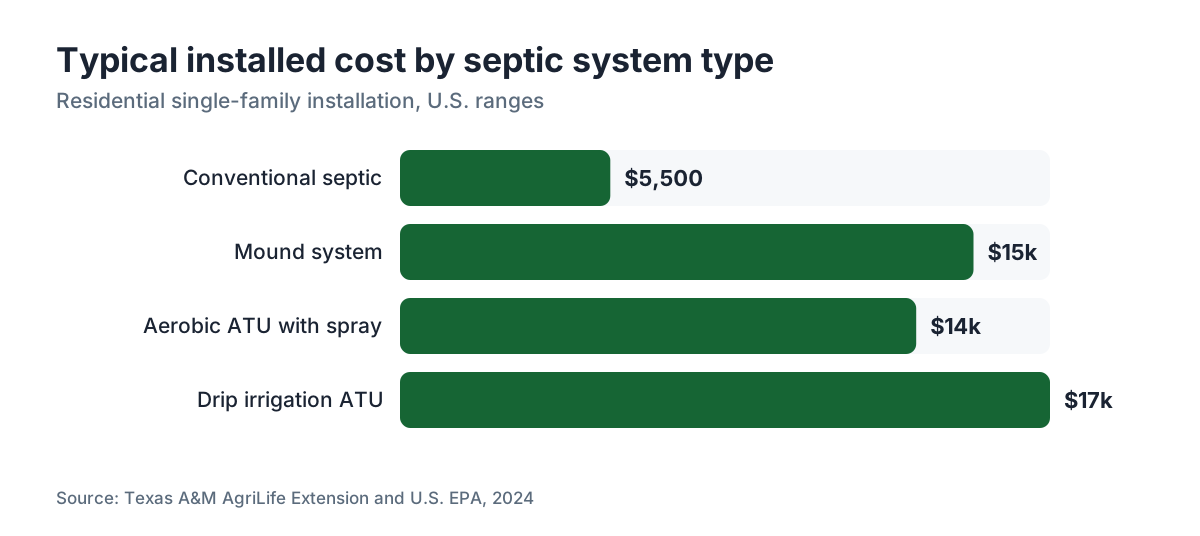
Installed cost runs roughly $10,000 to $20,000 for a standard residential system on a typical lot, based on contractor estimates across several states. Texas A&M AgriLife Extension, which tracks ATU costs in one of the highest-ATU-density states in the country, has published ranges of $10,000 to $17,000 for a complete residential install, including the tank, ATU unit, pump chamber, drainfield or spray heads, and electrical hookup. [2] Add subsurface drip or rocky terrain and you're past $20,000.
Four things drive the price: site conditions, system size, dispersal method, and local permit fees.
Site conditions matter more than anything else. If the installer has to break rock, haul in fill, or pump water out of a high water table, the cost climbs fast. A flat lot with sandy loam is the cheapest scenario there is. Caliche, heavy clay, or groundwater within four feet of grade adds thousands.
System size comes from bedroom count and daily flow estimates under your state's onsite wastewater code. Most states size residential ATUs at 500 to 1,500 gallons per day (GPD). A three-bedroom home usually needs a 500-GPD unit. A five-bedroom home may need 750 GPD or more.
Dispersal method is the second biggest variable after soil. Surface spray irrigation is cheaper to install than subsurface drip, but many counties make sprinkler heads meet setbacks from property lines, wells, and buildings, and some HOAs ban visible spray outright. Drip dispersal costs $2,000 to $5,000 more than spray but stays hidden and takes up less room.
Permit and inspection fees are all over the map. Some rural Texas counties charge $200 for a permit. Some suburban counties elsewhere charge $1,500 and want multiple site visits. Use 3 to 6% of total system cost as a rough placeholder, then get the actual fee schedule from your county health department before you finalize bids.
See the cost to install septic system breakdown for a full comparison against conventional and mound systems.
What are the permit requirements for an aerobic septic system?
Every state regulates onsite wastewater through an environmental or health agency, but the permitting itself happens at the county level. There's no single federal permit for a residential ATU, though the EPA sets the policy framework and most states have adopted NSF/ANSI Standard 40 as the baseline performance requirement for ATU equipment. [3]
The permit sequence usually goes like this: site evaluation (a licensed soil scientist or engineer), design approval by the county, installation by a licensed contractor, one or more inspections during the work, a final inspection before the system gets covered, then an operating permit or maintenance contract filed with the county. In Texas, the Texas Commission on Environmental Quality (TCEQ) requires ATU systems to be covered by a maintenance contract with a licensed company at the time of permitting. [4] That contract isn't optional, and you need proof of it for the operating permit.
NSF/ANSI Standard 40 is worth understanding. It requires a certified ATU to produce effluent averaging no more than 25 mg/L biochemical oxygen demand (BOD5) and 30 mg/L total suspended solids (TSS) over the test period. [3] When you're comparing brands during design, look for NSF 40 certification. An uncertified unit may not pass final inspection.
Setbacks vary by state but commonly put ATU components a minimum distance from property lines (typically 5 to 10 feet), water supply wells (usually 50 to 150 feet depending on soil), surface water, and the house foundation. Your designer pulls the local setback table during the site evaluation. On a tight lot, those setbacks are often what force a design change.
One practical note: get the permit application in early. In a lot of counties, review takes four to eight weeks. Start construction without a permit and you risk fines and forced removal of what you've installed. Homeowners have lost nearly finished installations because a contractor started before approvals came through.
What does the installation process look like, step by step?
From first call to first flush, the whole thing usually takes six to twelve weeks. The actual construction is two to four weeks of that, once the permit is in hand.
Step 1: Site evaluation (1 to 2 weeks). A licensed soil scientist or sanitarian visits, digs test holes to read the soil profile and restrictive layers, checks groundwater depth, and measures available area. In most states this generates a report that feeds the permit application.
Step 2: System design (1 to 3 weeks). A licensed designer (sometimes the same person, sometimes a separate engineer) specifies tank size, ATU model, pump chamber, dispersal type, and layout, all conforming to the state onsite code. The documents go to the county with the permit application.
Step 3: Permit approval (2 to 8 weeks, varies by county). The county reviews the design, may ask for revisions, and issues an installation permit.
Step 4: Excavation and tank installation (2 to 5 days). The installer excavates for the trash tank (pretreatment), the ATU compartment, and the pump chamber. These are often combined into one multi-compartment fiberglass or polyethylene tank, or set as separate tanks connected by pipes. Concrete tanks are common in some regions. Tanks get set level, bedded on compacted sand or pea gravel, and backfilled carefully to stop flotation. A common mistake here is rushing the backfill before the tanks are filled with water to hold them down.
Step 5: Plumbing and electrical (1 to 3 days). The air blower or compressor goes in (usually above grade in a small housing), float switches and alarms get wired, and the control panel is mounted. A licensed electrician does or supervises the electrical work in most states. The chlorinator or UV unit is plumbed in line on the outlet side.
Step 6: Dispersal field installation (1 to 3 days). For spray systems, risers and spray heads go in per the approved layout. For drip, tubing is laid in shallow trenches and tied to the pump chamber. For conventional subsurface dispersal, gravel trenches or chambers go in. See our guide to leach field installation for more on that piece.
Step 7: Inspections. Most counties want an inspection when the tanks are set and before backfill, and a second inspection of the dispersal field before covering. Some want a third look at the electrical and control panel. Don't skip these or let your contractor skip them. A missed inspection can void your operating permit.
Step 8: Final cover and startup. Once inspections pass, the excavations get backfilled, the site is graded, and the installer starts the system. The blower should be audible, a low hum, at startup. The installer should walk you through the control panel, the alarm, the chlorinator refill schedule, and what triggers a service call.
The installation errors that show up most often in state health department guidance: bad bedding that lets the tank shift, undersized blowers that can't hold dissolved oxygen, and spray heads set inside setbacks because someone mis-measured. All three cost real money to fix after the fact.
What are the main components of an aerobic septic system?
Knowing the parts helps you ask the right questions during bidding and understand what you're looking at during inspections.
Trash tank (pretreatment compartment). Raw sewage lands here first. Solids settle, grease floats, and partly clarified liquid moves to the aeration chamber. This compartment needs pumping on a regular schedule, same as a conventional septic tank. See septic tank pump out for typical schedules.
Aeration chamber. This is where the work happens. An electric blower or compressor forces air through diffusers at the bottom of the chamber. Aerobic bacteria multiply in the oxygen-rich water and break down organic compounds far faster than anaerobic bacteria can. Dissolved oxygen here should stay above 2 mg/L during normal operation, and most technicians check it on maintenance visits.
Clarifier or settling chamber. After aeration, the liquid passes into a quieter zone where bacterial floc (clumps of bacteria and organic matter) settles out. The cleaner liquid on top gets drawn off for disinfection and dispersal.
Disinfection unit. Two common types. Chlorination uses tablets in a contact chamber and costs less to install, but you buy and add tablets every one to three months. UV uses a lamp the effluent flows past, needs no consumables, but the lamp gets replaced every one to two years and cleaned in between.
Pump chamber. A separate tank holds the finished effluent and houses a submersible pump that doses the dispersal field on a timed or demand basis. Float switches set the high-water alarm.
Control panel and alarm. Mounts on the outside of the house or a nearby post. A red light or buzzer signals a high-water condition (pump failure, clogged line, stuck float). If your alarm goes off, call your maintenance provider, not a plumber, because the cause is almost always in the ATU itself.
Dispersal field. Spray heads, drip lines, or conventional subsurface chambers spread the treated effluent across the designated area. Because the effluent is treated to a higher standard, drip and spray options are allowed where raw-effluent application never would be.
How long does aerobic septic system installation take?
The construction phase, meaning excavation through final cover, usually takes two to four weeks for a standard residential system on a clear lot. That assumes a single-family home, no big site complications, and a contractor with the right equipment free.
The part that surprises homeowners is everything before construction. Permit review alone runs four to eight weeks in most counties. Add two weeks for the site evaluation and design, and you're looking at six to twelve weeks from the first call to a shovel in the ground. Total project time of ten to sixteen weeks from start to first flush is normal.
What stretches the timeline: rock excavation that needs a hydraulic breaker (one to three extra days of machine time), a high water table that needs dewatering (unpredictable), permit backlogs at the county health department (nothing you can do), and contractor scheduling in the busy seasons (spring and summer are peak in most regions).
Building a new home and timing the septic install around a construction draw or a closing date? Build in a buffer. The single most common cause of new-home closing delays in rural areas is a septic system that isn't approved in time.
What ongoing maintenance does an aerobic system require after installation?
This is the part homeowners underestimate when they compare bids. An aerobic system carries real ongoing costs a conventional system doesn't.
Mandatory maintenance contracts. Most states require a licensed provider to visit on a set schedule, typically every four to six months, and file a report with the county. Texas requires at least four inspections per year for the first two years, then at least two per year after that. [4] These contracts run $150 to $400 per year depending on region and terms.
Electricity. The blower runs continuously. A typical residential blower draws 100 to 300 watts. At the national average retail rate of about $0.16/kWh (EIA, 2024), a 200-watt blower costs roughly $280 a year to run. [5] Add the dosing pump (runs intermittently) and you're probably looking at $300 to $500 a year in added electricity over a gravity-fed conventional system.
Chlorine tablets or UV lamp. Chlorination runs $50 to $150 a year in tablets. UV lamps cost $80 to $200 to replace and need replacement every one to two years.
Pump-outs. The trash tank still fills with solids and needs pumping every two to three years, same as a conventional tank. A standard pump-out costs $250 to $500. The pump chamber occasionally needs pumping too.
Component replacement. Blowers typically last eight to twelve years. Submersible pumps last eight to fifteen. Float switches fail and cost $50 to $200 to swap. Set aside roughly $200 a year as a replacement reserve.
All in, budget $600 to $1,200 a year in ATU-specific costs on top of whatever a conventional system would cost. That's a real number to factor into total cost of ownership when you're deciding whether an aerobic system makes sense for your lot.
If you want to track maintenance records, service dates, and contractor contacts in one place, SepticMind helps you stay ahead of your county's reporting requirements.
What site conditions make an aerobic system necessary vs. conventional septic?
Most homeowners don't pick an aerobic system because they like it. They pick it because the site won't support a conventional system, or because local code forces the issue.
The situations that commonly push you toward an aerobic install:
Failed perc test. If soil percolation is too slow (most codes cap out around 60 to 120 minutes per inch), a conventional drainfield can't absorb effluent fast enough. An ATU makes cleaner effluent, which some codes let you disperse in soil that would fail for conventional effluent.
Small lot with tight setbacks. If you can't fit a primary drainfield plus the required reserve area while meeting every setback, a spray or drip system on an ATU may fit in a smaller footprint.
High water table. Most codes require the bottom of the drainfield to sit at least two to four feet above seasonal high groundwater. On flat coastal or river-adjacent lots, that often kills a conventional system at grade. An ATU with drip dispersal can sometimes go in a mounded or at-grade setup that meets the vertical separation.
Proximity to surface water. Some counties in sensitive watersheds (near lakes, bays, or drinking water reservoirs) require ATU-level treatment for any new install, no matter the lot size or soil.
Lot subdivision or density rules. Some counties apply ATU requirements to subdivisions above a certain density, even when the individual lots would pass for conventional.
If none of those apply and you've got good soil and a big lot, a conventional system is almost certainly the right financial call. Lower upfront cost, no electricity cost, no mandatory maintenance contract, and a simpler repair history all make conventional septic the better choice when the site allows it.
How do you choose an installer and what questions should you ask?
Licensing for ATU installation varies by state. In Texas, the installer must hold a TCEQ-issued Installer I or II license and be qualified for the specific system type. [4] In most states the equivalent is a licensed onsite wastewater installer with a specific ATU or NSF-40 endorsement. Verify the license directly with your state agency before you sign. A contractor licensed only for conventional septic should not be installing an ATU.
Questions worth asking before you sign:
- What NSF/ANSI 40-certified ATU brands do you regularly install, and why those?
- Who does the site evaluation and design, you or a subcontracted engineer?
- What does the permit fee include, and what's extra?
- Who handles the mandatory maintenance contract after install, and what's the annual cost?
- What's your warranty on parts and labor for installation defects?
- Can I see a completed install on a similar lot, or talk to a recent customer?
Get at least three bids. A bid that comes in way under market (say, under $8,000 for a standard residential install) is usually missing something: permit fees, electrical work, the pump chamber, or the dispersal field. Read the line items.
For operators running multiple ATU jobs and managing permits, maintenance schedules, and compliance paperwork across a customer base, SepticMind's operator software is built for that workflow.
Ask each bidder for their TCEQ or state license number and verify it. Ask for proof of general liability and workers' compensation insurance. A crew that cuts a water line or a gas line during excavation without insurance is your problem, not theirs.
What can go wrong during or after aerobic septic installation?
Installation failures happen more often than the industry likes to admit. Here are the ones that show up most.
Tank flotation. Backfill a tank before it's weighted down with water and groundwater pressure can push it right up. That's a catastrophic failure that means excavating and resetting the tank. Insist that tanks get filled with water before any backfill goes in.
Undersized blower. A blower sized for the tank volume but not for actual daily flow, or one losing capacity to worn impellers, makes effluent that doesn't meet NSF 40. The system passes at startup, then degrades over months. Your maintenance provider should check dissolved oxygen on every visit.
Improper electrical installation. ATUs need GFCI protection, proper grounding, and often a dedicated circuit. A poorly wired control panel is a fire risk and a reliability risk. In most states, an electrician pulls a separate permit for the ATU electrical work.
Spray head placement errors. Spray heads set too close to a property line, a well, or a building violate setbacks and fail final inspection. Worse, they create real public health risk. Treated effluent still carries pathogens at levels public health codes won't allow near wells or where people might contact the spray.
Ignoring the maintenance contract. After installation, some homeowners treat the maintenance contract as a nuisance expense and let it lapse. In Texas, a lapsed contract is a code violation subject to fines. Beyond the legal problem, a system without regular service fails faster. The aeration bacteria culture can collapse, the chlorinator runs dry, and the pump chamber alarm goes unnoticed until sewage surfaces in the yard.
For what to do when an existing system fails, see septic system repair.
Are there rebates or financing options for aerobic septic installation?
This is a spot where honest uncertainty is warranted. There's no federal rebate program specifically for aerobic septic installation as of 2025. USDA Rural Development offers loans and grants for water and wastewater systems in rural communities, mostly to municipalities and utility districts rather than individual homeowners, though some rural homeowners have used Section 504 Home Repair loans for septic work. [6]
State-level programs exist in a handful of states. Virginia's Department of Health has administered cost-share programs for onsite system upgrades in the Chesapeake Bay watershed. [8] Maryland has run similar programs. Florida's Department of Environmental Protection has funded septic-to-sewer conversions in certain areas, though those target sewer connection rather than ATU installs. [10] These programs open and close with legislative funding, so search your specific state plus "septic upgrade cost share" or "onsite wastewater financial assistance."
Some counties in Texas and elsewhere offer low-interest loans for septic installation through county health departments or economic development offices. Ask your county sanitarian.
On financing, many ATU installers offer payment plans or work with third-party lenders. A home equity line of credit (HELOC) is commonly used for septic installs over $10,000. The interest may be tax-deductible if the installation adds to your home's basis, but that's a question for your tax advisor, not your installer.
How does an aerobic system compare to other alternatives for difficult lots?
If your lot can't support a conventional system, you've got a few options besides an ATU. Here's a plain comparison.
| System Type | Typical Installed Cost | Requires Electricity? | Maintenance Contract Required? | Best For |
|---|---|---|---|---|
| Conventional septic | $3,000 to $8,000 | No | No | Good soil, adequate lot size |
| Aerobic ATU with spray | $10,000 to $17,000 | Yes | Yes (most states) | Poor soil, small lots, buffer zones |
| Mound system | $10,000 to $20,000 | Yes (pump) | No (in most states) | High water table, shallow soil |
| Drip irrigation ATU | $12,000 to $22,000 | Yes | Yes | Very tight lots, near surface water |
| Constructed wetland | $8,000 to $15,000 | Sometimes | Sometimes | Specific rural/hobby farm contexts |
Cost ranges are composites from Texas A&M AgriLife Extension [2] and EPA guidance [1]. Local costs vary a lot.
The mound system gets overlooked as an alternative to an ATU. It uses conventional-quality effluent but disperses it into an engineered mound of fill soil raised above natural grade. It doesn't need a continuous-run blower or a maintenance contract in most states, though it does use a pump for dosing. If your problem is groundwater or a shallow restrictive layer (rather than slow soil permeability), a mound may cost less over a ten-year horizon than an ATU.
For a full breakdown of installation costs across system types, see the cost to put in a septic tank page.
Frequently asked questions
How long does an aerobic septic system last?
The concrete or fiberglass tanks can last 30 to 40 years with proper care. Mechanical parts have shorter lives: blowers typically last 8 to 12 years, submersible pumps 8 to 15 years, and float switches 5 to 10 years. With a consistent maintenance contract and prompt repairs, the full system can serve a home for 20 to 25 years before a major rebuild is needed.
Can I install an aerobic septic system myself?
In most states, no. Installing an ATU requires a state-licensed onsite wastewater installer, a separate electrical permit pulled by a licensed electrician, and multiple inspections by the county health authority. A DIY install will fail inspection, may draw fines, and can create a genuine public health risk. The permit and license requirements exist for good reasons.
How often does an aerobic septic system need to be pumped?
The trash tank (pretreatment compartment) typically needs pumping every two to three years for a standard household, similar to a conventional septic tank. The pump chamber is pumped less often, usually only when a technician finds elevated sludge. Your maintenance provider assesses sludge depth on each visit and schedules pump-outs accordingly. See our guide on how often to pump a septic tank for benchmarks.
What happens if the aerator blower stops working?
Without aeration, the system reverts to anaerobic conditions. Treatment quality drops, odors appear, and effluent can fail NSF 40 thresholds within days to weeks. Your control panel alarm should trigger a high-water alert if a pump also fails, but a blower failure alone may not set it off. That's exactly why scheduled maintenance visits that check dissolved oxygen beat reactive service calls.
Does an aerobic septic system smell?
A working ATU produces less odor than a conventional septic system, because aerobic decomposition doesn't generate hydrogen sulfide the way anaerobic decomposition does. A bad smell from a surface spray system or the tank area almost always means the blower is failing, the chlorinator is empty, or the system is overloaded. Odor is a useful early warning. Investigate it promptly.
What can you not put in an aerobic septic system?
The same things that harm conventional systems: cooking grease, non-flushable wipes, feminine hygiene products, and pharmaceuticals in large quantities. ATUs are also sensitive to bleach and antibacterial cleaners in excess, because these can kill the aerobic bacteria culture in the aeration chamber. Use household cleaners in normal amounts, and avoid pouring bleach directly into drains in large or repeated doses.
Can an aerobic septic system be used for a business or commercial property?
Yes, though commercial sizing and permitting are more involved. Commercial systems are sized by daily flow, calculated from occupancy type and hours of operation under state code tables. A small office, campsite, or farm might use an ATU sized for 1,000 to 5,000 GPD. Higher-flow commercial applications typically require engineered design by a licensed PE and tougher permit review.
Is an aerobic septic system better for the environment than conventional?
In terms of effluent quality reaching the soil, yes. ATUs typically produce effluent with BOD5 below 25 mg/L and TSS below 30 mg/L, compared to conventional effluent averaging 130 to 180 mg/L BOD5. That matters near sensitive water bodies. The tradeoff is electricity use and the maintenance it takes to keep the system working. A neglected ATU can pollute more than a well-run conventional system.
What is the difference between an ATU and a conventional aerobic system with drip irrigation?
These describe the same general category from different angles. An ATU (aerobic treatment unit) refers to the treatment tank. Drip irrigation is a dispersal method. Many ATU installs use surface spray dispersal instead of drip. The choice between spray and drip comes down to lot layout, setback limits, HOA rules, and budget. Drip costs more to install but stays hidden and has a smaller dispersal footprint.
Do I need a maintenance contract and how much does it cost?
In most states with active ATU programs (Texas, Oklahoma, Florida, and others), yes, a maintenance contract with a licensed provider is legally required as a condition of your operating permit. Contracts typically run $150 to $400 per year and cover a set number of inspections. In Texas, four inspections per year are required in the first two years. Letting the contract lapse is a code violation subject to fines.
How do I know if my lot needs an aerobic system instead of conventional?
The site evaluation decides this. A licensed soil scientist or sanitarian tests soil percolation, measures depth to groundwater and restrictive layers, and checks available area against setbacks. If the soil fails the perc test, the lot is too small for a conventional drainfield plus reserve area, or groundwater is too shallow, the evaluator recommends an ATU or alternative system. You can't self-determine this. You need a professional site evaluation.
What inspections are required during ATU installation?
Most counties require at minimum an inspection of the installed tanks before backfill, an inspection of the dispersal field before covering, and a final inspection of the control panel and electrical work. Some want a fourth inspection of the plumbing connections. Every inspection must pass and be documented before the county issues the operating permit. Your installer schedules these. Don't let them skip a required step.
Can an existing conventional septic system be converted to aerobic?
Sometimes, yes. If the existing tank is in good shape and the right size, a retrofit ATU insert can be installed in it, adding an aeration chamber and converting the outlet. The dispersal field may also need upgrading depending on why the conversion is happening. Retrofit conversions cost less than a full install, typically $4,000 to $10,000, but they need a permit and inspection just like a new one. See septic tank repair for related scenarios.
Sources
- U.S. EPA, SepticSmart Program: Types of Septic Systems: ATUs can provide a higher level of treatment than conventional systems, making them suitable for sites where conventional systems would fail.
- Texas A&M AgriLife Extension, Aerobic Treatment Units for Onsite Wastewater Treatment: Typical residential ATU installation costs in Texas range from $10,000 to $17,000 fully installed.
- NSF International, NSF/ANSI Standard 40: Residential Onsite Wastewater Treatment Systems: NSF/ANSI 40 requires certified ATUs to produce effluent averaging no more than 25 mg/L BOD5 and 30 mg/L TSS.
- Texas Commission on Environmental Quality (TCEQ), On-Site Sewage Facilities Rules, 30 TAC Chapter 285: Texas requires ATU systems to be covered by a maintenance contract and inspected at least four times per year during the first two years of operation.
- U.S. Energy Information Administration, Electric Power Monthly, Average Retail Price of Electricity: National average retail electricity price approximately $0.16/kWh as of 2024, used to estimate annual blower operating cost.
- USDA Rural Development, Section 504 Home Repair Loans and Grants: USDA Rural Development offers Section 504 loans for home repairs including sanitation systems for eligible rural homeowners.
- U.S. EPA, Onsite Wastewater Treatment Systems Manual (EPA/625/R-00/008): Conventional septic effluent averages 130 to 180 mg/L BOD5; ATU-treated effluent targets below 25 mg/L BOD5 under NSF 40 criteria.
- Virginia Department of Health, Environmental Health Programs: Virginia has administered cost-share programs for onsite wastewater system upgrades in the Chesapeake Bay watershed.
- Florida Department of Environmental Protection, Onsite Sewage Programs: Florida DEP regulates onsite sewage treatment systems and has administered programs targeting septic system upgrades in environmentally sensitive areas.
Last updated 2026-07-09