Installing a septic tank cost: what you'll actually pay in 2025
By the SepticMind Editorial Team
TL;DR
- Installing a septic tank costs $3,000 to $10,000 for the tank alone, or $6,000 to $20,000 for a complete new system with a drain field.
- Replacing an existing tank usually runs $3,000 to $7,500.
- Soil type, tank material, system type, and local permit fees drive the price the most.
- Get at least three contractor bids.
What does it cost to install a septic tank in 2025?
A full septic system installation runs $6,000 to $20,000. Most single-family homes land between $9,000 and $15,000 once you add up the tank, drain field, labor, and permits [1]. The tank by itself, installed but without the leach field work, costs $3,000 to $10,000 depending on material and capacity [2].
Those numbers feel wide because they are. A 1,000-gallon concrete tank dropped into forgiving sandy soil in a rural county with cheap permit fees is a different job entirely from a 1,500-gallon fiberglass tank going into clay that fails its perc test and forces a mound system. Same homeowner, same need, wildly different bill.
Replacement runs lower. Swapping out a failed or deteriorating tank while the drain field stays usable typically costs $3,000 to $7,500, because you skip the drain field excavation [2]. See septic tank repair for cases where a fix beats a full replacement.
Want the whole picture on a brand-new system from scratch? The cost to install septic system guide breaks down every component line by line.
What are the main factors that change the final price?
Tank size. Most residential tanks hold 1,000 to 1,500 gallons. A 1,000-gallon concrete tank costs roughly $700 to $1,200 for the tank itself. A 1,500-gallon tank runs $1,200 to $2,200 [2]. Labor and equipment add $1,500 to $4,000 on top. Households with four or more bedrooms often need 1,500 gallons or more under local code.
Tank material. Concrete is the most common and usually the cheapest. Fiberglass and polyethylene tanks cost more upfront ($1,500 to $3,500 for the tank) but weigh less, which cuts crane and equipment costs. Fiberglass resists corrosion better in acidic soils. Concrete cracks over decades. Fiberglass can flex and distort under heavy vehicle traffic if it sits too shallow.
Soil conditions and perc testing. The soil percolation test (perc test) decides what kind of drain field you need. Pass it, and you get a conventional leach field. Fail it, or drain too slowly, and you may need a mound system ($10,000 to $20,000 added) or an alternative like drip irrigation ($15,000 to $30,000 total) [1][3].
Excavation difficulty. Rocky soil, high groundwater, steep grades, or a long run from the house to the install site all add excavation time and equipment cost. Budget $500 to $2,000 extra for difficult digging.
Permits and inspections. State and county health departments require permits for any new install. Fees range from under $200 in rural counties to over $1,500 in high-regulation jurisdictions [4]. Some states make you hire a licensed engineer to sign off on the design, adding $500 to $2,000.
Geographic labor markets. A septic contractor in rural Tennessee prices differently than one outside Boston. Regional labor gaps alone can move your total by $2,000 to $5,000.
How much does it cost to replace a septic tank?
Replacing a septic tank, the tank only and not the whole system, costs $3,000 to $7,500 in most markets [2]. That covers excavation to expose and remove the old tank, hauling it away, setting the new tank, connecting it to existing inlet and outlet pipes, backfilling, and basic site restoration.
When does a straight tank swap make sense? When the drain field checks out healthy and the tank itself has cracked, the baffles have corroded and let sludge escape, or the lid has collapsed. Pay for a septic tank inspection first. That money is well spent before you commit to anything.
Some replacements get pricier. If the old tank is concrete and was poured in place (many pre-1980 tanks were), breaking it up and hauling it out costs more than pulling a precast tank. Add $500 to $2,000 for demolition of a poured-in-place tank. Tight access can force a crane or a specialized excavator, adding $800 to $2,500.
One warning about the word "replacement." Some contractors quote the tank and baffles only. Others quote the tank, the inlet/outlet tees, and relaying the first few feet of pipe. Make every bid describe the same scope before you compare numbers.
For a full comparison of septic system repair options versus replacement, that guide walks through the decision in detail.
Septic tank installation cost breakdown by component
Here is a realistic line-by-line breakdown for a mid-range new system on a typical 3-bedroom home with good soil:
| Component | Typical Cost Range |
|---|---|
| Perc test and soil evaluation | $150, $500 |
| Design and engineer stamp (if required) | $500, $2,000 |
| Permits | $200, $1,500 |
| Tank (1,000 to 1,500 gal, concrete) | $700, $2,200 |
| Tank installation labor and equipment | $1,500, $4,000 |
| Distribution box or manifold | $100, $400 |
| Conventional leach field (3 bed home) | $3,000, $7,000 |
| Inspection fees | $100, $500 |
| Site restoration (grading, seeding) | $300, $1,500 |
| Total (conventional system) | $6,550, $19,600 |
These figures line up with what the EPA SepticSmart program calls typical residential septic costs, which it says can "range from $3,000 to $10,000 or more depending on the region and type of system" [3].
For a mound system or aerobic treatment unit, add $8,000 to $20,000 to the totals above. Alternative systems cost more to install and require ongoing maintenance contracts, often $300 to $500 per year [1].
See the dedicated septic tank installation guide for a closer look at what each phase looks like on the ground.
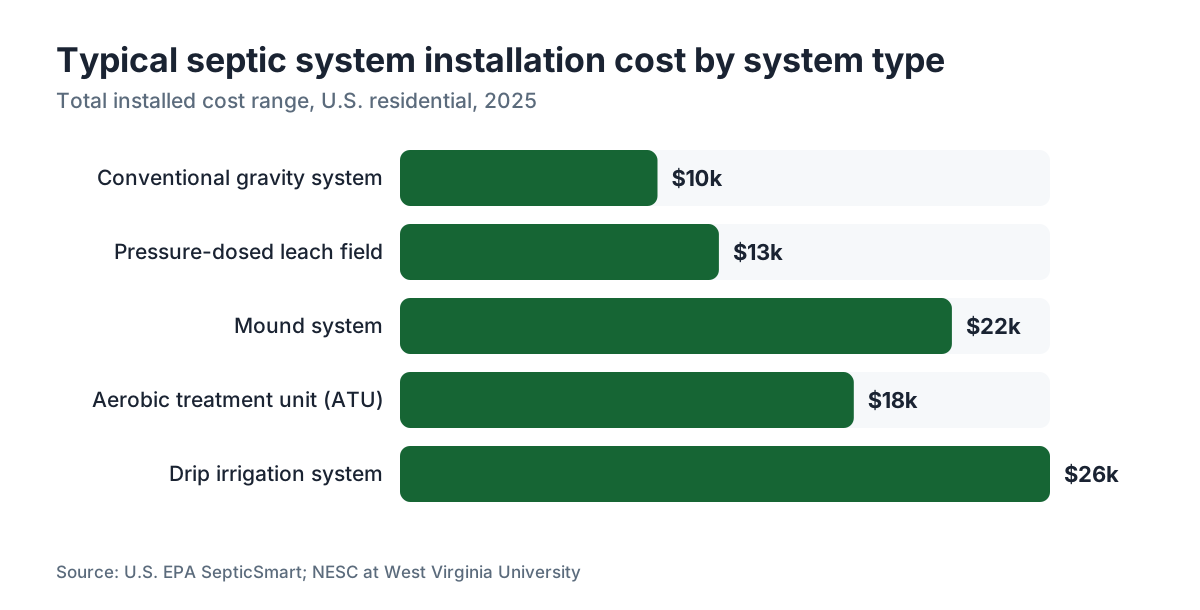
How do conventional, mound, and alternative systems compare in cost?
Not every lot can take a conventional gravity-fed system. Your soil test decides which system type is even legal on your property, and system type is probably the single largest cost variable in the whole project.
| System Type | Typical Total Install Cost | Best For |
|---|---|---|
| Conventional gravity (leach field) | $6,000, $15,000 | Good-draining sandy or loamy soil |
| Pressure-dosed leach field | $8,000, $18,000 | Moderately slow-draining soil |
| Mound system | $15,000, $30,000 | High water table or slow-perc soil |
| Aerobic treatment unit (ATU) | $12,000, $25,000 | Poor soil, small lots, sensitive areas |
| Drip irrigation system | $18,000, $35,000 | Very poor soil, tight setback requirements |
| Constructed wetland | $8,000, $20,000 | Certain rural jurisdictions, large lots |
Conventional systems win most of the time because they are simpler and cheaper. But clay-heavy soil or a shallow water table can take that choice away from you. The EPA notes that "more than one in five U.S. households depend on individual onsite systems," and many of those need engineered alternatives because of site constraints [3].
Buying a property with unknown soil? Budget for the worst case. Finding out after closing that you need a $25,000 mound system is a brutal surprise.
How to replace a septic tank: what the process actually looks like
You should be hiring a contractor for this. It is licensed work in every state. Here is what happens once they show up:
- Inspection and assessment. Before any digging, a pumper or inspector locates the existing tank, pumps it out, and figures out whether the tank alone is the problem or whether the drain field is compromised too. Replacing only the tank when the field is also failing is an expensive mistake. A septic tank pump out has to happen before any tank work.
- Permits. Your contractor pulls permits from the county or state health department. In most states, you cannot legally install a septic tank without a permit and a licensed installer [4]. DIY installation is illegal in nearly every jurisdiction.
- Excavation. The old tank gets exposed. A failed concrete tank may be pumped, crushed in place (some jurisdictions allow this), or hauled out whole. Crushing in place saves $500 to $1,500 on hauling but means filling the void with clean fill.
- New tank setting. The new tank arrives on a flatbed. An excavator or crane sets it into the prepared hole. The inlet and outlet elevations have to match the existing pipes exactly, or the contractor re-grades the piping.
- Connection and inspection. Inlet and outlet baffles (or tees) go in. The health department inspector verifies the install before backfill. Never let a contractor backfill before inspection. You may have to dig it all up again.
- Backfill and restoration. The tank gets backfilled with clean fill, compacted carefully to prevent settling. The surface is graded and seeded or sodded.
A straightforward tank swap takes one to three days. Jobs with access problems or pipe re-routing take longer.
Do not drive vehicles over the tank area for at least six months. Concrete needs time to cure, and the backfill needs time to settle.
What affects how much to replace a septic tank specifically?
Beyond the general install factors, tank replacement has a few cost drivers worth knowing.
Age and accessibility of the existing tank. Older tanks, especially from the 1960s and 1970s, may have been poured in place and are harder to remove. Tanks buried deeper than 5 feet cost more to excavate safely. Tanks near trees fight root intrusion, which complicates the dig.
Whether the outlet baffle has failed. A collapsed outlet baffle lets solids pass into the drain field. If that has been going on for years, the field may already be clogged. Replacing the tank while ignoring a failed field is a short-term fix. A smart contractor runs a camera down the field lines before quoting tank-only replacement [8].
Tank size for your current household. If your family grew since the original system went in, replacement is a good time to upsize. Going from 1,000 to 1,500 gallons adds roughly $500 to $1,000 to the tank cost and can save you from early system failure.
State-specific rules. Some states require that when you replace a tank, the new system meets current code, even if the old one was grandfathered. That can force a drain field upgrade too. Check with your county health department before you assume a like-for-like swap is legal [4].
For maintenance that stretches tank life, how often to pump septic tank covers the EPA's recommended schedule.
Are there ways to reduce the cost of septic tank installation?
Yes, but only a few levers move real money. Here is what works and what is mostly wishful thinking.
Get three bids minimum. This is the single most effective cost control you have. Bid spreads of $3,000 to $5,000 for identical scopes are common. Contractors carry different overhead and different amounts of work in their queue.
Time it right. Late fall and winter are slow seasons for septic contractors across most of the country. Some offer 5 to 15 percent discounts to fill the schedule. The tradeoff is frozen or saturated ground, which can complicate excavation.
Test the soil before you commit. Spending $150 to $500 on a proper perc test before you buy a lot or lock in a system design can save you from a $15,000 mound system you never priced in.
Pick concrete if cost is the priority. Concrete tanks are almost always cheaper to buy, and local suppliers stock them. Fiberglass has real advantages (corrosion resistance, lighter weight), but the premium rarely pays off on a standard install.
Do not cheap out on the drain field. I have watched homeowners negotiate hard on the drain field only to have it fail within five years because the contractor cut corners on gravel depth or pipe slope. The field is the most expensive part to fix after the fact. Pay to have it done right the first time.
Check for financing or state assistance. Some state revolving fund programs offer low-interest loans for septic installation, especially in rural areas. The EPA's Clean Water State Revolving Fund passes money to states, which can move it through to homeowners [5]. USDA Rural Development also runs grants and loans for wastewater work in eligible rural communities [6]. Ask your county health department what is active near you.
SepticMind's maintenance tracking tools help homeowners document their system from day one, which matters when you sell the house or need warranty records from the installer.
What permits and regulations govern septic tank installation?
Every state regulates onsite wastewater systems, and most have handed day-to-day permitting to county or local health departments. There is no single federal permit for residential septic installation, but EPA guidance shapes the state frameworks [3].
The EPA's SepticSmart program says "regulations vary widely by state and locality" and tells homeowners to "check with your local health department or permitting agency" before any installation or replacement work [3].
In practice, every installation needs:
- A site evaluation (soil test, perc test, setback measurements from wells, property lines, and waterways)
- A system design, sometimes with a licensed engineer's stamp
- A permit issued before work begins
- An inspection by the health department before backfilling
- A final permit closure or record drawing filed with the county
Setback requirements vary a lot. Many states require 50 to 100 feet between a septic tank and a private well, and 10 to 25 feet from a property line [4]. Blow a setback and you can void the permit and pay to relocate the whole system.
Contractors must be licensed in all 50 states to install septic systems. In most states, the contractor pulls the permit on your behalf and is legally on the hook for meeting code. Verify their license with your state licensing board before you sign anything.
For your state's current rules, the EPA's SepticSmart resources link to state programs and contacts [3].
Signs your septic tank needs replacement (more than repair or pumping)
Most septic tanks last 20 to 40 years, depending on material and maintenance. Concrete tanks can run 40 years or longer with good care [7]. Steel tanks (common before 1980) often fail in 20 to 25 years from corrosion [2].
Signs that point to replacement instead of repair:
- Structural cracks or collapse. Concrete cracks as it ages. Small cracks may be patchable. A tank that has shifted, cracked across a seam, or lost its lid needs replacing.
- Backups that keep coming despite regular pumping. If you are septic tank pumping every year instead of every 3 to 5 years, the tank may be too small or structurally shot.
- Sewage surfacing in the yard. This can mean a drain field failure. It can also mean a cracked tank dumping effluent straight into the soil.
- Age over 30 years with no inspection history. An uninspected tank this old is a liability, especially at sale.
- Rust-through on a steel tank. Steel corrodes from the inside out. By the time you see external rust, the tank has probably been failing for years.
Before you commit to replacement, get a septic tank inspection that includes a camera check of the outlet baffle and inlet pipe. Sometimes what looks like a dead tank is a blockage or a baffle repair costing $200 to $800 [8]. Septic tank cleaning followed by an inspection often clears up the picture without a full replacement.
How long does a new septic tank installation take?
From permit application to backfill, plan for two to eight weeks. Permit processing is usually the longest stretch, one to four weeks in most jurisdictions. The physical install, once permits are in hand, takes one to three days for a standard tank-and-field job.
Complex jobs stretch out. Mound systems, difficult terrain, or projects that need engineered design review can run three to six months start to finish.
On a tight timeline, like buying or selling a house with a failing system? Tell the contractor and the health department up front. Some jurisdictions offer expedited permit review for an extra fee. Some do not.
After installation, do not load the system heavily for the first few weeks. The drain field biomat (the bacterial layer that treats effluent) takes four to six weeks to establish in a new system. Spread out laundry loads, skip the marathon showers, and go easy on the garbage disposal during this window.
Regular septic tank emptying on a 3 to 5 year schedule from day one is the best thing you can do to get full value out of the money you just spent [9].
Frequently asked questions
How much does it cost to replace a septic tank?
Replacing a septic tank (the tank only, not the drain field) typically costs $3,000 to $7,500 in most U.S. markets. That covers pumping out the old tank, excavation, tank removal, setting and connecting the new tank, backfill, and basic site grading. Difficult access, deep burial, poured-in-place concrete demolition, and tank upsizing all push the price higher.
How much does a full septic system installation cost?
A complete new septic system, including tank, distribution, and leach field, runs $6,000 to $20,000 for a conventional gravity system on a standard lot. Mound systems and aerobic treatment units cost $15,000 to $35,000. Permit fees, soil testing, and engineer design fees add $500 to $3,500 on top of contractor labor and materials.
How long does septic tank installation take?
The physical installation takes one to three days for most standard jobs. The full timeline from permit application to final inspection is typically two to eight weeks. Permit processing is the biggest time variable. Complex system designs that need engineer review, or jurisdictions with heavy permit backlogs, can stretch the process to several months.
What size septic tank do I need for my home?
A 1,000-gallon tank is the standard minimum for a 1 to 3 bedroom home in most states. A 4-bedroom home usually requires 1,250 gallons, and many codes require 1,500. Your local health department's sizing table (based on bedroom count or daily flow) sets the minimum. Upsizing by one tier is cheap insurance against frequent pumping problems.
Is it cheaper to repair or replace a septic tank?
Repair is cheaper when the problem is isolated: a cracked baffle costs $200 to $800 to fix, and a collapsed riser costs $300 to $1,000. Replacement makes more sense when the tank is structurally cracked, is a corroded steel tank over 20 years old, or is letting solids reach the drain field. Get an inspection before you decide.
Can I install a septic tank myself?
No, not legally. All 50 states require a licensed installer and a permit for septic tank installation or replacement. Unpermitted installs can bring fines, required removal, and problems at property sale. Even if you own the equipment, the permit and inspection process exists to protect groundwater and neighboring wells. Hire a licensed contractor and verify their license with your state board.
How much does a perc test cost?
A soil percolation test typically costs $150 to $500 for a standard residential lot. Some engineering firms bundle the perc test with a full site evaluation and system design for $800 to $2,000. The perc test result decides what type of system is legal on your lot, so it has to happen before any design or contractor bidding.
How often does a septic tank need to be pumped after installation?
The EPA recommends pumping every three to five years for a typical household septic tank. Actual frequency depends on tank size and household usage. A 1,000-gallon tank serving four people may need pumping every two to three years. A 1,500-gallon tank for two people may go five to seven years. Sticking to a schedule keeps solids out of the drain field.
Does homeowners insurance cover septic tank replacement?
Standard homeowners policies exclude septic failure from wear, age, or lack of maintenance, which covers most replacement scenarios. Some policies cover sudden and accidental damage, like a tank cracked by a falling tree. A handful of insurers offer septic riders or endorsements for an added premium. Read your policy and ask your agent specifically about septic coverage.
What permits are required to install a septic tank?
A local or county health department permit is required in every state before any septic installation or replacement. Most jurisdictions also require a soil evaluation, a system design (sometimes engineer-stamped), and a mid-installation inspection before backfill. The contractor typically pulls the permit for you. Fees range from under $200 in rural counties to over $1,500 in some metro jurisdictions.
How much more does a mound septic system cost than a conventional system?
A mound system typically costs $15,000 to $30,000 total, compared to $6,000 to $15,000 for a conventional gravity system. The extra cost comes from engineered fill material, a pump chamber, a pressure-dosed distribution network, and more labor. Mound systems also need annual maintenance inspections and pump checks, adding $200 to $500 per year in ongoing costs.
What is the life expectancy of a new septic tank?
Concrete tanks last 20 to 40 years, sometimes longer with good maintenance and neutral soil chemistry. Fiberglass and polyethylene tanks can last 30 to 40 years or more and resist corrosion in acidic soils. Steel tanks, no longer installed new, typically fail in 15 to 25 years. Pumping every three to five years is the biggest factor in reaching maximum life expectancy.
Are there financial assistance programs for septic tank installation?
Yes. The EPA's Clean Water State Revolving Fund provides money to states that can pass low-interest loans to homeowners for onsite wastewater work. USDA Rural Development also offers grants and loans for wastewater infrastructure in eligible rural areas. Contact your county health department or state environmental agency to find out what programs are active where you live.
How much does a 1,000-gallon septic tank cost to install?
A 1,000-gallon concrete septic tank costs $700 to $1,200 for the tank itself. Installation labor, equipment, and connection work adds $1,500 to $4,000. Total installed cost for the tank only (not the drain field) runs $2,200 to $5,200 in most markets. A full system with leach field for a 3-bedroom home using a 1,000-gallon tank is typically $6,000 to $13,000.
Sources
- HomeAdvisor / Angi, Septic Tank Installation Cost Guide: Full septic system installation costs $6,000 to $20,000 for most single-family homes; alternative systems like mound or ATU systems add $8,000 to $20,000 or more
- HomeGuide, Septic Tank Cost Guide: Septic tank replacement (tank only) costs $3,000 to $7,500; a 1,000-gallon concrete tank costs $700 to $1,200 for the tank itself; steel tanks typically fail in 20 to 25 years
- U.S. EPA SepticSmart Program: EPA SepticSmart states septic costs 'range from $3,000 to $10,000 or more depending on the region and type of system' and that 'more than one in five U.S. households depend on individual onsite systems'
- EPA Onsite Wastewater Treatment Systems: State and Local Programs: Every state regulates septic installation; permits, licensed installers, and health department inspections are required before backfill; setback requirements from wells and property lines vary by jurisdiction
- U.S. EPA Clean Water State Revolving Fund (CWSRF): The CWSRF provides funding to states that can be passed through as low-interest loans to homeowners for septic system installation and repair
- USDA Rural Development Water and Waste Disposal Programs: USDA Rural Development offers grants and loans for water and wastewater infrastructure in eligible rural communities, which can include individual septic system assistance
- University of Minnesota Extension, Septic System Owner's Guide: Concrete tanks can last 40 years or longer with proper maintenance; regular pumping every 3 to 5 years is the primary maintenance action that extends tank life
- North Carolina State University Extension, Septic Systems and Their Maintenance: A failing outlet baffle can allow solids to enter the drain field; baffle replacement costs $200 to $800 and is far cheaper than drain field rehabilitation
- EPA SepticSmart, How to Care for Your Septic System: EPA recommends pumping household septic tanks every three to five years as the standard maintenance interval
- National Environmental Services Center (NESC) at West Virginia University: Mound systems typically cost $15,000 to $30,000 installed; aerobic treatment units run $12,000 to $25,000; both require ongoing maintenance contracts averaging $300 to $500 per year
Last updated 2026-07-09