Advanced septic inspection: what it covers and what it costs
By the SepticMind Editorial Team
TL;DR
- An advanced septic inspection uses video cameras, hydraulic load tests, dye tracing, and sometimes electronic locating to evaluate every component of your system, not the tank lid alone.
- Expect to pay $300 to $650 depending on system complexity and state rules.
- New Jersey and several other states require this depth of inspection at property sale.
What is an advanced septic inspection and how is it different from a basic one?
A basic septic inspection is roughly what it sounds like: a licensed inspector opens the tank, checks liquid levels, looks for obvious scum and sludge buildup, and confirms the outlet baffle is intact. That takes 20 to 30 minutes and usually costs $100 to $200. It tells you whether the tank is overdue for pumping. It tells you almost nothing else.
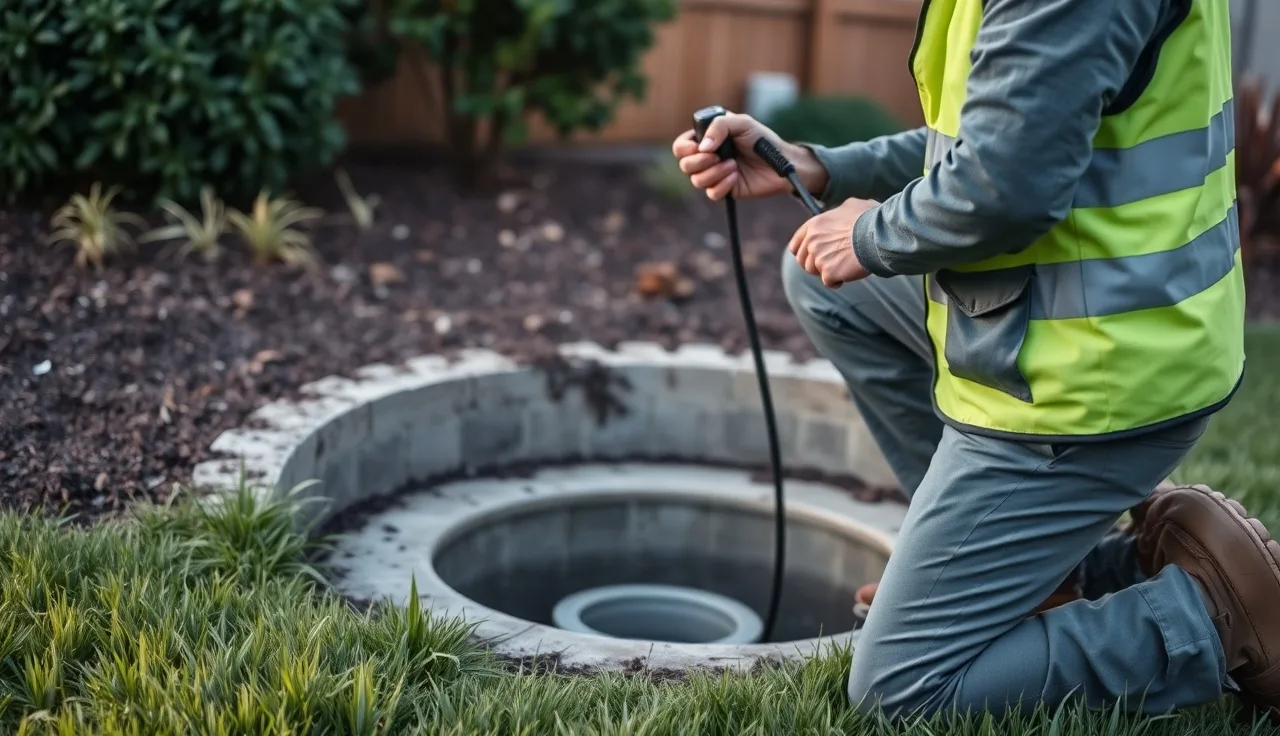
An advanced septic inspection is a full system evaluation. The inspector locates all components (tank, distribution box, pump chamber if present, drain field laterals), assesses flow into and through each one, often runs a camera through the outlet line and into the distribution box, and performs a hydraulic load test to confirm the drain field is actually accepting effluent under stress. Some inspectors add dye testing, where a fluorescent dye is flushed through the system so the inspector can watch for surface breakout over the drain field. [1]
The difference matters a lot at resale. A basic inspection can miss a drain field that's a year away from failure, a cracked distribution box, or a broken outlet pipe hidden under the soil surface. An advanced inspection is built to catch those things before they become a $15,000 to $50,000 replacement problem. [2]
The EPA's SepticSmart program puts it plainly: homeowners should have their systems inspected by a professional every three years, more often for systems with pumps, and that inspection should cover all accessible components. [1] "All accessible components" is the phrase that matters. A camera and a load test are what make that promise real.
What does an advanced septic inspection actually include?
The exact checklist varies by inspector and state, but here is what a thorough advanced inspection covers.
Component location and mapping. The inspector locates the septic tank, any pump chambers, the distribution box (D-box), and the drain field laterals, often using a probe rod or electronic locator. In older systems, records may not exist, so the locating step alone eats time.
Tank condition assessment. The tank is pumped or the inspector uses a riser or access port. They check for cracks, root intrusion, baffles, risers, and liquid level. Liquid above the outlet baffle signals a problem downstream. [3]
Video camera inspection. A flexible camera goes through the outlet pipe from the tank toward the distribution box, looking for breaks, root intrusion, offset joints, and buildup. This is the step most basic inspections skip and the step most likely to find hidden failures.
Distribution box inspection. The D-box splits effluent evenly across all drain field laterals. Inspectors check for cracks, silt buildup, and uneven flow. An unlevel or cracked D-box overloads one lateral and starves the others, killing a drain field years ahead of schedule. [10]
Hydraulic load test. Multiple toilets and faucets run at once for a set period (often 15 to 30 minutes) to put the system under realistic stress. The inspector watches for ponding above the drain field, surface breakout, or pump alarms. [4]
Dye testing (common but not universal). A non-toxic fluorescent dye goes into the system. The inspector walks the drain field area and any downhill surface water looking for the dye to emerge. Most states allow this as a supplemental test rather than a primary diagnostic.
Pump and alarm testing. For systems with effluent pumps or pump-to-pressure distribution, the inspector verifies the pump runs, checks float switches, and confirms the high-water alarm works.
Written report. Every legitimate advanced inspection ends with a written report noting what was found, what was tested, and what the inspector recommends. Some states require the report on a specific form. Keep this document. It matters for insurance, resale, and any future repair work.
See our septic tank inspection article for a side-by-side comparison of inspection types if you're unsure what your situation requires.
How much does an advanced septic inspection cost?
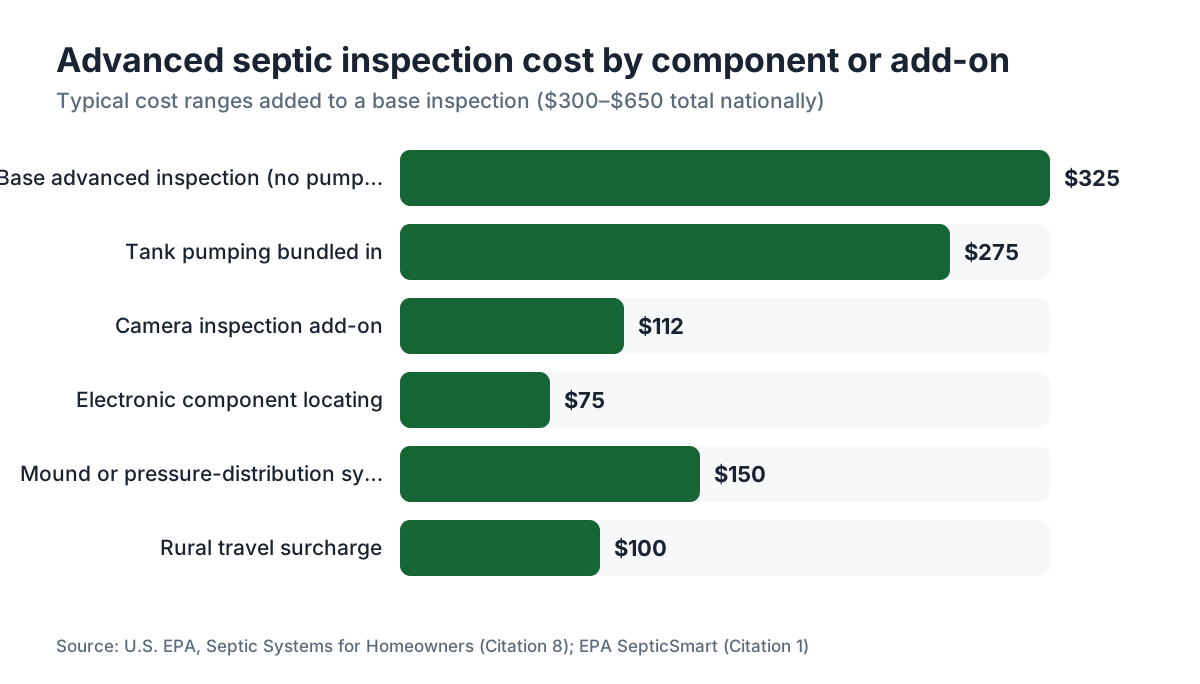
Nationally, advanced septic inspections run $300 to $650. [8] The wide range reflects system complexity (a 3-bedroom house with a gravity system is simpler than a 5-bedroom with a mound system and pump chamber), whether pumping is included, local labor markets, and state rules that add mandatory steps.
Here's what pushes the number higher:
| Factor | Typical added cost |
|---|---|
| Camera inspection included | $75, $150 |
| Tank pumping bundled in | $150, $400 |
| Mound or pressure-distribution system | $100, $200 extra |
| Electronic component locating | $50, $100 |
| Mandatory state-specific report form | Often included, sometimes $50 |
| Travel to rural property | $50, $150 |
In New Jersey, advanced inspections for property transfers tend to run $400 to $650 because the state's standards are among the strictest in the country. [5] The inspection must follow N.J.A.C. 7:9A and be done by a qualified inspector approved by the local Board of Health, and the report goes to the buyer and often to the county health department. [5]
If someone quotes you $150 for an "advanced" inspection, ask exactly what's included. That price usually means they opened the tank and looked. It does not mean camera, load test, and D-box evaluation.
Some real estate agents steer buyers toward cheaper inspectors to keep the deal moving. Worth knowing. The $200 you save on a cut-rate inspection is a bad trade against a failed drain field.
When do you legally need an advanced septic inspection?
It depends entirely on your state and sometimes your county. No single federal law requires a septic inspection at sale. The EPA recommends them; states and localities mandate them. [1]
States that require inspection at property transfer include New Jersey, Massachusetts, Maine, and Connecticut, among others. Many states leave it to individual counties. In New Jersey, N.J.A.C. 7:9A requires a full septic evaluation before a property with an onsite system can transfer. The inspection must be done by a qualified inspector approved by the local Board of Health, and the system must pass or be repaired or replaced before closing. [5]
Massachusetts has Title 5, one of the better-known state onsite wastewater codes. Title 5 requires a system inspection at sale (and in some cases after significant addition or alteration), with pass/fail criteria including hydraulic load testing under 310 CMR 15.000. [6]
Even where no law requires one, your mortgage lender may. FHA and VA loans often require a septic inspection as part of the property condition review, though the required depth is not always defined by loan type.
Outside of property transfers, you might need or want an advanced inspection if:
- Your system is more than 20 years old and has no inspection history
- You're seeing slow drains, sewage odors, or wet spots over the drain field
- You're adding a bedroom or sharply increasing water use
- A neighbor's system recently failed (shared geology is a real factor)
- You want documentation before a major renovation
The EPA's SepticSmart guidance recommends inspection every three years for conventional systems and annually for systems with mechanical components. [1]
What are the NJ-specific advanced septic inspection requirements?
New Jersey has some of the most detailed onsite wastewater rules in the country. They live in N.J.A.C. 7:9A, the Standards for Individual Subsurface Sewage Disposal Systems, administered by the New Jersey Department of Environmental Protection (NJDEP) and enforced locally through county health boards. [5]
For a property transfer inspection in NJ, the inspector must:
- Locate and expose all system components
- Document the tank size, type, condition, and baffle status
- Inspect the distribution box for cracks and flow balance
- Evaluate the soil absorption system (drain field) by hydraulic loading
- Determine whether any component is failing, malfunctioning, or inadequate for the home's bedroom count under current code
- Submit a written report on the approved form to the local Board of Health
If the system fails, the seller typically must repair or replace it before closing, or the parties negotiate an escrow. New Jersey does not let a buyer simply waive the requirement and take a failing system in most circumstances.
One wrinkle unique to NJ: inspectors compare existing system capacity to the current bedroom count. An older system permitted for a 2-bedroom house but now serving a 4-bedroom house may be flagged as undersized even if it works fine today. This surprises a lot of sellers. [11]
County health departments in NJ hold real authority over individual inspections, often more than NJDEP at the parcel level. Bergen, Ocean, Monmouth, and Morris counties each keep their own approved inspector lists and sometimes extra local forms. Confirm the inspector you hire is on the approved list for the specific county where the property sits.
For operators working across multiple NJ counties, platforms like SepticMind are built to keep inspection records, county forms, and maintenance schedules in one place instead of scattered across trucks and file cabinets.
What can an advanced inspection find that a basic one misses?
The list is longer than most homeowners expect.
Crushed or broken outlet pipe. A heavy vehicle drove over the yard years ago. The pipe from the tank to the D-box is cracked and partly collapsed. Effluent backs up toward the tank. A basic inspection sees a full tank. A camera sees the obstruction.
Uneven distribution. The D-box tilted over the years. One lateral gets 80% of the flow, and that section of the field is saturated. The other laterals look fine from the surface. A load test with careful observation of the D-box catches this. [10]
Root intrusion. Tree roots enter through pipe joints and eventually block flow. Cameras find them before they close the pipe off entirely.
A pump starting to fail. An effluent pump running at reduced capacity still functions during a basic inspection. A load test that runs the pump continuously for 20 minutes can reveal it's struggling against realistic demand.
Hydraulic failure in the drain field. The soil has biomat buildup (a layer of biological material that cuts permeability). The system may work fine on low daily use but back up under a full load test. This is the finding that matters most, because biomat failure often means leach field repair or replacement. [4]
Inadequate capacity for bedroom count. Common in NJ, as noted, but relevant anywhere: an inspector calculating flow capacity against the current bedroom count may find the system was never sized right, or that additions made it undersized.
Groundwater intrusion. High groundwater can push back into the tank through cracks, raising the liquid level artificially and cutting effective tank capacity. A basic inspection sees a full tank and recommends pumping. An advanced inspection figures out why it fills so fast.
How do you find and vet a qualified advanced septic inspector?
Start with your state health department or environmental agency. Most states that regulate onsite systems keep a list of licensed inspectors, and in states with mandatory transfer inspections (NJ, MA, ME), an unlicensed inspector means the inspection carries no legal standing. [5] [6]
In New Jersey, check with NJDEP and confirm the inspector with the specific county health board. In Massachusetts, Title 5 inspectors must be licensed by the state and pass a DEP-approved training course. [6]
Beyond the license, here's what to ask before hiring:
- Do you perform a hydraulic load test? (If no, keep looking.)
- Do you camera the outlet line and D-box? (Optional but telling.)
- Do you give a written report with photographs?
- Are you familiar with N.J.A.C. 7:9A (or your state code)?
- Do you carry errors and omissions insurance?
Skip inspectors offered through the real estate listing agent. The conflict of interest is real even when the individual inspector is honest. Get your own referral from the county health department, a neighbor who recently sold, or a plumber who does septic work regularly.
Pricing should be plain upfront. If the quote doesn't say whether pumping is included, ask before you schedule. A septic tank pump out is often needed to inspect the tank interior properly, and some inspectors bundle it while others don't.
How long does an advanced septic inspection take?
Plan for two to four hours on site for a conventional 3- or 4-bedroom system. Larger properties, systems with multiple tanks or pump chambers, or systems where component locations are unknown can run four to six hours.
Here's roughly how that time breaks down:
- Locating and exposing components: 30 to 60 minutes
- Tank pumping (if included): 20 to 40 minutes
- Tank interior inspection and camera work: 20 to 30 minutes
- D-box inspection: 15 to 20 minutes
- Hydraulic load test (running water, watching the field): 30 to 60 minutes
- Drain field surface inspection (walking for breakout and odors): 20 to 30 minutes
- Inspector notes and a verbal summary with the homeowner: 15 to 20 minutes
The written report usually arrives within 24 to 72 hours. For NJ property transfers, confirm turnaround with your inspector, because county health boards may have review periods that affect your closing timeline. Build in a two-week buffer before a scheduled closing. It's cheap insurance against a delayed deal.
What happens if your system fails an advanced inspection?
Failing an inspection doesn't automatically mean full replacement. The outcome depends on what failed and by how much.
Minor failures, like a cracked baffle, a broken riser, or an unlevel D-box, are often repaired for $200 to $1,500, then the system gets re-inspected. [2] See septic tank repair for what individual component repairs usually involve.
Moderate failures, like a partly blocked outlet pipe or a failing pump, fall in the $500 to $5,000 range depending on access and component cost.
Major failures mean trouble. A saturated or hydraulically failing drain field is the serious one. Drain field repair (trenching and adding media, or installing a new lateral) can run $2,000 to $10,000. Full system replacement, including a new tank and drain field, runs $15,000 to $50,000 depending on soil conditions, lot size, and whether alternative technology (mound, drip, aerobic) is required. [2] See cost to install septic system for current regional ranges.
In a real estate deal, a failed inspection triggers one of three outcomes: the seller repairs or replaces the system before closing, the price drops by the estimated repair cost, or the buyer walks. Which one happens is a negotiation. A concrete inspector's report with specific findings gives both sides a real basis instead of guessing.
For borderline failures, some states allow conditional passes, where the system passes for current occupancy but must be repaired or replaced if the bedroom count increases or the system degrades further within a defined window. New Jersey uses this mechanism in specific circumstances. [5]
SepticMind's operator platform lets service companies track failed inspections, schedule follow-up work, and document repairs in one workflow, which matters when a county health board wants repair verification before a closing can proceed.
How should you prepare your property for an advanced septic inspection?
A little prep makes the inspection faster and the results more accurate.
Pull your septic records first. The county health department should have permit records for any system installed after the locality started requiring permits, usually the 1970s or later. Your town's tax assessor sometimes has old plot plans showing component locations. If you have any past inspection or pumping reports, grab those too.
Do not pump the tank right before the inspection. This feels backward, but inspectors want the tank at its working liquid level so they can read scum and sludge thickness. Pumping 48 hours before an inspection throws away information. [3]
Make sure water is available for the load test. The inspector needs to run water through the system in volume, so confirm the supply is on and working.
Clear access to inspection ports and the drain field. Move any garden beds, furniture, or equipment sitting over the tank or field. Dense grass is fine; a locked storage shed on top of the D-box is not.
Write down any symptoms you've seen: slow drains, gurgling, odors inside or out, wet spots in the yard. Tell the inspector before they start, not after. That context helps them focus on likely problem areas and read borderline findings.
If the tank has no risers (access ports at grade), ask about adding them after the inspection. Risers make every future inspection and septic tank pumping faster and cheaper, and they pay for themselves within two to three pump cycles.
How often should you get an advanced septic inspection?
The EPA's SepticSmart program recommends professional inspection every three years for conventional gravity systems and annually for systems with mechanical components (pumps, aerobic treatment units, media filters). [1] Reasonable baselines.
In practice, most homeowners get an advanced inspection at purchase and then coast on basic inspections, or none at all, until they sell again. That's a mistake. A $400 advanced inspection every five years is cheap insurance against a $30,000 drain field replacement.
For systems over 20 years old, annual or every-other-year inspection makes sense. Concrete tanks develop cracks. Drain fields accumulate biomat. Pump switches corrode. None of these announce themselves with obvious symptoms until they're already expensive.
The how often to pump septic tank question is related but separate. The EPA recommends pumping every three to five years for a typical household, but household size, tank volume, and garbage disposal use all shift that schedule. An inspector doing an advanced inspection should tell you where you stand on pumping based on actual sludge and scum measurements, not a fixed calendar. [1] [3]
Frequently asked questions
What is the difference between a basic and an advanced septic inspection?
A basic inspection opens the tank, checks liquid level, and looks at baffles. It takes 20 to 30 minutes and costs $100 to $200. An advanced inspection adds camera work on the outlet line, a full distribution box evaluation, a hydraulic load test under real flow, and a formal written report. It takes two to four hours and costs $300 to $650. The advanced version is what catches drain field problems before they turn catastrophic.
Is an advanced septic inspection required when selling a house in New Jersey?
Yes. New Jersey requires a full septic system evaluation before property transfer under N.J.A.C. 7:9A. The inspection must be done by a qualified inspector approved by the county Board of Health, must include hydraulic loading, and the written report must go to the local health authority. If the system fails, it generally must be repaired or replaced before closing. The exact process varies slightly by county.
How much does a septic inspection cost in New Jersey?
Advanced septic inspections in New Jersey typically cost $400 to $650, at the upper end of the national $300 to $650 range, because the state's standards require more steps and mandatory reporting to county health boards. Pumping may or may not be included in that quote. Confirm exactly what's covered before hiring, and check that the inspector is on your county's approved list.
What does a hydraulic load test involve?
A hydraulic load test runs large volumes of water through the system at once, usually by flushing multiple toilets and running faucets for 15 to 30 minutes. The inspector then watches the drain field surface for ponding, breakout, or odors, and monitors any pump chambers or alarms. The goal is to stress the system closer to a fully occupied household rather than the trickle of flow present during a typical inspection.
Can an advanced septic inspection tell you how many years the drain field has left?
Honest answer: no, not precisely. An inspector can tell you whether the drain field is functioning now, showing early stress, or actively failing. They can't hand you a specific lifespan in years, because that depends on future water use, soil biology, groundwater, and maintenance. What they can do is classify the field as pass, marginal, or fail, and explain what they based that call on.
Does an advanced inspection always include pumping the septic tank?
Not always. Some inspectors bundle pumping; others charge separately. Pumping is often recommended because it opens up a full interior inspection of the tank walls and floor and gives accurate sludge and scum measurements. If pumping isn't in your quote, ask whether the inspector needs it to finish a proper evaluation. For a property transfer inspection, you'll almost certainly need the tank pumped as part of the process.
What happens if a septic system fails an inspection right before closing on a home?
The transaction stalls until the issue is resolved. Typically the parties negotiate: seller repairs or replaces the system, the price drops by the estimated cost, or funds go into escrow pending repair. Which outcome happens is a legal and financial negotiation. Your inspector's written report with specific findings is the key document. Walking away is also a legitimate option if the repair estimate is large and no agreement forms.
Are dye tests reliable for detecting drain field failure?
Dye tests are useful but not definitive. A positive result (dye surfacing above the drain field or in nearby water) is a clear sign of failure. A negative result doesn't guarantee the field is healthy, because dye may not surface even in a failing system if the soil is still absorbing effluent slowly. Most inspectors use dye testing as a supplement to, not a replacement for, hydraulic load testing. Some states don't accept it as a primary method.
How do I find a licensed septic inspector in New Jersey?
Start with the New Jersey DEP and your county health department. NJ inspectors working on septic systems hold state licenses or specific county health board approvals. Each county (Bergen, Ocean, Morris, Monmouth, and the rest) keeps its own approved inspector list. Don't rely on the real estate agent's recommendation; contact the county health department directly for the official list.
Can I be present during the advanced inspection?
Yes, and you should be. Being present lets you ask questions in real time, understand what the inspector is seeing, and get a verbal summary before the formal report lands. You can also point out symptoms you've noticed, like slow drains or wet spots, that might otherwise go unreported. Most inspectors expect homeowners or buyer representatives to attend and will walk you through findings as they go.
Does an advanced septic inspection cover the house drain lines inside the home?
No. A septic inspection starts where the house plumbing exits the foundation and covers everything outward: the main sewer line to the tank, the tank, the distribution box, and the drain field. Interior plumbing is a separate scope for a plumber or home inspector. If you're worried about the interior sewer line, ask whether the inspector can run a camera from a cleanout outside the foundation.
How long is an advanced septic inspection report valid?
Most states that require transfer inspections treat the report as valid for a set period, typically two to three years, if the system passed and nothing changed at the house. Massachusetts Title 5, for example, sets a two-year validity in most cases. New Jersey's validity depends on county rules but generally runs two years. Check with your county health board. If the property sits unsold past that window, a new inspection is required.
What is a septic system inspection report supposed to contain?
A proper advanced inspection report includes property and system identification, tank size and material, baffle condition, liquid level at the time of inspection, camera findings, D-box condition and flow balance, hydraulic load test results, drain field surface observations, pump and alarm test results (if applicable), a clear pass or fail determination, recommended repairs, and photographs of each component inspected. In NJ and MA, reports must follow state-specific forms.
Sources
- U.S. EPA, SepticSmart Program: EPA recommends professional septic inspection every three years for conventional systems and annually for systems with mechanical components; inspection should cover all accessible components.
- U.S. EPA, Onsite Wastewater Treatment Systems information: Full system replacement including tank and drain field can run $15,000 to $50,000 depending on soil conditions and system type.
- Penn State Extension: Inspectors evaluate scum and sludge thickness at the time of inspection; pumping immediately before removes diagnostic information.
- University of Minnesota Extension: Biomat accumulation in drain field laterals reduces permeability and causes hydraulic failure; hydraulic load testing is the primary method for detecting this before surface breakout.
- New Jersey Department of Environmental Protection, N.J.A.C. 7:9A Standards for Individual Subsurface Sewage Disposal Systems: N.J.A.C. 7:9A requires a full septic evaluation before property transfer in NJ, performed by a qualified inspector approved by the local Board of Health, including hydraulic loading and written report submission.
- Massachusetts DEP, Title 5 Septic System Regulations, 310 CMR 15.000: Massachusetts Title 5 requires septic system inspection at property sale with specific pass/fail criteria including hydraulic load testing; reports valid for two years.
- U.S. EPA, SepticSmart Homeowner Guidance: EPA SepticSmart states inspections should cover all accessible components of the system.
- U.S. EPA, Septic Systems for Homeowners: Advanced inspections including camera work, D-box evaluation, and load testing typically cost $300 to $650 nationally depending on system complexity.
- Maine Department of Environmental Protection: Maine requires septic inspection at property transfer as part of state subsurface wastewater disposal rules.
- University of Georgia Extension: Distribution box inspection for cracks and flow balance is a standard component of thorough advanced septic system evaluation.
- New Jersey Department of Environmental Protection: NJ inspectors compare existing system capacity to current bedroom count; systems permitted for fewer bedrooms than currently exist may be flagged as undersized even if physically functional.
- U.S. EPA, Septic Systems Funding and Costs: EPA documents average septic system replacement costs reflecting the $15,000 to $50,000 range for full system replacement.
Last updated 2026-07-09