Aerobic septic system inspection: what it covers and what it costs
By the SepticMind Editorial Team
TL;DR
- An aerobic septic system inspection checks the aerator, chlorinator, spray heads or drip emitters, alarm panel, and effluent quality.
- Most states require inspections every 4 to 12 months by a licensed provider.
- Expect to pay $150 to $500 per visit, often bundled into an annual contract.
- Skip them and you risk permit violations, a dead treatment tank, and a health hazard.
What is an aerobic septic system inspection?
An aerobic septic system inspection is a hands-on check of every mechanical and biological part of your treatment system. A conventional gravity tank mostly needs a septic tank pump out every three to five years. An aerobic treatment unit (ATU) is a different animal. It has pumps, an air compressor, a chlorinator, spray heads or drip lines, and an alarm panel, and all of it needs checking on a schedule.
Inspectors chase two questions. Is the equipment running right? And is the treated effluent clean enough to be sprayed on or near the surface? That second question is what sets ATU inspection apart from a standard septic tank inspection. Surface-applied effluent can touch people and pets, so regulators treat water quality as a public health matter, not a formality.
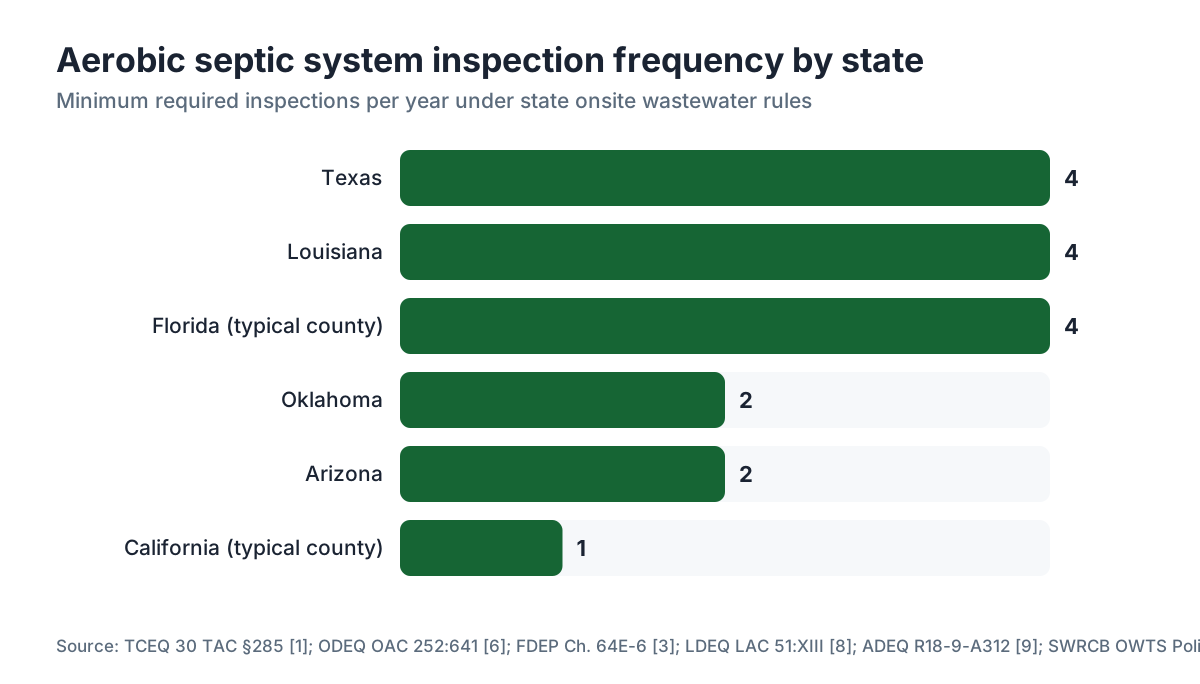
Most state programs spell out the inspection scope in their onsite wastewater rules. Texas requires maintenance providers to inspect ATUs at least four times a year under 30 TAC Chapter 285 [1]. Oklahoma requires two per year. Some Florida counties require monthly checks. Whatever your local rule says, treat it as the floor, not the ceiling.
A real inspection covers six areas: the pretreatment (trash) tank, the aeration chamber, the pump and dosing system, the disinfection unit, the dispersal field, and the alarm and control panel. Skip one and the inspection is incomplete.
Why do aerobic systems require more frequent inspections than conventional septic?
More moving parts, more ways to fail, and treated water that goes closer to the surface. That's the whole reason.
A conventional system is mostly passive. Solids settle, liquid flows by gravity to a leach field, and soil finishes the job underground. An aerobic system adds an air compressor that pushes oxygen into the treatment chamber, so aerobic bacteria break down waste faster and cleaner. The result is effluent clean enough to spray on a lawn. That only holds if the equipment keeps working.
Kill the air compressor and aerobic bacteria die within hours. You slide back to anaerobic conditions, and effluent quality drops fast. Let the chlorinator run dry and pathogens sail through untreated. Clog a spray head and effluent pools on the ground. None of these failures show up from your kitchen window.
The EPA's SepticSmart program says aerobic systems "require more maintenance than conventional systems" [2]. That maintenance requirement is not a suggestion. It is the reason regulators allow the technology in tight soils and sensitive areas at all.
There's a paperwork trap too. Most ATU permits are issued on the condition that a licensed maintenance provider holds a service contract and files inspection reports with the permitting authority. Let that contract lapse and you can be in violation of your operating permit even if the system runs perfectly.
What does an inspector actually check on an aerobic septic system?
Here's what a competent inspection covers, part by part.
Pretreatment (trash) tank. The inspector checks liquid levels, measures scum and sludge depth, and confirms the inlet and outlet baffles are intact. Sludge within six to eight inches of the outlet baffle means pumping is due. See septic tank pumping for what that involves.
Aeration chamber. The diffuser or aerator gets checked for fouling and proper operation. Dissolved oxygen (DO) in the chamber should read 1.0 mg/L or higher, and some state rules set a minimum. A DO meter goes into the chamber on the spot. Foam or a bad odor inside means the bacterial community is struggling.
Pump and dosing system. The submersible effluent pump gets tested for flow and float switch activation. Wiring and junction boxes get checked for corrosion. The inspector confirms dose volume and timing match the permitted design.
Disinfection unit. For chlorine tablet systems, the inspector confirms tablets are present, the contact chamber is full, and the feeder isn't clogged. UV systems need bulb intensity checks instead. EPA guidance points to a residual chlorine target near 0.5 to 1.0 mg/L in the effluent [2].
Dispersal system. Spray heads run through a full cycle so the inspector can see coverage, clogging, and broken heads. Drip systems get pressure checks and emitter counts. The inspector also hunts for ponding, wet spots, and that suspiciously lush green stripe that means effluent is surfacing.
Alarm and control panel. Every permitted ATU has a high-water alarm. The inspector lifts the float by hand to confirm the alarm goes off, both light and sound. Timer settings get compared to the permit.
Recordkeeping. A written report goes to the homeowner and, in most states, to the regulatory authority. It documents readings, deficiencies, and any corrective action.
Start to finish, expect 45 minutes to 2 hours depending on system size and condition.
How often does an aerobic septic system need to be inspected?
State rules vary more than most homeowners expect. The table below lays out requirements for several states with lots of ATUs.
| State | Minimum inspection frequency | Regulatory authority |
|---|---|---|
| Texas | 4 per year (quarterly) | TCEQ, 30 TAC §285.91 [1] |
| Oklahoma | 2 per year | ODEQ, OAC 252:641 |
| Florida | Varies by county; many require quarterly | FDEP Chapter 64E-6 [3] |
| Louisiana | 4 per year | LDEQ LAC 51:XIII |
| California | Varies by county; often annual | SWRCB [4] |
| Arizona | 2 per year minimum | ADEQ R18-9-A312 |
Those are state minimums. Your county or local health department can require more, especially if your system sits near a water body or in a protected watershed.
I'd go quarterly no matter what your permit demands. Aerator and chlorinator problems build fast, and a quarterly check catches them before effluent quality slides far enough to trigger a health issue or a neighbor's complaint.
Got a system with a rough history, or one past 10 years old? Ask your provider to swing by every couple of months for a quick operational look between formal visits. That's a lot cheaper than a dead component you find too late.
How much does an aerobic septic system inspection cost?
A standalone inspection where the tech checks every component and files a report runs $150 to $350. Add chlorine tablet replenishment and it climbs to $200 to $400. Toss in a pump test or effluent sampling and you're at $300 to $500 for that visit.
Most homeowners pay through an annual maintenance contract instead. A typical contract covering quarterly inspections, chlorine tablets, minor repairs, and the required reporting runs $400 to $900 a year depending on region. Texas and Oklahoma have dense ATU markets and competitive service industries, so they sit at the low end. Rural areas with few licensed providers push to the high end or past it.
Pumping is a separate line item when it comes up during a visit. Septic tank pumping for the pretreatment compartment usually adds $250 to $500. Most ATU pretreatment tanks need pumping every one to three years.
Repairs are their own thing. A failed aerator motor runs $200 to $600 for parts and labor. A dead effluent pump is $300 to $800. Not small numbers. Still far below a full septic system repair caused by letting a small problem run unchecked.
Nobody has clean national data on average ATU inspection costs. The figures here come from industry pricing surveys and state extension guidance, and your local market may differ.
What qualifications should an aerobic system inspector have?
This is where homeowners get burned. Not every septic pumper or plumber is licensed to inspect and service an ATU.
Most states with real ATU populations require inspectors to hold a specific onsite wastewater license or ATU maintenance provider certification. Texas requires ATU service providers to hold a licensed maintenance provider designation under 30 TAC Chapter 285 [1]. Oklahoma providers must be licensed by ODEQ. Florida requires certification under its onsite sewage treatment program.
Beyond the state license, many manufacturers require their own certification. Infiltrator, Norweco, Jet, and others all run training tracks. A provider certified on your brand knows the specific failure modes and calibration specs for your unit, which beats a generic checklist every time.
Before you hire anyone, ask to see:
- Their state license number (verify it on the regulator's website)
- Manufacturer certification for your specific system brand
- Proof they submit inspection reports to your state or county authority
Can't produce all three? Find someone else. An inspection that never gets reported to the regulatory authority does not satisfy your permit, no matter how well the work was done.
What happens if an aerobic system fails inspection?
Failing inspection rarely means your system is dead. It means the inspector found one or more deficiencies that need correction.
Minor stuff (low chlorine tablets, a clogged spray head, a loose wire) usually gets fixed on the spot during the visit. The inspector notes the finding, documents the repair, and the report shows the system back in compliance.
Major deficiencies are another story. A failed aerator, a burned-out effluent pump, a cracked disinfection chamber, or effluent testing above the permitted coliform limit all demand documented follow-up. Most states require the provider to notify the homeowner in writing and, for serious failures, notify the regulatory authority too.
Run the system in a failed state and you can catch a notice of violation from the permitting authority. Fines vary by state but typically land at $100 to $500 per day in Texas and similar markets [1]. Worse, if failed effluent reaches a neighbor's property or a water body, the state environmental agency can order the system offline until it's repaired.
So fix deficiencies fast. A failed aerator found in January that you push to March because "money's tight right now" can snowball into an expensive septic tank repair once the biology in the tank collapses. Small problems stay cheap only while they're small.
How is an aerobic system inspection different from a real estate transaction inspection?
Buying or selling a home with an ATU means a heavier inspection than the routine maintenance kind.
A transaction inspection runs on two layers. First, a licensed inspector (a home inspector or a septic specialist, depending on state rules) verifies the system is mechanically operational, has a valid operating permit, and isn't in violation. Second, many lenders and buyers want evidence the system can handle the home's bedroom count.
The septic tank inspection for a sale usually includes everything in a standard maintenance visit plus a review of the original permit and as-built drawings, a check that the installed system matches the permit, an assessment of the dispersal field, and often an effluent sample sent to a lab for coliform testing.
Transfer inspections cost more, usually $300 to $700. Some states require the seller to bring the system into compliance before transfer. Texas requires operating permit violations to be disclosed and, in some county programs, corrected before deed transfer.
Buyers, do this: ask for the last three to five inspection reports from the maintenance provider. A system with steady quarterly reports showing minor tablet swaps is a far better buy than one where nobody can find any inspection history. No records almost always means no service contract, which almost always means deferred maintenance you'll inherit.
What should homeowners do between professional inspections?
You're not a licensed inspector, and you shouldn't be adjusting timers or cracking open sealed components. But you can do real monitoring between visits.
Check the alarm panel at least monthly. Every ATU has a high-water alarm light, usually red or amber. If it's on, call your provider that day. Don't wait for the next scheduled inspection.
Listen to the aerator. Most ATUs have an above-ground air pump or a unit near the tank lids, and you should hear a steady hum. Silence means no air is going in. Grinding or rattling means a bearing is going. Either way, call.
Walk the dispersal area after a dose cycle. Wet or muddy patches where the ground should be dry, standing water near spray heads, or a bright green stripe over the field lines are all worth reporting.
For chlorinated systems, buy simple pool test strips and check residual chlorine in the final effluent chamber. Your provider can show you where to dip the strip. A reading below 0.5 mg/L usually means depleted tablets or a clogged feeder.
Keep a plain log: date, what you saw, whether anything looked off. Hand it to your provider when they arrive. Providers who keep records digitally can fold that input right in, and platforms like SepticMind help operators track site-specific notes across visits so nothing slips between quarterly reports.
Keep water use steady. A sudden flood of use, like a full house of guests for two weeks, can overwhelm the biology in the aeration chamber. Spread out laundry and skip dumping big volumes of water in a short window.
What are common aerobic system problems found during inspections?
These are the findings that show up over and over in what licensed inspectors and state extension programs report.
Depleted chlorine tablets. Probably the single most common finding. Homeowners forget to restock, or the feeder jams. Easy fix, ugly consequence if ignored, because untreated effluent heads straight to the spray field.
Clogged or broken spray heads. Mineral scale and debris plug nozzles. A broken head can spray effluent the wrong direction or not at all. Replacement heads cost $5 to $20 each. The work is finding and fixing them during a full system cycle.
Failed air compressor or aerator. These run 24 hours a day and last 3 to 10 years depending on brand and conditions. When one fails, treatment quality drops within 24 to 48 hours. An inspector who reads low dissolved oxygen should test the aerator right then.
Float switch failure. Floats stick, corrode, or fail open. A stuck float can run the effluent pump nonstop (burning it out) or never run it at all (flooding the system).
Grease in the pretreatment tank. High-grease households, especially ones running a garbage disposal hard, build a grease layer that swamps the trash tank and pushes solids into the aeration chamber. The fix is pumping plus, usually, a talk about kitchen habits. Septic tank cleaning handles this one.
Drainfield issues. ATUs make cleaner effluent than conventional systems, but dispersal fields still wear out. Biomat in spray fields, clogged drip emitters, and compacted soil under spray zones all turn up in older systems.
The University of Florida's IFAS Extension has documented aerator failure and disinfection failure as the two most common causes of ATU non-compliance in Florida's regulatory program [5]. Those two findings drive the majority of notice-of-violation letters.
How do aerobic septic system services and maintenance contracts work?
Aerobic septic services almost always run on a contract, not call-as-needed pricing, and there's a solid reason. Most state operating permits require a continuous service agreement on file with the permitting authority. The contract isn't just a deal between you and a provider. It's part of your compliance.
A standard aerobic service contract covers:
- All scheduled inspection visits (quarterly in most states)
- Chlorine tablet replenishment each visit
- Minor adjustments to timers, floats, and spray heads
- State-required reporting and paperwork
- Emergency callout within a set response window (often 24 to 48 hours)
What contracts usually leave out: major component replacements (pumps, aerators, UV bulbs), tank pumping, and dispersal field repairs. Read the exclusions before you sign.
Contract prices run $250 to $600 a year in competitive markets and $500 to $1,200 in rural or thin-competition areas. Get quotes from at least two licensed providers. Ask specifically whether they file inspection reports electronically to your state agency, because paper-only shops sometimes let reporting lapse.
For operators running multiple ATU accounts, the report workflow eats most of the administrative time. Scheduling, recordkeeping, and regulatory reporting across dozens or hundreds of accounts is where digital tools (operators after a cleaner workflow often evaluate platforms like SepticMind for this exact job) cut overhead.
If your provider goes out of business, getting a new contract in place is on you, immediately. Don't let coverage lapse even for a month, especially in states that audit permit records.
How long does an aerobic septic system last, and how does inspection history affect lifespan?
A well-maintained ATU has a design life of 20 to 30 years for the concrete or fiberglass tank. The mechanical parts run shorter: aerators 3 to 10 years, effluent pumps 5 to 15 years, control panels 10 to 20 years depending on exposure.
Inspection history moves the needle here. Systems on steady quarterly inspections show better component longevity in every state extension study I've read, because problems get caught at the minor-adjustment stage instead of the full-replacement stage. A clogged diffuser cleaned at inspection costs almost nothing. That same diffuser left to strain the compressor for 18 months can burn out a $400 unit.
The dispersal field is often the limiting factor. Even with clean effluent, surface spray systems develop soil compaction and biomat problems after 15 to 20 years. Buying an older home with an ATU? Ask specifically about dispersal field condition and any renovation history.
When an ATU fails past repair, the replacement bill hurts. A new ATU install typically runs $10,000 to $20,000 or more depending on size and site. For the full picture, see cost to install septic system. Against that, $400 to $900 a year in maintenance looks like cheap insurance.
One thing I'd watch: once your system hits about 15 years, ask your provider for an honest condition read on the dispersal field and tank structure at your next visit. Don't wait for a failure to start that conversation.
Frequently asked questions
How often does an aerobic septic system need to be inspected by law?
It depends on your state. Texas requires four inspections per year under 30 TAC Chapter 285. Oklahoma and Arizona require at least two. Florida requirements vary by county but are often quarterly. Check your operating permit and your state onsite wastewater regulations for the exact requirement at your address. Missing the required frequency can put you in violation of your system's operating permit.
What is the average cost of an aerobic septic system inspection?
A standalone inspection visit typically costs $150 to $350. Most homeowners pay through an annual maintenance contract covering quarterly inspections, chlorine tablets, and state reporting, which runs $400 to $900 a year in most markets. Rural areas with fewer licensed providers run higher. Pumping, when needed, adds $250 to $500 separately.
Can I inspect my aerobic septic system myself?
You can do basic monitoring: check the alarm panel, listen for the aerator, watch the spray heads during a dose cycle, and test chlorine residual with pool strips. But the formal inspection your state permit requires must be done by a licensed maintenance provider. DIY monitoring between visits is valuable and does not satisfy regulatory requirements on its own.
What happens if my aerobic septic system fails inspection?
Minor deficiencies like low chlorine or a clogged spray head usually get fixed on the spot. Major failures, such as a broken aerator or effluent testing above permitted coliform limits, require documented follow-up. Unresolved violations can bring fines, typically $100 to $500 per day in states like Texas, and in serious cases the regulator can order the system offline until repaired.
What is checked during an aerobic septic system inspection?
Inspectors check the pretreatment tank for sludge and scum levels, the aeration chamber for dissolved oxygen and aerator function, the effluent pump and float switches, the disinfection unit (chlorine tablets or UV), the spray heads or drip emitters, and the alarm and control panel. A written report documents all readings and any deficiencies found.
Do I need an aerobic septic system inspection to sell my house?
In most states, yes. A real estate transaction inspection for an ATU verifies the permit is current, the system is mechanically functional, and there are no unresolved violations. Many lenders require it. Some states require the seller to correct violations before the deed transfers. Budget $300 to $700 for a transaction inspection versus a routine maintenance visit.
How do I find a licensed aerobic septic system inspector near me?
Start with your state's environmental or health department website, which usually keeps a searchable database of licensed onsite wastewater maintenance providers. In Texas that's the TCEQ license lookup; in Florida it's the FDEP contractor search. You can also ask your ATU manufacturer for a list of certified service providers who know your specific equipment.
What is the difference between an aerobic system service contract and a one-time inspection?
A service contract covers all scheduled inspections, chlorine replenishment, minor adjustments, and state reporting for a year. A one-time inspection covers only that single visit. Because most state permits require a continuous service agreement on file with the permitting authority, a one-time inspection alone generally does not satisfy your compliance obligation.
How does chlorine testing work during an aerobic septic inspection?
The inspector tests residual chlorine in the effluent chamber, typically targeting 0.5 to 1.0 mg/L per EPA guidance. They use a colorimetric kit or digital meter. If residual chlorine is too low, they check the tablet feeder for jams and restock the tablets. If it's too high, they may slow the feeder rate to avoid harming the spray field area.
How long does an aerobic septic system inspection take?
A routine maintenance inspection typically takes 45 minutes to 2 hours. What adds time: systems with multiple treatment chambers, a dispersal field that needs walking across the full spray zone, repairs done on the spot, and effluent sampling for lab analysis. Real estate transaction inspections take longer because they also involve reviewing permit documents.
What are the most common deficiencies found during aerobic septic inspections?
The most common findings are depleted chlorine tablets, clogged or broken spray heads, failed or failing air compressors, and float switch problems. The University of Florida IFAS Extension documents aerator failure and disinfection failure as the two leading causes of ATU non-compliance in Florida's regulatory program. Most minor deficiencies get corrected during the inspection visit itself.
Does an aerobic septic system need to be pumped during an inspection?
Not every time. Pumping the pretreatment tank is needed when sludge depth reaches within six to eight inches of the outlet baffle, which usually happens every one to three years depending on household size and usage. The inspector measures sludge and scum depth each visit and recommends pumping as the threshold approaches. See septic tank pumping for what that process involves.
What is the lifespan of an aerobic septic system with regular inspections?
The tank structure typically lasts 20 to 30 years. Mechanical parts run shorter: aerators 3 to 10 years, effluent pumps 5 to 15 years, control panels 10 to 20 years. Systems on steady quarterly inspections show better component longevity because problems get caught early. The dispersal field is often the first major failure point, typically after 15 to 20 years.
Sources
- U.S. EPA SepticSmart Program, Septic System Types and Technology: EPA SepticSmart states aerobic systems require more maintenance than conventional systems and recommends checking residual chlorine in effluent
- Florida Department of Health, Chapter 64E-6 FAC, Standards for Onsite Sewage Treatment and Disposal Systems: Florida onsite sewage standards govern ATU inspection frequency, which varies by county and is often quarterly
- California State Water Resources Control Board (SWRCB), Onsite Wastewater Treatment Systems Policy: California ATU inspection requirements are set by county under the state OWTS policy framework, often requiring annual inspection at minimum
- University of Florida IFAS Extension, Aerobic Treatment Units for Onsite Sewage Treatment: University of Florida IFAS Extension documents aerator failure and disinfection failure as the two most common causes of ATU non-compliance in Florida's regulatory program
- U.S. EPA, Onsite Wastewater Treatment Systems Manual (EPA/625/R-00/008): EPA onsite wastewater manual describes component-level inspection requirements for aerobic treatment units including aerator DO testing and effluent quality monitoring
- Arizona Department of Environmental Quality (ADEQ), R18-9-A312, Aerobic Treatment Unit Requirements: Arizona requires aerobic system inspections at least twice per year under ADEQ rules for individual sewage disposal systems
- National Environmental Services Center (NESC), West Virginia University, Small Flows Quarterly: Industry guidance on ATU service contract pricing and scope of services including quarterly inspection bundling and chlorine replenishment
- Texas A&M AgriLife Extension, Aerobic Septic Systems, publication L-5440: Aerator and effluent pump typical service life ranges and cost-of-repair estimates for common ATU components in Texas
Last updated 2026-07-09