Aerobic septic systems in freezing weather: what actually happens
By the SepticMind Editorial Team
TL;DR
- Aerobic septic systems freeze more easily than conventional ones because their spray heads, air pumps, chlorinator tubes, and control panels all sit at or above ground.
- The aerator and pump chamber are the highest-risk parts.
- Most freeze failures are preventable with foam insulation, steady wastewater flow, and a fall service visit.
- Never shut down an occupied home's system to save it.
Why are aerobic septic systems more vulnerable to freezing than conventional systems?
A conventional septic tank sits buried underground where soil temperature stays above freezing even when the air turns brutal. An aerobic treatment unit (ATU) is a different animal. It has an air pump or compressor in or near the tank, a chlorinator that doses effluent close to grade, spray heads poking an inch or two above the turf, and a control panel on a post or the house wall. All of that lives at or above ground level, so all of it sees real freeze-thaw cycles.
The aerator is the part that fails most often. This is the device that pumps air into the treatment compartment to feed the aerobic bacteria. If water backs up into the air line or the motor housing, you can crack a diaphragm, seize a bearing, or pop a fitting. Aerator parts alone run roughly $200 to $600, and that's before anyone touches a wrench [1].
Spray heads are the other obvious weak point. Those small orifices that fan treated effluent across a spray field freeze solid when flow slows during a cold snap. A cracked head or a frozen riser pipe is a simple fix, just an annoying one.
Then there's the biology. The aerobic bacteria that treat your wastewater slow way down below about 50°F (10°C) and go nearly dormant near freezing. Effluent quality drops as a result, which matters if your county runs quarterly inspections [2].
What temperatures actually cause damage to an aerobic septic system?
The risk thresholds most service techs work with look roughly like this:
| Air Temperature | Risk Level | What's at Risk |
|---|---|---|
| 32 to 28°F (0 to -2°C) | Low-moderate | Spray heads, surface chlorinator tube |
| 28 to 20°F (-2 to -7°C) | Moderate | Air pump fittings, exposed riser pipes, timer/float connections |
| Below 20°F (-7°C) | High | Pump chamber water, air line condensation freeze, panel components |
| Sustained below 10°F (-12°C) | Severe | Tank frost if soil cover is thin, compressor damage |
Duration matters as much as the low number. One night at 18°F rarely wrecks anything if the system is running, because flowing wastewater and aeration both give off heat. A week of sustained below-zero temps at a house nobody's using is when the real damage shows up. No warm effluent flushes through, so nothing generates heat.
Soil cover changes the picture too. EPA's SepticSmart program notes that frost depth swings hard by region. In USDA hardiness zones 3 and 4 (Minnesota, Montana, northern New England), frost can drive 4 to 6 feet deep, while in zone 7 (most of Texas, where ATUs are everywhere) it rarely reaches more than a few inches [3][8]. A system built in Texas for zone 7 with minimum cover will struggle in a freak hard freeze in ways a Minnesota system, engineered for deep frost, never will.
Which aerobic system components fail first in a freeze?
Here's the rough order techs see freeze damage happen.
- Spray heads and risers. Most exposed, first to go. A head sitting above grade holds leftover effluent in its orifice and riser. Freeze that and the expanding ice cracks the plastic head or pops it off the riser fitting. Replacement heads cost $5 to $30 each. A cracked riser runs $50 to $150 per location.
- The chlorinator tube or tablet basket. Most ATUs drip chlorine through a tube into the pump chamber or spray line. Ice that tube over and dosing stops. You can then fail a state inspection because residual chlorine drops below the required threshold. The Texas Commission on Environmental Quality (TCEQ), which oversees more ATUs than any other state agency, requires 1 mg/L residual chlorine in treated effluent at the point of discharge [4].
- The air pump or compressor. These sit in a small compartment above or beside the tank, or mounted on the lid. They pull in ambient air, which in a freeze can be saturated or even carry ice crystals. Condensation builds in the air line, freezes at low points, blocks airflow, and starves the bacteria. Pump replacement is $200 to $600 for most residential units [1].
- Floats and control panel. Float switches control pump activation. Water or condensation inside the float housing can freeze the switch off, so the pump never fires and the tank backs up. Outdoor panels can throw relay failures or trip breakers in temperature extremes.
- The submersible pump in the pump chamber. Least likely to freeze, because it sits in liquid effluent that insulates it. But if the tank loses enough heat to form surface ice in the chamber, that ice can damage the impeller.
For a fuller look at pump chamber problems and repair costs, see our guide to septic system repair.
How do you winterize an aerobic septic system before a freeze?
There's no single federal protocol for ATU winterizing, because it changes with climate, system design, and manufacturer. Working from USDA and extension guidance plus manufacturer notes, here's what actually works.
Insulate the exposed parts. Foam pipe insulation on exposed PVC risers costs next to nothing and stops the most common spray-head failures. For the heads themselves, some installers use foam dome covers. Make sure they're rated for use over effluent spray heads, because plenty of decorative garden covers are not. Check your manufacturer's guidance. Norweco, Jet, and other ATU makers each publish winterization notes [5].
Keep the system running. A working ATU makes heat from aeration and biological activity. Shutting it down for winter is almost always the wrong call for an occupied home. Stagnant, non-aerated effluent freezes faster than active effluent, and you'll kill off the bacteria you spent weeks growing.
Maintain wastewater flow. This is the one people forget. Vacation cabins and homes that sit empty for weeks are the ones that freeze. If you're leaving a house empty in January, either winterize it fully (pump the tanks, blow out the lines, drain the chlorinator) or get someone to run a load of laundry every few days to keep warm water moving through.
Check your soil cover. EPA recommends at least 12 inches of soil over septic components in most climates, and more in cold regions [3]. If frost heave has thinned the cover over the tank or distribution lines, add clean fill before winter. Don't bury the access risers, though. You need to reach them for service.
Inspect the air pump intake filter. Most compressors have a small foam or paper filter. A clogged one cuts airflow, so the compressor works harder and dumps more condensation into the air line. Clean or swap it in fall. Five-minute job.
Ask about an insulating tank blanket. Some ATU lids take a rigid foam board or a purpose-made blanket. Not all systems allow it, since you can't block the blower intake, but for zone 4 and colder it's worth raising with your service provider.
What happens if your aerobic system freezes and how do you fix it?
You walk out one morning and the spray heads aren't spraying, the alarm light is on, or you see ice around the components. Here's how to triage it.
Don't pour hot water down the drain to thaw the system. It sounds smart. It isn't. Hot water can thermal-shock PVC fittings and build steam pressure in sealed parts.
Check the control panel first. A tripped breaker or a high-water alarm usually means the pump seized or a float stuck. Reset the breaker once. If it trips again, stop resetting it.
For frozen spray heads, leave them alone until temps rise above freezing. Most plastic heads survive a single freeze if the ice can expand upward instead of against a fixed wall. If a head is clearly cracked or snapped off, cap the riser with a threaded plug from any hardware store to keep raw effluent from surfacing.
For a frozen air line, a tech can often run low-voltage heat tape along the external line (not the tank interior) to thaw it. Same-day fix in most cases.
For a damaged aerator or pump, you're making a repair call. Aerator replacement labor runs $100 to $300 on top of parts. A submersible pump swap in the pump chamber runs $300 to $800 all-in for a residential unit. Our septic tank repair article breaks down what those service calls cover.
If the system stayed frozen solid for more than 24 to 48 hours and the tank itself partially froze, you may need a septic tank pump out to clear the frozen sludge and restart properly. That's a $250 to $500 job in most markets.
Photograph everything. If the freeze was an unusual weather event and your homeowner's policy covers sudden mechanical damage, some carriers will pay for aerator replacement. It depends on the policy language.
Do aerobic septic systems need to be winterized differently than conventional systems?
Yes, and it's not close. A conventional gravity system with a subsurface drain field has almost nothing above grade. The winterization advice for those, from EPA SepticSmart and state extension programs, comes down to three things: keep lids intact and insulated, stay off the drain field (compacted soil freezes faster), and leave grass cover over the leach field to trap heat [3].
An ATU needs all of that plus active protection for its moving parts. The aerobic process runs on electricity and machinery. You've got at minimum an air pump or compressor, a submersible effluent pump, a chlorinator, a control panel, and spray heads or drip emitters, and every one of them needs attention before hard weather.
The checklist difference:
| Action | Conventional System | Aerobic System |
|---|---|---|
| Insulate risers/lids | Yes | Yes |
| Check drain field cover | Yes | Yes (spray field) |
| Inspect/replace pump | Sometimes | Every fall |
| Check chlorinator | N/A | Yes |
| Inspect air pump filter | N/A | Yes |
| Test floats and alarms | No | Yes |
| Blow out spray lines if unoccupied | N/A | Yes |
For what a thorough fall inspection covers, our septic tank inspection guide walks through exactly what techs check.
Does cold weather affect the aerobic bacteria in the treatment tank?
Yes, and most homeowners never think about it. Aerobic bacteria (mostly heterotrophs and nitrifying bacteria) are temperature-sensitive. Their metabolic rate roughly halves for every 10°C (18°F) drop in temperature, a relationship described by the Arrhenius equation and well established in wastewater treatment literature [2].
At 50°F (10°C), treatment efficiency in an ATU drops noticeably. At 40°F (4°C), nitrification (converting ammonia to nitrate) nearly stops. At 32°F (0°C), the aerobic population goes almost dormant. So the effluent leaving the treatment compartment for the pump chamber may miss your state's quality standards even when every physical component works fine.
Most cold-climate households are saved by their own habits. Showers, laundry, and dishwashers send warm water into the tank, which usually keeps the interior above 40 to 50°F even when it's far colder outside. The buried tank adds insulation on top of that. The real worry is lightly used systems, or systems where the treatment compartment sits shallow.
If your state requires quarterly ATU maintenance visits (Texas, Oklahoma, and most states with big ATU populations mandate a service contract), your tech should check effluent quality at the winter visit. Residual chlorine is the easiest proxy for performance. Low chlorine with normal flow usually means the bacteria have slowed down, not that the chlorinator is broken.
What do state regulations say about ATU maintenance in cold weather?
Rules vary by state, but a few patterns hold.
Most states with large ATU populations require a service contract with a licensed operator, and that operator is on the hook for the system meeting standards year-round, winter included [4]. Texas, which has the most ATUs in the country, requires biannual maintenance inspections at minimum plus 1 mg/L residual chlorine at the effluent sampling port all year. The TCEQ's Chapter 285 rules write in no winter exception [4].
Oklahoma, with a big rural ATU base, requires quarterly maintenance by a certified operator under Oklahoma Administrative Code Title 252, Chapter 641 [6].
In northern states where ATUs are less common (Minnesota, Wisconsin, Michigan), engineers often steer buyers toward mound or drip-irrigation systems when an ATU won't hold up in the cold. The Minnesota Pollution Control Agency publishes frost-protection guidance for all onsite systems, including minimum cover depth by soil type [7].
The upshot: if your system fails an inspection because of freeze problems, that's your service provider's headache as much as yours. A good contract includes winterization guidance and a freeze-event response plan. If yours doesn't, bring it up before November.
If you run multiple ATU accounts across a service territory, tracking winter performance across dozens of units is the kind of workflow SepticMind's service operations software handles, flagging high-risk accounts by temperature zone before a cold snap instead of scrambling through freeze-damage calls after one.
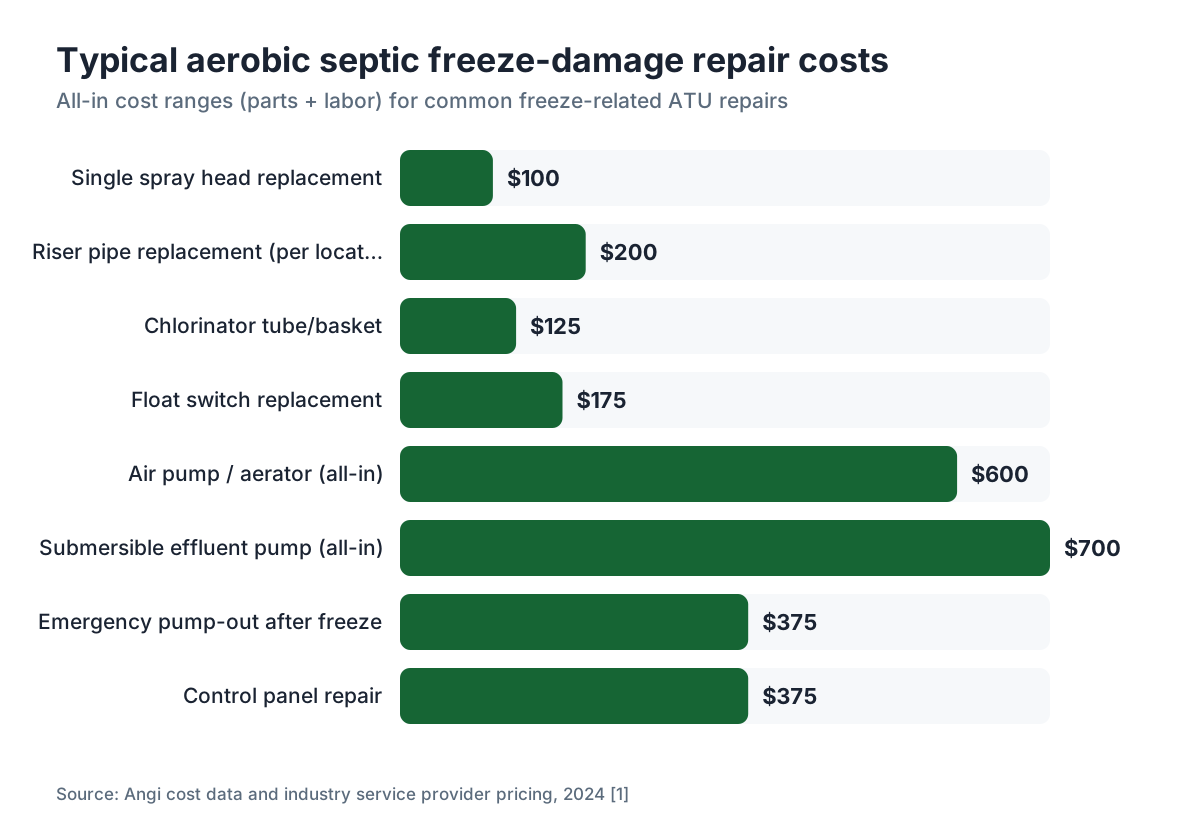
How much does freeze damage repair cost for an aerobic septic system?
Here's an honest range for what the common freeze repairs actually cost.
| Repair | Typical Cost Range | Notes |
|---|---|---|
| Single spray head replacement | $50 to $150 | Parts + labor, per head |
| Riser pipe replacement | $100 to $300 per location | More if a trench is needed |
| Air pump / aerator replacement | $300 to $900 all-in | Wide range by brand and HP |
| Submersible effluent pump | $400 to $1,000 all-in | Depends on pump rating |
| Chlorinator tube/basket | $50 to $200 | Usually DIY-accessible |
| Float switch replacement | $100 to $250 | |
| Control panel repair | $150 to $600 | More if the panel itself needs replacing |
| Emergency pump-out after freeze | $250 to $500 | septic tank pumping |
| Full system restart after winterization | $200 to $400 | Labor to re-inoculate and test |
The real money risk is a cascade. A frozen aerator causes a backup, the backup overloads the pump chamber, the chamber burns out the submersible pump, and now you've got effluent surfacing and an emergency call. One cold event, $1,500 to $3,000. Prevention costs maybe $100 to $200 in parts and a few hours each fall. That math isn't subtle.
If a severe freeze has taken out enough components that you're basically rebuilding the ATU, get a quote for full replacement and compare. Costs there swing widely by region and system type. Our guide to the cost to install septic system covers the full range.
Can you use heat tape or tank heaters on an aerobic septic system?
Heat tape (self-regulating resistance heat cable) is a legitimate, widely used tool for exposed pipes, air lines, and riser sections on ATUs in cold climates. The self-regulating kind adjusts its output to temperature, which makes it safer than constant-wattage tape and cheaper to run. HVAC and plumbing contractors use it constantly, and it works fine on PVC pipe.
A few caveats matter.
Not every spot on an ATU wants heat tape. Don't run it inside the tank or on the aerator motor housing without explicit manufacturer sign-off. The aerator motor runs warm on its own, and extra external heat can cook it.
The air intake line from the compressor to the tank is the best place for heat tape on most systems. It's exposed, prone to condensation freeze, and carries no effluent, so there's no sanitary concern.
For exposed risers above the lid, closed-cell foam pipe insulation (1-inch wall thickness minimum) handles all but the harshest climates. Heat tape adds cost (the tape plus electricity) and upkeep (connections and the thermostat controller need a yearly check).
Tank heaters, small submersible electric heaters set in the treatment chamber, do exist and get sold for cold-climate ATU use. But they're uncommon, they run up your electric bill, and engineers argue about them because they can drive thermal stratification that disrupts settling. Most extension guides and USDA Natural Resources Conservation Service guidance on onsite systems don't recommend them as a primary strategy [9].
The better answer is good soil cover, insulated risers, and an active system. Not a tank heater.
What should you do if your aerobic system is at a vacant property in winter?
Vacant-home ATU winterizing is a genuinely different problem from the occupied-home version, and it's where most freeze failures actually happen.
If the property sits empty for more than two to three weeks during hard-freeze weather, the right move is usually a full winterization shutdown. That means:
Have a licensed provider pump the tanks. A fully pumped tank has almost nothing left to freeze and crack. A septic tank pump out before winter at a vacation property is cheap insurance. Strip out most of the solids and liquid and even a severe freeze won't hurt the fiberglass or concrete tank.
Blow out the spray lines. A plumber or your ATU tech uses compressed air to push residual effluent out of the distribution lines and spray risers. Standard practice in northern climates, and it prevents split pipes.
Drain and pull the chlorinator tablet basket. Chlorine tablets in a frozen, stagnant system can leave an acidic residue that eats the chlorinator housing.
Cut power to the control panel at the breaker, but leave the breaker reachable so a caretaker can restore power fast.
Set up a check visit after any major cold snap. Someone should physically confirm the system hasn't alarmed or lost a component, especially before the spring restart.
A spring restart of a fully winterized ATU usually takes two to four weeks for the bacteria population to reestablish. Effluent quality runs below normal during that window. Most state agencies don't require reporting for a known seasonal restart, but check with your county environmental health department.
For routine questions like how often to pump a tank at a seasonal property, see our how often to pump septic tank guide.
Are there aerobic system designs that handle freezing weather better?
Yes. If you're in a cold climate designing a new system or replacing a dead one, this is worth knowing before you sign anything.
The biggest design factor is spray irrigation versus drip irrigation for final effluent dispersal. Spray heads sit above grade and freeze easily. Subsurface drip delivers effluent through buried emitters, typically 6 to 18 inches down, where soil stays above freezing even in harsh winters. For cold climates, drip-dispersal ATUs are the better design, though they cost more to install. Our leach field guide covers drip dispersal in more detail.
Burial depth and location matter too. Fiberglass ATU tanks need adequate soil cover, and the manufacturer's install manual specifies minimum and maximum depths. An ATU buried under just 6 inches of cover in Minnesota is a maintenance problem every winter, guaranteed.
Manufacturers like Norweco and Jet Inc. publish cold-climate install guides with specific cover depth and insulation requirements [12]. Some offer insulated lids or lid gaskets built for below-freezing operation. These should be standard in cold-climate jobs, but installers used to warmer markets sometimes skip specifying them.
For a cost-to-replace comparison between ATU types, our cost to put in a septic tank article has regional breakdowns.
If you're an operator managing ATUs across climate zones, keeping a record of each system's burial depth, soil cover, and design type lets you flag which accounts need extra eyes before a forecast freeze. Operators on software like SepticMind can build those attributes into customer records and run a filter before any major weather event.
Frequently asked questions
Will my aerobic septic system alarm go off in cold weather even if nothing is broken?
Yes, this happens. Cold can freeze or fog up a float switch inside its housing, or slow biological treatment enough that water levels rise and trip a high-water alarm. Before calling a tech, check that the breaker hasn't tripped and that the air pump is audible and running. If everything looks normal but the alarm stays on, a service call is warranted. Don't keep resetting and ignoring it.
How cold does it have to get for spray heads to freeze on an aerobic system?
Spray heads usually freeze when air temps drop below 28°F (-2°C) and stay there for several hours. Heads holding residual effluent in the riser are most vulnerable. A single hard-frost night rarely cracks anything. Sustained cold below 25°F over multiple nights is when physical damage to plastic heads and riser fittings shows up most. Foam covers or shutting off the spray zone (if your timer allows it) helps during extended cold.
Should I turn off my aerobic septic system in winter to prevent freezing?
For an occupied home, almost certainly no. A running ATU makes heat from aeration and biological activity that helps protect it. Kill the aerator and you stop that heat, let effluent go cold and septic, and wipe out your bacteria population. For a vacant or seasonal property, a proper winterization shutdown by a licensed tech makes sense, but that's a deliberate full-drain procedure, more than flipping a switch.
Can I pour antifreeze into my aerobic septic system to prevent freezing?
No. Never put antifreeze into an aerobic septic system. Even RV-grade propylene glycol will disrupt the biological treatment process and may violate your state's water quality rules. It can also tank your chlorine residual and fail you at inspection. The correct approach is physical insulation, steady wastewater flow, and for vacant properties, a pump-out plus a blow-out of the exposed lines.
How do I know if my aerobic system's aerator froze or just failed normally?
Freeze damage often shows up as a cracked diaphragm, a seized motor, or a blocked air line, and it lines up with a hard freeze event. That timing is your first clue. A tech can tell whether the air line has ice or condensation blockage versus a dead motor. Normal wear failure can hit any time of year. If the unit is more than 5 to 7 years old, age is a likelier culprit than freeze, even in January.
What is the minimum soil cover required over an aerobic septic system in cold climates?
It varies by state, but EPA guidance and most onsite codes call for at least 12 inches of cover over septic components in moderate climates. In northern states like Minnesota, frost-depth rules can push cover recommendations to 24 inches or more over distribution lines. Check your state's onsite wastewater rules or call your county environmental health office for the exact depth required where you live.
Do I need a special service contract to cover freeze damage on my aerobic system?
Most standard ATU contracts cover routine maintenance and adjustments but not parts replacement from freeze damage. Read yours carefully. Some companies sell a premium winter-protection plan that adds a fall inspection and emergency freeze dispatch. In Texas and Oklahoma, where contracts are legally required, scope and price vary by provider. Get quotes from at least two licensed operators before you commit.
My aerobic system's chlorinator froze. Is the effluent safe until it's fixed?
A frozen or blocked chlorinator means effluent is leaving the pump chamber with no disinfection, which is a real concern. Don't irrigate with it, keep kids and pets off the spray field, and get it repaired promptly. The system won't back up from a chlorinator failure, but you may be violating your state's effluent quality standard (most require 1 mg/L residual chlorine at the point of discharge) until it's fixed.
How long does it take an aerobic system to recover after a freeze event?
Physical parts (spray heads, aerator, pumps) work again the moment they're repaired or thawed. The biological side takes longer. If cold or a shutdown depleted the bacteria population, full treatment efficiency usually returns in two to four weeks at normal household water temperatures. During that window your effluent quality runs lower than usual. That's expected and not a reason to panic, as long as the system is physically working.
Can frost heave damage an aerobic septic system's tank or distribution lines?
Yes. Frost heave happens when soil water freezes and expands, lifting buried objects. Fiberglass ATU tanks are especially vulnerable because they're lighter and more buoyant than concrete. A heaved tank can break inlet and outlet pipe connections. Distribution lines can shift and pull apart at joints. It's most likely in poorly drained soils with shallow installation and thin cover. Proper backfill and adequate burial depth are the fixes [11].
Is a drip-irrigation aerobic system better than a spray system in cold climates?
Generally yes. Subsurface drip emitters sit 6 to 18 inches down where soil stays above freezing in most climates, which eliminates the spray-head freeze problem outright. Drip systems cost more to install and need finer effluent treatment (usually filtration ahead of the emitters), but they're far easier to maintain in cold weather. If your climate throws regular hard freezes, specify drip dispersal when you install a new ATU.
Do aerobic septic systems use more electricity in cold weather?
Somewhat. The compressor or aerator runs year-round, but in cold weather the motor works harder against denser air and runs less efficiently. Add heat tape and you draw more power on top of that. Most residential ATU compressors pull 100 to 400 watts continuously; heat tape on a single air line adds maybe 30 to 60 watts. The winter cost bump is usually modest, roughly $5 to $20 a month.
What should I tell my septic service technician to check before winter?
Ask them to inspect and clean the air pump intake filter, test all floats and the alarm, check chlorine residual in the effluent, inspect spray heads for cracks or clogs, confirm riser insulation is intact, check the air line for moisture or blockage, and verify soil cover hasn't thinned over the tank or distribution lines. A good pre-winter visit takes 30 to 60 minutes and can head off a $500 to $2,000 emergency call in January.
Sources
- Angi, Aerobic Septic System Cost Guide: Aerator/air pump replacement for residential ATUs typically runs $200-$600 for parts, plus $100-$300 labor
- EPA Office of Water, Onsite Wastewater Treatment Systems Manual (EPA/625/R-00/008): Aerobic bacteria treatment efficiency declines significantly below 50 degrees F and nitrification can nearly stop near freezing; the Arrhenius relationship describes how metabolic rate falls with temperature
- EPA SepticSmart, Homeowner Tips for Septic System Care: EPA recommends adequate soil cover over septic components for frost insulation and notes frost depth varies significantly by climate zone
- Texas Commission on Environmental Quality, Title 30 TAC Chapter 285 (On-Site Sewage Facilities): TCEQ requires 1 mg/L residual chlorine in treated effluent at the point of discharge and mandates ongoing maintenance for aerobic treatment units, with no winter exception
- Norweco Inc., Singulair ATU Installation and Operation Manual: Norweco publishes winterization and cold-climate installation guidance for its Singulair aerobic treatment unit product line
- Oklahoma Administrative Code Title 252, Chapter 641 (Individual and Small Public On-Site Sewage Treatment Systems): Oklahoma requires periodic maintenance of aerobic treatment units by a certified operator under its on-site sewage treatment rules
- Minnesota Pollution Control Agency, Septic Systems in Cold Climates: Minnesota PCA publishes minimum cover depth requirements by soil type for onsite sewage treatment systems in cold climates
- USDA Agricultural Research Service: Frost can penetrate 4 to 6 feet in USDA hardiness zones 3 and 4 while rarely exceeding a few inches in zone 7
- University of Minnesota Extension, Cold Climate Septic System Maintenance: Extension guidance recommends keeping septic systems active during winter for occupied homes, noting running systems generate heat from biological activity that protects components
- Penn State Extension, Protecting Your Septic System in Winter: Frost heave can damage fiberglass septic tanks and distribution line joints, particularly in poorly drained soils with shallow installation
- Jet Inc. (a brand of BioMicrobics), ATU Installation and Maintenance Specifications: Jet ATU manufacturer specifications include cold-climate installation guidance covering minimum burial depth and insulated lid options for below-freezing operation
Last updated 2026-07-10