Is CLR safe for septic systems? What the research says
By the SepticMind Editorial Team
TL;DR
- CLR (Calcium, Lime and Rust remover) is not safe for septic systems at full strength.
- Its acids, lactic acid and gluconic acid, can disrupt or kill the bacterial colonies your tank runs on.
- Diluted, occasional use is lower risk but still not recommended by most extension programs.
- Bleach at low doses is similarly risky but slightly better studied.
What is CLR and why does it concern septic owners?
CLR stands for Calcium, Lime and Rust remover. It's a liquid descaler sold in hardware and grocery stores, and it works because it's acidic. The two main active ingredients are lactic acid and gluconic acid. Both break down fine in wastewater plants that run on oxygen, mechanical mixing, and constant fresh input. A home septic tank has none of that.
Your tank is an anaerobic digester. A fixed population of bacteria, mostly Bacteroidetes, Firmicutes, and methanogens, does all the work. Those organisms live in the sludge and biofilm layers. They grow back slowly once you knock them down, and they don't get the constant reseeding a city plant gets from thousands of daily sewage inputs.
So the worry isn't that CLR is some scary chemical in a vacuum. The worry is what concentrated acid does to a small, closed biological system that already runs on a thin margin. Pour enough down the drain and you push the tank pH out of the neutral-to-slightly-alkaline range those bacteria like, roughly pH 6.5 to 7.5 in most wastewater microbiology references [1]. That's when things go wrong.
The manufacturer, Jelmar, labels CLR "septic safe" on some packaging and marketing. That claim has caused real confusion. What it almost certainly means is that CLR won't corrode your pipes or crack the tank structure. It does not mean the chemistry leaves the bacteria alone. Those are two different claims, and the difference matters.
Does CLR actually kill septic bacteria?
It can. The dose decides whether it does.
Lactic acid at CLR's concentrations (the label doesn't publish exact percentages, but independent testing puts concentrated CLR around pH 3 to 4) is bactericidal against some strains and bacteriostatic against others. A study in Water Research found that pH drops below 5.5 inside anaerobic digesters reliably cut methane production and volatile solids destruction, the two main signs your tank's biology is doing its job [2]. The bacteria weren't all dead. Their function was wrecked.
Gluconic acid, the second active, is a fermentation product that many bacteria happily eat. On its own it's less of a problem. Mixed with lactic acid, plus whatever surfactants and chelating agents ride along in the formula, the effect gets harder to call.
The dose question is real. Someone who drops one capful of CLR in a toilet bowl and flushes it into a 1,000-gallon tank is adding maybe 2 to 4 ounces of acid to roughly 800 gallons of buffered liquid. The tank's own buffering (bicarbonates from anaerobic digestion) almost certainly neutralizes that. One small use, now and then, probably isn't a disaster.
Repeated use is the problem. Run CLR through your dishwasher monthly to fight hard water, or hit several fixtures on a regular schedule, and you're stacking acid load on acid load. Nobody has run a controlled study on CLR in residential septic tanks, because funding one is nobody's business interest. The closest evidence comes from general pH disruption research in the anaerobic digestion literature [2] and from extension guidance that warns against any concentrated acid cleaner in septic homes [3].
What does the EPA say about chemicals and septic systems?
The EPA's SepticSmart program is the most cited federal guidance on household chemicals and septic systems [3]. It doesn't name CLR, but the principle is plain: "Only put things in your septic system that belong there." The program tells homeowners to keep chemicals, cleaners, and solvents that could harm the biological treatment process out of the drain.
The EPA's broader onsite wastewater material, including its septic owner's guide, lists acid-based cleaners as a category of concern next to chlorine bleach, antibacterial soaps, and organic solvents [3]. The logic runs the same through all of them: the tank depends on living organisms, so anything that kills or slows those organisms undercuts treatment.
State guidance gets more specific. The University of Minnesota Extension advises against putting rust removers, drain openers, and similar chemicals into septic-served homes [4]. North Carolina Cooperative Extension published similar guidance, saying toilet bowl cleaners, rust removers, and comparable products should be used sparingly if at all [5].
None of this says CLR wrecks your system in one pour. The guidance is precautionary and built on the class of chemistry, not a head-to-head test of CLR. But the direction is one-way. The agencies and extension programs that study this for a living recommend against it.
Is bleach safe for septic systems?
Bleach (sodium hypochlorite) is the most-asked-about chemical in the septic world, and the answer is genuinely more nuanced than CLR.
At high concentration, bleach kills bacteria hard. That's the whole point of a disinfectant. Pour a cup of undiluted bleach into your toilet and flush, and you send a real chlorine load into the tank. At normal household use, though, bleach gets heavily diluted before it ever reaches the tank. A laundry load with 3/4 cup of bleach mixes into 15 to 20 gallons of wash water, then travels through the pipes before hitting a 500 to 1,500 gallon tank. By the time it arrives, the chlorine is thin.
A University of Wisconsin study found that normal household bleach use, defined as up to one bleach laundry load per week plus routine use of bleach-containing cleaners, did not measurably harm septic bacterial populations in tanks that were properly sized and pumped on schedule [6]. Extension programs cite that finding to say normal bleach use is fine.
The word carrying the weight is normal. Multiple bleach loads a day, sanitizing surfaces and dumping the waste down the drain over and over, or bleach-based drain openers, that's a different story. The Wisconsin threshold for normal is worth respecting. It wasn't testing people who clean with bleach all day.
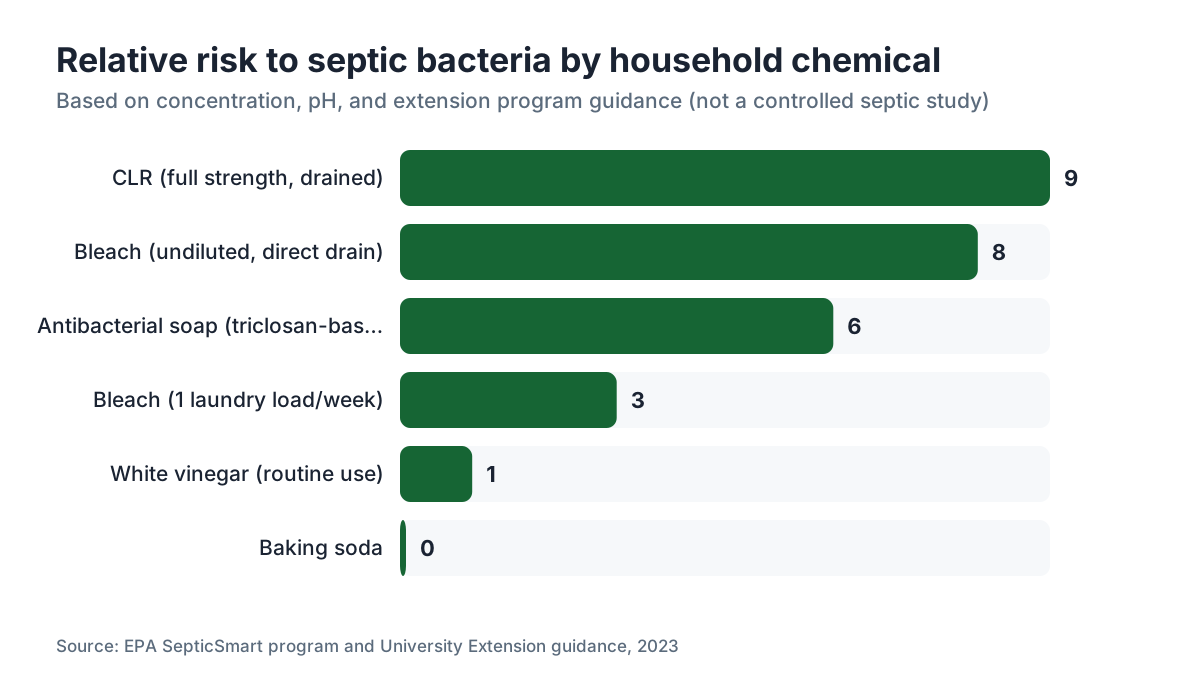
So bleach versus CLR. Bleach at typical use has more research behind it. CLR has less research and a lower pH in concentrated form. Forced to pick one for the occasional job, bleach used normally is the better-studied bet. Neither belongs in your routine if you're trying to protect a healthy tank.
For the maintenance rhythm that matters most, see the how often to pump septic tank guide.
How much CLR or bleach actually reaches your septic tank?
This is the dilution question, and it's where most of the "it's fine" arguments start. Here's the math.
A standard toilet flush is 1.6 gallons (the federal standard since 1994 under 42 U.S.C. § 6295, the Energy Policy and Conservation Act [7]). Put 2 ounces of CLR in the bowl and flush once, and that 2 ounces rides 1.6 gallons of water down the drain line into your tank. A 1,000-gallon tank at working level holds about 750 to 850 gallons of liquid. So your 2 ounces of CLR now sits in roughly 800 gallons. That's a dilution factor around 6,400 to 1.
At that dilution, the effect on the tank's bulk pH is almost certainly nothing. The buffering from digestion byproducts (bicarbonate alkalinity usually runs 1,000 to 3,000 mg/L in a healthy tank) neutralizes a small acid load fast [1].
The trouble scenarios look different:
- Running CLR through a dishwasher recirculates the chemical through the full cycle, then drains it. That might send 4 to 6 ounces at once, but it's mixed with a full tub of water, so dilution stays high.
- Using CLR monthly means repeated small acid loads. The bacteria recover each time, but repeated hits can shift the population toward more acid-tolerant, less effective species.
- Using CLR in a home with a small or old tank (500 gallons is common in older houses) drops the dilution factor a lot.
Tank size matters here. Undersized tanks already run stressed. Adding chemical disruption to a tank that's working hard is a worse bet than the same chemical going into a correctly sized, well-maintained one. The septic tank cleaning process covers what happens when tanks get overloaded.
What are the real risks if CLR disrupts your septic bacteria?
When the bacteria are impaired, the tank stops treating waste properly. Solids that should be digested pile up faster. Scum and sludge layers grow. The effluent leaving the tank for your leach field carries more undigested organic matter and more pathogens.
That's where it gets expensive. A clogged or biomat-choked drain field is one of the priciest septic failures there is. Drain field repair or replacement runs $3,000 to $15,000 or more depending on soil, local rules, and system type [8]. Compare that to the cost of not using CLR in a toilet: nothing.
The failure sequence is slow and rarely looks chemical. No tank dies from one CLR treatment. What happens is a slow slide: sludge builds faster, the field partially clogs with biomat, and eventually you see wet spots in the yard or sewage backing into the house. By the time the symptoms show, the fix can mean septic system repair running into the thousands.
That slow timeline is also why the chemical almost never gets blamed. Most homeowners who damage their systems this way never connect it back to the cleaner. The service tech finds a tank that needed pumping too often or a field that failed early, and the chemical history never comes up.
What can you use instead of CLR for hard water deposits on a septic system?
If you're fighting calcium and lime in toilets, faucets, or appliances, several options carry far less risk to your system.
White vinegar is the go-to. It's acetic acid, usually 5%, which is mild. It biodegrades readily and most anaerobic bacteria, including yours, metabolize it easily. A cup run through a dishwasher or a showerhead soaked in it sends a much smaller acid load to the tank than CLR does. Extension programs at several universities point to white vinegar as an acceptable descaler for septic homes [4][5].
Baking soda works for light cleaning and mild odors and is completely harmless to septic biology. It's alkaline, so it actually nudges the tank toward the pH bacteria prefer.
For genuinely stubborn mineral deposits where you feel you need something stronger, use CLR once, on a single fixture, and keep it out of the drain. Wipe it on and wipe it off, or use a bucket you dump outside. That sidesteps the septic question entirely.
For dishwashers and washing machines, citric acid-based descalers (Affresh, Lemi Shine, and others) are generally gentler than CLR's acid blend, though no controlled septic study exists for those either.
The pattern across thousands of service notes is consistent: tanks in homes that skip acid cleaners pump cleaner and show less premature field stress. The best long-term protection is regular septic tank pumping on schedule, not fretting over every cleaning product, but also not dumping chemicals into the tank that have no reason to be there.
How do you know if chemicals have already damaged your septic system?
There's no home test for bacterial health in a septic tank. A septic tank inspection by a licensed pro gives you the clearest read. Inspectors check sludge and scum depth, effluent clarity, and drain field condition. If the tank is stacking solids faster than expected for your household size, impaired biology is one possible cause. It's not the only one.
Some service companies offer bacterial count testing of tank liquid, but it isn't standard and the interpretation is debated. A healthy tank shows high numbers of anaerobic organisms. A disrupted tank may show low counts or a population shifted toward aerobic or acid-tolerant species.
The more practical signal is pumping frequency. If you're pumping more often than the EPA's general guidance of every 3 to 5 years for a typical household [3], and your household size and water use haven't changed, impaired digestion is worth checking. That could mean chemical disruption, an undersized tank from day one, or an inlet problem. The right tool is a professional assessment, not a DIY chemical test.
Worried about system health after chemical use? Stop the chemical, add a bacterial additive if you want (commercial septic starters are everywhere, and while the benefit is debated, they don't hurt), and schedule a septic tank pump out if you're overdue. Then give the system 6 to 12 months of normal use and normal chemistry before you call the damage permanent.
What chemicals are actually safe for septic systems?
The EPA SepticSmart program and extension guidance land on a short list of categories that are genuinely compatible with septic systems [3][4][5].
Safe in normal household use:
- Standard dish soap and hand soap (not antibacterial formulas with triclosan, which the FDA banned from consumer soaps in 2016 under 21 C.F.R. § 310.545 [9])
- Moderate use of regular laundry detergent
- White vinegar for descaling and cleaning
- Baking soda
- Hydrogen peroxide at household strength (3%), used occasionally
Avoid or use minimally:
- Chlorine bleach at high volumes (a weekly bleach laundry load is probably fine; daily is not)
- Antibacterial cleaners and soaps with quaternary ammonium compounds
- CLR and similar acid-based descalers at full strength
- Drain openers (lye/sodium hydroxide or sulfuric acid based)
- Paint, solvents, motor oil, or any organic chemical you'd treat as hazardous material
Here's what surprises people: garbage disposals hurt septic systems more than most cleaning chemicals do. They send large volumes of fine food solids into the tank, which drives up sludge accumulation fast. The EPA's guidance specifically warns septic owners about disposal use [3]. That's often a bigger problem than the occasional CLR.
Operators tracking chemical exposure across many customer tanks see this pattern surface in the service record over time.
What should you actually do if you've been using CLR regularly?
Stop putting it down the drain. That's step one, and it costs nothing.
If your last septic tank pump out was more than 3 years ago and you've been running CLR or heavy bleach regularly, book a pump-out now instead of waiting for the scheduled interval. The pump-out clears accumulated sludge and hands you a reset. The tech can eyeball the effluent quality and the scum layer consistency, which gives you a rough read on biological health.
After the pump-out, skip the exotic stuff. Normal household waste (human waste and toilet paper) reseeds plenty of bacteria to restart the tank's population. Commercial bacterial additives are fine and probably don't hurt, but the University of Minnesota Extension's review found no consistent evidence they improve performance beyond what normal use already provides [4]. They're not a waste of money if they make you feel better, and they're not a fix for ongoing chemical use either.
Switch your descaling to white vinegar. It handles most toilet and faucet mineral buildup if you use it regularly instead of letting deposits harden to the point only a strong acid touches them. Prevention beats intervention.
Had symptoms already? Slow drains, gurgling, wet spots in the yard need a professional look before you assume the system self-corrects. Drain field damage doesn't reverse with a pump-out. See the leach field guide for what field failure looks like and what the repair options are.
Frequently asked questions
Is CLR safe for septic systems?
CLR is not recommended for septic systems. Its active acids (lactic acid and gluconic acid) can disrupt the bacteria that treat waste in your tank, especially with repeated use. A single small dose, heavily diluted in a large tank, is unlikely to cause immediate failure, but regular use poses real risk to system biology. Most extension programs advise using white vinegar instead for descaling in septic-served homes.
Is bleach safe for septic systems?
Normal household bleach use, such as one bleach laundry load per week and routine surface cleaning, is generally tolerable for septic systems based on a University of Wisconsin study. Heavy or frequent bleach use is not safe. The key factor is dilution: bleach mixed into a full wash load before entering a large tank reaches very low concentrations. Undiluted bleach poured directly into a drain is a different matter and should be avoided.
Can CLR damage a drain field?
Directly, CLR is unlikely to reach your drain field in a damaging concentration, since it gets heavily diluted in the tank. Indirectly, repeated CLR use that impairs tank bacteria causes solids to accumulate faster and pass into the field as poorly treated effluent. That organic loading contributes to biomat formation in the field over time, which is one of the most common causes of drain field failure.
What happens if you put too much bleach in a septic tank?
At high concentrations, bleach kills the anaerobic bacteria that process waste in the tank. The tank doesn't stop working immediately, but biological activity slows, solids accumulate faster, and effluent quality drops. If you've dumped a large amount of bleach (say, a gallon or more), schedule a pump-out, stop bleach use, and give the system several months of normal use to allow the bacterial population to recover.
Does CLR dissolve in a septic tank?
CLR's acid components (lactic acid and gluconic acid) are water-soluble and will mix into the tank's liquid. They don't persist indefinitely; they're ultimately broken down or neutralized by the tank's bicarbonate buffering chemistry. The issue is the short-term pH disruption during and after introduction, not a permanent chemical residue. With small doses, the tank's buffering capacity handles it. With large or repeated doses, it can't keep up.
Is white vinegar safe for septic systems?
Yes. White vinegar (5% acetic acid) is widely recommended by extension programs as a septic-safe alternative to CLR and other descalers. Acetic acid is readily biodegradable and easily metabolized by most anaerobic bacteria. Used for toilet cleaning, dishwasher descaling, or soaking fixtures, it poses no meaningful risk to septic biology at normal household quantities.
How long does it take for septic bacteria to recover after chemical exposure?
Recovery time depends on how much of the bacterial population was disrupted and how large your tank is. Most sources suggest 4 to 8 weeks of normal household waste input (which continuously reintroduces bacteria) is enough to restore function after moderate chemical exposure. Severe disruption in a small or already-stressed tank can take longer. A pump-out followed by normal use is the fastest practical reset available.
Can I use CLR in my dishwasher if I have a septic tank?
This is one of the higher-risk CLR uses for septic owners. A dishwasher cycle recirculates the chemical through the machine before draining, and the drain sends a meaningful acid load through your pipes. While dilution in a large tank reduces the impact, running CLR through a dishwasher monthly adds up. White vinegar or citric acid-based dishwasher cleaners are the recommended alternatives for hard water maintenance.
What toilet cleaners are safe for septic systems?
Toilet cleaners without strong acids, chlorine bleach, or quaternary ammonium compounds are safest. Baking soda, white vinegar, and enzyme-based toilet cleaners (labeled septic-safe) are good choices. Avoid automatic toilet bowl tablets that release chlorine or bleach continuously into the tank, as they add a small but steady stream of bactericidal chemistry. Products explicitly labeled "septic safe" have typically been formulated to reduce microbial disruption.
Does the EPA recommend against using CLR in septic systems?
The EPA's SepticSmart program doesn't name CLR specifically but recommends against pouring household chemicals, including acid-based cleaners, into septic-served drains. The guidance says to only put things in your system that belong there and lists chemical cleaners as a category to avoid. State extension programs, drawing on the same principles, explicitly caution against rust removers and descalers of which CLR is the most common example.
Are septic-safe labels on cleaning products reliable?
The "septic safe" label is not regulated by any federal standard. Manufacturers apply it voluntarily, and the criteria vary. Some companies test their products against specific bacterial strains; others use the label loosely to mean the product won't physically damage pipes or tanks. When you see the label, it's reassuring but not a guarantee of microbial safety. Independent extension research and EPA guidance are more reliable sources than manufacturer claims.
How often should I pump my septic tank if I use household cleaners regularly?
The EPA's general guideline is every 3 to 5 years for most households, but that's based on normal household use and proper tank sizing. If you use cleaning chemicals heavily or have a smaller-than-recommended tank for your household size, pumping every 2 to 3 years is more conservative and protective. Your pump-out technician can measure sludge and scum depth to tell you whether your current interval is appropriate for your actual usage pattern.
Can I use hydrogen peroxide to clean if I have a septic system?
Household 3% hydrogen peroxide is generally considered acceptable for occasional septic-system use. It breaks down into water and oxygen quickly, and while it is mildly antimicrobial, the concentrations that reach the tank after dilution are typically low enough not to cause significant disruption. It's a better choice than bleach or CLR for disinfecting surfaces in a septic home, used in normal household quantities.
Will a bacterial additive fix chemical damage to my septic system?
Bacterial additives (septic starters and treatments) reintroduce anaerobic microbes to a disrupted tank. Whether they actually accelerate recovery beyond what normal household waste input provides is debated: the University of Minnesota Extension reviewed available evidence and found no consistent benefit. They're not harmful and may provide some help in severely disrupted systems. They're not a substitute for stopping chemical use and maintaining a proper pump schedule.
Sources
- Metcalf & Eddy, Wastewater Engineering (standard reference): pH range for anaerobic digestion: Optimal pH for anaerobic digestion bacteria is approximately 6.5 to 7.5; values below 5.5 impair methane production and biological activity.
- Water Research journal (Elsevier): anaerobic digester pH disruption study: pH drops below 5.5 in anaerobic digesters consistently reduced methane production and volatile solids destruction, indicating impaired biological function.
- EPA SepticSmart program: household chemical guidance for septic owners: EPA SepticSmart advises septic owners to avoid pouring chemicals down drains that could harm biological treatment, including acid-based cleaners, and notes that only appropriate materials should enter the system.
- University of Minnesota Extension: septic system care and household chemicals: University of Minnesota Extension advises against using rust removers, drain openers, or other concentrated chemicals in septic-served homes, and notes that bacterial additive products show no consistent benefit in peer-reviewed studies.
- NC Cooperative Extension: household products and septic systems: North Carolina Cooperative Extension advises that toilet bowl cleaners, rust removers, and similar products should be used sparingly if at all in homes with septic systems, and recommends white vinegar as an alternative descaler.
- University of Wisconsin-Madison: household bleach and septic system bacteria study: Normal household bleach use (up to one bleach laundry load per week and routine use of bleach-containing cleaners) did not measurably harm septic tank bacterial populations in properly sized and maintained systems.
- U.S. Code 42 U.S.C. § 6295: Energy Policy and Conservation Act plumbing standards: Federal law since 1994 requires toilets to use no more than 1.6 gallons per flush, which directly affects the dilution of chemicals entering the septic system.
- EPA: decentralized wastewater treatment cost guidance: Drain field repair or replacement is among the most costly septic system interventions, with costs ranging from thousands to tens of thousands of dollars depending on soil conditions and system type.
- FDA: 21 C.F.R. § 310.545 final rule banning triclosan in consumer antiseptic washes: The FDA banned triclosan and 18 other antimicrobial ingredients from consumer hand and body wash soaps in 2016 under 21 C.F.R. § 310.545.
- EPA: How Your Septic System Works: EPA general guidance recommends pumping septic tanks every 3 to 5 years for most households as the baseline maintenance interval.
Last updated 2026-07-09