Is RID-X good for septic systems? The honest answer
By the SepticMind Editorial Team
TL;DR
- RID-X won't hurt a healthy septic system, but there's no strong evidence it helps one either.
- The EPA's SepticSmart program and multiple university extension studies conclude that a properly used septic system already has all the bacteria it needs.
- RID-X won't replace pumping, and it won't rescue a failing system.
- Save your money for regular septic tank pumping instead.
What is RID-X and what does it claim to do?
RID-X is a consumer septic additive sold at hardware and grocery stores, usually as a powder or liquid. The manufacturer, Reckitt, says it contains a blend of bacteria and enzymes, specifically cellulase, lipase, protease, and amylase, along with Bacillus bacteria strains. The pitch is simple: pour it in your toilet once a month and it breaks down waste in your tank, cuts solids buildup, and prevents backups.
The product has been on U.S. shelves since the 1940s. It's probably the most recognized septic additive brand in the country, which makes it worth examining seriously instead of dismissing out of hand.
The core claim is that modern households are harder on septic systems than older ones because of antibacterial soaps, bleach cleaners, and garbage disposals. RID-X argues that these inputs kill off the natural bacteria your tank needs, so you should replenish them monthly. That's the sales logic. Whether it holds up is a different question.
What does the EPA actually say about septic additives like RID-X?
The EPA's SepticSmart program addresses this head-on. According to EPA guidance, "biological additives introduce bacteria and/or enzymes to try to improve the biological treatment process," but the agency does not recommend additives as a substitute for proper maintenance, including regular pumping [1].
The EPA's position is measured, not a blanket condemnation. They say additives are generally not harmful, but they stop well short of saying they help. The agency's SepticSmart materials steer homeowners toward the basics every time: pump on schedule, watch what goes down the drain, protect the drain field.
That's no ringing endorsement of monthly additive use. The EPA also knows the additive market pulls in real consumer spending with little demonstrated benefit to show for it.
What does the research say about whether septic additives work?
The most rigorous independent reviews came out of the University of Minnesota Extension and similar land-grant university programs. A widely cited Minnesota assessment found no scientific evidence that biological or enzymatic additives improve the performance of a properly functioning septic system [2]. The researchers tested whether additives sped up the breakdown of solids, cut pumping frequency, or improved effluent quality. None of those outcomes showed consistent improvement across the products tested.
A 1994 study published in Small Flows Quarterly (National Small Flows Clearinghouse) reviewed 21 septic additives and concluded that none provided a demonstrated benefit in field conditions, and some chemical additives posed environmental risks [3]. RID-X is a biological additive, so it clears the safety bar more easily than chemical products. That study set the skepticism that extension offices have carried ever since.
The University of Florida IFAS extension program puts it plainly: a healthy septic tank already holds billions of anaerobic bacteria. The microbial community is not the limiting factor in most systems. The limiting factors are hydraulic overload, non-biodegradable junk in the tank, and neglected pumping schedules [4].
Nobody has great longitudinal data on monthly additive use over 10 or 20 years in real residential systems. The closest evidence we have is lab-bench and short-term field studies, and those don't show a meaningful effect.
Does RID-X hurt your septic system?
Probably not. Here's the honest middle ground: the evidence that RID-X does no harm is stronger than the evidence that it does any good.
The Bacillus strains in RID-X are not pathogens, and the enzymes don't corrode tank liners or inlet baffles. Several state environmental agencies, including North Carolina and Massachusetts, have evaluated biological additives and found no significant risk to system components or groundwater [5].
The real risk is indirect. If you use RID-X and decide your tank is now protected, you might skip pumping. That's where the damage happens. A tank that goes unpumped too long builds a sludge layer that eventually reaches the outlet baffle and pushes solids into the leach field, which is a far more expensive problem than a pump-out. RID-X does not dissolve sludge fast enough to offset the natural accumulation rate in any household I've seen data for.
So: RID-X won't wreck your tank. Trusting it as a substitute for maintenance might.
How do RID-X's claims compare to what independent tests found?
RID-X's product page cites laboratory results showing enzyme activity and bacterial colony counts. Those numbers are real in the sense that the bacteria and enzymes exist in the product. The question is whether dropping that quantity into a tank that already holds hundreds of billions of organisms changes anything you can measure.
The math is not favorable. A healthy 1,000-gallon septic tank may hold roughly 1 billion (10 to the 9th power) bacteria per milliliter of liquid, according to microbial ecology estimates in wastewater treatment literature. A monthly RID-X dose adds a comparatively tiny number of colony-forming units to that already dense environment. The native population dilutes any supplement almost instantly.
Here's a rough comparison of what you're working with:
| Factor | RID-X monthly dose | Established tank population |
|---|---|---|
| Bacteria introduced | Tens of millions CFU (per label) | Hundreds of billions CFU naturally present |
| Enzyme types | 4 (cellulase, lipase, protease, amylase) | Wide-spectrum from native microbial community |
| Cost per year | ~$30 to $60 | $0 (no additive needed) |
| Pumping replacement | None | Pumping every 3-5 years still required |
The bacteria ratio alone tells you the additive is a rounding error in biological terms. The enzymes are more interesting, because enzyme concentration does matter in digestion kinetics, but extension researchers haven't documented a field-level benefit from the doses in consumer products.
Are there situations where RID-X might actually help?
Maybe one: a tank that's been dormant.
If a vacation home or seasonal property sits unused for months, the native bacterial population can drop off because nothing feeds it. In that specific case, adding a biological supplement before you fire the system back up has some theoretical basis. I wouldn't call it proven, but the logic beats adding bacteria to a tank you feed every day.
Some pumpers also use biological additives after a system has been pumped out completely, arguing that a freshly emptied tank benefits from a bacterial head start. Plausible in principle, again not well-supported by controlled data. If your pumper recommends it after a septic tank pump out, it probably won't hurt anything.
A failing or stressed system is a different animal. If you're seeing slow drains, sewage odors, or wet spots over your drain field, RID-X will not fix it. Those symptoms usually point to hydraulic failure, a clogged outlet, or a compromised drain field, none of which respond to biological additives. You need a septic system repair professional, not a box from the hardware store.
What do state regulators say about septic additives?
State positions vary, but the pattern is consistent: most states either discourage additives or require them to be registered without allowing strong efficacy claims.
North Carolina's Department of Environmental Quality states that no additive has been shown to eliminate the need for pumping, and that biological additives provide no documented benefit for properly maintained systems [5].
Massachusetts Title 5 regulations, which govern onsite wastewater in that state, do not require any additive use and make no provision for additives as a substitute for required inspection and pumping intervals [6].
Wisconsin has gone further historically, with state guidance recommending against routine additive use entirely. The reasoning: there's no independent evidence of benefit, and homeowners tend to deprioritize pumping once they believe a product is managing their tank [9].
If your state environmental agency has a position statement on septic additives, read it before you spend money. Most extension websites, usually tied to land-grant universities, publish clear guidance written for your region's soil and climate.
How often should you actually pump your septic tank instead?
The EPA recommends pumping every three to five years for a typical household [1]. The exact interval depends on tank size and how many people live there. A 1,000-gallon tank serving four people fills its sludge layer faster than the same tank serving one.
Here's the EPA's general guidance in practical terms:
| Household size | Tank size | Recommended pump frequency |
|---|---|---|
| 1-2 people | 1,000 gallons | Every 5-7 years |
| 3-4 people | 1,000 gallons | Every 3-5 years |
| 5+ people | 1,000 gallons | Every 2-3 years |
| Any size | 1,500 gallons | Add roughly 1-2 years to above |
These are starting points, not guarantees. The only way to nail down your actual sludge accumulation rate is to have a pumper measure the sludge and scum layers on two consecutive pump-outs and calculate the interval from there. See how often to pump a septic tank for a more detailed breakdown.
No additive changes these intervals in any documented way. RID-X's own label doesn't claim to extend pumping frequency, which is an honest point their marketing tends to bury.
What should you do instead of relying on RID-X?
The maintenance that actually protects septic systems is boring and well-established.
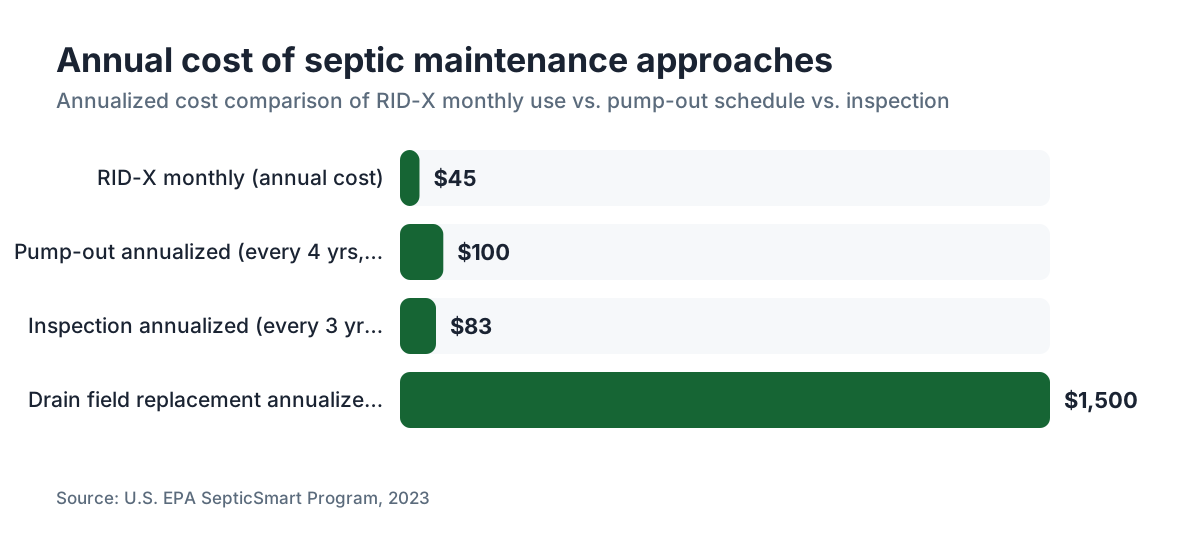
Pump on schedule. This is the single most effective thing a homeowner can do. Regular septic tank cleaning removes accumulated sludge and scum before they reach problem levels. A typical pump-out costs $300 to $600 depending on tank size and location [7]. That's real money, but it's far less than a drain field replacement, which runs $3,000 to $15,000 or more depending on soil conditions and local rules.
Watch what enters the system. Flushing wipes labeled "flushable," feminine hygiene products, medications, or heavy grease loads hurts system function more than the absence of any additive ever could. The EPA's SepticSmart program names solids management as the top priority [1].
Protect the drain field. Don't park vehicles over it, don't plant trees with aggressive roots nearby, and route roof drainage and surface runoff away from the leach field. Hydraulic overload kills more drain fields than any bacterial shortage.
Get inspections. A septic tank inspection every few years catches problems early, before they get expensive. Inspectors check baffles, lids, effluent filters, and the distribution box, parts no additive touches.
If you want to track your system's maintenance history and set pumping reminders, tools like SepticMind help you stay on a schedule instead of guessing when service is due.
Those four practices, pumping, waste management, field protection, and inspection, have actual evidence behind them. RID-X does not.
Is RID-X worth the money?
At roughly $30 to $60 a year for monthly use, RID-X is not a financial disaster. The question is whether you get anything for it.
Based on the evidence: no, you're probably not getting a measurable benefit in a normally functioning system. The bacteria are redundant, the enzyme volumes are small next to what's already there, and no credible independent study has shown extended pump intervals or better effluent quality from consumer additive use.
If you've used RID-X for years and your system runs fine, the additive isn't the reason. Your tank's native microbial community is doing the work. You could stop tomorrow and see the same performance, as long as you keep pumping on schedule and treating the drain right.
I'd rather see homeowners put that $40 a year into a savings line for their next pump-out or toward a proper septic tank inspection. That's money with a demonstrated return.
SepticMind's scheduling and recordkeeping tools are built around this kind of practical maintenance, not additive dependency. If you're a service operator managing multiple accounts, having pump histories and interval tracking in one place is worth more than any additive your customers are buying.
What about other septic additives compared to RID-X?
The additive market is large and messy. Products fall into three broad camps: biological (bacteria and enzymes, like RID-X), chemical (solvents and surfactants), and yeast-based products sold on folk wisdom.
Chemical additives are the ones with documented harm potential. Solvents like methylene chloride can damage tank components and carry volatile organic compounds through the soil into groundwater. The EPA and most state regulators actively warn against them [1].
Biological additives, including RID-X, are the benign tier. No evidence of harm, minimal evidence of benefit. That finding shows up across multiple state and university reviews.
Yeast-based additives add a trivial bacterial count and have no meaningful evidence base at all.
If you're comparing products and wondering whether a pricier biological additive beats RID-X, the honest answer is that the evidence doesn't tell them apart. None have cleared the bar of demonstrated field efficacy in independent testing. Spending more on a premium brand doesn't change that.
Frequently asked questions
Is RID-X good for septic systems?
RID-X won't harm a healthy septic system, but independent research and EPA guidance consistently find no evidence it improves performance or extends pumping intervals. A properly maintained tank already has the bacteria it needs. Use RID-X if you want, but don't skip or delay pumping because of it. Pumping every three to five years is what actually protects your system.
Can RID-X replace septic tank pumping?
No. RID-X cannot dissolve accumulated sludge fast enough to offset natural buildup in a household-use tank. Even the manufacturer doesn't claim it eliminates the need for pumping. The EPA recommends pumping every three to five years regardless of additive use. Skipping pumps because you're using an additive is how drain fields get destroyed.
How often should you use RID-X?
The label recommends monthly use. From a purely biological standpoint, that frequency shows no documented benefit in an active system. If you choose to use it, the dormant or post-pump-out scenarios have slightly more rational basis. In an actively used home, the monthly dose is absorbed into a tank population that already vastly outnumbers what you're adding.
Does RID-X help a failing septic system?
No. Septic failures are almost always caused by hydraulic overload, clogged outlets, compacted drain field soils, or neglected pumping, not bacterial deficiency. Adding RID-X to a failing system won't fix any of those. If you're seeing sewage backups, slow drains, or wet spots over the drain field, call a licensed septic professional for diagnosis and repair.
Is RID-X safe for septic systems?
Yes, RID-X is considered safe for septic components and groundwater. The bacterial strains and enzymes it contains don't harm tank liners, baffles, or soil. Multiple state environmental agencies have reviewed biological additives and found no significant risk. The concern isn't safety, it's whether the product does anything useful, and the evidence there is thin.
What do septic professionals think of RID-X?
Most experienced pumpers and inspectors view RID-X skeptically. Trade groups in the wastewater field generally align with university extension guidance: a healthy tank doesn't need additives. Some pumpers will suggest a biological supplement after a complete pump-out, but routine monthly use is widely seen as unnecessary spending that occasionally delays needed service calls.
Does RID-X work for older septic systems?
Older systems don't benefit from additives in any documented way that newer systems don't. An aging tank may have cracked baffles, a saturated drain field, or a corroded lid, problems no additive touches. If your system is old and underperforming, a professional inspection is far more useful than additive treatment. Find out what's actually wrong before spending anything.
Can you use too much RID-X?
Overdosing a biological additive is unlikely to cause acute harm, but it's wasteful. The bacteria and enzymes are simply absorbed into the existing tank population or flushed out with effluent. There's no known mechanism by which excess RID-X damages a septic tank. There's also no evidence that doubling the dose produces better outcomes than following the label.
What actually keeps septic bacteria healthy without additives?
The main things that support healthy tank bacteria are consistent water use (feeding the microbial community regularly), avoiding large volumes of bleach, not flushing antibiotics or strong chemical cleaners, and keeping the system from being hydraulically overloaded. Normal household use maintains a healthy bacterial community on its own. You don't need to add anything.
How much does RID-X cost per year compared to pumping?
Monthly RID-X use runs roughly $30 to $60 per year depending on product size. A professional pump-out costs $300 to $600 on average and is needed every three to five years, so that's roughly $75 to $200 per year annualized. The additive costs are real money, but pumping is what actually maintains the system. Prioritizing pumping over additives is the better financial choice.
Does RID-X affect the drain field?
In theory it might help, because better-digested solids in the tank means fewer solids reaching the drain field. In practice, researchers haven't documented a measurable improvement in effluent quality at the drain field from consumer additive use. Keeping solids out of the drain field matters a great deal, but that's achieved through pumping and proper waste management, not additives.
Are there any septic additives that actually work?
Independent research hasn't confirmed that any consumer septic additive, biological, chemical, or yeast-based, consistently improves system performance in field conditions. Chemical additives are actively harmful. Biological additives including RID-X are harmless but unproven. If your system is functioning normally and you're pumping on schedule, you don't need one. No product has cleared the bar of demonstrated efficacy in independent testing.
What does the EPA recommend for septic system maintenance?
The EPA's SepticSmart program recommends four practices: inspect and pump every three to five years, use water efficiently, dispose of waste properly (no wipes, grease, or medications), and protect the drain field from vehicle traffic and deep-rooted plants. Additives are not listed as a recommended maintenance practice. The program is free to access at epa.gov/septic.
Is RID-X worth buying if my septic system is working fine?
Probably not. A functioning system already has the bacterial population it needs. The $30 to $60 annual cost isn't ruinous, but based on the evidence you're not getting a return on it. A better use of that money is a pump-out fund or your next inspection. If the peace of mind matters to you and you understand it's not a maintenance substitute, it won't hurt anything.
Sources
- U.S. EPA, SepticSmart Program: EPA does not recommend additives as a substitute for proper maintenance including regular pumping; recommends pumping every 3-5 years
- University of Minnesota Extension, Septic System Owner's Guide: No scientific evidence that biological or enzymatic additives improve performance of a properly functioning septic system
- National Small Flows Clearinghouse, Small Flows Quarterly, review of 21 septic additives (1994): None of 21 tested additives provided a demonstrated benefit in field conditions; some chemical additives posed environmental risks
- University of Florida IFAS Extension, Septic Tank Maintenance: A healthy septic tank has billions of anaerobic bacteria already present; microbial community is not the limiting factor in most systems
- North Carolina DEQ, Onsite Wastewater Program guidance on additives: No additive has been shown to eliminate the need for pumping; biological additives provide no documented benefit for properly maintained systems
- Massachusetts Title 5 Regulations, 310 CMR 15.00: Massachusetts Title 5 onsite wastewater regulations do not require additive use or allow additives as substitute for required pumping intervals
- U.S. EPA, Septic System Costs and Maintenance Overview: Typical septic pump-out costs $300 to $600; drain field replacement costs thousands of dollars
- Penn State Extension, Septic System Additives: Do They Work?: Penn State Extension review found no independent evidence supporting consumer septic additive use for normally functioning systems
- Wisconsin Department of Natural Resources, Septic System Care: Wisconsin DNR guidance recommends against routine additive use citing lack of independent evidence and risk of deprioritized pumping
- U.S. EPA, Types of Septic Systems: EPA categorizes biological additives as introducing bacteria and enzymes to try to improve biological treatment; does not endorse their use
- Oklahoma State University Extension, Homeowner's Guide to Septic Systems: Consumer additive doses are small relative to native tank bacterial populations numbering in the billions per milliliter
Last updated 2026-07-09