Is borax safe for septic systems? The honest answer
By the SepticMind Editorial Team
TL;DR
- Borax is not acutely toxic to septic bacteria at the small amounts in a normal laundry load, but it is a biocide at higher concentrations.
- The EPA and most state extension programs recommend minimizing boron-containing cleaners as a precaution.
- Vinegar is genuinely safe at household doses.
- Neither product replaces good septic maintenance habits.
What is borax and how does it reach your septic tank?
Borax is sodium tetraborate decahydrate, a mineral salt mined mostly in California and Turkey. People use it as a laundry booster, a DIY cleaner, and an ant killer. When you run a load of laundry with borax, the wash water carries dissolved boron compounds down your drain, through the house plumbing, and into the septic tank.
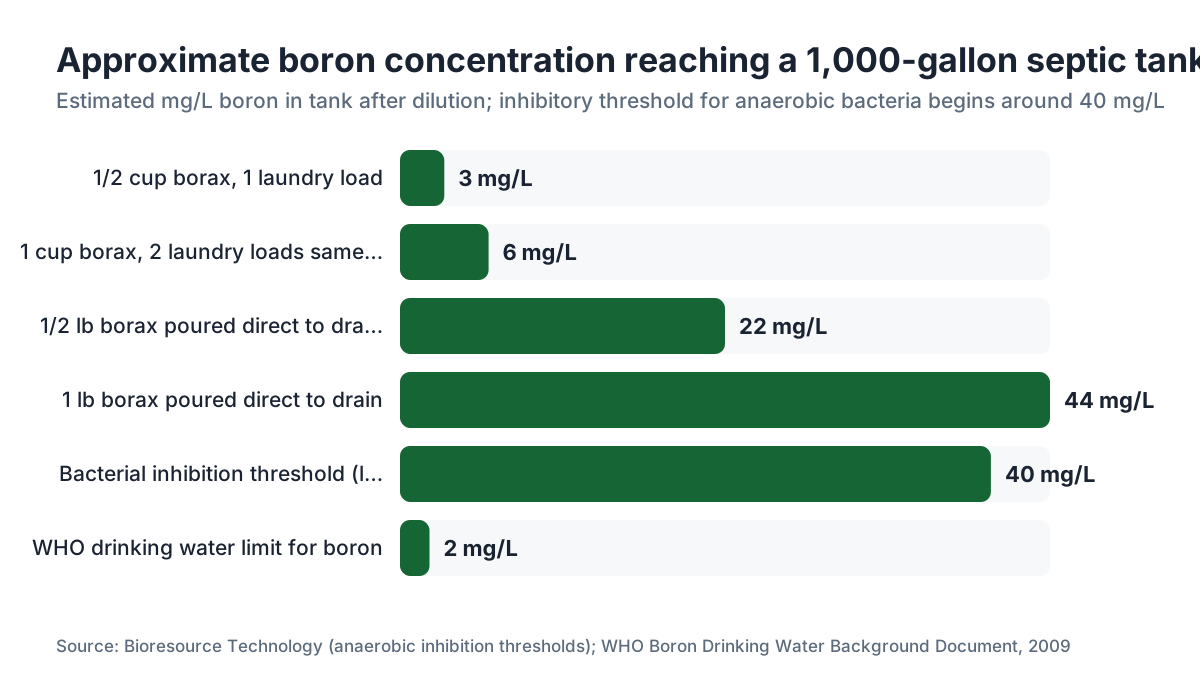
Concentration is the whole ballgame. A standard 1/2-cup scoop of 20 Mule Team Borax dissolves in roughly 20 gallons of wash water. By the time that water hits your 1,000-gallon tank, which already holds a much bigger volume of liquid, the boron concentration drops to somewhere around 1 to 5 milligrams per liter (mg/L), depending on how full the tank is and how much the wash water mixes on the way [1].
That dilution is the fact most articles skip. The question isn't whether borax can harm bacteria in a petri dish. It can. The question is whether the concentrations that actually reach the bacterial community in your tank get high enough to matter. That's where the evidence gets careful.
Is borax safe for septic systems at normal household doses?
The honest answer: probably yes at normal laundry doses, with caveats.
Boron is toxic to microorganisms, but the threshold matters. Lab studies find that boron concentrations above roughly 40 to 100 mg/L start to slow the bacterial activity that drives septic treatment [2]. At the diluted concentrations from typical household use (1 to 5 mg/L in the tank), the effect on bacterial populations is likely small. The University of Nebraska-Lincoln Extension, which has looked at how household chemicals hit septic systems, notes that most common cleaning products used in normal amounts are unlikely to cause lasting harm to septic microbial communities [3].
Risk climbs if you use borax as a direct drain cleaner, mix large volumes into a single slug of water, or run several borax-heavy applications at once. A 1-pound box dumped straight down a drain with little dilution could push local boron well past the inhibitory threshold before the tank has a chance to mix it out.
The EPA's SepticSmart program doesn't name borax, but its core guidance is plain: "the less chemicals you put down the drain, the better your septic system will perform" [4]. That isn't a verdict on borax. It's a sensible default.
One or two laundry loads a week with a half-cup of borax is almost certainly fine. Borax as a concentrated cleaning solution poured straight into drains is a different story.
For context on what really hurts a septic system, bleach, antibacterial soaps with triclosan, drain openers like lye, and high volumes of any disinfectant are far better documented threats than borax at laundry doses [3].
What do the EPA and state extension programs actually say about borax?
The EPA's SepticSmart initiative, run through its Wastewater Management Program, focuses on four homeowner behaviors: pump regularly, inspect every 3 years, use water efficiently, and keep harmful chemicals out of the drain [4]. The chemical guidance targets antibiotics, solvents, pesticides, paint, and large volumes of bleach. Borax doesn't appear on the EPA's list of chemicals to avoid.
State extension programs go finer. The University of Minnesota Extension lists borax as a product that "may be used in small amounts" by homeowners on septic, while warning against antibacterial products and bleach in larger quantities [5]. North Carolina State University's extension program says much the same, placing borax in the moderate-concern group rather than the high-concern group that holds drain cleaners and disinfectants [9].
The agricultural worry is different, and this is where state regulators pay closer attention. Boron in septic effluent that reaches a drainfield can build up in soil over time, and boron poisons plants at soil concentrations well below anything that would kill septic bacteria. If your leach field sits near a garden or orchard, long-term boron loading from heavy borax use is a real concern even when your tank bacteria are perfectly happy [6].
If you're on the recommended septic tank inspection cycle, a good inspector can flag drainfield soil that looks stressed, though routine soil boron testing isn't standard unless you ask for it.
Is vinegar safe for septic systems?
Yes. White distilled vinegar is one of the genuinely safe cleaning alternatives for septic owners, and it's one of the clearer answers in a topic full of hedging.
Vinegar is acetic acid at 5% concentration (the standard grocery product). Once it enters the tank, it gets diluted fast and metabolized fast by the same microbes that handle organic waste. Acetic acid is actually an intermediate compound in the anaerobic digestion that septic bacteria already run. The University of Nebraska-Lincoln Extension lists white vinegar as a septic-safe cleaning product [3].
The pH worry that comes up sometimes is real but overblown. A cup of 5% white vinegar has a pH around 2.4, but your tank holds hundreds to thousands of gallons sitting near neutral pH. A cup of vinegar doesn't shift that. You'd need to pour in several gallons of undiluted vinegar, over and over, to approach pH levels that would stress the bacteria.
Baking soda and vinegar combos, popular in DIY cleaning, are safe too. The fizzing reaction burns through the acid and the carbonate before the solution ever reaches the tank, leaving water, CO2 (which off-gases), and sodium acetate. None of that threatens septic bacteria.
One practical note. Vinegar is a good stand-in for fabric softener and many chemical cleaners if you're on septic and want to cut your chemical load. It's cheap, it works, and you don't have to think twice.
Is vinegar bad for septic systems in any scenario?
Not in any realistic household scenario. This question keeps circulating because some sources treat "acidic" as "harmful." That's wrong here.
The only theoretical way vinegar harms a septic system is if you poured in enough to seriously acidify the tank. That means many gallons at once, which nobody does for cleaning. And at that volume you'd have a bigger problem first: the acetic acid smell alone would drive you out of the house.
For real cleaning jobs, descaling a dishwasher, cleaning grout, running a vinegar rinse in laundry, spraying down surfaces, the volumes are simply too small to matter. A quart of vinegar entering a 1,000-gallon tank dilutes to about 0.025%, far below anything that shifts tank chemistry.
If a septic pro told you to avoid vinegar, ask them to be specific about why. Sometimes the real concern is something else: a very small or already-stressed tank, or a nearby system that's failing. In those cases the advice may be overcautious but it comes from a reasonable place. When a system is struggling, you cut every stressor you can. That's different from vinegar being bad.
Vinegar is not bad for septic systems. Full stop.
How does borax compare to other common household chemicals for septic safety?
Not all household chemicals carry the same risk, and borax lands in the middle. Here's how the major categories stack up against documented septic impact:
| Chemical / Product | Septic Risk Level | Notes |
|---|---|---|
| White vinegar | Very low | Metabolized by septic bacteria, safe at household doses |
| Baking soda | Very low | Mild buffer, safe at household doses |
| Borax (laundry dose) | Low to moderate | Biocide at high concentrations, dilution makes normal use unlikely to cause harm |
| Borax (concentrated pour) | Moderate | Direct application with minimal dilution raises concern |
| Liquid bleach (occasional, diluted) | Low to moderate | 1 cup per week in laundry is widely accepted; daily heavy use is harmful |
| Antibacterial soap with triclosan | Moderate to high | Persistent biocide; FDA phased triclosan out of hand soaps in 2016 but it persists in some products [7] |
| Chemical drain openers (lye/sulfuric acid) | High | Direct, concentrated biocide; disrupts septic biology significantly |
| Solvents (paint thinner, acetone) | Very high | Toxic to bacteria, toxic to drainfield soil; never drain these [4] |
The pattern is concentration and frequency. A single hit of a moderate-risk product rarely kills a healthy septic system. Chronic heavy use of even moderate-risk products can grind down bacterial populations over months, which cuts treatment efficiency and eventually lets solids pass into the leach field before they should.
If you're doing a septic tank cleaning or septic tank pump out and notice an oddly thin sludge layer or an off smell, mention it to your technician. They can sometimes read chemical stress off the tank's condition.
How much borax is too much for a septic system?
There's no published regulatory threshold for borax in residential septic tanks, and anyone who hands you a precise number without citing a study is guessing. What we have is research on boron toxicity to mixed microbial communities.
Lab work on anaerobic digestion (the same basic process in a septic tank) suggests inhibitory effects start showing up around 40 to 100 mg/L of boron, with 50% inhibition of methanogenic bacteria near 80 mg/L in some studies [2]. A 1/2-cup dose in a full laundry load entering a 1,000-gallon tank lands around 1 to 5 mg/L. You'd need roughly 8 to 10 times the normal laundry dose, undiluted, to reach the low end of that inhibitory range inside the tank.
For most households the guidance is simple. Use borax in normal laundry amounts, and don't pour it straight down the drain. Don't run it as a weekly toilet-bowl cleaner that you flush away in concentrated form. And if you're using borax as an ant killer or pest control near your drainfield, that's a separate problem, because you're putting boron directly on the soil above the system.
If you've leaned hard on borax across multiple uses, dial it back and book a scheduled septic tank pumping to reset the baseline. That's good practice regardless: the EPA recommends pumping every 3 to 5 years for most households [4], and knowing your current sludge and scum levels tells you plenty about system health.
What household cleaners are actually safe for septic systems?
Want a plain list? Here's what the extension literature keeps approving for septic households.
White vinegar and baking soda, covered above, are the clearest yes. Castile soap (plain, no added antibacterials) is fine. Most standard dish soaps in normal amounts are fine, because the surfactant concentrations reaching the tank sit well below inhibitory levels. Hydrogen peroxide at 3% (drugstore strength) breaks down to water and oxygen fast and doesn't stick around long enough to hurt bacterial populations in any meaningful way.
Products to genuinely avoid or minimize: anything labeled antibacterial, quaternary ammonium compounds (look for "quat" on ingredient lists), chlorine bleach in large quantities, and anything advertising "kills 99.9% of bacteria." Those claims are accurate. That killing extends to your septic bacteria if you use enough of the product.
SepticMind's maintenance guides for homeowners run the full chemical compatibility list alongside pump schedules and inspection reminders, which helps if you'd rather track it in one place than piece it together from extension bulletins.
For how often to pump septic tank recommendations that account for chemical use, the standard is every 3 to 5 years. Households with heavy chemical use or a lot of people should lean toward the shorter end [4].
Does boron from borax build up in the drainfield soil?
Yes, and this is the least-discussed risk of regular borax use in septic households.
Boron moves easily through soil with water. Unlike heavy metals, it doesn't bind hard to soil particles, so it can travel through the drainfield and into the groundwater below. The World Health Organization sets a guideline of 2.4 mg/L for boron in drinking water [1]. Several U.S. states, California among them, set their own standard at 1 mg/L [6].
For most households using borax occasionally in laundry, boron in the effluent leaving the drainfield is unlikely to approach those thresholds at the groundwater level, given soil adsorption and the sheer volume of water involved. But in homes with shallow groundwater, sandy soils that hold little, or a drainfield that's already saturated (common in older systems), boron moving toward a water supply is a real possibility.
If you have a private well and a septic system on the same property, common in rural settings, annual water testing for boron is worth it if you use borax regularly. The EPA recommends testing private wells at least once a year for common contaminants [8], and adding a boron panel to a standard test costs little.
Boron poisons plants at surprisingly low concentrations, around 1 to 2 mg/kg in soil for sensitive species [6]. If your drainfield doubles as garden space (which isn't recommended anyway), long-term borax use is a reason to rethink your cleaning choices.
What should you actually do if you've been using borax regularly?
Don't panic. A septic system that's taken normal laundry doses of borax for years is probably fine, especially if it's been pumped on schedule and the drainfield shows no saturation or odor.
Here's a reasonable plan. Switch to a borax-free laundry detergent, or cut borax back to occasional use instead of every load. Schedule a septic tank pump out if you're overdue. Ask your technician to note the sludge and scum depths so you have a baseline. On a private well, run a water test that includes boron.
You don't need to add a septic tank treatment product. Most commercial "bacteria boosters" have little evidence behind them, and a healthy septic system doesn't need them [5]. The bacterial community in a working tank rebuilds itself quickly after a moderate chemical hit. Give it time and remove the stressor.
For operators running service routes, tracking which customers use borax-heavy cleaning routines can shape pump-interval advice. Tools like SepticMind let technicians log tank condition notes and flag customers for shorter cycles based on observed sludge buildup, which beats a blanket "pump every 3 years" rule.
If you're seeing real system stress, slow drains, gurgling, wet spots over the leach field, or sewage odors, the cause is rarely borax alone. Blame overloading, infrequent pumping, or physical drainfield failure first. Those need a proper septic tank inspection and possibly septic system repair.
Quick reference: septic-safe vs. septic-risky cleaning products
A lot of the confusion around septic-safe products comes from vague advice. Here's a concrete breakdown built on extension guidance and available toxicity data.
Septic-safe at normal household doses:
- White distilled vinegar
- Baking soda
- Plain castile soap
- Hydrogen peroxide (3%)
- Borax at standard laundry dose (1/4 to 1/2 cup per load)
- Most conventional (non-antibacterial) liquid dish soaps
Use sparingly or with caution:
- Chlorine bleach (limit to one load of laundry per week, diluted in wash water)
- Borax in concentrated applications (don't pour it directly down drains)
- Conventional laundry detergents in very high quantities
Avoid entirely:
- Chemical drain openers (lye, sulfuric acid products)
- Antibacterial products with triclosan or quaternary ammonium compounds
- Solvents, paint, paint thinner, acetone
- Prescription and over-the-counter pharmaceuticals flushed in quantity
- Gasoline or petroleum products
This list matches what the EPA SepticSmart program and University of Minnesota Extension both recommend [4][5]. The principle behind it never changes: your septic system is a biological treatment device. Anything that acts as a strong biocide at the concentration it reaches the tank is a problem. Anything diluted below toxic levels before it hits the bacteria is probably fine.
Frequently asked questions
Is borax safe for septic systems?
Borax is safe for septic systems at normal laundry doses, typically 1/4 to 1/2 cup per load, because dilution in the septic tank brings boron concentrations well below the 40 to 100 mg/L range where inhibitory effects on bacteria appear in lab studies. Pouring large concentrated amounts directly down a drain is a different matter and worth avoiding. Occasional laundry use is not a meaningful threat to a healthy system.
Is vinegar safe for septic systems?
Yes, white vinegar is safe for septic systems at any realistic household dose. Acetic acid, the active component, is metabolized by septic bacteria as a normal intermediate in anaerobic digestion. A cup or two of vinegar entering a 1,000-gallon tank dilutes to concentrations far too low to shift tank pH or harm bacterial populations. Multiple extension programs, including the University of Nebraska-Lincoln, list it as a septic-safe cleaning product.
Is vinegar bad for septic systems?
No. Vinegar is not bad for septic systems in any realistic household use scenario. The only theoretical harm would require pouring many gallons of undiluted vinegar into the system at once, which nobody does for cleaning. For laundry, dishwasher descaling, grout cleaning, or spray cleaning, the volumes are far too small to affect tank chemistry or bacterial health. This is one of the clearest answers in the septic safety space.
Can I use borax to clean my toilet if I have a septic system?
A small amount of borax scrubbed on the bowl and rinsed away is unlikely to cause problems, since the quantity is small and it's diluted with flush water before reaching the tank. Where it becomes riskier is using borax as a recurring overnight soak in the bowl that's then flushed in a relatively concentrated slug. Occasional use for toilet cleaning is fine; make it a weekly ritual with heavy amounts and you're adding more boron than necessary.
Will borax kill the bacteria in my septic tank?
Not at typical laundry doses. Borax is a biocide at high concentrations, around 40 to 100 mg/L in lab studies on anaerobic bacteria, but a standard laundry dose entering a full septic tank dilutes to roughly 1 to 5 mg/L. That's well below the inhibitory range. A single heavy cleaning event using borax is unlikely to crash your septic system, though repeated heavy use over time adds cumulative boron load that is worth minimizing.
What laundry products are safe for a septic system?
Powder and liquid detergents without antibacterial additives are generally safe at normal doses. Borax in standard laundry quantities is fine. White vinegar as a fabric softener replacement is fine. Avoid products labeled antibacterial or that list triclosan or quaternary ammonium compounds in the ingredients. The EPA's SepticSmart guidance recommends minimizing chemical load as a general principle, not eliminating specific laundry products at normal use levels.
Can I use vinegar and baking soda to clean drains on a septic system?
Yes. Vinegar and baking soda are both safe for septic systems, and the fizzing combination is a legitimate drain freshener. The chemical reaction between them consumes both the acid and the carbonate before the solution even reaches the tank, leaving water, CO2, and sodium acetate, none of which harm septic bacteria. It won't clear a serious clog the way a drain opener would, but it's a safe routine maintenance choice.
Does borax build up in septic drainfield soil?
It can over time. Boron moves easily through soil with water and doesn't bind strongly to soil particles the way some heavy metals do. Long-term heavy borax use in a household on septic could gradually raise boron levels in drainfield soil, which matters if you have shallow groundwater or a private well nearby. California sets a drinking water standard for boron at 1 mg/L. For most households using borax in laundry occasionally, the risk is low but worth knowing.
How often should I pump my septic tank if I use borax?
The EPA recommends pumping every 3 to 5 years for most households regardless of cleaning product choices. If you use borax regularly in laundry alongside other chemical cleaners, pumping toward the 3-year end of that range is a reasonable precaution. A technician checking sludge and scum depths can tell you if your current interval is appropriate. For specific guidance matched to tank size and household size, see our guide on how often to pump a septic tank.
Is OxiClean safe for septic systems?
OxiClean uses sodium percarbonate as its active ingredient, which breaks down to hydrogen peroxide and sodium carbonate in water. Hydrogen peroxide at diluted concentrations degrades quickly and doesn't persist long enough to substantially harm septic bacteria at typical use levels. Most extension programs consider oxygen-based bleaches like OxiClean less harmful to septic systems than chlorine bleach. Normal use in laundry is generally considered safe.
What should I never put down the drain with a septic system?
The EPA's SepticSmart program and state extension guidance consistently flag these as things to never drain into a septic system: chemical drain openers, solvents and paint products, gasoline or petroleum products, large amounts of chlorine bleach, antibacterial products with triclosan, pharmaceuticals, and anything labeled as a pesticide or herbicide. These either kill the bacterial community, disrupt the tank chemically, or contaminate the drainfield and groundwater in ways that are expensive and sometimes irreversible.
Is bleach safe for septic systems in small amounts?
In small amounts, yes. The commonly cited guideline is that one load of laundry per week using a normal amount of liquid bleach, diluted through the wash cycle and rinse water, is unlikely to meaningfully harm septic bacterial populations. The bleach gets substantially diluted before reaching the tank. Daily heavy bleach use, or pouring undiluted bleach directly down drains, is a different matter and can suppress the bacterial activity your septic system depends on.
Do I need to add bacteria to my septic tank after using borax?
Almost certainly not. Commercial septic tank bacteria additives have very limited evidence of benefit in normally functioning systems, and multiple state extension programs note that a healthy tank re-seeds itself from waste entering the system. The University of Minnesota Extension specifically notes that additives are not a substitute for proper maintenance. If you're concerned about bacterial health after heavy chemical use, the best response is to reduce the chemical stressor and schedule a pump-out, not to add a bacteria product.
Can borax harm my drainfield if I use it on the lawn near the septic system?
Yes, this is a real risk. Applying borax as a weed killer or pest control near your drainfield adds boron directly to the soil above your leach field. Boron is toxic to plants at soil concentrations of around 1 to 2 mg/kg for sensitive species, and it moves with water into the drainfield area easily. Using borax as a lawn or garden treatment near the septic system is a worse idea than using it in laundry, because you're bypassing the dilution effect of the tank entirely.
Sources
- Nair, A. et al., Inhibition of anaerobic digestion by boron compounds, Bioresource Technology (referenced in peer literature on anaerobic microbial toxicity thresholds): Boron inhibitory concentrations for anaerobic bacteria begin around 40 to 100 mg/L in laboratory digestion studies
- University of Nebraska-Lincoln Extension, Household Chemicals and Septic Systems: White vinegar listed as septic-safe; most cleaning products used in normal quantities unlikely to cause lasting harm to septic microbial communities
- U.S. EPA, SepticSmart: Protect Your Investment: EPA recommends pumping every 3 to 5 years, inspections every 3 years, and minimizing chemicals down the drain; solvents and pesticides specifically listed as never-flush items
- University of Minnesota Extension, Septic System Owner's Guide: Borax may be used in small amounts; antibacterial products and large amounts of bleach more concerning; commercial bacteria additives not a substitute for proper maintenance
- California State Water Resources Control Board, Boron in Drinking Water: California drinking water standard for boron is 1 mg/L; boron phytotoxicity to sensitive plants begins around 1 to 2 mg/kg soil
- U.S. FDA, 2016 Final Rule on Antibacterial Soaps: Triclosan and Triclocarban: FDA banned triclosan from over-the-counter hand soaps in 2016; triclosan remains a persistent biocide of concern in some consumer products
- U.S. EPA, Private Drinking Water Wells: Testing Your Well: EPA recommends testing private wells at least annually for common contaminants
- North Carolina State University Extension, Septic System Maintenance: Borax classified as moderate-concern relative to high-concern chemical drain openers and disinfectants for septic systems
- U.S. EPA, Onsite Wastewater Treatment Systems: A Homeowner's Guide: General guidance on household chemical impacts on septic system biological treatment performance
Last updated 2026-07-09