Aerobic septic system electrical requirements: the complete guide
By the SepticMind Editorial Team
TL;DR
- An aerobic treatment unit (ATU) needs one or two dedicated circuits: a 120V/20A circuit for the air compressor and control panel, plus sometimes a 240V circuit for a larger aerator or spray pump.
- Every outdoor connection needs GFCI protection and a weatherproof enclosure.
- Most states also require a permitted electrical inspection before the system runs.
What electrical power does an aerobic septic system actually need?
An aerobic septic system runs day and night. A conventional gravity system has no moving parts and no power draw. An ATU has at least one motor turning around the clock, and that changes how the electrical supply gets sized and protected.
Most residential ATUs use a fractional-horsepower air compressor or diffuser aerator rated between 1/4 HP and 3/4 HP. That draws roughly 3 to 8 amps at 120 volts, continuously. [1] The control panel that watches float switches, timers, and alarms adds another 1 to 2 amps. Small-to-medium residential units run fine on a single dedicated 20A, 120V circuit, as long as the wire run is short and voltage drop stays under 3 percent.
Larger systems serving multi-family or commercial buildings often use a 240V aerator motor. Anything above roughly 1 HP almost always needs 240V to keep the current draw manageable. Your equipment manual lists the exact voltage and minimum ampacity. Those numbers beat any rule of thumb.
The spray irrigation pump that spreads treated effluent across the yard is the other big load. A 1/2 HP submersible pump at 120V pulls about 6 to 8 amps running, with a startup surge two to three times that. Share a circuit between the aerator and the spray pump and that surge can trip a 20A breaker. Good installers give the spray pump its own dedicated circuit for exactly this reason.
Here is the typical configuration:
| Component | Typical voltage | Typical ampacity needed | Dedicated circuit? |
|---|---|---|---|
| Air compressor / aerator (small, <1 HP) | 120V | 15-20A | Yes |
| Air compressor / aerator (large, ≥1 HP) | 240V | 20-30A | Yes |
| Control panel + alarm | 120V | 15A | Shared with aerator or separate |
| Spray irrigation pump | 120V or 240V | 15-30A | Strongly recommended |
| UV disinfection unit (if present) | 120V | 15A | Shared or separate |
Got a UV disinfection stage? Add another 15A, 120V circuit. UV ballasts don't like sharing a circuit with motor loads.
What does the National Electrical Code require for ATU wiring?
The National Electrical Code (NEC), published by the National Fire Protection Association (NFPA) and adopted in all 50 states (sometimes with amendments), governs aerobic system wiring the same way it governs any outdoor motor-driven equipment. [2]
The articles that matter:
- Article 430: motors, motor circuits, and controllers. It sets minimum wire ampacity at 125 percent of the motor's full-load current. A 7A aerator motor needs wire and breaker rated for at least 8.75A continuous, which in practice means a 15A circuit minimum.
- Article 547: agricultural buildings. If your ATU sits in a shed or attaches to a barn, this article can apply and demand extra moisture and dust protection for the wiring. [11]
- Article 680: equipment near water. ATU components in or near the tank can fall under the equipotential bonding and GFCI rules that cover swimming pools and similar water-containing structures in many jurisdictions. Ask your local authority having jurisdiction (AHJ).
- Article 300.5: burial depth. Direct-buried UF (underground feeder) cable must sit at least 24 inches deep, or 6 inches deep inside rigid metal conduit. [2] Most installers run PVC conduit at 18 inches to split the difference and add mechanical protection.
The verbatim rule from NFPA 70 (NEC 2023), Article 430.22(A): "Each continuous-duty motor branch-circuit conductor shall have an ampacity of not less than 125 percent of the motor full-load current rating." [2] Bookmark that sentence. It is the standard your electrical inspector checks against.
State amendments matter. Texas adopted the NEC with specific modifications for onsite sewage facilities in Title 30 of the Texas Administrative Code. [3] Florida references Chapter 64E-6 of the Florida Administrative Code for aerobic systems and defers to the Florida Building Code for the electrical work. [4] Pull the current version of your state's adopted NEC edition. Some states run one or two editions behind the 2023 NEC.
Do aerobic septic systems require GFCI protection?
Yes, every time. No exceptions.
GFCI (ground-fault circuit interrupter) protection is mandatory for all 125V, 15 and 20A outdoor receptacles under NEC 210.8(A)(3). [2] ATU control panels almost always mount outdoors, and some components sit submerged in liquid, so the ground-fault risk is real. A hairline crack in a pump seal lets water reach a winding. Without GFCI protection, anyone touching the tank at that moment completes the circuit.
You have three ways to get there:
- Install a GFCI breaker in the panel feeding the ATU circuits. This protects everything from panel to equipment.
- Install a GFCI receptacle at the first outlet and wire downstream devices from its load terminals.
- Use a GFCI-equipped control panel. Most name-brand manufacturers (Norweco, Advantex, Jet, Bio-Microbics) ship panels with GFCI built in. Confirm it in the installation manual before you buy a separate device.
One practical note. GFCI devices trip when a ground fault passes 5 milliamps. Old or cheap aerator motors can develop enough capacitive leakage to nuisance-trip a GFCI, especially when the motor is cold and wet. Getting unexplained trips? Measure the leakage current with a clamp meter before you blame the GFCI. A motor leaking more than 3 to 4 mA is near the end of its life.
What weatherproofing and enclosure ratings are required?
Every outdoor electrical enclosure needs a NEMA (National Electrical Manufacturers Association) rating suited to the environment. For an ATU control panel mounted outside, NEMA 3R is the floor. [8]
- NEMA 3R handles rain and sleet but not hose-directed water or submersion. Most residential ATU panels ship as NEMA 3R.
- NEMA 4 or 4X is the call if the panel gets hosed down regularly, sees wash water, or sits in a coastal environment with salt-air corrosion. NEMA 4X adds the corrosion resistance.
- Conduit entering the enclosure from below (the preferred direction outdoors) should use liquidtight flexible conduit for the final 18 inches to the motor or panel. That stops water from wicking along the conduit wall into the enclosure.
Conduit itself: PVC Schedule 40 is the common choice for underground runs. It resists soil corrosion, works easily, and meets NEC burial depth at 18 inches for residential 120 or 240V conductors. [2] Skip EMT (electrical metallic tubing) underground. It corrodes.
Wire inside the conduit: THWN-2, rated for wet locations at 90°C, is the standard. THHN in wet conduit is a code violation. THWN-2 covers dry and wet both, so buy it and stop thinking about it.
Every conduit penetration into the tank or riser gets sealed with approved duct seal or foam. This blocks sewer gas from traveling back up the conduit into the electrical panel. Installers skip this step surprisingly often. It is both a code requirement and a real safety issue, because methane is explosive.
What does a typical ATU control panel do and what does it need to run?
The control panel is the brain of the aerobic system. It runs the aerator on a timer, watches liquid levels with float switches, signals the spray pump when the effluent compartment fills enough to dose, and throws an audible and visual alarm when something goes wrong.
Power to the panel: a standard residential panel wants a 120V, 20A dedicated circuit. The panel itself usually draws under 2 amps in standby, but it controls outputs that can total 10 to 15 amps. The dedicated 20A circuit covers that combined load, more than the brain box.
Alarm circuit: the red light and horn on top of the panel (or on a separate post near the house) must be visible and audible from inside the home under Texas Title 30 Chapter 285 and similar rules in most states. [3] The alarm circuit runs at 120V and draws under 1 amp. Some states require the alarm on a separate circuit from the aerator, so a tripped aerator breaker still leaves the alarm working. Check your state code for that detail.
SepticMind's operations software connects directly to the data output of many modern ATU control panels, so service companies can watch runtime hours, alarm history, and pump cycles remotely. Mention that to your installer on a new system. Running the wire for a communication line or cellular antenna is far easier during original installation than as a retrofit.
Float switches: most panels use two or three floats wired back to the panel. Float wire is typically 18 AWG, two-conductor, rated for wet locations. Keep float wiring in a separate conduit from motor power wiring. Run them together and induced interference can cause erratic control behavior.
What permits and inspections does an aerobic septic electrical install require?
Permits are not optional, and skipping them is not worth the risk. An unpermitted ATU electrical install can void your homeowner's insurance, trip up a home sale, and leave you personally liable if something goes wrong.
The typical permit sequence:
- Onsite sewage permit: issued by the county or state environmental or health department before any work starts. In Texas this is the Onsite Sewage Facility (OSSF) permit under Title 30, Chapter 285. [3] In Florida, Chapter 64E-6 governs. [4] Every state has an equivalent.
- Electrical permit: a separate permit from the local building or electrical department, covering the panel circuits, conduit runs, and any new subpanel feeding the ATU. In most jurisdictions this work has to be done by a licensed electrician, not the homeowner.
- Electrical inspection: a licensed electrical inspector (separate from the septic inspector in most states) signs off on the ATU wiring before backfill and before the system goes into service. Do not bury conduit until it passes.
- Final system inspection: the onsite wastewater inspector confirms the whole system, electrical connection included, is complete and running.
Timelines swing widely. In a rural county with one inspector, scheduling can take two to three weeks. Plan for it. Replacing a failed aerator motor or control panel instead of building new? Check with your county. Many jurisdictions treat component swaps as repairs that need only an electrical permit, not a fresh OSSF permit.
For a closer look at what inspectors check during the broader system review, see our guide to septic tank inspection.
How much does it cost to wire an aerobic septic system?
Electrical work for a new ATU install typically runs $800 to $2,500, depending on the distance from the main panel, local labor rates, and how many circuits you need. [5]
The conduit run is the biggest cost driver. Running conduit 20 feet from a nearby subpanel is a different job from trenching 150 feet of buried conduit from the house. Expect $8 to $15 per linear foot for buried conduit, including labor, conduit, wire, and fittings.
A new 200A main panel upgrade, if you need one to add the ATU circuits, adds $1,500 to $3,500. Most homes don't need it. ATU loads are modest. But if your panel is already near capacity, or it's a Federal Pacific or Zinsco panel that needs replacing anyway, factor that in.
Control panel replacement (the ATU's brain box, not the main electrical panel) runs $300 to $900 for the panel plus $150 to $400 for a licensed electrician to disconnect, reconnect, and program it. Don't skip the licensed electrician even if you're handy. In most states the warranty and the permit both require it.
For the full system cost picture, see our article on the cost to install a septic system.
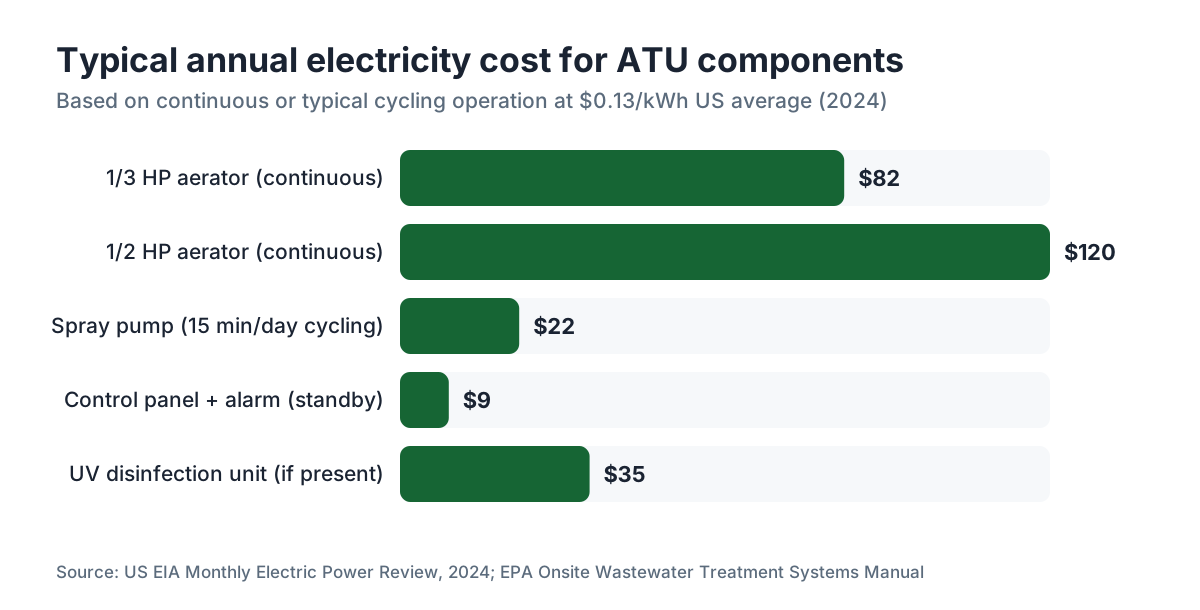
Running power to an ATU is a long-term operating cost too. A 1/3 HP aerator running 24 hours a day at $0.13 per kWh costs roughly $70 to $90 a year. Add the spray pump cycling 15 to 30 minutes a day and total ATU electrical operating cost lands around $100 to $150 a year for a typical residential system. [6]
What are the most common ATU electrical failures and how do you troubleshoot them?
The alarm is going off. Here is how to work through it methodically.
Check the breaker first. A tripped breaker is the most common cause of an ATU alarm. Reset it once. If it trips again right away, there is a short or a dead motor, and you need an electrician before you touch anything else.
Check the GFCI second. A GFCI that won't reset, or resets and trips again, usually means water reached a motor winding or a float switch cable has a damaged jacket. Pull the floats and inspect the cables where they exit the tank. A nick in the insulation at the tank rim is a classic failure point.
Check voltage at the panel third. Use a multimeter. Voltage below 108V on a nominal 120V circuit makes motors pull higher-than-rated current, overheat, and die early. Reading low voltage means the problem is at the utility or in the service entrance, not the ATU.
Check the aerator fourth. Disconnect it from its circuit and measure winding resistance with an ohmmeter, between each pair of motor terminals and between each terminal and the motor frame (ground). Less than 1 megaohm between any winding and ground means the insulation has broken down and the motor is done. Normal winding resistance varies by motor, but it should read consistent, not zero (short) and not infinite (open).
Check float switch continuity fifth. A float that reads open when it should be closed (or the reverse) confuses the control panel and triggers false alarms or stalls the spray pump. Floats are cheap ($15 to $40 each) and fail regularly. Keep one spare on the shelf.
Capacitor failure is the next most common aerator problem after winding breakdown. Most single-phase ATU motors use a run capacitor. A bad one makes the motor hum but not spin, or spin slowly and pull high current. A multimeter with a capacitance function tests it. The reading should land within 10 percent of the rating printed on the capacitor label.
For physical damage to the tank or components, our guide to septic system repair covers what to expect from a service visit.
What are state-specific electrical requirements for aerobic septic systems?
Federal rules set the floor (EPA SepticSmart guidelines, NEC adoption), but states layer on requirements that can change the scope and cost of your project a lot. [7]
Texas is the most prescriptive. Title 30, Chapter 285 of the Texas Administrative Code requires every aerobic system to have a control panel with a visual and audible alarm visible from the home, a chlorinator (which needs its own power supply), and biannual maintenance inspections by a licensed technician. [3] The electrical system must be inspected by a licensed electrician and the permit closed before the system operates.
Florida's Chapter 64E-6 requires aerobic treatment units to hold at least 1 mg/L dissolved oxygen in the treatment chamber, which means the aerator has to run continuously. That has an electrical consequence: the system must be wired so the homeowner can't switch the aerator off at the panel. Some inspectors read this as requiring a lockable disconnect. [4]
California has relatively few ATUs statewide, since state rules historically favored conventional systems. Where ATUs are permitted, they fall under Regional Water Quality Control Board oversight on top of county rules. Wiring has to meet the California Electrical Code (the state's NEC adoption with amendments).
Ohio's OAC 3701-29 requires spray irrigation systems to have a lockout/tagout-capable disconnect within sight of the spray pump. [9] This is a worker safety rule more than a consumer protection, but it decides where your electrician puts the disconnect.
Installing or maintaining an ATU in a state not listed here? Search "[your state] onsite wastewater code" or "[your state] aerobic treatment unit regulations" and find the actual administrative code citation. The EPA's SepticSmart program has a state-by-state resource directory as a starting point. [7]
For operators running ATU fleets across state lines, software like SepticMind can flag jurisdiction-specific maintenance and inspection intervals so nothing slips between rule sets.
How does ATU electrical wiring differ from a conventional septic system?
A conventional gravity septic system has one piece of electrical equipment, maybe a dosing pump, maybe nothing. An aerobic system has three to five components running continuously or on frequent cycles. That gap shapes the whole wiring job.
With a conventional system, an electrician might run a single 15A, 120V circuit to a junction box near the distribution box, sometimes with no permit needed on an existing system. An ATU calls for one to three dedicated circuits, a weatherproof subpanel or control panel at the tank, float switch wiring, alarm circuits, and maybe a chlorinator outlet. The full electrical package for an ATU rivals wiring a detached garage.
Conventional systems with a pump (pressure-dosed systems, mound systems) share some traits with ATUs, but they cycle intermittently instead of running an aerator 24 hours a day. That continuous-duty motor is what changes how you size wire and breakers (125 percent of full-load current under NEC 430.22) and how you think about long-term reliability.
For the full cost picture of conventional versus aerobic, our articles on septic tank installation and leach field maintenance cover the conventional side.
What should you check on ATU electrical components during routine maintenance?
The EPA's SepticSmart program recommends inspecting a septic system at least every three years for conventional systems and annually for systems with electrical or mechanical parts. [7] For ATUs under mandatory maintenance contracts (required in Texas, Florida, and several other states), the licensed technician handles most of these checks. Knowing what they should be doing protects you as a homeowner.
At every visit, a technician should:
- Confirm the aerator is running and producing visible aeration (bubbling or surface agitation) in the treatment chamber.
- Check control panel indicator lights and confirm no alarm is active.
- Measure amperage draw on the aerator motor and compare it to the nameplate rating. A motor pulling more than 110 percent of rated current is running hot.
- Inspect all visible wiring for cracked insulation, rodent damage, and UV breakdown (above-grade conduit should be UV-rated or painted).
- Test GFCI function with the test button. The outlet or breaker should trip right away. If it doesn't, the GFCI has failed and needs replacing before the next visit.
- Inspect the control panel enclosure gasket. A dried or cracked gasket lets moisture in and corrodes the terminals.
- Check float switch operation by manually raising each float and confirming the matching indicator or relay changes state.
For the pump-out and cleaning side of ATU maintenance, our guides on septic tank pumping and septic tank cleaning walk through a full service visit.
An ATU that's wired right and maintained regularly should last 15 to 25 years on the mechanical parts. The electrical components (capacitors, float switches, control panel relays) are consumables. Budget to replace them every 5 to 10 years.
Frequently asked questions
Can I wire my aerobic septic system myself, or does it have to be a licensed electrician?
In most states the wiring for a permitted ATU install has to be done by a licensed electrician, because it requires an electrical permit and inspection. A few states allow homeowner electrical work on owner-occupied single-family homes, but even where it's legal, the manufacturer's warranty often requires licensed installation. Check your state's electrical licensing board before you pick up a wire stripper.
What size breaker does an aerobic septic system need?
Most small residential ATUs need a 20A breaker for the aerator and control panel circuit. The spray pump often needs its own 20A breaker. Larger systems with 1 HP or greater motors may need a 30A, 240V circuit. Start with the nameplate on your specific equipment. The manufacturer's minimum circuit ampacity is the controlling number, not any general rule of thumb.
Why does my ATU alarm keep tripping even after I reset it?
A persistent ATU alarm after reset usually points to high water in the treatment tank (spray pump failure or blockage), a dead aerator (no aeration), a tripped GFCI or breaker, or a failed float switch sending a false signal. Check the breaker first, then the GFCI, then confirm the aerator is running. If none of that fixes it, call your maintenance contractor. Ignoring the alarm risks discharging poorly treated effluent.
How deep does the electrical conduit need to be buried for an aerobic system?
Under NEC Article 300.5, direct-buried UF cable must sit at least 24 inches deep. PVC conduit with conductors inside must be at least 18 inches deep for residential branch circuits. Most ATU installers run PVC Schedule 40 at 18 to 24 inches. Always check your local AHJ. Some counties require 24 inches for all conduit regardless of material.
Does an aerobic septic system use a lot of electricity?
A typical residential ATU costs roughly $100 to $150 a year in electricity. A 1/3 HP aerator running continuously at $0.13 per kWh uses about 70 to 90 dollars a year. The spray pump cycles for shorter periods and adds another 20 to 40 dollars. That's much more than a gravity system, which uses essentially no power, but comparable to a refrigerator's annual draw.
What happens to an aerobic system during a power outage?
The aerator stops, aeration ceases, and treatment slows or halts. For outages under a few hours, the effect on effluent quality is minimal. Extended outages of 24 hours or more can push the system back toward anaerobic conditions, causing odors and worse treatment. If outages are frequent where you live, a transfer switch and generator connection is worth it, especially if your state mandates a minimum effluent quality.
Can an aerobic system be connected to a generator?
Yes, and in areas with frequent outages it's a smart move. The ATU circuits get wired into the generator's transfer switch. Never backfeed a generator through an extension cord into a GFCI outlet feeding the ATU. That bypasses overcurrent protection and creates a hazard. A licensed electrician can add ATU circuits to an existing transfer switch for $200 to $600, depending on panel configuration.
What NEMA rating does an aerobic septic control panel need?
NEMA 3R is the minimum for an outdoor ATU control panel. It protects against rain and sleet. If the panel might get hosed down, or sits in a coastal environment, NEMA 4X is better because it adds corrosion resistance and protection against directed water. Always check the manufacturer's spec for the enclosure rating and confirm it meets your local code.
Do aerobic septic systems require a separate alarm circuit?
Several states, Texas among them under Title 30 Chapter 285, require the audible and visual alarm to be visible and audible from inside the home, and some require it on a separate circuit from the aerator so a tripped breaker can't silence the alarm. Even where a separate circuit isn't legally required, it's good practice. Confirm your state's specific requirement with the permitting authority.
How often should ATU electrical components be inspected?
The EPA SepticSmart program recommends annual inspections for systems with mechanical and electrical parts. States with mandatory maintenance contracts (Texas, Florida, and others) usually require inspections every six months. At each visit a technician should test GFCI function, measure motor amperage, inspect visible wiring, and check all float switches. Annual maintenance contracts from a licensed ATU service company typically cost $150 to $400 a year.
What gauge wire is used for aerobic septic system wiring?
For a 20A, 120V circuit, the minimum is 12 AWG copper (THWN-2 for wet locations). For a 30A, 240V circuit feeding a larger aerator or pump, use 10 AWG copper. Float switch signal wiring is typically 18 AWG, two-conductor, rated for wet locations. Never use aluminum wire for ATU circuits. The connections corrode in outdoor, wet environments.
What is the average lifespan of an ATU aerator motor, and does wiring affect it?
Most ATU aerator motors last 5 to 15 years. Wiring quality affects motor life directly. Low voltage from undersized wire or a long run with too small a gauge makes motors work harder and run hotter, cutting lifespan hard. A properly sized circuit with voltage drop under 3 percent gives the motor its best shot at the upper end of that range.
Is chlorinator wiring part of the ATU electrical requirements?
In states that require chlorination (Texas is the common example), the chlorinator needs a power source, usually a standard 15A, 120V outlet inside or near the control panel enclosure. Some panels have a built-in outlet for it. Others need a separate weatherproof outlet nearby. The chlorinator itself draws under 1 amp but needs GFCI protection like every other outdoor outlet.
Sources
- EPA, Onsite Wastewater Treatment Systems Manual (EPA/625/R-00/008): Aerobic treatment unit aerator motors typically range from 1/4 HP to 3/4 HP for residential systems, drawing 3 to 8 amps at 120V continuously.
- NFPA 70, National Electrical Code (NEC) 2023 Edition, Articles 300.5, 430.22, 210.8: NEC Article 430.22(A) requires branch-circuit conductors for continuous-duty motors to be rated at 125% of full-load current; Article 300.5 sets burial depth minimums; Article 210.8 requires outdoor GFCI protection.
- Texas Administrative Code, Title 30, Chapter 285, Onsite Sewage Facilities: Texas Title 30 Chapter 285 requires aerobic systems to have a control panel with a visual and audible alarm visible from the home, a chlorinator, biannual maintenance inspections, and a licensed electrical inspection with the permit closed before operation.
- Florida Department of Health, Chapter 64E-6 Florida Administrative Code, Standards for Onsite Sewage Treatment and Disposal Systems: Florida Chapter 64E-6 requires aerobic treatment units to maintain at least 1 mg/L dissolved oxygen in the treatment chamber, necessitating continuous aerator operation.
- HomeAdvisor / Angi, Electrical Wiring Cost Guide (2024): Electrical wiring for outdoor motor installations including buried conduit typically costs $800 to $2,500 for residential projects depending on run length and circuit count.
- US Energy Information Administration, Average Retail Price of Electricity (2024): The US average residential electricity price in 2024 was approximately $0.13 per kWh, used to estimate ATU annual operating costs of $100 to $150 per year.
- US EPA SepticSmart Program: EPA SepticSmart recommends annual inspections for septic systems with mechanical or electrical components and provides a state-by-state resource directory for onsite wastewater regulations.
- National Electrical Manufacturers Association (NEMA), Enclosure Type Ratings Standard 250: NEMA 3R enclosures protect against rain and sleet; NEMA 4X adds corrosion resistance and protection against directed water spray, relevant to outdoor ATU control panels.
- Ohio Administrative Code 3701-29, Household Sewage Treatment Systems: Ohio OAC 3701-29 requires spray irrigation systems to have a lockout/tagout-capable disconnect within sight of the spray pump for worker safety.
- National Fire Protection Association, NFPA 70 Article 547, Agricultural Buildings: NEC Article 547 requires additional moisture and dust protection for electrical wiring methods in agricultural buildings, which can apply to ATU equipment housed in outbuildings.
Last updated 2026-07-10