Aerobic septic system control panel: what it does and when to fix it
By the SepticMind Editorial Team
TL;DR
- The control panel on an aerobic septic system is the electrical brain that sequences every pump and timer, sounds an alarm when something fails, and keeps treated effluent from reaching the spray heads or drainfield too soon.
- Most panel repairs run $150 to $600.
- A full panel replacement costs $400 to $1,200 installed.
What does an aerobic septic system control panel actually do?
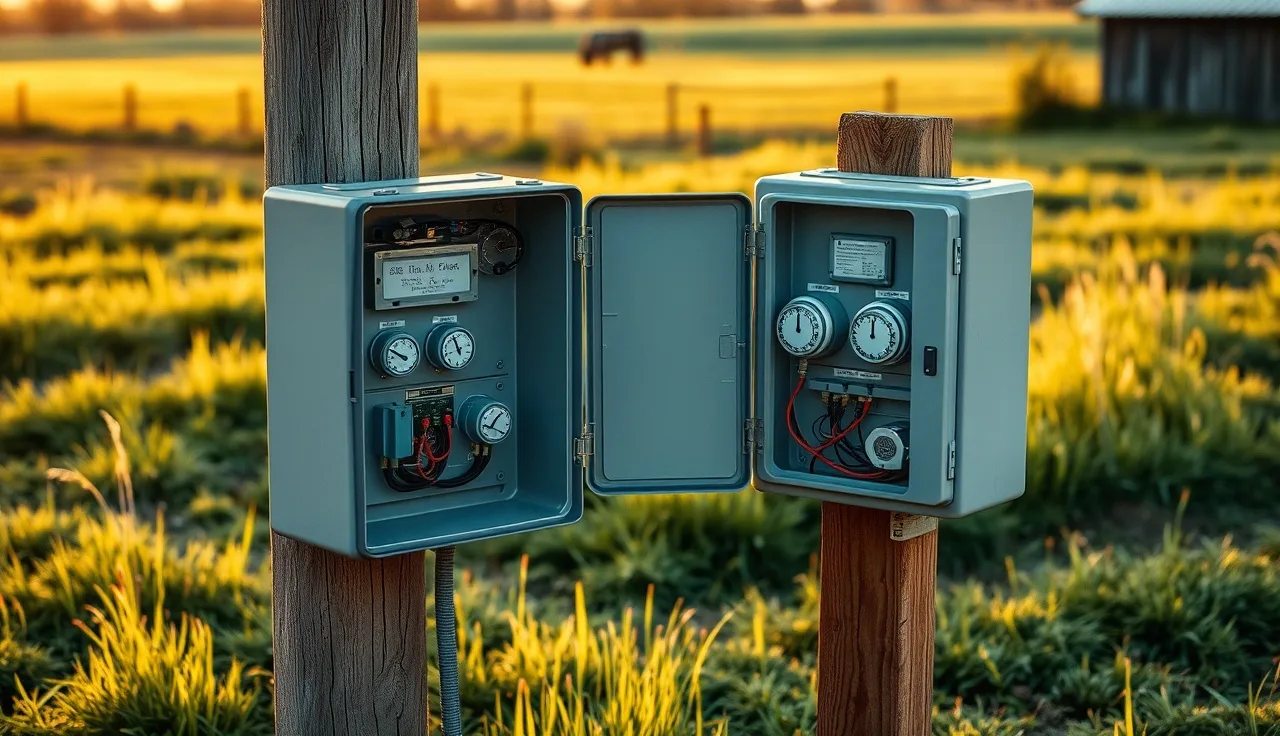
The control panel is a traffic cop that never sleeps. It sits in a weatherproof box, usually on a post near the tank lids or on the side of the house, and it tells every pump and timer exactly when to run, for how long, and when to stop. Take it away and you've got tanks full of biology doing nothing and spray heads that either run constantly or never fire at all.
A standard aerobic treatment unit (ATU) has at least three stages: a trash tank or pretreatment chamber, an aeration chamber where the compressor keeps bacteria alive, and a pump tank that doses treated effluent to the surface drip or spray field. The panel coordinates all three. It runs the air compressor on a schedule (or continuously, depending on design), times the dosing pump so the field doesn't get overloaded, watches the float switches for high water, and sounds an alarm when any of those signals go wrong [7].
Newer units store the alarm history, and that matters when a state inspector shows up. Texas, for example, requires ATU owners to hold a two-year maintenance contract with a licensed provider, and inspectors check that the system alarmed, that someone responded, and that a log exists [11]. Your panel's alarm circuit is what creates that paper trail.
Here's what homeowners miss. The control box is also a safety device. If the effluent pump runs dry because a float switch fails, the panel's overload protection is supposed to cut power before the motor burns up. Whether it actually fires depends on how well the panel is wired and maintained. That's why a corroded terminal block is not a cosmetic problem.
What are the main components inside the control panel?
Pop the cover on almost any residential ATU control box and you find the same core parts, no matter whose name is on the enclosure.
Timer(s): Most panels use one or two mechanical or digital interval timers. The aeration timer controls how often or how long the compressor runs. The dosing timer controls the effluent pump cycles, usually set to dose a small volume several times a day rather than one big slug. Bad timer settings are one of the most common reasons a field gets overloaded or starved [3].
Float switches: These are buoyancy switches wired to different levels in the pump tank. A low-level float protects the pump from running dry. A high-level float triggers the alarm. Some systems add a mid-level "pump on" float that works with or instead of the timer. Each float has a cord that runs through conduit into the panel, and those connection points corrode in humid air.
Control relay or contactor: This is the switch the timer trips when it's time to run the pump. Relays wear out, especially when the timer cycles the pump on and off many times a day. A failed relay is one of the most common panel-level repairs.
Alarm circuit: Usually a 120V or 240V horn or light, sometimes both. It should be audible from inside the house. EPA SepticSmart guidance tells homeowners to "have their septic system inspected and pumped regularly" and to respond fast to any alarm, because a dosing failure or backup can turn into a public health problem within 24 to 48 hours [1].
Breakers or fuses: Separate circuits for the compressor, the dosing pump, and the alarm are standard. Trip the compressor breaker and forget to reset it, and the aeration stops, the bacteria die off, and treatment falls apart within days.
Enclosure and wiring: The NEMA rating matters. NEMA 3R is the minimum for outdoor use. NEMA 4X (fiberglass, corrosion-resistant) is what you want in a humid or coastal climate. Corroded terminals and wiring chewed by rodents drive a surprising share of service calls.
How do aerobic system control panels differ by brand?
The big ATU makers, Norweco, Infiltrator (formerly BioMicrobics), Jet, Aerobic Sprout, and others, all ship systems with proprietary panels matched to their equipment. The wiring diagrams differ. The timer brands differ. The alarm voltages sometimes differ. That's why a generic replacement panel off an electrical supply shelf may not drop in cleanly with your dosing pump's motor requirements.
| Brand | Common panel type | Alarm voltage | Typical timer brand |
|---|---|---|---|
| Norweco Singulair | Norweco proprietary | 120V | Grasslin or Intermatic |
| Jet (Consolidated) | Jet proprietary | 120V | Intermatic |
| Infiltrator / BioMicrobics | BioMicrobics Smart Panel or generic | 120V or 240V | Varies |
| Aerobic Sprout | OEM generic ATU panel | 120V | Intermatic T101 common |
| Generic ATU (many Texas brands) | Generic ATU control box | 120V | Intermatic or Grasslin |
Norweco's Singulair panels carry a chlorinator control circuit that doses tablets on the same timer schedule as the effluent pump. Swap the panel without accounting for that circuit and your disinfection stops working [4]. In most states that require disinfection, that's a straight regulatory violation.
So cross-reference your ATU's model number against the panel wiring diagram before you order anything. Your maintenance provider should have that documentation. The manufacturer's tech line can usually tell you which third-party panels are compatible.
What do the alarm lights and sounds on the panel mean?
Most panels have a red alarm light and a separate green power light. Some add an amber "system running" light that flashes when the dosing pump is active. Here's what the signals usually mean, though your owner's manual wins any argument.
Red light on, alarm sounding: High water in the pump tank, or the system caught a fault. Stop the laundry, the dishwasher, the long showers. Cut household water use right now. Call your maintenance provider. This is not a wait-and-see situation [1].
Red light on, no sound: The horn may have burned out or someone silenced it. The underlying fault is still there. Plenty of homeowners silence the alarm, forget to call, and turn a pump failure into a field failure.
Green power light off: Loss of power, a tripped breaker, or a failed main disconnect. Check the breaker box first. If the breaker is fine and the panel is dark, the panel itself or the incoming wire has a problem.
Amber light not flashing during a dose cycle: The timer may be running but the pump isn't responding. That points to a burned-out pump, a failed relay, or a tripped overload.
A real alarm log notes the time, the duration, and the cause of each event. Texas TCEQ requires ATU maintenance providers to keep service records and respond to alarms within a set window, typically 24 hours for most permit types [11]. If your provider isn't logging alarm responses, that's a compliance gap worth raising.
What are the most common aerobic control panel failures?
Service techs see the same handful of problems over and over. Knowing them helps you have a smarter conversation with your provider and judge whether a proposed repair is reasonable.
Burned-out or stuck timer: Mechanical timers like the Intermatic T101 use trippers (small plastic tabs) to set the on/off cycle. Trippers break, get bumped, or seize up after years of use [10]. A stuck timer that runs the dosing pump nonstop empties the pump tank and floods the drainfield [3]. Replacement timers run $20 to $60 at a supply house. The labor to swap and reset them correctly is where the cost adds up.
Failed relay: The relay the timer switches to start the pump clicks thousands of times a year. It wears out. The tell is a timer that looks like it's running fine while the pump never starts. Relay replacement usually runs $50 to $150 in parts plus labor.
Corroded terminal block: Humidity and condensation inside the box corrode the terminal screws. You get intermittent connections, nuisance alarms, then hard failures. A tech should clean and re-torque terminals at every annual service.
Float switch failure: The floats themselves are durable, but cords kink and connections at the panel corrode. A high-level float that fails to trigger the alarm is a serious safety problem. Testing floats at every inspection is standard practice.
Burned-out pump (panel-related): If the overload protection fails to cut power when the pump runs dry, the motor cooks. The panel didn't cause the dry run, but it failed to stop the damage. That's one reason techs push to upgrade older panels that lack proper overload protection.
Lightning strike damage: In Texas, Florida, and other thunderstorm-heavy states, lightning takes out a lot of panels, sometimes frying the timer, relay, and pump in a single hit. Surge protectors built for pump panel circuits cost $30 to $80. Cheap insurance.
How much does it cost to repair or replace an aerobic control panel?
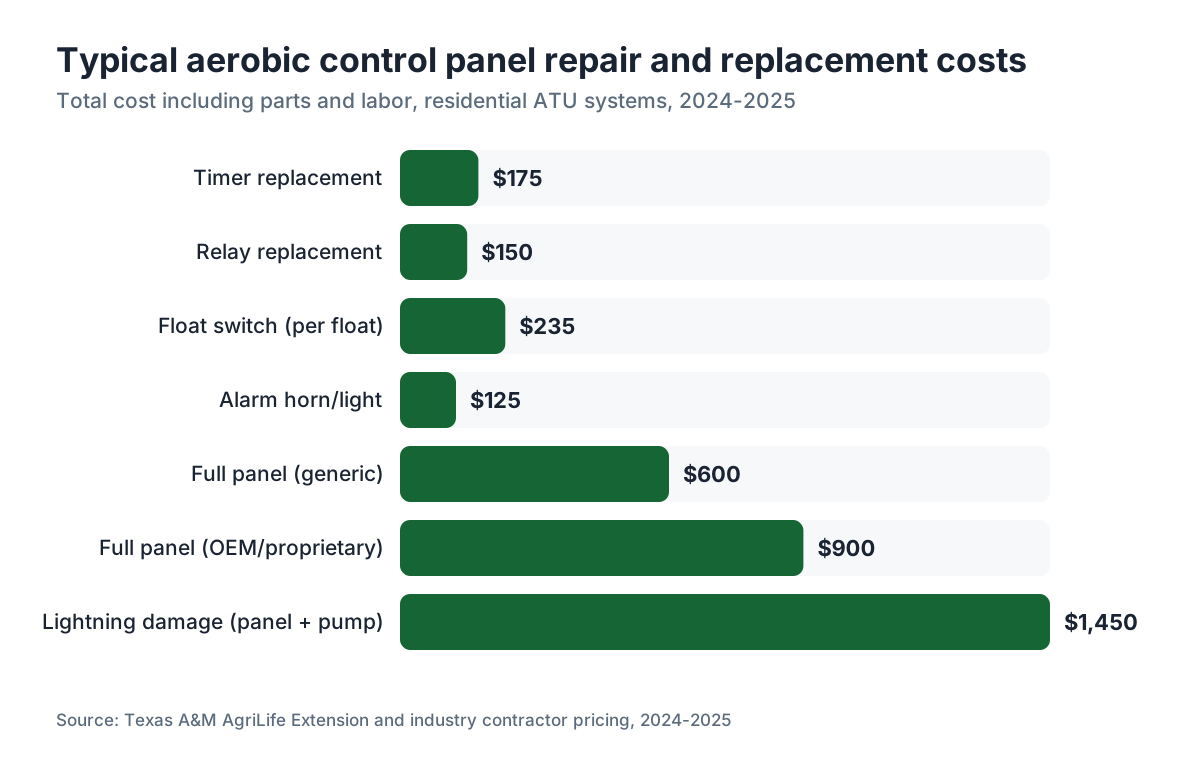
Cost depends on your region, the panel's complexity, and whether you're swapping one part or the whole box. These are typical ranges for 2024 to 2025 based on industry service pricing. Your area may run 20 to 30 percent higher or lower.
| Repair type | Parts cost | Typical total (parts + labor) |
|---|---|---|
| Timer replacement | $20 to $60 | $100 to $250 |
| Relay replacement | $15 to $50 | $100 to $200 |
| Float switch replacement | $20 to $80 per float | $120 to $350 |
| Alarm horn or light | $10 to $30 | $75 to $175 |
| Full panel replacement (generic) | $150 to $400 | $400 to $800 |
| Full panel replacement (OEM/proprietary) | $300 to $700 | $600 to $1,200 |
| Lightning damage (panel + pump) | $400 to $900 | $900 to $2,000+ |
A full panel replacement for a standard residential ATU in Texas runs roughly $500 to $900 installed [9]. Systems with variable-speed pumps or remote monitoring modules push higher.
For scale: a full aerobic system install from scratch runs $15,000 to $50,000 or more depending on site conditions and state rules [9]. A $600 panel replacement is cheap preventive maintenance next to that.
If your provider quotes a full panel replacement when only a timer or relay failed, ask to see the diagnostic. Good techs walk you through what they found and why a component fix won't hold. Bad ones replace the whole panel on every visit.
Can a homeowner troubleshoot or repair the control panel themselves?
Honest answer: some checks are fine for a careful homeowner, and some are a good way to get hurt.
Safe to check yourself: Is the main breaker for the panel tripped? Is the power light on? Is the alarm silence button stuck? Any obviously loose wires visible through the cover window? Is the enclosure full of water or clearly damaged?
Not safe unless you have electrical training: opening the panel and poking around live terminals, replacing parts with the power on, or rewiring float switches. These panels run on 120V or 240V. A mistake can kill you. It can also put you in violation of your maintenance permit, which in states like Texas and Florida requires a certified technician to perform all service [5].
One more thing worth knowing. Your ATU maintenance contract usually requires a licensed provider to keep you in compliance with state rules. DIY repairs can void that contract and drop you out of compliance, which can trigger fines or force you to decommission the system during a property sale [5].
The one thing every homeowner can and should do: silence the alarm after noting the time, cut water use immediately, and call the maintenance provider. Don't ignore it. Don't silence it and move on. EPA's SepticSmart program says an alarming system needs professional attention, not a workaround [1].
Operators who manage multiple ATU accounts have a different problem: tracking alarm events, service responses, and timer settings across dozens of systems. That's where software like SepticMind earns its keep. It holds the compliance records inspectors want in one place instead of scattered across paper logs and text threads.
How often should the control panel be inspected?
Most states with ATU rules require quarterly maintenance inspections as a condition of the operating permit. Texas TCEQ requires maintenance at the interval written into the permit, typically every four months, with a licensed provider [11]. Florida requires annual inspections at minimum, and some counties want more.
At each visit, a technician should:
- Verify timer settings match the permitted design
- Test each float switch by lifting it and confirming the correct response
- Clean and tighten terminal connections
- Test the alarm circuit
- Check for moisture inside the enclosure
- Record all findings in the maintenance log
Homeowners on a contract often have no idea what the tech actually did, because they never see the log. Ask for a copy after every visit. If the report just says "system checked, OK," that's not enough detail to serve as a compliance record or a diagnostic history.
Panel-specific intervals, separate from the whole-system inspection, aren't always spelled out in state rules. The National Onsite Wastewater Recycling Association (NOWRA) recommends that electrical components get evaluated at every scheduled visit [6]. A panel that hasn't been opened in 18 months is a panel that may be quietly failing.
For the full inspection process, see septic tank inspection.
What happens if the control panel fails and goes unnoticed?
The failure modes are not equal. Some are slow and hand you warning signs. Others are fast and expensive.
If the aeration timer fails and the compressor stops, aerobic bacteria in the treatment chamber die within 12 to 72 hours depending on temperature and organic load [3]. Treatment stops. What leaves the pump tank is now closer to raw sewage than treated water. Reach the spray heads with that, and you've got a public health violation. Reach the drainfield, and you may trigger premature biomat failure [8].
If the dosing timer sticks in the "always on" position, the pump runs continuously and floods the drainfield with more effluent than the soil can absorb. This is one of the fastest ways to destroy a leach field. Drainfield restoration or replacement runs $5,000 to $20,000 depending on size and site.
If the high-level float fails and the panel doesn't alarm on high water, the pump tank overflows. That surfaces in the yard, backs up into the house, or discharges to a nearby ditch. All of it is a regulatory violation with potential fines.
A failed panel that nobody notices for two or three weeks is not hypothetical. It happens when homeowners silence the alarm and forget, when the provider is behind on visits, or when the system sits at a vacation property nobody checks. If you own a place you visit rarely, remote monitoring is worth the money. Several ATU makers sell cellular alarm modules that text you when the panel alarms, around $200 to $500 installed.
Any underlying tank problem a panel failure exposes, like a cracked baffle or a failing pump, may need septic tank repair on top of the panel work.
What should you look for when hiring someone to service the panel?
In states with ATU permit requirements, the minimum bar is easy to check: the tech or company must hold a current license from your state's environmental or health agency. In Texas, that's a TCEQ-licensed maintenance provider. In Florida, it's a licensed onsite sewage treatment and disposal system contractor [5]. Ask for the license number and verify it on the agency's website before you sign a contract.
Beyond the license, here's what separates a good ATU company from an average one.
They bring a wiring diagram for your specific system on the visit. Generic ATU panels aren't one-size-fits-all, and a tech who doesn't know your timer settings before arriving is guessing.
They test the floats instead of glancing at them. Lifting each float and confirming the alarm or pump response takes two minutes and catches a lot of failures.
They hand you a written report with timer settings, float test results, and any corrective action taken. That report is your documentation when a state inspector or a home buyer's inspector asks about system history.
They're straight about when a component fix is enough versus when the whole panel needs to go. A good tech shows you the failed part, explains why it failed, and tells you whether the rest of the panel is sound.
Service contracts for ATU systems run $200 to $600 a year for quarterly visits in most of the country, sometimes with chlorine tablet supply included. Cheap next to a drainfield replacement. For related maintenance, see how often to pump septic tank and septic tank pumping.
Are there upgrades worth considering for older aerobic control panels?
If your panel is more than 10 to 15 years old, a few upgrades meaningfully improve reliability and compliance documentation.
Digital timers over mechanical: Mechanical trippers break and get bumped. A digital timer like the Intermatic P1353ME holds its settings through a power outage, has finer resolution (minutes instead of 15-minute increments), and is harder to mis-set by accident. The parts difference is $20 to $50.
Surge protection: A whole-panel surge suppressor rated for pump circuits costs $30 to $80 and can save a $400 pump from a $10 voltage spike. Worth it anywhere lightning is common.
NEMA 4X enclosure: If your box is basic steel NEMA 3R and you live in a humid climate, upgrading to a fiberglass NEMA 4X enclosure ($80 to $200) when you replace components pays for itself in fewer corrosion problems.
Remote alarm module: Cellular or Wi-Fi modules that text or app-alert you when the panel alarms cost $150 to $500 installed. For vacation properties or rentals, genuinely useful.
Smart panels with data logging: Some newer proprietary panels log runtime, alarm events, and pump cycles internally. That data helps diagnose intermittent problems and proves compliance history. If your ATU maker offers a smart panel upgrade, ask your tech what it costs and what it captures.
Operators running fleets of ATU systems often use software like SepticMind to pull panel alarm data together, schedule preventive maintenance, and generate the compliance reports state agencies want, without building a spreadsheet for every permit.
Before you spend on any panel upgrade, make sure the rest of the system is sound. A new panel on a failing pump or a compromised tank is wasted money. A septic system repair assessment first makes sense if the system has been underperforming.
Frequently asked questions
Why is my aerobic septic system alarm going off?
The usual causes are high water in the pump tank (pump failure, float switch failure, or a power outage), a tripped breaker for the dosing pump, or a failed relay in the control panel. Stop heavy water use, check whether your main breaker tripped, and call your maintenance provider. Don't silence the alarm and walk away. An active alarm means something is wrong with your system right now.
How long can an aerobic septic system run without a working control panel?
Not long. If the panel loses power or a key timer fails, aeration can stop and bacteria start dying within 12 to 72 hours. Dosing either stops, which backs up the tank, or runs continuously, which floods the drainfield. Either mode can cause expensive damage within days to weeks. A dead panel is an emergency repair, not a deferred maintenance item.
What is the difference between a control panel and a control box on an aerobic system?
They're the same thing. "Control panel" and "control box" get used interchangeably by homeowners and technicians. Some manufacturers label theirs a "pump panel" or "ATU panel." All refer to the weatherproof enclosure that houses the timers, relays, breakers, and alarm circuits running the aerobic treatment unit's electrical side.
Can I replace my aerobic septic control panel with a generic unit?
Sometimes, but verify compatibility first. Generic ATU panels work with many standard pump setups, but proprietary systems like Norweco Singulair carry chlorinator control circuits that generic panels lack. Swapping to an incompatible panel can disable disinfection, which is a regulatory violation. Cross-reference your ATU model number against the panel wiring diagram and confirm with the manufacturer before ordering.
How do I reset my aerobic septic system control panel after an alarm?
Most panels have a physical silence or reset button, often red or labeled "alarm silence." Press it to silence the horn. The red light usually stays on until the underlying condition clears, such as the water level dropping back to normal. Don't treat the alarm as resolved just because it's quiet. The cause has to be diagnosed and corrected by your maintenance provider before the system is back to normal.
Does my homeowner's insurance cover aerobic septic control panel failure?
Standard homeowner's policies usually exclude septic components. Some cover sudden and accidental damage (like a lightning strike) but exclude mechanical breakdown or wear-and-tear failures. A few insurers offer equipment breakdown endorsements that cover pump and panel failures. Check your specific policy and ask about an equipment breakdown rider if you want coverage for panel or pump failures.
How do I find the wiring diagram for my aerobic septic control panel?
Start with the manual that came with your ATU. If it's gone, find the brand and model number on a nameplate on the tank riser or the panel itself, then search the manufacturer's website. Most major brands (Norweco, Jet, BioMicrobics) keep technical documents online or through their dealer networks. Your licensed maintenance provider should also have this on file for your system.
What is the life expectancy of an aerobic septic control panel?
A well-maintained panel in a protected spot typically lasts 15 to 25 years. Panels in humid, coastal, or lightning-prone environments often fail sooner, sometimes within 8 to 12 years, from corrosion and surge damage. Individual parts like timers and relays may need replacement every 5 to 10 years even when the panel overall is fine. Regular cleaning of terminal connections extends panel life a lot.
Is it legal for a homeowner to work on their aerobic septic control panel?
In most states with ATU permit requirements, all service and repairs must be done by a licensed maintenance provider. Texas requires a TCEQ-licensed provider for all ATU maintenance. Florida requires a licensed contractor. DIY electrical work on the panel may void your maintenance contract and put you out of compliance with your operating permit. Check your state's onsite wastewater code before touching anything inside the enclosure.
How do timer settings on an aerobic control panel affect drainfield health?
Timer settings control how often and how long the dosing pump runs, which sets the hydraulic load on your drainfield. Dose too frequently and you can waterlog the soil and collapse the aerobic zone that treats effluent at the field surface. Dose too rarely and effluent stagnates in the pump tank. Correct settings come from the system's design documents and should only be adjusted by a licensed technician.
Why does my aerobic system control panel keep losing power?
Repeated power loss usually points to a tripping breaker, which can mean an overloaded circuit, a failing pump drawing too many amps, a short in the conduit, or a loose connection at the panel or breaker box. Corrosion at the terminal block is a common cause of intermittent faults that look like power loss. Have a licensed technician run a load test and inspect all connections before assuming the panel needs replacement.
What maintenance does an aerobic control panel need every year?
At minimum: inspect and clean all terminal connections, test each float switch by hand, verify timer settings against the permitted design, test the alarm circuit, check the enclosure for moisture, and inspect conduit for damage. In lightning-prone areas, confirm the surge protection is intact. Most states require these checks quarterly rather than annually. Keep the written report from every visit as your compliance record.
Sources
- EPA SepticSmart program, U.S. Environmental Protection Agency: Homeowners should respond promptly to septic system alarms and have systems inspected regularly; effluent backup can become a public health issue quickly.
- North Carolina State University Cooperative Extension, Aerobic Treatment Units: Aerobic bacteria in ATU treatment chambers can die within 12 to 72 hours when aeration stops, and improper timer settings are a common cause of field overloading or underloading.
- Norweco Inc., Singulair Green System Documentation: Norweco Singulair panels include a chlorinator control circuit; replacing with a non-compatible panel disables disinfection function.
- Florida Department of Health, Onsite Sewage Treatment and Disposal Systems: Florida requires a licensed onsite sewage treatment and disposal system contractor to perform service and repairs on ATU systems.
- National Onsite Wastewater Recycling Association (NOWRA), ATU Maintenance Guidelines: NOWRA recommends that electrical components of ATU control panels be evaluated at every scheduled maintenance visit.
- EPA, Onsite Wastewater Treatment Systems Manual (EPA/625/R-00/008): Aerobic treatment units require electromechanical controls including timers, floats, and alarms to maintain treatment performance and regulatory compliance.
- University of Florida IFAS Extension, Aerobic Treatment Units for Onsite Sewage Treatment: Continuous dosing caused by a failed timer set to the on position can overload the drainfield and cause premature biomat formation.
- Texas A&M AgriLife Extension, Aerobic Septic Systems: Full ATU control panel replacement in Texas typically runs $500 to $900 installed for a standard residential system; complete ATU installation costs $15,000 to $50,000 depending on site conditions.
- Intermatic Inc., T100 Series Timer Technical Documentation: Mechanical interval timers like the Intermatic T101 use trippers that can break or be accidentally displaced, causing dosing cycles to fail or run continuously.
- TCEQ, Title 30 Texas Administrative Code Chapter 285, On-Site Sewage Facilities: Texas Administrative Code Chapter 285 specifies ATU maintenance contract requirements, inspection intervals, and alarm response obligations for licensed providers.
Last updated 2026-07-09