Aerobic septic system red light on: what it means and what to do
By the SepticMind Editorial Team
TL;DR
- A red light on an aerobic septic system means the control panel caught a fault.
- The usual culprits are a dead air pump (aerator), high water in the tank, a clogged spray head, or an empty chlorinator.
- Silence the alarm, check each part in order, and call a licensed installer if you can't clear the fault within 24 to 48 hours.
What does the red light on an aerobic septic system actually mean?
The red light is the control panel telling you one of the conditions it watches has slipped outside its normal range. That's it. It doesn't mean the system has failed completely, and it doesn't mean sewage is about to surface in your yard. It means something needs attention, usually within a day or two rather than a decade.
Most aerobic treatment units (ATUs) sold in the United States run on a three-zone process: a trash tank or pre-treatment chamber, an aeration chamber where a motor (the aerator) pumps air to grow aerobic bacteria, and a pump or spray chamber that doses treated effluent to a surface spray field or a subsurface drip zone [1]. The panel watches the aerator motor, the liquid level in the pump chamber, and sometimes the chlorine residual. Any of those going wrong trips the alarm.
The light almost always comes with an audible alarm. Most panels have a silence button so you can kill the noise while you investigate. Silencing it does not fix the problem and does not restart a failed part. The red light stays on until the fault clears.
What are the most common reasons the alarm goes off?
Seven causes account for almost every red-light call. Here they are in rough order of how often they show up.
- Dead or seized aerator motor. The aerator is the heart of the system, running 24 hours a day. Most residential units use a diaphragm-style air pump rated for 3 to 7 years of continuous use [2]. When the diaphragm tears or the motor burns out, the aeration chamber goes anaerobic fast, the panel sees the loss of operation, and the alarm fires. This is the single most common cause.
- High water level in the pump or aerobic chamber. A float switch rises with the water. If the effluent pump fails, a spray head clogs, or the system takes on abnormally high input (a leaking toilet, a party, groundwater working its way in), the float trips the alarm [3].
- Chlorinator is empty or jammed. Most ATUs dose the treated effluent with chlorine tablets in a contact chamber before it reaches the spray field. Empty the basket and the residual drops below the required level. In many states the panel is wired to alarm on low chlorine. This is also one of the few faults you can fix yourself in about ten minutes.
- Tripped or blown breaker. The aerator and effluent pump usually sit on separate breakers. A tripped breaker looks exactly like a component failure at the panel. Check your electrical panel before you assume the worst.
- Clogged spray heads or distribution lines. If effluent can't leave the system fast enough, the pump chamber fills, the float rises, and the alarm sounds. Soggy ground around the spray heads is a common second clue.
- Faulty float switch. The float itself can stick, corrode, or lose a wire. A float stuck in the up position reads as high water even when the tank is fine.
- Wiring or control panel fault. Less common, but panels do fail. If you've checked everything else and come up empty, the panel may need an electrician or the manufacturer's service rep.
Nobody has clean population-level data on which fault leads the pack. Field reports from Texas, Oklahoma, and other high-ATU-density states consistently put aerator failure and low chlorine at the top.
How do aerobic septic systems work, and why does the alarm design matter?
Knowing how the system works helps you troubleshoot the light. A conventional septic system is anaerobic: bacteria break down waste without oxygen, and the partially treated effluent drains passively to a leach field. An aerobic system adds forced air, which grows a much denser microbial population and treats effluent to a higher standard. That's why aerobic systems get approved for smaller lots, tighter soils, and surface spray disposal in many states [1].
Better effluent and spray disposal that can reach people means stricter rules. The EPA's SepticSmart program notes that ATUs need "more monitoring, maintenance, and operating costs" than conventional systems, and most state programs require annual or semi-annual inspections by a licensed service provider [4]. Texas ties a maintenance contract with a licensed provider directly to the permit [5]. That context changes what the alarm means. In most states you're not looking at a simple plumbing gripe. You're looking at a permitted system with reporting obligations.
The alarm exists to warn you early, because a failed ATU carries worse consequences than a conventional system sitting quiet with a slow drain field. Untreated effluent reaching a spray head meant to deliver disinfected water is a public health problem. The alarm is doing its job.
Is it safe to keep using the system while the red light is on?
Reduce use right away and don't wait more than 24 to 48 hours to act.
If the aerator is dead, the aeration chamber is filling with raw or partially treated sewage. Your effluent pump keeps cycling that out to the spray field, but treatment quality drops sharply within hours of the aerator quitting. In Texas, state rules require the owner to notify their maintenance provider within 24 hours of an alarm condition [5].
If the problem is just an empty chlorinator, you have a bit more room, but the effluent reaching your yard is no longer disinfected. Kids, pets, and anyone walking the spray area should stay off it.
Here's the practical sequence. Silence the alarm. Cut household water use to the bare minimum. Find the cause using the checklist in the next section. Call your licensed maintenance provider if you can't fix it yourself within a day. Don't silence the alarm and forget about it for a week.
Step-by-step: how to diagnose the red light yourself
Work through this in order. You'll want a flashlight and maybe a screwdriver.
Step 1. Silence the audible alarm with the button on the control panel. The red light stays on. That's fine for now.
Step 2. Check your home's electrical panel. Find the breakers labeled for the aerobic system (often two: one for the aerator, one for the pump). If either is tripped, reset it and wait five minutes to see if the red light clears. If the breaker trips again right away, there's an electrical fault and you need a pro.
Step 3. Go to the control panel and look for diagnostic indicators beyond the red light. Many modern panels have separate indicator lights or a display showing which zone faulted: aerator, pump, or alarm float. Read your manual if you have it. Manuals for common brands (Norweco, Delta, Premier Tech) are usually posted as PDFs on the manufacturer's site.
Step 4. Lift the aeration chamber lid and listen. A working aerator makes a steady hum or buzz, and you should see bubbling in the chamber. No sound, no bubbles: the aerator is likely dead, so call a provider. Bubbles present: the aerator is probably fine.
Step 5. Check the pump chamber float. With the aerator confirmed working, lift the pump chamber lid. Look at the float switch. Is it sitting in a normal position, or is the water level genuinely high? High water points to a failed pump or blocked spray heads.
Step 6. Inspect the spray heads. Walk the spray field and look for heads that are clogged (no spray pattern), broken off, or buried. A single clogged head can back up enough to raise the chamber level over time. Most spray heads clean up with a small pick or replace for $5 to $15 each.
Step 7. Check the chlorinator. Open the chlorinator compartment (usually part of the pump chamber or a separate housing). Look at the tablet level. Most systems take 1-inch or 3-inch chlorine tablets sized for wastewater, not pool shock, not liquid bleach. If the basket is empty, refill it. The alarm may clear within a few pump cycles once residual comes back, though some systems need a manual reset.
If you've run all seven steps and found nothing obvious, or if what you found is beyond a simple fix (a dead aerator, a failed pump, a broken float wire), stop and call a licensed technician. Aerobic systems are more complex than conventional ones, and the parts interact.
Can you fix the red light yourself, or do you need a licensed technician?
A few things are genuinely DIY. Refilling the chlorinator, resetting a tripped breaker, and cleaning or swapping a clogged spray head are all fair game for a homeowner comfortable with basic maintenance. None of those require opening a sealed chamber or touching high-voltage components.
Everything else belongs to a licensed provider, and in most states that's not your choice to make. Because ATUs run under a permit, repairs to the aerator, effluent pump, float assembly, or control panel typically have to be done by a licensed installer or maintenance contractor [5]. Do the repair yourself and something goes wrong, and you may own a permit violation, with your county health department requiring a full re-inspection before it clears the system.
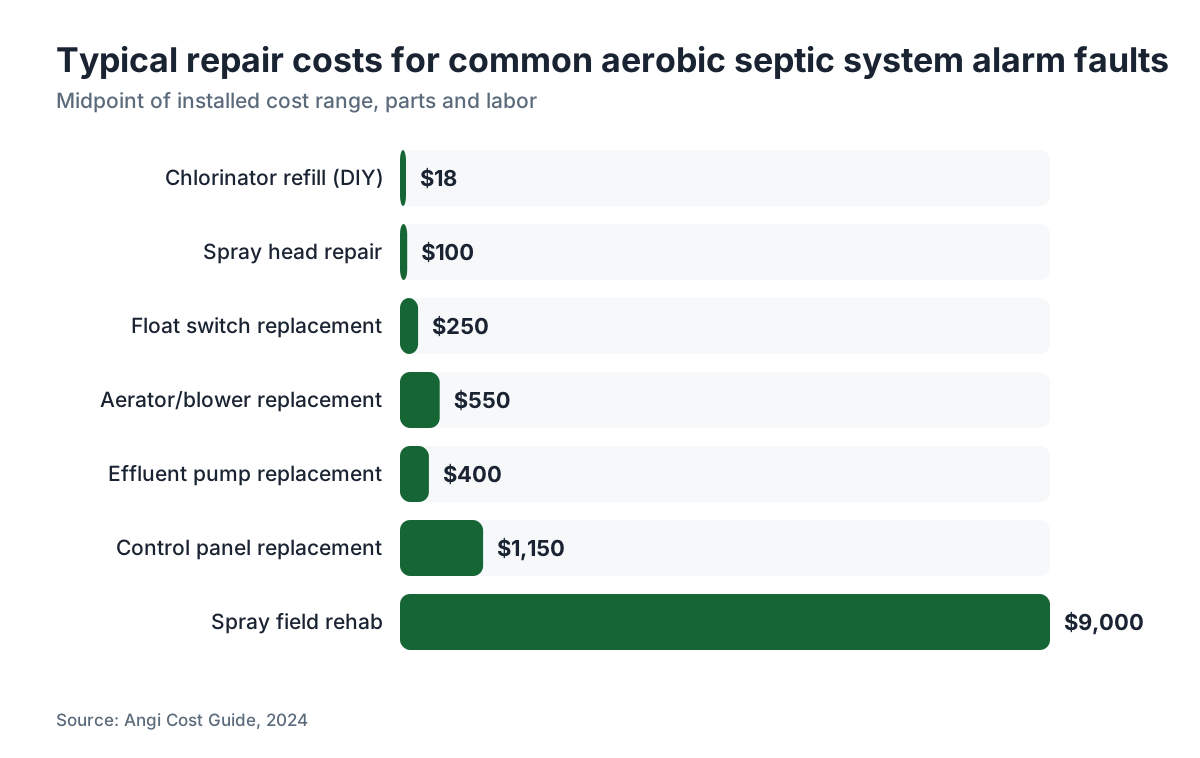
Replacing a residential aerator runs $300 to $700 for parts and labor depending on brand and region [6]. A failed effluent pump runs $200 to $500 installed. A full control panel replacement can hit $800 to $1,500. Not trivial numbers, but far cheaper than a complete failure that forces septic system repair or a new drain field.
Operators and service companies managing multiple ATU accounts often track alarm histories and service patterns across properties. SepticMind is built for that kind of fleet-level monitoring, letting operators see which accounts are in alarm state and schedule dispatch without a phone tree.
If your system is under a mandatory maintenance contract, the right move is usually just to phone your provider. That's what the contract buys you.
What do the different alarm states mean on common ATU control panels?
Not every red light means the same thing, and manufacturers wire their panels differently. Here's a general reference for the most widely installed residential ATU brands.
| Brand | Typical alarm indicators | Common red-light triggers |
|---|---|---|
| Norweco (Singulair) | Red light + horn | High water float, aerator failure, blower failure |
| Aerob-ic System | Red/yellow/green lights | Aerator off, pump chamber high, low chlorine |
| Whitewater | Red light + buzzer | High water, blower fault |
| Delta Treatment Systems | Panel LED + alarm | Aerator motor fault, high water |
| Premier Tech (Ecoflo) | Audible + panel fault code | Varies by model, consult manual |
On a Norweco Singulair, one of the most common units in the southern US, the red light with audible alarm means the high-water float in the pump chamber has tripped [7]. Silence it, and if the water level drops on its own within a few hours (once normal household use settles), the float probably caught a temporary surge. If it stays high, the pump has failed or the spray distribution is blocked.
Always pull your specific manual before you assume anything. No manual? Search the brand name plus your model number and "installation manual" in quotes. Most are posted as PDFs.
What happens if you ignore the red light?
Ignore an ATU alarm and the consequences stack up fast, and they get expensive.
Within hours to days: treatment quality drops. Aerobic bacteria need continuous oxygen. Shut off the air for 24 to 48 hours and the population crashes. The system starts behaving like a conventional one, pushing partially treated effluent to the spray field.
Within days to weeks: the spray field takes on undertreated effluent with higher BOD (biological oxygen demand) and pathogen counts. In states with surface spray disposal, that's a direct public health risk. Texas and Oklahoma health departments can issue notices of violation with fines that, in Texas, reach $10,000 per day for continued violations of the Texas Water Code [8].
Over weeks to months: if the pump chamber floods from a failed pump, solids get pushed out to the spray heads and drip field. Clogged emitters and biomat in a spray field can force full field rehabilitation or replacement, which runs $5,000 to $15,000 or more depending on system size and soil [6].
In most states, an ATU sitting in alarm that nobody addresses can also give the health department grounds to require a septic tank inspection or a full system evaluation before the permit clears. That's a cost and a headache you don't want.
If your system needs a periodic septic tank pump out anyway, servicing it while the alarm gets sorted is good timing. A technician on site can pump the pre-treatment compartment and inspect the aeration zone in one trip.
How much does it cost to fix an aerobic septic system alarm fault?
Cost swings a lot by fault type, region, and whether you're still under a maintenance contract. These are real-world ranges from industry pricing data. The low end assumes a contractor in a rural southern state; the high end assumes a pricier market or a complex repair.
| Fault | Typical repair cost (parts + labor) |
|---|---|
| Chlorinator refill (DIY) | $10-$25 in tablets |
| Spray head cleaning/replacement | $50-$150 |
| Tripped breaker reset (service call) | $75-$150 call fee only |
| Float switch replacement | $150-$350 |
| Aerator/blower replacement | $300-$800 |
| Effluent pump replacement | $200-$600 |
| Control panel replacement | $800-$1,500 |
| Full drip/spray field rehab | $3,000-$15,000 |
Under a maintenance contract, many of these repairs are covered or discounted. Annual ATU maintenance contracts typically run $300 to $600 per year and are required by law in most states with large ATU populations [5]. That covers scheduled inspections, chlorine, and often parts and labor for minor repairs. Paying out of pocket with no contract? Factor in a $75 to $200 diagnostic fee on top of the repair.
For a sense of the number if the whole system needs replacing, see our guide on cost to install septic system.
How do you prevent the red light from coming on in the first place?
Preventive maintenance on an ATU isn't complicated. Stay on schedule and don't ignore small signs.
Check the chlorinator every 1 to 3 months. This is the highest-leverage homeowner task there is. An empty chlorinator is one of the most common alarm triggers and the easiest one to head off. Use the tablet type your manufacturer specifies. Size and concentration matter.
Listen to the aerator monthly. Put your hand near the air intake or your ear to the ground near the aeration chamber lid. A healthy diaphragm pump has a steady rhythmic sound. Grinding, rattling, or an intermittent noise means a diaphragm is wearing out. Replacing a diaphragm kit early costs $30 to $80 in parts and saves a full motor swap later.
Keep your maintenance contract current. Where it's required, a lapsed contract can be a permit violation on its own, whether or not the system works. More useful day to day: your provider catches failing parts on scheduled visits before they ever trip the alarm.
Smooth out water spikes. ATUs size their pump chambers for average daily flow. A big party, a stuck toilet float running all night, or a broken irrigation line can swamp the system in hours. Spread laundry across the week and fix running toilets fast.
Protect the spray field. Keep vehicles off it. Don't plant deep-rooted trees within 10 feet of spray heads or distribution lines. Don't add irrigation water to the spray area. It's already getting effluent.
Get the pre-treatment tank pumped on schedule. Like a conventional system, the pre-treatment (trash) tank collects solids and needs septic tank pumping every 3 to 5 years for a typical household, more often with heavy use [10]. Skip it and solids push into the aeration chamber and wreck the aerator. Our guide on how often to pump septic tank has the full breakdown.
Operators managing large portfolios of ATU accounts use scheduling software to track maintenance intervals and alarm histories across dozens of properties. SepticMind's operator platform tracks contract status and service due dates across accounts so nothing slips during busy seasons.
What are your legal obligations when the alarm goes off?
This is the part most homeowners don't learn until they're already in trouble.
In Texas, which has more installed ATUs than any other state, Title 30 Texas Administrative Code Chapter 285 requires the owner or their maintenance provider to respond to an alarm condition within 24 hours and restore normal operation within 48 hours, or submit a written explanation to the authorized agent [5]. Miss that and you've got a violation of the operating permit.
Oklahoma requires ATU owners to keep a service agreement with a certified maintenance provider and report malfunctions. Most Oklahoma counties follow Oklahoma Administrative Code 252:641 for individual ATUs, which sets similar response timelines [9].
Other states with large ATU populations, including Louisiana, South Carolina, and Tennessee, run analogous rules. The thread through all of them: the ATU is a permitted system, the permit has conditions, and an alarm left unaddressed is a permit violation.
The EPA's SepticSmart guidance puts it plainly: "Have your system inspected and pumped regularly" and "Fix any problems as soon as they arise" [4]. State rules turn that advice into a requirement.
Not sure what your state demands? Your state environmental or health department's onsite wastewater program page is the authoritative source. The EPA keeps a directory of state onsite programs at epa.gov.
When should you consider replacing the system instead of repairing it?
Most alarm faults are worth repairing. But some situations make replacement the smarter financial call.
If the aerator has failed twice in three years, the tank shows corrosion or structural cracks, or the spray field keeps ponding and forming biomat even after the treatment system is restored, you may be looking at end-of-life for the whole installation. ATU tanks have a design life of roughly 20 to 30 years, but the electromechanical parts (aerator, pump, panel) cycle through replacements over that span.
A licensed inspector can tell you which parts are near end of life and give you an honest five-year cost of ownership against replacement. A full aerobic system replacement, including a new ATU tank, aerator, pump, spray field design, and permit, runs $10,000 to $30,000 depending on lot size, soil, and local permitting [6]. Big number, but weighing it against a five-year repair trajectory is how you make the call straight.
For homes facing a full replacement, the guides to read are septic tank repair for component-level decisions and septic tank installation for the installation process. If you're buying a home with an ATU, a proper septic tank inspection is non-negotiable before closing.
Frequently asked questions
Can I silence the alarm and wait a few days to deal with it?
You can silence the audible alarm, but most state rules require a response within 24 to 48 hours. The red light stays on until the fault is fixed. Waiting longer risks dropping effluent quality to your spray field and, in many states, puts you in violation of your operating permit. Cut household water use immediately and get someone to look at the system within a day.
What kind of chlorine tablets go in an aerobic septic system?
Use solid 1-inch or 3-inch trichlor (trichloroisocyanuric acid) tablets rated for ATU use, not pool shock granules, not liquid chlorine. The right size depends on your chlorinator basket, so check your manufacturer's manual. The wrong type can damage the contact chamber or produce chlorine levels that harm the spray field. Most ATU service providers sell the correct tablets.
Will the red light turn off by itself after I refill the chlorinator?
Sometimes, yes, once several pump cycles restore adequate chlorine residual in the effluent. Some panels need a manual reset even after the fault clears. Check your control panel manual for the reset procedure. If the light doesn't clear after 12 to 24 hours and several pump cycles, there may be a second fault or a panel issue that needs professional diagnosis.
My aerobic septic system red light and alarm are going off but the tank looks fine. What now?
A visually normal tank doesn't rule out a fault. Check the aerator by listening for the motor and looking for bubbles in the aeration chamber. Check the float switch position in the pump chamber. Check the breakers. Inspect the spray heads for clogs. If everything looks normal, the issue may be a faulty float switch or a wiring fault in the panel itself. Both need a technician.
How often should an aerobic septic system be serviced to prevent alarms?
Most state rules require a licensed service inspection every 4 to 6 months for ATUs. Between visits, homeowners should check the chlorinator monthly and listen to the aerator periodically. The pre-treatment tank needs pumping every 3 to 5 years. Staying on that schedule catches failing parts before they trip alarms, which is cheaper and keeps you clear of permit violations.
Is a red light on my aerobic septic system an emergency?
It's urgent, not necessarily an emergency. It rarely means sewage is surfacing right this minute, but it does mean treatment quality is compromised or a component has failed. Treat it as something to address within 24 hours. If you see sewage surfacing, standing water with an odor near the spray field, or sewage backing up into the house, that's an emergency. Call a licensed provider right away.
Can a heavy rain trigger the red light on an aerobic septic system?
Yes. Heavy rain can seep into the tank through the risers, lid seals, or cracked inlet and outlet connections, raising the pump chamber level fast and tripping the high-water float. If the alarm clears within a few hours after the rain stops, infiltration is the likely cause. Persistent infiltration should be found and sealed by a technician to stop the problem from recurring.
Does homeowner's insurance cover aerobic septic system repairs?
Standard homeowner's policies typically exclude septic components unless a named peril (a fire, or a pipe burst from freezing) directly causes the damage. Mechanical breakdown of an aerator or pump is almost always excluded. Some insurers offer equipment breakdown endorsements that cover motor failures, so check your policy. Maintenance contract coverage through your ATU service provider is usually more reliable for common failures.
How long do aerobic septic aerators last before needing replacement?
Diaphragm-style air pumps used in most residential ATUs are rated for roughly 3 to 7 years of continuous operation, though real lifespan varies by brand, loading, and whether the diaphragms get replaced early. Linear diaphragm pumps (used in brands like Norweco) can last 5 to 10 years with diaphragm kit swaps every 2 to 3 years. Rotary vane blowers in larger systems often last longer but cost more to replace.
What's the difference between an ATU alarm light and a regular septic alarm?
A conventional septic alarm is almost always a high-water float in a pump chamber, warning that the effluent pump failed or the tank is overloading. An ATU alarm can mean the same thing but also covers aerator failure, low chlorine residual, and blower faults, none of which exist in a passive system. ATU alarms have more possible causes and usually need a licensed technician to diagnose right.
Can I run laundry and showers while the aerobic system red light is on?
Cut back significantly. If the alarm is from a dead aerator, more water pushes undertreated effluent to the spray field faster. If it's from a failed pump, extra flow can overflow the pump chamber. Limit water to essentials: toilet flushing and hand washing. Skip laundry, the dishwasher, and long showers until the system is repaired and cleared.
How do I find a licensed aerobic septic technician?
Your state's environmental or health department onsite wastewater program keeps a list of licensed installers and maintenance providers. In Texas, the TCEQ license lookup at tceq.texas.gov lists licensed On-Site Sewage Facility installers. In Oklahoma, the DEQ keeps a similar list. Your ATU manufacturer's website often has a dealer and service locator by zip code. Ask for proof of licensure before you authorize any repair work.
Sources
- EPA, Septic Systems Overview: Description of aerobic treatment unit (ATU) zones including pre-treatment, aeration, and disinfection chambers.
- NSF International, NSF/ANSI 245 Wastewater Treatment Systems: ATU component durability and testing standards for residential aerobic systems.
- Texas A&M AgriLife Extension, Aerobic Sewage Treatment Systems: High water float switch operation and common ATU alarm triggers including pump failure and high water level.
- EPA, SepticSmart Homeowner Guidance: ATUs require more monitoring, maintenance, and operating costs than conventional systems; homeowners should have systems inspected and pumped regularly and fix problems as they arise.
- Texas Commission on Environmental Quality (TCEQ), 30 TAC Chapter 285: Texas requires maintenance contracts for ATUs, 24-hour alarm response, and 48-hour restoration or written explanation to the authorized agent.
- HomeAdvisor / Angi, Septic System Cost Guide: Aerator replacement costs $300-$800 installed; full ATU system replacement runs $10,000-$30,000 depending on size and location; spray field rehab $3,000-$15,000.
- Norweco, Singulair ATU Installation and Service Manual: Red light with audible alarm on Norweco Singulair panel indicates high-water float triggered in pump chamber.
- Texas Water Code, Section 7.102 - Civil Penalties: Civil penalties under the Texas Water Code can reach $10,000 per day for continued violations.
- University of Florida IFAS Extension, Aerobic Treatment Units: ATU pre-treatment tanks require pumping every 3 to 5 years; aerobic bacteria require continuous oxygen to maintain treatment quality.
- TCEQ, Licensed On-Site Sewage Facility Installers Lookup: TCEQ maintains a public lookup of licensed On-Site Sewage Facility installers and maintenance providers in Texas.
Last updated 2026-07-09