Aerobic septic systems in central Texas: the complete guide
By the SepticMind Editorial Team

TL;DR
- Aerobic treatment units (ATUs) are the norm in central Texas because thin, rocky, or clay-heavy soils block conventional drain fields.
- Texas regulates them under 30 TAC Chapter 285, requires a maintenance contract for the life of the system, and mandates chlorine disinfection before surface spray disposal.
- Installed cost runs $10,000 to $20,000, and maintenance contracts add $150 to $400 a year.
Why are aerobic septic systems so common in central Texas?
Aerobic systems are the default across much of central Texas, not a niche pick. Drive through the Hill Country, the Blackland Prairie east of Austin, or the Cedar Park and Georgetown suburbs, and you'll see aerobic treatment units (ATUs) on lot after lot. Two forces put them there: the geology and the rules. They feed each other.
Soil is the big one. Central Texas sits on a patchwork of Edwards Limestone, heavy shrink-swell clay (Taylor and Austin Chalk formations), and thin caliche hardpan. None of that is friendly to a conventional septic system, which leans on a drain field to slowly percolate treated effluent into the ground. A conventional system needs at least two feet of suitable soil below the trenches. Much of central Texas can't offer that without expensive site work. The Texas Commission on Environmental Quality (TCEQ) requires a site evaluation before any system goes in, and across big stretches of Travis, Williamson, Hays, Comal, and Kendall counties, that evaluation rules conventional systems out [1]. Texas A&M AgriLife Extension flags the same limestone and heavy clay conditions as the reason aerobic units became the practical alternative [7].
Aerobic systems get around the soil problem by treating wastewater to a much higher standard before it ever touches the ground. Instead of relying on soil to finish the job, the system pumps air into a treatment chamber, feeds bacteria that break down waste faster than anaerobic digestion, then chlorinates the effluent and sprays it onto the yard through surface irrigation heads. The effluent is clean enough that Texas lets you spray it on the surface instead of soaking it through soil. Thin soil stops being a dealbreaker.
Growth did the rest. As Austin's suburbs pushed into the Hill Country and onto rural lots with no municipal sewer, builders and homeowners reached for ATUs. TCEQ has permitted tens of thousands of aerobic units statewide, with the heaviest clusters in the I-35 corridor counties [1].
The geology forced it. The rules made room for it. Now it's simply what people install here.
How does an aerobic septic system actually work?
An aerobic system runs in four stages, and each one fails in its own way. Learn the stages and the maintenance list stops feeling random.
First is the trash tank, or pre-treatment compartment. Raw sewage lands here and solids settle out the same way they do in a conventional tank. This compartment needs periodic pumping. Skip septic tank pumping and solids carry over into the aeration chamber and clog it. Plan on pumping the trash tank every two to three years, sometimes longer, depending on household size.
Second is the aeration chamber. Air pumps push oxygen through the liquid and feed aerobic bacteria that digest waste fast. That process is far more efficient than the anaerobic digestion in a plain septic tank, so the effluent leaving this chamber is much cleaner. The air pump is the heart of the whole thing. It runs constantly, and it's one of the most common failure points. When it dies, the system goes anaerobic and treatment quality drops within hours.
Third is the clarifier, or settling chamber. Biological solids from the aeration step settle out here before the liquid moves on. Some systems recirculate those solids back to the trash tank.
Fourth is disinfection. Texas requires it before surface disposal [2]. Almost every central Texas ATU uses chlorine tablets (calcium hypochlorite) in a feeder. The effluent flows through the tablets, picks up enough chlorine to kill pathogens, and moves to the pump chamber before it sprays.
The spray system is a pump plus sprinkler heads spread around the yard. It's timed to spray in short cycles, usually at night or during low-use hours, spreading treated effluent across a designated area. Texas rules set minimum setbacks from the property line, structures, and water features [2].
For how the disposal side of a conventional system differs, see our explainer on leach fields.
What are the Texas regulations for aerobic septic systems?
Texas regulates on-site sewage facilities (OSSFs) under 30 TAC Chapter 285, administered by TCEQ [2]. Most rural central Texas counties adopted these rules directly. Counties over 50,000 people and some cities run their own authorized agent programs, which have to be at least as strict as the state rules.
Here's what the state requires for an aerobic system:
| Requirement | Detail |
|---|---|
| Permit | Required before installation; issued by TCEQ or local authorized agent |
| Installer license | Must use a TCEQ-licensed installer |
| Annual maintenance contract | Mandatory for the life of the system [2] |
| Inspection frequency | At least once per year by a licensed maintenance provider |
| Disinfection | Chlorine or UV required before surface spray disposal |
| Spray setbacks | 10 ft from property line, 15 ft from road right-of-way, 50 ft from private water wells, 75 ft from public water wells |
| Spray area posting | "Caution: Reclaimed Water" signs required near spray zones |
| System registration | New systems registered with TCEQ |
The maintenance contract is the rule that blindsides most homeowners. Texas won't let you install an ATU and walk away. The rules require the owner to keep a contract with a licensed maintenance company that inspects the system at least once a year and documents it [2]. Some providers inspect quarterly. The provider checks the air pump, chlorine levels, effluent quality, spray heads, and sludge depth.
TCEQ's Chapter 285 requires the maintenance company to give the owner "a written report of each inspection" and to notify the permitting authority if the system is malfunctioning [2]. That's a real enforcement hook. Counties follow up on reported malfunctions.
Buying a home with an ATU? Verify the maintenance contract is current and transferable. A lapsed contract is a code violation, and you inherit that liability at closing. A septic tank inspection before purchase should include reviewing the contract and the last two or three inspection reports.
For the regulatory text, TCEQ's OSSF program page is the source [1].
How much does an aerobic septic system cost in Texas?
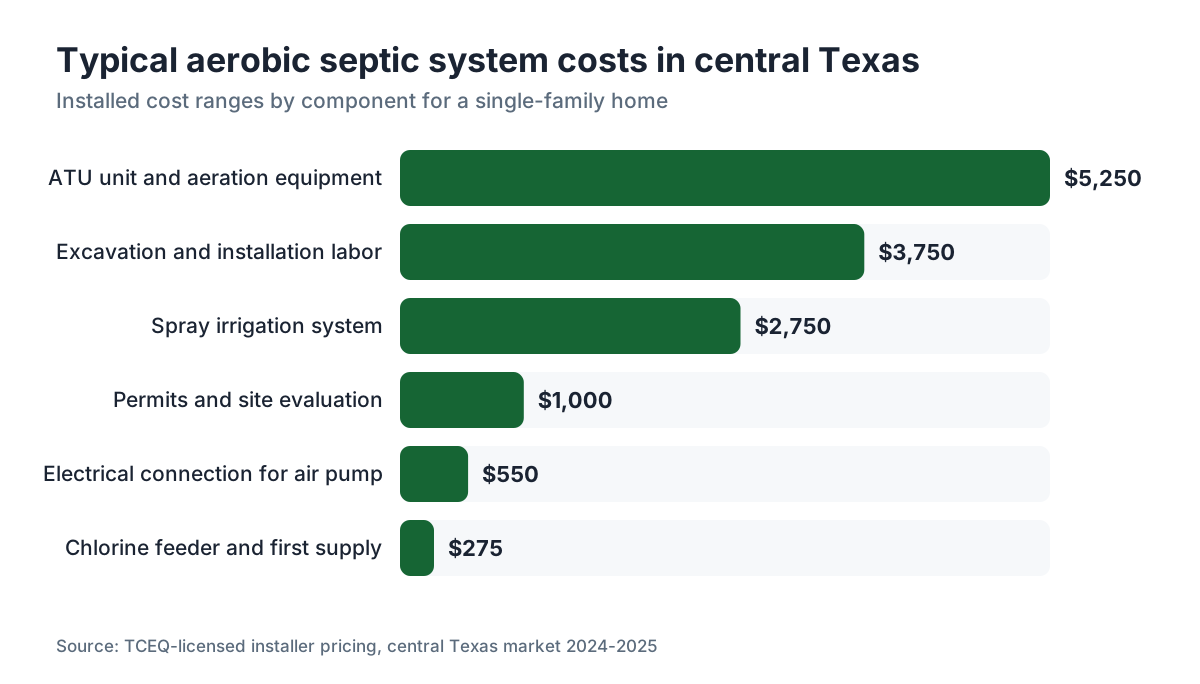
A new aerobic system in central Texas runs $10,000 to $20,000 for a single-family home, based on TCEQ-licensed installer pricing across the region. Easy lots with a basic system can come in under $12,000. Complex sites with tough access, rocky excavation, or a large required spray area push past $20,000. Advanced treatment components or drip irrigation disposal can reach $25,000 or more.
Where the money goes:
| Cost component | Typical range |
|---|---|
| ATU unit (tank + aeration equipment) | $3,500 to $7,000 |
| Excavation and installation labor | $2,500 to $5,000 |
| Spray irrigation system | $1,500 to $4,000 |
| Permits and site evaluation | $500 to $1,500 |
| Electrical connection for air pump | $300 to $800 |
| Chlorine feeder and first supply | $150 to $400 |
| Total | $10,000 to $20,000+ |
For comparison, a conventional septic system on a site that can take one runs $5,000 to $12,000 in central Texas. The ATU costs more upfront because the treatment does more work. Our full breakdown on cost to install a septic system has a wider comparison.
The ongoing costs are real and you can't skip them:
- Maintenance contract: $150 to $300 a year is typical, though quarterly-inspection contracts run $400 or more.
- Chlorine tablets: roughly $50 to $100 a year depending on household size.
- Air pump replacement: pumps fail every 3 to 10 years; parts run $200 to $600 by brand.
- Trash tank pumping: every 2 to 5 years at $250 to $450. Our page on septic tank pump out has current pricing.
- Spray head replacement: heads are cheap ($5 to $20 each) but clog or get clipped by mowers often.
Over ten years, budget $3,000 to $6,000 in maintenance and operating costs on top of installation. That's the true cost of aerobic treatment. Budget for it honestly from day one and it won't surprise you.
What brands and system types are most common in central Texas?
A handful of manufacturers own the central Texas market. Partly they earned TCEQ approval early, and partly local installers built their expertise around specific models.
Aerobicorp and Norweco are the two brands you'll see cited most on TCEQ-approved product lists [3]. Infiltrator Water Technologies and Hoot Systems both hold real market share in Texas. Premier Tech Aqua (Jet-brand systems) shows up often on older installations.
On disposal type, central Texas runs almost entirely on surface spray rather than subsurface drip. Drip costs more, and many lots just don't have the soil volume for drip emitters. Surface spray is the default, which is why those "caution: reclaimed water" flags on sprinkler heads are such a common sight in Hill Country subdivisions.
Some newer installs use drip irrigation, especially in developments with deed restrictions against visible spray heads or near sensitive areas like the Edwards Aquifer recharge zone. The Edwards Aquifer Authority has jurisdiction over systems inside the recharge and contributing zones, and it often prefers or requires subsurface disposal [4].
When you're picking a brand, the better question is whether your installer is certified to maintain that specific system. An installer servicing dozens of Aerobicorp units in your county beats a slightly fancier unit nobody nearby has ever touched.
What maintenance does an aerobic system in Texas require?
An ATU asks more of you than a conventional system. It isn't hard, but neglect bites fast, because live mechanical parts run the treatment.
The state-mandated annual inspection is your baseline. Your licensed provider checks all of this:
- Air pump operation (running, and at what air flow rate)
- Chlorine tablet supply and residual chlorine in the effluent
- Spray heads (popping up, rotating if applicable, not clogged)
- Sludge depth in the trash tank
- Effluent clarity in the clarifier
- Alarm function (most ATUs have an audible and visual alarm for pump failure or high water)
- Electrical components including float switches
Between visits, your homeowner tasks are simple:
- Check and refill chlorine tablets every 1 to 3 months depending on use. The feeder is usually accessible without tools. Running out is a code violation and a health issue.
- Inspect spray heads monthly. Mow around them carefully. Replace any that are broken or clogged.
- Keep the area around the tank clear for inspections and future pumping.
- Watch the alarm. If it triggers, call your provider within 24 to 48 hours. Most alarms mean a pump failure or high water level.
- Never flush wipes (even "flushable" ones), medications, grease, or heavy garbage disposal loads. All of that stresses the aeration chamber.
On how often to pump a septic tank, the trash tank in an ATU works like a conventional tank: every 2 to 5 years for a typical family, sooner with a garbage disposal or a big household.
EPA's SepticSmart program tells all septic owners to inspect annually and pump every 3 to 5 years [5]. For ATUs the inspection is mandatory by state law, and pumping should track actual sludge accumulation, which your provider measures.
Operators juggling many service accounts feel the pain of tracking inspection schedules, chlorine refill dates, and alarm calls across dozens of customers. SepticMind is built for that workflow. It gives service companies a way to log inspection results and automate maintenance reminders without living in spreadsheets.
What are the most common aerobic system failures in central Texas?
Central Texas ATUs fail in predictable ways. Know the failure modes and you catch problems early, before the expensive ones.
Air pump failure leads the list. The pump runs 24 hours a day, 365 days a year. Most last 3 to 8 years. When one dies, aerobic treatment stops, the system goes anaerobic, and effluent quality drops fast. Watch for the alarm, a sulfur smell near the tank, or an inspection flagging low dissolved oxygen. The fix is usually a new pump or diffuser, $200 to $600 if you catch it quick. Let it run anaerobic for months and you may have to restart the bacterial colony and clean out the aeration chamber.
Chlorine depletion is common and completely avoidable. Some homeowners go months without checking the feeder. Unchlorinated effluent spraying on the yard is a regulatory violation and a health hazard. The fix is a monthly check. That's it.
Spray head clogging or breakage is a near-constant chore. Central Texas has armadillos, riding mowers, and hard caliche around the heads. They get hit, clogged with iron or mineral deposits, or just wear out. Replacement is cheap if you catch it. If a head quits entirely and the pump keeps running, effluent pools at the dead head, which is a nuisance and a possible violation.
Trash tank overflow into the aeration chamber happens when pumping gets deferred too long. Solids carry over and choke the aeration system. Recovery means pumping the trash tank and often cleaning the aeration chamber, a $500 to $1,500 repair depending on how bad it got. For septic tank cleaning after an event like this, use a provider who knows ATU configurations.
Float switch failure makes the spray pump run nonstop or not at all. Nonstop running burns chlorine fast and can oversaturate the spray area. A dead switch lets the pump chamber fill until the alarm trips. Float switches are cheap parts, but they need a look at every maintenance visit.
For major component or structural problems, see our guides on septic tank repair and septic system repair.
Are aerobic systems common throughout Texas or just central Texas?
ATUs show up across a wide band of Texas, but their concentration peaks in central Texas for the soil and geology reasons above. East Texas has its own soil challenges (sandy in spots, clay-heavy in others) but also more areas where conventional systems work. West Texas is sparsely populated and its systems vary. The Gulf Coast runs a mix, with many areas on sewer.
The I-35 corridor from San Antonio through Austin to the Dallas-Fort Worth Metroplex holds some of the highest ATU density in the state. The Hill Country counties (Kerr, Kendall, Bandera, Gillespie, Blanco, Llano) are almost entirely on ATUs wherever lots sit off municipal sewer. Hays County (San Marcos, Wimberley) has a standout concentration because of fast development on limestone terrain [1].
A fair estimate: most permitted on-site systems installed in central Texas since the late 1990s are aerobic. TCEQ has issued permits for well over 100,000 ATUs statewide, with dense clusters in the counties named above [1]. TCEQ does not publish a county-by-county ATU permit breakdown in a public table, so that estimate rests on aggregate permit data and county health department records. Nobody has a clean county-level count.
Where the Edwards Aquifer Recharge Zone applies, the Edwards Aquifer Authority's rules layer on top of TCEQ's and push toward more advanced treatment, which makes ATUs even more dominant than in ordinary rural areas [4].
What should you check before buying a home with an aerobic system in central Texas?
Buying a home with an ATU in central Texas is completely normal and not inherently risky. There's just a specific checklist that doesn't apply to conventional systems.
Get the maintenance contract. Ask the seller for the current contract and the last two inspection reports. A gap in coverage or a report showing deferred repairs is a negotiating point and possibly a compliance issue.
Check the alarm history. Ask the maintenance provider directly whether the system has triggered alarms in the past 12 months and why. Repeated air pump alarms mean a pump near the end of its life.
Get an independent septic tank inspection from a licensed inspector who is not the seller's current provider. Have them check chlorine residual, air pump function, sludge depth in the trash tank, and spray head operation. It runs $200 to $400 and earns its keep.
Confirm the system is registered with TCEQ and all permits are in order. TCEQ's OSSF search tool lets you look up permitted systems by address [1].
Understand the recurring commitment. The maintenance contract, chlorine, and periodic pumping are real ongoing expenses. Budget $300 to $600 a year in normal operation, more if repairs come up.
Locate the spray zone. Walk the property and find every spray head. Confirm the spray area meets setbacks from structures, the property line, and any wells. If there's a vegetable garden, make sure it's outside the spray zone. Texas rules prohibit spray irrigation on edible crops [2].
Check whether the system sits in the Edwards Aquifer recharge or contributing zone. If it does, extra EAA requirements apply, and future resale or modification may involve EAA permits alongside TCEQ permits [4].
How does an aerobic system compare to a conventional septic system in Texas?
The site evaluation usually makes the aerobic-versus-conventional choice for you, not personal preference. Still, the tradeoffs are worth knowing.
| Factor | Aerobic ATU | Conventional septic |
|---|---|---|
| Upfront cost (central TX) | $10,000 to $20,000 | $5,000 to $12,000 |
| Annual maintenance cost | $150 to $400 (contract required) | Minimal (pumping every 3 to 5 years) |
| Treatment quality | Very high (spray-safe effluent) | Lower (soil-dependent) |
| Soil requirements | Minimal | 2+ ft of suitable soil needed |
| Electrical dependency | Yes (air pump runs continuously) | No |
| Disposal footprint | Surface spray on yard | Underground drain field |
| Failure consequence | Fast (mechanical failure drops treatment right away) | Slower (drain field failure is gradual) |
| Regulatory oversight | High (annual inspections required) | Lower |
Conventional systems are simpler. Fewer moving parts, no electricity, no monthly chlorine check. If your site allows one and you have the choice, the lighter maintenance load is a genuine perk. For most central Texas lots, that choice doesn't exist.
One thing conventional systems do better: they fail gracefully. A failing drain field gives you weeks or months of warning before it quits. An ATU with a dead air pump starts degrading effluent within hours. That electrical dependency is the main operational risk of an aerobic system, and it's exactly why the alarm matters so much.
For cost comparisons across system types, our cost to put in a septic tank article lays out the full range.
Are there specific rules for aerobic systems in the Edwards Aquifer area?
Yes, and they're meaningfully stricter. The Edwards Aquifer Recharge Zone and Contributing Zone cover large parts of Bexar, Comal, Hays, Travis, Williamson, Kinney, Uvalde, Medina, and Bandera counties. If your property sits in those zones, Edwards Aquifer Authority (EAA) rules layer on top of TCEQ's Chapter 285 requirements [4].
The EAA's concern is simple and legitimate. The Edwards Aquifer is the main drinking water source for San Antonio and a big source for other central Texas communities. Wastewater that reaches the recharge zone can move into the aquifer fast through fractures in the limestone. The EPA has designated the Edwards a sole-source aquifer under the Safe Drinking Water Act [6].
In the recharge zone, TCEQ and EAA requirements include:
- Higher effluent quality standards before any surface or subsurface disposal
- Preference for, or a requirement of, subsurface drip disposal in some areas rather than surface spray
- EAA permits on top of TCEQ permits for new systems or major modifications
- More frequent monitoring in some high-sensitivity areas
- Stricter setbacks from sinkholes, caves, and documented recharge features
Homeowners in these zones should confirm their system has both a TCEQ permit and any required EAA authorization. Installers who work these areas know the dual-permit process well, but it adds cost and time to a new install.
The EAA publishes its rules online, and the recharge zone boundaries are mapped with public GIS tools [4]. TCEQ coordinates with the EAA on OSSF permits inside the recharge and contributing zones [9].
How do you find a licensed aerobic system maintenance provider in central Texas?
Texas requires ATU maintenance providers to hold a TCEQ license for OSSF maintenance [2]. You can search TCEQ's database of licensed individuals and companies online and verify credentials before you sign anything [1].
Most central Texas counties have plenty of licensed providers, because ATU density is high and maintenance contracts create steady revenue. In Hays, Travis, Williamson, Comal, and Kendall counties, you'll usually find several competing providers. Rural Hill Country counties may have fewer, which sometimes means less competitive pricing.
When you evaluate a provider:
- Confirm the TCEQ license number and that it's current
- Ask which ATU brands they're certified to service (some manufacturers require brand-specific certification)
- Ask how many systems they service in your county (local experience tells you they know the common failure patterns)
- Get the contract terms in writing: inspections per year, what's included versus extra, and the call-out fee for emergency service
- Ask how they notify you and the county if the system is found malfunctioning
Service companies running large account portfolios across multiple counties lean on scheduling and documentation software to stay compliant. SepticMind is one option Texas OSSF operators use to manage inspection logs, customer notifications, and maintenance schedules across big customer bases. That matters when you're on the hook for hundreds of mandatory annual inspections.
One practical tip: your installer often bundles a maintenance contract with the install. Convenient, sure. Get a competing quote from an independent provider a year or two in anyway. Price and service quality both vary.
Frequently asked questions
Are aerobic septic systems common in central Texas?
Yes, they're the dominant on-site sewage system in central Texas. Thin limestone, shrink-swell clay, and caliche soils rule out conventional drain fields on most rural lots. TCEQ has permitted tens of thousands of aerobic treatment units in the Hill Country and I-35 corridor counties, and most new installations in those areas are aerobic systems.
How much does an aerobic septic system cost in Texas?
Installed cost in central Texas runs $10,000 to $20,000 for a single-family home. Difficult sites with rocky excavation or large spray requirements push past $20,000. Ongoing costs add up: mandatory maintenance contracts run $150 to $400 a year, chlorine tablets cost $50 to $100 a year, and the trash tank needs pumping every 2 to 5 years at $250 to $450.
Does Texas require a maintenance contract for aerobic septic systems?
Yes. Under 30 TAC Chapter 285, Texas requires aerobic system owners to keep a current contract with a TCEQ-licensed maintenance provider for the life of the system. The provider must inspect at least once a year and give a written report. A lapsed contract is a code violation, and counties enforce it.
How often should an aerobic septic system be inspected in Texas?
State rules require at least one inspection a year by a licensed maintenance provider. Many central Texas contracts include quarterly inspections, which is smart given that air pumps and chlorine systems can fail between annual visits. As a homeowner, check chlorine tablet levels monthly and inspect spray heads after mowing.
What kind of chlorine does a Texas aerobic system use?
Almost all central Texas ATUs use calcium hypochlorite tablets in a gravity-feed feeder. The tablets dissolve slowly as effluent flows through the disinfection chamber. Check and refill the feeder every 1 to 3 months depending on water use. Running out of tablets violates state rules and creates a real public health risk from the spray system.
Can I put a vegetable garden in my aerobic system spray zone?
No. Texas rules under 30 TAC Chapter 285 prohibit spray irrigation of edible crops with ATU effluent. The treated effluent is chlorinated and meets state standards for yard surface disposal, but it is not approved for contact with food crops. Keep vegetable gardens, herb beds, and fruit trees outside the designated spray area. Ornamental plantings are fine.
What happens if my aerobic system alarm goes off?
Call your licensed maintenance provider within 24 to 48 hours. The alarm usually signals an air pump failure, high water level in the pump chamber, or an electrical fault. Don't ignore it; an untreated ATU degrades effluent quality quickly. Minimize water use until it's repaired to avoid overloading the pump chamber and causing a surface discharge.
How long does an aerobic septic system last in Texas?
The concrete or fiberglass tanks last 20 to 30 years or more with proper maintenance. Mechanical parts have shorter lives: air pumps average 3 to 8 years, spray pumps 5 to 10 years, and spray heads 3 to 7 years. A well-maintained system with timely part replacement serves a home for 20 to 25 years before major structural work is needed.
Are aerobic systems required near the Edwards Aquifer?
Not required by name, but the stricter effluent quality standards in the Edwards Aquifer Recharge and Contributing Zones make ATUs or better the only realistic choice for new on-site systems. The Edwards Aquifer Authority has permitting authority that layers on top of TCEQ's rules, and some recharge zone areas require subsurface drip disposal rather than surface spray.
Can I install an aerobic system myself in Texas?
No. Texas requires on-site sewage facilities to be installed by a TCEQ-licensed installer. You need a permit before installation begins, and the work must be inspected. Homeowners who install without a licensed installer and proper permits face fines and may have to remove and replace the system. Always verify the installer's TCEQ license before signing a contract.
How do I find out if a home I'm buying has a properly permitted aerobic system?
Search TCEQ's online OSSF permit database by address. Request the maintenance contract and the last two annual inspection reports from the seller. Hire an independent licensed inspector to evaluate the system before closing. Check whether the system is in the Edwards Aquifer zone and whether any EAA permits were required. A gap in permit or maintenance records is a negotiating point.
What's the difference between an aerobic and conventional septic system?
A conventional system uses a septic tank for basic settling, then a drain field where soil finishes treatment. It needs no electricity and little maintenance. An aerobic system injects air to raise treatment quality, then disinfects and sprays effluent on the yard. ATUs cost more upfront and need electricity and a maintenance contract, but they work where soil conditions rule out conventional drain fields.
What setbacks apply to aerobic spray irrigation in Texas?
Under 30 TAC Chapter 285, spray heads must sit at least 10 feet from the property line, 15 feet from a public right-of-way, 50 feet from a private water well, and 75 feet from a public water well. Extra setbacks apply near surface water and drainage features. Your site design has to show all setbacks are met before TCEQ or the local authorized agent issues a permit.
Sources
- Texas Commission on Environmental Quality (TCEQ), On-Site Sewage Facilities program page: TCEQ administers OSSF permits statewide under 30 TAC Chapter 285, with dense ATU permit concentrations in central Texas counties
- Texas Administrative Code, 30 TAC Chapter 285, On-Site Sewage Facilities: Mandatory annual maintenance contracts, chlorine disinfection requirement, spray setbacks, and licensed installer requirements for aerobic systems in Texas
- TCEQ, Approved Products List for On-Site Sewage Facilities: Aerobicorp, Norweco, Hoot Systems, and other ATU brands listed as TCEQ-approved products for Texas installations
- Edwards Aquifer Authority, Water Quality Protection program: EAA has permitting authority over OSSFs in the Edwards Aquifer Recharge and Contributing Zones, adding requirements beyond TCEQ Chapter 285
- U.S. Environmental Protection Agency, SepticSmart: Protect Your Investment: EPA recommends annual septic system inspections and pumping every 3 to 5 years for typical households
- U.S. Environmental Protection Agency, Sole Source Aquifer Program: The Edwards Aquifer is designated a sole-source aquifer under the Safe Drinking Water Act, triggering additional federal review of projects that may affect it
- Texas A&M AgriLife Extension, On-Site Sewage Facility Guidance for Homeowners: Soil conditions in central Texas including limestone and heavy clay frequently prevent conventional drain field installation, making aerobic systems the practical alternative
- U.S. EPA, Septic Systems: What To Do After the Flood (SepticSmart resources): EPA SepticSmart resources cover inspection, maintenance, and system operation guidance applicable to aerobic systems
- TCEQ, Edwards Aquifer Rules and On-Site Wastewater in Sensitive Areas: TCEQ coordinates with Edwards Aquifer Authority on OSSF permits in recharge and contributing zones
- Texas A&M AgriLife Extension, Aerobic Treatment Units for On-Site Wastewater Treatment: Aerobic treatment units provide significantly higher effluent quality than conventional septic tanks, enabling surface spray disposal in Texas
Last updated 2026-07-09