Aerobic septic system clogged: causes, fixes, and what it costs
By the SepticMind Editorial Team
TL;DR
- A clogged aerobic septic system usually traces to a failed aerator, biomat buildup in the spray heads or drain field, or a solid-overloaded tank.
- Fixes range from cleaning spray heads yourself (free) to replacing a drain field ($5,000, $20,000).
- Most homeowners spend $300, $2,000 to restore normal function when they catch it early.
What does a clogged aerobic septic system actually mean?
Aerobic treatment units (ATUs) are more than a fancy septic tank. They inject air into wastewater, feed aerobic bacteria that break down solids much faster than a conventional anaerobic system, and then disinfect the effluent before it discharges to a spray field or drip irrigation zone. The EPA describes aerobic treatment as producing "a higher-quality effluent" than standard septic tanks, which is why most states allow ATUs on smaller lots where a conventional system would fail [1].
When people say their aerobic system is "clogged," they usually mean one of three different problems that look the same from the surface:
- The spray heads or drip emitters are physically plugged with biofilm, mineral scale, or debris.
- The drain field soil is clogged (biomat), meaning treated effluent can no longer percolate into the ground.
- Something upstream, the aerator, pump, or tank compartments, has failed and is sending undertreated solids into the dispersal system, accelerating both types of clogs.
These are not the same problem and they do not have the same fix. Cleaning a spray head takes ten minutes. Rehabilitating a biomat-choked drain field can take months and thousands of dollars. Knowing which one you actually have decides whether you call a plumber, a septic service, or a drain field specialist.
What causes an aerobic septic system to clog?
The most common causes, in rough order of frequency:
Aerator failure. The aerator (sometimes called the air pump or blower) is the heart of an ATU. When it fails, aeration stops, aerobic bacteria die off, and the system reverts to anaerobic digestion. Solids build up fast. That thick, under-treated sludge gets pushed downstream and starts plugging distribution lines, spray heads, or drip tubing. A failed aerator is easy to miss because everything looks fine until the field or heads back up. Check your aerator's indicator light or alarm first.
Biomat in the drain field. A biomat is a layer of bacteria and organic material that coats the soil pores in the drain field. Every septic system develops some biomat, and that is normal up to a point. But when a field takes too much flow, receives undertreated effluent, or is undersized, the biomat gets so thick that water cannot move through. The EPA's SepticSmart program notes that drain field failure is the number-one reason septic systems stop working, and biomat is the leading cause of that failure [1].
Clogged spray heads or drip emitters. Spray heads sit outside and clog with mineral scale from hard water, biofilm, grass, dirt, and insects. Drip emitters clog from similar buildup plus fine solids. This kind of clog does not mean your tank or field is failing. It just means the distribution hardware needs cleaning or replacement.
High solids load in the tank. If the trash tank (settling compartment) has not been pumped on schedule, solids carry over into the aeration and clarifier chambers. From there they reach the pump and field. Most ATU manufacturers and state codes require the settling tank to be pumped every 1 to 3 years, depending on household size [2]. Skipping that service is the single most preventable cause of downstream clogging.
Grease and household chemical overload. Cooking grease coats aeration chamber surfaces and kills aerobic bacteria. Bleach, antibacterial soaps, and big doses of harsh drain cleaners do the same. Once the microbial community collapses, solids stop breaking down and clogs follow.
Root intrusion. Tree roots grow toward moisture. Distribution pipes, risers, and drain field laterals are all targets. Roots break joints, collapse pipes, and create physical blockages that no amount of biological treatment fixes.
Hydraulic overload. Aerobic systems are sized for a specific daily flow, typically 150 gallons per bedroom per day under most state codes, though the figure varies [3]. A big party weekend, a leaky toilet (which can waste 200 gallons a day), or adding people to the household can flood the system faster than it can process, pushing solids forward.
How can you tell if your aerobic system is clogged vs. having a different failure?
The symptoms overlap, but there are patterns worth knowing.
| Symptom | Most Likely Cause | DIY Check |
|---|---|---|
| Spray heads not rotating or misting | Clogged spray head | Unscrew head, rinse nozzle |
| Puddles or wet spots in spray field | Biomat or hydraulic overload | Reduce water use, call pro |
| Sewage odor at heads but no spray | Pump running, heads clogged | Clean or replace heads |
| Slow drains in house | Clog upstream of tank | Snake/auger drain line |
| Alarm light on | Aerator or pump failure | Check power, then call service |
| Sewage surfacing near tank | Severe overload or field failure | Call pro immediately |
| Gurgling after flushes | Partial blockage in inlet line | Camera inspection needed |
One reliable field test: have your service tech pull a sample from the clarifier chamber (the final compartment before discharge). If the effluent is cloudy, dark, or smells strongly septic, the treatment process is not working and you have an upstream problem, more than a clogged spray head. Clear, lightly colored effluent with mild odor means treatment is working and the clog is downstream.
For anything beyond spray head cleaning, you want a licensed inspector. See our guide to septic tank inspection for what that visit covers and how to prepare.
Odor alone is not diagnostic. ATUs are supposed to produce treated effluent, but the spray can still smell slightly. Persistent strong sewage odor at the heads, especially with wet ground, is the red flag.
How do you fix a clogged aerobic spray head or drip system?
Spray head cleaning is genuinely a homeowner-level task. Here is how to do it without making things worse.
First, turn off the system at the control panel or breaker so the pump does not activate while you are working. Remove the spray head by unscrewing it from the riser. Most ATU spray heads are standard 1/2-inch or 3/4-inch threaded fittings. Take the nozzle off the body. Rinse both under a hose. If you see white scale (calcium and magnesium buildup from hard water), soak the parts in undiluted white vinegar for 30 minutes, then scrub with a small brush. If the nozzle is cracked or the bearings are seized, replace it. Heads usually cost $5 to $30 each at irrigation or plumbing supply stores.
Reassemble, restore power, and watch the head cycle through a full rotation. If it still does not spray properly, the problem is in the riser or the supply line, which means digging and a service call.
Drip irrigation emitters are trickier. The lines are usually buried and the emitters are tiny. Most residential ATU drip systems have a filter at the pump vault that needs cleaning every 6 to 12 months. Check the manufacturer's maintenance manual. If the filter is fouled, clean it per the manual instructions. If emitters are clogged throughout the field, the system typically needs a flush cycle run by your service technician, or in bad cases, emitter replacement across the zone.
One thing to avoid: never use a pressure washer directly into a spray head riser. It drives debris into the supply line and can damage the pump check valve downstream.
What does it cost to fix a clogged aerobic septic system?
Costs depend heavily on where the clog is.
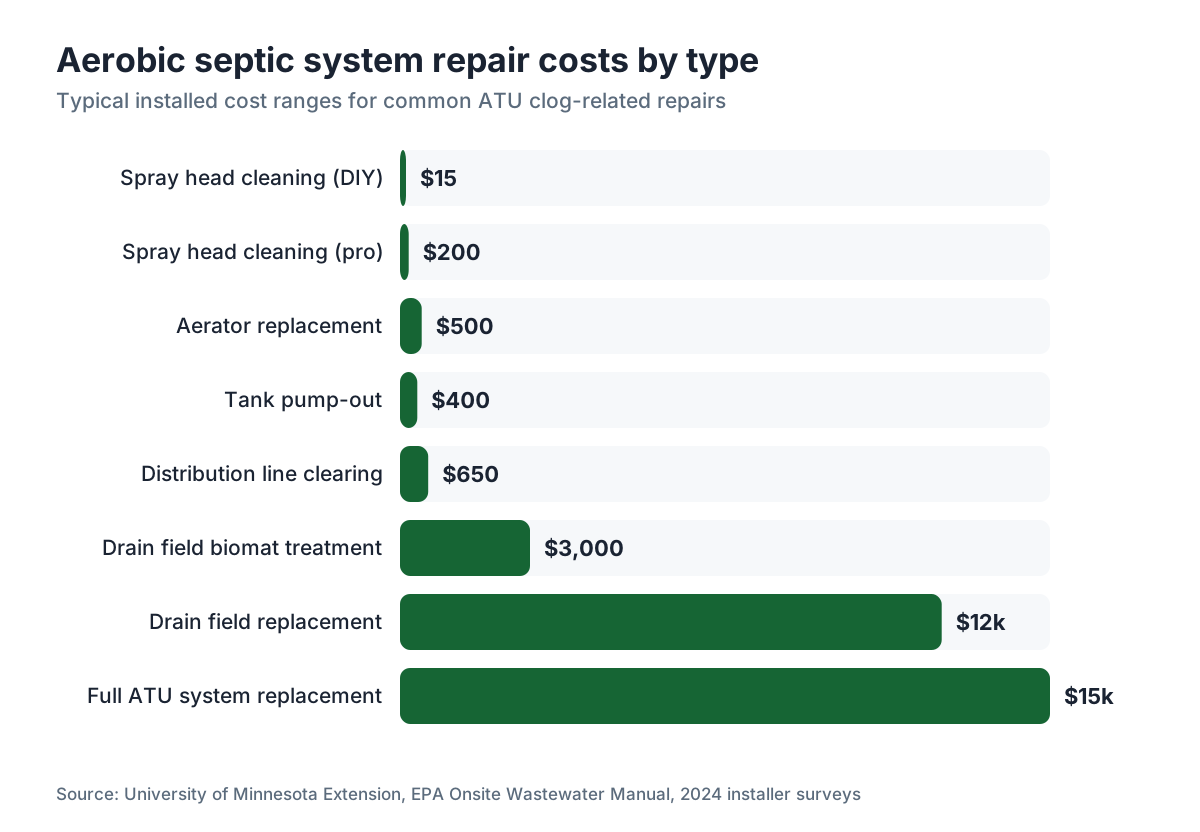
| Repair Type | Typical Cost Range | Notes |
|---|---|---|
| Spray head cleaning (DIY) | $0, $30 | Parts only if heads replaced |
| Spray head cleaning (pro) | $100, $300 | Part of routine service visit |
| Aerator replacement | $200, $800 | Parts plus labor; brand varies |
| Tank pump-out (routine) | $250, $600 | More in rural/access-limited areas |
| Distribution line clearing | $300, $1,000 | Hydro-jet or auger |
| Drain field aeration/biomat treatment | $1,000, $5,000 | Terralift or similar |
| Drain field replacement (conventional) | $5,000, $20,000 | Site conditions drive range |
| Full ATU replacement | $10,000, $20,000+ | Includes new tank, aerator, dispersal |
Those drain field replacement numbers come from state extension data and installer surveys rather than a single authoritative study, so treat them as a realistic range, not a fixed price [4]. Costs in dense coastal states (Massachusetts, California, Florida) run 20 to 40 percent higher than national medians.
The most cost-effective thing you can do is pump the settling tank on schedule. A routine septic tank pump out usually runs $250 to $600 and directly prevents the solid carryover that causes downstream clogs. Compare that to a $10,000 drain field replacement and the math is obvious.
For a broader look at what repairs run when you catch something on inspection, see our septic system repair cost breakdown.
Can you fix a biomat-clogged drain field, or does it need replacement?
This is the question most homeowners want answered, and nobody gives them a straight answer. The honest truth: it depends, and nobody has great data on long-term success rates for biomat remediation.
The closest thing to a systematic review comes from university extension programs. The University of Minnesota Extension notes that resting a drain field (diverting flow to an alternate field if one exists) can let a biomat partially break down over several months, but only if the soil has not been permanently damaged by anaerobic conditions [5]. Permanent compaction or grease saturation generally cannot be reversed.
Mechanical aeration treatments (brand names include Terralift and SeptiAire) inject air and sometimes nutrients into the drain field soil to fracture compaction and encourage aerobic biomat digestion. Results vary. Some fields recover well enough to work normally for years. Others see temporary improvement that lasts 6 to 18 months before the biomat regrows. I would not count on these treatments as a permanent fix if the underlying cause (undersized field, aerator failure, chronic overloading) has not been corrected.
Chemical biomat treatments sold at hardware stores and online get a lot of marketing attention. The EPA has not endorsed any specific additive as effective at restoring failed drain fields, and some products that claim bacterial enzyme action are not well studied in peer-reviewed literature [6]. Save your money on anything labeled "septic treatment" or "field restorer" until you have addressed the actual mechanical issue.
If your field is genuinely failed and not recoverable, you are looking at replacement or a system upgrade. That is a natural point to weigh whether a full aerobic septic system conversion to a new ATU design makes more sense than patching an old conventional system.
For a detailed look at what happens when a drain field fails completely, our leach field guide covers repair and replacement options in depth.
How often should you pump and service an aerobic system to prevent clogs?
More often than a conventional tank. That is the consistent answer across state regulations and manufacturer guidelines.
Most states with specific ATU rules (Texas, Florida, Oklahoma, and others have detailed onsite wastewater regulations) require quarterly maintenance visits by a licensed service provider as a condition of the operating permit [7]. Texas Commission on Environmental Quality (TCEQ) rules under 30 TAC Chapter 285 require aerobic system owners to hold a maintenance contract with a licensed maintenance provider and have the system inspected at least four times per year [7].
The settling (trash) tank compartment should be pumped every 1 to 3 years for a typical household. A household of four generating normal wastewater loads builds sludge faster than a retired couple. See our how often to pump septic tank guide for the calculation method.
Beyond pumping:
- Check the aerator/blower monthly. You should hear it running. Many units have a visual indicator.
- Inspect and clean spray heads or check the drip filter every 6 months.
- Keep a maintenance log. If a state inspector asks to see it, you want proof of service.
- Watch your chlorinator tablet supply. Most ATUs use chlorine tablets in a contact chamber before discharge. A depleted chlorinator means untreated effluent hits your spray field, which speeds up biomat growth.
If you run a service business managing multiple ATU accounts, tracking maintenance intervals, permit expiration dates, and service history across dozens of properties gets complicated fast. Tools like SepticMind are built for that scheduling and record-keeping problem, keeping operators out of compliance trouble.
For homeowners, a simple calendar reminder every 6 months for a DIY spray-head check and a contract with a licensed ATU maintainer is the whole strategy.
Are there warning signs that a clog is about to get much worse?
Yes, and catching them early is the difference between a $300 service call and a $15,000 drain field replacement.
The alarm on your ATU control panel is the most direct warning system. Most ATUs have high-water alarms that trigger when the pump vault or clarifier fills above normal level. If your alarm goes off and you silence it without investigating, you are flying blind. The alarm means effluent is not leaving the system fast enough, which means something is backing up.
Soft ground or standing water in the spray field between irrigation cycles is a serious sign. Treated effluent should absorb into the soil within hours. If you see puddles 24 hours after the system ran, the soil is saturated or biologically clogged.
A sudden jump in how often the pump runs (you can hear the pump cycling) without a change in household water use suggests the system is working harder to move the same volume, which usually means resistance downstream.
Dark or murky discharge from the spray heads, when you can see it, means treatment is failing. Normal ATU effluent is relatively clear.
Strong septic odor coming from the soil surface in the spray field (more than the heads) suggests surface application of undertreated effluent. That is both a health concern and a regulatory violation in most states.
Do not wait on any of these. The EPA SepticSmart program advises homeowners to "inspect your system every 3 years at minimum and pump your tank every 3 to 5 years" for conventional systems, but ATUs need that attention on an annual or more frequent basis [1].
Is aerobic septic system conversion worth it if conventional systems keep failing?
Sometimes converting an existing conventional system to an ATU, or replacing a failed ATU with a better-designed one, is the most cost-effective long-term move. But it is not always the answer, and the economics are genuinely site-specific.
ATUs cost more upfront. A new aerobic system with an engineered spray field usually runs $10,000 to $20,000 installed, compared to $6,000 to $12,000 for a basic conventional system on a favorable lot [4]. They also carry higher ongoing costs: electricity for the aerator (typically $10 to $30/month), chlorine tablets ($50 to $150/year), and mandatory quarterly maintenance contracts.
Where ATUs win: small or difficult lots. If your soil percolation rate is too slow for a conventional drain field, or your lot is too small for setback requirements, an ATU with spray irrigation might be the only permitted option. ATUs also help when a conventional system has chronically failed and the lot cannot support more drain field area.
Where ATUs lose: if you do not want the maintenance commitment. An ATU that is not maintained degrades faster than a conventional system. The aerator needs power and attention. The chlorinator needs refilling. Missing quarterly service is more than a code violation, it speeds up clogging.
If you are weighing this for a new installation or a failing conventional system, the cost to install septic system and septic tank installation guides cover what the full project involves.
State health department or environmental agency permitting will decide whether an ATU is even required or allowed on your property. Do not start that conversation with a salesperson. Start it with your county or state onsite wastewater program.
What can you do right now if you think your aerobic system is clogged?
Start with the things you can check and do yourself before you spend money.
Step 1: Cut water use immediately. If the system is backed up or the field is saturated, adding more water makes every diagnosis harder and the situation worse. Spread laundry across multiple days, take shorter showers, fix any running toilets.
Step 2: Check the control panel. Is the aerator alarm on? Is the pump alarm on? Note which lights are active and what color. Take a photo. This tells your service tech where to start.
Step 3: Listen for the aerator. You should be able to hear the blower motor running (it sounds like a small fan motor). If it is silent, you have an aerator issue that is probably behind the whole problem.
Step 4: Inspect the spray heads. Walk the spray field and look for heads that are not rotating, not spraying, or clogged with debris. Clean them as described above.
Step 5: Check the chlorinator. If the tablet container is empty, refill it per your system's instructions. This is quick and cheap.
Step 6: Call your maintenance provider. If anything beyond spray head cleaning is needed, you want a licensed ATU service technician, not a general plumber. Most states require that ATU work be done by licensed professionals.
If you need to find a qualified service provider or are unsure who to call, your state's environmental or health department usually keeps a list of licensed onsite wastewater contractors.
For the pumping side of things, our septic tank pumping and septic tank cleaning guides explain what to expect from that visit and how to judge whether your pumper is doing it right.
What do state regulations say about aerobic system maintenance and repairs?
Regulations vary a lot by state, but the trend is toward mandatory maintenance contracts and frequent inspection requirements for ATUs. That reflects the reality that aerobic systems need active management to stay compliant.
Texas is one of the most prescriptive states. Under 30 TAC Chapter 285, homeowners with an aerobic system must hold a maintenance contract with a licensed maintenance provider and have the system serviced at least four times per year [7]. Failure to keep the contract can result in permit violations and fines.
Florida requires that ATUs (called "performance-based treatment systems" in Florida rule) meet specific effluent quality standards and be inspected and maintained per the manufacturer's specifications, typically quarterly [8].
Oklahoma, which has a large ATU installed base, requires a two-year maintenance contract with initial system installation and annual inspections thereafter under OAC 252:641 [9].
At the federal level, the EPA does not directly regulate individual septic systems but gives guidance through programs like SepticSmart and the EPA Onsite Wastewater Treatment Systems Manual [1][6]. The EPA's manual, last substantially updated in 2002 (EPA/625/R-00/008), stays the main federal guidance document on ATU design and performance, stating that ATUs "can produce effluent with BOD and TSS concentrations less than 30 mg/L each" under proper operation [6].
For repairs specifically, most states require that any work affecting the treatment components (tank, aerator, distribution system) be permitted and inspected. Homeowner DIY is typically limited to routine maintenance tasks like cleaning spray heads or replacing chlorine tablets. Replacing a pump, aerator, or drain field components almost always requires a licensed contractor and a permit.
Check your specific state's onsite wastewater program. Most states list these regulations on their department of environmental quality or department of health website.
SepticMind users who manage compliance paperwork for multiple ATU accounts can track permit dates, maintenance contract status, and inspection records in one place, which matters when state inspectors ask for the service log.
Frequently asked questions
Can I use a drain cleaner to unclog my aerobic septic system?
No. Chemical drain cleaners (lye, sulfuric acid, enzyme blends) can kill the aerobic bacteria that make your ATU work. If you have a clog in the household drain line before the tank, use a mechanical auger or call a plumber. For anything inside the ATU itself, the chemistry of the treatment process is too sensitive for harsh chemicals. Vinegar is safe for soaking spray head hardware outside the system.
How long does it take for a clogged aerobic drain field to recover?
If the biomat is mild and you rest the field by cutting water use, partial recovery can happen in 4 to 12 weeks. Full recovery depends on whether the soil has been permanently damaged. Fields clogged for months or years rarely recover to full capacity without mechanical intervention or replacement. University of Minnesota Extension research suggests resting plus aeration gives the best results when damage is not yet severe.
Why does my aerobic system keep clogging even after it was just repaired?
Recurring clogs almost always point to an unresolved root cause: an undersized drain field for your household's actual water use, a failing aerator that keeps reverting to anaerobic operation, chronic overloading from leaky plumbing fixtures, or a soil percolation problem that was never properly assessed. Fix the symptom without fixing the cause and the clog returns. Ask your service tech to do a full system audit, more than the presenting repair.
What happens if I ignore a clogged aerobic septic system?
Sewage will surface in your yard or back up into your house. Beyond the sanitation problem, surfacing sewage is a public health violation and a regulatory violation in every state. You risk groundwater contamination, neighbor complaints, fines, and being ordered to stop using the system. The longer you wait, the more expensive the repair. What might cost $400 to fix today can cost $15,000 if the drain field is destroyed.
Can tree roots clog an aerobic septic system?
Yes. Roots seek moisture and will grow into distribution pipes, risers, tank joints, and drain field laterals. Root intrusion creates physical blockages and can crack pipes so that effluent leaks before reaching the drain field. A camera inspection of the distribution lines will show root intrusion. Treatment involves mechanical cutting (hydro-jetting or root saw) plus, in some cases, chemical root barriers. Keep trees at least 10 to 20 feet from any ATU component.
Is it normal for aerobic spray heads to smell?
A mild odor when the heads are actively spraying is normal. The effluent is treated but not odor-free. Strong sewage smell that lingers, or smell coming from the soil surface between spray cycles, is not normal. It typically signals that treatment quality has degraded (aerator issue, depleted chlorinator, overload) or that the field is surfacing undertreated effluent. Have your service tech pull an effluent sample from the clarifier to check treatment quality.
How much does it cost to replace an aerobic septic system aerator?
Aerator replacement typically costs $200 to $800 depending on the brand and blower size. Common brands include Hiblow, Thomas, and manufacturer-specific units from Norweco, Jet, and Infiltrator. The unit itself runs $100 to $400; labor adds another $100 to $400. Some units are user-replaceable (simple plug-and-play blower swap) while others need a technician. Check your system model's manual before ordering parts.
Do aerobic septic systems need to be pumped more often than conventional tanks?
Yes, generally. The settling compartment of an ATU should be pumped every 1 to 3 years for a typical household, compared to every 3 to 5 years for a conventional septic tank. The faster treatment cycle and smaller tank volume in most ATUs mean solids build up more quickly relative to capacity. Most state maintenance contracts require annual inspection that includes a sludge depth check to determine if pumping is needed.
Can I convert my failed conventional septic system to an aerobic system?
In many cases yes, and it is sometimes the only permitted option on small or difficult lots. An aerobic septic system conversion involves installing an ATU in place of or alongside the conventional tank, plus a new spray irrigation or drip field. Costs run $10,000 to $20,000 installed. You need a permit from your local health or environmental department, and the existing drain field may need to be abandoned. Start with a licensed site evaluation before committing to anything.
What is a biomat and why does it cause aerobic system clogs?
A biomat is a dense layer of microorganisms and organic material that forms on the soil surface inside a drain field. Some biomat is normal and actually helps filter effluent. But when a field receives too much flow, or receives undertreated effluent from a failing ATU, the biomat grows thick enough to seal soil pores and block water absorption. Once severe biomat forms, the field cannot drain and effluent either surfaces or backs up into the tank.
Will aerobic septic system additives fix a clog?
Probably not. The EPA has not found sufficient evidence that commercial septic additives restore failed drain fields or significantly improve ATU performance. Some products market bacterial cultures or enzyme blends as biomat treatments. The honest answer is that independent, peer-reviewed data supporting these claims is thin. Address the mechanical and operational causes first: pump the tank, fix the aerator, reduce water load. If the field still struggles after that, call a drain field specialist.
How do I find a licensed aerobic septic system service technician?
Start with your state's environmental or health department website, which typically keeps a searchable list of licensed onsite wastewater contractors. In Texas, TCEQ licenses Maintenance Providers specifically for aerobic systems. The National Onsite Wastewater Recycling Association (NOWRA) also keeps a member directory. Avoid hiring a general plumber for ATU-specific repairs; aerobic systems have regulatory and technical requirements that call for specialized training.
What is the average lifespan of an aerobic septic system?
A well-maintained ATU tank can last 20 to 40 years. The mechanical components (aerator, pump, control panel) typically last 10 to 20 years with proper maintenance and occasional part replacement. The drain field or spray system has the shortest lifespan and is most sensitive to operational problems. Fields on aerobic systems can last 15 to 25 years if treatment quality stays high, but chronic aerator failures or neglected maintenance can destroy a field in 3 to 5 years.
Sources
- EPA SepticSmart Program: The EPA SepticSmart program identifies drain field failure as the primary reason septic systems stop working and describes aerobic treatment as producing a higher-quality effluent than standard septic tanks.
- EPA, Onsite Wastewater Treatment Systems Manual (EPA/625/R-00/008): EPA guidance recommends settling tank pump-out every 1 to 3 years depending on household size and system type; ATUs under proper operation can produce effluent with BOD and TSS less than 30 mg/L each.
- EPA, Onsite Wastewater Treatment Systems Manual: Aerobic systems are sized for specific daily flow rates; typical state codes use approximately 150 gallons per bedroom per day as a design standard.
- University of Minnesota Extension, Septic System Owner's Guide: Extension guidance and installer surveys place conventional drain field replacement in the $5,000 to $20,000 range and full ATU installation in the $10,000 to $20,000 range, driven by site conditions.
- University of Minnesota Extension, Septic System Owner's Guide: Resting a drain field can allow a biomat to partially break down over several months, but only when the soil has not been permanently damaged by anaerobic conditions.
- EPA, Onsite Wastewater Treatment Systems Manual (EPA/625/R-00/008): EPA has not endorsed specific septic additives as effective at restoring failed drain fields; the 2002 manual remains the primary federal guidance document on ATU design and performance.
- Texas Commission on Environmental Quality, 30 TAC Chapter 285: Texas requires aerobic system owners to hold a maintenance contract with a licensed maintenance provider and have the system serviced at least four times per year.
- Florida Department of Health, Onsite Sewage Program: Florida requires performance-based treatment systems (ATUs) to be inspected and maintained per manufacturer specifications, typically quarterly, and meet specific effluent quality standards.
- National Onsite Wastewater Recycling Association (NOWRA): NOWRA maintains a member directory of licensed onsite wastewater contractors and provides professional standards for ATU maintenance.
- University of Florida IFAS Extension, Septic System Maintenance: Extension guidance confirms that aerobic system aerators typically last 10 to 20 years and that chlorinator maintenance is essential for maintaining effluent quality before spray dispersal.
Last updated 2026-07-10