Aerobic septic system cleaning: the complete guide
By the SepticMind Editorial Team
TL;DR
- An aerobic septic system needs cleaning every 6 to 12 months: pump the trash tank and treatment chamber, scrub the aerator and spray heads, and check chlorine levels.
- Skip it and solids overwhelm the aerobic bacteria and foul the spray field.
- Full service usually costs $200 to $500 depending on system size and local labor rates.
What does 'aerobic septic system cleaning' actually mean?
Most people picture a single pump-out when they hear "septic cleaning." An aerobic treatment unit (ATU) has several chambers and mechanical parts that all need attention. A full cleanout covers at least four jobs: pumping accumulated sludge from the pre-treatment (trash) tank, removing floating scum and settled solids from the aeration chamber, cleaning or replacing the aerator diffuser, and clearing spray heads or drip emitters so the treated effluent disperses the way it should. [1]
The aerobic process is what sets these systems apart. A conventional septic tank relies on anaerobic bacteria that work slowly without oxygen. An ATU pumps air into the wastewater so aerobic bacteria break down organic matter faster and more completely. The EPA notes that properly maintained ATUs cut pathogen levels far below what a standard tank reaches. [2] But aerobic bacteria are fussy. Let sludge climb too high and the bacteria die off, and the system turns into an unventilated conventional tank that pumps raw effluent onto your yard.
So cleaning is not cosmetic. It keeps the biology alive.
Some states call it "service" instead of cleaning, and their rules spell out exactly what a licensed operator does on each visit. Texas requires aerobic system owners to hold a maintenance contract with a licensed provider covering at least four inspections a year plus any needed cleaning. [3] Your state may differ, but the mechanical tasks are close to universal.
How often should an aerobic septic system be cleaned?
The short answer most operators give: pump the trash tank every 1 to 3 years and inspect or service the full system every 6 to 12 months. Those two schedules get mixed up all the time. They are different tasks.
The 6-to-12-month inspection interval comes from state ATU regulations and manufacturer recommendations. During a service visit, a technician checks chlorine residual, tests the aerator, clears spray heads, and measures sludge depth. Pumping the trash tank only happens when solids reach roughly one-third of the chamber volume, which for an average household means every 12 to 36 months. [1]
Household size matters a lot. A couple generating 60 gallons a day builds sludge far slower than a family of six at 150-plus gallons a day. The EPA's SepticSmart guidance tells homeowners to know their system's design flow and compare it to actual use. [2] If extended family has been staying for months, or you run a home business that adds people to the water use, move your pumping schedule up.
Here's a rule of thumb many service companies use: if sludge depth in the trash tank tops 12 inches, schedule a pump-out no matter when the last one happened. A sludge judge (a clear tube that measures settled solids) costs about $30 and gives you a real number instead of a guess.
What drives cleaning needs up faster than anything else is flushing wipes, grease, or antibacterial soaps. Wipes don't break down and pack the trash tank in months. Antibacterial products kill the aerobic bacteria in the aeration chamber and can force an early cleanout. [2]
What are the step-by-step tasks in a professional aerobic system cleaning?
A thorough service visit from a licensed ATU provider runs through a sequence most homeowners never watch. Knowing it helps you verify you're getting what you paid for.
Pre-treatment (trash) tank pump-out. The technician opens the first chamber and removes solids with a vacuum truck. This is the same pump-out used on conventional tanks. Our guide on septic tank pump out covers what to expect during that part.
Aeration chamber inspection and cleaning. Solids that slip past the trash tank settle or float in the aeration chamber. The tech removes gross accumulations, checks the air diffuser or aerator motor, and clears clogs in the air lines. A fouled diffuser is the single most common cause of aerobic system failure. Without good air distribution, the bacteria colony collapses.
Chlorination system check. Most ATUs use a chlorine tablet feeder or a liquid injector to disinfect effluent before it sprays. The tech checks tablet levels, cleans the chlorinator housing, and may test residual chlorine in the pump tank. EPA guidance for surface spray systems generally targets a chlorine residual of 1 mg/L or higher at the spray head. [2]
Pump tank and spray heads. The effluent pump that pushes treated water to the spray field sits in a separate pump tank or the final chamber. The tech checks the float switches, clears debris from the pump screen, and cycles each spray head to confirm full coverage. Clogged heads make wet spots and dry spots, and both wear down the spray field over time.
Control panel and alarms. Modern ATUs have a control panel with a timer, an alarm, and sometimes remote monitoring. The tech tests the high-water alarm and confirms the aeration timer matches manufacturer spec. A silent alarm is dangerous. It lets a malfunction run for weeks with the homeowner none the wiser.
Written report. A good operator leaves or emails a signed report listing what was done, sludge depths, chlorine readings, and any problems found. Keep these. When you sell the home, a record of steady maintenance is worth real money during the buyer's inspection. septic tank inspection standards in most states require documentation of recent service history.
What does aerobic septic system cleaning cost?
Pricing swings enough by region and system size that a single number misleads more than it helps. Here's the honest breakdown.
A routine 6-month service visit without pumping (inspection, spray head cleaning, chlorinator recharge, alarm test) usually runs $75 to $200 across most of the country. Annual maintenance contracts that bundle four visits a year range from $200 to $500. Add a full pump-out and expect $350 to $600 for the combined call. High-labor markets (coastal metros, Hawaii, Alaska) can push a full-service pump-out past $800. [4]
The numbers that actually matter are the failure costs. A collapsed spray field costs $5,000 to $20,000 to rehabilitate or replace, and in many states a failed spray field triggers a mandatory system upgrade instead of a simple repair. [5] Against that, a $400 annual contract is cheap insurance.
Some homeowners DIY parts of the cleaning: clearing spray heads with a thin wire, refilling chlorine tablets, testing the aerator by listening for the hum. Those tasks are fine for a competent owner. But the pump-out needs a licensed vacuum truck, and in most states only a licensed operator can certify the system is working, which your county may require every year. Doing it yourself does not satisfy the maintenance contract requirement most states impose. [3]
To compare against other systems, our septic tank cleaning article covers conventional tank pricing, and cost to install septic system has current installation figures if you're weighing long-term capital costs.
How is cleaning an aerobic system different from a conventional septic tank?
The core difference is complexity. A conventional septic tank has one or two chambers, no moving parts, and needs pumping every 3 to 5 years on average. An ATU has an aerator motor, a chlorinator, float switches, spray heads or drip lines, a control panel, and usually three to five separate chambers. Each part can fail on its own, and each adds to the cleaning scope. [1]
A side-by-side comparison:
| Feature | Conventional Septic | Aerobic Treatment Unit |
|---|---|---|
| Moving parts | None | Aerator motor, pump, float switches |
| Disinfection | None | Chlorination (usually) |
| Effluent dispersal | Drain field / leach field | Spray heads or drip lines |
| Pump-out frequency | Every 3-5 years | Trash tank every 1-3 years |
| Service visits per year | 0-1 | 2-4 (often mandated) |
| Annual maintenance cost | $50-$150 (occasional pump) | $200-$500 |
| Typical system lifespan | 25-30 years (well maintained) | 15-25 years (well maintained) |
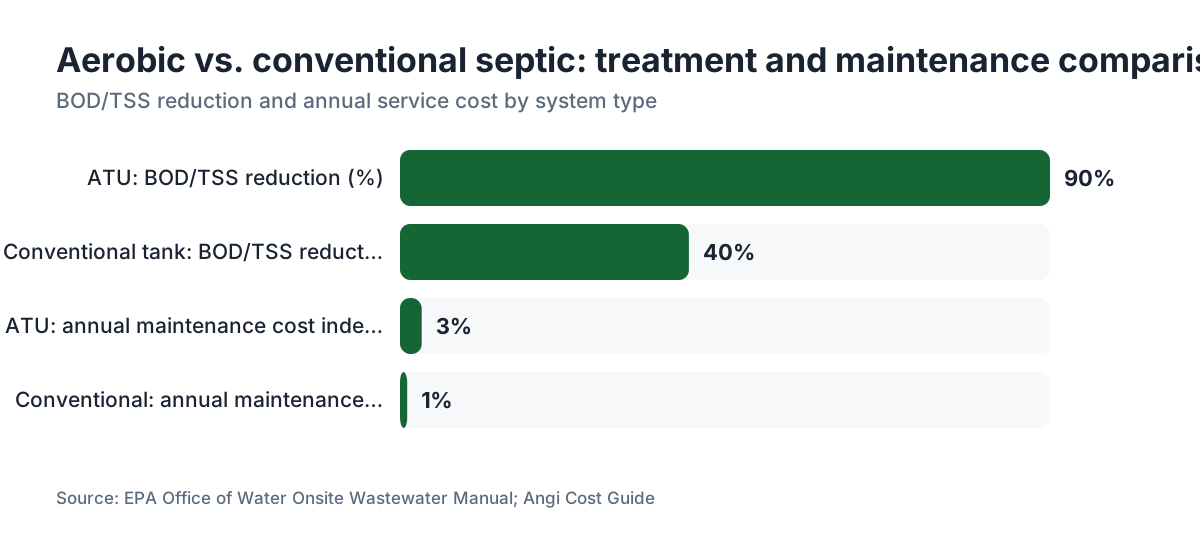
The aerobic system's effluent quality edge is real. EPA estimates that properly functioning ATUs cut biochemical oxygen demand (BOD) and total suspended solids by 85 to 95 percent, against 35 to 45 percent for a conventional tank. [2] That's why ATUs are often the only approved option on lots too small or too wet for a conventional drain field. But that treatment quality rides entirely on consistent cleaning and maintenance.
If you have a conventional system and want to see how its drain field differs from an ATU spray field, the leach field article covers conventional dispersal in detail.
What happens if you skip aerobic septic system cleaning?
Nothing at first. That's the trap. An ATU can run 12 to 18 months past its service date before obvious symptoms show, and the damage builds the whole time.
The sequence usually goes like this. Sludge in the trash tank rises until solids carry over into the aeration chamber. The aerator diffuser fouls with biosolids and delivers less air. The aerobic bacteria colony shrinks. Treatment quality drops. Partially treated effluent reaches the spray heads. The heads start clogging because there's more solids in the effluent. The pump tank fills faster because the system isn't cycling right. Then the high-water alarm goes off, or sewage backs up, or a neighbor complains about the smell from the spray field.
At that point you're not looking at a routine cleanout. You're looking at emergency pumping ($400 to $800), possible aerator replacement ($300 to $1,200), spray head replacement ($50 to $200 per head), and maybe spray field remediation if a bio-mat has set in. In bad cases, state regulators can order full system replacement. [5]
The EPA's SepticSmart guidance puts it plainly: "A key reason why systems fail is that they are not maintained properly." [2] Skipped cleanings are the most common maintenance failure for ATUs.
There's a public health angle too. Spray fields distribute treated effluent above ground. If skipped cleaning leaves that effluent poorly treated, it carries pathogens that can reach neighbors, kids playing in the yard, and nearby wells. Several states tightened ATU oversight because of documented groundwater contamination from neglected systems. [6]
What state regulations govern aerobic septic system maintenance and cleaning?
State regulation of ATUs runs tougher than for conventional systems, and the rules vary meaningfully from one state to the next.
Texas has some of the most explicit rules. The Texas Commission on Environmental Quality (TCEQ) requires ATU owners to hold a service agreement with a licensed maintenance provider. The provider must inspect the system at least four times a year and file annual reports with the local permitting authority. Owners who let a contract lapse can face fines and mandatory repair or replacement. [3]
Florida requires ATU owners to have their systems inspected annually and report the results to the county health department. Systems that fail must be repaired within 30 days. [6]
Other states, including California, New York, and North Carolina, set their own onsite wastewater rules for inspection intervals and operator licensing. The common thread: nearly every state that allows ATUs also requires documented maintenance at shorter intervals than conventional systems.
The EPA doesn't directly regulate individual septic systems (that authority sits with states and counties), but it publishes guidance through SepticSmart and the Office of Water's voluntary manuals. [2] Those federal documents are a useful baseline when your state rules are vague.
Buying a home with an ATU? Ask for the service history and confirm the maintenance contract is current. A lapsed contract is either a negotiating point or a reason to walk. Our septic tank inspection guide covers what a pre-purchase inspection should include for both conventional and aerobic systems.
Operators tracking compliance across many accounts often use software to manage service schedules, inspection reports, and state submission deadlines. SepticMind was built for this workflow, letting service companies automate report generation and alert customers when a maintenance contract is due for renewal.
Can you clean an aerobic septic system yourself?
Partially. Some tasks are reasonable for an informed homeowner. Others need a licensed pro and specialized equipment.
What a homeowner can safely do: clear clogged spray heads with a small wire or compressed air, refill chlorine tablets in the chlorinator basket, watch and listen for whether the aerator is running (you should hear or feel air moving in the aeration chamber), and keep a log of tablet consumption and any alarms.
What needs a professional: pumping the trash tank (vacuum truck required), certifying system performance for state or county reports, testing effluent quality, diagnosing aerator or motor problems, and any repair that opens electrical parts of the control panel.
There's a regulatory issue beyond the equipment. Most states that require annual maintenance reports will not accept homeowner self-certification. The report has to carry a licensed operator's signature. So even excellent informal maintenance doesn't get you off the hook. You still need a professional visit at least annually, and often quarterly, to stay compliant and protect your permit status. [3]
For the pump-out itself, see how often to pump septic tank for timing guidance that applies to the trash tank part of your ATU.
What products and chemicals are safe to use in an aerobic septic system?
The system's biology is the asset you're protecting. Almost anything that kills bacteria is a threat.
Chlorine tablets: use only the brand and tablet size your manufacturer specifies. Most ATUs take 1-inch or 3-inch calcium hypochlorite tablets, but feed rate and composition vary by system. The wrong tablets overdose or underdose chlorine, and either one causes problems. Never put pool chlorine tablets (trichlor) in a septic chlorinator. That's the wrong chemistry and it can damage the housing. [7]
Cleaning products: bleach in small household amounts (a load of laundry, occasional toilet cleaning) is generally tolerable and dilutes a lot by the time it hits the aeration chamber. Daily heavy bleach use is a different story. Antibacterial soaps and disinfectants used heavily and often can suppress the aerobic colony. The EPA specifically warns against overuse of antibacterial products in homes on septic. [2]
Septic additives: most state agencies and the EPA don't recommend biological or chemical additives for a properly working system. The evidence for additive effectiveness is thin, and some products speed solids carryover to the drain or spray field. Save your money.
Drain cleaners: skip lye-based (sodium hydroxide) drain cleaners entirely. They're highly alkaline and kill aerobic and anaerobic bacteria fast. Clear a clogged drain mechanically instead.
What are the signs your aerobic septic system needs cleaning right now?
Some warning signs are obvious. Others slip by until the damage is done.
Obvious signs:
- The control panel alarm light is on or the audible alarm has sounded. Don't reset it and forget it. Call your service provider the same day.
- Spray heads spray in odd patterns, don't rotate, or don't spray at all. Partial coverage means uneven loading on the spray field.
- Sewage odor near the spray field or inside the house.
- Slow drains throughout the house (more than one fixture, which points to a clog rather than a system problem).
- Standing water or unusually green grass over the spray field.
Easy-to-miss signs:
- Chlorine tablets disappearing faster or slower than usual. Faster can mean the chlorinator is flooding. Slower can mean the aerator isn't circulating.
- The aerator motor is louder than normal or runs intermittently when it should run continuously.
- You haven't had a service visit in over 12 months. In many states, that alone is a compliance problem even if the system seems fine.
Seeing sewage backup or a persistent alarm with no provider available? Cut water use in the house hard, call an emergency pump-out service, and stay off the spray field area. For systems that need more than cleaning, our septic system repair guide covers repair options and typical costs.
For operators running many customer accounts, tracking these symptom patterns across service history is where a tool like SepticMind earns its keep, flagging overdue accounts or odd service patterns before they turn into emergency calls.
How should you prepare for an aerobic system cleaning appointment?
A little prep cuts the service time and gets you more out of the visit.
Locate your access lids before the technician arrives. ATUs typically have three to five: one for the trash tank, one or two for the aeration chamber, one for the pump tank, and sometimes a separate lid for the control panel junction box. If any are buried under soil or sod, uncover them. Some contracts charge extra if the tech has to find and dig out lids.
Know your system's make and model. The installation paperwork should have it. Common ATU brands include Aerobic Enviro (AES), Norweco, Jet, Infiltrator, and Delta Environmental. The tech needs the model to confirm the right chlorine tablet type and aerator settings. No paperwork? The control panel usually has a manufacturer label.
Skip the garbage disposal for two days before the visit. Heavy food solids in the trash tank the morning of service make the pump-out messier and slower. Not a hard rule, just a courtesy.
Have your last service report handy if you can find it. The tech can compare current sludge depths and chlorine readings against the prior visit and spot trends.
After the visit, ask for a written report even if the company doesn't offer one automatically. For future septic tank repair or system changes, that paperwork is your baseline.
Frequently asked questions
How often does an aerobic septic system need to be pumped?
The trash tank (first chamber) typically needs pumping every 1 to 3 years depending on household size and water use. The aeration chamber may need partial cleaning more often. Service visits with inspection and cleaning but no full pump-out should happen every 6 to 12 months. Most state regulations mandate at least two to four service visits per year regardless of whether pumping is needed.
What is included in aerobic septic system cleaning?
A full cleanout covers pumping sludge from the pre-treatment tank, removing solids from the aeration chamber, cleaning or inspecting the aerator diffuser, checking and recharging the chlorinator, clearing spray heads or drip emitters, testing float switches and the high-water alarm, and a written service report. Some providers also test chlorine residual in the effluent for compliance reporting.
How much does aerobic septic system cleaning cost?
A routine service visit without pumping runs $75 to $200. Annual maintenance contracts with quarterly visits cost $200 to $500 per year. A service call that includes full pump-out typically runs $350 to $600, or higher in expensive labor markets. Emergency calls outside normal hours add $100 to $300 or more depending on the company.
Can I use bleach or antibacterial soap if I have an aerobic septic system?
Small amounts of bleach, like a single load of laundry or occasional toilet cleaning, are generally fine and dilute enough to have little effect on the aerobic bacteria colony. Daily heavy bleach use or regular antibacterial soap use can suppress treatment bacteria over time. The EPA advises against overuse of antibacterial products in homes on any septic system.
What type of chlorine tablets go in an aerobic septic system?
Most ATUs use calcium hypochlorite tablets in sizes the manufacturer specifies, typically 1-inch or 3-inch. Never use trichlor (pool chlorine) tablets. They're a different chemistry that can damage the chlorinator housing and deliver the wrong residual. Always use the tablet type listed in your system's owner manual or confirmed by your service provider.
What happens if I don't maintain my aerobic septic system?
Skipped maintenance lets sludge build up, foul the aerator, collapse the aerobic bacteria colony, and force partially treated effluent onto the spray field. That clogs spray heads, damages the spray field biozone, and can eventually require full system replacement costing $10,000 to $30,000 or more. Many states also fine homeowners for lapsed maintenance contracts on ATUs.
Do aerobic septic systems need a maintenance contract?
In most states that permit ATU installations, yes. Texas, Florida, and many others legally require homeowners to hold a current maintenance contract with a licensed ATU service provider. The contract ensures regular inspections and gives the state a way to verify the system is performing. A lapsed contract can bring fines or a mandatory system upgrade order.
How do I know if my aerobic system's aerator is working?
Open the aeration chamber lid and look for bubbling or rippling at the water surface. You should also hear or feel air moving from the diffuser. If the water looks still and dark, or smells strongly of raw sewage rather than mildly earthy, the aerator is likely off or failing. Check the control panel for alarm indicators and call your provider. A dead aerator needs same-week attention.
Can aerobic septic systems be used in cold climates?
Yes, though cold temperatures slow aerobic bacterial activity and can freeze spray heads and surface components. Manufacturers design ATUs for cold-climate operation, but some spray field systems need winterization or a switch to subsurface drip dispersal in northern states. Your local permitting office will know what modifications or seasonal adjustments apply to your area.
How long does aerobic septic system cleaning take?
A routine service visit without pumping takes 30 to 60 minutes. A full cleanout that includes pumping the trash tank takes 1.5 to 3 hours depending on tank size, sludge volume, and how many spray heads need attention. Emergency visits that involve diagnosis and repair can run longer.
Is an aerobic septic system better than a conventional septic system?
It treats wastewater more thoroughly, cutting pathogens and organic load by 85 to 95 percent versus 35 to 45 percent for a conventional tank, per EPA estimates. That makes ATUs the right choice for small lots, high water tables, or sensitive environmental areas. The trade-off is higher maintenance cost and complexity. If a conventional system fits your lot, it's simpler and cheaper to maintain long-term.
What is the life expectancy of an aerobic septic system?
A well-maintained ATU typically lasts 15 to 25 years. The concrete or fiberglass tanks often outlast the mechanical parts. Aerator motors may need replacement every 8 to 12 years. Spray heads and chlorinators are consumable parts replaced more often. Consistent cleaning and maintenance is the single biggest factor in reaching the upper end of that range.
Sources
- EPA Office of Water, Septic (Onsite/Decentralized) Systems: ATUs require pumping, aerator maintenance, and spray head clearing as part of regular cleaning; conventional tanks have no moving parts and less frequent service needs
- EPA SepticSmart homeowner guidance: EPA advises against overuse of antibacterial products, recommends regular maintenance to prevent system failure, states ATUs reduce pathogens far below conventional tank levels, and states a key reason systems fail is that they are not maintained properly
- Texas Commission on Environmental Quality (TCEQ), On-Site Sewage Facilities program: Texas requires ATU owners to hold a maintenance contract with a licensed provider for at least four inspections per year with annual reporting to local permitting authority
- Angi, Septic Tank Pumping Cost Guide: Full ATU service including pump-out typically costs $350 to $600; annual maintenance contracts range $200 to $500
- EPA, Onsite Wastewater Treatment Systems Manual (EPA/625/R-00/008): Failed spray fields cost $5,000 to $20,000 to remediate or replace; many state regulators require system upgrade rather than simple repair after spray field collapse
- Florida Department of Health, Onsite Sewage Programs: Florida requires annual ATU inspections with results reported to the county health department; systems failing inspection must be repaired within 30 days
- NSF/ANSI 40, Residential Wastewater Treatment Systems standard (NSF International): ATU chlorinators require calcium hypochlorite tablets at manufacturer-specified sizes; trichlor (pool) tablets are incompatible and can damage equipment
- University of Florida IFAS Extension (EDIS), onsite wastewater and aerobic treatment resources: Properly functioning ATUs reduce BOD and total suspended solids by 85 to 95 percent; aerator fouling from high sludge levels is a common cause of ATU failure
- North Carolina State University Extension, onsite wastewater resources: ATU aerator motors typically require replacement every 8 to 12 years; consistent cleaning and maintenance is the primary determinant of system lifespan reaching 20-plus years
- Texas A&M AgriLife Extension: Sludge depth exceeding one-third of tank volume is the standard trigger for pump-out regardless of elapsed time since last service
Last updated 2026-07-10