Aerobic septic system care: the complete owner's guide
By the SepticMind Editorial Team
TL;DR
- Aerobic treatment units (ATUs) treat wastewater with oxygen and disinfection before discharge.
- They need monthly chlorine tablet refills, quarterly or annual licensed inspections depending on your state, and pumping every one to three years.
- Skip the maintenance and you risk permit violations, spray-head failures, and a $10,000-plus repair bill.
- This guide covers every care task, chemical choice, and warning sign.
What makes an aerobic septic system different from a conventional one?
A conventional septic system is passive. Wastewater flows into a tank, solids settle, and clarified effluent trickles into a drain field where soil does the treatment. That works fine on the right lot. But many properties are too small, too wet, or sit on soil that can't handle raw effluent. That's where aerobic treatment units come in.
An ATU adds a mechanical step. An air pump or compressor forces oxygen into a treatment chamber, feeding aerobic bacteria that break down waste far more aggressively than the anaerobic bacteria in a conventional tank. The treated effluent then passes through a disinfection chamber, usually chlorine tablets or sometimes UV light, before it's pumped out through surface spray heads or drip emitters. Water leaving a properly working ATU is dramatically cleaner than conventional septic effluent.
The trade-off is complexity. A conventional tank has zero moving parts. An ATU has an air compressor, a pump, spray heads, a chlorinator, and a control panel with alarms. More parts means more things to maintain. The EPA's SepticSmart program notes that "advanced treatment systems require regular inspections and maintenance to function properly" [1]. That's underselling it. These systems need monthly attention, not a once-a-decade pump-out.
Common ATU brands in the U.S. include Aerobic Systems International, Norweco Singulair, Aquaworx, and Fuji Clean. The brand matters less than understanding the maintenance rhythm they all share.
What does an aerobic septic system maintenance schedule actually look like?
Here's the honest breakdown by task and frequency. The specifics vary by state and manufacturer, but this covers the core work every owner needs to do.
Monthly tasks
Check the chlorine tablet level in the disinfection chamber. Most systems use 1-inch or 3-inch tablets, and the chamber should never run dry. A dry chlorinator means untreated effluent is spraying into your yard. Walk the dispersal area and confirm each spray head pops up, rotates if it's a rotary type, and retracts cleanly. Listen for the air compressor. It should run continuously or cycle regularly depending on the design. Silence from the compressor usually triggers an alarm on the control panel.
Quarterly tasks (some states set this as the minimum inspection interval)
Test the effluent for chlorine residual. Many state codes, including Texas Title 30 TAC 285 [2], require a measurable chlorine residual at the point of discharge. The typical target is 1 mg/L or greater. Check the aeration chamber for scum buildup and confirm the diffuser or air stone is producing visible bubbling. Inspect the pump float switches for correct positioning.
Annual tasks
Have a licensed service provider inspect the full system, collect an effluent sample for fecal coliform testing if your permit requires it, and submit a maintenance report to your local authority. Most states require that ATU owners hold a maintenance contract with a licensed provider for the life of the system. Skipping that contract is a permit violation in Texas, Oklahoma, and most other states with large ATU populations [2][3].
Every 1 to 3 years
Pump the trash tank (the first compartment) and the clarifier. The interval depends on household size and how much solid waste the system sees. A two-person household may go three years. A family of five with a garbage disposal should pump every 12 to 18 months. See the septic tank pump out guide for what to expect during that service visit.
Which aerobic septic system chemicals do you actually need?
The only chemical an ATU genuinely requires is a disinfectant, and for most systems that means chlorine tablets. Not pool chlorine. Not liquid bleach poured straight in. The right product is calcium hypochlorite tablets sized for your chlorinator chamber, typically 1-inch tablets for smaller single-chamber units or 3-inch tablets for larger tube-style chlorinators.
Calcium hypochlorite tablets formulated for septic systems run about $20 to $40 per bag depending on quantity. Products like Septic Sanitizer tablets are sold specifically for this use. Some homeowners try trichlor tablets from pool supplies. Those work chemically, but they lower the pH more aggressively and can corrode some chlorinator housings over time. Stay with calcium hypochlorite unless your manufacturer explicitly approves trichlor.
Beyond chlorine, the marketing noise around septic chemicals gets loud fast. Enzyme additives, bacterial inoculants, "septic activators": the EPA's position is that properly functioning systems don't need additive products, and some additives can actually harm the biological balance in the aeration chamber [1]. The aerobic bacteria you're feeding with oxygen thrive without supplements. Save your money.
One category to actively avoid is anything antibacterial in large quantities. Antibacterial soaps, heavy disinfectant cleaners, and big bleach pours kill the aerobic bacteria you depend on. Normal occasional use won't crash a healthy system. But someone doing a heavy bleach clean-out of a utility sink once a week will degrade performance. The bacterial population recovers from an occasional hit. Chronic antibiotic loading is a real problem.
Water softener backwash is another one worth watching. The high-salt discharge from regeneration cycles has been linked in some university extension research to harm biological treatment in ATUs [4]. If your household runs a water softener, consider routing backwash to a separate disposal point where local code allows it.
How often do aerobic septic systems need to be pumped?
Most service providers say every one to three years, and that range reflects real variation. The trash tank in an ATU accumulates solids just like a conventional septic tank. The aerobic treatment process does not eliminate the need to remove settled sludge.
The right interval for your system depends on four things: household size, daily water use, whether you run a garbage disposal (they roughly double solids loading [5]), and tank capacity. A 1,500-gallon trash tank serving two people with no disposal can go three years between pump-outs. A 1,000-gallon tank serving five people with a disposal should be checked yearly and pumped whenever the sludge layer reaches one-third of tank depth.
If you're not sure what your interval should be, ask your licensed maintenance provider to measure sludge depth at the next inspection. The rule most operators use is simple: pump when the combined sludge and scum layers fill more than one-third of the tank volume. That's consistent with guidance from the National Environmental Services Center [5].
Over-pumping is rare and mostly wastes money. Under-pumping is common and does real damage. Solids carry over into the aeration chamber, clog diffusers, and eventually push through to spray heads. A clogged spray head is an $8 fix. A fouled aeration chamber can cost several hundred dollars to clean. A failed pump runs $300 to $800 in parts plus labor. See the how often to pump septic tank article for a general pumping frequency calculator.
For more on what the pump-out process involves, the septic tank pumping guide covers it in detail.
What are the signs that an aerobic system is failing or needs repair?
The control panel alarm is the loudest signal. Most ATUs have a red light or buzzer that fires when the compressor fails, when the pump float triggers a high-water condition, or when the chlorinator runs empty. Don't silence the alarm and walk away. It's there because the system is actively discharging, or about to discharge, improperly.
Spray heads that don't retract are a common nuisance failure. A head stuck in the up position gets mowed over, knocked off, or snapped. The broken head then creates a wet spot that breeds mosquitoes and raises the risk of human contact with partially treated effluent. Walk your spray field after each mow and push any stuck head down by hand. If it won't retract, clean or replace it.
Odors are a diagnostic tool. A sulfur or rotten-egg smell near the control panel or aeration chamber usually means the air supply is restricted or the compressor is failing. An ammonia smell from the spray area suggests the chlorinator ran dry or the aerobic treatment is compromised. A sewage smell inside the house, especially near floor drains or toilets that gurgle, means the problem is upstream, possibly a clogged inlet or a failing pump.
An alarm pump that runs continuously is a red flag. The alarm float should only trigger occasionally during heavy water use. If it runs daily or for long stretches, water is entering the system faster than it can leave, or the dispersal field is saturated.
Wet spots or unusually green grass over the spray field, plus soggy ground that stays wet days after rain, usually mean the dispersal system is overloaded or failing. That's when you call for a licensed inspection before things get worse. The septic system repair article covers what repair options exist when a system reaches that stage.
Don't drive or park over any part of the ATU, including the spray field. Many newer installations use buried plastic or fiberglass tanks, and vehicle weight can crack them. That failure is expensive and completely preventable.
What do state regulations say about aerobic septic system maintenance contracts?
This is the part most homeowners don't find out about until they sell the house or get a violation notice. In most states with significant ATU installations, particularly Texas, Oklahoma, New Mexico, and other states with large rural populations, you are legally required to hold a current maintenance contract with a licensed service provider for as long as the system operates [2][3].
Texas is the clearest example. Title 30 of the Texas Administrative Code, Chapter 285, requires ATU owners to hold a maintenance contract and submit maintenance reports through the county [2]. Violations can bring fines and an order to repair or replace the system. The county has authority to inspect and can deny a resale permit if maintenance records are incomplete.
Oklahoma's rules under OAC 252:641 similarly require licensed service contracts for ATUs [3]. Most states base their rules on EPA guidance and NSF/ANSI Standard 40 certification, which governs how ATUs must perform. A system certified to NSF/ANSI 40 must produce effluent with BOD5 and suspended solids at or below 30 mg/L on a 30-day average [6].
Buying a house with an ATU? Ask for the maintenance contract documentation and the last three years of inspection reports before closing. A lapsed contract is a material defect. The septic tank inspection article explains what a full pre-sale inspection should cover.
For service operators managing dozens of ATU maintenance contracts, tracking inspection schedules, report submissions, and renewal dates across accounts is where software like SepticMind replaces a pile of spreadsheets. The platform is built for service businesses running recurring maintenance programs.
How do you maintain the spray heads and dispersal system?
The spray heads are the most hands-on maintenance point and the most neglected. They sit in the yard, get mowed over, heave with frost, and clog with mineral deposits and algae. A bad spray head doesn't just waste treated water. It concentrates discharge in one spot, creating a wet patch that draws wildlife, breeds mosquitoes, and violates most state dispersal setback rules.
Clean or inspect spray heads at least quarterly. Unscrew the head, rinse the filter screen with clean water, and check that the orifice isn't blocked. Calcium and iron deposits clog the small orifices, and a short soak in white vinegar clears most mineral buildup. Never poke a wire through the orifice. You'll enlarge it and change the spray pattern.
Keep a buffer zone around the spray field. State codes typically require setbacks from property lines, wells, surface water, and structures. Texas, for example, requires a minimum 10-foot setback from property lines for spray dispersal [2]. Don't plant vegetable gardens in the spray field. State codes generally prohibit it because of pathogen exposure risk. Ornamental grass and low shrubs are fine.
Frost heave in cold climates can push spray heads out of alignment or disconnect underground lateral lines. After the first hard freeze each fall, walk the system and check that heads sit flush with grade. If you're in a climate that regularly hits below 20°F, ask your installer whether the dispersal laterals were set below frost depth. Surface-mounted micro-spray systems may need winterization or heat tape near the pump vault.
The pump that pressurizes the spray system usually lasts 5 to 10 years depending on run time and water quality. Budget for the replacement. It's a predictable cost, not an emergency. Write the pump model number somewhere accessible so your service provider can source a replacement fast.
What household habits help or hurt an aerobic system?
The aerobic bacteria doing the work in your treatment chamber are sensitive to sudden biological disruptions. Large amounts of antibacterial soap, whole bottles of bleach, photographic chemicals, paint thinner, or medications flushed down the drain can crash the bacterial population temporarily. The system recovers, but during recovery, treatment quality drops and you may fail a chlorine residual test.
Skip the garbage disposal if you can. If you already have one and want to keep it, pump more often. The USDA and various state extension services have documented that garbage disposal use significantly raises suspended solids loading to septic systems [5]. An ATU handles the dissolved BOD load well. It's not built to be a food processor.
Spread laundry loads through the week. Six loads on a Saturday afternoon hydraulically flush the aeration chamber before treatment finishes. The system is sized for average daily flow, and sudden surges push partially treated water forward through the process train.
Ask guests not to flush wipes, even the ones labeled "flushable." Non-woven wipes do not break down in the aerobic treatment chamber. They wrap around diffusers, float switches, and pump impellers. A service call to clear a wipe-fouled pump costs $150 to $300 and is completely avoidable.
Keep detailed records. Write down every service visit date, what the provider found, what chemicals were added, and what was repaired. When you sell the house, that record is worth money. When a problem shows up, it's diagnostic gold. A three-year gap in records is a red flag to any buyer's inspector.
Curious what a full installation looks like from the ground up? The cost to install septic system article breaks down the price range for ATU installs versus conventional systems.
How much does aerobic septic system maintenance cost per year?
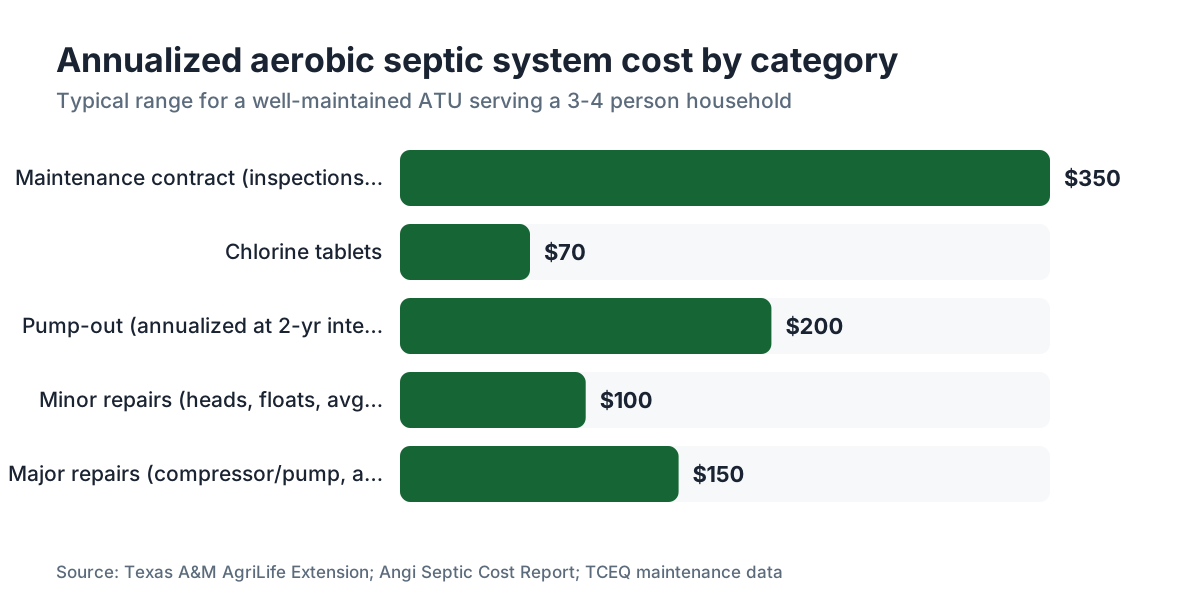
Budget $400 to $700 a year for a well-maintained ATU with no major failures. Costs vary by region, system size, and contract terms, but that all-in figure holds for most southern and southwestern households. Here's where the money goes.
A standard annual maintenance contract covering two to four inspections, effluent testing, and report filing runs $200 to $500 per year across most of the southern and southwestern U.S. Texas averages around $200 to $350 for basic contracts, though contracts that include effluent sampling and lab fees can reach $400 to $500 [2][7].
Chlorine tablets are a separate consumable cost, roughly $40 to $100 per year depending on household size and tablet size.
Pumping adds $250 to $500 per pump-out for a typical ATU trash tank, depending on local rates and access. See septic tank cleaning for more on what affects pricing.
Repair costs are the wild card. A failed air compressor runs $150 to $400 in parts plus labor. A failed effluent pump is $300 to $700 installed. A spray head is $20 to $80 per head. Full system replacement, if the ATU reaches end of life, runs $8,000 to $20,000 for a new installation depending on site conditions and local permit requirements [8]. The cost to put in a septic tank article covers replacement cost factors in detail.
| Cost item | Typical annual range |
|---|---|
| Maintenance contract (inspections + reporting) | $200 to $500 |
| Chlorine tablets | $40 to $100 |
| Pump-out (every 1-3 years, annualized) | $100 to $300 |
| Minor repairs (heads, floats) | $0 to $200 |
| Major repairs (compressor, pump) | $0 to $700 |
| Total annualized cost | $340 to $1,800 |
That's meaningfully more than a conventional system, which costs almost nothing to maintain between pump-outs. The trade-off is real, though. An ATU works on lots where a conventional system would fail entirely.
When should you replace versus repair an aerobic system?
Repair beats replacement most of the time. ATU tanks are concrete, fiberglass, or polyethylene and last decades unless something physically damages them. The mechanical parts, compressor, pump, float switches, control panel, spray heads, all swap out piecemeal.
Repair makes sense when the tank structure is intact, the system is under 15 to 20 years old, and the failure is limited to one or two components. A failing compressor on a 10-year-old system is a repair. A failing pump on a 12-year-old system is a repair.
Replacement makes sense when the tank has structural cracks, when the dispersal field is saturated and can't recover, when several components fail at once, or when site conditions have changed (higher water table, new setback requirements under updated code). Some states grandfather older ATUs but require current-code installation if repairs exceed a set percentage of system value. Check your local authority.
Once a system passes 20 years and needs repairs every year, run the math. $700 in repairs this year, another $500 next year, maybe $1,500 the year after starts to look expensive next to a $12,000 replacement that runs clean for 20 more years. Get a written assessment from a licensed provider, more than a service technician, before committing to major repairs on an old system.
For deeper guidance on what repair categories exist, the septic tank repair article covers tank-level issues, and septic system repair covers the full system.
How do you find a qualified aerobic septic system service provider?
In most states, servicing an ATU requires a specific license, separate from a general plumbing or conventional septic license. Texas licenses aerobic system maintainers under TCEQ rules. Oklahoma uses ODEQ licensing. When you're hiring, ask straight out: are you licensed specifically for aerobic treatment unit maintenance in this state?
The National Onsite Wastewater Recycling Association (NOWRA) keeps a member directory that's a reasonable starting point [9]. State health or environmental agencies typically publish lists of licensed providers, and TCEQ's website has a searchable contractor database.
Get at least two bids for maintenance contracts. The cheapest one isn't always bad, but read what's included. Some low-cost contracts cover visual inspection only and charge separately for effluent sampling, lab fees, and report filing. A slightly higher all-in contract often costs less in total.
Ask for references from customers with the same system brand you have. A technician fluent in Norweco Singulair may not know the quirks of an Aerobic Systems International unit. Brand-specific experience matters for diagnostics.
Service operators running recurring ATU maintenance programs across many customers face a genuinely hard scheduling and documentation problem. SepticMind's service operations platform handles exactly that workflow: recurring inspection scheduling, report tracking, and customer communication at scale.
One last check. If your system still has an active manufacturer's warranty, confirm whether a non-authorized service provider voids it. Some ATU manufacturers require certified technicians during the warranty period.
Frequently asked questions
How often do aerobic septic systems need to be inspected?
Most states require at minimum an annual inspection by a licensed provider, and some require quarterly inspections. Texas Title 30 TAC 285 mandates at least two inspections per year for most ATUs. Check your state's onsite wastewater rules for the exact frequency, because operating without the required inspection schedule violates your permit and can affect your ability to sell the property.
Can I maintain my aerobic septic system myself?
You can handle the monthly tasks: refilling chlorine tablets, checking spray heads, listening for the compressor, and watching the control panel for alarms. The licensed inspection, effluent testing, and annual report filing required by most state codes must be done by a licensed provider. Doing it yourself to save money isn't legal in most states with significant ATU populations, and it puts your permit at risk.
What happens if I let my chlorinator run out of tablets?
If the chlorinator runs dry, untreated or under-disinfected effluent goes straight to your spray heads. That's a public health violation in most states. Chlorine residual in the effluent must typically be at least 1 mg/L at the point of discharge. A dry chlorinator for even a few days can cause a failed effluent test. Check tablet levels monthly and keep a spare bag on hand.
Are aerobic septic systems better than conventional septic systems?
It depends entirely on the lot. On sites with poor soil, high water tables, small acreage, or proximity to surface water, an ATU produces much cleaner effluent than a conventional system and can work where a conventional system can't. On a suitable lot with good soil, a conventional system costs far less to install and has no mechanical components to maintain. ATUs aren't better. They're appropriate for specific conditions.
How long does an aerobic septic system last?
The tanks, concrete or fiberglass, can last 30 to 40 years with no structural damage. Mechanical components have shorter lifespans: air compressors typically 5 to 10 years, effluent pumps 7 to 12 years, control panels 10 to 15 years. A well-maintained ATU with periodic component replacement can operate indefinitely. Systems that skip maintenance typically see cascading failures starting around 10 to 15 years.
Can aerobic septic systems handle a garbage disposal?
They can handle it, but it costs you. Garbage disposals raise the solids load entering the trash tank substantially, which means more frequent pump-outs and faster accumulation in the aeration chamber. If you use a disposal, plan to pump every 12 to 18 months regardless of household size rather than waiting for the standard 2 to 3 year interval. Some county health departments advise against disposals with ATUs entirely.
What chemicals are safe to use in an aerobic septic system?
Normal household cleaning products in typical quantities are generally safe. The only chemical you should add on purpose is calcium hypochlorite tablets in the chlorinator chamber. Avoid pouring large amounts of bleach, disinfectants, or drain cleaners directly into drains. They kill the aerobic bacteria you depend on for treatment. Skip the enzyme and bacterial additive products. They're not needed and the EPA does not endorse them.
Do aerobic septic systems smell?
A properly functioning ATU should produce little to no odor. A sulfur smell near the air compressor or aeration chamber usually signals a compressor failure or restricted air supply. An ammonia or sewage smell near the spray field suggests the chlorinator is empty or the aerobic process is compromised. Odors inside the house often mean a plumbing vent issue or a pump problem rather than a treatment failure. Don't ignore odors. They're diagnostic signals.
What is a maintenance contract for an aerobic septic system and is it required?
A maintenance contract is a written agreement with a licensed service provider to inspect, test, and report on your ATU on a schedule set by your state. It is legally required in most states with significant ATU populations, including Texas, Oklahoma, and New Mexico. Operating without a current contract typically violates your operating permit and can result in fines or an order to repair or replace the system.
How do I know if my aerobic system is working correctly?
The clearest indicators: the control panel shows no alarm lights, the compressor runs consistently, spray heads operate fully and retract cleanly, no odors near the system or spray field, and your effluent chlorine residual tests at 1 mg/L or above. Annual effluent sampling for fecal coliform and BOD gives you objective data. If all those check out, the system is working. One failing indicator is worth investigating before it cascades.
Can aerobic septic systems freeze in cold climates?
The buried tanks rarely freeze because soil insulates them, but surface components are vulnerable. Spray heads can freeze and crack. Pump vault lids can ice over. Lateral lines set above frost depth can freeze and block flow. In climates that regularly drop below 20°F, winterization steps like insulated vault covers and heat tape on exposed fittings are worth discussing with your installer. Manufacturers like Norweco publish cold-climate installation guidance.
Does an aerobic septic system affect property value?
It can go either way. A well-maintained ATU with complete records on a lot that couldn't support a conventional system is a genuine asset. It's why the house can be there at all. A neglected ATU with a lapsed maintenance contract and no inspection history can complicate or kill a sale, especially in states like Texas that require a county-filed maintenance history. Buyers' inspectors look at the records. Keep them current and organized.
How does the aerobic treatment process actually work?
Wastewater enters a trash tank where heavy solids settle. Clarified liquid moves to an aeration chamber where an air compressor forces oxygen through diffusers, feeding aerobic bacteria that rapidly digest dissolved organic matter. Treated water moves to a clarifier or settling zone, then through a disinfection chamber with chlorine tablets. Disinfected effluent is pumped to spray heads or drip emitters that disperse it across a designated spray field.
Sources
- U.S. EPA SepticSmart Program: EPA states that advanced treatment systems require regular inspections and maintenance to function properly, and that properly functioning systems do not need additive products.
- University of Nebraska-Lincoln Extension, Water and Septic Systems: High-salt discharge from water softener regeneration cycles has been associated with harm to biological treatment processes in aerobic treatment units.
- National Environmental Services Center, Septic Systems: A Guide for Owners: Garbage disposal use significantly increases suspended solids loading to septic systems; pump when sludge and scum fill more than one-third of tank volume.
- NSF International, NSF/ANSI Standard 40: Residential Wastewater Treatment Systems: NSF/ANSI 40 requires ATUs to produce effluent with BOD5 and suspended solids at or below 30 mg/L on a 30-day average.
- Texas A&M AgriLife Extension, On-site Sewage Facilities: Annual ATU maintenance contracts in Texas typically run $200 to $350 for basic service; contracts including effluent sampling and lab fees range up to $500.
- Angi, Septic System Installation Cost Report: Full ATU system replacement installation costs range from $8,000 to $20,000 depending on site conditions and local permit requirements.
- National Onsite Wastewater Recycling Association (NOWRA), Member Directory: NOWRA maintains a member directory of licensed onsite wastewater professionals, used as a starting point to find qualified ATU service providers.
- U.S. EPA, Onsite Wastewater Treatment Systems Manual: EPA manual documents that aerobic bacteria in ATUs require continuous oxygen supply and that treatment performance degrades when aeration is interrupted.
- Clemson University Cooperative Extension, Aerobic Treatment Units: Extension guidance confirms that air compressor lifespan in ATUs is typically 5 to 10 years and pump lifespan is 7 to 12 years under normal operating conditions.
Last updated 2026-07-10