Aerobic septic system air diffuser: what it does and when to replace it
By the SepticMind Editorial Team
TL;DR
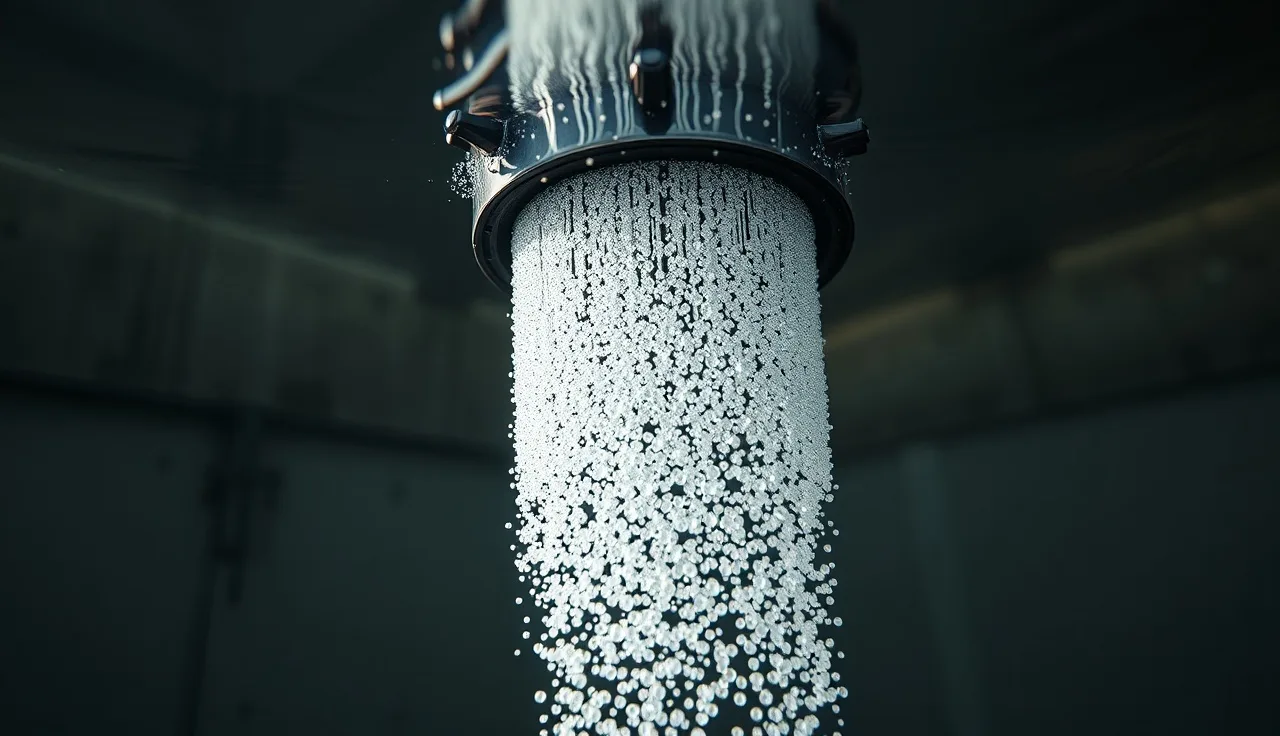
- The air diffuser in an aerobic septic system is a porous membrane or stone disc that breaks compressed air into fine bubbles inside the aeration chamber.
- Those bubbles feed oxygen-hungry bacteria that digest waste more completely than a conventional tank can.
- Most diffusers last 2 to 5 years.
- When they clog or crack, treatment quality drops fast and your system can fail inspection.
What does an air diffuser actually do in an aerobic septic system?
The diffuser is the part that gets oxygen into your wastewater. An aerobic treatment unit (ATU) works because it keeps a dense population of aerobic bacteria alive inside the aeration chamber, and those bacteria need dissolved oxygen to eat waste. No oxygen, no treatment.
Here's the chain. The air compressor (sometimes called the aerator or blower) pushes air through a hose down to the bottom of the aeration chamber. The diffuser is mounted at the end of that hose. Its job is to shatter the incoming air stream into the smallest bubbles it can before they rise through the water. Fine bubbles have far more surface area than coarse ones, so oxygen crosses into the liquid much more efficiently.
The EPA's SepticSmart program describes aerobic treatment units as systems that "use oxygen to break down waste more completely than a conventional septic system" [1]. The diffuser is the hardware that makes that oxygen transfer happen. When it stops working right, dissolved oxygen in the chamber drops, anaerobic bacteria take over, and effluent quality falls off a cliff.
Most residential ATUs run the compressor continuously or on a timed cycle. That means the diffuser sits wet and pressurized for thousands of hours a year. Constant exposure to wastewater, biofilm, and pressure cycling is exactly why diffusers wear out.
What are the main types of aerobic septic system diffusers?
Three types show up in residential systems, and the difference matters for how often you'll service them.
Membrane (EPDM or silicone tube diffusers). The most common in modern ATUs. A perforated rubber or silicone sleeve wraps a rigid core. When air pressure hits it, the membrane flexes open at tiny slits and produces very fine bubbles. When the compressor cycles off, the slits close, which limits wastewater backing into the air line. These are what you'll find in Norweco, Jet, and most Clearstream units.
Air stones (ceramic or bonded mineral). Older and simpler. A porous ceramic or mineral body lets air seep through thousands of tiny pores. They make reasonably fine bubbles but clog faster than membrane types, because biofilm and mineral scale fill the pores from the outside. Common in lower-cost or DIY retrofit kits.
Plate or disc diffusers. A flat disc, usually EPDM membrane over a rigid plastic or stainless frame, mounted horizontally at the chamber floor. Good oxygen distribution across a larger footprint. Less common in residential ATUs, more common in commercial units.
For the Clearstream CS113 aerobic septic system, the manufacturer specifies a tube-style EPDM membrane diffuser sized to the CS113's aeration chamber. Put in a diffuser with the wrong diameter or length and you change the bubble rise pattern, which can cut oxygen transfer even when the part physically fits [2].
The practical split between membrane and stone diffusers comes down to maintenance interval. A ceramic air stone in a hard-water area may need cleaning or replacement every 12 to 18 months. A quality EPDM membrane diffuser in the same system can run 3 to 5 years before membrane fatigue drags performance down.
How long does an aerobic septic system diffuser last?
Honest answer: 2 to 5 years for most membrane diffusers under normal residential use. Shorter for air stones in hard water. Longer if the compressor is sized right and the household is lightly loaded.
Several things pull that number down. High hydrogen sulfide in the wastewater attacks EPDM faster. Calcium and magnesium carbonate scale from hard water clogs porous surfaces. A compressor running at too high a pressure stresses membrane slits on every cycle. Iron bacteria lay down thick biofilm that plugs pores quickly.
What extends life: correct compressor sizing, periodic cleaning (some manufacturers recommend pulling and cleaning the diffuser annually), and moderate organic loading.
Manufacturer warranties on diffuser parts run about 1 year, though some premium membrane diffusers carry 2-year warranties. Warranty period is not service life. Most experienced service techs will tell you a diffuser past 4 years is living on borrowed time even if it looks fine.
Nobody has great published data on how diffuser degradation tracks against measured dissolved oxygen over time in residential ATUs. The closest guidance comes from NSF International's Standard 40, which sets minimum effluent quality thresholds for Class I ATUs [3]. If dissolved oxygen in your aeration chamber sits below 1.0 mg/L at mid-depth, your diffuser or compressor is underperforming regardless of its age.
See our guide on how often to pump a septic tank for the maintenance schedule that runs alongside diffuser servicing.
What are the signs that your diffuser needs replacing?
The clearest sign is a change in how the aeration chamber looks. A working diffuser makes a visible boil, a rolling turbulence at the water surface. Coarse, widely spaced bubbles, or no surface agitation at all, both point to a diffuser in trouble.
Odor is the second signal. Aerobic systems run nearly odorless. A sulfur or sewage smell from the access lid of the aeration chamber means dissolved oxygen is low and anaerobic decomposition has taken over.
Your state regulator or service provider may test effluent directly. In Texas, aerobic systems must produce effluent that meets at least secondary treatment standards, 30 mg/L BOD5 and 30 mg/L TSS, before surface spray or drip discharge [4]. A failed effluent test almost always sends the technician to the diffuser and compressor first.
On a visit, a technician with a dissolved oxygen meter confirms the problem in about two minutes. Healthy aeration chamber DO runs 2.0 to 4.0 mg/L for residential systems [3]. Below 1.0 mg/L is a clear failure.
Foaming in the chamber is a different animal. It usually comes from surfactants in the wastewater (detergents, cleaners), and it is not by itself a sign of diffuser failure. Don't confuse the two.
How much does it cost to replace an aerobic septic system air diffuser?
The part is cheap. A replacement membrane tube diffuser for most residential ATUs runs $15 to $60 depending on brand and size. Ceramic air stones cost $10 to $30. The Clearstream CS113 aerobic septic system air diffuser replacement part sells in the $20 to $45 range through septic supply distributors as of 2025, though pricing moves with supply chain conditions.
Labor is where the money goes. A service visit to a residential ATU usually runs $75 to $200 depending on your region, the provider's trip charge, and whether the tech has to pull and clean the diffuser assembly versus swap a quick-connect part. If the visit is part of a required annual maintenance contract (mandatory in Texas, Florida, and many other states for ATUs), the diffuser replacement often rides along at little extra cost.
Catch the failure late and you can add costs for system cleaning or chlorinator replenishment. Full septic tank cleaning runs $200 to $400 in most markets.
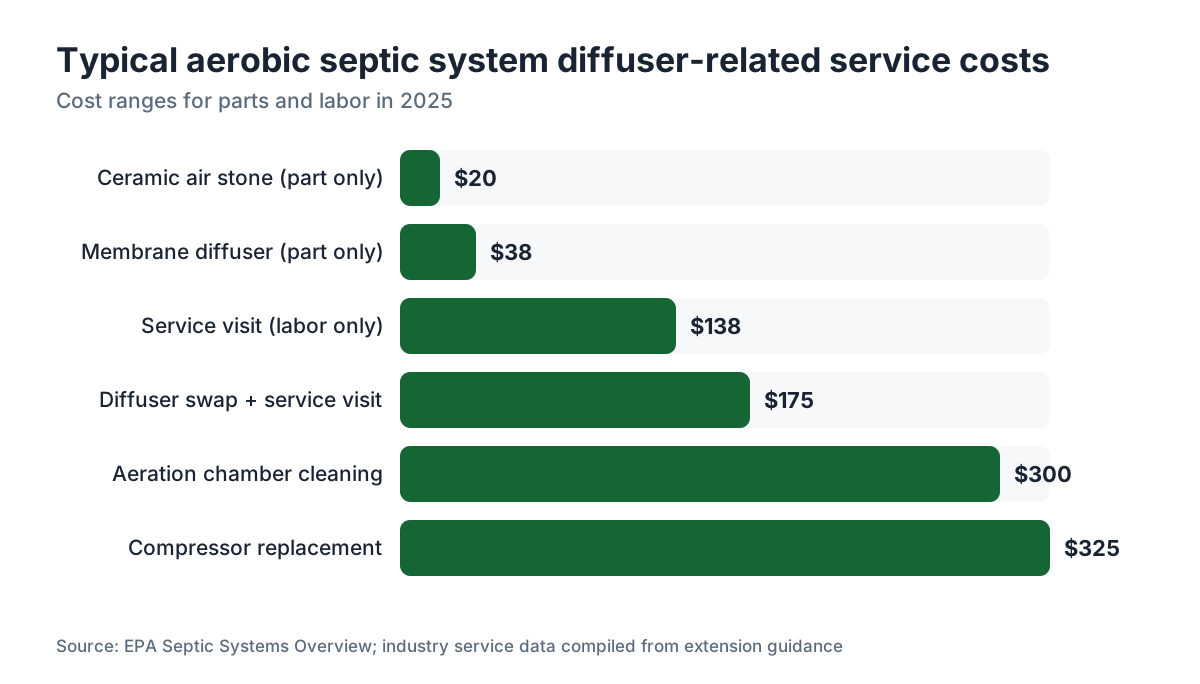
The table below shows typical cost ranges for diffuser-related service.
| Service | Typical Cost Range |
|---|---|
| Replacement membrane diffuser (part only) | $15 to $60 |
| Replacement ceramic air stone (part only) | $10 to $30 |
| Service visit (labor, no parts) | $75 to $200 |
| Diffuser swap bundled in annual contract visit | $0 to $50 additional |
| Full aeration chamber cleaning | $200 to $400 |
| Compressor replacement (if also needed) | $150 to $500 |
Don't let the low part cost talk you into waiting. A failed diffuser running for months pushes BOD and TSS in your effluent way up, which loads your leach field or drip field with poorly treated waste. Biomat buildup in a drain field costs $2,000 to $10,000 or more to fix [5].
Can you replace an aerobic septic system diffuser yourself?
In many cases, yes. The physical swap is not complicated. Open the aeration chamber access lid, disconnect the air line from the diffuser assembly (usually a barbed fitting or compression coupling), pull the diffuser up through the access opening, drop in the new unit, reconnect, confirm the compressor is running, and watch the bubble pattern.
A few things make it harder than it sounds. Access lids on some ATUs sit buried 6 to 12 inches below grade. The air line may be brittle with age and crack when you handle it. Some systems require you to draw down the aeration chamber to reach the diffuser mount. And if your diffuser attaches to a weighted base or bottom-mount bracket instead of hanging off the hose, you have to reach into the chamber.
Here's the bigger issue. In most states with mandatory ATU maintenance contracts, service work has to be done by a licensed maintenance provider to stay in compliance [4][6]. Texas TCEQ rules require ATU owners to keep a contract with a licensed maintenance company, and that company documents the service. Doing it yourself can void your contract or put you out of compliance with your permit.
Outside a mandatory-contract state, if you're comfortable with the physical work, replacing a diffuser yourself saves $75 to $150 in labor. Use only the manufacturer-specified part for your unit. A generic air stone that doesn't match the flow the compressor was sized for can underaerate even when it fits.
For operators running multiple ATU accounts, SepticMind tracks diffuser replacement dates and compressor run-hours per unit, which beats digging service notes out of binders when you're trying to schedule replacements before failure.
How do you clean an aerobic septic system diffuser instead of replacing it?
Cleaning is worth a shot before replacement, especially if the diffuser is under 2 years old and a membrane type.
For ceramic air stones, soak the stone 30 minutes in a white vinegar solution (1 part vinegar to 3 parts water) to dissolve carbonate scale, then rinse. Some technicians use a dilute muriatic acid soak (1 part acid to 10 parts water) for heavily scaled stones, but acid demands proper safety gear and thorough rinsing. After cleaning, blow air through the stone and check bubble uniformity before you reinstall it.
For membrane tube diffusers, cleaning does less, because the failure mode is usually membrane fatigue (the slits stretch and stop closing fully) rather than clogging. Wipe biofilm off the outside and confirm the membrane isn't torn or cracked, but if bubbles stay coarse after cleaning, the membrane is fatigued and replacement is the right call.
Never use chlorine bleach on diffusers. Chlorine degrades EPDM and silicone fast, and any leftover residue shortens membrane life.
Some ATU service programs include an annual pull-and-clean of the aerobic septic system diffuser as a standard item, which keeps the part in service longer. Whether that pays off depends on your water hardness and organic loading. In soft-water areas, a membrane diffuser may not need cleaning at all before it gets replaced at year 4 or 5.
What happens to your aerobic system if the diffuser fails completely?
The chain of events is predictable, and it moves faster than most homeowners expect.
First, dissolved oxygen in the aeration chamber drops. Aerobic bacteria crash within 24 to 72 hours once DO falls below 0.5 mg/L. Anaerobic bacteria, always present in smaller numbers, take over. Effluent quality falls apart: BOD and TSS climb, pathogen removal drops, and the system starts pushing out poorly treated wastewater.
For systems that spray effluent on the lawn (surface application), that means partially treated wastewater is landing on the ground. Texas TCEQ and similar state agencies treat this as an immediate public health violation [4]. You can get a notice of violation, be ordered to stop discharging, and face fines.
For systems that discharge to a drip field or subsurface absorption area, the high-BOD effluent speeds up biomat formation. The leach field clogs progressively. Once biomat sets in, restoring proper aeration alone doesn't undo the soil clogging without remediation.
The compressor takes a hit too. Without the diffuser giving back-pressure, some compressors run off-load and overheat. Others have thermal cutoffs, but repeated thermal events shorten compressor life. A replacement compressor for a residential ATU runs $150 to $500, not counting labor [5].
So the math is brutal. A $20 to $60 diffuser left in place can cascade into a $2,000 to $10,000 drain field repair or septic system repair.
How do aerobic system diffusers fit into your overall maintenance schedule?
Most state rules require ATU owners to have a licensed service provider inspect the system two to four times a year [6]. Texas requires at least four inspections annually for systems with surface discharge [4]. Florida and many other states require a minimum of two.
Diffuser condition should get checked at every visit, not only when symptoms show up. A good provider measures DO in the aeration chamber (about 2 minutes with a handheld meter), watches the bubble pattern, and notes any biofilm building on the diffuser assembly.
A reasonable preventive schedule for most residential ATUs:
- Inspect diffuser condition every 6 months (part of the routine service visit).
- Clean ceramic diffusers annually in hard-water areas.
- Replace membrane diffusers on purpose at 3 to 4 years regardless of apparent condition.
- Log replacement dates so you have a paper trail for inspection records.
The diffuser schedule should line up with your septic tank pump out schedule too. ATUs collect sludge in their pretreatment compartment just like conventional tanks. Most manufacturers recommend pumping every 1 to 3 years depending on household size and loading [5].
A physical logbook near the system access beats relying on memory. Operators running multiple accounts can automate this with field service software like SepticMind, which ties maintenance records to specific unit serial numbers.
What should you look for when buying a replacement diffuser for your specific ATU brand or model?
Match the replacement to your system's compressor output. That's the whole game. Compressor output is measured in cubic feet per minute (CFM) or liters per minute (LPM) at a stated pressure head, and the diffuser's rated airflow range has to overlap with what your compressor actually produces.
For the Clearstream CS113 specifically, Clearstream's own documentation names the compatible diffuser assembly. Use a third-party diffuser rated for less airflow than the compressor delivers and you get turbulent, coarse aeration. Use one with too much resistance and you overstress the compressor diaphragm.
Beyond the Clearstream CS113 aerobic septic system air diffuser, the other major ATU brands (Norweco Singulair, Jet, Fuji Clean, Hoot, Bio-Microbics) each use proprietary diffuser assemblies that don't interchange. Some brands have authorized aftermarket suppliers. Others restrict parts to their dealer network. Before you order online, confirm:
- The manufacturer model number of your ATU (on the nameplate, usually inside the access lid).
- Whether your state's maintenance contract requires OEM parts (some do).
- The compressor CFM rating, which lives in your installation manual or on the compressor nameplate.
Generic aquarium-style air stones don't belong in a residential ATU. They aren't rated for the flow volumes residential compressors produce, they fail quickly, and using them can void your system's NSF 40 certification compliance, which matters for your operating permit [3].
Price-shopping makes sense for diffusers, but only inside the set of parts actually rated for your system. Saving $15 on a wrong-spec diffuser is a bad trade.
How does diffuser performance affect your septic system's state inspection results?
ATUs in most states have to pass periodic effluent quality tests or visual inspections as a condition of the operating permit. What gets measured depends on the state, but common parameters include BOD5, TSS, fecal coliform, and pH.
NSF/ANSI Standard 40 sets the benchmark most states reference. Class I performance requires an average effluent BOD5 of 25 mg/L or less and TSS of 30 mg/L or less [3]. Per NSF, "Class I residential aerobic treatment units...shall achieve a 30-day average effluent quality" at those thresholds. A failed diffuser pushes both numbers well past those limits within a few weeks.
In Texas, the TCEQ maintenance report form lists the condition of the air diffuser as an inspection item [4]. A provider who reports a failed or clogged diffuser triggers a required corrective action timeline, typically 30 days to repair.
Florida's Department of Health requires ATU owners to keep systems producing effluent that meets secondary treatment standards at minimum, and the service provider files annual reports on system condition [6]. A diffuser in poor shape documented on two consecutive reports puts the homeowner into notice-of-violation territory.
If you're prepping for a septic tank inspection or selling a home with an ATU, install a fresh diffuser and get a DO reading documented before the inspection. It's cheap insurance.
Frequently asked questions
How often should I replace the diffuser in my aerobic septic system?
Most membrane (EPDM) diffusers last 3 to 5 years under normal residential loading. Ceramic air stones in hard-water areas may need replacement every 12 to 18 months. The practical trigger is dissolved oxygen dropping below 1.0 mg/L in the aeration chamber, coarse or absent bubble activity at the surface, or a sulfur odor from the chamber lid. Don't wait for an effluent test to fail.
What is the difference between the aerobic system diffuser and the air compressor?
The compressor (or blower) generates the airflow. The diffuser is the device at the end of the air line that breaks that airflow into fine bubbles inside the wastewater. They're separate components that fail independently. A compressor can run perfectly while a clogged or fatigued diffuser makes coarse, inefficient aeration. Always test DO before replacing the compressor, since diffuser failure is more common and far cheaper to fix.
Can I use a generic aquarium air stone in my aerobic septic system?
No. Aquarium stones aren't rated for the airflow volumes residential ATU compressors produce, they fail quickly under continuous operation, and substituting them can violate your system's NSF 40 compliance, which affects your operating permit. Use only a diffuser specified for your ATU model and matched to your compressor's CFM output. The correct part costs $15 to $60 and is worth it.
What dissolved oxygen level should my aerobic septic system maintain?
A healthy aeration chamber typically reads 2.0 to 4.0 mg/L of dissolved oxygen at mid-depth during normal operation. Below 1.0 mg/L points to underperforming aeration, either a failed diffuser or an undersized or failing compressor. NSF Standard 40 uses effluent quality thresholds (25 mg/L BOD5 or less) as the compliance measure, but DO is the fastest field check for diagnosing the cause.
What does a Clearstream CS113 aerobic septic system air diffuser replacement cost?
The OEM replacement diffuser for the Clearstream CS113 typically sells for $20 to $45 through septic supply distributors as of 2025. Labor for a service visit to replace it adds $75 to $200 depending on your area and whether it's bundled into a maintenance contract visit. Total out-of-pocket is usually $100 to $250 when professionally replaced, or $20 to $45 if you do it yourself in a state that allows self-service.
My aerobic septic system smells bad. Is the diffuser the problem?
Sulfur or sewage odor from the aeration chamber access lid is a strong sign dissolved oxygen has dropped and anaerobic decomposition has taken over. The most common cause is a failed or heavily clogged diffuser, but a compressor that stopped running or lost output produces the same symptom. Check whether the compressor is audibly running first, then watch the bubble pattern at the surface before ordering parts.
Do I need a licensed technician to replace the diffuser, or can I do it myself?
It depends on your state. Texas, Florida, and most states with mandatory ATU maintenance contracts require service work to be done by a licensed maintenance provider to stay in permit compliance. If you're in a state without that requirement and comfortable with the physical work, replacement is straightforward for hanging-mount diffusers. Doing it yourself in a mandatory-contract state may void your service agreement and put you out of compliance.
How does a failed diffuser damage my drain field or leach field?
When the diffuser fails, effluent BOD and TSS rise sharply because aerobic treatment has degraded. That incompletely treated effluent loads your drip field or leach field with organic material that builds up as biomat in the soil pores. Biomat restricts drainage progressively and is very expensive to remediate, often $2,000 to $10,000 or more. A $30 diffuser left unreplaced for months can cause drain field damage many times its cost.
How do I know if my aerobic system diffuser is clogged versus just old?
Clogging usually shows up earlier (under 2 years) and is more common with ceramic stones in hard water or systems with heavy iron bacteria. Signs include uneven bubble distribution or a patchy boil at the surface rather than the absence of bubbles entirely. Age-related membrane fatigue shows as uniformly coarse, large bubbles throughout. Pull the diffuser and inspect: visible scale or biofilm suggests clogging; no obstruction but poor bubble quality suggests fatigue.
What maintenance does an aerobic septic system require beyond the diffuser?
Regular maintenance includes inspecting the compressor and air line for leaks, checking the chlorinator and replenishing tablets, monitoring the disinfection chamber, testing effluent quality, and pumping accumulated sludge from the pretreatment compartment every 1 to 3 years. Most states require licensed service providers to inspect ATUs two to four times a year. Keeping records of each visit is required in most jurisdictions and protects you at resale.
Can a failing diffuser cause the aerobic system compressor to burn out?
Yes. When a diffuser is heavily clogged, back-pressure on the compressor increases. Many residential diaphragm compressors aren't designed for sustained high back-pressure, and running against a blocked line fatigues the diaphragm faster or overheats the motor. Conversely, if the diffuser fails open (membrane torn), the compressor runs with almost no resistance, which also overheats some compressor designs. Replacing a worn diffuser early protects the compressor.
What is NSF Standard 40 and why does it matter for my aerobic system?
NSF/ANSI Standard 40 is the performance standard that certifies residential aerobic treatment units. Class I certification requires the unit to produce effluent averaging 25 mg/L BOD5 and 30 mg/L TSS or less over a test period. Most states reference NSF 40 in their ATU permitting rules. If you use non-certified parts or let components fail, your unit may no longer meet the specification its permit was based on, which can bring a compliance notice.
How does aerobic septic system performance compare to a conventional septic system?
A conventional septic tank removes roughly 50 to 70 percent of BOD through anaerobic settling before sending effluent to the drain field. A working aerobic treatment unit removes 85 to 98 percent of BOD and achieves significant pathogen reduction before discharge. That better treatment quality is why ATUs are permitted where conventional systems are not, including small lots and high water table sites. The diffuser is the component that makes that difference possible.
Sources
- U.S. EPA, SepticSmart: Aerobic Treatment Units: EPA SepticSmart describes aerobic treatment units as systems that use oxygen to break down waste more completely than conventional septic systems.
- Clearstream Wastewater Systems, CS113 Product Documentation: Clearstream specifies compatible diffuser assemblies for the CS113 model ATU.
- NSF International, NSF/ANSI Standard 40: Residential Wastewater Treatment Systems: NSF/ANSI 40 Class I certification requires ATUs to achieve 30-day average effluent BOD5 of 25 mg/L or less and TSS of 30 mg/L or less.
- Texas Commission on Environmental Quality, On-Site Sewage Facilities Program: Texas requires aerobic systems to meet secondary treatment standards (30 mg/L BOD5 and 30 mg/L TSS) before surface or drip discharge, lists diffuser condition as an inspection item, and mandates licensed maintenance contracts.
- University of Florida IFAS Extension, Aerobic Treatment Units for Onsite Sewage Treatment: Extension guidance notes residential ATU compressor replacement costs range from about $150 to $500 and recommends pumping ATU pretreatment compartments every 1 to 3 years.
- Florida Department of Health, Onsite Sewage Program: Florida requires ATU owners to maintain systems producing secondary treatment standards and service providers to submit annual reports documenting system condition.
- U.S. EPA, How Your Septic System Works: EPA describes the role of aeration in promoting biological treatment and the importance of maintaining ATU components.
- Oklahoma State University Extension, Aerobic Sewage Treatment Systems: OSU Extension guidance recommends pumping ATU pretreatment compartments every 1 to 3 years depending on household loading.
- Texas A&M AgriLife Extension, Aerobic Septic Systems: Texas A&M guidance documents the relationship between diffuser condition, dissolved oxygen levels, and effluent quality in residential ATUs.
- U.S. EPA, Septic Systems Overview: EPA provides general guidance on septic system types, maintenance, and the consequences of system failure.
Last updated 2026-07-10