Garbage disposal for septic systems: what actually happens
By the SepticMind Editorial Team
TL;DR
- You can use a garbage disposal with a septic system, but it sharply increases the solids piling up in your tank.
- The EPA and most state extension programs recommend against standard disposals on septic.
- If you keep one, expect to pump 50% more often.
- Septic-rated disposals with enzymes help but don't erase the extra load.
- Your pumping schedule is the real decision driver.
Can you use a garbage disposal with a septic system?
Yes, you can. Nothing about a septic system physically stops a garbage disposal from working. Wastewater leaves the disposal, travels through your house drain, and enters the septic tank the same way everything else does. The system won't immediately fail or back up.
The real issue is what that ground-up food waste does once it's inside your tank. A conventional septic tank is sized by the number of bedrooms in your home, not by how much food you grind. The EPA's SepticSmart guidance notes that garbage disposals "increase the amount of solids and grease entering the septic system" and that this can lead to more frequent pumping and, over time, drain field problems [1]. That's the entire argument against using one, stated plainly.
So the answer is yes, with a serious caveat. Plan for that caveat and you can make it work. Ignore it and you'll pay eventually, either in emergency septic tank pumping calls or, worse, in leach field repairs that cost several times what a pump-out does.
How much extra solids does a garbage disposal actually add to a septic tank?
A garbage disposal adds roughly 50% more solids to your tank. That number comes from a University of Wisconsin study, one of the few controlled investigations into this, which found that homes using disposals generated about 50% more total suspended solids entering the septic tank than homes without one [2]. That's not a rounding error. It's a real jump in the organic load your tank's bacteria have to process.
Septic tank design assumes a set daily wastewater volume and solids input per person. The old rule of thumb from the American Society of Civil Engineers and various state codes is roughly 50 gallons per person per day, with solids accumulation built into the tank sizing. Disposal use wasn't assumed in most of those calculations, especially in systems designed before the 1990s.
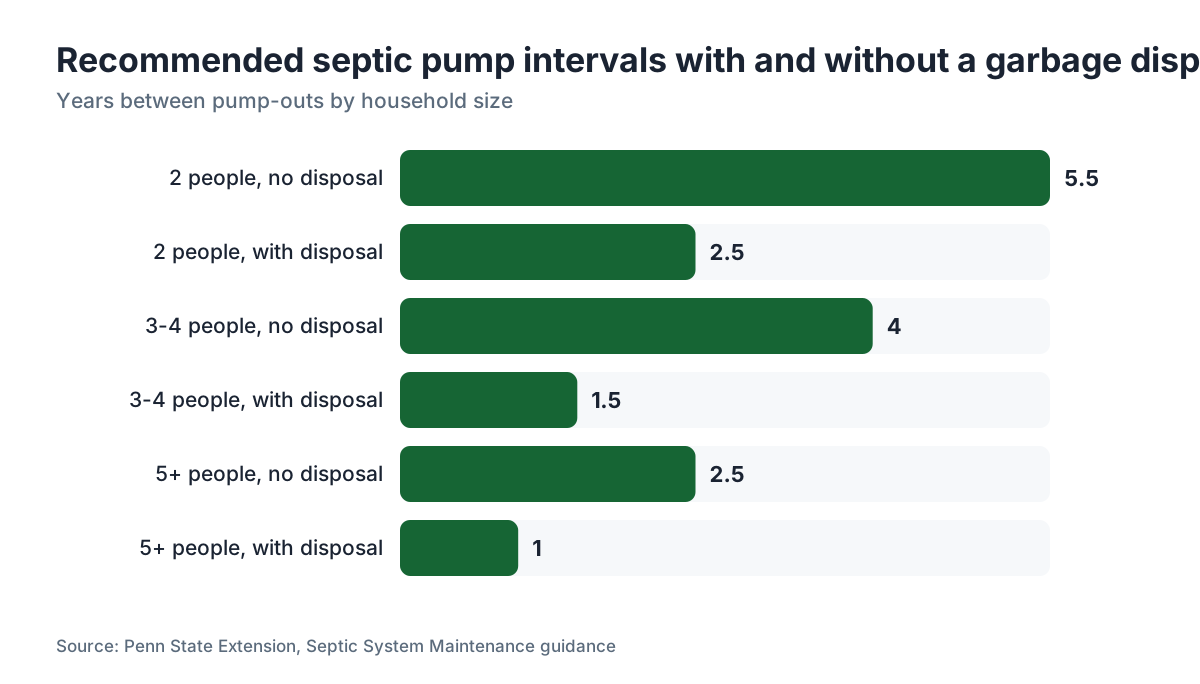
Here's the practical result. The scum layer on top and the sludge layer on the bottom grow faster. Once combined they reach about 30% of tank volume, you need a pump-out or you risk solids washing out to the drain field. Penn State Extension, which has done a lot of applied work on onsite systems, recommends that disposal users pump every 1 to 2 years instead of the standard 3 to 5 [3]. That's a real cost difference over a decade of homeownership.
The table below puts the pumping math in concrete terms.
| Household size | Standard pump interval | With garbage disposal |
|---|---|---|
| 2 people | Every 5-6 years | Every 2-3 years |
| 3-4 people | Every 3-5 years | Every 1-2 years |
| 5+ people | Every 2-3 years | Annually |
These are rough guidelines, not engineering specs. Your actual interval depends on tank size, usage habits, and what you're grinding. But the direction is always the same: more frequent pumping [3].
What does the EPA say about garbage disposals and septic systems?
The EPA's SepticSmart program is the agency's main consumer-facing education effort on onsite wastewater, and it's clear on this. Under its list of what not to do, the program says to avoid a garbage disposal if you have a septic system, because disposals "can add solids and grease to an already full system" [1].
That's not a ban. The EPA doesn't regulate your kitchen appliances. But it's about as direct a discouragement as a federal agency issues for a household appliance choice.
State codes vary more. Connecticut and Massachusetts, among others, have onsite system rules that either prohibit disposals outright on certain system types or require more tank capacity if you install one. Massachusetts Title 5, for example, addresses disposal use in system sizing [4]. If your state has active onsite wastewater regulations (and most do), check them before installing a disposal or buying a house that has one. Your local health department is the fastest way to find out what applies where you live.
Are septic-safe or septic-rated garbage disposals actually better?
Yes, but only somewhat. Several manufacturers sell disposals as "septic-safe" or add enzyme cartridges that supposedly break down food waste before it reaches the tank. InSinkErator's Evolution Septic Assist is the most widely sold example. The idea is that the disposal doses the ground waste with microorganisms or enzymes that pre-digest it on the way to the tank.
Does it work? Partially. The enzyme injection does appear to reduce particle size and start biological breakdown. Whether that means meaningfully less tank loading than a standard disposal is harder to prove. A 2012 review of septic-related disposal studies found that enzyme-injecting units produced somewhat smaller particles but that the net solids contribution to the tank was still much higher than a no-disposal household [2]. So a septic-rated disposal beats a standard one. It isn't neutral.
My honest take: if you're committed to a disposal on septic, get the septic-rated model. The price gap between a standard InSinkErator and the Evolution Septic Assist runs roughly $100 to $150, and it's worth it at the margin. Don't let the "septic-safe" label talk you into ignoring pumping intervals. You still pump more often than a disposal-free household does.
What foods cause the most damage when ground into a septic system?
Grease and fats are the worst offenders by a wide margin. They float, pile up in the scum layer, and are slow for anaerobic bacteria to process. Even a modest amount over time can clog the inlet baffle of your tank or migrate to the drain field and coat the soil, killing its ability to absorb effluent.
Fibrous foods like celery, artichoke leaves, and corn husks grind poorly and pass through as long stringy particles that also build up slowly. Eggshells create a fine granular sediment. Starchy foods like pasta and rice swell with water and add to the sludge layer faster than proteins do.
Lower-risk foods (though never zero risk) are soft cooked vegetables, fruit pulp, and small amounts of cooked meat. They break down faster in anaerobic conditions.
Here's the practical rule. Treat a disposal as a convenience for incidental scraps, not a substitute for scraping plates into the trash. Everything you grind ends up in your tank. The bacteria there work without oxygen, and they're less efficient than aerobic digestion. Give them a fighting chance by keeping volumes low and fat content lower.
How does garbage disposal waste affect the drain field?
Your drain field (also called a leach field) is where partially treated effluent from the tank disperses into the soil. Soil bacteria and physical filtration do the final treatment work. That process depends on the soil staying permeable, which means the pores between soil particles have to stay open.
When excess solids leave the septic tank and reach the drain field, they coat the soil. Biomat, a layer of bacterial growth and organic material, forms at the soil-pipe interface. Some biomat is normal and actually aids treatment. Too much of it, fed by too many solids passing through, clogs the soil and makes effluent pond or back up.
Drain field repair or replacement is expensive. Costs run from $3,000 to $15,000 or more depending on system type, local soil conditions, and whether the old field has to be decommissioned [5]. Compare that to a pump-out every couple of years at $300 to $600 and the case for keeping disposal use minimal writes itself.
Some drain field failure is inevitable over a long system life. Speeding it up with heavy disposal use is entirely avoidable. See our leach field guide for a full breakdown of failure signs and repair options.
Should you remove your garbage disposal if you're on septic?
You don't have to remove it. But make a conscious decision instead of using it just because it's there. This question comes up constantly when people buy a house that has both a septic system and an existing disposal.
Say you're a household of two, your tank was sized generously for your load, you pump on schedule, and you're not grinding heavy fat-laden waste. Keeping the disposal is probably fine. You'll pump more often, but it's manageable.
Now say you have a large household, an older tank with unknown sizing history, or a drain field that's already shown signs of stress. Removing the disposal, or at least stopping its use, is the conservative call. The septic system is the harder and more expensive thing to fix. The disposal is an $8 basin stopper or a compost bin away from being replaced functionally.
A septic tank inspection is worth doing before you decide. A pumper who inspects the tank can tell you how fast solids are building up relative to your current habits. That's real data. It beats guessing.
Does adding a septic tank enzyme treatment help offset disposal use?
No, not meaningfully for bottled additives. Enzyme and bacterial products sold for septic systems are a huge category with a lot of marketing and mixed evidence. The EPA's own position is that most commercial septic additives have not been shown to improve system performance, and that a healthy septic tank already has plenty of biological activity [1].
The enzyme injection built into a septic-rated disposal like the InSinkErator Septic Assist works differently from a monthly tablet you drop in your toilet. It doses the waste at the source, so the enzymes get more contact time with food particles before they hit the tank. That's a more plausible delivery mechanism than a distant additive.
For external additives sold in bottles or packets, the evidence for any real benefit is thin. I wouldn't spend money on them as a way to offset heavy disposal use. If you're grinding a lot of food waste and hoping a monthly enzyme treatment will compensate, it won't. More frequent septic tank pump out is the only reliable fix for excess solids.
If you're tracking your pumping history or want a reminder system that ties into your service records, operators who use tools like SepticMind can set automated pump interval alerts based on household size and disposal use, which takes some guesswork out of scheduling.
How often should you pump a septic tank if you use a garbage disposal?
Every 1 to 2 years for an average household using a disposal regularly, versus 3 to 5 years without one. That's Penn State Extension's guidance [3]. The EPA's general recommendation is every 3 to 5 years for a typical household, but that baseline doesn't account for disposal use [6].
The honest answer is that the right interval depends on your actual tank size, actual occupancy, and how hard you use the disposal. The only way to know for sure is to have the tank inspected and measured for sludge and scum depth. If combined sludge and scum fill more than a third of the tank, pump it regardless of how long it's been.
A pumper who opens the tank and measures the layers can give you a personalized interval estimate. Do that after the first year if you've just moved into a home with a disposal and no pumping records.
See our detailed guide on how often to pump septic tank for the full calculation method, including tank size tables and occupancy adjustments.
For cost context, septic tank pumping runs $300 to $600 nationally, though prices vary by region and tank size [7]. Pumping twice as often sounds painful. It's a fraction of a drain field repair.
What do state regulations say about garbage disposals on septic?
State rules differ a lot here, and this is one of those areas where "check with your local health department" is genuinely the right answer, not a dodge.
Massachusetts Title 5 (310 CMR 15.000) is one of the stricter frameworks in the country for onsite wastewater. It accounts for disposal use in system design requirements [4]. Several other New England states have similar provisions.
In many southeastern and midwestern states, there's no specific disposal ban in the onsite code, but county health departments may have their own policies. Texas, for instance, has onsite sewage facility rules under 30 TAC Chapter 285 that address design loading rates but don't universally ban disposals [8].
Some local jurisdictions in California effectively prohibit disposals on septic through design standards that assume no disposal use. If a later inspection turns one up, it can complicate system permitting or a real estate transfer inspection.
Before installing a new disposal on a septic system, or before buying a home where one is present, call your county health department and ask specifically about disposal rules for onsite systems. It's a five-minute call that saves real headaches.
What's the best practice if you want to keep a garbage disposal on septic?
If you're keeping the disposal, here's what actually cuts risk.
First, upgrade to a septic-rated model if you have a standard one. The difference in solids contribution matters at the margin, and the price gap is modest.
Second, use it sparingly. Run it for small amounts of incidental food waste, not as your main plate-scraping method. Compost or trash large amounts of scraps.
Third, never grind fat, grease, or cooking oil. Pour those into a container and trash them. This is the single highest-impact change you can make.
Fourth, run cold water during and after grinding to move particles through, and keep the disposal running until grinding is done rather than stopping early.
Fifth, schedule a septic tank inspection to set a baseline sludge and scum depth, then pump on a schedule that matches your actual disposal habits rather than a generic calendar interval.
SepticMind's scheduling tools help service operators set up automated reminders for households with known disposal use, which is a real efficiency gain when you're managing dozens of accounts with different risk profiles.
Know the early warning signs of a stressed system: slow drains, gurgling toilets, wet spots near the drain field, or sewage odors. Any of those means stop using the disposal immediately and call a professional. Quick response at that stage is the difference between a pump-out and a full septic system repair.
Frequently asked questions
Can you use a garbage disposal with a septic system?
Yes, but with real trade-offs. Garbage disposals roughly double the solids entering your septic tank, which means you need to pump 50% to 100% more often than a disposal-free household. The EPA and Penn State Extension both recommend against routine disposal use on septic systems. If you keep one, use it sparingly, never grind grease, and pump the tank at least every 1 to 2 years.
Can you use a garbage disposal on a septic system without damaging it?
You can avoid serious damage if you're disciplined about what you grind and how often you pump. Heavy use over years without extra pump-outs is what causes drain field problems, not occasional light use. Get a septic-rated disposal, keep volumes low, never grind fats, and schedule annual or biennial inspections to measure sludge accumulation. That combination keeps risk manageable for most households.
What type of garbage disposal is best for a septic system?
Septic-rated models with enzyme injection, like the InSinkErator Evolution Septic Assist, are the better choice compared to standard disposals. They reduce particle size and begin biological breakdown before waste enters the tank. They don't eliminate the extra solids load entirely, but they reduce it. Expect to pay roughly $150 to $250 more than a comparable standard unit.
How often should you pump a septic tank if you have a garbage disposal?
Penn State Extension recommends every 1 to 2 years for average households using a garbage disposal regularly, compared to every 3 to 5 years without one. Actual frequency depends on household size and tank capacity. A pumper who measures sludge and scum depth can give you a personalized interval. Never go more than 2 years without at least an inspection if you use a disposal regularly.
Do septic enzyme treatments help offset garbage disposal use?
Not meaningfully for external additives. The EPA states that most commercial septic additives haven't been shown to improve system performance. Enzyme injection built into a septic-rated disposal has a more plausible mechanism because it works at the source. But no enzyme treatment substitutes for pumping on the correct schedule. Treat additives as a minor supplement, not a strategy.
What foods should you never grind in a garbage disposal on a septic system?
Fats, oils, and grease top the list. They accumulate in the scum layer and can migrate to and clog the drain field. Fibrous foods like celery and artichokes grind poorly and create stringy particles. Starchy foods like pasta and rice swell and add to sludge faster than other waste. Soft cooked vegetables and fruit pulp are lower-risk but still should be kept to small quantities.
Is it illegal to have a garbage disposal with a septic system?
Not universally, but some states and local jurisdictions do restrict or prohibit them under onsite wastewater codes. Massachusetts Title 5 and several other New England state codes address disposal use in system design requirements. Local county health departments in many states have their own policies. Check with your county health department before installing a new disposal or buying a house where one is present.
What are the signs that garbage disposal use is damaging a septic system?
Slow-draining sinks or toilets, gurgling sounds from drains after flushing, wet or soggy patches near the drain field, sewage odors indoors or outdoors, and sewage backups into the home are all warning signs. Any of these symptoms mean stop using the disposal immediately and schedule a professional inspection. Catching a stressed system early usually means a pump-out rather than expensive drain field repair.
Should you remove a garbage disposal when buying a home with a septic system?
Not necessarily, but you should make an active choice. Get the tank inspected and pumped as part of your purchase process, establish current sludge depth as a baseline, and decide based on household size and usage habits. If the system is older, the drain field has any history of issues, or you have a large household, discontinuing disposal use or removing it is the lower-risk path.
Does running a garbage disposal use more water in a septic system?
Yes, but water volume is a secondary concern compared to solids. Running cold water while the disposal operates is recommended to flush particles through the drain. That adds a few gallons per use, a modest hydraulic load increase. The bigger concern is always the solids and fat content of what's being ground, not the water. Septic tanks are sized primarily around daily water volume, so extra water is a minor issue for most systems.
Can a garbage disposal cause a septic drain field to fail?
Yes, over time with heavy use and insufficient pumping. When excess solids pass through an under-pumped tank, they reach the drain field and feed excessive biomat growth, which clogs the soil interface. The field loses its ability to absorb effluent and backs up or surfaces. Drain field replacement costs $3,000 to $15,000 or more. Regular pumping is far cheaper than the repair.
What's the cost difference between pumping more often versus not using a disposal?
Septic tank pumping costs $300 to $600 on average nationally. If disposal use cuts your pump interval from 4 years to 2 years, you're adding roughly one extra pump-out per 4-year cycle, so $300 to $600 in additional cost over that period. Over 20 years that's $1,500 to $3,000 extra in pumping costs, which is still much less than a single drain field repair. Budget for it rather than ignoring the interval.
Are there garbage disposal alternatives that are safer for septic systems?
Yes. Composting is the most common alternative: a countertop or outdoor compost bin handles food scraps without adding anything to the septic system. Scraping plates into the trash is the simplest approach. Some households use a food strainer over the drain and trash the collected solids. Any of these keeps solids out of the tank entirely and avoids the pump-interval problem, which is the cleanest outcome for the system.
Sources
- EPA SepticSmart: Protect Your Investment: EPA SepticSmart guidance states garbage disposals increase solids and grease entering the septic system and recommends against their use.
- University of Wisconsin-Madison, Small Scale Waste Management Project: garbage disposal effects on septic systems: Research found homes using garbage disposals generated roughly 50% more total suspended solids entering the septic tank than homes without one, and enzyme-injecting units still added substantially more solids than disposal-free households.
- Penn State Extension: Septic System Maintenance: Penn State Extension recommends disposal users pump septic tanks every 1 to 2 years instead of the standard 3 to 5 years.
- Massachusetts DEP Title 5 Regulations (310 CMR 15.000): Massachusetts Title 5 onsite wastewater regulations address garbage disposal use in the context of system design and sizing requirements.
- InterNACHI: Septic System Inspection and Cost Reference: Drain field repair or replacement costs run from $3,000 to $15,000 or more depending on system type, soil conditions, and decommissioning needs.
- EPA SepticSmart: How to Care for Your Septic System: EPA's general pump frequency recommendation is every 3 to 5 years for a typical household without a garbage disposal.
- HomeAdvisor / Angi: Septic Tank Pumping Cost Guide: Average national cost for septic tank pumping is $300 to $600, varying by region and tank size.
- Texas Commission on Environmental Quality: On-Site Sewage Facilities (30 TAC Chapter 285): Texas onsite sewage facility rules under 30 TAC Chapter 285 address design loading rates but do not universally ban garbage disposals.
- University of Minnesota Extension: Septic System Dos and Don'ts: University of Minnesota Extension advises against using garbage disposals with septic systems due to increased solids and grease loading.
- North Carolina State University Extension: Septic System Management: NC State Extension notes that garbage disposal use can shorten pump intervals and increase risk of drain field problems.
Last updated 2026-07-09