Aerobic septic system maintenance in Conyers, GA: the complete guide
By the SepticMind Editorial Team
TL;DR
- Aerobic treatment units (ATUs) in Conyers need a state-required maintenance contract with three inspections a year under Georgia rules, plus a trash-tank pump-out every 1 to 3 years.
- Budget $350 to $500 a year for the contract and $350 to $600 per pump-out.
- Skip the service and you void your operating permit and risk a failed spray or drip field that costs $8,000 or more to replace.
What is an aerobic septic system and how does it work?
An aerobic treatment unit (ATU) is a small sewage treatment plant buried in your yard. A conventional septic tank lets waste settle slowly with anaerobic bacteria. An ATU pumps air into the tank around the clock, feeding bacteria that chew through waste much faster. The effluent comes out clean enough to spray on your lawn or send to a drip field, which is why ATUs go on lots that can't support a conventional leach field, usually because the soil percolates too slowly, the water table sits too high, or the lot is too small.
Most systems around Conyers and Rockdale County use a three-chamber design: a trash tank for pre-treatment, an aeration chamber, and a clarifier. Some add a disinfection stage with chlorine tablets or a UV lamp before the effluent leaves. The air pump runs 24/7. Stop it and the aerobic bacteria die within hours, and the system flips back to an anaerobic stew. That stew is what makes odors and triggers regulatory violations.
Moving parts, a constant power draw, and live bacteria that need specific dissolved-oxygen levels make an ATU mechanically fussier than a gravity septic tank. That's why Georgia law requires a maintenance contract with a licensed provider instead of just occasional pumping.
What does Georgia law require for aerobic septic maintenance?
Georgia regulates on-site sewage under the Georgia Department of Public Health Rules and Regulations for On-Site Sewage Management Systems, Chapter 511-3-1 [1]. Any ATU with surface spray or subsurface drip disposal has to carry an active operation permit and a maintenance contract with a state-licensed company. The permit renews every year.
Most county health departments, Rockdale County Environmental Health included, require an inspection every four months, so three visits a year minimum. Each visit checks the air compressor, dissolved-oxygen levels, effluent turbidity, disinfection residual (chlorine level or UV lamp function), and the condition of the spray heads or drip emitters. The service provider files a report with the county after every visit.
Georgia Rule 511-3-1 covers malfunctions directly. If your system discharges inadequately treated effluent to the surface or a receiving water, the county health department can issue a notice of malfunction and require repair within a set window, often 30 days for non-emergency conditions [1]. Repeated violations can get your permit revoked, which means the system can't operate legally until it's fixed and re-inspected.
One thing worth knowing. Rockdale County follows up on lapsed maintenance contracts, because an ATU spraying partly treated effluent is a direct public health exposure. Don't let your contract lapse and figure nobody will notice. The county checks.
How often should an aerobic septic system be serviced in Conyers?
Three times a year, one visit roughly every four months, is the floor set by the state permit [1]. In practice, most licensed ATU companies around Conyers schedule visits in January/February, May/June, and September/October to dodge peak summer heat, when high temperatures stress the disinfection stage and burn through chlorine faster.
Beyond the required inspections, plan to add chlorine tablets every 2 to 3 months, more often for a bigger household. A family of four with a busy kitchen and daily laundry loads goes through tablets faster than a retired couple. Check the chlorinator tube monthly. Running out of chlorine is the single most common violation inspectors write up.
The air compressor pump earns its own line. Most ATU manufacturers spec diaphragm replacement every 2 to 3 years [2]. Ignore the compressor until it quits and your system runs anaerobic for as long as it takes you to smell the problem and book a repair. Diaphragm kits for common brands (Norweco, Jet, Bio-Microbics) run $40 to $120 and go in during a scheduled visit.
For pump-outs, most Conyers households need the trash tank emptied every 1 to 3 years depending on how many people live there [3]. Two people can sometimes stretch to three years. Six people plus a garbage disposal may need it yearly. Our guide on how often to pump septic tank lays out the general framework, then shorten the interval for an ATU, because the trash tank runs smaller than a standard septic tank.
What does aerobic septic system maintenance cost in Conyers?
Costs around Conyers and Rockdale County break into three buckets: the annual maintenance contract, individual service visits, and pump-outs.
Annual contracts covering three inspections run $350 to $500 a year from local providers. That covers inspection labor and report filing. It usually leaves out chlorine tablets, which run $20 to $40 per bag, and any repair parts.
One-off service visits without a contract run $150 to $300 each. Skip the contract to save money and call only when something seems wrong, and you'll almost certainly spend more per year and sit out of compliance between visits. The contract is the better buy.
Pump-outs (emptying the trash tank or the full tank) run $350 to $600 for most residential ATUs here, depending on tank size and access [4]. Tanks buried under landscaping or hard to reach add $50 to $150 to the bill. Our septic tank pump out explainer covers what drives the price.
Repairs are the wild card. Air compressor replacement runs $300 to $600 installed. A control panel or timer runs $200 to $500. Spray heads run $15 to $50 each. Flushing or replacing drip emitters on a drip field runs $300 to $1,000 depending on how many clogged. A full drip field or spray field replacement, if the dispersal area has failed, runs $6,000 to $15,000 or more [5].
The EPA's SepticSmart program puts the math plainly: "Properly maintaining your septic system can save you thousands of dollars" in avoided failures [6]. That's not marketing. A spray field replacement in Conyers genuinely costs more than five years of steady maintenance contracts.
What are the main components of an ATU that need routine maintenance?
Knowing what your tech should check helps you tell whether you're getting what you pay for.
Air compressor / blower. The heart of the system. It runs nonstop, so it wears constantly. The tech should verify airflow and pressure are within the manufacturer's spec and listen for noise that points to diaphragm wear or a failing bearing [2].
Aeration chamber. Diffusers or air stones at the bottom clog with biofilm over time and cut oxygen transfer. Cleaning or replacing them runs on a 2 to 5 year interval depending on the design and water chemistry.
Clarifier / settling zone. Sludge builds here between pump-outs. The tech measures sludge depth. Once the sludge layer takes up more than a third of the clarifier volume, it's time to pump.
Disinfection system. The tech checks the chlorinator tube for tablet level and confirms the tablets are dissolving right, then measures residual chlorine in the effluent, usually aiming for 1 mg/L or more before discharge [1]. UV systems (rare on residential ATUs) need a lamp swap every year.
Spray heads or drip emitters. Spray heads clog with mineral scale and biofilm. The tech should run a full spray cycle and watch each head. Drip emitters get checked for even flow and any surface ponding.
Control panel and float switches. Alarms and floats fail quietly. A good tech tests the audible alarm and the high-water float every visit instead of just confirming the light is on.
What problems are unique to Conyers and Rockdale County ATU owners?
Conyers sits in the Georgia Piedmont, where the soil is mostly dense red clay over saprolite [10]. That profile is exactly why so many Rockdale County lots ended up with ATUs instead of conventional systems. The clay percolates too slowly for a standard drip field without treatment, and many older subdivisions were platted before modern setback rules cut into usable lot area.
The clay creates one recurring headache: poor drainage around the spray or drip area. When the ground stays saturated after heavy rain, the dispersal area can't take effluent at its design rate. The system backs up, the high-water alarm sounds, and some homeowners silence the alarm instead of calling a tech. That's a compliance violation, and it wears the tank out faster.
Summers here run hot and humid. High heat speeds chlorine loss in the disinfector. If your service visit is in May and the next one lands in September, you may run low on chlorine by July or August. Ask your provider to visit more often in summer or leave extra tablets.
Power outages come with Georgia thunderstorm season. The air compressor stops the moment the power does. A few hours generally causes no lasting harm. An outage past 24 hours kills enough aerobic bacteria to knock down effluent quality for a while. After a long outage, tell your provider and have them run a check before the system goes back to normal spray operation.
How do I find a licensed ATU maintenance provider in Conyers?
Georgia requires ATU service companies to hold a license from the Georgia Department of Public Health [11]. The Rockdale County Environmental Health office (part of Georgia DPH District 3-4) can confirm whether a specific company holds a valid service license for your county [7].
You can also go straight to the manufacturers. Norweco, Jet Inc., and Bio-Microbics keep dealer locators on their sites, and factory-authorized providers train on that exact equipment. An authorized tech carries the right parts and knows the precise tolerances, which matters when the control panel throws a fault code.
Ask any provider three specific questions. Do they file inspection reports directly with Rockdale County Environmental Health after each visit? Do they carry general liability insurance? Do they give you a written agreement spelling out what's included and what isn't?
Stay away from any company that offers a contract but can't name the county reporting requirement. Georgia's rules require inspection reports to go to the county health department, and a provider who skips that step is either unaware of the rule or ignoring it. Either way you could end up out of compliance even after paying for service.
Operators juggling multiple ATU accounts across Conyers and nearby counties can use a platform like SepticMind to track inspection schedules, compliance filing deadlines, and service history across the whole customer base. That gets useful fast once you're past a handful of accounts.
What happens if you skip maintenance on an aerobic system in Conyers?
The failure runs in a predictable order. First the disinfection stage dies quietly, because nobody refills the chlorine. Effluent sprays onto the lawn or disperses underground with too little pathogen reduction. The homeowner sees nothing wrong.
Next the air compressor limps along on worn diaphragms or starts cutting out. The aeration chamber goes partly anaerobic. Effluent quality slides further. The clarifier fills with sludge because nobody has pumped the system.
At some point the high-water alarm trips, or a neighbor smells sewage, or the grass around the spray heads turns oddly green and thick (a sign of heavy nutrient loading), or Rockdale County gets a complaint and sends an inspector. Now you're looking at a notice of malfunction, a mandatory repair deadline, and repair costs that may include replacing the whole dispersal area.
In bad cases, failed ATU effluent reaches surface water. Georgia water quality rules under the Environmental Protection Division allow fines for unpermitted discharges [8]. Those fines sit separate from the health department's permit enforcement, and they can be steep.
The cost comparison isn't subtle. Figure $400 to $500 a year for maintenance contracts against $8,000 to $15,000 or more for a failed drip field plus possible fines. Regular septic system repair catches problems while they're still cheap.
Can I do any aerobic septic maintenance myself?
Some tasks are fair game for a homeowner. Adding chlorine tablets to the chlorinator is safe for anyone, and doing it monthly instead of waiting for the service visit keeps the disinfection residual where it belongs. Keep a bag of the right size (most ATUs use 1-inch or 3-inch tablets) in the garage and check the tube every 3 to 4 weeks.
Cleaning spray heads is also reasonable if you're handy. Unscrew the head, clear the orifice with a small pin or toothpick, and reinstall. Do it in dry weather and wear gloves. The spray line carries treated water, but it's not potable.
Here's what to leave alone: the electrical control panel, the float switches, the internal aeration diffusers, and the diaphragm pump. Those mean electrical components in a wet environment, and a mistake can create a shock hazard or a mis-set system that fails the next inspection with no obvious symptom. The permit inspection also requires a licensed provider's signature, so DIY work doesn't satisfy the state rule no matter how well you do it.
EPA's SepticSmart guidance draws the same line: know where your system is, protect it from physical damage, watch for warning signs, and send internal components to a professional [6].
How do aerobic system maintenance costs compare to conventional septic upkeep?
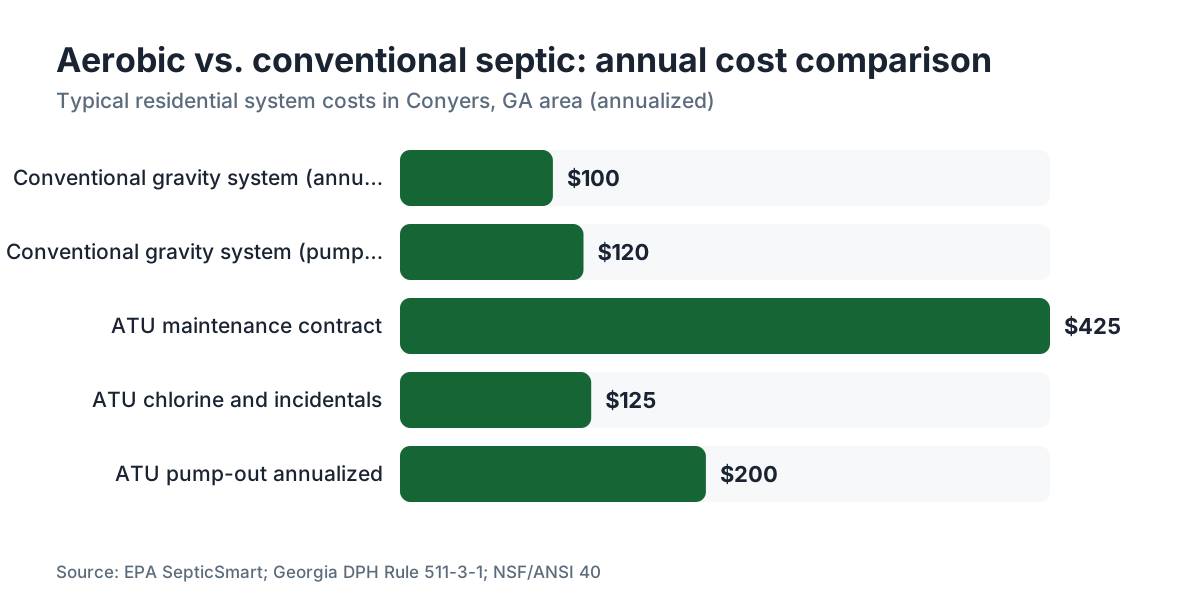
Here's the honest comparison. A conventional gravity system with a standard leach field has basically no required annual maintenance in Georgia beyond pumping every 3 to 5 years [3]. Pumping costs $300 to $500. Annualized, that's $60 to $165 a year.
An ATU runs $350 to $500 a year for the contract, plus $100 to $150 a year in chlorine and small parts, plus pump-outs every 1 to 3 years at $350 to $600. Real all-in cost lands around $500 to $750 in a quiet year and $700 to $1,100 in a year with a pump-out.
So an ATU costs roughly three to five times more per year than a conventional system. That premium buys you buildable land a conventional system can't serve. If you bought a Conyers lot that only got approved because of an ATU permit, that operating cost came with the property.
Replacement costs shift the math. A failed conventional leach field costs $3,000 to $8,000 to replace. A failed ATU drip field or spray area costs $6,000 to $15,000. The bigger replacement bill makes steady ATU maintenance even more sensible than it already is for a conventional system.
| System type | Annual maintenance cost | Pump-out interval | Pump-out cost | Failed field replacement |
|---|---|---|---|---|
| Conventional gravity + leach field | $0 to $100 | 3 to 5 years | $300 to $500 | $3,000 to $8,000 |
| ATU with spray/drip dispersal | $500 to $750 | 1 to 3 years | $350 to $600 | $6,000 to $15,000 |
Sources: Georgia DPH Rule 511-3-1 [1]; EPA SepticSmart [6]; NSF/ANSI 40 performance standard [2].
What records should Conyers homeowners keep for their ATU?
Keep one folder, paper or digital, with the original system permit and installation drawings, the current operation permit (renewed yearly), every inspection report your provider filed, pump-out receipts with dates and volumes, and any repair invoices.
When you sell, the buyer's attorney or inspector will ask for these records during the transaction. Georgia has no statewide point-of-sale septic inspection requirement, but buyers routinely request a septic tank inspection as a condition of purchase, and FHA or USDA lenders sometimes want documentation of a working, permitted system [9].
A full service history also protects you if the county ever questions your compliance. When your provider files reports with the county, the records exist on both sides. If a report got misfiled or the provider changed software and lost data, your copy is the backup.
SepticMind's service history tools are one way operators and homeowners can pull the same inspection record from one source, which closes the gap between what the provider files and what the homeowner has. A plain spreadsheet or a folder of PDFs does the same job if you keep it current.
For what a septic tank inspection covers before a sale, that article walks through what inspectors look at on ATU systems specifically.
How do I know if my aerobic system is actually working correctly?
The best single indicator is a clean inspection report from a licensed provider. Between visits, a few signs tell you the system runs right.
The air pump should be audible, a faint hum or low bubbling, from near the access riser. Hear nothing and the compressor may have failed. Some control panels have a green run light. Check it weekly if the panel is easy to reach.
Effluent from a working ATU should be clear to slightly cloudy, not dark or opaque. If you can safely watch effluent during a spray cycle, from a distance and never in contact, clear or light gray water is normal. Dark effluent, floating solids, or a strong sewage odor from the spray heads means the system isn't treating well.
The ground around the spray heads should soak up the effluent within a few minutes of a cycle. Standing puddles, soggy ground that never dries, or one patch of unusually lush grass all warrant a service call before the next scheduled visit.
If the alarm light or horn on your control panel comes on, that's a high-water or fault condition. Don't silence it and wait for the next inspection. Call your provider the same day. A high-water alarm means the system isn't moving effluent at the right rate, and piling on more water makes it worse.
Frequently asked questions
How often does an aerobic septic system need to be pumped in Conyers, GA?
Most Conyers homeowners pump their ATU's trash tank every 1 to 3 years. A two-person household can often go three years; a household of five or more should plan on annual pump-outs. If you run a garbage disposal, move that schedule up by at least a year. Your technician should measure sludge depth at each inspection and tell you when you're near the threshold.
What is the average cost of an ATU maintenance contract in Conyers?
Annual contracts covering the three inspections Georgia permit rules require run $350 to $500 from most providers around Conyers and Rockdale County. That usually covers inspection labor and county report filing, not chlorine tablets, replacement parts, or pump-outs. One-off visits without a contract cost $150 to $300 each, which makes the contract the better value for most homeowners.
Does Georgia law require a maintenance contract for aerobic septic systems?
Yes. Georgia Rule 511-3-1 requires ATUs with surface spray or drip dispersal to carry an active operation permit and a maintenance contract with a state-licensed provider. The permit renews annually, and inspection reports go to the county health department. Operating without a current contract puts your permit at risk and can trigger a notice of malfunction from the Rockdale County Environmental Health office.
Can I spray aerobic system effluent on my vegetable garden in Georgia?
No. Georgia rules and standard ATU permit conditions limit spray disposal to lawn areas and prohibit application on vegetable gardens, fruit trees, or any spot where people touch the soil or produce directly. Spray zones also have to keep setback distances from property lines, water features, and structures. Check your own permit; the spray-area restrictions are listed on the permit document the county health department issued.
What chlorine tablets should I use in my aerobic septic system?
Use tablets rated for ATU disinfection, usually calcium hypochlorite in a 1-inch or 3-inch size to match your chlorinator tube. Skip pool shock granules, trichlor, and dichlor tablets; they dissolve at different rates and use chemical forms that can damage the chlorinator or leave you short on residual. Your manufacturer's manual gives the correct size and type. When in doubt, ask your provider.
How long do aerobic septic systems last in Georgia?
With steady maintenance, the tanks and structural parts of an ATU typically last 20 to 30 years. Mechanical parts wear sooner: air compressor diaphragms need replacement every 2 to 5 years, control panels and timers last 10 to 15 years, and spray heads or drip emitters may need replacement every 5 to 15 years depending on water quality and upkeep. The dispersal field can last 20 years or more with properly treated effluent and correct loading rates.
What happens if my aerobic system alarm goes off?
A sounding alarm almost always means high water in the tank or a component fault. Don't silence it and wait for the next service visit. Cut household water use right away, hold off on the dishwasher and washing machine, and call your provider the same day. Keeping up normal water use with an active alarm can overflow the tank and push partly treated effluent into the dispersal area, turning a small problem into an expensive one.
Do I need a permit to repair or replace an aerobic septic system in Rockdale County?
Yes. Any repair or modification to an on-site sewage system in Georgia needs a permit from the county health department before work starts. That includes replacing the ATU unit, changing the dispersal area, or adding a new component. Minor repairs like a compressor swap or spray head replacement by a licensed provider are generally covered under the existing operation permit. Contact the Rockdale County Environmental Health office to confirm what triggers a new permit application.
Can cold weather affect my aerobic septic system in Conyers?
Conyers winters are mild by most standards, but a hard freeze can damage spray heads and exposed piping. Spray heads can freeze and crack if the system sits idle during a deep freeze. The disinfection stage also slows at low temperatures, so chlorine residuals get harder to hold if your system has real exposure. If you'll leave the home vacant in winter, ask your provider about winterization steps for your specific ATU model.
How do I transfer an ATU operating permit when I buy a home in Conyers?
The operating permit ties to the property, but the maintenance contract is between the homeowner and the service provider. When you close on a home with an ATU, contact Rockdale County Environmental Health to confirm the permit is current and active. Set up a new maintenance contract with a licensed provider before you move in; don't assume the seller's contract transfers. Ask the seller for all prior inspection reports and pump-out records as part of the deal.
Is an aerobic septic system better than a conventional septic system?
Better is the wrong frame. ATUs exist because site conditions, lot size, or soil percolation won't support a conventional system. An ATU makes higher-quality effluent and works on sites where a conventional drip field would fail, but it costs more to run and has more parts that break. If your lot could support either, a conventional gravity system is simpler and cheaper to maintain. Most Conyers homeowners with an ATU had no choice given their soil profile.
What is the NSF 40 certification and why does it matter for ATUs?
NSF/ANSI Standard 40 is the performance standard for residential aerobic treatment units. It requires certified units to consistently produce effluent with biochemical oxygen demand (BOD) and total suspended solids (TSS) below 25 mg/L. Georgia requires ATUs installed under state permits to be NSF 40 certified. When you buy a replacement unit or size up a new system, NSF 40 certification confirms independent testing to the performance standard rather than a manufacturer's claim.
How do I find my aerobic septic system's service records in Rockdale County?
Your licensed provider should hold copies of every inspection report they filed with the county. The Rockdale County Environmental Health office also keeps copies of submitted reports and your operation permit history. If you're a new homeowner and the previous owner left no records, contact both the provider (if you can identify them from permits or old receipts) and the county health office. Gaps in the record are a red flag worth chasing before you assume the system is fine.
Sources
- Georgia Department of Public Health, Rules and Regulations for On-Site Sewage Management Systems, Chapter 511-3-1: Georgia requires ATU systems to carry an operation permit renewed annually, a maintenance contract with a licensed provider, and inspection reports filed with the county health department, with malfunction repair timelines of approximately 30 days.
- NSF International, NSF/ANSI Standard 40: Residential Wastewater Treatment Systems: NSF/ANSI 40 sets performance requirements for residential ATUs including BOD and TSS effluent quality thresholds of 25 mg/L; manufacturers spec diaphragm replacement intervals in compliance documentation.
- U.S. Environmental Protection Agency, SepticSmart: Maintaining Your Septic System: EPA recommends septic system pump-outs every 3 to 5 years for average households and notes that proper maintenance saves thousands of dollars in avoided failures.
- HomeAdvisor / Angi, Septic Tank Pumping Cost Guide (national data): Septic tank pump-out costs nationally range from approximately $300 to $600 for residential systems, with access difficulty adding to cost.
- U.S. Environmental Protection Agency, Septic System Costs: A Homeowner's Guide: Drip field and spray field replacement costs for ATU systems can range from $6,000 to $15,000 or more depending on site conditions and system size.
- U.S. Environmental Protection Agency, SepticSmart Week Program Materials: EPA SepticSmart states: 'Properly maintaining your septic system can save you thousands of dollars' and directs homeowners to use licensed professionals for internal component service.
- Georgia Department of Public Health, District 3-4 Environmental Health (Rockdale County): Rockdale County Environmental Health administers on-site sewage management permits and can confirm licensed service provider status for ATU maintenance contracts.
- Georgia Environmental Protection Division, Water Quality Rules, Title 391 Chapter 3: Georgia EPD can impose fines for unpermitted discharges of inadequately treated wastewater to surface waters under Georgia water quality regulations.
- U.S. Department of Housing and Urban Development, FHA Single Family Housing Policy Handbook 4000.1: FHA and USDA lenders may require documentation of a functioning and permitted septic system as a condition of mortgage approval.
- University of Georgia Extension, On-Site Wastewater Treatment Systems: A Homeowner's Guide: UGA Extension documents Georgia soil conditions including Piedmont clay and saprolite profiles that require ATU systems where conventional percolation is insufficient.
- Georgia Department of Public Health, Licensed Onsite Sewage Management System Contractors: Georgia DPH maintains licensure requirements for companies providing ATU maintenance contracts and inspection services.
Last updated 2026-07-09