Alternative septic systems: types, costs, and how to choose
By the SepticMind Editorial Team
TL;DR
- When bad soil or a small lot rules out a conventional septic system, you choose from mound systems, aerobic treatment units (ATUs), drip irrigation, constructed wetlands, or cluster systems.
- Installed costs run $5,000 to $20,000 or more depending on type and site.
- Each one carries specific maintenance demands and is regulated under state onsite wastewater codes.
What is an alternative septic system and when do you need one?
A conventional septic system uses gravity to move wastewater from your house to a tank, then out to a drain field where the soil treats it. The whole thing depends on soil that perc-tests well, a lot big enough to fit a leach field, and a water table that stays well below grade. When any of those conditions fail, the system fails with them.
That's when a regulator or a soil scientist points you toward an alternative septic system. The EPA defines these as any onsite system that is not a conventional gravity system, and notes they are often required where sites have poor soil permeability, high water tables, shallow bedrock, or small lot sizes. [1]
Three triggers cause most of it. A failed perc test. A lot smaller than an acre in some states. A prior conventional system that has stopped working. Some jurisdictions also require alternative systems near lakes, streams, or drinking-water aquifers no matter what the soil test says.
You'll also hear the term "advanced treatment system." That's a subset of alternatives built to treat wastewater to a higher effluent quality before it reaches the soil or a discharge point. Each system section below says which ones qualify.
Starting from scratch? The cost to install a septic system guide has the full breakdown for conventional systems, which is useful context before you price alternatives.
What are the main types of alternative septic systems?
Six categories cover almost everything you'll see in the field. Each one solves a different site problem.
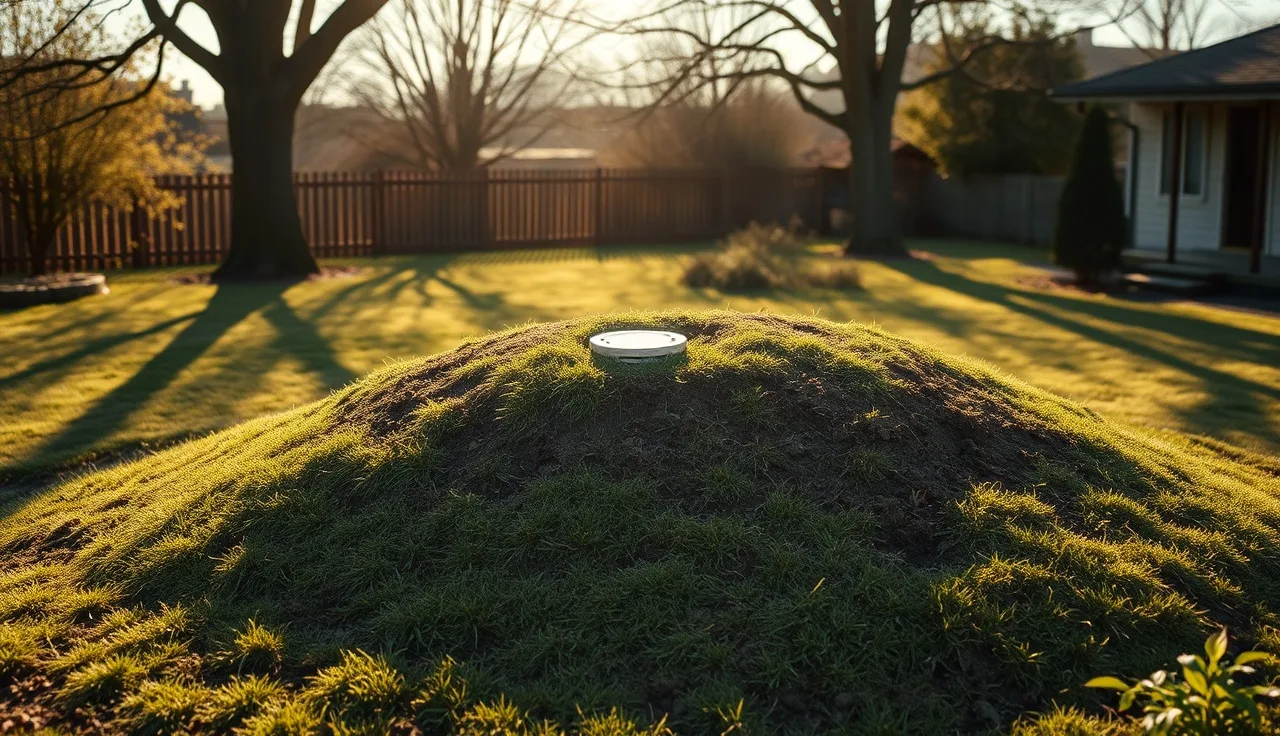
Mound systems put the drain field above natural grade by building an engineered sand-and-gravel mound on top of the existing soil. They work where the water table sits too high or the native soil won't absorb effluent fast enough. A pump lifts effluent from a dosing chamber up into the mound. They're the most common alternative in the upper Midwest and parts of the Mid-Atlantic. [2]
Aerobic treatment units (ATUs) inject air into the treatment tank, feeding aerobic bacteria that break down waste far more aggressively than the anaerobic process in a conventional septic tank. The effluent coming out is much cleaner, which is why ATUs get approved on small lots and in nutrient-sensitive watersheds. Most require a maintenance contract as a condition of the permit. [1]
Drip irrigation systems push small, timed doses of treated effluent through subsurface drip tubing across a wide area. They handle sloped, rocky, or oddly shaped lots where a conventional trenched field won't fit. They need a pump, a timer, and a filter, and the drip emitters need periodic flushing.
Constructed wetlands route effluent through a shallow cell of gravel planted with wetland vegetation. The plants and the microbial community in the gravel do the treatment. They're rare for single-family homes but show up more often on small commercial or rural cluster sites. Cold weather slows them down.
Cluster systems (shared systems) serve two or more homes from a single treatment and dispersal site. They're common in rural subdivisions where individual lots can't support their own systems. Maintenance responsibility usually goes to a homeowners association or a licensed operator under a service agreement. [3]
Composting toilets and greywater systems take a different approach: they separate the waste streams at the source. A composting toilet handles solids with little or no water. Greywater from sinks and showers gets treated and dispersed on its own. Not every state allows these for primary residences, and the rules are all over the map. Wisconsin's SPS 382 chapter and Arizona's greywater code are two of the cleaner state frameworks. [4]
One word on "cesspool," for clarity. A cesspool is a pit that receives raw sewage with no treatment. It is not an alternative system in any modern sense. It's banned for new construction in all 50 states and it's a public health liability.
How much do alternative septic systems cost?
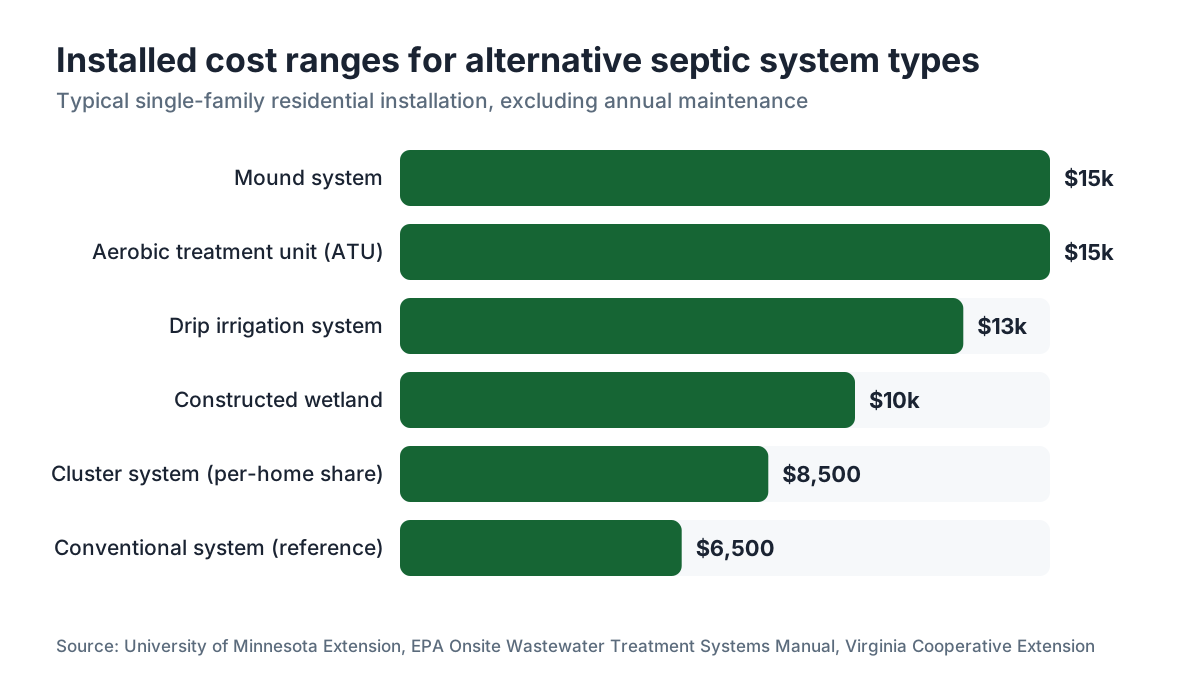
Cost data for these systems is genuinely scattered, because installed price swings with state rules, site prep, soil, and local labor. The ranges below come from state extension research and EPA guidance, not blended averages that hide the variation.
| System Type | Typical Installed Cost | Annual Maintenance Cost |
|---|---|---|
| Mound system | $10,000 to $20,000 | $300 to $600 |
| Aerobic treatment unit (ATU) | $10,000 to $20,000 | $500 to $1,200 |
| Drip irrigation system | $8,000 to $18,000 | $400 to $900 |
| Constructed wetland | $6,000 to $15,000 | $200 to $500 |
| Cluster/shared system (per-home share) | $5,000 to $12,000 | $200 to $600 |
| Conventional system (for comparison) | $3,000 to $10,000 | $100 to $300 |
University of Minnesota Extension puts the installed cost of a mound system for a typical three-bedroom home at $10,000 to $20,000, depending on how much fill the site needs and the pump setup required. [2] ATUs sit in a similar range nationally, though California and New England markets can push them past $25,000 on hard sites.
Maintenance is the cost that ambushes homeowners. ATUs carry mandatory service contracts in most states. A technician visits two to four times a year to inspect the aeration parts, test effluent quality, and swap parts as needed. At $150 to $300 per visit, that's $300 to $1,200 a year before any repairs. Over a 20-year life, that's $6,000 to $24,000 stacked on top of the install.
Commercial septic cost is a separate math problem. A small commercial property (restaurant, office building, campground) with high daily flow or difficult soil might install an ATU or drip system for $20,000 to $60,000 or more. Commercial systems cost more because they're sized for peak daily flows regulated under state commercial codes, and they usually need more control equipment and operator oversight. [5]
Weighing repair against going alternative? The septic system repair guide breaks down what repair actually costs versus full replacement.
How does a mound system work and who needs one?
A mound system is the right call when your water table sits within 24 inches of the surface, or your native soil is too dense or too sandy to treat effluent before it reaches groundwater. Virginia Cooperative Extension estimates mound systems are required on roughly 10 to 20 percent of Mid-Atlantic sites that fail conventional perc testing. [6]
The system starts with a conventional septic tank, then routes effluent into a dosing chamber with a pump. On a timed schedule, the pump pushes effluent up into the mound, which is built from clean sand and gravel. The mound sits on the native soil surface and adds the vertical separation that would otherwise be missing. Effluent percolates down through the sand, gets treated by microbial action, then soaks into the native soil below.
Sizing is everything. A mound has to be big enough to spread effluent evenly and dry out between doses, so the sand never stays saturated. A three-bedroom home mound might run 60 to 100 feet long and 8 to 12 feet wide at the base, rising 2 to 4 feet above grade. On a small lot, that footprint is often the limiting factor.
Mounds fail three ways. The pump quits. Grease or solids carry over from an under-sized or poorly pumped tank. Or the sand clogs. Regular septic tank pumping every 3 to 5 years is non-negotiable with a mound. The how often to pump septic tank guide covers the timing.
How does an aerobic treatment unit (ATU) work?
An ATU swaps passive anaerobic treatment for active aerobic treatment. Air pumps continuously into the main chamber, feeding bacteria that break down organic waste much more thoroughly than a conventional tank ever does. Effluent leaving a healthy ATU typically hits 10 to 30 mg/L of biological oxygen demand (BOD), against 150 to 250 mg/L from a conventional septic tank. [10]
That much cleaner effluent is the entire point. It lets the system work on smaller lots, close to water features, or in states that require advanced treatment near sensitive aquifers. Many ATUs add a disinfection step too, usually a chlorine tablet dispenser or a UV light, before the effluent goes to the dispersal field or gets surface-sprayed.
Spray irrigation is common with ATUs. Treated effluent sprays over the lawn through above-grade pop-up sprinkler heads. This works where the soil is too thin or rocky for any buried field. It comes with real strings attached: you keep people and pets off the spray area during and shortly after application, and the disinfection system needs regular monitoring.
NSF International runs the main third-party certification program for ATUs under NSF/ANSI Standard 40. Most states require NSF 40 certification before they'll permit an ATU. [7] When you compare brands, that certification is the floor, not a selling point.
What is a drip irrigation septic system and when does it make sense?
Drip dispersal pumps small, precise doses of treated effluent through flexible tubing buried 6 to 12 inches down. The tubing carries tiny emitters that release effluent slowly into the surrounding soil. Because the doses are small and timed, the soil around each emitter never floods, which is the failure mode that kills conventional trenched leach fields.
That makes drip a strong option on sloped lots (up to about 25 percent grade in some state codes), lots with thin soil over bedrock, and oddly shaped parcels where trenches won't fit. It can also retrofit onto a property whose old trench footprint no longer works.
The tradeoff is complexity. A drip system needs an ATU or sand filter to pre-treat effluent before it enters the tubing. The emitters clog if solids get through. You've got a pump, a timer, a filter that needs cleaning, and pressure-monitoring gear. Maintenance costs run higher than a mound, and tracking down a clogged drip zone takes experience.
For the right site, drip is genuinely elegant. The tubing can spread across a whole yard at low density instead of concentrating effluent in one trench zone, which spreads the treatment load and can stretch field life. Some state extensions also point out that drip can be routed around setback conflicts with wells, property lines, and trees that would kill a conventional field. [6]
How are alternative septic systems regulated and permitted?
Regulation happens almost entirely at the state level, with county health departments handling day-to-day permits and inspections. There is no single federal permit for onsite septic. The EPA's role is guidance and funding, not direct permitting. [1]
The EPA's SepticSmart framework works like this: states set the design and installation standards, licensed engineers or installers do the design and construction, and local health departments issue the operating permit and track compliance. [1] States vary enormously. Texas regulates ATUs under 30 TAC Chapter 285, Oregon under OAR 340-071, Wisconsin under SPS 382 through 385.
Almost every state that allows ATUs requires a maintenance contract with a licensed operator as a permit condition. Texas requires the installer to provide a two-year maintenance contract, then the homeowner keeps one going for the life of the system. [8] Let that contract lapse and you can void your operating permit and pick up liability if effluent reaches a neighbor's well.
For mound and drip systems, permitting starts with a soil evaluation and a site plan from a licensed engineer or soil scientist. The design goes to the health department for review, a permit gets issued, and inspections happen during construction. Final sign-off usually needs an as-built drawing and a certification that the system was installed to the approved design.
Operators managing dozens of permitted alternative systems, especially ATUs on service-contract routes, carry a heavy documentation and scheduling load. Platforms like SepticMind exist to help operators track service schedules, store permit records, and log inspection results across a large number of sites.
One rule holds everywhere: never install an alternative system without checking your county health department's requirements first. Design standards for the same system type can differ between neighboring counties in the same state.
How long do alternative septic systems last?
Lifespan turns on system type, maintenance quality, and the original design.
Mound systems, maintained and pumped on schedule, last 20 to 30 years. The sand is the limiting factor. It eventually clogs with biomat, the biological layer that forms where effluent meets soil. A mound overloaded with solids because nobody pumped the tank can fail in 10 years. [2]
ATUs have a mechanical lifespan tied to their aeration parts. The air pump or blower typically lasts 5 to 10 years and costs $300 to $800 to replace. Cared for properly, the overall unit runs 20-plus years. Many ATU makers offer 20-year system warranties, conditional on a maintained service contract. [7]
Drip tubing clogs with iron bacteria, calcium deposits, or biomat if pre-treatment quality slips. Manufacturers generally rate their emitters for 15 to 20 years under normal conditions, but chemical flushing (citric acid or chlorine) every few years is often needed to hold performance.
For context, a concrete septic tank built correctly can last 40 years or more. What fails is the distribution and soil components, not the tank. That pattern holds for alternatives too: the tank is usually fine; the dispersal and treatment parts need the attention.
One thing shortens any alternative system fast. A leach field or dispersal zone driven over by heavy vehicles, planted with deep-rooted trees, or flooded by redirected surface water.
What maintenance do alternative septic systems require?
More than conventional systems. That's the honest answer, and you want it before you commit.
A conventional system needs pumping every 3 to 5 years and not much else. An ATU needs a service visit every 3 to 6 months, depending on the state, to inspect the aeration parts, clean the filter, test effluent quality, and refill the disinfection dispenser. A mound needs the dosing pump inspected once a year and the float switches checked so it keeps dosing correctly. A drip system needs its filter cleaned and its pressure zones checked regularly.
Here's the practical breakdown:
| System Type | Pumping Frequency | Service Visits per Year | Key Maintenance Tasks |
|---|---|---|---|
| Mound | Every 3 to 5 years | 1 | Pump and float inspection, mound surface check |
| ATU | Every 3 to 5 years | 2 to 4 | Aeration check, effluent test, disinfection refill |
| Drip | Every 3 to 5 years | 2 to 4 | Filter cleaning, pressure test, emitter flush |
| Constructed wetland | Every 5 to 7 years | 1 to 2 | Media inspection, plant management, effluent test |
The biggest mistake homeowners make is treating an ATU like a conventional system. No service contract, no maintenance, then shock when it fails in year seven. A neglected ATU can actually push out effluent worse than a conventional tank, because the aeration dies and the tank goes anaerobic without the tank geometry that makes conventional tanks work in the first place.
Keep your records. Health departments in many states require proof of maintenance at permit renewal and at property sale, so log every septic tank pump out and every service visit.
Can you replace a failed conventional system with an alternative system?
Usually yes, and often it's the only legal path forward. A conventional system fails when the drain field saturates and sewage backs up into the house, surfaces in the yard, or turns up in a neighboring well test. At that point you can't just repair the field. You need a new design.
The repair process starts with a new soil evaluation to see whether any spot on the property can support a system. If conventional options are out, the designer moves to alternatives. In many states the permitted repair can be a different type than the original. A failing gravity-dosed drain field might come back as a mound or an ATU-plus-drip system on the same lot.
Cost for a replacement alternative system is generally the same as a new install. You also typically pay for demolition and disposal of the old field materials, which can add $1,000 to $3,000 to the project. [5]
Troubleshooting an existing system before failure becomes a crisis? The septic tank repair and septic tank inspection guides walk through what pros look for and which repairs are actually possible short of full replacement.
One practical note. If you're buying and the inspector flags a questionable system, ask specifically whether the lot can support a replacement. In some rural areas with poor soil and small lots, there's no feasible alternative system either. That's a title issue more than a maintenance issue.
Are alternative septic systems worth the cost?
On a site where a conventional system isn't permitted, there's nothing to debate. An alternative system is the only legal way to have indoor plumbing. So the real question is whether to buy or build on that site at all, and that turns on the system's total cost over its life.
Over 20 years, a mound with routine pumping and no major failures costs roughly $15,000 to $25,000 all-in (install plus maintenance). An ATU on a mandatory service contract runs $18,000 to $35,000 over the same stretch. A conventional system on a cooperating site runs $8,000 to $15,000 over 20 years. The gap is real, but it isn't the whole picture. A lot that requires an alternative system is often cheaper to buy than a comparable lot with good soil, so the system premium is sometimes already priced into the cheaper land.
For commercial properties, alternative systems cost a lot more but frequently decide whether a site is developable at all. A campground, small resort, or rural restaurant with no municipal sewer has no alternative to an alternative system. Commercial systems cost more per gallon of daily flow than residential ones, mostly from higher engineering fees, bigger tanks, and more control equipment.
My honest opinion: if you're buying a home with an ATU and the service contract has been lapsed for years, price in a full inspection and at least one year of service before closing. A neglected ATU is not a minor repair. If you're building new and a mound is your only option, get two contractor bids, not one. Mound pricing swings more than almost any other system type, because the amount of fill sand a site needs varies so much.
Frequently asked questions
What is the cheapest alternative septic system?
Constructed wetlands and cluster shared systems tend to be the least expensive alternatives, sometimes installed for $5,000 to $10,000 per home. Mound and ATU systems generally start at $10,000. 'Cheapest' depends heavily on your site, though. A system needing less fill material or fewer pump components costs less regardless of type. Always get a site evaluation before pricing a system.
How much does a mound septic system cost?
Most mound systems for a three-bedroom home cost $10,000 to $20,000 installed, according to University of Minnesota Extension research. Sites with poor soil that need large amounts of imported fill sand can push costs past $25,000. Annual maintenance runs $300 to $600 for pump inspections and periodic tank pumping.
How much does an aerobic septic system cost per year to maintain?
Expect $500 to $1,200 a year for the mandatory service contract, which usually means two to four visits annually. Each visit covers aeration inspection, filter cleaning, effluent testing, and disinfection tablet refills. Over 20 years that maintenance cost can reach $10,000 to $24,000 on top of the original install price.
Can an alternative septic system be installed on a small lot?
Yes, and that's one of the main reasons they exist. ATU systems with drip dispersal or spray irrigation can work on lots under half an acre in many states, because the cleaner treated effluent allows shorter setback distances. Specific lot minimums vary by state code. Your county health department and a licensed designer decide what's feasible on your exact parcel.
Do alternative septic systems require a permit?
Every state requires a permit for any onsite septic system, conventional or alternative. Alternative systems usually need extra documentation: a licensed engineer's design, soil evaluation results, and in many states proof of a service contract before the permit issues. Operating without a permit is a code violation and can create serious liability at property sale.
How often does an ATU (aerobic treatment unit) need to be serviced?
Most state regulations require two to four service visits a year. A licensed technician inspects the aeration parts, cleans the effluent filter, tests the outflow quality, and refills the chlorine or UV disinfection system. Skipping service doesn't just risk failure. In most states it voids your operating permit, which is a legal problem more than a maintenance one.
What happens if you don't maintain an alternative septic system?
Neglected ATUs revert to anaerobic conditions and can produce effluent worse than a conventional tank, clogging the dispersal field within a few years. Mound systems with no pumping fail when solids carry over and clog the sand. Either failure creates a public health hazard, potential groundwater contamination, and a repair bill that often exceeds the original install cost.
Is a commercial septic system more expensive than residential?
Significantly. Commercial septic systems cost $20,000 to $60,000 or more depending on daily flow, waste type, and required treatment level. Higher engineering fees, larger tank volumes, more complex controls, and stricter effluent standards all push costs up. States regulate commercial systems under separate flow-based sizing rules that differ from residential codes.
Can I replace a failed septic system with a different type?
Usually yes. If your property's soil evaluation rules out a conventional replacement, your designer proposes an alternative system suited to the site. The new system needs a new permit and a full installation. Many failed conventional drain fields come back as mound systems or ATU-plus-drip setups. Budget $10,000 to $20,000 plus $1,000 to $3,000 for old field demolition.
Are composting toilets a legal alternative to a septic system?
In some states, yes, but the regulatory picture is fragmented. Several states allow NSF-certified composting toilets paired with a greywater system in place of a full septic system for primary residences, but many require a septic system regardless. Wisconsin, Arizona, and Oregon have relatively clear codes on this. Check your county health department before assuming a composting toilet removes the need for a septic permit.
How do I know if my property needs an alternative septic system?
A site evaluation and perc test tell you. A licensed soil scientist or engineer measures how fast your soil absorbs water. If it fails the perc standard, or the water table is too shallow, or the lot can't fit the required setback distances for a conventional field, you need an alternative system. Your county health department can recommend licensed evaluators and explain local permitting standards.
Does a drip irrigation septic system smell?
Not normally. Effluent entering a drip system has passed through an ATU or sand filter first, which cuts odor compounds sharply. The emitters sit buried below the surface, containing any residual odor. Odor problems with drip systems almost always trace back to a failing pre-treatment unit or a clogged filter creating anaerobic conditions before distribution.
What is the EPA's guidance on alternative septic systems?
The EPA's SepticSmart program recommends alternative systems for sites where conventional systems won't work safely, and says advanced treatment systems can protect groundwater in sensitive areas. The EPA also funds state revolving loan programs homeowners can use to finance alternative system installs. Details are at epa.gov/septic.
Sources
- U.S. EPA, SepticSmart: Types of Septic Systems: EPA defines alternative septic systems and describes ATU effluent quality standards and the regulatory framework under which states permit onsite systems.
- University of Minnesota Extension, Mound Septic Systems: Installed cost of a mound system for a three-bedroom home is $10,000 to $20,000; mound systems are required when the water table is within 24 inches of the surface or native soil fails perc testing.
- U.S. EPA, Cluster and Community Onsite Wastewater Systems: Cluster systems serve two or more homes and require assigned maintenance responsibility, typically to a homeowners association or licensed operator.
- Wisconsin Department of Safety and Professional Services, SPS 382-385 Plumbing Code: Wisconsin regulates alternative onsite wastewater systems including composting toilets under SPS 382 through 385.
- U.S. EPA, Onsite Wastewater Treatment Systems Manual: Commercial alternative septic systems cost significantly more per gallon of daily flow than residential systems due to higher engineering requirements and stricter effluent standards; replacement systems require full new permits.
- Virginia Cooperative Extension, Alternative Septic Systems for Problem Soils and Sites: Roughly 10 to 20 percent of Mid-Atlantic sites fail conventional perc testing and require mound or other alternative systems; drip systems are approved on slopes up to approximately 25 percent grade in some state codes.
- NSF International, NSF/ANSI Standard 40: Residential Wastewater Treatment Systems: NSF/ANSI Standard 40 is the primary third-party certification for ATUs; most states require NSF 40 certification as a condition for permitting an aerobic treatment unit.
- Texas Commission on Environmental Quality, 30 TAC Chapter 285: Texas regulates on-site sewage facilities including ATUs under 30 TAC Chapter 285, requiring a two-year installer maintenance contract followed by a continuous homeowner service agreement.
- Oregon DEQ, Onsite Wastewater Treatment Program (OAR 340-071): Oregon regulates alternative onsite wastewater treatment systems under OAR 340-071, including design standards for drip irrigation and ATU dispersal systems.
- U.S. EPA, Onsite Wastewater Treatment Systems Manual: ATU effluent quality typically reaches 10 to 30 mg/L BOD compared to 150 to 250 mg/L from a conventional septic tank, supporting use in sensitive watershed areas.
Last updated 2026-07-09