Cost to install a septic system in Texas: 2025 guide
By the SepticMind Editorial Team
TL;DR
- Installing a septic system in Texas usually costs $5,000 to $25,000, and most homeowners land between $8,000 and $15,000.
- Conventional gravity systems on sandy soil are cheapest.
- Aerobic treatment units (ATUs), rocky ground, and large lots push the number up.
- TCEQ licensing and county permit fees add $500 to $2,500 before anyone digs.
What does it cost to install a septic system in Texas?
Most Texas homeowners pay between $8,000 and $15,000 for a complete septic install. The floor sits near $5,000: a simple concrete tank with a shallow gravity drain field on easy soil, in a rural county with light inspection rules. The ceiling is harder to pin down. An aerobic treatment unit (ATU) with surface drip irrigation on clay-heavy or rocky ground can top $25,000 once you count the required alarm, the service contract, and repairing the lawn you tore up.
Those figures come from installer quotes and TCEQ-licensed contractor data, not one clean survey. Nobody tracks Texas septic costs the way the Census tracks home prices, so treat any single number you see with suspicion. The honest move is to get three local bids. Soil type and county rules change so much that a quote from the next county over can be close to useless.
Here's the part people get wrong: the tank is usually the smallest line on the invoice. Labor and drain field work run 50 to 70% of the total on a conventional system. [1]
How do Texas septic costs compare to the national average?
Texas runs a bit high. The EPA SepticSmart program says "proper installation of a new septic system can cost from $3,000 to $10,000 or more depending on the system type and location." [2] Standard Texas systems sit in the upper half of that band, and alternative systems land well above it. Part of the reason is that the state requires ATUs across many sensitive areas and mandates a two-year maintenance contract after any ATU goes in.
Ohio is a useful contrast. Conventional systems in rural Ohio often run $3,500 to $8,000 because much of the state has soil that favors gravity drain fields, and there are enough contractors to keep labor rates down. Texas terrain fights back. Hill Country limestone and Gulf Coast clay both raise material and labor costs.
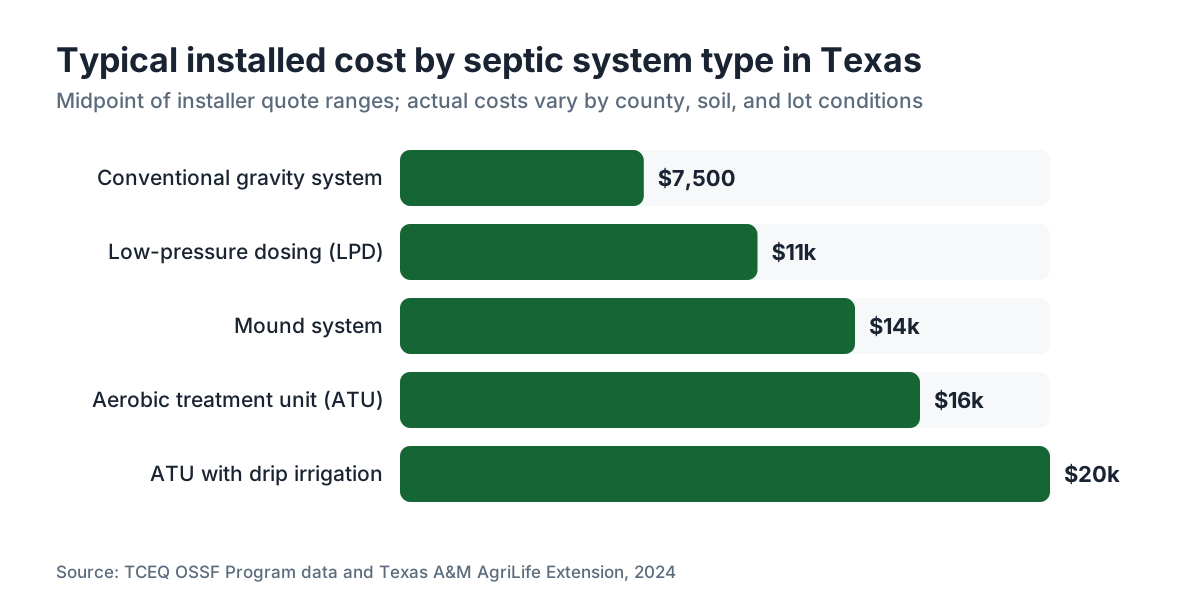
The table below lays out typical system types and their installed cost ranges in Texas.
| System type | Typical Texas installed cost | When you'll need it |
|---|---|---|
| Conventional gravity (concrete tank + gravel trench) | $5,000 to $10,000 | Sandy/loam soil, adequate setbacks |
| Low-pressure dosing (LPD) | $8,000 to $14,000 | Slower-perc soil, shallow water table |
| Aerobic treatment unit (ATU) | $12,000 to $20,000 | High groundwater, poor soil, small lots |
| ATU with drip irrigation | $15,000 to $25,000+ | Restrictive soil, 100-ft setback issues |
| Mound system | $10,000 to $18,000 | High water table, thin soil over bedrock |
What factors drive the cost up or down?
Soil is the biggest lever. A perc that comes back fast-draining means a shorter, shallower drain field: less gravel, less pipe, less labor. Slow or failing perc means an engineered alternative system, and those run two to three times as much. If your land has caliche, Austin Chalk, or Blackland Prairie clay, plan for the high end.
Lot size and setbacks matter almost as much. TCEQ sets minimum horizontal distances from water wells, property lines, and structures. [3] On a tight lot you may have no room for a conventional drain field at all, which forces an ATU or drip system no matter how good your soil is.
Household size drives tank size. Texas ties tank capacity to bedroom count. A three-bedroom home usually needs a 1,000-gallon tank; a five-bedroom home needs 1,500 gallons or more. [4] Jumping from a 1,000-gallon to a 1,500-gallon concrete tank costs $300 to $700 for the tank alone, but the bigger tank also needs a bigger drain field, so the real gap is larger.
Depth to bedrock or the water table hits excavation cost fast. Rocky ground can call for a jackhammer or blasting, which adds $1,000 to $4,000. A high water table forces a mound or ATU design.
County permit and inspection fees range from about $150 to $800 across Texas, and populous counties like Travis and Bexar tack on soil evaluation fees. Plan on $500 to $1,500 in permit-related costs before the installer's markup for handling the paperwork.
Need a new water well drilled at the same time? That's a separate $5,000 to $15,000 project. It shares only the mobilization cost, and most installers won't bundle the two.
What are the permit and regulatory requirements in Texas?
Texas regulates on-site sewage facilities (OSSFs, the state's term for septic systems) under Title 30, Texas Administrative Code, Chapter 285. [3] The Texas Commission on Environmental Quality (TCEQ) writes the statewide rules but hands enforcement to Authorized Agents, usually county or city health departments. Some of those counties are stricter than the TCEQ baseline, so local rules can surprise you.
The permitting process usually goes like this:
- Site evaluation: A TCEQ-licensed Site Evaluator visits your lot, reviews soil samples, measures setbacks, and writes a site evaluation report. Fee: $300 to $700 depending on the evaluator and county.
- Permit application: You (or your installer) submit the site evaluation and system design to the Authorized Agent. Permit fee: $150 to $500.
- Installation by a TCEQ-licensed installer: Texas requires the installer to hold an On-Site Sewage Facility Installer License from TCEQ. [3] You cannot legally install and connect your own septic system in Texas, with narrow rural exceptions that still require a permit.
- Inspection: The Authorized Agent inspects the open excavation before backfill, then again at final. Some counties add a third inspection at tank delivery.
- ATU maintenance contract: Install an ATU and state rules require a two-year maintenance contract with a licensed maintenance company at installation. Expect $150 to $350 per year.
The whole permit-to-approval timeline runs 3 to 8 weeks in most counties. Backlogged rural counties take longer, especially after a rush of rural land buying.
How much does a soil perc test cost in Texas?
A soil percolation test (in Texas, a soil morphology evaluation) runs $250 to $700 in most counties. [5] Some site evaluators bundle it with the design report for $500 to $1,000 total.
Texas moved away from timed perc tests toward soil morphology evaluation years ago. A licensed site evaluator digs test holes, reads soil texture, structure, and mottling (signs of seasonal water saturation), then classifies the soil using TCEQ criteria. It's generally more accurate than a timed test, but it takes a licensed evaluator. You can't rent a backhoe and do it yourself.
If the first evaluation rules out a conventional system, you can pay for a second opinion or a more detailed evaluation. On borderline lots, that happens plenty.
One practical note: the site evaluation report belongs to whoever paid for it, and it expires after two years in most cases. If you bought land with an existing evaluation, check the date before you lean on it.
What does a Texas aerobic treatment unit cost, and why are they so common?
An ATU (aerobic treatment unit) is the system Texas requires when a conventional setup can't meet setback or soil rules. Fast growth and a lot of homes on smaller rural lots have made ATUs common, especially in Hill Country counties (Comal, Kendall, Hays, Blanco) and the suburban edges of Austin, San Antonio, and Dallas-Fort Worth.
An ATU treats wastewater with air injection and disinfection (usually chlorine tablets or UV) before dispersing it through a spray head or drip field. Installed cost runs $12,000 to $20,000 for the treatment unit and spray system, and $15,000 to $25,000 for drip irrigation on a large lot. [6]
Beyond install, ATUs carry costs conventional systems don't:
- Mandatory maintenance contract: $150 to $350/year, required by state rule [3]
- Electricity: the compressor and pump run continuously, adding roughly $10 to $30/month to your bill
- Disinfection supplies: chlorine tablets run $50 to $100/year
- Periodic inspections: some Authorized Agents require annual or semiannual checks
Over 10 years, total ATU ownership often runs $3,000 to $6,000 more than a conventional system, even after the higher upfront price. If you have a real choice between systems, that gap should shape it.
Already fighting a failing ATU? Septic system repair costs are worth reading before you decide between fixing it and replacing it.
How much does the drain field (leach field) cost in Texas?
The drain field is usually 40 to 60% of a conventional system's total installed cost. For a 1,000-gallon tank serving a three-bedroom home, expect $3,000 to $7,000 just for the leach field: excavation, gravel, perforated pipe, and fabric.
What sets that range? Trench length, which comes from your soil's loading rate (how fast it soaks up water). Fast-draining sandy soil might need 100 to 150 linear feet of trench for a three-bedroom home. Slow clay soil, if it qualifies for a conventional system at all, might need 300+ feet. More trench means more excavation, more gravel, more pipe.
Texas rules require a repair area (also called an expansion area) equal to 100% of the primary field, kept clear of structures and pavement. That costs nothing upfront, but it limits what you can build on the lot later.
A failed drain field costs $4,000 to $15,000 to replace, depending on system type and whether you can reuse the existing tank. It's one of the most expensive septic problems out there, and it often traces back to years of skipped septic tank pumping that let sludge overflow into the field and clog the soil. The EPA recommends pumping every 3 to 5 years. [2]
What does a new septic tank alone cost in Texas?
If you need just the tank, not a full system, Texas prices break down roughly like this:
| Tank size | Material | Typical cost (tank only, delivered) |
|---|---|---|
| 750-gallon | Concrete | $600 to $1,000 |
| 1,000-gallon | Concrete | $800 to $1,400 |
| 1,250-gallon | Concrete | $1,000 to $1,700 |
| 1,500-gallon | Concrete | $1,200 to $2,000 |
| 1,000-gallon | Fiberglass | $1,500 to $2,500 |
| 1,000-gallon | Polyethylene | $1,200 to $2,000 |
Setting the tank (excavation, placement, connecting inlet and outlet) adds $1,500 to $4,000 in labor. Concrete tanks own the Texas market because they're everywhere, they hold up in the state's soils, and they're what most county inspectors expect to see.
For total installed costs including tanks, see our guide on cost to put in a septic tank.
Are there ways to reduce the cost of a new septic system in Texas?
Get three bids from licensed installers. Obvious, yes, but the spread between the high and low bid on the same job often runs $2,000 to $5,000. TCEQ lets you search licensed installers on its website. [3]
Time the project for late fall or winter. Texas installers tend to be less backlogged October through February, and some will move on labor rates during the slow season.
Don't overbuild. If you're permitting a three-bedroom house, don't let a salesperson push a 1,500-gallon tank and an oversized drain field "just in case." TCEQ's sizing tables are conservative enough that following them exactly protects you without wasting money.
Ask about concrete versus fiberglass tanks. Concrete is almost always cheaper in Texas because it's made locally across the state. Fiberglass is lighter and easier to haul to remote sites, but you pay for that.
Check for county assistance programs. Some Texas counties and rural water districts offer low-interest loans or grants for OSSF installation, especially in colonias (unincorporated communities along the Texas-Mexico border). The Texas Water Development Board runs several relevant funding programs. [7]
Maintain the system so it doesn't fail early. A well-cared-for septic system lasts 25 to 40 years. Skipping pump-outs is the fastest road to a $10,000 drain field replacement. Our guide on how often to pump your septic tank walks through the real schedule.
How long does septic system installation take in Texas?
From the day you hire a site evaluator to the day you have a working, permitted system, plan on 6 to 12 weeks. The steps and their usual durations:
- Site evaluation and report: 1 to 2 weeks (scheduling plus report prep)
- Permit application and approval: 2 to 4 weeks (county processing varies a lot)
- Installation: 1 to 3 days for a conventional system, 3 to 5 days for an ATU
- Final inspection and approval: 1 to 2 weeks after installation
Weather adds slack. Wet stretches in East Texas, or the aftermath of a Gulf storm, can push excavation back by weeks. Rocky Hill Country ground slows the install even with permits in hand.
On a deadline, like a property closing? Work backward from your date and start the permit process as early as you can. Some county inspectors won't expedite for any reason, and a permit delay can blow a closing.
Buying a property with a system already in place? A septic tank inspection before closing is not optional, in my view. A failed system is a five-figure problem that never shows up on a standard home inspection.
What ongoing maintenance costs should Texas homeowners budget for?
Installation is a one-time hit. Maintenance is forever, and it's where most homeowners under-budget.
For a conventional gravity system:
- Pumping every 3 to 5 years: $250 to $500 per pump-out in most Texas markets [8]. A septic tank pump out is the most basic task and the one people skip most.
- Inspections: $100 to $200 if you hire a pro instead of relying on the pumper's quick visual check
- Repairs (over 20 years): budget $1,000 to $3,000 for septic tank repair like baffle replacement, riser installation, or small pipe fixes
For an ATU:
- Mandatory maintenance contract: $300 to $700/year (some include inspections, some don't)
- Electricity: $120 to $360/year
- Disinfection (chlorine tablets): $50 to $100/year
- Major service events over 15 years: $1,500 to $4,000
The EPA's SepticSmart program says it plainly: "You should pump out your septic tank every 3 to 5 years." [2] Households with garbage disposals, more people, or an ATU may need septic tank cleaning more often.
Septic service operators who want to systematize scheduling and customer reminders across a big book of business often look at platforms like SepticMind, which is built to manage OSSF customer records, service intervals, and ATU maintenance contract tracking.
What does a septic inspection cost when buying a Texas property?
Pre-purchase septic inspections run $150 to $400 in Texas for a basic visual and functional check. A full inspection with pumping, a camera run on the outlet line, and a load test (running water to see how the drain field responds) can hit $600 to $800.
Texas does not require a septic inspection at closing the way some states do, so it falls on the buyer. Write it into your offer as a contingency.
A good inspector checks the tank's structural condition, the inlet and outlet baffles, the water level in the tank, signs of drain field saturation (spongy ground, odors, wet spots), and whether the system matches the permitted records. If the property sits in an Authorized Agent's jurisdiction, you can often pull the permit history for free.
Where septic tank emptying hasn't happened in years, the inspection may find a full tank that's hiding drain field trouble. Budget for both a pump-out and an inspection when the records are unclear.
SepticMind's operator tools help service companies document and share inspection reports digitally, which is what real estate agents and buyers increasingly expect from professional OSSF inspectors.
Can you finance a septic system installation in Texas?
Yes, several routes exist, though none are as clean as a straight home improvement loan.
FHA Title I Property Improvement Loans can cover septic installation as a permanent improvement. The FHA sets the loan limits and eligibility rules. [9]
USDA Rural Development offers Section 504 loans and grants for low-income rural homeowners in eligible areas, which covers much of rural Texas. USDA's definition of rural is broader than most people expect. [10]
The Texas Water Development Board runs a Colonia Self-Help Center program and related wastewater funding for border communities. [7]
Some licensed Texas installers offer in-house financing or partner with regional banks, with rates and terms all over the map. A home equity loan or HELOC is often the cheapest path for homeowners with equity, since the rates beat unsecured personal loans and the interest may be deductible.
One thing to skip: financing through a septic company's in-house program at 18 to 24% APR. That's common in rural Texas where buyers have few options, but over a five-year term it adds $2,000 to $4,000 to an already expensive project. Shop the rate before you sign.
Frequently asked questions
How much does a septic system cost in Texas for a 3-bedroom house?
A three-bedroom house in Texas usually needs a 1,000-gallon tank and a drain field sized to your soil. Total installed cost runs $8,000 to $15,000 for a conventional gravity system, or $14,000 to $22,000 for an aerobic treatment unit. Your real number depends on soil type, county permit requirements, and how far the installer has to haul materials.
Do I need a permit to install a septic system in Texas?
Yes. Texas requires a permit from your county's Authorized Agent (usually the county health department) before any OSSF installation. The installer must also hold a TCEQ On-Site Sewage Facility Installer License. Installing without a permit violates 30 TAC Chapter 285 and can bring fines plus an order to remove the system at your expense.
How long does a septic system last in Texas?
A well-maintained concrete tank can last 30 to 40 years. Drain fields typically last 20 to 30 years when the tank is pumped on schedule and no non-biodegradable junk goes down the drain. ATUs have more moving parts and may need major replacements every 10 to 15 years. The biggest killer of Texas septic systems is skipped pump-outs, which let solids overflow into the drain field.
What type of septic system is required in the Texas Hill Country?
Much of the Hill Country (Hays, Comal, Kendall, Blanco, and neighbors) sits over the Edwards Aquifer recharge and contributing zones. TCEQ and many county Authorized Agents require aerobic treatment units with surface spray or drip irrigation there because the aquifer is sensitive. Expect installed costs of $14,000 to $25,000 in these zones.
Is a perc test required in Texas before installing a septic system?
Texas uses soil morphology evaluation rather than a timed percolation test. A TCEQ-licensed Site Evaluator reads soil texture, structure, and mottling in test pits to classify the soil and pick the right system type. This evaluation is required before permit approval and typically costs $300 to $700, sometimes bundled into a design package for $500 to $1,000.
Can I install my own septic system in Texas?
Not legally for a home connection. Texas requires installations by a TCEQ-licensed On-Site Sewage Facility Installer. A few narrow rural exceptions let a homeowner install on their own property, but a permit is still required and the system must pass inspection. Doing it without a license and permit invites fines and can make the property hard or impossible to sell.
How much does it cost to replace a septic drain field in Texas?
Replacing a failed drain field in Texas typically costs $4,000 to $10,000 for a conventional gravel trench, or $10,000 to $20,000 if your soil now requires an alternative system like an ATU with drip irrigation. The existing tank can often be reused if it's structurally sound, which saves $1,000 to $2,000. Run a camera on the outlet pipe before assuming the tank is fine.
What is an aerobic treatment unit (ATU) and why does Texas require them so often?
An ATU treats wastewater with air injection and disinfection before dispersing it, producing cleaner effluent than a conventional system. Texas requires ATUs on lots where soil, setbacks, or proximity to the Edwards Aquifer or other sensitive water make conventional systems inappropriate. They cost $12,000 to $25,000 installed and carry ongoing electricity and maintenance contract costs of $400 to $700/year.
How do Texas septic installation costs compare to Ohio?
Septic installation in Ohio typically runs $3,500 to $8,000 for a conventional system, notably lower than the Texas range of $8,000 to $15,000. Ohio's better soil for conventional systems, higher rural contractor density, and lighter ATU requirements for sensitive zones all pull average costs down. Rocky Texas terrain and Hill Country aquifer rules push prices up.
Does Texas require a maintenance contract for septic systems?
Only for aerobic treatment units. Texas 30 TAC Chapter 285 requires a two-year maintenance contract with a licensed provider when an ATU is installed. After the first two years, homeowners must keep the contract or self-maintain under specific rules. Conventional gravity systems have no mandatory contract, though pumping every 3 to 5 years is strongly recommended.
What government assistance is available for septic installation in Texas?
The USDA Rural Development Section 504 loan and grant program helps low-income rural Texas homeowners with wastewater system costs. The Texas Water Development Board runs Colonia funding programs for border communities. FHA Title I Property Improvement Loans can cover septic installation. Check eligibility at USDA Rural Development's website and the TWDB's financial programs page before paying full out-of-pocket.
How do I find a licensed septic installer in Texas?
TCEQ keeps a public license lookup tool on its website where you can search active On-Site Sewage Facility Installer licenses by name, company, or county. Verify the license is current before you sign anything. Your county's Authorized Agent (health department) can also point you to installers who work that jurisdiction and know the local permit rules.
What happens if my septic system fails inspection in Texas?
The Authorized Agent issues a notice of violation and requires corrective action before final approval. Depending on what failed, you may need to reposition distribution lines, add inspection ports, replace a damaged baffle, or in the worst case redesign part of the system. Each reinspection usually carries a $50 to $150 fee. Work stops until the fix is done, which can add weeks.
Sources
- EPA SepticSmart Program, U.S. Environmental Protection Agency: Septic system installation costs range from $3,000 to $10,000 or more depending on system type and location; labor and drain field work make up the majority of conventional system costs.
- EPA SepticSmart: Protect Your Investment: The EPA SepticSmart program states 'You should pump out your septic tank every 3 to 5 years' and notes proper installation can cost '$3,000 to $10,000 or more.'
- Texas Commission on Environmental Quality (TCEQ), On-Site Sewage Facilities Program: Texas regulates OSSFs under 30 TAC Chapter 285, requires TCEQ-licensed installers, sets minimum setbacks, and mandates a two-year maintenance contract for aerobic treatment units.
- Texas A&M AgriLife Extension, Onsite Wastewater Treatment Systems: Texas ties septic tank capacity to bedroom count; a three-bedroom home typically requires a 1,000-gallon tank and a five-bedroom home requires 1,500 gallons or more.
- Texas A&M AgriLife Extension, Onsite Wastewater Treatment Systems: Soil morphology evaluation by a licensed site evaluator is required in Texas before OSSF permit approval; costs typically range $250 to $700.
- Texas A&M AgriLife Extension, Onsite Wastewater Treatment Systems: Aerobic treatment units use air injection and disinfection to treat wastewater before dispersal via spray or drip irrigation, and are commonly required where soil or setbacks rule out conventional systems.
- Texas Water Development Board, Financial Programs for Water and Wastewater: The Texas Water Development Board administers funding programs including Colonia wastewater assistance for rural and border community homeowners.
- EPA SepticSmart: Homeowner's Guide to Septic Systems: Regular septic tank pumping every 3 to 5 years is recommended; pump-out costs vary by region and tank size.
- U.S. Department of Housing and Urban Development, FHA Title I Property Improvement Loans: FHA Title I Property Improvement Loans can be used for permanent home improvements including septic system installation.
- USDA Rural Development, Single Family Housing Repair Loans and Grants: USDA Rural Development Section 504 loans and grants are available to low-income rural homeowners for repairs and improvements including wastewater systems.
- National Environmental Services Center (NESC), West Virginia University: Conventional concrete septic tanks can last 30 to 40 years with proper maintenance; drain fields typically last 20 to 30 years when the tank is pumped on schedule.
Last updated 2026-07-09