Cost to move a septic system: what to budget in 2025
By the SepticMind Editorial Team
TL;DR
- Moving a septic system usually costs $5,000 to $30,000 or more.
- Relocating the tank by itself runs $3,000 to $8,000.
- Add a new drain field and you're looking at $10,000 to $25,000.
- Permit fees, soil testing, excavation, and whether the current system has already failed all push the number higher.
- Most homeowners land between $10,000 and $18,000 for a full move.
What does it actually cost to move a septic system?
It depends on how much of the system you actually move. Move everything, meaning the tank, the inlet and outlet lines, and the drain field, and you're typically looking at $10,000 to $25,000 for an average residential lot. Easy moves on clean sandy soils sometimes come in near $7,000. Bad sites with clay, a high water table, or a steep grade sail past $30,000.
If you only reposition the tank and the existing drain field can stay put (rare, but it happens on big lots), you might get out for $3,000 to $8,000. That only works if the contractor first confirms the field is healthy and that the new pipe routing won't wreck the flow. So budget an inspection up front.
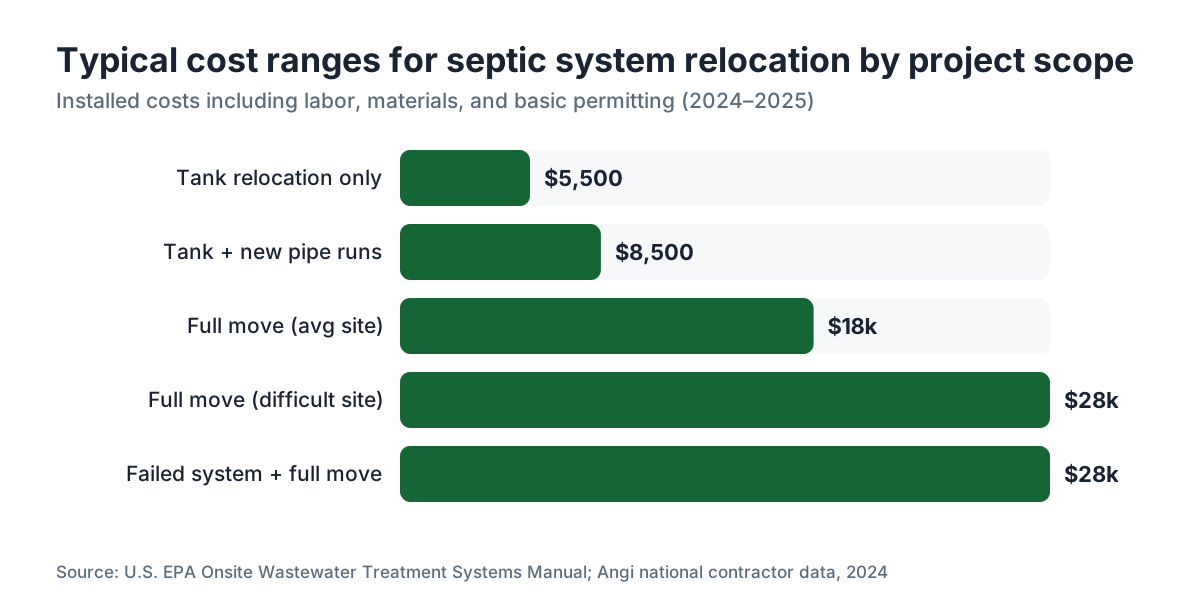
The table below breaks the cost down by what's actually being moved. These are installed numbers, meaning labor, equipment, materials, and basic permitting, drawn from national contractor data and EPA cost guidance for onsite wastewater systems [1][2].
| Scope of work | Typical cost range |
|---|---|
| Tank relocation only (field stays) | $3,000 to $8,000 |
| Tank + new connecting pipe runs | $5,000 to $12,000 |
| Full system move (tank + drain field) | $10,000 to $25,000 |
| Full move on difficult site (clay, high water table) | $20,000 to $35,000+ |
| Failed system requiring replacement during move | $15,000 to $40,000+ |
The ranges are wide on purpose. Soil type, local labor rates, tank material, and county rules all swing the number hard. A job in rural Nebraska and one in suburban Connecticut can share almost nothing on cost even if the two houses are twins.
What factors push the cost up or down?
Soil and site conditions move the price more than anything else. Excavating clay costs more than sandy loam because the machine works harder and the field design has to make up for slow percolation. A perc test, which most jurisdictions require before they'll issue a permit, runs $300 to $1,500, and the result decides everything downstream: a standard trench field, or an engineered mound, drip system, or aerobic unit that costs two to three times more [3].
Tank size and material matter next. A 1,000-gallon concrete tank weighs roughly 8,500 pounds. Lifting that takes a crane or a large excavator, and neither is cheap. A 1,500- or 2,000-gallon tank weighs proportionally more. Older steel tanks are usually rusted through by the time you want to move them, so contractors often push for a fresh tank at the new spot instead of gambling on a split during transport. That reshapes the budget, because now you're buying a new tank ($700 to $2,500 depending on size) plus paying to haul and dispose of the old one.
Distance from the house is another lever. Sliding the system 20 feet to clear a planned addition is far cheaper than dragging it 150 feet to the far corner of the lot. Every extra foot of sewer line adds pipe and labor, and long runs sometimes force re-grading to hold the quarter-inch-per-foot slope most codes demand.
Permit and engineering fees get underestimated constantly. Permits for onsite system modifications run $200 to $2,000 depending on the state and whether a licensed engineer has to stamp the design. Some counties require an engineer-of-record on any relocation. Others let a certified installer pull the permit directly. Call your local health department before you gather quotes so you know which bucket you're in [4].
The condition of the current system matters a lot too. If the system you're moving is already limping, meaning slow drains, soggy soil over the field, or odors, the contractor will find problems the moment the excavator bites in. A failing drain field doesn't heal when you relocate it. It gets replaced. Read septic system repair to understand where repair ends and full replacement begins.
How much does a new drain field cost when you move the system?
The drain field, sometimes called the leach field, is almost always the priciest single piece of a relocation. A conventional gravity-fed trench field for a 3- or 4-bedroom home runs $3,000 to $10,000 installed. Mound systems, required when the seasonal high water table sits within 24 inches of the surface, cost $10,000 to $20,000. Drip irrigation and aerobic treatment systems built for tight soils or sensitive areas can top $25,000 by themselves [2][5].
Field size comes from three things: the number of bedrooms, local code, and the soil perc rate. You can't transplant an old field. The new location earns its own perc test, and the design flows from those results. That's actually a good thing for you. If the new spot perc-tests badly, you find out before you write the big check instead of after.
Before you collect contractor quotes, read what a leach field replacement involves on its own. The pricing overlaps with a full move but isn't identical.
Does a failed septic system cost more to move than a working one?
Yes, almost always. A failing field has usually soaked up years of partially treated effluent, and the soil structure underneath is shot. Contractors have to handle that dug-out material with care. Some jurisdictions treat biomat-laden soil as a regulated waste that needs special handling or a designated disposal site. That's cost stacked on before the new field is even built [6].
A failing system also tends to expose tank problems once it's out of the ground. Baffles go missing or crumble. Tanks crack. Risers corrode. What you scoped as a move turns into a full replacement if the tank flunks inspection once it's dug up. This overlap is real: homeowners who budget for a relocation and hit a failed system mid-job routinely spend 40 to 60 percent more than the original quote.
If you have any hunch the system is struggling, commission a septic tank inspection and a pump-out before you finalize any relocation plan. The inspection runs $300 to $700 and a septic tank pump out runs $300 to $600. Together they hand you a clear picture. Walking into a contractor negotiation knowing the tank is structurally sound is worth real money.
What permits do you need to move a septic system?
Every state requires a permit to modify or relocate an onsite wastewater system. I don't know of a single exception. Skipping it exposes you to fines, mandatory removal, and a mess when you go to sell. The permit comes from your county or state health department in most states, not the building department, though a few places combine those functions.
EPA's SepticSmart program tells homeowners to "check with your local health department for guidance" before changing a septic system [1]. That's the right first call. Your local office tells you whether a licensed professional engineer has to sign the design, which soil tests are required, what setbacks apply (typically 50 to 100 feet from wells and property lines, 10 to 25 feet from structures, though these vary by state), and how long approval takes.
Permit timelines are one of the most underestimated pieces of the whole project. Some rural counties turn a permit in two weeks. Others sit on backlogs of 60 to 90 days. If you're moving the system to clear a home addition or close a sale, that delay cascades into everything downstream. Apply early.
State codes set the floor, and they override anything a contractor tells you. EPA maintains a directory of state onsite wastewater and drinking water programs that links out to each state's rules [7].
How does septic system location affect what you're allowed to do?
Setback rules are the most common reason people move a system in the first place. You want an addition, or a pool, or the system sits too close to a neighbor's well or your own water line. Most states require 50 to 100 feet between a septic system and any drinking water well, 10 feet from property lines, and 5 to 10 feet from foundation walls, but the exact numbers shift by jurisdiction [4][7].
Some sites make relocation nearly impossible. A small lot, a high water table across the whole property, or a watershed protection overlay zone can shrink your options down to engineered alternatives (mound, drip, aerobic) that still have to fit the space you've got. A few jurisdictions demand a hydrogeologic report for any system near a sensitive water body, and that adds $1,500 to $5,000.
Lot size hits you directly. The drain field for a 3-bedroom home usually needs 1,000 to 2,500 square feet of suitable soil, plus a reserve area of roughly equal size in most states. If your lot can't offer that in a compliant location, no budget lets you put a conventional system there.
Check feasibility before you design the addition or commit to any landscaping. A preliminary site evaluation runs $200 to $500 and answers the one question that matters: is the location you want physically and legally workable?
What's the timeline for moving a septic system?
Construction itself, once permits are in hand and the contractor is scheduled, takes two to five days for a typical residential move. Bigger or more complex jobs run a week. Crane days, if a heavy concrete tank needs lifting, often book out weeks ahead.
The full run from decision to done usually takes six to fourteen weeks:
- Site evaluation and soil testing: 1 to 2 weeks
- Permit application and approval: 2 to 10 weeks (varies enormously by county)
- Contractor scheduling: 1 to 4 weeks depending on season
- Construction: 2 to 5 days
- Final inspection and permit sign-off: 1 to 2 weeks
Spring and summer are the busiest stretch for septic contractors across most of the country, which means longer scheduling waits and, in some markets, slightly higher prices. If you have flexibility, fall is often the sweet spot. Contractors have more room and the ground is still workable in most regions.
Don't schedule your foundation crew or pool installer until the septic permit is in your hand. Plenty of homeowners learn that one the hard way.
Can you move just the septic tank without moving the drain field?
Technically yes. Cleanly, rarely. The field can stay put only if three things line up: the new tank location still feeds the field by gravity at the right grade, the field checks out healthy on inspection, and the new pipe routing breaks no setbacks. That alignment shows up on big lots with flexible geometry. On a typical suburban lot, it usually doesn't.
When it does work, tank-only relocation runs $3,000 to $8,000 and saves real money. The contractor pumps the existing tank, disconnects the inlet and outlet pipes, digs out the old tank, and either moves it (if it's sound) or drops in a new one at the new spot. Then the field connections get extended or re-routed to reach it.
Before you assume this is on the table, get the field evaluated. A contractor doing a septic tank repair can assess field condition during the same visit. If the field is past 20 to 25 years old or showing any sign of saturation, replacing it now usually beats moving the tank and facing a field replacement two years later anyway.
Operators tracking these jobs across many properties do better with tools that log system age, last pump date, and field condition notes. SepticMind's service management platform keeps that history in one place, so a contractor can advise a homeowner from records instead of guessing at how old the system is.
How do you get accurate quotes from septic contractors?
Get three quotes, minimum. Relocation pricing swings 30 to 50 percent between contractors on the exact same job, partly from different overhead and partly because they read site conditions differently. The cheapest bid isn't automatically wrong, but it earns scrutiny. Ask what it leaves out.
A solid quote covers permit fees (or states plainly that they're your responsibility), soil testing, all excavation, tank purchase or relocation, pipe and fittings, drain field materials and installation, topsoil backfill and rough grading, and final inspection. Anything missing from that list is a potential add-on later.
Ask each contractor one question directly: what happens if you open it up and find something unexpected? The honest answer is that they call you before they proceed. A contractor who guarantees the price no matter what's underground is either padding the bid heavily or planning to cut corners.
Confirm your contractor is licensed for onsite wastewater work in your state. Most states run an online license verification tool through the health department or a contractor licensing board. An unlicensed contractor can't legally pull a permit, which means the work goes in unpermitted even if you thought it was handled.
For a baseline on what fresh installation should cost, compare against cost to install septic system and cost to put in a septic tank.
Are there any ways to reduce the cost of moving a septic system?
A few honest options exist. None of them are huge.
Time the project for fall or early winter in your region. Contractors are quieter then, which buys you better scheduling and sometimes a slightly better price. Steer clear of spring, when everyone's playing catch-up after frozen ground.
Pull the permit yourself instead of letting the contractor handle it. Many contractors mark up permitting, sometimes $200 to $500, for the paperwork time. If you're comfortable making calls and filing forms, handle the application and hand the contractor the approved permit.
Check whether the scope is even right-sized. If you're moving the system for an addition or pool, have a design pro look at whether a small change to the project can dodge the septic move entirely. An addition shifted 10 feet sometimes changes the whole equation. That consultation costs $200 to $500 and can save $15,000.
If the existing tank is plastic or fiberglass and in good shape, insist on relocating it rather than replacing it. Moving a tank you've already paid for beats buying new, assuming it's structurally sound.
Here's what I wouldn't do: hire an unlicensed contractor to save a few dollars, skip the soil testing, or try any of the work yourself. The liability and resale headaches from unpermitted septic work are serious, and they don't fade. A buyer's real estate attorney hunts for exactly this.
Maintenance on the new system counts too. Staying on a pumping schedule, usually every 3 to 5 years for most households, protects the money you just spent on the move [8]. See septic tank pumping for the schedule details.
What ongoing costs come after a septic system relocation?
The move is the big spend, but the system still needs care. Pump the new tank inside the first year to confirm it's settling right and to set a baseline for solids accumulation. After that, run the normal schedule: every 3 to 5 years for a household of four, more often with a garbage disposal or a bigger household [8][9].
For how often to pump and what changes that interval, how often to pump septic tank is the next stop.
The drain field needs almost nothing beyond keeping vehicles and deep roots off it. Grass is fine. Big shrubs and trees are not, since roots rank among the top causes of drain field failure. EPA's SepticSmart guidance says to "plant only grass over and near your septic system" and to keep heavy vehicles and machinery off the field [1].
Operators managing several accounts after relocation jobs track pump schedules, system specs, and maintenance notes more reliably with software built for septic service work. SepticMind's platform handles that scheduling layer so nothing slips across a full service territory.
Budget $300 to $600 every 3 to 5 years for pumping and septic tank cleaning, plus an inspection each time you pump. That's pocket change next to a drain field repair, which runs $1,500 to $20,000 depending on how much of the field is involved [10].
Frequently asked questions
How much does it cost to move a septic tank to a different location on the same property?
Moving a septic tank alone, without relocating the drain field, typically costs $3,000 to $8,000. If the drain field must also move or be replaced, the total climbs to $10,000 to $25,000 for most residential properties. Site conditions, tank size, local permit fees, and how far the tank travels all shape the final number.
Can a septic system be moved to allow a home addition?
Yes, this is one of the most common reasons for relocation. A contractor first confirms a compliant location exists on the lot, runs a perc test on the new soil, and pulls the required permit from the local health department. The job typically takes six to fourteen weeks start to finish. Before you commit, check whether shifting the addition's footprint could avoid the move entirely.
Do you need a permit to move a septic system?
Every state requires a permit for septic system modification or relocation, no exceptions. Permits come from the county or state health department. Unpermitted work creates fines, possible mandatory removal, and serious complications when selling the property. Some counties require a licensed engineer to stamp the design; others let a certified installer pull the permit directly.
How long does it take to relocate a septic system?
The physical construction takes 2 to 5 days. The full project from first call to final inspection typically runs 6 to 14 weeks, mostly because soil testing and permit approval eat time. Spring and summer projects often stretch longer due to contractor backlogs. Starting the permit early, before you need the space cleared, is the single best way to avoid delays.
Does homeowners insurance cover the cost to move a septic system?
Standard homeowners policies don't cover elective septic relocation. Some cover sudden, accidental septic damage but exclude planned moves or slow deterioration. If the system failed from a covered event, partial coverage is possible, but you'd need to read your specific policy language. Most homeowners pay out of pocket or use a home equity line of credit.
What is the cheapest type of septic system to install when moving?
A conventional gravity-fed trench field with a concrete tank is generally the least expensive option, typically $8,000 to $15,000 installed for an average home. It's only allowed where soil perc rates and water table depth meet minimum standards. Mound systems, aerobic treatment units, and drip irrigation cost more but become mandatory when site conditions rule out conventional design.
What happens if a septic system is moved without a permit?
Consequences range from fines (typically $500 to $5,000 depending on the state) to mandatory removal of the unpermitted system at the homeowner's expense. Unpermitted septic work shows up in title searches and can block or kill a home sale. Buyers' attorneys and home inspectors look for it specifically. The risk isn't worth the permit fee you'd save.
Can I move my septic system myself to save money?
There's no practical way to do it. Moving a septic system requires licensed contractors in virtually every state, permitted soil testing, a health department permit, and inspections at several stages. A homeowner can't legally pull these permits in most jurisdictions. Beyond the legal wall, the equipment needed (excavators, cranes for heavy tanks) makes DIY both dangerous and impractical without professional machinery.
How does a failing septic system affect relocation costs?
A failing system consistently costs 40 to 60 percent more to relocate than a healthy one. The drain field soil may require special handling or disposal as regulated waste. The tank often needs replacement once it's dug up. And contractors build in contingency pricing when they know the system is compromised. Get an inspection and pump-out before finalizing any plan so you know exactly what you're dealing with.
What soil tests are required before moving a septic system?
Most jurisdictions require a percolation test (perc test) on the new drain field location, which measures how fast water drains through the soil. Many states also require a soil profile evaluation to identify soil type and the depth to seasonal high groundwater. Together these tests cost $300 to $1,500. The results decide whether a conventional system is allowed and, if so, how large the field must be.
How far does a septic system have to be from a house after it's moved?
Most state codes require at least 5 to 10 feet between the septic tank and any foundation, and 10 to 20 feet between the drain field and the house. These setbacks vary by state. Extra setbacks apply to wells (typically 50 to 100 feet), property lines (10 to 25 feet), and surface water. Your local health department gives the exact numbers for your jurisdiction.
Is it better to move the existing septic system or install a brand-new one?
If the existing tank is concrete and structurally sound, moving it saves $700 to $2,500 over buying new. If it's old steel or cracked, install new. The drain field almost always has to be built fresh at the new location regardless, since you can't transplant soil structure. Have the tank inspected before you decide; the inspection cost pays for itself fast.
What setback distances apply when choosing a new septic system location?
Common minimums include 50 to 100 feet from drinking water wells, 5 to 10 feet from house foundations, 10 to 25 feet from property lines, 25 to 100 feet from streams or wetlands, and 10 feet from any buried water line. State and county codes vary, and some watershed overlay zones add stricter rules. Always verify current requirements with your local health department before you lock in a location.
Sources
- U.S. EPA, SepticSmart Program: EPA SepticSmart guidance on system maintenance, setbacks from wells and property features, planting only grass over the system, and contacting local authorities before modifying a septic system
- U.S. EPA, Onsite Wastewater Treatment Systems Manual (EPA/625/R-00/008): Cost guidance and design requirements for conventional and alternative onsite wastewater treatment systems including mound and drip systems
- Penn State Extension, Soil Evaluation for On-Lot Sewage Systems: Percolation test requirements, typical costs, and how perc rates determine drain field design and size
- Minnesota Pollution Control Agency, Subsurface Sewage Treatment Systems Rules (Minn. R. 7080): Setback distances, permit requirements, and licensed professional requirements for onsite wastewater system modifications as an example of state-level regulation
- North Carolina State University Extension, Septic System Costs and Alternatives: Cost ranges for conventional gravity-fed systems versus mound and drip irrigation systems for residential onsite wastewater
- University of Minnesota Extension, Failing Septic Systems: Causes and Fixes: Description of biomat formation in failing drain fields and the additional costs and regulatory requirements associated with biomat-contaminated soil handling
- U.S. EPA, Septic Systems State and Local Resources: EPA directory linking to state onsite wastewater and drinking water programs and each state's septic rules
- U.S. EPA, How to Care for Your Septic System: EPA recommendation that septic tanks be pumped every 3 to 5 years for average households as part of routine system maintenance
- National Environmental Services Center (NESC), West Virginia University: Guidance on pumping frequency varying by household size, garbage disposal use, and tank size
- Angi Cost Data, Septic System Repair and Replacement Costs: National contractor survey cost ranges for drain field repair ($1,500 to $20,000) and full system relocation projects
- Texas Commission on Environmental Quality (TCEQ), On-Site Sewage Facilities Rules: State-level permit requirements, licensed installer requirements, and setback distances for onsite sewage facility modifications in Texas as a representative state example
Last updated 2026-07-09