Cost to remove a septic system: what homeowners actually pay
By the SepticMind Editorial Team
TL;DR
- Removing a septic system runs $500 to $20,000.
- Abandonment (filling and capping the tank) costs $500 to $2,500.
- Full excavation and haul-off runs $3,000 to $10,000, and pulling a large concrete tank or a mound system can push past $20,000.
- Permit fees, soil testing, and site restoration add to every job.
- State rules, tank material, tank size, and drain field condition swing the number the most.
What does it cost to remove a septic system?
Removing a septic system costs $500 to $20,000, and the honest answer is that your number depends on which part of the system you're removing and how completely you want it gone.
Abandonment means filling the tank with sand or concrete slurry and capping it. It's the cheapest legal path. Most contractors charge $500 to $2,500 for that work, depending on tank size and access. Full removal, where the tank gets excavated, pumped out, broken apart or hauled whole, and the hole backfilled, runs $3,000 to $10,000 as a midrange. Got a large concrete tank, a dual-compartment system, or a mound with engineered fill that also has to come out? Budgets of $15,000 to $20,000 are not unusual.
Drain field removal is the expensive part people forget to budget for. Pulling perforated pipe, gravel, and infiltrator chambers from a standard 1,000-square-foot leach field can add $2,000 to $8,000 on top of the tank, plus whatever soil work the county requires. Some jurisdictions make you remove the field when you connect to municipal sewer. Others only care about the tank.
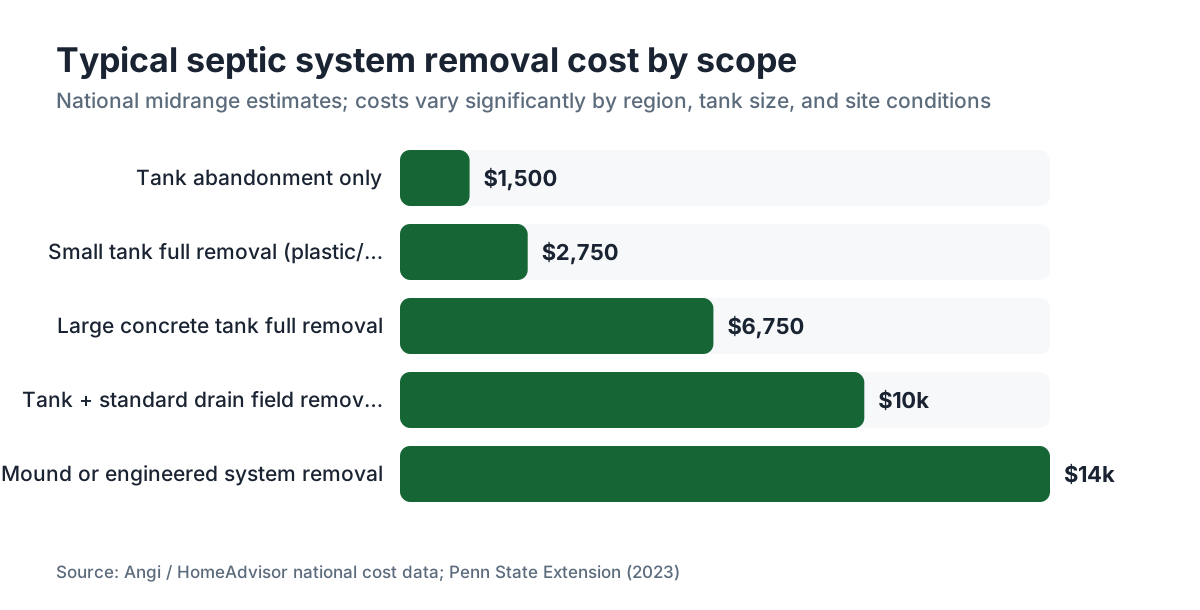
Here's what different scopes typically look like:
| Scope of removal | Typical cost range | What's included |
|---|---|---|
| Tank abandonment only | $500, $2,500 | Pump-out, fill with sand/concrete, cap |
| Tank full removal (small, plastic/fiberglass) | $1,500, $4,000 | Excavation, haul, backfill |
| Tank full removal (large concrete) | $3,500, $10,000 | Excavation, breaking, haul, backfill |
| Tank + drain field removal | $5,000, $15,000+ | All of above plus pipe, gravel, chambers |
| Mound or engineered system removal | $8,000, $20,000+ | Engineered fill removal, site regrading |
| Permit fees (varies by state/county) | $50, $500+ | Local health dept. or building dept. permit |
These ranges come from contractor quotes collected by home services aggregators and match what state health department guidance describes [1][2]. Your specific number sits somewhere in that table based on the factors below.
What factors drive the price up or down?
Six things move the price more than anything else: tank size, tank material, whether you abandon or fully remove, drain field condition, depth and access, and your region's labor rates.
Tank size and material set the baseline. A 500-gallon fiberglass tank comes out whole in a few hours. A 1,500-gallon precast concrete tank can weigh 10,000 pounds and need a large excavator plus a concrete crusher or a flatbed. Labor alone can double between those two jobs.
Abandonment vs. full removal is often decided for you. State and local rules dictate which option is even on the table. Many states require full removal when you connect to public sewer, while allowing abandonment for systems that are simply no longer in use. Call your county environmental health office before you assume the cheap path is legal for you.
Drain field condition matters more than people expect. If the field has failed and the soil is soaked with effluent, the contractor handles the excavated material as potentially contaminated fill. Hauling that to an approved landfill costs more than moving clean dirt. That alone can add $1,000 to $3,000.
Depth and access. A tank buried four feet deep is a morning's work. One buried eight feet under a deck addition or hard against a foundation wall takes longer, needs shoring, and carries more risk. Tight access for equipment is one of the most common budget surprises on the invoice.
Location swings the total hard. The same job that costs $4,000 in rural Mississippi might cost $9,000 in coastal Connecticut, partly because contractor rates differ and partly because permitting in some jurisdictions is heavier.
Pump-out before removal. Most states require the tank to be pumped before abandonment or excavation [3]. If you haven't done a recent septic tank pump out, add $300 to $600 for that step. Some contractors bundle it. Many don't.
Site restoration. After removal, you have a hole. Backfilling with compacted soil, regrading to match surrounding grades, and seeding or sodding can add $500 to $2,500 depending on yard size and how close to original you want the landscaping.
How much does septic tank abandonment cost vs. full excavation?
Abandonment runs $500 to $2,500. Full excavation runs $1,500 to $10,000 for the tank alone. They're genuinely different jobs with different risk profiles, so the gap isn't just labor time.
Abandonment means the tank stays in the ground for good. The contractor pumps it out, removes or collapses the baffles, crushes or removes the lid to kill the collapse hazard (requirements vary by state), and fills the void with sand, pea gravel, or flowable fill concrete. The EPA and most state environmental agencies treat this as an acceptable practice when it's done to code [3]. If you sell later, you'll disclose that an abandoned tank is on site. That occasionally complicates appraisals but rarely kills deals.
Full excavation is mandatory in some states when you connect to municipal sewer, and plenty of homeowners choose it anyway to avoid future liability. An excavator opens the ground, the tank gets pulled whole (plastic, fiberglass) or broken in place and removed in pieces (concrete), the cavity is inspected if required, then backfilled and compacted. No buried structure to disclose. No risk of future subsidence.
My honest take: if abandonment is legal in your county and you're not selling soon, it's a sound option. A tank that's sat quietly for 20 years isn't going anywhere. But if you're within two years of listing the house, or a sewer connection is a condition of a building permit, pay for full removal and be done with it.
Do you need a permit to remove a septic system?
Yes, in almost every jurisdiction. Septic systems fall under state environmental or public health codes, and decommissioning one usually requires a permit from your local health department, building department, or both [4].
The fees are modest, typically $50 to $500. The process is what bites you. Some counties require a licensed septic contractor (more than a general excavator) to pull the permit and do the work. Some require a final inspection before backfilling, which means matching the inspector's schedule to your contractor's crew. Backfill before the inspector signs off and you may be ordered to re-excavate. That's an expensive mistake.
Some states also require soil testing or a site evaluation after removal, especially where contamination is suspected. Texas, California, and several northeastern states have specific closure requirements for onsite wastewater systems that go beyond filling the tank [4][5][11].
The EPA's SepticSmart program tells homeowners to work with licensed professionals for any septic work, which in practice means checking your state's contractor licensing board before you hire anyone [3]. A contractor who pulls the permit is signing up as the party legally responsible for the job meeting code. That's worth something.
What does it cost to remove the drain field (leach field) too?
Drain field removal adds $2,000 to $8,000 for a typical residential field. If you only need the tank gone, you may be able to leave the leach field in place, depending on local rules and what happens next to the property. But if you're building over the field footprint, connecting to municipal sewer, or required by code to fully decommission, the field goes too.
Standard field removal means excavating the trenches (typically 18 to 36 inches deep, several hundred linear feet of pipe), pulling the perforated pipe and gravel or chamber systems, and backfilling. Expect $2,000 to $8,000 for a typical residential field. It climbs when the field is large, deep, or has to be hauled to a certified facility.
Mound systems cost more. The engineered fill (usually sand) has to come out along with the distribution pipes, and the whole site needs regrading. Mound field removal commonly runs $6,000 to $15,000 for the field portion alone.
Here's what people overlook: after the field is out, that soil is compacted and torn up. Putting grass back means topsoil, seeding, and maybe irrigation. Budget at least $500 to $1,500 for final grading and lawn restoration on a typical half-acre lot.
For how leach fields work and what makes them fail, the leach field guide covers it in detail.
Why would you remove a septic system in the first place?
The most common reason is a newly available municipal sewer line. Many municipalities require you to decommission the existing septic system within a set window, often 30 days to 1 year, once a sewer connection is available. Miss the deadline and you can face fines.
Other common reasons show up regularly.
System failure. A system that's surfacing effluent or backing up into the house sometimes has to come out as part of the fix, especially when the county condemns it. If that's you, the septic system repair guide walks through repair vs. replace.
Property development. Building a new structure where the tank or field sits requires removal. Developers routinely rip systems out when subdividing land or changing use.
Home sale. Some buyers, and some lenders (FHA and USDA loan programs in particular), require a current septic tank inspection and sometimes full decommissioning of an old system before closing.
Age and condition. A tank that's 40 or 50 years old and cracking may be cheaper to remove and replace than to repair. The septic tank repair guide runs that math.
How does connecting to city sewer affect removal costs?
Connecting to municipal sewer is the most common reason homeowners get a septic removal bill, and the costs stack up fast. Plan for $5,000 to $20,000 total once you add the sewer tie-in to the removal.
The sewer connection itself typically costs $3,000 to $10,000, depending on how far the main line sits from your house, whether the street needs cutting, and local tap fees. Many utilities charge a one-time connection fee (sometimes called an impact fee or tap fee) of $1,000 to $5,000 on top of the physical work.
Then comes the septic removal: $500 to $2,500 for abandonment or $3,000 to $10,000 for full excavation, as covered above.
Add it up and a homeowner connecting to sewer while fully decommissioning an old system should plan for $5,000 to $20,000 before any interior plumbing changes. Some municipalities offer low-interest loans or hookup fee waivers to push connection, so ask your utility before you assume you're paying full retail.
Timing matters. Most states give you between 90 days and 2 years to connect once sewer is available, though the window depends on your state's rules [4][5]. Blow past it and some jurisdictions charge fines of $100 to $500 per day.
Can you remove a septic system yourself to save money?
Technically possible in a small number of jurisdictions. Practically, almost nobody should try.
Septic waste is a public health problem. Most states require a licensed contractor to pump the tank before any work begins [3]. Excavating a tank you haven't pumped is dangerous, and in many states it's a misdemeanor. The tank can hold hydrogen sulfide gas at levels that kill in seconds.
Safety aside, the permit almost always names a licensed contractor. You usually can't pull it as a DIY homeowner because the contractor's license is what gives the health department someone to hold accountable for code compliance.
Where homeowners do save real money is site prep and restoration: clearing vegetation before the contractor shows up, doing their own finish grading after backfill, or seeding the lawn themselves instead of paying the contractor's markup on landscaping labor. Those savings are real, $500 to $1,500, and actually achievable.
Hiring a general excavator instead of a licensed septic contractor is another common shortcut that backfires. If the work fails code and the county orders re-inspection or re-excavation, you pay more than you saved.
How do you get an accurate septic system removal cost estimate?
Get at least three quotes. Septic removal pricing has high variance because it's a specialty service with low job volume per contractor, and markups swing widely.
Before you call anyone, gather three things: your tank's approximate size and age (check the original permit on file with your county health department), the tank material if you can find it (concrete, fiberglass, plastic), and whether the drain field needs to go too.
When you call contractors, ask straight out:
- Is the pump-out included or billed separately?
- Who pulls the permit and what's the fee?
- Is a site inspection required before backfill, and who schedules it?
- What's the backfill material, and is topsoil/seeding included?
- What happens if you find unexpected contamination?
A contractor who answers those cleanly is worth more than the lowest bid from one who can't.
For tracking quotes and comparing septic service options digitally, SepticMind's operator network connects you with licensed contractors who handle decommissioning in your area.
State extension services are a solid free resource too. Many land-grant universities publish consumer guides to septic costs and contractor vetting specific to their state [2][6]. Free and unbiased.
What happens to the soil and site after removal?
You're left with excavated ground that needs to come back to a usable state, and what that looks like depends on what's next for the property.
If the soil around a failed system tested positive for contamination, your county may require the excavated material hauled to a licensed landfill instead of reused as backfill on site. Clean fill dirt trucked in costs $10 to $25 per cubic yard, and a tank removal easily disturbs 10 to 30 cubic yards. That's $100 to $750 in fill material, before delivery and compaction labor.
Subsidence is the main long-term risk when backfill isn't packed right. A poorly backfilled cavity settles unevenly for years, opening depressions in the yard or, at worst, undermining driveways or outbuildings. Put it in the contract: the contractor compacts backfill in lifts (layered passes), more than dumps and leaves.
With concrete tanks broken in place during abandonment, some contractors leave the busted concrete in the bottom of the cavity and fill over it. Legal in many states, but the ground in that spot behaves differently over time. Planning to build over that footprint? Ask for the concrete to come out fully.
If your county required a soil evaluation after removal, the results go on file with the health department and stay with the property record. That's useful paperwork to hand a future buyer.
Are there any rebates or financial help for septic removal?
Some programs exist. They're not universal, and most have waiting lists.
USDA Rural Development offers grants and low-interest loans under its Section 504 and Section 306C programs for rural homeowners connecting to public water and sewer, which can include decommissioning the septic system [7]. Income limits apply.
Some state revolving fund programs, run under the Clean Water Act framework, offer low-interest financing for homeowners making sewer connections [8]. Your state environmental agency is the place to ask.
A handful of counties, especially in the Chesapeake Bay watershed and around other sensitive water bodies, offer direct grants for failing septic system replacement or removal as part of nutrient reduction efforts. Maryland's Bay Restoration Fund has funded thousands of septic upgrades since 2004 [9].
Utility sewer connection incentives sometimes include credits against tap fees or waived connection costs during a limited enrollment window when a new main gets extended. These get negotiated at the local utility level, so ask before you sign anything.
None of this is guaranteed. But if you're low-to-moderate income in a rural area, USDA Rural Development is worth a phone call before you put the project on a credit card.
How does septic removal cost compare to septic system replacement?
This is the question most homeowners are really asking: is it cheaper to rip it out and replace, or to connect to sewer? The two totals land closer than you'd think.
A new conventional septic system costs to install roughly $3,000 to $15,000, with the national midrange around $7,000 to $10,000 for a standard 3-bedroom home [1][2]. Advanced treatment systems, required in some sensitive areas, run $10,000 to $30,000. Our guide on cost to put in a septic tank covers the tank portion specifically.
So removal plus sewer connection ($5,000 to $20,000 combined) isn't dramatically more than replacement in most cases, and a sewer connection carries lower long-term maintenance because you're done with pumping, inspections, and field upkeep. The catch: sewer comes with a monthly service bill, typically $30 to $100, that a private septic system doesn't.
Over 20 years, the math is genuinely close. The right answer depends on your municipal rates, how well a new system would perform on your lot, and whether your lot even percs for a new system. If your soil has failed the perc test, sewer connection may be your only path.
For what routine maintenance costs when you keep a system, the how often to pump septic tank and septic tank pumping guides cover that side.
Frequently asked questions
How much does it cost to abandon a septic tank in place?
Abandoning a septic tank in place typically costs $500 to $2,500. The tank gets pumped out, the baffles removed or collapsed, and the cavity filled with sand, gravel, or concrete slurry. Lid collapse prevention is required in most states. Permit fees of $50 to $300 are usually separate. This is the cheapest legal decommissioning option and is acceptable in most jurisdictions when you're not connecting to sewer.
Do I have to remove my septic tank when connecting to city sewer?
Most municipalities require decommissioning your septic system once a sewer connection is made, but some allow abandonment in place rather than full excavation. Requirements vary by state and county. Your local health department or sewer utility has the specific rule. In some areas you get 30 days; in others up to 2 years. Ignoring the requirement can trigger daily fines, so check before you assume you can postpone.
How long does septic system removal take?
Tank abandonment usually takes 4 to 8 hours for a crew of two. Full tank excavation and removal typically takes 1 to 2 days. Adding drain field removal stretches the job to 2 to 5 days depending on field size and depth. Permitting and scheduling the county inspection are often the longer delays, sometimes adding 1 to 4 weeks depending on your jurisdiction's backlog.
Is septic tank removal covered by homeowners insurance?
Standard homeowners policies generally don't cover septic system removal as a standalone project. If a sudden covered event like a vehicle accident damages the tank, your policy might cover removal as part of the property damage claim. Routine decommissioning or removal due to system failure is almost always excluded. A few specialty riders or home warranty products cover septic repair but rarely removal. Read your policy or call your agent to confirm.
What permits are required to remove a septic system?
Most counties require a permit from the local health department, environmental health division, or building department before septic removal. Some jurisdictions require both a health department permit and a building permit. In most states, only a licensed septic or plumbing contractor can pull the permit. Fees typically run $50 to $500. The permit usually requires a final inspection before backfilling, so coordinate timing with your contractor before scheduling the crew.
Can I just fill in an old septic tank myself?
In most states, no. Licensed contractors are required to pull the permit and do the work. The tank must be pumped by a certified hauler before any excavation or filling because of sewage gas and contamination hazards. Some states specifically prohibit unlicensed individuals from decommissioning a septic system. DIY attempts that fail code can bring fines and a mandatory re-do at your expense. Check your county health department's rules before assuming this is a weekend project.
How much does it cost to remove a septic system before selling a house?
The cost doesn't change because you're selling, but the scope often does. If a buyer or their lender requires full removal (common with FHA and USDA loans when there's a known failed system), budget $3,000 to $10,000 for the tank plus $2,000 to $8,000 if the drain field goes too. If you're just decommissioning to connect to sewer before closing, costs match any removal. Get the work done and permitted before listing so inspection reports come back clean.
How do I find out where my septic tank is before getting removal quotes?
Start with your county health department. Original septic installation permits, which usually include a site sketch showing tank location and field layout, are public record in most states. If those aren't available, a septic contractor can probe the yard with a thin metal rod or run a small camera down the outlet pipe to trace to the tank. Some areas offer ground-penetrating radar for hard-to-find tanks. Knowing your tank location before contractors quote saves time and prevents misquotes.
Does the drain field have to be removed too?
Not always. Many jurisdictions let the drain field stay in place when you decommission a septic system, especially if you're not building over it. The pipes decompose over decades and the gravel becomes part of the subsoil. But if you're connecting to sewer and your county has strict closure rules, or you're building a structure over the field footprint, removal is usually required. Ask your county health department before assuming either way.
What is a septic system cost estimate for a typical 3-bedroom home?
For a typical 3-bedroom home with a 1,000-gallon tank and standard drain field, a full removal (not abandonment) usually runs $5,000 to $12,000 including permit fees, pump-out, excavation, haul, backfill, and basic site restoration. Add sewer connection and total project cost rises to $10,000 to $22,000. Abandonment only on the same system runs $800 to $2,500. These are national midranges; coastal and high-cost metro areas skew toward the top of each range.
Is it cheaper to repair or remove a failing septic system?
Repair is almost always cheaper in the short term. A failed drain field can sometimes be restored for $1,500 to $5,000. Full system replacement runs $7,000 to $15,000 on average. Removal plus sewer connection runs $5,000 to $20,000 but ends ongoing maintenance costs. If sewer access is available and your lot is marginal for a new system, removal and connection often makes more sense over a 10- to 20-year horizon. The septic system repair guide covers repair options in detail.
Are there grants or loans to help pay for septic removal?
Yes, though availability is limited. The USDA Rural Development Section 306C program offers grants and low-interest loans to low-income rural homeowners for sewer connection projects, which can include septic decommissioning. Some states in the Chesapeake Bay region offer direct grants for failing system replacement through Bay restoration funds. Local utilities sometimes waive tap fees during limited enrollment windows. Income limits apply to most programs. Contact your state environmental agency and USDA Rural Development office to check eligibility.
What happens if I don't remove or properly abandon an old septic system?
Consequences depend on your jurisdiction but can include fines for code violations, failed property inspections at sale, and liability if the old tank collapses and injures someone. An improperly abandoned tank with a compromised lid is a real collapse hazard, and if groundwater contamination gets traced back to your property, remediation costs can far exceed what removal would have cost. Some municipalities can place a lien on the property for unpaid compliance fines.
How do I find a licensed contractor for septic system removal?
Your state's contractor licensing board maintains a searchable database of licensed septic contractors. Your county health department often keeps an approved list of contractors they work with for permits and inspections. The National Onsite Wastewater Recycling Association (NOWRA) also has a member directory. Get at least three quotes, verify the contractor's license number with the state board, and confirm they'll pull the permit and coordinate the county inspection rather than leaving that to you.
Sources
- HomeAdvisor / Angi, Septic Tank Removal Cost Guide: National cost ranges for septic tank removal and abandonment, including regional variance
- Penn State Extension, Onsite Sewage Programs: Consumer guidance on septic system costs, contractor selection, and state permitting requirements
- U.S. EPA, SepticSmart: Protect Your Investment: EPA SepticSmart program recommendations for working with licensed professionals and proper system decommissioning
- U.S. EPA, Onsite Wastewater Treatment Systems Manual: Federal guidance on state and local regulatory requirements for septic system closure and abandonment
- California State Water Resources Control Board, Onsite Wastewater Treatment Systems Policy: State-level closure requirements for onsite wastewater systems when connecting to municipal sewer
- University of Minnesota Extension, Septic System Owner's Guide: Consumer guidance on septic system costs, decommissioning options, and contractor vetting
- USDA Rural Development, Water and Environmental Programs Section 306C: USDA grants and low-interest loans available to rural homeowners for sewer connection projects including septic decommissioning
- U.S. EPA, Clean Water State Revolving Fund: State revolving fund programs offering low-interest financing for homeowners making sewer connections
- Maryland Department of the Environment, Bay Restoration Fund: Maryland Bay Restoration Fund has funded thousands of septic upgrades and replacements since 2004
- National Onsite Wastewater Recycling Association (NOWRA), Industry Data: Industry data on septic system installation and removal costs and contractor licensing requirements by state
- Texas Commission on Environmental Quality, On-Site Sewage Facilities Rules: Texas-specific closure requirements for onsite wastewater systems including soil testing after removal
Last updated 2026-07-09